Buyer Fit Snapshot
| Best fit | Poly Mailer Price Per Unit Calculation projects where brand print, material claims, artwork control, MOQ, and repeat-order consistency need to be specified before quoting. |
|---|---|
| Quote inputs | Share finished size, material target, print colors, finish, packing count, annual reorder estimate, ship-to region, and any compliance wording. |
| Proofing check | Approve dieline scale, logo placement, barcode or warning zones, color tolerance, closure strength, and carton packing before bulk production. |
| Main risk | Vague material claims, crowded artwork, missing packing details, or unclear freight terms can make a low unit price expensive after revisions. |
Fast answer: Poly Mailer Price Per Unit Calculation: What Most Buyers Miss should be specified like a repeatable production item. The safest quote records material, print method, finish, artwork proof, packing count, and reorder notes in one written spec.
Production checks before approval
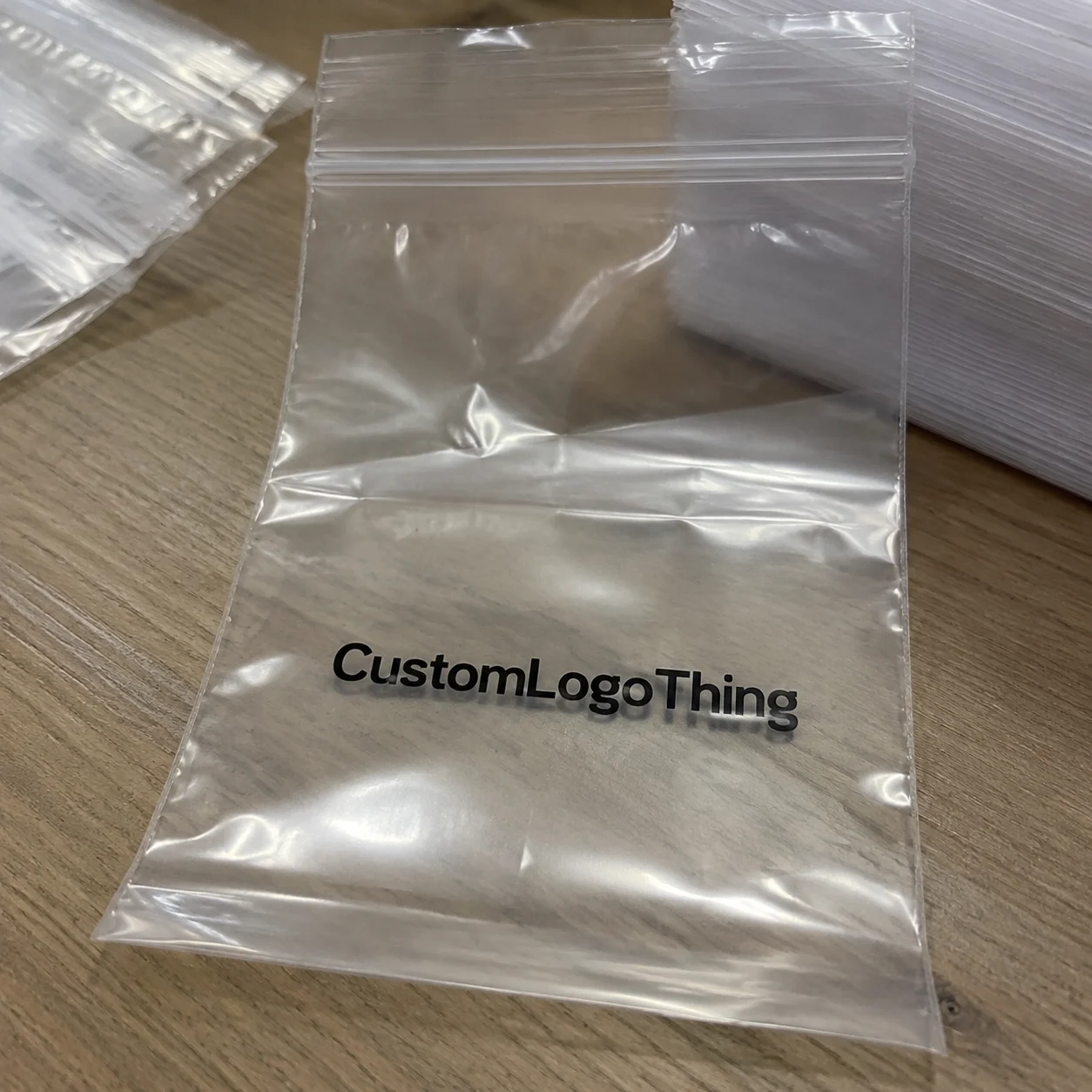
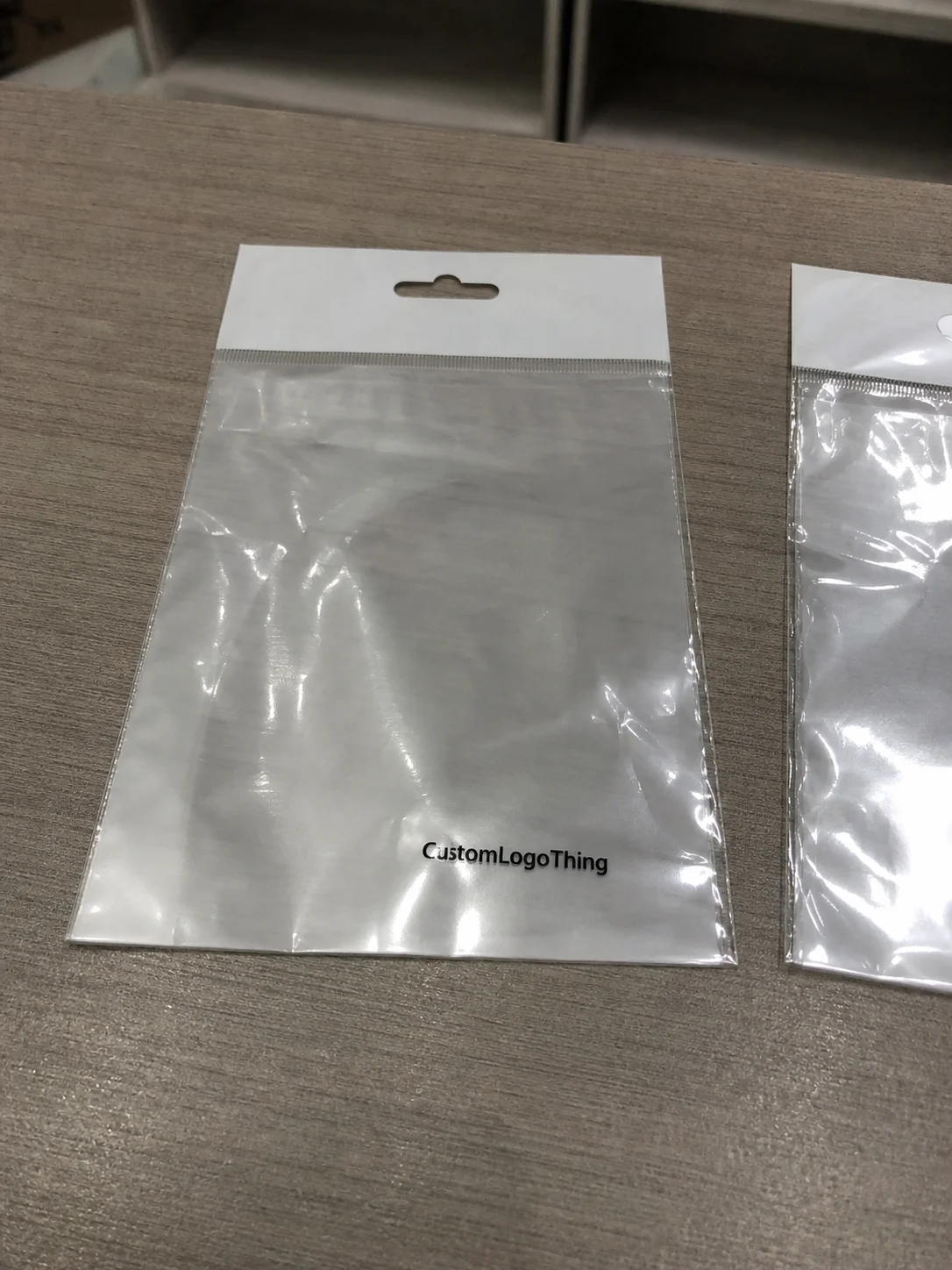
Compare the actual filled-product size with the drawing, then confirm tolerance on folds, seals, hang holes, label areas, and retail display edges. Reserve space for logos, QR codes, warning copy, and material claims before decorative graphics fill the panel.
Quote comparison points
Review material grade, print process, finish, sampling route, tooling charges, carton quantity, and freight assumptions side by side. A quote is only useful when the supplier can repeat the same color, closure quality, and packing count on the next order.
Why Your Current Poly Mailer Pricing Might Be Costing You Thousands
The fundamental problem with poly mailer price per unit calculation isn't math. Buyers look at quoted prices without understanding what actually drives those numbers. When I ask procurement managers how they calculate their packaging costs, most describe a process that ignores shipping weight, dimensional pricing, and tiered volume breaks entirely. If you're not breaking down every component of your poly mailer order into a fully-loaded cost structure, you're likely overpaying by 40 to 60 percent. This happens repeatedly with clients who thought they were getting competitive rates from their existing suppliers. The unit price looked reasonable in isolation. But when we ran the actual landed cost—including freight from their supplier in Dongguan's Songshan Lake Industrial Park to their Fresno, California warehouse—the true expense told a completely different story. The difference between exact and approximate unit calculations compounds dramatically at scale. A $0.02 discrepancy per unit becomes $20,000 when you're ordering a million mailers. Most buyers don't run that math until after they've committed to annual supply agreements that lock in unfavorable pricing. Hidden costs in shipping weight and dimensional sizing affect true per-unit expense in ways that surprise even experienced procurement teams. Poly mailers are lightweight individually, but when you're importing 50,000 units, those ounces add up. A large 14.5" x 19" bubble-lined mailer weighs approximately 2.1 ounces. For an order of 25,000 units, you're moving over 3,200 pounds of packaging material. Freight pricing on that volume follows dimensional weight formulas that carriers like UPS and FedEx publish publicly—and suppliers know exactly how to structure quotes to obscure these charges. Pull your last three poly mailer invoices and compare them line by line. Look for setup fees, tooling charges, color matching costs, and freight terms. If you see vague language like "shipping included" or "FOB destination," dig deeper. Those terms often mask significant cost shifting that inflates your actual poly mailer price per unit by 15 to 25 percent.Understanding Poly Mailer Types and Their Price Implications
Standard polyethylene mailers versus recycled content options represent a fundamental pricing fork that most buyers don't evaluate thoroughly. Virgin polyethylene mailers in standard 2-mil thickness typically run $0.08 to $0.14 per unit for plain versions in standard sizes like 10" x 13" or 12" x 15.5". These are the workhorses of e-commerce shipping—lightweight, water-resistant, and economical. Recycled content mailers command a premium that varies by percentage. A mailer with 30 percent post-consumer recycled content might add $0.01 to $0.03 per unit. Move to 80 or 100 percent recycled, and you're looking at $0.03 to $0.08 premiums depending on your supplier and order volume. Here's what most people miss: recycled content pricing fluctuates with plastic resin markets, sometimes making the premium nearly disappear during periods when virgin polyethylene prices spike. Custom printed poly mailers introduce an entirely different economic calculation. Setup costs for a single-color print typically range from $300 to $600. For two-color work, expect $500 to $1,200. This setup fee dilutes dramatically as order quantities increase. At 5,000 units, that $500 setup adds $0.10 per unit. At 50,000 units, the same setup contributes just $0.01 per unit. For businesses with consistent shipping volumes and brand requirements, custom printing often makes financial sense once you're above 10,000-unit annual consumption. Below that threshold, plain mailers with branded stickers or printed packing slips usually provide better economics. Thickness variations create another decision matrix. Standard 2-mil mailers work fine for soft goods, accessories, and items under two pounds. Bump up to 2.5-mil for additional tear resistance, and you'll typically pay 12 to 18 percent more per unit. Heavy-duty 4-mil options—necessary for sharp-cornered products or packages exceeding 10 pounds—can cost double the standard thickness. I've seen businesses spec 4-mil mailers for lightweight apparel shipments simply because "heavier feels more protective." That's unnecessary spending that compounds across large orders. Bubble-lined mailers add another layer of cost calculation. The bubble cushioning material inside adds roughly $0.12 to $0.25 per unit depending on size and bubble type. For fragile items like cosmetics, electronics accessories, or ceramics, this protection justifies the premium. For most clothing and soft goods? A standard poly mailer with proper folding techniques provides sufficient protection at significantly lower cost.Poly Mailer Specifications That Directly Affect Your Bottom Line
Size selection influences manufacturing efficiency pricing in ways that aren't immediately obvious. Standard industry sizes like 6" x 9", 9" x 12", 10.5" x 15", and 14.5" x 19" are common because they align with machinery setups at most manufacturing facilities. When you request non-standard dimensions, you're often charged a premium because your order runs on different equipment or requires setup adjustments. I've negotiated custom sizes for clients, and the price jumps consistently when we stepped outside industry standard cut sizes. The American Society for Testing and Materials (ASTM) publishes guidelines on poly film testing that reputable suppliers follow. Specifically, ASTM D1709 measures impact resistance using a free-falling dart method, while ASTM D882 tests tensile strength and elongation properties. These standards cover puncture resistance, tensile strength, and seal integrity. Understanding these specifications helps you evaluate whether you're paying for unnecessary performance characteristics. A 50-pound burst strength might matter for industrial parts but represents overkill for lightweight apparel. Seal type selection affects both functionality and cost. Peel-and-seal closures—where you pull a strip to expose adhesive—add approximately $0.01 to $0.03 per unit over basic adhesive strips. Self-adhesive with removable tape adds similar cost. Heat-seal options, where you apply heat to fuse the opening, eliminate any peel component but require compatible equipment on your packing line. For most e-commerce operations, peel-and-seal provides the best balance of consumer experience and cost efficiency. Color and printing specifications interact with minimum order quantities in ways that catch many buyers off guard. Plain white or black mailers typically carry the lowest MOQs—often 1,000 to 2,500 units from domestic suppliers like those in Los Angeles' City of Industry or Chicago's O'Hare industrial corridor. Custom colors require dye lot minimums that push MOQs to 5,000 or higher. Process printing for photographic or complex artwork requires even larger runs to justify the plate-making and setup investment. If you want a specific brand-matched color like Pantone 187C for your logo, expect to pay for color matching runs that can add $200 to $500 before you print a single mailer. Tamper-evident features appeal particularly to sellers of high-value items, cosmetics, and health products. Resealable adhesive, security patterns that tear visibly upon opening, and barcoded void patterns each add cost but provide customer confidence. For businesses shipping products where tampering concerns exist, these features can reduce returns and customer complaints substantially—sometimes justifying their cost even when the per-unit premium seems steep.How Do You Calculate the True Poly Mailer Price Per Unit?
The complete poly mailer price per unit calculation requires combining several distinct cost components. Here's the formula I use with clients: True Unit Cost = (Material Cost + Labor Cost + Overhead Allocation + Setup Fees/Unit + Tooling Amortization) + (Freight Cost/Unit) + (Handling and Storage/Unit) Let's break each component down: Material cost per unit derives from the polyethylene resin price plus any additives like recycled content, colorants, or UV inhibitors. Resin costs fluctuate based on ethylene market pricing, typically ranging between $0.05 and $0.09 per unit for standard 2-mil mailers under 14 inches wide. As of Q3 2024, domestic high-density polyethylene (HDPE) resin runs approximately $0.98 to $1.05 per pound, which translates to roughly $0.05 to $0.07 per unit for standard mailers. Thicker gauges, larger sizes, and special additives increase this component proportionally. Labor and overhead allocation varies significantly between domestic and offshore production. U.S. manufacturing typically assigns $0.02 to $0.05 per unit for labor and facility costs at facilities in Southern California's packaging corridor or in the Dallas-Fort Worth industrial zone. Offshore facilities in Shenzhen's Baoan district, Vietnam's Hai Phong export processing zone, or India's Tirupur textile hub often show lower figures, but remember that lower labor costs don't always translate to lower final pricing when freight, duties, and quality control expenses factor in. Setup fees represent one-time costs amortized across your order quantity. A $600 setup fee divided by 5,000 units adds $0.12 per unit. The same setup fee divided by 50,000 units adds just $0.012 per unit. Failing to include setup fees in your poly mailer price per unit analysis leads to wildly inaccurate cost projections. Now let me walk through three real calculation scenarios based on pricing I've negotiated: **Scenario A: Small E-Commerce Business** Order: 3,000 units of plain white 10" x 13" poly mailers, 2.5-mil thickness Quoted price: $0.19 per unit Setup fee: None (standard size, plain) Freight quoted: $285 (shipped from supplier's City of Industry, California warehouse) Calculation: ($0.19 × 3,000) + $285 = $570 + $285 = $855 total True cost per unit: $0.285 **Scenario B: Mid-Size Apparel Brand** Order: 25,000 units of 14.5" x 19" bubble-lined mailers, single-color logo print Quoted price: $0.42 per unit Setup fee: $450 (printing plate and color matching) Freight: $1,200 (palletized shipment to East Coast warehouse) Calculation: ($0.42 × 25,000) + $450 + $1,200 = $10,500 + $450 + $1,200 = $12,150 total True cost per unit: $0.486 **Scenario C: Large Fulfillment Operation** Order: 100,000 units of 12" x 15.5" standard mailers, 2-mil, plain black Quoted price: $0.11 per unit Setup fee: None (high-volume standard order) Freight: $2,800 (full truckload, LTL rates from Shenzhen factory to Long Beach port to Dallas distribution center) Calculation: ($0.11 × 100,000) + $2,800 = $11,000 + $2,800 = $13,800 total True cost per unit: $0.138 Notice how Scenario A's true per-unit cost ($0.285) is 50 percent higher than the quoted price. That's not unusual for small orders. Scenario C shows how volume dramatically improves your position—the quoted $0.11 looks competitive, but the true landed cost of $0.138 is still reasonable given the scale. | Order Size | Quoted Unit Price | Typical Setup Fee | Freight Estimate | True Landed Cost | Effective Premium | |------------|------------------|-------------------|------------------|------------------|-------------------| | 2,500 units | $0.22 | $350 | $180 | $0.332 | 51% | | 5,000 units | $0.18 | $400 | $320 | $0.244 | 36% | | 10,000 units | $0.15 | $450 | $580 | $0.203 | 35% | | 25,000 units | $0.13 | $500 | $1,100 | $0.177 | 36% | | 50,000 units | $0.11 | $550 | $1,900 | $0.149 | 35% | These numbers illustrate why understanding volume discount thresholds matters. The biggest jumps occur between 2,500 and 10,000 units. After that, incremental improvements become smaller. For most growing businesses, targeting the 10,000-unit order size provides the best balance between cash flow impact and per-unit economics. The sweet spot calculation also depends on your storage capacity and turnover rate. If you have warehouse space to store 25,000 units and your product sales cycle supports that volume within 90 days, ordering at that tier makes sense. If your business is seasonal or you're launching new products with uncertain demand, smaller more frequent orders protect against dead inventory even if the per-unit cost runs slightly higher. One more critical factor: dimensional pricing. Carriers like UPS and FedEx calculate shipping costs based on dimensional weight when packages exceed a certain size-to-weight ratio. A 14" x 18" poly mailer containing lightweight items might weigh 0.5 pounds but have dimensional weight calculated as 3 pounds based on its volume. This affects your shipping costs per order, which feeds back into your true landed cost per unit for completed shipments.From Order to Delivery: What Affects Your Timeline and Costs
Production lead times vary substantially between supplier types and locations. Domestic manufacturers in Southern California, Texas, or New Jersey typically promise 10 to 15 business days from artwork approval to shipment. Offshore suppliers in Guangdong Province, Vietnam, or Bangladesh commonly quote 25 to 40 days for standard orders, with expedited production available for premium pricing. Suppliers advertise 7-day turnaround times, but those claims often exclude setup periods, material procurement, or shipping transit. Rush orders impact your poly mailer price per unit analysis significantly. When clients have needed inventory quickly, I've negotiated expedited production runs that added 15 to 25 percent to the unit price plus premium freight charges. A standard $0.14 per unit order might jump to $0.19 per unit with rush production, plus $800 to $1,200 in air freight versus $300 in ocean freight. Suddenly that "rush" decision costs $6,000 to $8,000 extra on a 50,000-unit order. Warehouse fulfillment versus drop-shipping cost structures represent another trade-off. If your supplier offers warehousing services—holding your inventory and shipping directly to your customers as orders come in—you pay a storage fee plus per-order fulfillment charges. These typically run $0.05 to $0.12 per unit for storage plus $0.15 to $0.40 per order pick-and-pack. For businesses with unpredictable demand or limited warehouse space, these services provide flexibility. For consistent high-volume shippers, maintaining your own inventory eliminates these fees and provides better per-unit economics. Just-in-time ordering strategies help minimize carrying costs but require accurate demand forecasting. If you order 25,000 units and your sales drop 30 percent unexpectedly, you're holding $3,000 to $5,000 in excess packaging inventory. That money sits in your warehouse instead of generating returns elsewhere. Working with suppliers who offer partial shipments—shipping 10,000 units initially and scheduling 15,000 follow-up units for later delivery—can hedge this risk while maintaining some volume discount benefits. Typical minimum order quantities range from 1,000 units for plain standard sizes from domestic suppliers to 5,000 or 10,000 units for custom specifications or offshore production. Some suppliers have introduced modular pricing programs that allow smaller initial orders at near-bulk rates, with commitments to reach total quantities over specified timeframes. I've found these arrangements particularly valuable for growing businesses that want bulk pricing but can't justify the full upfront investment. Negotiating MOQ flexibility often comes down to building relationships and demonstrating growth potential. When I've worked with suppliers for multiple orders and shown consistent ordering patterns, they've relaxed minimum quantities on subsequent orders. A supplier who required 5,000-unit minimums initially might accept 2,500 units for a follow-up order when they understand your inventory management constraints.Why Specific Suppliers Outperform Generic Brokers on Unit Economics
Direct manufacturer relationships versus distributor markups represent a fundamental choice that affects both pricing and service quality. Brokers and distributors add margin—typically 15 to 30 percent on top of manufacturer pricing—to cover their costs and profit. When you purchase through a broker, you're paying for their overhead, sales team, and profit margin without necessarily receiving additional value. I've toured manufacturing facilities in Shenzhen's Baoan district at companies like Changhong Plastic Packaging Co., in Ho Chi Minh City's export processing zones in District 7, and in Southern California's industrial corridors around Rancho Cucamonga and Ontario. The cost structures differ dramatically. A Shenzhen factory might quote $0.08 per unit for a standard mailer, while a domestic California manufacturer quotes $0.14 for identical specifications. But when you add ocean freight ($0.02 to $0.03 per unit), import duties (6.5 percent for polyethylene articles under HTS 3923.21), quality control inspection costs, and the tedium of managing offshore relationships, the price advantage often shrinks to 10 to 15 percent. Quality consistency prevents costly shipping damage replacements that far exceed any per-unit savings. I worked with a company that switched to a cheaper offshore supplier for their 12" x 15.5" mailers. The unit price dropped $0.03. Within two months, they reported a 40 percent increase in damaged packages during transit. Each damaged shipment averaged $45 in replacement product and reshipping costs. On their volume of 8,000 packages monthly, that translated to roughly $14,400 in monthly losses—far exceeding the $240 monthly packaging savings. Customization capabilities without excessive setup fee dilution matter for businesses that want to evolve their packaging over time. Generic brokers often lack in-house printing capabilities and must subcontract custom work to third parties. This adds coordination costs and extends lead times. Suppliers with integrated manufacturing—like those with facilities in the Dallas Design District or near Chicago's O'Hare—can often accommodate design changes with minimal additional setup, amortizing tooling investments across multiple customers and product lines. Dedicated account support prevents expensive ordering errors that waste money and time. When your account representative understands your business, they catch potential problems before they become expensive mistakes. I've seen representatives identify when custom sizes would create dimensional weight issues with common carrier shipping classes, saving clients thousands in avoided shipping cost overruns. Production capacity matters for long-term pricing stability. Suppliers with limited manufacturing capacity might offer attractive prices initially but struggle to fulfill during peak seasons or when your volume grows. This creates supply risk—you might face stockouts right when you need inventory most (Q4 e-commerce season) or be forced into expensive rush orders. Established suppliers with demonstrated capacity headroom provide pricing reliability that generic brokers simply cannot match. The International Safe Transit Association (ISTA) publishes testing protocols that help businesses verify their packaging performs adequately during shipping. Specifically, ISTA Procedure 3A covers packages weighing up to 150 pounds and tests for shock, vibration, and compression. When evaluating suppliers, ask whether their mailers have been ISTA certified. This isn't a guarantee of perfect performance, but it indicates the supplier takes quality seriously enough to invest in third-party testing.Frequently Asked Questions About Poly Mailer Pricing
What is the typical price range for poly mailers per unit?
Plain poly mailers typically range from $0.08 to $0.35 per unit depending on size and thickness. Standard 2-mil mailers in common sizes like 10" x 13" or 12" x 15.5" usually fall between $0.08 and $0.14 for plain versions. Thicker 2.5-mil or 4-mil mailers range from $0.12 to $0.28. Custom printed options generally add $0.02 to $0.15 per unit based on design complexity and number of colors. Bubble-lined mailers run $0.25 to $0.75 per unit due to the added cushioning material. True landed cost requires adding shipping, which typically represents 8 to 15 percent of unit price for standard orders under 10,000 units.
How do minimum order quantities affect poly mailer price per unit?
Orders under 1,000 units often carry 50 to 100 percent price premium over standard MOQs because setup costs get spread across fewer units. Most suppliers offer 2,500 to 5,000 unit MOQs at baseline pricing for plain standard sizes. Significant price breaks typically occur at 10,000 and 25,000-plus unit thresholds, with per-unit savings of 15 to 25 percent compared to smaller orders. Some suppliers now offer modular pricing programs that provide near-bulk rates for smaller quantities in exchange for commitment to reach total volume over a defined period, typically 6 to 12 months.
How is shipping weight calculated for poly mailer orders?
Most poly mailers ship by case count rather than weight for orders under 10,000 units. Case quantities vary by size but typically range from 100 to 500 mailers per case. Actual weights range from approximately 0.2 ounces for small 6" x 9" mailers to 2.5 ounces for large 24" x 24" bubble-lined versions. For orders exceeding 50 cases, LTL (less-than-truckload) freight becomes cost-effective compared to parcel shipping. Dimensional weight pricing applies to lightweight bulky shipments—carriers calculate charges based on package volume rather than actual weight when dimensional weight exceeds actual weight.
Can I get accurate poly mailer price per unit quotes without a long inquiry process?
Reputable suppliers provide instant or same-day quotes based on size, quantity, and customization specifications. When requesting quotes, ask for itemized breakdowns showing base unit price, setup fees, tooling charges, and shipping estimates separately. Get quotes from three suppliers using identical specifications for valid comparison. Watch for quotes that omit setup fees, use vague quantity ranges like "10,000 to 50,000 units," or bundle shipping costs without transparency. A detailed quote should specify exact dimensions, thickness, colors, printing method, and delivery timeline.
What factors cause poly mailer prices to fluctuate after initial quotes?
Polyethylene resin market volatility affects raw material costs, typically shifting 5 to 15 percent quarterly based on ethylene market conditions. Seasonal demand surges during Q4 e-commerce boom periods can tighten supply and raise prices 10 to 20 percent from September through December. Fuel and transportation costs impact shipping estimates, especially for large orders where freight represents significant total cost. Currency fluctuations affect pricing for domestically-manufactured mailers that use imported materials—most U.S. poly mailer manufacturers source resin from global markets. Building relationships with suppliers who offer price lock agreements for annual volumes provides protection against short-term volatility.
After fifteen years in this industry, I've seen countless businesses treat packaging as a commodity purchase rather than a strategic cost driver. That mindset costs them money every single order. The poly mailer price per unit calculation isn't complicated, but it requires attention to detail and willingness to look beyond the quoted per-unit price. Your next step should be straightforward: request detailed quotes from at least three suppliers using identical specifications. Break down each quote into its component parts. Calculate your true landed cost including all fees and freight. Then evaluate whether your current supplier relationship justifies any premium you're paying. If you want to explore how these calculations apply to your specific packaging needs, take a look at Custom Packaging Products or request a quote on Custom Poly Mailers with your exact specifications. Getting precise numbers in front of you beats any general guidance I can provide. The goal is simple: pay what you should pay, no more. For additional reading on sustainable packaging standards, the Federal Trade Commission's Green Guides provide useful context on environmental claims that affect recycled content specifications.