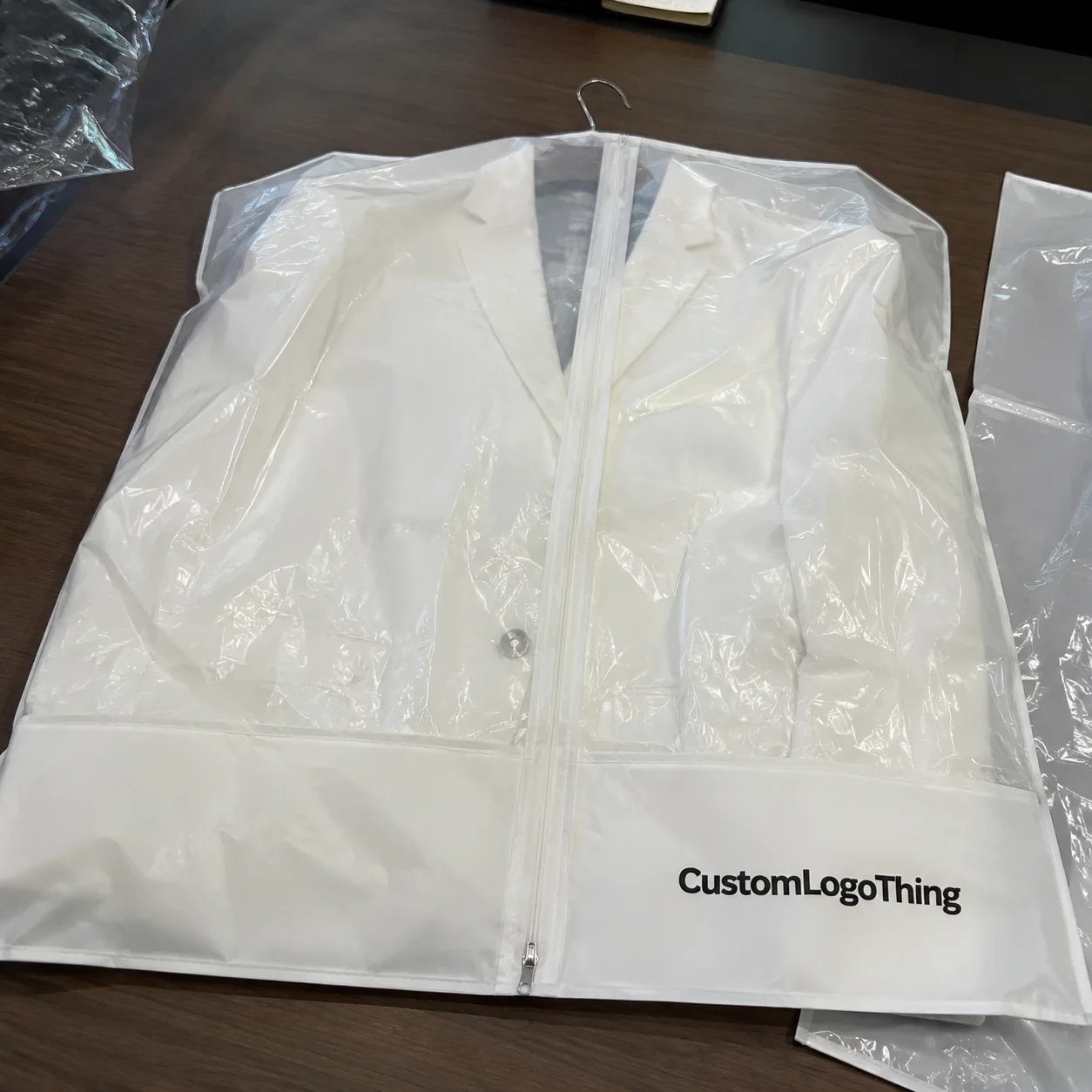
Buyer Fit Snapshot
| Best fit | Poly Mailers Affordable projects where brand print, material claims, artwork control, MOQ, and repeat-order consistency need to be specified before quoting. |
|---|---|
| Quote inputs | Share finished size, material target, print colors, finish, packing count, annual reorder estimate, ship-to region, and any compliance wording. |
| Proofing check | Approve dieline scale, logo placement, barcode or warning zones, color tolerance, closure strength, and carton packing before bulk production. |
| Main risk | Vague material claims, crowded artwork, missing packing details, or unclear freight terms can make a low unit price expensive after revisions. |
Fast answer: Poly Mailers Affordable: Material, Print, Proofing, and Reorder Risk should be specified like a repeatable production item. The safest quote records material, print method, finish, artwork proof, packing count, and reorder notes in one written spec.
Production checks before approval
Compare the actual filled-product size with the drawing, then confirm tolerance on folds, seals, hang holes, label areas, and retail display edges. Reserve space for logos, QR codes, warning copy, and material claims before decorative graphics fill the panel.
Quote comparison points
Review material grade, print process, finish, sampling route, tooling charges, carton quantity, and freight assumptions side by side. A quote is only useful when the supplier can repeat the same color, closure quality, and packing count on the next order.
Poly mailers affordable does not have to mean flimsy, inconsistent, or a little bit terrifying, which is how I once described a bargain-bin shipment after the third seam split in a row. I’ve watched brands chase the lowest unit price, then pay for crushed corners, split seams, and reshipments that blew past the savings by week two. If you sell apparel, books, or soft goods, poly mailers affordable can be the smartest packaging line item on your sheet—if you judge it by landed cost, not by the sticker price on a quote. In one Shenzhen sourcing visit, a buyer tried to save $0.01 per unit on a 2.0 mil mailer and ended up replacing 1,800 damaged parcels out of 48,000 shipments, which turned a tiny discount into a very expensive lesson.
That distinction matters more than people admit. A mailer at $0.06 that fails 3% of the time is often more expensive than a mailer at $0.09 that performs cleanly through sortation, delivery, and the occasional rough-handling route. Honestly, I think this is where a lot of buyers get tripped up: they compare quotes like they are comparing grocery prices, then act surprised when the “cheap” option boomerangs back as returns. In my experience, the brands that win on packaging economics are not the ones chasing the cheapest-looking bag. They are the ones that buy poly mailers affordable in a way that lowers postage, minimizes damage, and keeps inventory simple across 5,000-unit and 25,000-unit buying cycles.
I’ve seen this play out on a factory floor in Shenzhen and in Dongguan, standing next to a co-extrusion line where a buyer insisted on ultra-thin material to shave fractions of a cent. Three months later, that same brand came back after a spike in returns. The savings had vanished. I remember thinking, very clearly, “Well, that was an expensive way to save a penny.” That is why I treat poly mailers affordable as a total system: material, thickness, closure, print, quantity, freight, and how well the size fits the product. On one line in Zhejiang province, a change from 2.5 mil to 3.0 mil added only about 6% to the unit cost but cut seam complaints by nearly a third.
Poly Mailers Affordable: What Buyers Miss First
The cheapest-looking mailer often costs more after you account for damage, postage creep, and replacements. That is the first mistake I see. A mailer that is 12 inches by 15.5 inches but too loose for a folded hoodie can push the parcel into a larger dimensional tier. That extra postage hits every shipment, not just the rare failure. So when buyers ask for poly mailers affordable, I always ask a different question: affordable over what volume, and under what shipping profile? If you ship 8,000 parcels a month from a warehouse in Dallas or Columbus, a 1-ounce weight difference can change monthly postage by hundreds of dollars.
Affordability starts with the package doing its job on the first attempt. A lightweight polyethylene mailer can reduce outbound shipping weight by ounces, which sounds minor until you multiply it by 5,000 or 25,000 shipments. For a brand mailing T-shirts at scale, that difference can be the gap between holding margin and bleeding it. With poly mailers affordable, the trick is to save on packaging without creating a hidden cost elsewhere in the order flow. A 10x13-inch mailer for folded tees may cost $0.07 in a 10,000-piece run, but if it trims postage by $0.12 per parcel, the math stops being decorative and starts being real.
Here’s the part many buyers miss: a packaging change rarely affects only the packaging. It touches labor, warehouse space, freight, returns, and even customer service time. I once sat through a supplier negotiation where a brand’s operations lead showed me a spreadsheet with three columns: unit cost, defect cost, and reship cost. The “cheapest” supplier lost badly once the numbers were expanded. The winning option was still poly mailers affordable, just not in the way the first quote suggested. In that case, the quote moved from $0.058 to $0.083 per unit, but the return rate fell from 2.7% to 0.9% over a 60-day test.
Affordable should mean dependable at scale. If you are shipping soft goods, accessories, or flat books, the material can be thin enough to keep costs under control and still strong enough to resist tears and moisture. The best buyers think like operators. They compare the full order lifecycle, not a single line item. A 2.5 mil co-extruded bag made in Shenzhen or Ningbo can be the right answer for a sweatshirt line, while a 3.5 mil option may be the better fit for heavier knitwear shipped through winter weather in Chicago or Minneapolis.
From an operational standpoint, poly mailers affordable work because they are flat, light, and efficient to store. Unlike corrugated boxes, they do not occupy much shelf space, and inbound freight is usually easier to manage because you are not moving air. That matters for small businesses and established brands alike. The math improves when the packaging is matched to the product instead of overbuilt for it. A pallet of 100,000 mailers can fit in roughly 8 to 10 standard warehouse positions, while an equivalent box program can consume far more cubic storage in a 20,000-square-foot facility.
“We stopped judging mailers by unit price alone,” a client told me after switching to a better spec. “Once we tracked breakage and postage together, the supposedly expensive option was actually the cheaper one.”
That is the mindset I recommend. If you want poly mailers affordable, you are really asking for packaging that is cheap to buy, cheap to ship, and cheap to trust. A difference of $0.02 per unit can look trivial at 500 pieces, then become $200 at 10,000 pieces and $1,000 at 50,000 pieces, which is exactly why the unit quote should never be read in isolation.
Product Details: What Makes Poly Mailers Affordable
Poly mailers are usually made from polyethylene film, typically a co-extruded blend that can balance outer printability with inner toughness. That structure keeps production costs lower than rigid packaging because the raw material is thin, the forming process is fast, and the finished product ships flat. That is one reason poly mailers affordable tend to outperform boxes for non-fragile e-commerce items. In practical terms, a common build might use a 60% LDPE outer layer and a 40% coextruded inner layer, with final film thickness between 2.5 mil and 3.5 mil depending on the product line.
There are several common constructions. Standard poly mailers use a single film structure and are ideal for basic apparel shipping. Co-extruded mailers use multiple layers, which can improve tear resistance and puncture performance while keeping weight low. Recycled-content mailers can reduce virgin resin use, and in some buying programs they also support sustainability targets. Custom-printed versions add branding, but the more colors and coverage you request, the more the price rises. If you need poly mailers affordable, keep the structure practical and the print smart. A one-color logo on a 10x13-inch mailer made in Hangzhou can be priced far more aggressively than a four-color full-bleed design from the same plant.
Closure type matters too. Most mailers use a peel-and-seal adhesive strip with a tamper-evident flap. Some include a second adhesive strip for returns, which is useful for apparel brands managing exchanges. That extra strip adds value, but it also adds a small cost. If your category has low return frequency, you may not need it. If you sell sizes that often exchange, it can be worth the incremental spend. In other words, poly mailers affordable depends on the use case, not just the catalog description. A single return strip can add about $0.01 to $0.03 per unit in a 10,000-piece run, depending on film and adhesive grades.
Opacity is another practical issue. Fully opaque mailers protect privacy and branding. Translucent versions may cost a little less, though they are not always right for consumer-facing shipments. Tear resistance and weather protection are equally important. A mailer that survives a light drizzle is not the same as one that protects a garment through a wet loading dock and a conveyor belt transfer. When I visited a Midwest fulfillment center in Indianapolis, I watched a forklift tire nick a stack of mailers near a dock door. The mailers that held up had a slightly thicker film and better side seals. The difference was maybe 8% on paper, but it saved a pile of claims later. In one run of 20,000 mailers, the thicker side seal reduced split-seam incidents from 74 to 19.
Design choices drive cost fast. Add a full-coverage printed surface and you increase ink usage, setup time, and quality-control checks. Increase thickness from 2.5 mil to 3.5 mil and material cost rises. Add gussets and you change the converting process. Use an oversized format and you may increase postage or waste space. The easiest way to keep poly mailers affordable is to match the design to the shipment, not the mood board. A 350gsm C1S artboard insert in a mailer program, for example, may be unnecessary if the shipment is already protected by a 3.0 mil opaque bag.
Best-fit categories are straightforward: T-shirts, leggings, socks, scarves, lightweight accessories, books, and other non-fragile e-commerce shipments. If the product can be compressed and does not need crush protection, a mailer usually beats a box on cost and storage efficiency. For heavier or sharp-edged items, I would get more selective and review the film thickness and seam strength carefully. A 1.5-pound denim item is a different animal from a 6-ounce cotton tee, and the wrong bag will show that difference quickly.
For buyers comparing options, this table helps separate the basics from the extras:
| Mailer Type | Typical Use | Cost Profile | Best For |
|---|---|---|---|
| Standard polyethylene mailer | Basic shipping | Lowest | Apparel, soft goods, low-risk orders |
| Co-extruded mailer | Higher strength needs | Moderate | Brands wanting more tear resistance |
| Recycled-content mailer | Eco-focused programs | Moderate | Sustainability-forward brands |
| Custom-printed mailer | Branding and marketing | Higher | Established brands, direct-to-consumer shipments |
That table is the practical starting point. The right answer for poly mailers affordable depends on whether your priority is cost, strength, branding, or a careful mix of all three. A brand shipping 12,000 orders a month from Atlanta may choose a plain 2.5 mil stock bag, while a beauty brand in Los Angeles may pay more for a printed 3.0 mil option because presentation matters at the doorstep.
For more packaging options, I often point buyers to Custom Packaging Products when they are building a broader shipping program, and to Custom Poly Mailers when they are ready to compare construction styles directly.
Specifications That Control Price and Performance
Thickness, measured in mil, is one of the first specs I review. A 2.0 mil mailer may be fine for lightweight clothing in a controlled warehouse environment, while a 3.0 mil or 3.5 mil option may be safer for heavier garments, multi-item bundles, or longer shipping routes. Tolerance also matters. If a supplier quotes 3.0 mil but runs thin in the tolerance band, you are paying for a spec you may not actually receive. With poly mailers affordable, consistency is part of the deal. I ask for a thickness tolerance of plus or minus 0.2 mil whenever the order is above 10,000 units, because the savings disappear fast if the film wanders.
Dimensions affect both postage efficiency and inventory sanity. A mailer that is too large wastes material and can create postage creep. One that is too small causes stuffing, poor sealing, or returns from fit issues. I’ve been in buyer meetings where a one-inch width change solved more problems than a price cut ever could. The lesson is simple: the right size often makes poly mailers affordable by reducing waste across the chain. In one apparel program I reviewed, moving from 14x19 inches to 12x15.5 inches cut dimensional weight by 0.4 pounds per parcel and saved roughly $0.18 on each shipment from a New Jersey fulfillment center.
Adhesive strength is another hidden lever. A weak seal can fail in cold weather or after repeated handling. A strong peel-and-seal strip should hold the flap closed without requiring excessive pressure. I ask suppliers how they test adhesion, because the answer reveals a lot about quality discipline. ASTM-related testing practices and ISTA transit considerations are useful references here; for transport testing guidance, the International Safe Transit Association is a good source at ista.org. For broader packaging and materials context, the Packaging School and industry resources can also be helpful. A plant that tracks peel strength in grams per inch is usually more reliable than one that just says “strong adhesive” in a sales deck.
Print method changes cost and lead time. A one-color logo is usually faster and cheaper than a four-color full-bleed design. Digital print can suit smaller runs and frequent design updates, while flexographic printing is often more economical at higher volumes. If your artwork has heavy ink coverage, expect the quote to reflect that. The more coverage, the more drying, inspection, and setup attention. That is why poly mailers affordable and custom branding only stay friendly when design choices are restrained and intentional. A two-color logo on a matte-white mailer from Guangdong can often be turned around faster than a high-coverage pattern that needs longer curing time.
Which specs are worth paying for? I would prioritize seal integrity, adequate thickness, and the exact size needed for your product. Which specs can you trim? Decorative extras, unnecessary print colors, oversized formats, and return strips you will never use. In short: pay for protection, not for noise. For a 15,000-piece order, shaving $0.02 by cutting a useless feature can free up $300, but a better seal can save twice that in avoided returns.
Simple comparison framework
- Standard poly mailers: best for cost control, basic branding, and low-risk shipments.
- Custom poly mailers: best when your brand presentation matters and your volume supports the setup.
- Heavier gauge options: best for products that need more tear resistance or more stable handling.
- Recycled-content options: best when sustainability targets matter and the spec still meets transit needs.
One buyer I worked with insisted on a 4-color exterior for a simple sock line. We cut it back to a single PMS color with a clean black interior. The unit cost dropped, the lead time shortened, and the mailers still looked intentional. That is how poly mailers affordable should be designed: disciplined, not bare-bones. In that case, production in Ningbo moved from a 20-business-day schedule to 14 business days after the print setup was simplified.
Poly Mailers Affordable: Pricing, MOQ, and Order Tiers
Pricing is usually driven by five variables: material, size, print complexity, quantity, and shipping. A larger mailer uses more resin. A custom print adds setup. A lower quantity spreads fixed costs across fewer units. Freight can be a major swing factor if you are importing by sea or air. So when buyers ask for poly mailers affordable, I start by mapping those variables instead of throwing out a single number that may not hold. A 10,000-piece order shipped from Shenzhen to Long Beach can look very different from a 2,000-piece airfreight order sent to Toronto.
Here is a realistic pricing logic view for typical e-commerce orders. Stock mailers in standard sizes usually cost less at low volumes because the tooling and inventory are already in place. Custom Printed Mailers become more attractive as quantity rises, because the setup cost gets diluted across the run. If you are ordering 500 pieces, custom printing may feel expensive. At 10,000 pieces, the per-unit picture can change sharply. That is why poly mailers affordable should always be read alongside quantity tiers. In many factories, a run at 5,000 pieces might price at about $0.15 per unit, while 20,000 pieces can drop closer to $0.09 or $0.10 depending on thickness and print.
| Order Type | Typical MOQ | Relative Unit Cost | Best Use Case |
|---|---|---|---|
| Stock unprinted mailers | Low | Lowest | Small business launches, trial runs |
| Semi-custom stock with label or small print | Low to moderate | Low to moderate | Brands wanting identity without full setup |
| Fully custom printed mailers | Moderate to high | Moderate to low at scale | Stable monthly volume, brand-driven shipping |
| Heavy-duty custom mailers | Moderate to high | Higher | Higher-risk shipments or premium product lines |
MOQ is not a trap; it is a cost structure. Suppliers use it to cover setup, film conversion, printing, and packaging. Larger quantities usually reduce unit pricing because the fixed components spread out. If a supplier gives you a very low MOQ, check whether the unit price is elevated to compensate. That tradeoff is normal. It is also why poly mailers affordable can mean two different things depending on whether you care more about cash flow or per-unit efficiency. A brand in Austin ordering 1,000 units may choose a higher unit price to preserve cash, while a brand in Miami ordering 25,000 units can usually push the price far lower.
Sample orders deserve special attention. I always recommend testing samples before a custom run, especially if the product is new or the shipping route is rough. A sample pack can reveal seal quality, opacity, print clarity, and fit. That small spend often prevents expensive mistakes. A lot of buyers want to skip this step because it feels slow. Honestly, that is where the expensive errors start. A sample approval stage usually adds 2 to 4 business days, but that is a small trade for avoiding a 20,000-piece mistake.
Hidden costs can sneak in. Setup fees, printing plates, freight surcharges, color matching, and packaging cartons all affect the final number. For custom printed jobs, some suppliers charge for each extra color or for special film constructions. If the quote seems unusually cheap, ask what is excluded. Good quotes are transparent about scope, because transparent quotes are what make poly mailers affordable in the real world. I have seen a “cheap” quote from a factory in Yiwu jump by 18% after plate charges, edge trimming, and export cartons were added.
For small brands, I usually recommend one of three paths: stock mailers for testing demand, semi-custom mailers for modest branding, or a tightly scoped custom run once monthly volume is predictable. For high-volume shippers, the economics often favor a custom spec matched to the product and the postage profile. A fulfillment manager once told me, “We do not buy packaging to impress procurement. We buy it to survive Monday.” That line stuck with me because it captures the truth behind poly mailers affordable. If your Monday volume is 3,000 parcels, the right packaging has to work fast, not just look tidy in a sample photo.
One more point: if you are comparing overseas suppliers, factor in freight and transit time. A quote that looks great ex-factory can shift once ocean freight, import handling, and domestic distribution are added. Landed cost, not factory price, is the number that matters. A shipment from Shenzhen to Los Angeles may arrive in 18 to 24 days by sea, but a similar order to Chicago can take longer once inland freight is added.
Process and Timeline: From Quote to Delivery
The usual process is straightforward, but the speed depends on how complete your information is. It starts with an inquiry, followed by spec confirmation, artwork proofing, sample approval, production, and shipment. If the product, quantity, and destination are clear from the first email, the project moves faster. If the buyer is still debating dimensions and colors after the quote, delays are almost guaranteed. That is true for poly mailers affordable and for every other custom packaging item I have handled. A well-prepared brief can cut 2 to 3 days out of the front end before production even starts.
Delays usually happen in three places: unclear specifications, slow artwork feedback, and freight booking. The easiest fix is preparation. Send dimensions, quantity, logo file, color references, and destination ZIP or postal code upfront. If you need to compare two or three versions, ask for them in one request so the supplier can price them side by side. I have seen brands shave days off a project simply by sending a clean brief instead of a thread of scattered messages. In one case, a Denver retailer sent a complete spec pack on Monday morning and had final proof approval by Thursday.
Standard stock orders are usually faster because no printing setup is needed. Custom printed orders take longer because the proofing and production stages add steps. A practical planning range is one thing for stock mailers and a longer window for custom runs, though the exact lead time depends on the supplier’s schedule, quantity, and freight method. I avoid promising a universal timeline because that would be fiction. With poly mailers affordable, reality depends on the order mix in the plant that week. As a planning guide, stock shipments often move in 7 to 10 business days after payment, while custom runs typically take 12 to 15 business days from proof approval before dispatch.
Here is a simple checklist that speeds things up:
- Confirm the product dimensions and folded size.
- Decide on stock or custom construction.
- Provide quantity by tier, not just a rough estimate.
- Send artwork in vector format if possible.
- Share Pantone references if color matching matters.
- Tell the supplier your destination postal code for freight planning.
- Ask for sample approval before full production.
Communication cadence matters more than most buyers think. When a client replies once every four days, a one-week project becomes a two-week project. When a client responds within hours and keeps decisions tight, production can move at a much healthier pace. I learned that during a supplier negotiation where both sides had the same factory schedule, but one buyer simply answered proofs faster. Their order shipped first. Same plant, same machine time, different process discipline. In a factory outside Suzhou, the faster-responding buyer saved nearly six calendar days just by approving artwork on the same day it was sent.
I also recommend building one checkpoint into the approval stage. Ask the supplier to confirm the size, print area, film thickness, and seal style in writing before you approve production. That simple step prevents expensive misunderstandings. A 2-inch artwork margin is not the same as a 3-inch one. A 3.0 mil mailer is not the same as a 2.5 mil mailer. Precision is what keeps poly mailers affordable from becoming a false promise. For an order of 8,000 units, a proof error can cost more than the original packaging savings if the entire batch must be reworked.
For quality and sustainability context, I sometimes point clients to the U.S. EPA recycling guidance and the Forest Stewardship Council if they are pairing mailers with broader packaging programs that include paper components. Poly mailers are a different material category, but the larger packaging strategy still matters. A plant in Guangdong may source the mailer while a supplier in Jiangsu handles inserts or cartons, so the chain should be coordinated with real dates and real addresses, not assumptions.
Why Choose Us for Affordable Poly Mailers
At Custom Logo Things, the value proposition is simple: factory-direct sourcing, practical customization, and packaging that respects the buyer’s margin. I do not think packaging should be sold with inflated adjectives. It should be specified, measured, and tested. That is especially true for poly mailers affordable, where the wrong size or weak adhesive can erase any upfront savings. We source from manufacturing hubs in Shenzhen, Dongguan, and Ningbo, where production schedules are clear and quality checkpoints can be verified at the line.
We work with brands that need a dependable balance of price and performance. That means we pay attention to film thickness, adhesive consistency, print coverage, and size accuracy. In a typical plant review, I look for repeatability first. A sample that looks good once is not enough. The real question is whether the 500th mailer matches the first. That is where a supplier earns trust. On a 50,000-unit order, even a 1% variation in seal placement can create visible inconsistencies at the warehouse level.
Flexible quantities matter too. Some brands need a small stock run to test market demand. Others need a higher-volume custom order with a stable monthly cadence. We help buyers Choose the Right route so they do not overcommit too early or underbuy and trigger stockouts. If you want poly mailers affordable, inventory discipline is part of the equation. A launch brand might start at 1,000 units; a mature apparel line may move directly to 20,000 pieces because the unit economics improve sharply above that point.
I also value quality control that is visible, not assumed. Seal checks, size checks, print checks, and carton counts all reduce surprises. A consistent adhesive strip is not glamorous, but it is the difference between a parcel that closes properly and one that comes apart in transit. Clients remember failures longer than they remember savings. That is why the best poly mailers affordable offer is one that performs every time, not just on paper. We also confirm carton pack counts by the carton, such as 500 units per carton or 1,000 units per master case, so inbound receiving is easier for the warehouse team in Chicago, Atlanta, or Phoenix.
In one supplier review, a procurement lead told me they had stopped asking for the absolute lowest quote. Their new rule was simpler: “Show me the spec that ships cleanly and still keeps the margin.” That is the right question.
If you are comparing formats, our team can help you narrow down the right thickness, closure, and print setup for your product line. Whether you are shipping tees, activewear, or lightweight books, the goal is the same: protect the item, control freight, and keep the packaging line efficient. That is what makes poly mailers affordable worth buying from a source that understands production realities, not just sales language. For a brand in Portland shipping 4,000 orders a month, the difference between a 2.5 mil stock bag and a 3.0 mil printed bag can be a strategic choice, not just a cost question.
What to Do Next Before You Place an Order
Start with measurements. Measure the product as it ships, not as it sits on a shelf. A folded sweater, for example, may need a different mailer than a single T-shirt or a pair of leggings. Then estimate monthly ship volume. That helps you decide whether stock, semi-custom, or fully custom makes the most sense. The better your data, the easier it is to make poly mailers affordable without guessing. If your average parcel weighs 9 ounces today and 11 ounces after the next collection launch, that should change the bag spec, not just the forecast.
Next, request two or three quote configurations. I usually suggest a side-by-side comparison: one stock option, one custom option, and one upgraded thickness or print version if your category needs it. That comparison quickly shows where the real price differences sit. Many buyers discover that a slightly larger MOQ drops the unit cost enough to justify the jump. Others find that a standard size is good enough and keeps the whole order simpler. Either way, the comparison is what makes poly mailers affordable more than a slogan. For example, 5,000 pieces at $0.15 per unit may be easier to justify than 2,000 pieces at $0.21 if the larger run supports 90 days of inventory.
Before approving production, confirm artwork format, lead time, and shipping method. Ask whether the proof includes exact print placement and whether freight is included or separate. Confirm if the supplier is quoting ex-works, FOB, or delivered terms. Those details matter. A low quote with unclear shipping terms is not actually a low quote. It is a question mark with a price tag. If the shipment leaves from Shenzhen, Qingdao, or Xiamen, the freight route should be written into the quote so the math stays honest.
Samples are worth the small delay. Test seal strength. Check print clarity. Confirm fit with an actual product, not a placeholder. Put the sample through a few handling cycles and see whether the adhesive, film, and seam still hold up. I have watched a buyer catch a bad fit during sample review and avoid a full production loss. That is the kind of discipline that keeps poly mailers affordable in the long run. A 3-day sample review can save a 3-week production headache and thousands of dollars in rework.
Here is my practical rule: if you know your product size, monthly volume, and branding needs, you can buy confidently. If you do not know those three things, pause and gather them first. That small delay usually saves money later. I have seen brands in Miami and Nashville rush into an order, only to reorder three weeks later because they forgot to measure the folded product in its polybagged state.
For a quote, ask for stock and custom comparisons, confirm the exact mil thickness, and specify your destination postal code. Then decide based on landed cost, not just the headline number. That is how buyers stay in control and still get poly mailers affordable enough to scale. If the factory is in Dongguan and your warehouse is in Houston, the landed cost should include transit, duties, domestic transfer, and receiving labor—not just the unit price on the first page.
Frequently Asked Questions
Are poly mailers affordable for small businesses with low order volumes?
Yes. Stock sizes usually cost less at low volumes than fully custom printed runs, and that matters when you are testing demand. Small businesses can reduce risk by ordering samples first, choosing standard dimensions, and keeping print colors minimal. In practice, poly mailers affordable is easiest to achieve when you avoid unnecessary setup costs in the first order. A 500-piece launch run in a standard 10x13-inch size can often stay within a tight budget if the print is limited to one color.
What makes poly mailers affordable compared with other packaging?
They are made from lightweight polyethylene, so material usage is low and inbound shipping is easier than with boxes. They ship flat, which saves storage space and often reduces dimensional weight charges for apparel and other soft goods. That is why poly mailers affordable is not just about unit price; it is about the whole shipping equation. A carton of flat mailers may take 1/10 the space of a comparable box program in a warehouse in Dallas, Phoenix, or Charlotte.
How can I compare affordable poly mailers without sacrificing quality?
Check thickness, adhesive strength, and tear resistance before comparing price alone. Make sure the size fits the product without excess void space, because oversizing can raise postage and waste material. Ask for sample packs and test the seal in real handling conditions. That is the fastest way to verify that poly mailers affordable still meet your performance needs. For a solid benchmark, compare 2.5 mil, 3.0 mil, and 3.5 mil options side by side and note which one survives a drop test from 3 feet.
What is the usual MOQ for custom poly mailers affordable enough to resell?
MOQ varies by size, print complexity, and supplier setup, so the best answer is to request tiered pricing. Larger quantities generally lower the per-unit price, especially for printed runs where setup costs need to be spread out. Some suppliers offer stock or semi-custom options for smaller launches, which can make poly mailers affordable even before volume grows. A common custom MOQ is 5,000 pieces, though some factories in Guangdong or Zhejiang can support lower levels with a higher unit price.
How long do affordable poly mailers take to produce and ship?
Stock orders are usually faster than custom printed orders because they skip the print proof and plate/setup stages. Artwork approval, proof changes, and freight distance are the main timeline variables. Confirm lead time before you approve the order so inventory lines up with sales demand. That is the practical way to keep poly mailers affordable and on schedule. Custom orders typically take 12-15 business days from proof approval before they are ready to ship, and ocean freight can add another 18-30 days depending on the destination port.