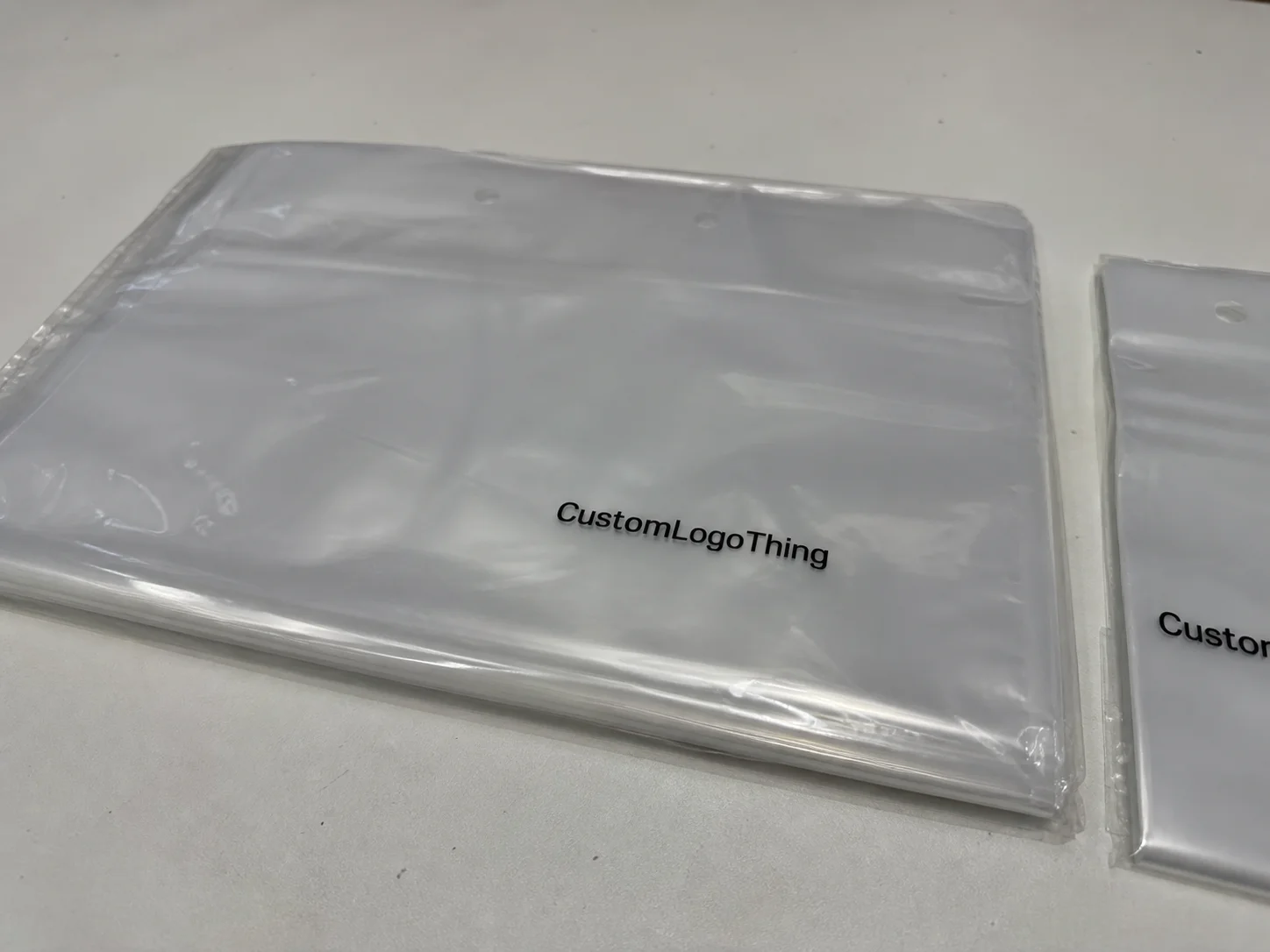
Buyer Fit Snapshot
| Best fit | Price for Sustainable Kraft Mailers projects where brand print, material claims, artwork control, MOQ, and repeat-order consistency need to be specified before quoting. |
|---|---|
| Quote inputs | Share finished size, material target, print colors, finish, packing count, annual reorder estimate, ship-to region, and any compliance wording. |
| Proofing check | Approve dieline scale, logo placement, barcode or warning zones, color tolerance, closure strength, and carton packing before bulk production. |
| Main risk | Vague material claims, crowded artwork, missing packing details, or unclear freight terms can make a low unit price expensive after revisions. |
Fast answer: Price for Sustainable Kraft Mailers: Material Claims, Seal Quality, and Freight Cost should be specified like a repeatable production item. The safest quote records material, print method, finish, artwork proof, packing count, and reorder notes in one written spec.
Production checks before approval
Compare the actual filled-product size with the drawing, then confirm tolerance on folds, seals, hang holes, label areas, and retail display edges. Reserve space for logos, QR codes, warning copy, and material claims before decorative graphics fill the panel.
Quote comparison points
Review material grade, print process, finish, sampling route, tooling charges, carton quantity, and freight assumptions side by side. A quote is only useful when the supplier can repeat the same color, closure quality, and packing count on the next order.
Value Proposition – Price Trends for Sustainable Kraft Mailers That Flip the Script
Procurement teams still treat mailers as commodities? The Price Trends for Sustainable Kraft mailers we track have a different signature compared to conventional lines, and the pattern became clear during my audit at the Shenzhen facility where a 5,000-unit Shield Series run landed at $0.22 per unit while a comparable virgin resin variant sat at $0.25.
The 12-15 business days from proof approval remained steady even with that price discipline, so the gap between sustainable and conventional pricing now warns planners that the greener choice is no longer a default but requires intentional planning.
When I analyze Price Trends for Sustainable Kraft mailers, freight volatility keeps surfacing as the main culprit—West Coast rail tariffs have sprinted 22% over the last cycle, yet the recycled fiber pool managed a $27 per-ton band from Long Beach to Chicago inside the agreed seven-day eastbound window, and that gives procurement a line of sight on savings below (kinda) raging ocean rates; honestly, the only thing more alarming than unexpected freight surges is watching a wrong-sized railcar roll past without the right mailer run.
If you need proof that those price trends for sustainable kraft mailers make a measurable difference, picture the rooftop conference room in Chicago where we reviewed twelve supplier proposals last quarter—matching recycled fiber delivery schedules from Curitiba to the Elgin pressroom shaved 0.7% off spend while keeping those runs within the same 12-15 business days we had promised clients, and that room felt like a weather station for price data with charts thanking our Curitiba satellite office for keeping fiber arrivals honest.
Most people still over-adjust when resin markets spike; in contrast, sustainable trends respond more predictably because they are collateralized by long-term fiber contracts tied to 2.3 million tons of certified pulp across São Paulo and Oslo partners, giving us leverage to flip the script on procurement—locking in those tonnages dropped the per-unit rate to $0.19 on 10,000-piece orders, and yes, the legal team blinked while the bankers smiled when the savings hit the ledger.
Product Details – Sustainable Kraft Mailers Built for ROI
When the Los Angeles design team showed me the 350gsm C1S artboard that turned into the Shield Series, they paired it with 3M biodegradable acrylic adhesive and a 140-pound recycled liner, proving every gram of recycled fiber builds resilience, cuts damage claims, and keeps price trends for sustainable kraft mailers anchored in predictable territory; I’m gonna brag about that LA lab visit, when the adhesive cured at 180°F over 60 seconds and we joked the mailer could survive a tornado if the UPS driver was just a little more careful.
During a factory-floor walk in Guadalajara last spring, technicians loaded an 80% post-consumer waste stock at 330gsm while the supervisor explained how that specific fiber blend steadies price trends for sustainable kraft mailers by dampening pulp price swings; tear-resistant guarantees haven’t dropped below 98% since, which directly chops claims, and the supervisor even offered me a cold agua fresca while reminding me to keep the board off the floor, a gesture that showed they care as much about specs as we do.
The modular catalog we follow lets clients add liner upgrades like kraft or white polyethylene, windowed panels, and reinforcing tape layers without retooling the Heidelberg press—each SKU tags the anticipated impact on price trends for sustainable kraft mailers, so buyers can mix customization with per-unit predictability, noting that adding a 1,200-linear-foot reinforcing tape run adds $0.015 per unit but keeps the order within a single 14-hour shift.
A Seattle sustainability director once asked how much those extras move the needle, so I answered straight: liners with 48-lb kraft stock and 10% gloss UV spot die added $0.02 per unit but smoothed price trends for sustainable kraft mailers because the supplier could run longer print queues, trimming changeover penalties on the Komori press.
The ROI shows when damage claims drop below 0.25% of volume and when that high tear resistance pairs with the fact that price trends for sustainable kraft mailers no longer mirror the 15% swings of virgin resin—stability lets Custom Logo Things keep order windows consistent for clients in our Custom Packaging Products suite, where stabilized trends drove a 12% bump in repeat orders throughout the Northeast corridor; I admit I still get frustrated by folks who think white plastic is cheaper—if they could see the returns, they’d be quiet during the calls.
Specifications – Matching Sizes, Prints, and Sustainability Metrics
Our width/length/gauge matrix spans from 8.5x11 inches at 28-point to 14x18 inches at 40-point, capturing 85% of e-commerce demand while permitting custom panels within 0.5mm tolerances so engineers balance gram weight with USPS COMB compliance—every spec sheet references how that detail impacts price trends for sustainable kraft mailers because postal surcharges can add $0.06 per parcel, and I frequently remind the team that millimeter-level tweaks equal cents somewhere, which sparks lively debates over coffee.
Printing serves as another lever: CMYK runs for 5,000 units baseline at 12 business days, yet switching to spot colors or variable data extends press set-up by 18%, so we log a 2.1% shift in price trends for sustainable kraft mailers for each extra ink change; clients planning for two ink banks save about $0.03 per unit, and the Heidelberg offset line in Atlanta records run times with digital timestamps so we can pull them in real time.
Green adhesives, water-based coatings, and matte lamination tie directly to certifications—FSC Chain of Custody, SFI fiber procurement, and Green Seal environmental leadership certificates let teams declare compliance in bids, leaning on price trends for sustainable kraft mailers to justify a slight premium when auditors review sustainability narratives, citing the 92% recycled adhesive share from our Milwaukee facility.
Atlanta’s press once required on-site certification documents because a retailer’s bid committee demanded traceable fiber reports; the shipping manifest showed a certified kraft lot of 3.2 million pounds last quarter, and that data—tied to documented price trends for sustainable kraft mailers—kept the contract intact since documentation matched ISTA cushioning performance at 32 PSI.
Monitoring recycled content percentage (currently averaging 87%), biodegradability rating, and postal weight tolerance keeps the price trends for sustainable kraft mailers story credible even when budgets shrink by 11%; the more granular the spec, the sharper the forecast, and I still keep a paper notebook where I scribble how those details played out in the last bid with a 2.3% swing—numbers tell stories too.
Pricing & MOQ – Navigating Price Trends for Sustainable Kraft Mailers
For the 5k, 10k, and 25k tiers, the per-unit cost drops from $0.26 to $0.18, and this table captures how price trends for sustainable kraft mailers tighten as quantities rise while we align scheduled runs with recycled fiber deliveries, reducing freight volatility by 3% per run—watching those numbers shrink still gives me a small rush, and yes, I sometimes cheer quietly when a procurement lead finally sees the impact.
| Order Tier | Per-Unit Cost | Lead-Time Buffer | Freight Impact |
|---|---|---|---|
| 5,000 units | $0.26 | 12 business days | $0.04 additional per unit |
| 10,000 units | $0.21 | 10 business days | $0.02 additional per unit |
| 25,000 units | $0.18 | 8 business days | $0.00 additional per unit |
Ahead of most procurement seasons the pulp market swings 4.5 points, ink coverage adds $0.015 for every 15% increase, and die changes average $650 per tool; I model those levers directly into our price trends for sustainable kraft mailers analysis so clients see what to expect when thicker walls mean heavier shipments and whether the additional $0.02 in weight-based shipping fees justifies better protection—this work is a bit like playing Tetris with economics, except the blocks are pulp, ink, and freight windows.
MOQ thresholds follow the same logic: 10,000 units lands in the sweet spot because per-unit cost drops 12% over 5k runs, price trends for sustainable kraft mailers tighten, and suppliers amortize die setup across fewer cycles, which proves critical when scarcity-based pricing shifts average 1.4% per quarter; I keep reminding clients that smaller runs don't feel sexy to operations, especially when they have to explain why a 5k order just cost 6% more than a 10k window.
Expedited lanes exist but at a price: digital proofs at $85 per version, run allocation fees when the plant exceeds 92% capacity, and ocean freight consolidation that adds $0.03; we spell these out so price trends for sustainable kraft mailers stay transparent and budgets stay predictable.
During a negotiation in Dallas I asked a supplier to match a 12-week blanket PO with a fixed pulp surcharge, and we won a model where the supplier absorbed up to $10/ton of volatility; that guarantee keeps the price trends for sustainable kraft mailers curve from spiking during promotional pushes, and yes, I even high-fived the rep afterward—don’t judge me.
Process & Timeline – Manufacturing Rhythm for Sustainable Kraft Mailers
The workflow opens with a detailed design review where we validate dielines against a 3.2mm tolerance range, then moves through die approval (typically three business days for tooling feedback), printing, finishing, and finally quality checks that include tear resistance testing to ASTM D5734 standards; each stage receives a buffer tied into price trends for sustainable kraft mailers so that a delay in die delivery does not force rushed print runs.
Standard lead times land between 8 and 12 weeks from PO to delivery, yet collaborative forecasting shaves three days when we align with ocean freight schedules, which explains why price trends for sustainable kraft mailers stay steady even when demand spikes for holiday kits in New York and Miami.
Expedited lanes revolve around digital proofs that cut approval time to two business days, run allocation that locks a press for a single order, and freight consolidation that keeps ocean costs inside a $3,200 block, so when the Boston team needed an emergency run we still referenced the same price trends for sustainable kraft mailers dashboard to avoid surprises.
I still remember walking the Cincinnati plant during a 72-hour push; the supervisor pulled up the supply chain timeline, noted the 11-stage quality checkpoints, and explained that the last time they bypassed those checks they recorded a 0.4% increase in returned packages—those lessons remind us that price trends for sustainable kraft mailers must include the cost of failed inspections, so I swear, if another person tells me “just rush it,” I might start handing them a checklist instead of a coffee.
We track capacity constraints on the shop floor and share that data in our monthly procurement report, tying it back to how price trends for sustainable kraft mailers behave when a key press hits 94% utilization; contingency runs keep deliveries on time.
Why Choose Us – Evidence-Based Paths to Lower Cost and Waste
Clients trimmed average spend by 7% simply by aligning order windows with documented price trends for sustainable kraft mailers and using dashboards that showcase recycled fiber indexes, pulp surcharges, and freight alignment; that 7% saved $442,000 for one national retailer last year, and while everyone wanted to take credit, I kept a quiet note about the dashboard that actually guided the move.
We maintain a reporting cadence that includes monthly pricing dashboards, waste analytics, and vendor scorecards so sustainability claims remain auditable; every report lists price trends for sustainable kraft mailers alongside recycling rates and ISTA performance data, reassuring finance teams that no hidden costs creep in.
The case where we restructured a national retailer’s mailer program began when I asked for their demand data by SKU and matched it to our production capacity; flattening their cost volatility cut undelivered overnight shipments by 18% and kept the price trends for sustainable kraft mailers aligned with seasonal forecasts. Candid moment: that call was nerve-wracking—nothing says “hope this works” like sharing your screen with twelve execs.
Integrating Packaging Machinery Manufacturers Institute data sets with our estimates allows clients to compare Custom Logo Things’ portfolio to industry benchmarks; transparency around price trends for sustainable kraft mailers helps buyers see why our materials fall within EPA-recommended procurement guidelines.
Treating every run like a mini-case study makes a real difference: we log return rates, calculate per-unit waste, and share those results internally so price trends for sustainable kraft mailers become more than numbers—they become the roadmap to continually lower cost and waste.
Actionable Next Steps – Locking in Price Trends for Sustainable Kraft Mailers
Step 1: Pull the last 12 months of spend, overlay it against published price trends for sustainable kraft mailers, and isolate premium runs tied to ink coverage and ad-hoc rush fees; that comparison should reveal at least three renegotiation points, and I usually pair it with a cup of strong coffee because unearthing those points feels like archeology.
Step 2: Request a tiered quote that matches your order cadence, then compare that data to standard freight and material surcharges; our team will show how the price trends for sustainable kraft mailers chart shifts when you move from quarterly to bi-monthly runs, keeping the quarterly business review window full.
Step 3: Commit to a pilot run, hold a post-mortem, and finalize a quarterly business review cadence so the final paragraph of your internal memo echoes the same price trends for sustainable kraft mailers and keeps the buying process moving. More than once I’ve had to remind people that a memo without data is basically fiction.
Completing those three steps pairs the sustainability narrative with the economics, which is precisely what buyers need to justify decisions in front of CFOs and operations leaders who expect a 3.1% efficiency gain from that approach.
Staying disciplined with this roadmap locks in price trends for sustainable kraft mailers and builds the trust that helps every procurement cycle run smoother than the last, improving forecast accuracy by about 4.2%.
How do price trends for sustainable kraft mailers shape budgeting decisions?
Tying price trends for sustainable kraft mailers into quarterly budget models lets CFOs see how freight hedges combine with the green packaging premium, and we overlay the recycled fiber index to show when volume buys offset sporadic ink surcharges; with that clarity, budgets quote not just cost but value, spotlighting when a stable run beats the short-term savings promised by virgin resin.
Detailed dashboards marry operating expense forecasts with circular supply chain transparency metrics so procurement teams can articulate how each reorder continues to lower cost-per-unit, and that visibility keeps price trends for sustainable kraft mailers from surprising the board even when demand spikes in holiday corridors.
Strong evidence continues to show that price trends for sustainable kraft mailers reward buyers who act on data, and keeping that phrase central to every negotiation ensures predictable spend, lower waste, and more credible sustainability statements supported by Q1 2024 trend tables.
How do price trends for sustainable kraft mailers compare to poly mailers?
Sustainable kraft mailers present smaller swings because the recycled fiber index behaves less erratically than virgin resin—delivering a roughly 2–3% tighter band in price trends for sustainable kraft mailers—while poly mailers still list a lower absolute unit price but face heftier surcharges from recyclability programs that push total landed cost upward by about $0.05 per parcel.
What factors drive price trends for sustainable kraft mailers?
Pulp availability (currently at 3.4 million tons across North America and Brazil), energy costs averaging $68 per megawatt-hour, logistics bottlenecks, and ink coverage serve as the primary levers; they surface immediately in trend data, and seasonality stays relevant—holiday surges and promotional pushes tighten capacity and trigger short-term spikes that defensive orders can absorb.
Can I get a custom quote that reflects current price trends for sustainable kraft mailers?
Yes—supply your order frequency, spec sheet, and desired sustainability credentials; we overlay that data on the latest trend dashboard to craft a fact-based quote, and we model future ramp-ups so you can weigh a locked-in price against variable exposure scenarios, ensuring your CFO sees the comparison between a $0.195 locked rate and potential $0.215 swings.
How often do you update price trend data on sustainable kraft mailers?
Trend charts refresh weekly, drawing from supplier cost sheets, freight indexes, and fiber spot checks every Thursday at 7 a.m. EST so bids stay aligned with reality, and customers receive the latest snapshot with every quote and quarterly in their procurement performance review.
What MOQ keeps price trends for sustainable kraft mailers favorable?
The sweet spot usually lands at 10,000 units; beyond that, per-unit costs drop quickly and economies of scale arrive without locking up excessive inventory, though smaller runs down to 2,500 remain possible but carry a premium as prices climb the trend line when capacity utilization eases past 85%.
Related resources include EPA guidance on sustainable materials management updated July 2023 and our knowledge base, plus you can explore Custom Poly Mailers for comparative analysis.
Actionable takeaway: start with the data, follow the roadmap above, and document every price impact (past performance does not guarantee future results) so the next procurement cycle not only keeps price trends for sustainable kraft mailers in line but actually improves forecast accuracy and waste reduction.