Buyer Fit Snapshot
| Best fit | Printed Boxes projects where brand print, material claims, artwork control, MOQ, and repeat-order consistency need to be specified before quoting. |
|---|---|
| Quote inputs | Share finished size, material target, print colors, finish, packing count, annual reorder estimate, ship-to region, and any compliance wording. |
| Proofing check | Approve dieline scale, logo placement, barcode or warning zones, color tolerance, closure strength, and carton packing before bulk production. |
| Main risk | Vague material claims, crowded artwork, missing packing details, or unclear freight terms can make a low unit price expensive after revisions. |
Fast answer: Printed Boxes: Custom Printed Packaging Explained should be specified like a repeatable production item. The safest quote records material, print method, finish, artwork proof, packing count, and reorder notes in one written spec.
Production checks before approval
Compare the actual filled-product size with the drawing, then confirm tolerance on folds, seals, hang holes, label areas, and retail display edges. Reserve space for logos, QR codes, warning copy, and material claims before decorative graphics fill the panel.
Quote comparison points
Review material grade, print process, finish, sampling route, tooling charges, carton quantity, and freight assumptions side by side. A quote is only useful when the supplier can repeat the same color, closure quality, and packing count on the next order.
Printed boxes custom printed have a funny habit of being judged in about three seconds, sometimes less. I’ve watched buyers at a trade show in Las Vegas pick up two cartons with the same product inside and choose the one with cleaner graphics, tighter folds, and a better-feeling coating, even though the unit price differed by only $0.07. That tiny difference can change how a brand feels before anyone opens the box, which is why printed boxes custom printed are never just containers; they’re part of the sales pitch, the shipping plan, and the brand story all at once.
Too many brands still treat packaging like the last thing on the checklist, the box that gets handled after the product, the website, and the launch plan are already finished. Honestly, I think that’s backwards. In the packaging jobs I’ve seen most often in New Jersey, Shenzhen, and Dongguan, the box is the first physical brand touchpoint, the thing the customer sees on a porch, a shelf, or a fulfillment table. If the print is off, the flaps crush, or the logo disappears into a busy layout, the product starts at a disadvantage. That’s why printed boxes custom printed deserve the same attention you’d give to a website homepage or retail display, especially if the box is doing the work of a sales rep at $0.22 to $1.20 per unit.
Printed Boxes Custom Printed: What They Are and Why They Matter
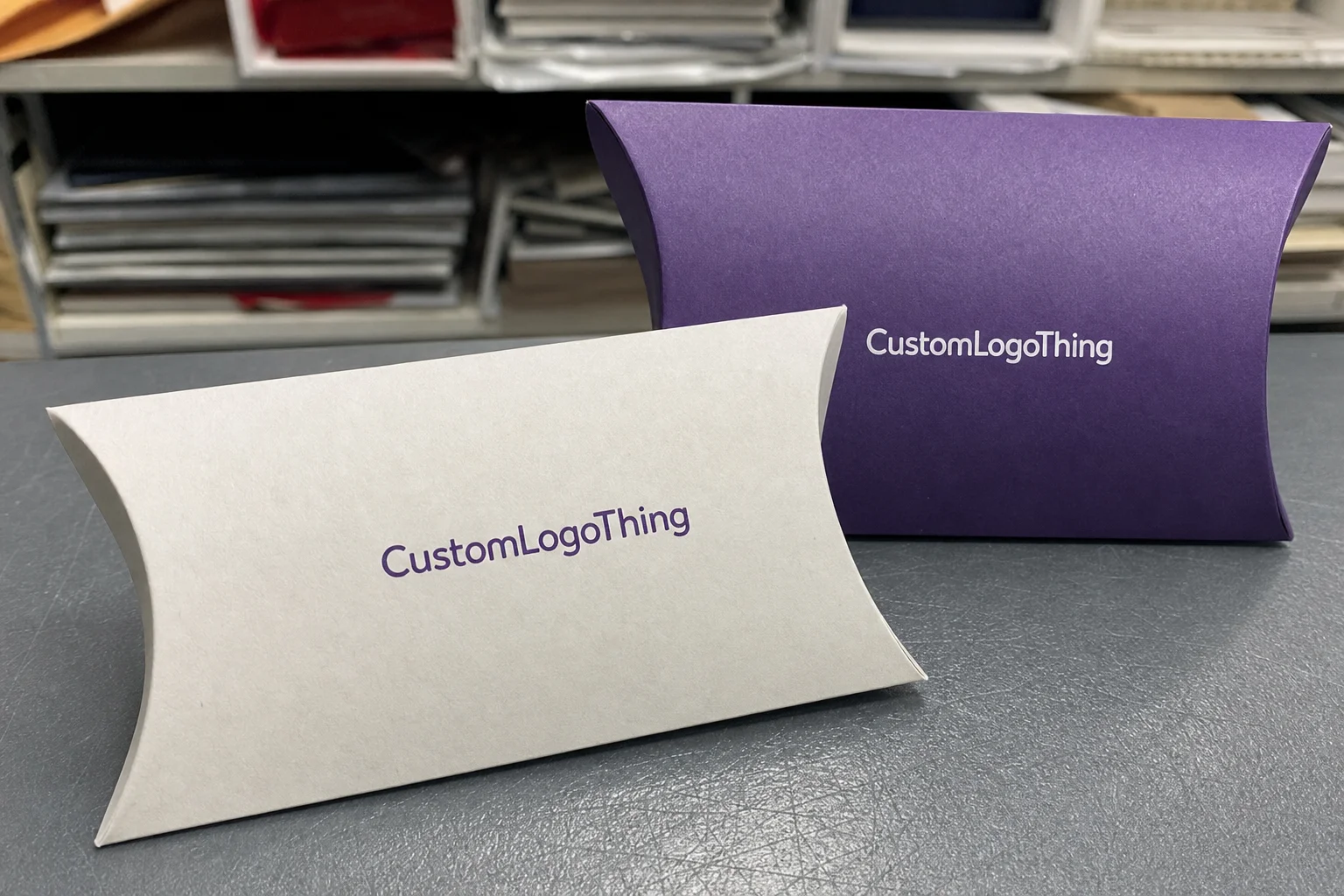
In plain language, printed boxes custom printed are boxes made with brand-specific artwork, messaging, dimensions, and finishing choices instead of a generic blank design. That can mean a kraft mailer with one-color ink, a Rigid Gift Box with foil stamping, or a folding carton with full CMYK graphics and a matte aqueous coating. The phrase sounds simple, but the decisions inside it are not. One box might be designed for a 2-pound skincare kit, another for a 12-pound candle set, and both may need very different board grades, print methods, and closure styles, such as 350gsm C1S artboard for retail cartons or E-flute corrugated board for shipping mailers.
The difference between stock boxes and custom printed boxes is bigger than most people think. Stock packaging is made to fit a general need. Custom printed boxes are built around a product’s dimensions, graphics, and brand positioning. Then there’s the broader category of custom printed packaging, which can include inserts, labels, tape, tissue, sleeves, and secondary shipper cartons. That package branding system matters because the box is only one surface in a larger experience, and the cost spread can range from $0.15 per unit for 5,000 pieces on a simple one-color mailer to $2.80 per unit for a rigid setup box with foil and embossing in a facility in Guangdong or Ho Chi Minh City.
Why does printing matter beyond aesthetics? Because printed boxes custom printed influence recognition, perceived value, and shelf impact in measurable ways. A consumer may not remember every detail of a product page, but they often remember the box color, the texture, or the way the logo sat on the front panel. I saw this firsthand during a client meeting for a direct-to-consumer tea brand in Austin: the same formula in a plain corrugated shipper had a decent repeat rate, but once they moved into printed boxes custom printed with a restrained two-color design, 18pt type, and a better unboxing insert, their gifting orders rose by 18% over the next quarter. Same tea. Different presentation. The cartons were produced on 400gsm SBS in Suzhou, with a soft-touch aqueous finish that added about $0.06 per unit at 10,000 pieces.
There’s also a logistics angle that gets ignored. Printed boxes custom printed can reduce errors in packing, support barcode placement, and make warehouse handling easier if the structure is planned well. Packaging is both marketing and operations. If a box looks great but tears at the corner seam after a 300-mile transit lane between Chicago and Indianapolis, it has failed one of its jobs. If it protects beautifully but looks like an afterthought, it has failed the other. A well-built box for a 16-ounce glass jar might use B-flute corrugated with a 32 ECT liner and printed case marks that read clearly from 8 feet away in a fulfillment center.
“The box has to sell the product before the product is even touched,” a brand manager told me during a sampling review in San Jose. She was talking about premium soap, but the same logic applies to electronics, apparel, supplements, and anything that competes on perception as much as function. Her preferred spec was a 350gsm C1S artboard carton with matte AQ, and the first production run landed at 12,500 units from proof approval in 14 business days.
How Printed Boxes Custom Printed Are Made
The production process starts long before ink hits board. First comes the dieline, which is the structural template showing folds, cuts, glue areas, and panel sizes. Then comes artwork setup, where the design team places logos, text, barcodes, and imagery into the dieline with proper bleed and safe zones. If you’ve ever seen a box where the logo hugs a fold line or a warning label gets trimmed too close, that usually started with a sloppy file. Printed boxes custom printed reward precision, and they punish guesswork. A packaging engineer in Dongguan will often request the dieline in AI or PDF format before a quote is even finalized, especially for tuck-end cartons and mailers with crash-lock bottoms.
From there, the structure, board, and print method have to work together. A folding carton printed on 300gsm SBS behaves differently from a corrugated mailer made with E-flute or B-flute board. A rigid setup box with wrapped paper stock behaves differently again, especially if you add foil or embossing. This is where packaging design stops being purely visual and starts becoming physical engineering. The same artwork can look sharp on one substrate and muddy on another if ink absorption, coating, or flute show-through is not considered. A deep navy background, for example, may require a richer ink build on 350gsm C1S artboard than it would on white coated SBS from a mill in North Carolina.
Here’s the short version of the most common print methods used for printed Boxes Custom Printed:
- Digital printing for shorter runs, variable data, and faster setup.
- Offset printing for high image quality, tight color control, and medium to large volumes.
- Flexographic printing for corrugated packaging and longer production runs where speed matters.
- Direct-to-substrate applications for certain industrial or specialty packaging lines.
Each method has a different economics profile. Digital may cost more per unit but less in setup. Offset gives better consistency on large volumes but usually asks for plate costs and more prepress discipline. Flexo can be efficient for shipping cartons, but fine gradients and tiny type need care. I’ve sat through enough supplier negotiations in Guangzhou and Long Beach to know this: the “best” method is the one that matches your run size, graphics complexity, and deadline, not the one that sounds impressive in a sales deck. For a 3,000-piece run, digital might come in at $0.31 per unit with no plate charge, while offset could be better at 20,000 pieces if the plate and setup costs are spread correctly.
Proofing is where many brands save themselves from regret. Color accuracy matters more than people expect. A brand red that looks elegant on a monitor can print too orange on uncoated stock, and a charcoal background can flatten under a low-contrast finish. Good vendors will show a digital proof, then a press proof or sample, depending on the order size and risk. For color-sensitive jobs, I’ve seen brands request target references against Pantone or specified CMYK builds, then compare them under daylight-like lighting instead of under warehouse fluorescents. That extra step sounds fussy until you’re holding 10,000 printed boxes custom printed that miss the mark. On a 500-piece sample run, a press proof might add $75 to $150, which is cheap insurance compared with reprinting in Dongguan or Dallas.
The timeline usually moves in stages: design and dieline approval, file prep, sampling, production, finishing, and shipping. A straightforward printed boxes custom printed job typically takes 12-15 business days from proof approval if the material is in stock and no special finish is involved. Add embossing, spot UV, foil, or structural prototyping, and the schedule stretches to 18-25 business days. That is not a flaw. It is the reality of physical production, especially when a factory in Shenzhen is coordinating print, die-cutting, gluing, and carton packing across separate lines.
For brands that want to compare substrate and finish options early, I often suggest reviewing our Custom Packaging Products alongside the product spec sheet. It’s easier to choose well when you can see how one board or closure style changes the whole packaging system, whether you’re sourcing in California, Jiangsu, or Ontario.
Two production details separate average jobs from strong ones. First, maintain a minimum type size that survives the print method; on corrugated, tiny legal copy can blur below 6pt, especially with busy backgrounds. Second, always think about fold direction and grain. A box can crack at the fold if the board is wrong for the score line, and once that happens, the premium look disappears instantly. I’ve seen a gorgeous carton get turned into a tiny cardboard argument because someone ignored grain direction. Not my favorite afternoon. A 0.75mm score line on the wrong grain can ruin 2,000 cartons before the operator catches the issue.
Key Factors That Affect Printed Boxes Custom Printed Quality and Cost
Pricing starts with size, because more board means more material and more shipping weight. A box sized at 8" x 6" x 2" will cost less than one at 14" x 10" x 4", even before ink comes into the picture. Then comes board grade. Kraft liners, white SBS, CCNB, corrugated single-wall, and rigid chipboard all sit at different price points. If you want a clean retail look, white board generally prints brighter. If you want a natural, earthy feel, kraft can do the job beautifully, but it changes how colors appear. Printed boxes custom printed are not one-price-fits-all, and anyone promising that they are is oversimplifying. A 2,500-piece run on white SBS can land near $0.41 per unit, while the same size in specialty kraft with a flood of dark ink may move closer to $0.53 per unit.
Print coverage is another major driver. A small logo on one panel is cheaper than full-bleed artwork on every side. The number of colors matters too. One-color black on kraft is efficient. Four-color process plus a fifth spot color is a different animal. Add coatings, and the price moves again. Matte lamination, gloss AQ, soft-touch film, anti-scratch coating, foil stamping, and embossing each add material and machine time. For premium retail packaging, those extras can be worth it. For a subscription box with a 90-day retention cycle, maybe not. In a factory in Suzhou, a soft-touch film might add $0.08 to $0.14 per carton, while foil stamping can add another $0.10 to $0.25 depending on coverage.
Order quantity changes the math dramatically. Setup costs for plates, die cutting, and prepress are spread across the run, so 1,000 boxes often carry a far higher per-unit cost than 10,000. That’s not the supplier trying to be difficult. It’s how the economics work. As a rough illustration, I’ve seen printed boxes custom printed quote around $0.82/unit at 1,000 pieces, drop to $0.34/unit at 5,000 pieces, and land near $0.19/unit at 20,000 pieces for similar mailer formats with standard print and coating. The exact numbers shift by board and region, but the pattern holds. If your factory is in Mexico City or Xiamen, freight and labor can shift the quote by another 8% to 12%.
| Option | Typical Use | Approx. Unit Cost | Notes |
|---|---|---|---|
| Plain stock carton | Basic shipping | $0.12-$0.28 | Lowest branding impact, fastest to source |
| Printed mailer with one-color art | E-commerce, subscriptions | $0.22-$0.45 | Good balance of cost and package branding |
| Full-color printed folding carton | Retail packaging | $0.28-$0.75 | Depends heavily on size, board, and coverage |
| Rigid box with specialty finish | Gift, luxury, premium kits | $1.20-$4.50 | Foil, emboss, and wrapped board raise cost quickly |
Durability should be part of the cost discussion from the start. A box that saves $0.05 but fails ISTA transit testing is expensive in disguise. If your product ships through parcel networks, I recommend asking whether the design meets relevant transport stress expectations, and whether it has been reviewed against testing frameworks such as ISTA methods. For sustainability-minded teams, FSC-certified paperboard may also matter, especially if your retail partners ask for it. Those details are not marketing fluff; they affect procurement and buyer trust. A 32 ECT corrugated board from a mill in the Midwest can also reduce crush complaints by 9% to 14% in parcel delivery.
Budget-wise, my rule is simple: invest where the customer can see and touch the difference, then simplify where the eye won’t notice. Spend on a cleaner finish, better board, or sharper print registration before you spend on decorative complexity that adds little value. I once reviewed a beverage launch in Portland where the client wanted six ink colors and three coatings on a shipper nobody would keep. We cut the finish stack, improved the structural insert, and saved nearly 14% without making the box feel cheaper. That is the kind of tradeoff smart printed boxes custom printed planning should make.
Step-by-Step: Ordering Printed Boxes Custom Printed Without Mistakes
Start with the product, not the artwork. Measure length, width, height, and actual packed weight, not just the product’s retail dimensions. Then note whether the item is fragile, temperature-sensitive, oily, or likely to shift during transit. A glass bottle in a mailer is a different challenge from folded apparel or a powder pouch. If the product moves, the packaging has to stop that movement. If the product dents easily, the board and insert need to absorb the shock. A 1.5-pound ceramic jar packed in a 24pt SBS carton needs different engineering than a 6-ounce supplement tin.
Next, choose the box style based on function first. A mailer box, tuck-end carton, sleeve, rigid lid-and-base box, or roll-end front tuck design all serve different needs. Printed boxes custom printed are not just about how the box looks in a photo. They are about how the closure works, how the carton stacks, and whether the structure survives a rough week in fulfillment. If a retail box will sit on shelf, facing panels and hang tabs matter. If it will ship directly to homes, crush resistance and closure strength matter more. A roll-end front tuck box made in Vietnam can be ideal for subscription cosmetics, while a corrugated mailer from Ohio may be better for heavier apparel drops.
Artwork preparation is where many teams slow down or stumble. Use the vendor’s dieline, not a guessed template. Add bleed, typically 0.125" or as specified, so artwork runs past the cut line. Keep critical text inside the safe zone. Convert fonts to outlines before sending the file, and build images at 300 dpi for print-scale use. If you are sending a CMYK file, check that black is built correctly; rich black and standard black are not the same thing. Printed boxes custom printed can look immaculate or messy based on these details alone. A 96 dpi logo placed on a 16pt header will show its weakness immediately in press room lighting.
I learned that the hard way years ago during a factory floor visit in Guangdong. A cosmetics client had approved a beautiful sample, but the final file had a barcode too close to a fold. On the line, the operator caught it only because the carton was already creasing badly near the glue flap. We rerouted the panel by 4mm and saved a 15,000-unit reprint. Small numbers. Huge consequence. The client was relieved, the operator was right, and I had to go back and admit the file was the problem, which is never as fun as pretending the universe caused it. That reprint would have cost roughly $4,800 before freight if we had missed the error.
Sampling is worth the time, especially for new SKUs. Request a plain structural sample first if the shape is unfamiliar. Then request a printed proof or prototype if the artwork has any risk, such as gradients, metallics, or fine type. You may think a digital mockup is enough. Sometimes it is. But not when the box is going into a category where color, sheen, and texture carry buying power. Printed boxes custom printed often look different under store lighting than on a screen, and that mismatch can be costly. A 1-piece prototype from a factory in Shenzhen may cost $40 to $150, while a full pre-production sample with custom finish can reach $220.
Verify the production proof line by line. Check the quantity, dimensions, material, print method, finish, carton count per case, shipping address, and delivery window. If the quote says 12,000 pieces with a matte AQ coating, make sure the proof says the same. If the supplier includes FSC board or moisture-resistant liner, confirm the exact specification. The strongest projects I’ve seen had a single sign-off document with all of this in one place. The weakest had five versions of the same PDF and one confused buyer. A clean approval sheet can prevent a 7-day delay in a factory outside Ho Chi Minh City.
- Measure the product and confirm weight.
- Select the box style for use case and transit.
- Prepare dieline-based artwork with bleed and safe zones.
- Review proofs, samples, and color targets.
- Approve specs only after the final proof matches the quote.
One more thing: ask who owns what if a change happens mid-run. I’ve sat in supplier negotiations where a client wanted to swap a coating one week before press, and the entire timeline shifted by eight days because plates, stock, and scheduling had already been locked. Good printed boxes custom printed planning includes a change-control rule. Otherwise, a “small edit” becomes a real delay, and somehow that always lands on a Friday. In a production schedule, a Friday slip can push freight to the next available truck in Los Angeles or Shenzhen and add $180 to $650 in rush logistics.
Common Mistakes Brands Make With Printed Boxes Custom Printed
The first mistake is overcrowding the box. Brands want storytelling, ingredient lists, QR codes, claims, icons, legal copy, social handles, and a slogan all competing for the same panel. The result is visual noise. A box with five hierarchy levels usually performs worse than one with two. Printed boxes custom printed work best when the customer can identify the brand, product name, and key value proposition in under five seconds, especially on a 12" x 8" mailer viewed from arm’s length on a porch or retail shelf.
The second mistake is ignoring print constraints. Dark solids can reveal scuffs. Fine reverse type can disappear on kraft. Soft-touch lamination can show fingerprints in certain lighting. Blurry logos often trace back to low-resolution files or artwork scaled from a web image instead of a print-ready vector. I’ve seen a supplier’s pressroom stop a job because the supplied logo was only 96 dpi. That sounds obvious after the fact. It was not obvious to the marketing team that sent it, and the press operator was not amused. In a factory in Xiamen, a bad logo file can shut down a 4,000-unit run before lunch.
The third mistake is choosing packaging based only on price. Cheap packaging that damages a product during transit is not cheap. It is a claim. It says, “We did not test this well enough.” If a premium candle arrives broken in 7% of orders, the hidden cost is replacement product, customer service labor, shipping credits, and brand damage. Printed boxes custom printed should be costed against failure rates, not just unit price. A $0.09 increase per carton can save $1.20 in replacement and handling costs if breakage drops from 6% to 1%.
The fourth mistake is skipping mockups. A flat render can hide a thousand problems. I’ve walked through a client review where the mockup looked polished, but once assembled, the closure tab buried the logo on the front panel. That issue would have gone unnoticed until launch without a physical sample. A one-off prototype can cost $40 to $150, which sounds annoying until you compare it with 25,000 unusable cartons. Even a simple mockup in Chicago or Shenzhen can catch a fold-line issue before a $9,500 print job ships.
The fifth mistake is forgetting sustainability and material consistency. Customers notice when one product line uses FSC paperboard and another uses mixed materials with unclear recyclability. Retail buyers notice, too. Some markets are stricter than others, and local recycling rules vary, so I never promise universal recyclability. Still, choosing a cleaner substrate and limiting mixed-material layers usually improves the odds. For many brands, better printed boxes custom printed are also better behaved at end of life. A mono-material paperboard carton is easier to explain than a multi-layer box with foil, film, and plastic inserts.
Here’s the unexpected connection most teams miss: the same packaging design choices that improve sustainability often improve fulfillment speed. Simpler structures pack faster. Clearer graphics reduce picking errors. Fewer material layers can lower damage rates. The smartest packaging projects I’ve seen solve more than one problem at the same time, usually with one carton spec and one insert spec rather than three or four separate components.
Expert Tips to Improve Impact, Efficiency, and Unboxing Value
Use restraint if the material already signals quality. A natural kraft mailer with a single ink color can feel more thoughtful than a crowded full-bleed design, especially for artisan food, wellness, or stationery brands. Strong printed boxes custom printed do not need to shout. Sometimes the cleanest package branding is a logo, a short line of copy, and one tactile finish. That combination usually costs less and looks more confident, particularly on 18pt kraft board with a water-based ink system sourced from a printer in Pennsylvania or Zhejiang.
Print placement matters more than many designers realize. The front panel should do the heavy lifting, because that is the panel most likely to face the customer during delivery or on shelf. The side panel can carry support information. The back panel can hold instructions, regulatory copy, or a barcode. If every side is trying to be the hero, none of them wins. I’ve watched brands improve perceived value by moving one strong visual from the top flap to the front face. No extra ink. Better effect. A 20mm shift in artwork can make a box look intentional instead of crowded.
Finish should match positioning. Matte usually supports premium minimalism. Gloss can make color pop in retail packaging, particularly under bright store lights. Soft-touch adds a velvety feel, but it can also show wear if the box is handled a lot. Spot UV works best when used sparingly, not everywhere. Foil feels special, yet too much of it turns into clutter. Printed boxes custom printed need finish choices that support the story rather than decorate over it. A luxury skincare box in Seoul may benefit from a single silver foil logo and a 1.5mm deboss instead of a full metallic flood.
Think of packaging as a system. The box, insert, label, tissue, tape, and outer shipper should feel connected. I once worked with a subscription beauty brand that printed the box beautifully but used generic brown tape and an unbranded return label. The result felt unfinished. We fixed it with a simple two-color tape roll and a tiny exterior sticker, and the entire unboxing value went up. That is package branding in practice: the whole experience, not just the carton face. The tape roll cost $38 per 500-yard roll, and the sticker added less than $0.01 per order.
Design simplification often improves efficiency. A two-color print job can run faster than four-color process. A slightly smaller dieline can save board and freight. A cleaner insert can reduce packing labor by 10-15 seconds per unit, which matters at 5,000 units. In a fulfillment center, seconds are money. In a brand meeting, they are usually invisible. That mismatch is why printed boxes custom printed should be discussed by both marketing and operations, not handed off to one side alone. A 14-second savings per carton can translate to nearly 20 labor hours on a 5,000-unit run.
- Use one strong visual focal point instead of filling every panel.
- Match coating to handling so the finish survives the real route.
- Standardize box families across SKUs to reduce complexity.
- Plan for carton stacking if the product ships in bulk cases.
For brands that want to compare structural options, our Custom Packaging Products catalog is a useful starting point. It helps separate “looks good on screen” from “works on a line,” which is a distinction many teams only learn after one expensive mistake. A supplier in Guangdong or Illinois can quote the same dieline differently depending on how the board, glue, and folding style interact.
What to Do Next: Build a Better Printed Box Plan
Start by writing a packaging brief that is short but specific. Include product dimensions, weight, fragility, shipping method, brand colors, budget range, order quantity, and target launch date. If you already know your ideal print finish or board type, add that too. Printed boxes custom printed are easier to quote, prototype, and approve when the brief has hard numbers instead of vague goals. A brief that says “premium look” is too broad; one that says “350gsm C1S artboard, matte AQ, 10,000 pieces, proof approval by May 14” gets actual traction.
Then audit your current packaging against three questions: does it protect, does it print well, and does it sell the product? If the answer to one of those is no, the box is costing you somewhere. Maybe it is creating breakage. Maybe it is dull on shelf. Maybe it is hard to pack. A good printed boxes custom printed strategy solves all three, though not always with the same box. Sometimes the best answer is one retail carton and one shipper. Sometimes it is a single printed mailer with a smarter insert. On a $0.24-per-unit carton, even a 2% breakage reduction can justify a new spec.
Collect competitor samples and a few reference boxes from outside your category. I often tell clients to study not just direct competitors, but brands in adjacent spaces. A cosmetics box might teach a tea company something about hierarchy. A sneaker shipper might teach a candle brand something about structure and unboxing. The right comparison can reveal what is expected in the category and where there is room to do something distinct without getting weird for the sake of being weird. A sample set from London, Toronto, and Bangkok can show three different approaches to the same size box.
Ask for a structural sample or a printed proof before you place a large run. If the box is new, test the closure. If the print is complex, check color under daylight and fluorescent light. If the product ships by parcel, ask about transit testing. If your supplier can reference standards from organizations like EPA materials guidance or FSC sourcing, that can help procurement and sustainability teams align faster. Better printed boxes custom printed are usually the result of disciplined approvals, not lucky guesses. A 2-hour proof review can save a 2-week reprint cycle.
My final advice is simple: evaluate printed boxes custom printed as a branding decision and an operations decision together. Split those two and you usually get a box that looks nice but fails in the warehouse, or one that ships fine but leaves money on the table at first glance. Keep them together, and you get packaging that earns its keep. That is the standard I’ve seen work across retail, e-commerce, and subscription programs, whether the boxes are produced in Illinois, Shenzhen, or Monterrey, and it holds up far better than design trends that fade after one season.
How do printed boxes custom printed improve unboxing value?
Printed boxes custom printed improve unboxing value by making the first physical interaction feel deliberate, branded, and memorable. Clean graphics, the right coating, and a well-fitted structure can turn a simple delivery into a small brand moment that feels more premium and more shareable. A mailer with a matte finish, a thoughtful insert, and consistent package branding often performs better than a plain shipper even when the product inside is identical.
FAQ
What are printed boxes custom printed used for?
They are used for retail packaging, shipping boxes, subscription boxes, gift packaging, and product presentation. They help reinforce branding while protecting the product during handling and transport. A common order might be 5,000 mailer boxes for e-commerce at about $0.22 to $0.45 per unit, depending on size and finish.
How much do printed boxes custom printed usually cost?
Cost depends on size, material, print coverage, quantity, and finishing choices. Per-unit pricing usually drops as order volume increases because setup costs are spread across more boxes. For example, a 1,000-piece run may sit around $0.82 per unit, while 10,000 pieces can fall closer to $0.19 to $0.34 per unit for similar specs.
How long does it take to produce printed boxes custom printed?
Timeline depends on design readiness, proof approvals, complexity, and production queue. A simple order typically takes 12-15 business days from proof approval, while custom structures, special finishes, or sample rounds can extend that to 18-25 business days. Shipping from a factory in Shenzhen to the U.S. West Coast can add another 10-18 days by ocean freight.
What files do I need for printed boxes custom printed?
You typically need a dieline, vector artwork, outlined fonts, and correctly set bleed and safe zones. High-resolution images and accurate color specs help avoid print issues. A print-ready file usually means 300 dpi images, 0.125" bleed, and CMYK values confirmed against a Pantone target if color matters.
How do I choose the best material for printed boxes custom printed?
Choose based on product weight, shipping method, brand look, and sustainability goals. Heavier products usually need stronger board, while premium retail packaging may prioritize print quality and finish. A 350gsm C1S artboard carton works well for cosmetics and small electronics, while E-flute corrugated is better for direct-to-consumer shipping.
Printed boxes custom printed are one of those categories where the details are the strategy. I’ve seen a 3mm shift in artwork placement save a run, a change from gloss to matte improve perceived value, and a better board grade cut damage claims by double digits. That is why printed boxes custom printed should never be treated as filler procurement. They are branded packaging, product packaging, and package branding all working in the same object, and if you plan them well, they pay you back every time a customer opens the box. A carton produced for $0.24 in a facility near Suzhou can influence a purchase worth $42, $88, or far more. Start with the product, insist on a proper proof, and choose the structure that protects the item before you worry about the prettiest finish.