restaurant takeaway tissue paper cost is rarely just a paper-price question, and that is where a lot of buyers get tripped up. The real number depends on sheet size, print coverage, order volume, packing format, and whether the tissue is a plain stock item or a branded run that needs setup, proofing, and freight folded into the quote. From a packaging buyer's point of view, restaurant takeaway tissue paper cost only makes sense when it is judged against the role the sheet is actually playing, because one well-made sheet can handle wrapping, lining, and brand recognition at the same time.
The cheapest quote is not always the smartest one. A figure that looks lean on paper can climb quickly once tooling fees, setup charges, carton packing, or transport from the production site are added. A carefully specified run can bring restaurant takeaway tissue paper cost down by removing unnecessary complexity, using a standard size, and keeping the print repeat simple enough for efficient production. If you are asking for prices, the aim is not to chase a guess; it is to compare like for like and understand the real unit cost.
Custom Logo Things works with buyers who need clear, comparable pricing before they place an order. That matters because takeaway tissue is usually ordered alongside bags, boxes, stickers, and inserts, so the tissue quote should fit the wider packaging budget rather than sit in isolation. If the spec is clean, the artwork is ready, and the quantity is realistic, restaurant takeaway tissue paper cost becomes a straightforward purchasing decision instead of a moving target.
Why settle for a quote that hides the real numbers?
Restaurant takeaway tissue paper cost: what drives the price?
The first thing to understand about restaurant takeaway tissue paper cost is that the paper itself is only part of the answer. Sheet size changes the yield, print coverage affects ink use and machine time, and order volume changes how quickly the setup cost gets spread across each sheet. A small run often carries a higher cost per piece because the production team still has to prepare the artwork, align the print, and pack the goods even if the run is modest. With a larger run, those fixed steps are shared across more sheets, which is why restaurant takeaway tissue paper cost usually drops more efficiently at scale.
Material grade matters too. A lighter decorative tissue can be enough for presentation, while a slightly stronger grade is easier to handle if the sheet is used for wrapping or interleaving. In practice, tissue grades in the 17gsm to 24gsm range are common for presentation work, and that small shift in paper weight can influence restaurant takeaway tissue paper cost more than some buyers expect. If the design covers most of the sheet, you are also paying for more ink coverage, longer press time, and more careful drying. Simple one-color repeats usually keep restaurant takeaway tissue paper cost lower than full-coverage artwork with multiple tones.
Packaging format changes the number as well. Sheets packed flat in cartons are easier to price than specialty folding or retail-style wraps, and the difference shows up in both labor and freight. The same is true for shipment distance. A quote that looks attractive before transport can become less competitive once freight is added, especially if the cartons are bulky relative to the order value. That is why a serious restaurant takeaway tissue paper cost comparison should always include delivery terms, packing count, and whether the quote is ex-works, FOB, or landed.
One more point gets overlooked more often than it should: the tissue can do the job of several other branded touchpoints. A plain sheet may look cheap, but a branded tissue sheet can improve the bag opening, support presentation, and add polish without requiring an extra printed insert. That is part of the value equation. If the sheet reinforces the brand at the moment the customer opens the meal, restaurant takeaway tissue paper cost should be judged against that visual impact, not just against the raw paper price.
For broader packaging material context, it can help to review standards and sourcing references from trusted industry bodies such as packaging.org and sustainability guidance from the Forest Stewardship Council. Those references do not set your quote, of course, but they do help buyers ask better questions about paper origin, traceability, and specification.
"The best quote matches the exact sheet, the exact print, and the exact delivery terms. Anything less is only a rough number."
To keep restaurant takeaway tissue paper cost under control, the most reliable levers are simple: choose a standard size where possible, keep the color count tight, avoid unnecessary coverage, and confirm the carton pack before requesting pricing. Those choices do not remove quality; they remove friction. That is usually where the real savings are hiding.
Custom restaurant takeaway tissue paper product details
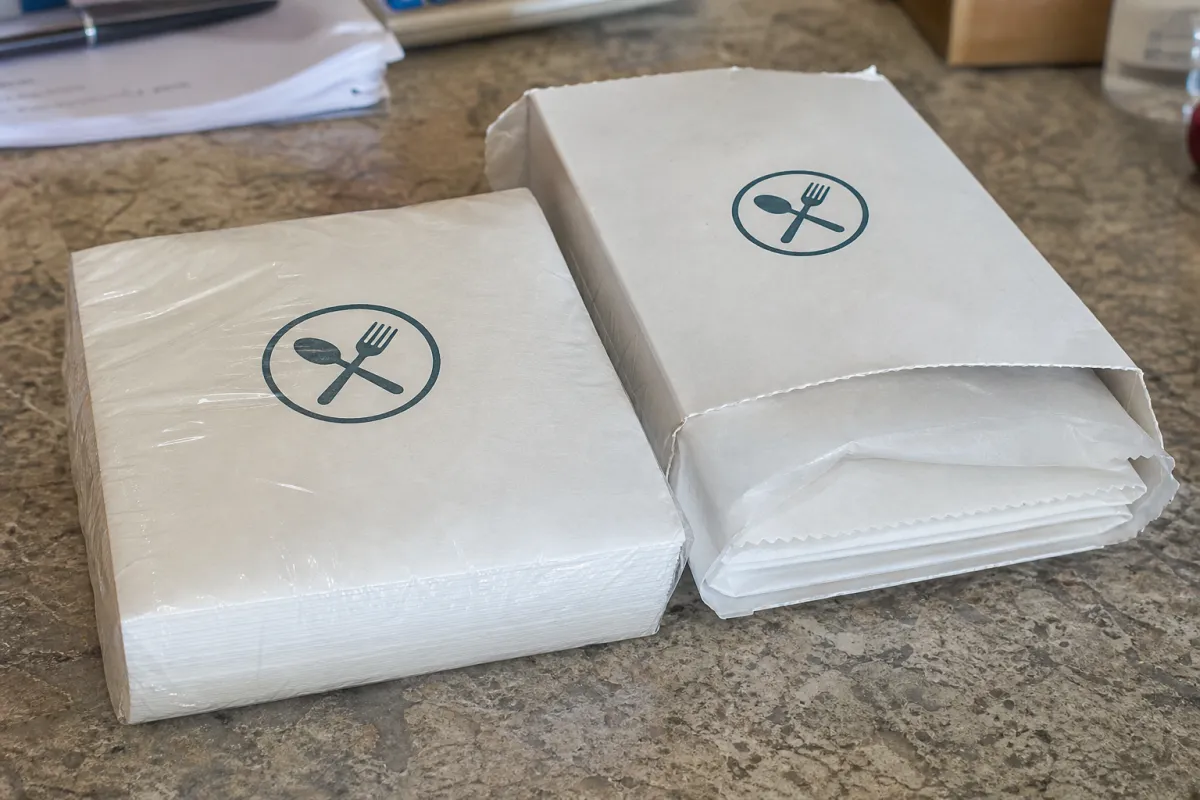
Custom restaurant tissue is used for more than one job, and that is why the product detail matters so much. It can wrap a sandwich, line a basket, separate bakery items, fill a takeaway box, or sit visibly in the bag as a brand carrier. When the spec is clear, restaurant takeaway tissue paper cost becomes easier to calculate because the factory knows whether it is producing a light presentation sheet, a functional wrap sheet, or a hybrid item that needs to do both. The wrong assumption at the quoting stage is expensive later.
Common sheet sizes include compact formats for bag presentation and larger formats for wrapping and lining. A buyer might ask for 200 x 200 mm sheets for small bakery items, or 250 x 350 mm and larger where the tissue needs more surface area. Fold style matters too. Flat cut sheets are straightforward, but interfolded or pre-folded formats can add handling time and push restaurant takeaway tissue paper cost upward. If your team packs quickly during service, that extra convenience may still be worth it, but it should be priced deliberately rather than guessed.
Print style makes a visible difference. A one-color logo repeat creates a clean, premium look and generally keeps restaurant takeaway tissue paper cost simpler to manage. Two-color printing adds brand depth without becoming too busy. Full-bleed or heavy-coverage patterns create a stronger visual statement, but they also use more ink and can require more careful registration. Some brands want a subtle repeat that disappears into the fold until the sheet is opened; others want a bold pattern that becomes part of the unboxing moment. Both approaches are valid, but they carry different production loads.
Food-contact suitability is another practical issue. If the tissue may touch food directly, the paper grade and inks should be checked for the intended use in your market. That does not mean every sheet needs to be treated like primary food packaging, but it does mean the buyer should state the application clearly. If the tissue sits only in the bag or acts as an outer wrap, the spec can be simpler. If it may touch hot, greasy, or ready-to-eat items, confirm that before approving artwork, because restaurant takeaway tissue paper cost is not the only thing at stake; compliance and fit-for-purpose matter more.
Brand design also changes the final feel. A tonal print gives a softer, more understated look. A dark logo on natural or white tissue feels more direct. Repeats with well-managed white space look premium without appearing crowded. Restaurant buyers often underestimate how much a restrained layout can do. A clean logo repeat with enough breathing room usually looks more expensive than a dense design, even if the actual restaurant takeaway tissue paper cost is lower.
Here is the simple rule I give buyers: decide first what the tissue needs to do, then decide how visible the brand should be. If the sheet is mainly decorative, light tissue and minimal print may be enough. If it needs to help the packing line and support the meal in transit, choose a sturdier grade and accept the small cost increase. Isn't a cleaner spec the fastest route to a better quote?
Why pay for a feature you will not use?
Restaurant takeaway tissue paper cost, pricing, and MOQ
Pricing and MOQ tend to move together. A lower minimum order quantity gives smaller brands more flexibility, but it often comes with a higher unit cost because the setup time is spread across fewer sheets. Larger commitments usually unlock better restaurant takeaway tissue paper cost, especially when the size, print, and folding method are standardized. The trick is to match the order size to real consumption, not to an optimistic forecast that leaves cartons sitting on a shelf.
MOQ also depends on how the tissue is made. A simple stock size with one-color printing may sit at a lower threshold, while a custom size or a complex multi-color run may need a higher minimum. That is not a penalty; it is a production reality. If your team only needs a trial batch, ask whether a pilot run is possible, but expect restaurant takeaway tissue paper cost to reflect the extra handling.
One clean way to compare quotes is to ask for a price ladder. Request the cost at several volumes, then compare the unit price and the landed total at each level. That makes the breakpoints obvious. A quote may look similar at 5,000 and 10,000 sheets, but the shipping and packing math can shift the real result more than the headline figure suggests.
Volume reveals leverage.
Production steps, process, and turnaround timeline
The production path is usually simple, but every step affects timing. Artwork is checked first, then proofs are prepared, then printing begins, and finally the tissue is packed and shipped. If any of those steps changes, the timeline moves. That is why a buyer who wants fast turnaround should send final artwork early and keep the spec locked before requesting a formal schedule.
Proofing deserves more attention than it gets. A color on screen is not the same as a color on tissue, and a logo that looks crisp in PDF form can soften if the file is low resolution or the repeat is too tight. Review the proof carefully, because a small correction before print is easy, while a correction after production starts can be costly. In practical terms, careful proofing protects both the schedule and restaurant takeaway tissue paper cost.
Lead times vary with quantity, print complexity, and factory workload. A straightforward run may move quickly, while a full-coverage design or a special fold can take longer. Shipping adds another layer. Air freight shortens delivery but raises cost; sea freight lowers transport cost but extends the calendar. If the tissue is tied to a restaurant launch or seasonal promotion, build in a buffer so the packaging arrives before the campaign starts.
Plan early, and the rest gets easier.
Why branded tissue improves takeaway presentation
Branded tissue does more than fill space. It creates a better opening moment when the customer first lifts the lid, folds back the wrap, or reaches into the bag. That moment matters because it sets the tone for the meal before the first bite. A clean branded sheet can make the whole order feel more intentional, and that is where restaurant takeaway tissue paper cost starts to look like a presentation investment rather than a disposable line item.
Presentation also influences perceived value. A plain package can still be effective, but a coordinated package feels considered. Tissue is one of the easiest ways to add that layer without redesigning the entire packing system. It works quietly in the background, yet the customer notices the effect immediately. That is especially true for premium takeaway, bakery, deli, and hospitality brands that want the meal to feel polished from the moment it leaves the counter.
Here is the advantage in one sentence: branded tissue makes ordinary service look deliberate.
Specification checklist for restaurant takeaway tissue paper
Start with the sheet size, then confirm the fold style, paper grade, print colors, and repeat layout. Add the packaging count, carton dimensions, and shipping terms before requesting a final quote. Those details may feel administrative, but they are what turn a vague estimate into an accurate price. If the supplier knows exactly what you want, restaurant takeaway tissue paper cost becomes much easier to compare.
It also helps to define the use case in plain language. Say whether the tissue is decorative, functional, or both. Say whether it touches food directly. Say whether the artwork must be subtle or bold. Clear instructions shorten the back-and-forth and reduce the chance of a revision cycle that adds time and expense. When the brief is sharp, the quote usually is too.
Before you approve an order, check the following: size, gsm, print method, color count, packing style, delivery terms, and intended food-contact use. Miss one of those items, and the quote can drift. Catch them early, and the buying decision stays clean.
Next steps to compare restaurant takeaway tissue paper cost
To compare restaurant takeaway tissue paper cost properly, ask for at least two or three quotes based on the same specification. Keep the sheet size, print coverage, and delivery terms identical across each request. Otherwise, you are not comparing prices at all; you are comparing different products. The goal is clarity, not confusion.
If you already have artwork, send it with the inquiry. If you do not, describe the logo placement and the visual tone you want. Minimal, premium, playful, bold, natural, and classic are all useful descriptors when they are paired with a real production brief. The more concrete the reference, the less room there is for guesswork.
When the numbers come back, compare the unit cost, the freight, the carton pack, and the lead time together. One supplier may be cheaper on paper but slower in practice. Another may cost a little more yet save a launch date. That is why the smartest purchase decision weighs the full picture instead of hunting for the lowest line item.
FAQ
What affects restaurant takeaway tissue paper cost the most? Sheet size, print coverage, quantity, folding method, and freight usually make the biggest difference. Material grade and packing format also matter, especially when the order is small.
Can I order a small run? Yes, but the unit price is often higher because setup costs are shared across fewer sheets. If you only need a test batch, ask for a pilot quote and compare it against a larger volume.
Is branded tissue worth it? For many restaurants, yes. It adds presentation value, supports brand recognition, and can improve the opening moment without changing the rest of the packaging system.
How do I get a better quote? Send a complete spec, use a standard size if possible, keep the color count simple, and confirm delivery terms before requesting pricing. Clean inputs usually produce cleaner numbers.