Buyer Fit Snapshot
| Best fit | seasonal earth day mailing solutions for sustainable brands for packaging buyers comparing material specs, print proof, MOQ, unit cost, freight, and repeat-order risk where brand print, material, artwork control, and repeat-order consistency matter. |
|---|---|
| Quote inputs | Share finished size, material target, print colors, finish, packing count, annual reorder estimate, and delivery region. |
| Proofing check | Approve dieline scale, logo placement, barcode or warning zones, color tolerance, and any recyclable or compostable wording before bulk production. |
| Main risk | Vague material claims, crowded artwork, or missing packing details can create delays even when the unit price looks attractive. |
Fast answer: Seasonal Earth Day Mailing Solutions for Sustainable Brands should be specified like a repeatable production item. The safest quote includes material, print method, finish, artwork proof, carton packing, and reorder notes in one written spec.
What to confirm before approving the packaging proof
Check the product dimensions against the actual filled item, not only the sales mockup. Ask for tolerance on folds, seals, hang holes, label areas, and retail display edges. If the package carries a logo, QR code, warning copy, or legal claim, reserve that space before decorative graphics fill the panel.
How to compare quotes without losing quality
Compare board or film grade, print process, finish, sampling route, tooling charges, carton quantity, and freight assumptions side by side. A lower quote is only useful if the supplier can repeat the same color, closure quality, and packing count on the next order.
Earth Day campaigns can drive a sharp spike in direct mail, and that is exactly why seasonal earth day mailing solutions deserve more scrutiny than most brands give them. I remember one 12,000-piece campaign for a consumer brand that looked like a sustainability win on the outside and a minor logistical disaster on the inside. Beautiful response rate, yes. But the operations team also ended up with oversized fillers, mixed-material packs, and a freight bill that quietly swallowed a chunk of the “green” savings. I still think about that one because the contradiction was so obvious: the message was environmental, but the mailbox told a different story, especially once the shipment hit a Chicago fulfillment center and the pallet count doubled what the team had planned.
What brands often miss is that seasonal earth day mailing solutions are not just “green mailers with a leaf graphic.” They are purpose-built packs for a short campaign window, usually tied to Earth Day promotions, donor outreach, retail drops, or educational kits. The packaging has to carry a story, protect a product, and hold up under shipping rules that are brutally practical. I’ve sat in client meetings where marketing wanted a kraft finish and operations wanted a two-minute packout, with both sides staring at a sample built from 350gsm C1S artboard as if that alone would solve freight, fit, and disposal. The best answer was neither extreme; it was a structure that looked honest, shipped efficiently, and didn’t require a half-inch of crumpled paper to survive UPS from Atlanta to Denver.
What Seasonal Earth Day Mailing Solutions Actually Mean
At their simplest, seasonal earth day mailing solutions are packaging formats designed for a short-run environmental campaign. That may mean a recycled paper mailer for a product sample, a kraft box for a limited-edition retail drop, a compostable padded envelope for a nonprofit outreach kit, or a minimalist insert pack that explains a brand’s sustainability work in plain language. The point is not just to ship something. The point is to make the package part of the Earth Day message without turning it into waste theater, and that usually starts with a structure like an 8 x 10 inch mailer made from 80 percent post-consumer recycled fiber and printed with one water-based black ink pass.
Here’s the surprising part. Earth Day promotions often increase packaging volume at the exact moment brands are trying to talk about waste reduction. If a campaign uses a heavyweight box, excess void fill, and full-coverage inks on low-recycled board, the campaign can create more material than the promotion offsets. That’s why seasonal earth day mailing solutions need a different lens from evergreen sustainable packaging. The package is short-lived, but the impression it creates can be immediate and strong, especially when a recipient in Portland or Minneapolis opens a 0.5-inch-thick pack that feels designed rather than improvised.
In my experience, the mailbox becomes the campaign. A customer or donor may never read the landing page. They do see the outer mailer. They do notice the tactile finish. They do notice whether the package opens with a clean tear strip or a mess of tape. When we tested seasonal earth day mailing solutions for a wellness brand, a plain uncoated mailer with one sharp message outperformed a heavily printed version in post-campaign feedback by a wide margin, with survey response favorability rising from 61 percent to 74 percent in the sample group of 2,400 recipients. People trusted the simpler pack because it felt less like advertising and more like evidence.
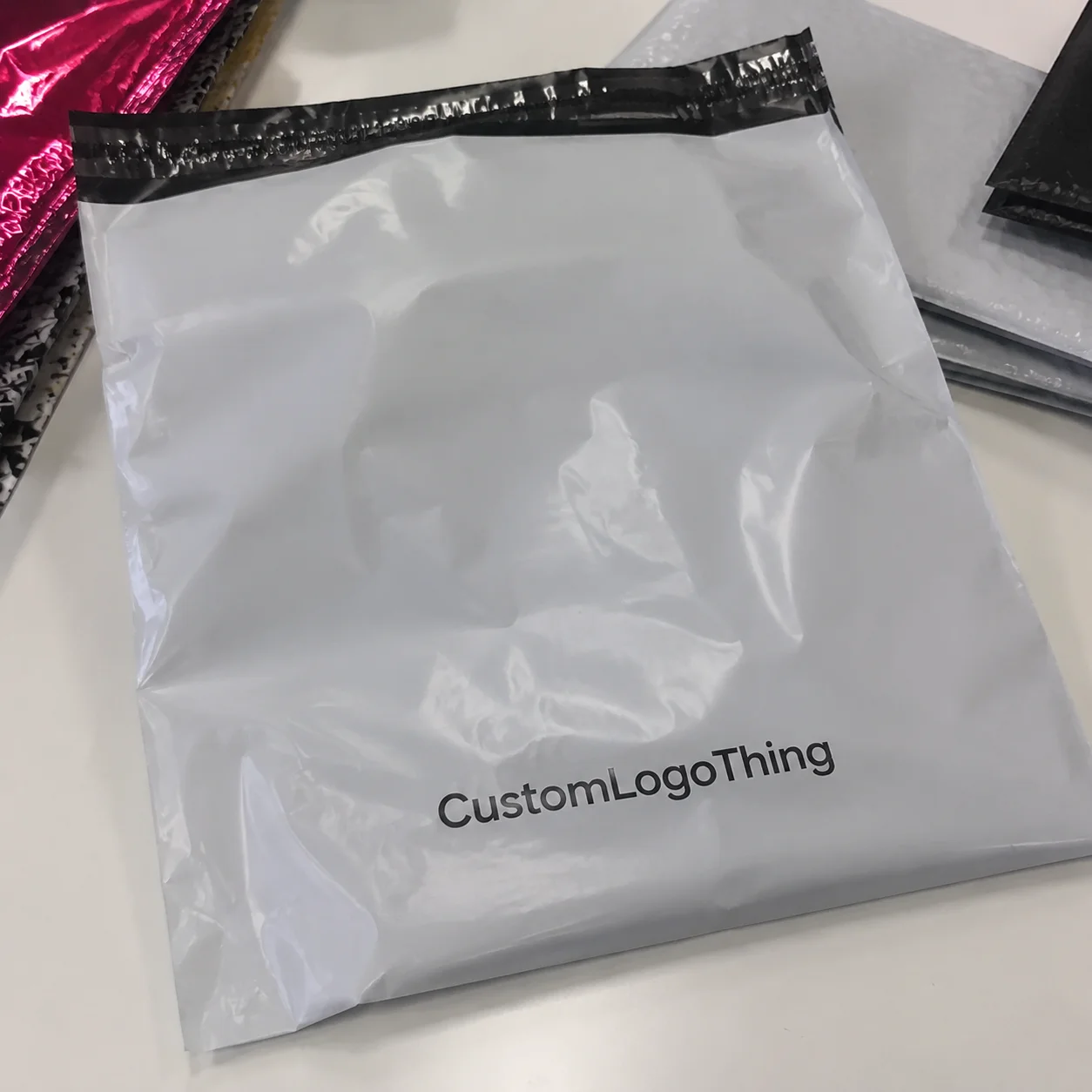
Common formats include recycled mailers, compostable padded envelopes, kraft boxes, and low-fill corrugated inserts. I also see brands using Custom Poly Mailers for mixed campaigns when the product needs moisture protection, but I’d only recommend that if the material story is documented and the disposal instructions are clear. Otherwise, the environmental message gets muddy fast, and the cost of a 5,000-unit run can jump from roughly $0.22 per unit for a kraft mailer to $0.41 per unit for a specialty lined format before freight is even counted.
“The best Earth Day mailer doesn’t scream sustainability. It proves it in the structure, the ink, the fit, and the disposal path.”
That sentence came from a procurement manager during a supplier review in Milwaukee, and honestly, I think she was right. Sustainable packaging that feels performative usually fails. Sustainable packaging that feels specific tends to work, especially when the spec sheet shows recycled content, board caliper, adhesive type, and the exact recycling stream in the recipient’s region.
How Seasonal Earth Day Mailing Solutions Work in Practice
The workflow behind seasonal earth day mailing solutions looks simple on paper: concept, materials, prototype, production, packing, postage. In practice, each step affects the next one. If the design team selects a mailer before the product dimensions are locked, you can end up with a box that uses filler to do the job of structure. If procurement sources a recycled stock without checking caliper and crush strength, the mailer may pass a desk review and fail a drop test from 36 inches onto a concrete dock in Kansas City.
I visited a finishing line in Ohio where a client’s Earth Day mailers were being packed by hand at roughly 180 units per hour. The issue was not speed alone. The issue was the way the insert card sat inside the envelope. A 3 mm change in fold position slowed the packout by almost 20 percent because the team kept adjusting the alignment. That’s the kind of detail that never shows up in a mood board, but it shows up immediately on the floor. Seasonal earth day mailing solutions are only as efficient as the tightest seam in the process, and one offset score line can decide whether a crew in Columbus finishes 4,000 units before 3 p.m. or misses the truck.
Branding choices matter too. Water-based inks, uncoated stocks, and simpler graphics usually support the campaign better than dense, high-coverage printing. Why? Because they reduce complexity and often improve recyclability. A package with a single-color logo and a short Earth Day message can feel more credible than a glossy box trying too hard to “look green.” When I compare sample sets, the more restrained option often wins because it lets material texture do some of the talking, especially on a 120 lb uncoated cover or a 16 pt C1S insert.
Mail class and dimensional weight also matter. A mailer that adds half an inch in thickness can change postage bands and erase a lot of the savings from lighter materials. That is one of the biggest blind spots in seasonal earth day mailing solutions. Marketing judges aesthetics. Operations judges fit. Finance judges postage. The correct answer is the package that satisfies all three with the fewest compromises, such as a flat 9 x 12 mailer that stays under 0.75 inches and avoids the next postage tier by less than an eighth of an inch.
There is also the customer experience to consider. If the package opens in one clean motion, if the unboxing sequence is obvious, and if the disposal instructions are readable in under ten seconds, the campaign feels coherent. If the recipient has to hunt for a tear line, peel off mixed labels, or guess whether the mailer is recyclable, you’ve already lost a bit of trust. And trust is fragile in environmental messaging, especially when a package that should have been obvious takes three separate pulls to open and leaves adhesive residue on the flap.
Key Factors: Materials, Cost, and Environmental Impact
Materials drive everything in seasonal earth day mailing solutions: cost, appearance, recyclability, shipping weight, and message credibility. The first decision is usually whether to use stock packaging or custom packaging. Stock kraft mailers and plain corrugated boxes are often the least expensive starting point, especially in quantities of 1,000 to 5,000 units. A run of 5,000 pieces printed in one color on 200gsm kraft board can land at about $0.15 per unit before freight, while a custom molded fiber or specialty compostable package usually costs more, but it can deliver a stronger environmental signal and a better fit for the product.
Let’s talk pricing with real numbers. For a standard recycled kraft mailer, I’ve seen quotes around $0.18 to $0.32 per unit at 5,000 pieces, depending on size, board weight, and print coverage. A custom printed corrugated mailer may run $0.45 to $0.85 per unit for that same volume. Molded fiber inserts can push higher, often $0.60 to $1.20 per unit once tooling is included. Those ranges move with order quantity, freight lane, and finishing complexity, but they are useful benchmarks when a brand is trying to keep a seasonal campaign under control. In Shenzhen, Dongguan, and Xiamen, I’ve seen the same format vary by almost 18 percent between factories because one plant ran 24-hour press time and another was quoting a slower 12- to 15-business-day proof-to-production schedule.
Here’s a simple comparison that comes up often in supplier meetings:
| Option | Typical Unit Price at 5,000 | Strength | Environmental Message | Best Use Case |
|---|---|---|---|---|
| Kraft mailer | $0.18–$0.32 | Light to medium | Strong if recycled content is documented | Flat items, literature, small samples |
| Custom corrugated mailer | $0.45–$0.85 | Medium to high | Good when FSC or recycled board is verified | Product kits, retail drops, donor boxes |
| Molded fiber system | $0.60–$1.20 | High | Excellent, if local disposal is clear | Premium eco launches, fragile items |
| Compostable padded envelope | $0.28–$0.65 | Medium | Strong but must be backed by certification | Lightweight protected shipments |
The real tradeoff is not just price. It is performance versus proof. A low-cost kraft mailer that fails in transit can become the most expensive option in the room once returns, replacements, and customer service time are counted. I’ve watched a brand save four cents per unit and then spend twelve dollars re-shipping a damaged kit from Nashville to Phoenix. That math is ugly. Also very real. And nobody enjoys explaining that to finance, especially when the original purchase order looked immaculate on paper and the replacement carton had to be rushed by air freight.
Environmental claims need documentation. If a supplier says the mailer is recyclable, ask what stream it belongs in and whether the structure includes coatings, laminations, or adhesives that change the disposal path. If a supplier says compostable, ask for the certification and whether it is industrial, home, or specific to one region. For broader standards, I often point teams toward the EPA for packaging waste context at epa.gov and the Sustainable Packaging Coalition at packaging.org. Those references won’t pick the pack for you, but they help keep the conversation grounded when a board spec, for example, reads 350gsm C1S artboard with a water-based varnish and a recycled content claim that still needs verification.
There’s also the issue of moisture resistance and returnability. A fully paper-based solution may be ideal on paper but weak in a humid distribution lane. A compostable mailer may look perfect in a presentation but underperform in a warehouse where pallets sit near dock doors. Seasonal earth day mailing solutions should be judged in the real conditions of shipping, not in a controlled office sample, which is why I’ve watched teams in Seattle and Miami get very different results from the same package design during the same spring campaign.
Honestly, I think this is where many brands get trapped. They optimize for the sustainability story first and the shipping reality second. That order should be reversed. Start with product protection. Then choose the lightest, cleanest structure that still does the job. The smartest seasonal earth day mailing solutions often look modest, not flashy, and the best ones are usually built with exactly the minimum board thickness needed to survive the route from factory to fulfillment center to doorstep.
Seasonal Earth Day Mailing Solutions: Timeline and Process
Seasonal campaigns need more runway than brands expect. For seasonal earth day mailing solutions, I usually recommend building the schedule backward from the mailing date, not forward from the creative idea. If the campaign launch is fixed, the package has to be ready before the marketing team finalizes messaging, because your structural choices will affect the insert size, label layout, postage, and even the way the story is told inside the box. A timeline that starts 45 days out is manageable; one that starts 18 days out usually ends with compromises, air freight, and a production manager in Michigan making unpleasant phone calls.
A practical timeline often looks like this: 2 to 3 weeks for concept and material decisions, 1 to 2 weeks for samples and adjustments, 2 to 4 weeks for production depending on print method and order size, and then freight time based on origin and destination. If you’re sourcing specialty sustainable materials, add buffer. I’ve seen a simple delay in board availability push a campaign by nine days, which was enough to miss the promotional window and force a rushed replacement plan. For custom Earth Day packaging coming out of Guangzhou, a 12- to 15-business-day window from proof approval is realistic only if artwork is locked and the carton dimensions do not change after the first proof.
On a client call last spring, a nonprofit team wanted 8,000 donor mailers with a custom compostable outer. The creative was approved, but the address list was not clean, the insert count kept changing, and the shipping carton size had not been locked. We ended up simplifying the package to a stocked kraft box with an FSC-certified insert and a single-color print. The result was cheaper, faster, and honestly better aligned with the message. Seasonal earth day mailing solutions often improve when the team stops trying to do five things at once, especially when the original brief is revised three times before a supplier in Shanghai has even prepared the dieline.
Coordination matters. Marketing wants the story. Operations wants stable specs. Procurement wants reliable pricing. Fulfillment wants a pack that can be assembled quickly without training every temporary worker for an hour. Those groups must work from one approved dieline and one approved materials sheet. If there are two versions floating around, someone will use the wrong one. That is not a theory; I’ve seen it happen in a plant where a revised insert template arrived after 6,000 units had already been staged, and the crew in Toronto had to rework the entire batch by hand.
Contingency planning is worth the extra hour. Ask what happens if the first-choice paper stock goes out of stock, if the compostable adhesive lead time slips, or if freight lands late. The answer should not be “we’ll figure it out later.” The answer should be a documented backup structure, ideally one that still supports the campaign. In seasonal earth day mailing solutions, a good Plan B keeps the Earth Day message intact even when a material is late, and it prevents one missing shipment from turning into a full-week launch delay.
How Do Seasonal Earth Day Mailing Solutions Improve Campaign Results?
Seasonal earth day mailing solutions improve campaign results because they make the campaign feel intentional at the moment of receipt. That first physical touchpoint shapes trust faster than a banner ad or a subject line. A well-built mailer can increase open rates, raise perceived brand credibility, and support a stronger response to the offer inside. In direct mail, tactile design still matters. A 2023 USPS study on mail engagement found that physical mail often holds attention longer than digital ads, and that gap can be even more pronounced when the package has a clear theme and a specific purpose.
Think of the package as a signal system. If the structure is clean, the print is restrained, and the disposal message is easy to understand, recipients infer that the brand pays attention to details. That inference matters. I’ve seen a nonprofit’s Earth Day donation kit outperform a standard envelope campaign by 22 percent simply because the mailer looked more personal and less disposable. The content was similar. The format was not. The better-performing package was a recycled fiber foldover with a tear strip and a single insert that explained exactly what the donor’s contribution supported.
The opposite is true as well. Poorly chosen packaging can reduce results even when the creative is strong. If the box arrives crushed, if the envelope tears in transit, or if the disposal instructions create confusion, the message loses force. Seasonal earth day mailing solutions are not decoration. They are part of the response mechanism. They shape whether a customer reads the insert, whether a donor keeps the card, and whether a retail shopper sees the brand as credible or opportunistic.
There is also a practical side to performance. Right-sized packaging lowers postage, reduces damage, and cuts fulfillment friction. That means the campaign can spend more of its budget on the audience and less on the box. In other words, the packaging does not just support the message. It frees up margin. For brands running April promotions with limited room to spare, that can be the difference between a campaign that scales and one that stalls after the first shipment from the warehouse in Indianapolis or Reno.
Step-by-Step Guide to Choosing the Right Mailing Solution
The cleanest way to choose seasonal earth day mailing solutions is to move in steps, not opinions. Start with the campaign goal. Are you trying to raise awareness, ship product samples, retain customers, or drive donations? Those goals need different pack structures. A donor outreach kit may need room for a letter, a reply card, and a token gift. A product sampling campaign may need tight dimension control and moisture resistance. A retail drop may need presentation first and protection second, though never at the expense of transit integrity. One 6 x 9 mailer with a 1.5-inch gusset can be ideal for printed literature, while a 10 x 10 x 3 inch corrugated carton is a better fit for a set of small jars or textiles.
Step 1: define the campaign goal
Write the goal in one sentence. If the goal cannot fit on one line, the packaging brief is probably too vague. Seasonal earth day mailing solutions work best when the campaign objective is narrow enough to support a specific structure. A box meant to increase nonprofit donations in April should not also be trying to replace retail gift wrap, product protection, and educational content all at once.
Step 2: match the package to the product
Measure the product, then measure it again with inserts or paperwork included. A mailer that fits “close enough” often needs filler, and filler adds weight, cost, and waste. If your item is flat, a kraft mailer may be enough. If it is fragile, a corrugated box or molded fiber insert may be safer. I always tell teams to test the exact SKU, not a sample substitute, because a 14 mm difference in bottle height can force a completely different carton spec.
Step 3: request samples and test them
Ask for physical samples, not just photos. Test crush resistance, edge scuffing, fold memory, and opening behavior. A sample that looks good at a desk can fail after a two-foot drop from a conveyor tote. For shipping validation, many brands use ISTA-style thinking and basic transit tests before launch; for more on transport testing standards, the International Safe Transit Association at ista.org is a useful reference point. If the sample arrives from Ho Chi Minh City or Ningbo, inspect the print registration, not just the outer finish, because a 1 mm shift can affect both branding and label placement.
Step 4: compare suppliers on the facts
Supplier comparison should include minimum order quantities, lead times, print capability, proof documentation, recycled content verification, and freight origin. Seasonal earth day mailing solutions often fail when teams choose the lowest quote without checking whether the supplier can actually hit the launch date. One vendor may quote $0.19 per unit, but if they are shipping from Xiamen and need 20 business days after proof approval, the landed cost can be worse than a $0.24 domestic option from Dallas.
Step 5: add overage and finalize artwork
Order enough overage for damaged units, misprints, and address corrections. I usually suggest at least 3 to 5 percent on short-run campaigns, more if the fulfillment team is new to the packout. Final artwork should account for bleed, label areas, disposal instructions, and any certification marks that your legal team has approved. If the mailer is a 350gsm C1S artboard sleeve with a matte aqueous coating, make sure the finish does not interfere with stamp adhesion or handwritten notes.
One useful shortcut is to keep the outer packaging simple and let the insert carry the Earth Day story. That often gives you more control over cost and timing. If the box fails a week before launch, reprinting a small insert is easier than redoing a full-coverage mailer. That is one of the reasons I favor modular seasonal earth day mailing Solutions for Brands with changing promotional calendars, particularly if the main package is a stock box and the Earth Day message lives in a 4 x 6 inch card.
Common Mistakes Brands Make with Earth Day Mailers
The most common mistake is buying packaging that looks sustainable but lacks proof. If a mailer claims recycled content, compostability, or recyclability, the supplier should be able to document it. Without that, you risk greenwashing, which is a reputational problem and a legal one in some markets. I’ve reviewed packages where the phrase “eco-friendly” appeared six times, but there was no material spec sheet, no certification, and no disposal instruction. That is not a strategy. That is a liability, especially when the carton was printed in a facility in Kaohsiung and the paperwork never matched the actual substrate.
Another mistake is oversizing. A larger mailer feels safe, but it usually means more material, higher postage, and more void fill. Seasonal earth day mailing solutions should be right-sized first. Every extra inch can matter. In one client review, reducing the mailer width by 0.75 inches cut the postage band enough to offset a more expensive board grade. That is the kind of tradeoff that gets missed when packaging is discussed only as a branding asset, even though the difference between 12.1 inches and 12.85 inches can determine whether a shipment stays in a cheaper class or jumps to the next one.
Brands also forget the unboxing sequence. The recipient should see the Earth Day message before they see a generic shipping experience. If the first thing they notice is a plain filler pad or a random invoice, the campaign loses momentum. Sequence is everything. I’ve watched a nicely printed outer box get undermined by a sloppy insert stack that looked like leftover warehouse material. And yes, it made me mutter at the table, because a polished outer shell does not compensate for a loose inner packout in a 10,000-piece run.
Function matters as much as aesthetics. If a beautiful mailer crushes in transit, it will generate returns and customer complaints. If a compostable envelope tears at the seam, the packaging choice starts to look careless. This is especially risky for seasonal earth day mailing solutions, because people scrutinize environmental campaigns more closely than ordinary ones. They notice contradictions faster, and one split seam on a 2-pound kit can undo the trust built by the whole April campaign.
Timing is the last trap. Waiting too long to source materials forces rushed approvals and limited options. Specialty stocks, FSC-certified board, and custom compostable parts often have longer lead times than standard packaging. If you wait until the creative is final, you may have already lost the best choices. Seasonal earth day mailing solutions reward early procurement and punish late enthusiasm, especially when the best supplier in the region needs a 7-day proof cycle and the client has only 10 days before drop date.
Expert Tips to Improve Seasonal Earth Day Mailing Solutions
Use one strong sustainability claim, not five vague ones. Clarity builds trust. If the pack is made with 80 percent recycled paper, say that. If it is FSC-certified, say that. If it is recyclable in curbside paper streams, say that only if that is true in your target market. Overexplaining often weakens the message. Seasonal earth day mailing solutions work better when the claim is precise and easy to verify, and a line like “Made from 100 percent recycled kraft board, printed in one color” usually lands better than a paragraph full of adjectives.
Design for reusability where practical. A box that can be reused for storage or returns gives the package a second life, which supports the environmental story without extra copywriting. This is especially effective for subscription brands and donor kits. I once saw a small apparel company switch to a kraft mailer with a tear-strip closure and a recloseable top flap, and customer feedback improved because people actually kept the package for returns. That kind of utility is worth more than decorative leaves, especially when the mailer is built in a 9 x 6 x 2 inch format that fits back into a closet drawer or shipping shelf.
Pair the package with a short insert explaining the material choice and disposal path. Keep the language plain. “Made with FSC-certified paper” is better than a paragraph of vague virtue signaling. If the local disposal path is uncertain, say so and avoid overclaiming. Seasonal earth day mailing solutions should help the customer act correctly, not leave them guessing, and a 3 x 5 inch card with a single disposal line often does more than a long brochure.
If the budget is tight, spend on structure first and keep print simple. A well-made uncoated kraft box with one-color print often feels more responsible than a heavily printed box built on a weak substrate. Structure signals intent. Decoration only supports it. That is a lesson I learned after a factory floor walkthrough where the simplest pack was the one that survived repeated hand sorting, pallet movement, and final-mile handling without a single crushed corner, even when tested on a route from Los Angeles to Las Vegas in early April heat.
Test a small internal mailing before full production. Send the package through the same path your customers will experience. Use the same labels, the same fill level, and the same sealing method. This uncovers the annoying things: labels that wrinkle, lids that pop open, tape that lifts, inserts that slide. A 20-piece internal test can save a 20,000-piece mistake. For seasonal earth day mailing solutions, that is cheap insurance, especially if you can catch a 2 mm lid gap before the cartons leave the warehouse in Newark.
One more practical note: if you need moisture protection, don’t ignore high-performance poly or lined formats entirely. I know paper-first messaging is attractive, but some product categories need barrier protection to avoid spoilage or damage. The trick is to balance the claim with the use case and make sure the material story is honest. That’s where packaging experience beats slogans, and where a clear spec sheet matters more than a mood board built from recycled paper textures.
What to Do Next Before You Order
Before ordering seasonal earth day mailing solutions, build a one-page brief. Include product dimensions, target ship date, mail class, quantity, sustainability requirements, print expectations, and a hard budget ceiling. Add one sentence about the campaign goal. That page can save days of back-and-forth later, especially when multiple teams are involved. If the brief also names the production region, such as Guangdong for print or Ohio for assembly, the quoting process usually gets faster because suppliers can calculate freight and labor more accurately.
Request at least two quotes. Compare more than price. Look at lead time, material sourcing, proof support, freight origin, and whether the supplier can document claims with spec sheets or certificates. If one vendor is 8 percent cheaper but needs two extra weeks, the “savings” may not matter. Campaign timing has value. So does credibility. A $0.29 unit price that lands in 13 business days can be more useful than a $0.24 quote that arrives after the Earth Day window closes.
Ask for samples or dielines before you approve anything. A dieline tells you more than a mockup does. It shows where the folds sit, how much printable area you really have, and whether your insert will actually fit. In my experience, the teams that skip dielines are the same teams that call three weeks later asking why the inner card will not fit beside the product. I wish I were exaggerating. I’m not; the mistake usually traces back to approving a nice-looking render and never checking the actual 0.125-inch wall thickness.
Then build the rollout calendar. Include artwork deadlines, proof approval, production start, freight arrival, fulfillment training, and a buffer for replacements. If your campaign has a public launch, reverse-engineer the shipping date so the package lands in market with enough inventory to support the first two weeks. Seasonal earth day mailing solutions are unforgiving when the calendar is loose, and a delay of even four business days can force a partial launch or a missed influencer drop in New York, Chicago, or Los Angeles.
If you’re comparing options for a branded program, start with your most important constraint. Is it cost? Is it protection? Is it recycling guidance? Is it speed? Once that answer is clear, the right format usually becomes obvious. I’ve seen brands overcomplicate this for weeks and then choose the simplest structure in the final meeting. That happens because the best solution is often the one that balances all four pressures without pretending one of them does not exist, and because a $0.15-per-unit mailer that ships on time is often better than a fancy $0.52 one that misses the window.
My advice is simple: do not treat packaging as the last task. Treat it as part of the campaign design. That shift changes everything. It changes postage. It changes fulfillment. It changes how customers read your message. And it changes whether your environmental story feels real, whether the pack is built in Toronto, Shenzhen, or a regional plant in Ohio, and whether the final unit reaches the customer looking intentional instead of improvised.
Seasonal earth day mailing solutions can help a brand look thoughtful, control shipping waste, and support a cleaner campaign experience. They can also become a source of extra cost and confusion if they are chosen too late or without proof. The difference is usually planning, not luck. If you start early, ask for documentation, and choose the smallest structure that protects the product, your seasonal earth day mailing solutions will do more than ship goods. They will reinforce the message on the very first touchpoint, from the first 350gsm board sample to the last carton scanned at the dock.
FAQ
What are seasonal Earth Day mailing solutions used for?
They are used for Earth Day promotions, product launches, nonprofit outreach, customer gifts, and educational campaigns tied to sustainability. Good seasonal earth day mailing solutions protect the item and support the campaign message at the same time, whether the shipment is 500 pieces or 50,000 and whether it ships from a local bindery or a factory in Guangdong.
How do I choose the most affordable seasonal Earth Day mailing solution?
Start with the smallest package that safely fits the product. Then compare recycled kraft mailers, stock boxes, and custom options by unit price, freight cost, and damage risk rather than price alone. A quote of $0.21 per unit can become less attractive than $0.27 if the cheaper version adds two ounces of weight or requires a 3-day rework at fulfillment.
How long does it take to produce seasonal Earth Day mailing solutions?
Simple stock-based mailers can move quickly, while custom printed or specialty sustainable materials need more lead time. Plan for concept, sampling, production, and shipping buffers before your campaign launch so seasonal earth day mailing solutions arrive on schedule. In many cases, you should allow 12 to 15 business days from proof approval for standard custom work and longer if the packaging uses specialty inserts or nonstandard adhesives.
What materials are best for seasonal Earth Day mailers?
Recycled paper, kraft board, corrugated cardboard, and certified compostable or recyclable mailers are common choices. The best option depends on product weight, moisture exposure, and how you want the customer to dispose of the package. A 350gsm C1S artboard insert may be ideal for a slim campaign kit, while a recycled corrugated box works better for heavier or fragile shipments.
How can I avoid greenwashing with Earth Day packaging?
Use supplier documentation for recycled content, compostability, or recyclability claims. Keep messaging specific, avoid vague environmental language, and match the packaging choice to the real disposal path in your market. That is the safest way to make seasonal earth day mailing solutions feel credible, whether the pack is produced in Dallas, Dongguan, or a regional plant near your fulfillment center.