Buyer Fit Snapshot
| Best fit | Shipping Bags Premium Quality projects where brand print, material claims, artwork control, MOQ, and repeat-order consistency need to be specified before quoting. |
|---|---|
| Quote inputs | Share finished size, material target, print colors, finish, packing count, annual reorder estimate, ship-to region, and any compliance wording. |
| Proofing check | Approve dieline scale, logo placement, barcode or warning zones, color tolerance, closure strength, and carton packing before bulk production. |
| Main risk | Vague material claims, crowded artwork, missing packing details, or unclear freight terms can make a low unit price expensive after revisions. |
Fast answer: Shipping Bags Premium Quality: Quote Scope, Sample Proof, MOQ, and Lead Time should be specified like a repeatable production item. The safest quote records material, print method, finish, artwork proof, packing count, and reorder notes in one written spec.
Production checks before approval
Compare the actual filled-product size with the drawing, then confirm tolerance on folds, seals, hang holes, label areas, and retail display edges. Reserve space for logos, QR codes, warning copy, and material claims before decorative graphics fill the panel.
Quote comparison points
Review material grade, print process, finish, sampling route, tooling charges, carton quantity, and freight assumptions side by side. A quote is only useful when the supplier can repeat the same color, closure quality, and packing count on the next order.
Shipping bags premium quality sounds like a simple phrase, until you’ve watched two mailers with the same glossy outside fail in completely different ways on a warehouse floor. I remember standing next to a packing line in Shenzhen, coffee in hand, watching one bag split at the side seam after a 3-foot drop while the “same” bag from another supplier held up through rough conveyor handling, carton compression, and a miserable week of cross-country transit packaging abuse. Same look. Very different reality. That’s why shipping bags premium quality matters more than most buyers realize, especially when you are moving 5,000 to 20,000 units a month through ecommerce fulfillment centers in places like Los Angeles, Dallas, and Atlanta.
At Custom Logo Things, I’ve seen brands treat poly mailers like an afterthought, then spend $3,000 fixing avoidable damage claims because the adhesive strip peeled open in winter shipping. That’s not a theory. That’s an invoice with a lot of rude little line items attached. Good shipping bags premium quality reduce returns, protect soft goods, and make your order fulfillment look a lot more professional the moment the customer picks up the package. And yes, people do judge a brand by how the bag feels in hand. They always have, and honestly, I think they always will, whether the mailer costs $0.15 per unit for 5,000 pieces or $0.32 per unit for a heavier, custom-printed run.
Shipping Bags Premium Quality: What They Are and Why They Matter
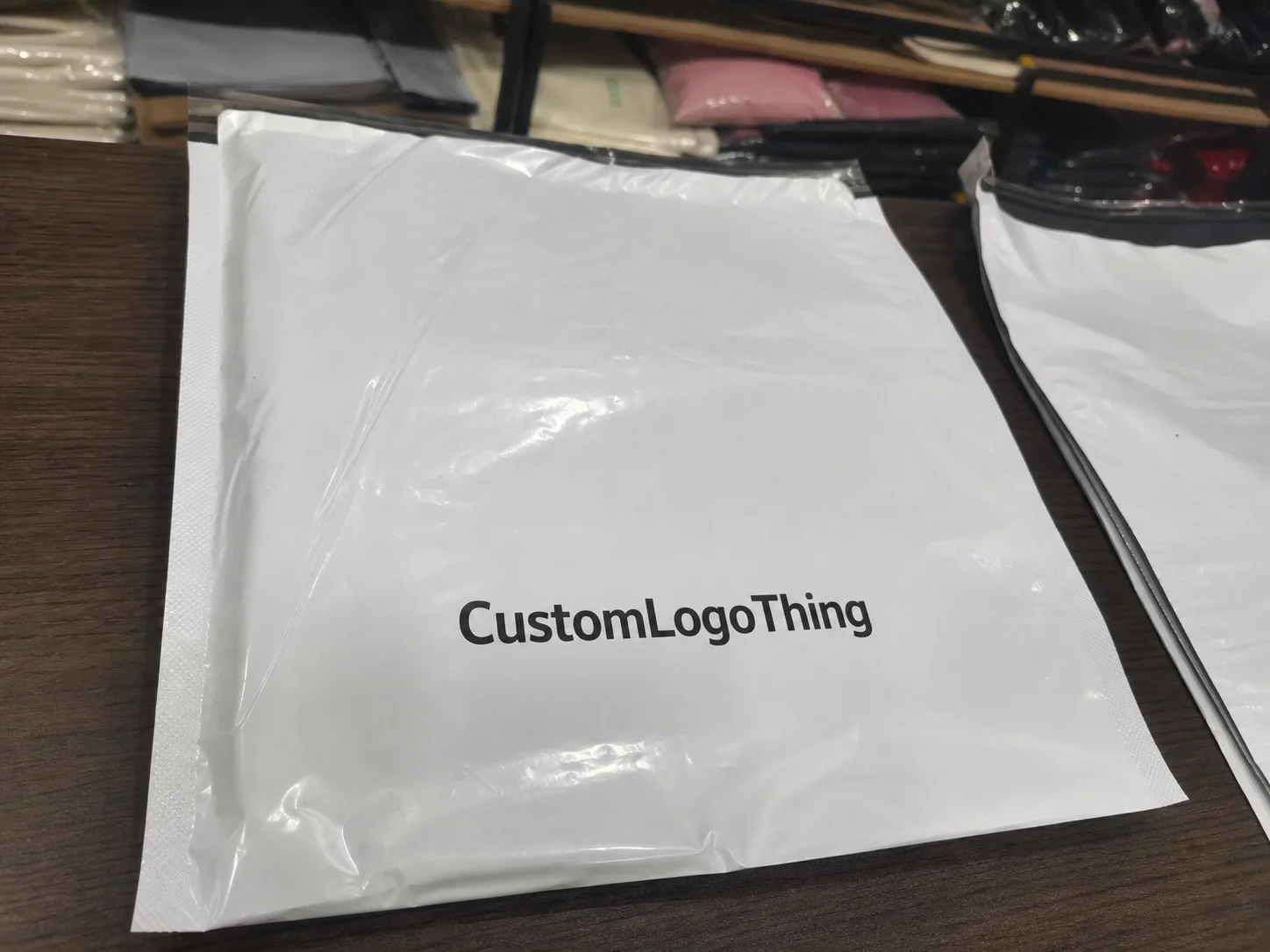
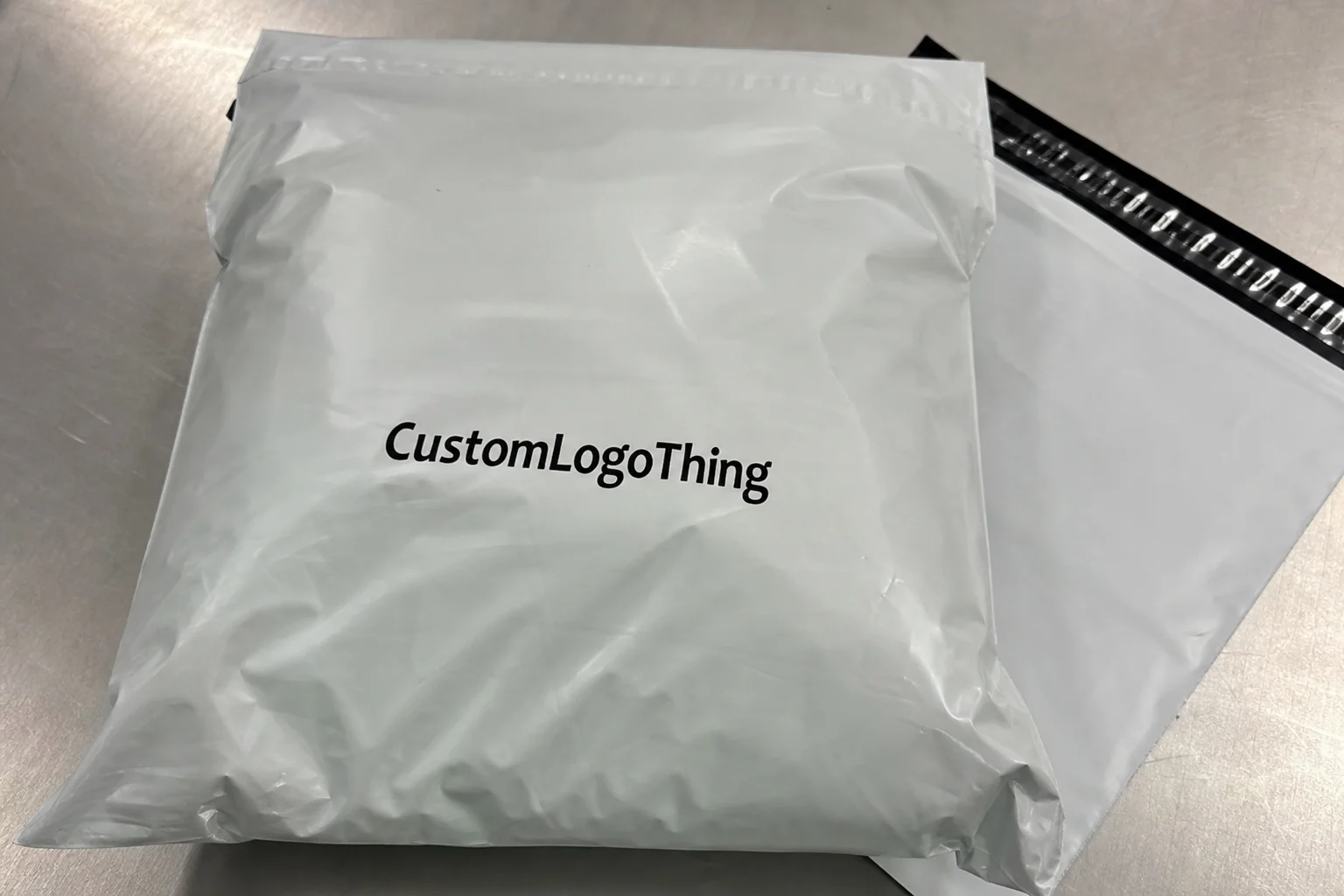
In plain English, shipping bags premium quality are poly mailers built to handle real shipping stress without tearing, splitting, or printing like a cheap festival flyer. They usually have stronger film, cleaner heat seals, better puncture resistance, and an adhesive strip that actually sticks after being folded, stacked, and shoved around a depot. If you’ve ever opened a shipment and found the whole side seam peeled open like a zipper gone bad, you already know the problem. I’ve had that exact moment more than once, and I still get a little twitchy when I see a crooked seal line. A well-made mailer from a factory in Dongguan or Yiwu often uses co-extruded LDPE film with a sealed flap width of 40 to 50 mm, and that little measurement makes a real difference when cartons are stacked six high in a trailer.
Here’s the difference I explain to clients: a basic mailer might be fine for very light, low-risk items, but shipping bags premium quality are designed for more consistent performance. That means film strength you can measure, seal integrity you can trust, and print durability that survives rub marks during ecommerce shipping. I’m not impressed by a pretty mailer that fails after a rainy dock transfer. Pretty is cheap. Performance is what saves money, and it saves a lot of headaches too, especially when you are shipping 1,000 units a week from a fulfillment center in New Jersey to customers in Chicago, Phoenix, and Miami.
Shoppers care because package protection affects whether a product arrives wearable, sellable, or ruined. Brands care because damage rates hit margins fast. A 2% breakage problem on 10,000 units is 200 headaches, and each one can cost you shipping, replacement goods, service time, and maybe the customer’s trust. Shipping bags premium quality also improve the unboxing experience, which matters even when the item is simple. A clean, well-sized mailer says you run a tight operation instead of a “let’s hope for the best” operation, which is not a compliment I enjoy giving anyone. For apparel brands, that first impression can be worth more than the bag itself, especially when the order value is $38 to $120 and the packaging is the first physical brand touchpoint.
People often ask whether thicker automatically means better. Not always. A heavier gauge can help with puncture resistance, but if the film gets too stiff, the seal area can crease badly, the adhesive can misalign, and the bag can feel awkward for folded garments. I’ve had a supplier try to sell me “premium” bags at 90 microns when 60 microns was actually the smarter spec. Extra thickness without the right structure is just expensive plastic theater, and frankly, I’m allergic to expensive plastic theater. A 60 to 80 micron bag with a clean 50 mm adhesive strip and a true 8 to 10 mm side seal can outperform a clumsy 90 micron build that was never tuned for the product.
So what should you expect from the rest of this piece? I’ll walk through how shipping bags premium quality are made, what drives pricing, how to compare quotes without getting fooled, and how to avoid the mistakes that waste money. If you’re choosing transit packaging for apparel, accessories, or soft goods, this is the stuff that matters, whether your supplier is quoting from Shenzhen, Guangzhou, or Ho Chi Minh City.
How Shipping Bags Premium Quality Are Made and Tested
Most poly mailers start with polyethylene film, often a co-extruded blend. That means multiple layers are combined to balance strength, flexibility, and print performance. A typical shipping bags premium quality build includes a main film layer, a sealing layer, folded edges, and a pressure-sensitive adhesive strip with a release liner. Sounds simple. It isn’t. A weak bond at one seam can turn a good design into landfill, which is the kind of efficiency nobody should brag about. In factories around Dongguan and Foshan, I’ve seen production lines run 200,000 to 500,000 bags per month, and the best ones keep a strict eye on melt temperature, seal-bar pressure, and film gauge tolerance within ±5 microns.
In one factory visit outside Dongguan, I watched a production manager explain why two batches from the same line performed differently. One run used a recycled-content layer that had slightly inconsistent melt flow. The seal looked fine to the eye, but the pull test told the truth. The strip held at 2.8 pounds of force on one sample and only 1.9 on another. That kind of spread is exactly why shipping bags premium quality should always be tested, not guessed at. I wish I could say factories never cut corners, but I’ve seen enough to know better. A supplier who can quote 350gsm C1S artboard for a box build usually understands material specs well enough to explain film gauges, adhesive chemistry, and seal dwell time without hand-waving.
Premium bags are usually checked with a few basic but very useful tests. Drop tests simulate transit impact. Seal pull tests measure how much force it takes to open a bonded seam. Tear resistance checks whether a corner nick becomes a full split. Print rub resistance tells you whether your logo smears when bags rub against each other during fulfillment. If you want a reference standard for shipping and transport stress, I’ve used the ISTA test methods as a guide when discussing package protection with suppliers. For a real-world shipping bag test, I like to see a 3-foot drop from all six faces, plus one corner and one edge, because a package does not land politely when it leaves a conveyor in Clark, New Jersey.
For brands trying to keep things greener, recycled content can be a smart option, but only if the performance still passes real shipment tests. Virgin resin often gives more consistency. Recycled blends can work beautifully too, but the supplier should show you data, not just a nice-sounding sustainability label. If you care about material sourcing, the FSC standard is relevant for paper-based packaging, though it won’t apply directly to polyethylene mailers. I mention it because buyers often mix up sustainability claims across shipping materials, and the confusion gets old fast. If your project includes paper inserts, hang tags, or rigid mailer components, FSC-certified stock from mills in Canada, Malaysia, or Finland may be part of the broader packaging plan.
Typical production flow and timing
For custom orders, the process usually starts with artwork review, then a digital proof, then a physical sample if the order is more complex. After approval, the bag runs into production, then quality control, then final packing and shipment. If the artwork is clean and the film spec is standard, I’ve seen custom mailers move in 12 to 15 business days from proof approval. If you need special film sourcing, unusual sizing, or full-coverage print, plan on 20 to 30 business days. Delays usually come from artwork revisions, color corrections, or waiting on a specific resin blend, and the worst delays always seem to happen when the client needs 8,000 units by the end of the month and approved the wrong dieline on Thursday afternoon.
I once had a client insist on a deep matte black print with metallic silver text on a recycled film. Pretty? Yes. Easy? Not remotely. We went through three proof rounds because the ink density kept shifting by 8 to 12 percent between runs. That’s the kind of reality people don’t see when they’re shopping shipping bags premium quality from a catalog photo. The photo always looks calm, doesn’t it? The factory floor, less so. In a plant in Shenzhen, a print operator may be checking registration every 500 bags while a QC technician measures seal width with calipers and logs the batch at 2:00 p.m., which is the kind of detail a buyer should ask about before signing off on 10,000 pieces.
Key Factors That Affect Shipping Bags Premium Quality and Price
Pricing for shipping bags premium quality is driven by a handful of variables, and every supplier knows exactly which ones you’re not checking. The big ones are film thickness, film type, bag size, print complexity, adhesive quality, and order quantity. A 12 x 15 inch mailer with one-color print and standard adhesive is a very different animal from a 14 x 19 inch custom bag with four-color outside print, inside printing, and a reinforced seal. If you need a rough benchmark, a basic 10 x 13 inch stock poly mailer might start near $0.11 per unit at 10,000 pieces, while a custom 14 x 19 inch premium run with printed branding and stronger film can move into the $0.24 to $0.40 range depending on the factory in Shenzhen, Dongguan, or Ningbo.
Thickness is usually measured in microns or mils, depending on the supplier. A common range for shipping bags premium quality is 50 to 100 microns, though the right number depends on what you’re shipping. For lightweight apparel, 60 to 70 microns can be plenty if the film quality is good. For heavier items, sharper edges, or rougher transit, you may want more. But again, thicker is not magic. A bad seal on a thick bag is still a bad bag, and a bad bag is still a customer service ticket waiting to happen. A 70 micron co-extruded bag with a 10 mm side seal and a 50 mm pressure-sensitive flap will usually outperform a thicker bag with poor lamination control.
Print cost is another place where budgets get slippery. One-color print on the outside is far cheaper than full-coverage artwork with metallic ink or inside printing. A simple custom mailer might land around $0.18 to $0.28 per unit at 5,000 pieces. Add more colors, special finishes, or higher film weight, and you can jump to $0.30 to $0.55 or more per unit. At 10,000 pieces, the price can come down, but setup fees, plates, and print prep still matter. Shipping bags premium quality are not expensive because they’re fancy; they’re expensive because the materials and process control cost money. In practical terms, a two-color print in Guangzhou may add $45 to $120 in plate charges, while a full-coverage matte finish with metallic ink can add another $0.04 to $0.09 per bag.
| Option | Typical Spec | Approx. Price at 5,000 Units | Best For |
|---|---|---|---|
| Basic poly mailer | 50–60 micron, no print | $0.10–$0.16/unit | Low-risk shipments, simple fulfillment |
| Shipping bags premium quality | 60–80 micron, one-color custom print | $0.18–$0.32/unit | Branded apparel, soft goods, ecommerce shipping |
| High-spec premium mailer | 80–100 micron, multi-color or inside print | $0.30–$0.55+/unit | Retail branding, stronger package protection |
Now, a lower quote can hide a weaker adhesive, thinner film, or a less consistent seal line. I’ve sat through supplier negotiations where one factory quoted $0.21 and another quoted $0.26. The cheaper one looked attractive until we asked for seal samples and saw the adhesive strip lifting after 48 hours in a warm room. That $0.05 saved you nothing if you lose one shipment out of twenty. Shipping bags premium quality should be judged by total landed cost, not the prettiest spreadsheet number, because spreadsheets never have to apologize to a customer. If you’re buying from a factory in Zhejiang or Guangdong, ask whether the quote includes carton packing, inner poly bundling, and ocean freight to Los Angeles or Houston, because those details can change your real cost by 8% to 14%.
Order quantity changes the math too. At 3,000 pieces, your unit price might be annoyingly high because setup fees are spread across fewer bags. At 10,000 or 20,000 pieces, the price improves. If you’re working with a broker, ask exactly what’s included: plates, cylinders, proofs, freight, carton packing, and any QC fee. I’ve seen “great” quotes magically grow by 14% once the factory added packaging and freight. Surprise. My favorite kind of surprise is coffee, not hidden charges, and definitely not freight math. A quote that looks like $0.19 per unit can become $0.27 landed when you add palletization, inland trucking from the factory in Dongguan, and a 7 to 10 day export window.
How to Choose Shipping Bags Premium Quality for Your Business
The smartest way to choose shipping bags premium quality is to start with the product, not the packaging. What are you shipping? A folded cotton T-shirt, a padded scarf, a lightweight accessory, or something with a box inside? How much does it weigh? Does it have sharp corners? Will it sit in a warehouse for 30 days before shipping? Those answers determine the right mailer better than any sales pitch. A 6-ounce knit tee shipping out of Miami needs a different spec than a leather accessory bag shipping from a warehouse in Reno, and the bag size should be matched to the folded dimension, not the flat garment size.
I usually tell brands to match the bag to the worst-case transit scenario, not the best-case one. If the item is soft and lightweight, a 60-micron mailer may be enough. If the order includes a garment box, tissue, inserts, or a return label, you need extra room and stronger film. Shipping bags premium quality should support the product’s actual route through order fulfillment, not just the happy path. A bag that works for domestic shipping might fail on a longer route with more handling, and then everybody suddenly wants to “look into it,” which usually means blame charts. If your average shipping lane runs from Portland to Orlando in 4 to 6 days, that’s a different strain than two-day ground within California.
Request samples. Always. And don’t just stare at the logo. Inspect the seam alignment, adhesive closure, print clarity, and overall bag feel. Open and close it three times. Press the seal after 5 minutes and again after 24 hours. Rub the print with a dry cloth. Drop a packed sample from waist height onto a hard floor. Then tape the result and compare it to the supplier’s promise. That’s how I test shipping bags premium quality when a client wants the truth instead of a sales deck. If the factory can send samples from Shenzhen within 5 to 7 business days by courier, that is a good sign that they already understand how to move product without losing a week in email limbo.
When comparing quotes, line up the specs side by side. Same size? Same thickness? Same film construction? Same adhesive type? Same print coverage? If one supplier is quoting a 60-micron bag and another is quoting 80 microns, that’s not a real comparison. That’s apples versus oranges wearing the same label. For more packaging formats, some brands also compare Custom Poly Mailers against Custom Shipping Boxes when they need a mix of transit packaging options. A 350gsm C1S artboard box may make sense for rigid items, while shipping bags premium quality make far more sense for folded apparel and soft goods that do not need corrugated structure.
Simple vendor checklist
- Minimum order quantity: Ask for the exact MOQ, not a vague “flexible” answer.
- Lead time: Confirm sampling time and production time separately.
- QC standards: Ask what pull strength, seal checks, and print checks are done.
- Reprint policy: Get the policy in writing for defects, color variance, or seal failures.
- Freight terms: Clarify EXW, FOB, or delivered pricing before you compare.
If your business ships regularly, I’d also keep one centralized spec sheet for every approved bag. Include size, thickness, adhesive type, print file name, carton count, and approved supplier contact. That saves time when your team changes, which happens more than anyone likes to admit. I’ve watched people hunt through old email threads for a bag spec like it was buried treasure, and honestly, it felt like a small tragedy. A simple sheet stored in Google Drive or your ERP system can save 2 to 3 hours every time someone in operations needs to reorder from a factory in Guangdong or Jiangsu.
Common Mistakes When Buying Shipping Bags Premium Quality
The biggest mistake is choosing the cheapest option and calling it smart procurement. It usually isn’t. Cheap bags often hide thin film, inconsistent seals, weak adhesive, or sloppy print registration. I’ve seen brands save $600 on the first order and lose $4,000 in replacements and support credits after bags split in transit. That is not efficiency. That’s a lesson with postage attached, and it’s not one I’d wish on anyone unless they really enjoy fire drills. A quote that saves $0.03 per unit is not a win if defect rates climb from 0.5% to 3% across a 12,000-piece run.
Another common mistake is buying the wrong size. A bag that’s too tight around folded garments puts stress on the seal and corners. A bag that’s too big shifts around in transit and looks careless when it arrives. For ecommerce shipping, sizing matters because a 1-inch mistake can affect closure performance and dimensional weight calculations if the bag ends up overstuffed or paired with extra packaging. A 10 x 13 inch bag can be perfect for a folded tee, while a 12 x 15 inch bag may be the safer choice if you add a thank-you card, tissue paper, and a return label.
Artwork can wreck the whole job too. If your file is low resolution, the font is too thin, or the color values aren’t set correctly, even shipping bags premium quality can look cheap. I’ve had clients send a logo at 72 dpi and then wonder why the print looked fuzzy. Well, because physics still exists. The factory can’t invent detail that isn’t in the file, no matter how many polite emails you send. For clean results, most printers in Shenzhen or Wenzhou want vector artwork, spot colors matched to Pantone references, and line weights no thinner than 0.25 pt if you want the text to survive flexing and handling.
Storage matters more than people think. Heat, moisture, and compression from stacked cartons can deform bags before they’re used. I once visited a warehouse in summer where cartons sat near a loading bay with 90°F heat and high humidity. The adhesive strips on one shipment lost consistency after six weeks. The bags were fine out of the carton, then failed after storage. Nobody wants to pay for shipping bags premium quality and then destroy them with bad warehousing. Keep cartons off the floor, away from direct sun, and inside a stable 60°F to 75°F room if you want the adhesive and film to stay consistent.
And yes, test real product shipments before you place the big order. Not mockups. Not empty bags. Real packed units, real labels, real handling. A sample that passes on a desk may fail when the product has a hanger, a tag, or a rigid insert. The first 20 shipments can teach you more than 20 pages of supplier claims, and they tend to do it with a lot less politeness. If you can run 100 pilot units through your own fulfillment line in Austin or Newark, you’ll get a far clearer answer than you ever will from a glossy sample photo.
Expert Tips for Better Shipping Bags Premium Quality Results
Here’s the first tip I give every serious buyer: ask for film certificates, seal samples, and print proof photos before mass production. A factory that’s confident in shipping bags premium quality will usually provide them without drama. If they dodge the request, that’s a signal. Not always a dealbreaker, but definitely a signal. I’ve learned to trust the awkward pause more than the polished sales pitch, especially when the factory is quoting from Ningbo and promising a 7-day turnaround without showing a single seal test.
When I visited a supplier in Shenzhen, the production supervisor showed me how they kept a reference sheet for every approved bag. It listed gauge, seal temperature range, ink formulation, and acceptable color delta. That kind of discipline saves money because it gives the factory a target. Without it, you get “close enough,” which is a phrase I trust exactly zero percent. I like seeing a control sheet that includes seal temperature around 160°C to 185°C, print registration tolerance within 1 mm, and a retained sample from every approved batch.
Order a small pilot batch when launching a new SKU or switching suppliers. Even 300 to 500 units can reveal problems with fit, print alignment, or adhesive behavior. Pilot runs are cheap insurance. If a supplier refuses a pilot or acts annoyed by testing, I’d move on. Good suppliers understand that shipping bags premium quality needs real-world validation, not just cheerful words in a PDF. A pilot run from a factory in Guangzhou may cost $0.28 to $0.40 per unit because of setup, but that is still cheaper than discovering a seam issue after 8,000 units have been packed and labeled.
Be conservative with sizing. Leave enough room for a return insert, a barcode label, or seasonal changes in product thickness. I’ve seen brands design a beautiful mailer around one perfect folded garment, then discover the winter version of the same product adds 0.4 inches of bulk. Now the bag looks tight and the seal wrinkles. Tiny change, big headache. Packaging has a dramatic streak, apparently. A good rule is to add 0.25 to 0.5 inches of clearance on each side when the garment may vary by season, wash cycle, or folding method.
Sustainability is fine, but confirm performance first. Recycled-content mailers can work well, but only if they pass your transit tests. I’m not against eco claims. I’m against paying for a recycled badge and getting a bag that splits on the first sharp corner. If you want to reduce waste, the EPA has useful packaging and waste reduction resources at epa.gov, and that can help you think beyond a single material choice. If your supplier offers a blend with 30% post-consumer recycled content, ask for data on seal strength, puncture resistance, and storage stability after 30 days at 85°F.
When negotiating, ask for volume breaks, free replacements for defects above a defined threshold, and a written QC checklist. If a supplier says they “usually” handle defects, ask what usually means in percentages. I like numbers. 2%. 3%. 5%. That’s a conversation. “Usually” is a fog machine. For example, I’d rather see a contract that promises replacement for defects above 1.5% on a 10,000-piece order than a vague promise with no threshold at all.
For businesses with growing catalogs, I often recommend keeping Custom Packaging Products organized by use case: mailers for soft goods, cartons for rigid items, and inserts for premium presentation. That way shipping bags premium quality stay part of a planned packaging system instead of a random purchase someone made during a panic on Monday afternoon. It also makes it easier to coordinate production across suppliers in Shenzhen, Qingdao, and Yiwu when your team adds new SKUs every quarter.
What to Do Next Before Ordering Shipping Bags Premium Quality
Before you place an order, write down your product dimensions, packed weight, shipping route, branding goals, and budget ceiling. Keep it simple. A 10-minute spec sheet can prevent a 10,000-piece mistake. If your product is 11.5 inches wide when folded, do not order a 12-inch bag and hope for the best. Hope is not a packaging spec. If you know your monthly volume is 6,000 units and your average customer is in the United States, that helps the supplier suggest the right film, print method, and carton count on the first try.
Next, request 2 to 3 samples from different suppliers and test them with the actual packed product. Check the seal after packing, check the print after rubbing, and check the bag after a short transit test. If one sample looks great but tears when stacked under pressure, that supplier doesn’t have shipping bags premium quality in a meaningful way. They have marketing, and marketing is not what keeps a seam from splitting. I like to run one sample through a 48-hour room-temperature hold and another through a 3-day warehouse hold, because the adhesive and film can behave differently once the bag sits in a carton in Columbus or Phoenix.
Build a comparison sheet with price, lead time, MOQ, print method, thickness, adhesive type, and defect policy. Then compare the total cost, not just unit price. If Supplier A is $0.23 but has a 12-day lead time and a 2% defect allowance, and Supplier B is $0.26 with tighter QC and faster replacements, Supplier B may actually cost less in the real world. Add freight from the factory to your port or warehouse, and you may find the difference is only $120 on a 10,000-unit order, which is not much when one bad batch can cost ten times that in support labor.
If you’re unsure whether to go stock or custom, ask two questions: how many units do you ship per month, and how much branding matters to your customer? If your volume is low and speed matters, stock mailers can be sensible. If branding and repeat order value matter, shipping bags premium quality custom options usually pay off. That’s especially true for apparel, accessories, and subscription boxes where presentation shapes perception. I’ve watched a plain bag get ignored and a nice one get photographed like it was part of the product (which, in a way, it is). For many brands, the right move is a custom 60 to 80 micron poly mailer with one-color print and a lead time of 12 to 15 business days from proof approval.
My last bit of advice is simple: never buy shipping bags premium quality on a promise alone. Ask for specs. Ask for samples. Ask for proof. I’ve seen enough factory floors and enough shipment failures to know that good packaging is not luck. It’s controlled materials, correct sizing, tested seals, and a supplier who doesn’t panic when you ask questions. That’s how you protect your product, your margins, and your sanity. If your supplier can also tell you whether the run is coming from Shenzhen, Dongguan, or Ningbo, and can back the quote with a clear per-unit cost like $0.15, $0.21, or $0.34 depending on quantity, you’re already ahead of most buyers.
FAQs
What makes shipping bags premium quality instead of standard poly mailers?
Premium quality usually means stronger film, better seal integrity, cleaner printing, and more consistent sizing. They should survive shipping stress better and reduce product damage or returns. In practice, shipping bags premium quality are the ones that pass your real tests, not just the supplier’s brochure test. A strong example is a 70 micron co-extruded LDPE mailer with a 50 mm adhesive flap and a seal that holds after a 3-foot drop test and a 24-hour pressure check.
How much do shipping bags premium quality usually cost?
Pricing depends on size, thickness, print coverage, order quantity, and adhesive quality. Custom premium poly mailers often cost more upfront, but the lower damage rate can make them cheaper overall. I’ve seen good shipping bags premium quality land anywhere from about $0.18 to $0.55 per unit depending on the spec and volume, with a very common quote at 5,000 pieces around $0.21 to $0.28 per unit for one-color custom print from a factory in Guangdong or Zhejiang.
How long does it take to produce custom shipping bags premium quality?
Sampling, proofing, and production timelines vary by supplier and complexity. Simple orders can move faster, while custom sizes or heavy print coverage usually take longer. A common range is 12 to 15 business days after proof approval for straightforward runs, with longer timelines for special film sourcing or complex artwork. If the supplier needs to source a special recycled blend or metallic ink, plan on 20 to 30 business days, plus 5 to 7 business days for courier samples if they are coming from Shenzhen or Dongguan.
What thickness should I choose for shipping bags premium quality?
Choose thickness based on product weight, sharp edges, and shipping conditions. Heavier isn’t always better; the right balance of flexibility and puncture resistance matters more. For many apparel and soft goods shipments, 60 to 80 microns is a practical place to start, but real testing matters more than guessing. A folded tee may be fine at 60 microns, while a garment box with an insert often does better at 70 to 80 microns.
How do I test if shipping bags premium quality are worth ordering in bulk?
Test sample bags with your actual products, then check seals, closures, print durability, and transit performance. Run a small pilot before committing to a big bulk order so you can catch problems early. If the bag survives your real shipping conditions, then shipping bags premium quality are probably worth the spend. I usually recommend a pilot of 300 to 500 units, then a 100-unit stress test that includes stacking, rubbing, and a short courier route before you approve a 5,000-piece production run.