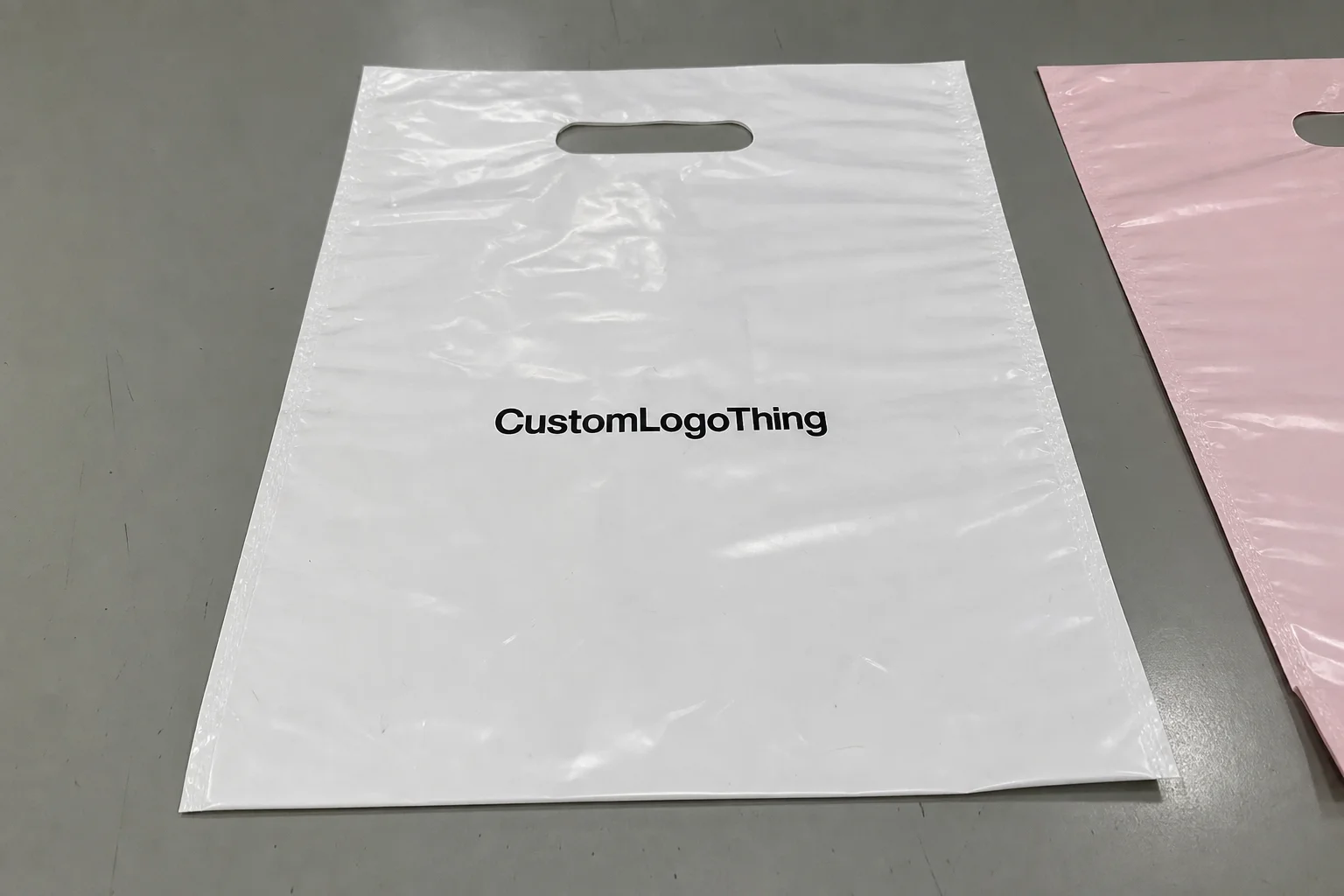
Buyer Fit Snapshot
| Best fit | Sustainable Poly Mailer Sourcing for Better Packaging projects where brand print, material claims, artwork control, MOQ, and repeat-order consistency need to be specified before quoting. |
|---|---|
| Quote inputs | Share finished size, material target, print colors, finish, packing count, annual reorder estimate, ship-to region, and any compliance wording. |
| Proofing check | Approve dieline scale, logo placement, barcode or warning zones, color tolerance, closure strength, and carton packing before bulk production. |
| Main risk | Vague material claims, crowded artwork, missing packing details, or unclear freight terms can make a low unit price expensive after revisions. |
Fast answer: Sustainable Poly Mailer Sourcing for Better Packaging: Film, Print, MOQ, and Carton Packing should be specified like a repeatable production item. The safest quote records material, print method, finish, artwork proof, packing count, and reorder notes in one written spec.
Production checks before approval
Compare the actual filled-product size with the drawing, then confirm tolerance on folds, seals, hang holes, label areas, and retail display edges. Reserve space for logos, QR codes, warning copy, and material claims before decorative graphics fill the panel.
Quote comparison points
Review material grade, print process, finish, sampling route, tooling charges, carton quantity, and freight assumptions side by side. A quote is only useful when the supplier can repeat the same color, closure quality, and packing count on the next order.
Two poly mailers can look nearly identical under warehouse lighting, roll off the same conveyor in a facility outside Dallas, and even carry the same matte white print, yet one may contain 50% post-consumer recycled resin, a stronger side seal, and a cleaner recyclability story while the other is mostly virgin film with a glossy coating that complicates recovery. That gap is exactly why sustainable poly mailer sourcing tips matter so much, because the real decision is not just about the bag you see in your hand, but about resin choice, film gauge, print method, freight weight, and how the mailer behaves in a live fulfillment line that ships 8,000 orders a day.
I remember standing beside a form-fill-seal station in a New Jersey e-commerce packout room, watching a buyer proudly point to the “eco” mailer on the sample board. On paper, it looked like the better option. In production, though, the seal jaws were set for a thicker film, and the bag split at the corners during a 48-inch drop test, which was as annoying as it sounds and cost the team roughly $1,700 in damage returns over the next two weeks. That sort of mismatch is why sustainable poly mailer sourcing tips need to start with performance first, marketing second, and assumptions last.
What follows is the practical side of the topic: how these mailers are made, what to compare before quoting, where hidden costs appear, and how to judge a claim that sounds good in a sales deck but may fall apart on the dock. If you are buying for a brand, a 3PL, or a packaging program that needs Custom Poly Mailers, these sustainable poly mailer sourcing tips will help you sort the real options from the vague ones and keep the conversation tied to real specs like 2.75 mil film, 30% PCR, and a 5,000-piece MOQ.
Sustainable Poly Mailer Sourcing Tips Start With the Real Problem
The first mistake I see is treating sustainability like a single feature, as if a mailer is either “green” or not. That is not how the factory floor works in places like Hebei, Dongguan, or Monterrey, where the structure, sealing window, and resin blend are tuned to the order profile. In practice, sustainable poly mailer sourcing tips are about balancing four things at once: how much material the bag uses, what that material is made from, whether it survives shipping without failure, and whether your fulfillment operation can run it without slowing down. A 3.5 mil mailer with heavy print coverage may look premium, but if a 2.75 mil downgauged structure survives the same route with less resin, the lighter build is usually the smarter package.
When I visited a converter in southern California, the plant manager showed me two stacks of nearly identical white mailers. One had a 40% PCR LDPE blend in the film, and the other was a cleaner-looking virgin blend with stronger clarity. They both passed visual inspection. But when we measured seal peel strength, one averaged 3.2 pounds per inch and the other came in at 5.1 pounds per inch after a simple adjustment to the seal bar temperature from 128°C to 134°C. That is the kind of detail buyers miss when they rely only on brochure language. Good sustainable poly mailer sourcing tips always push the conversation down to the actual film and process data.
So what makes a poly mailer sustainable? Usually it is a mix of recycled content, downgauged film, mono-material construction, and lower-impact printing or finishing choices. PCR content means post-consumer recycled resin has been included in the film, often at 30%, 50%, or even 60% depending on the line. Downgauging means using less plastic while maintaining function, such as moving from 3.0 mil to 2.5 mil after transit testing. Mono-PE or mono-PE-like structures matter because recycling systems generally prefer a single resin family rather than multi-layer combinations that are harder to separate. And lower-impact print choices usually mean fewer ink-heavy panels, simpler graphics, or water-based systems where appropriate. None of those alone makes a package sustainable, but together they shape a smarter sourcing decision.
“If a mailer uses less material and still protects the product, that’s the kind of sustainability I can defend to both a CFO and a warehouse lead.” — A remark I heard from a west-coast packaging buyer during a supplier review in Long Beach
The real job of sustainable poly mailer sourcing tips is to help you evaluate the whole system, not just the bag. You are comparing source resin, film thickness, freight weight, machine compatibility, print durability, and brand presentation, because a mailer that tears during transit is not sustainable no matter what the spec sheet says. A supplier that cannot explain those tradeoffs in plain language usually has not done the hard part yet, and that is especially true if they cannot distinguish a 2.8 mil mailer from a 350gsm C1S artboard sample card sitting on the same desk.
How Sustainable Poly Mailers Work in Production and Use
Most Sustainable Poly Mailers begin as polyethylene resin, often in the form of PCR LDPE, LLDPE blends, or a carefully managed mono-PE film build. LDPE brings flexibility and sealability, while LLDPE usually improves toughness and puncture resistance. PCR resin adds recycled feedstock into the mix, though the exact ratio matters because too much recycled content without the right processing controls can affect haze, color consistency, and sealing behavior. On a good line in Suzhou or Tijuana, a 30% to 50% PCR blend can perform very well, but that depends on the resin supplier, the film recipe, and the mailer’s intended load range, which is often 2 lb to 8 lb for apparel or soft goods.
In extrusion, the resin is melted and formed into film, and during co-extrusion multiple layers can be built to balance stiffness, seal response, and tear resistance. That is where a lot of the engineering happens. A mailer built for apparel shipment may need different properties than one meant for cosmetics or subscription kits. If the film is too soft, it can scuff or wrinkle. If it is too stiff, the seal may become brittle or the bag may feel bulky. The sustainability angle is not just about the resin itself; it is also about using the right structure so you do not overbuild the package. A factory in Foshan might run a 2.6 mil structure with a 15% thicker seal band, while a plant in Illinois may recommend 2.9 mil with a narrower adhesive strip to keep the bag light enough for parcel programs.
Printing matters too. Flexographic printing with controlled ink laydown can deliver strong branding without loading the film with unnecessary coverage. Heavy solid backgrounds and multiple spot colors increase ink consumption and can complicate recyclability if the buyer or retailer has strict guidance. I’ve seen brands ask for four-color art on every side of a mailer, then wonder why their recycling story gets muddy. Honestly, that moment always makes me want to hand them a thicker coffee and a sharper pencil. If you want practical sustainable poly mailer sourcing tips, one of the smartest moves is to simplify the artwork where you can and keep high-opacity film or color only where it truly supports the brand, such as a 2-color flexo layout instead of a 5-color design.
The sealing system matters just as much as the film. Heat seal temperature, dwell time, and pressure all affect whether the mouth of the bag closes cleanly and whether the finished mailer survives abuse. On a line in Ohio, I watched a converter reduce seal failures simply by adjusting the jaw pressure by 0.2 bar and trimming the film gauge by 0.25 mil, which cut material use while keeping the mailer strong enough for 6-lb shipments. That is the kind of real-world tuning that separates a theoretical eco-spec from a production-ready one, especially when a packout line is moving 28 cartons per minute.
One area that gets confused constantly is the difference between recyclable, compostable, and recycled content. They are not interchangeable. A mailer with recycled content may still be recyclable depending on local collection streams and how the film is constructed. A compostable mailer is a different category entirely and usually needs specific conditions and certifications to claim industrial compostability. Recyclable claims should be backed by resin structure and local guidance, while recycled content claims need documentation showing what percentage came from post-consumer or post-industrial sources. If a supplier blurs those lines, that is a red flag, particularly if they cannot produce a spec sheet with exact percentages and an ISO 9001 or equivalent quality reference from the facility in question.
For buyers who want deeper technical references, I often recommend checking packaging guidance from authoritative organizations such as the EPA sustainable materials management resources and recycling design guidance from the Association for Packaging and Processing Technologies. Those sources will not choose your mailer for you, but they can help you frame the right questions before you sign a purchase order, especially if your supplier is quoting from a factory in Jiangsu, Gujarat, or the Carolinas.
Key Factors to Compare Before You Request Quotes
Before you ask five suppliers for pricing, gather the same comparison points for each one. That sounds basic, but in practice it is where many sourcing programs fall apart. Sustainable poly mailer sourcing tips work best when you compare like for like, because one supplier may quote a 2.5 mil mailer with 30% PCR, another may quote a 3.0 mil bag with 80% PCR, and a third may include a heavier gusset or a stronger adhesive strip that changes the economics entirely. Without clean specs, the quotes are noise, and the difference between $0.15 per unit for 5,000 pieces and $0.28 per unit for 25,000 pieces is often just a change in thickness, print, or freight origin.
Start with resin type and recycled content percentage. Ask whether the film is LDPE, LLDPE, or a blended structure, and whether the recycled content is post-consumer, post-industrial, or a combination. Then ask for film thickness in mils or microns, because a tiny change there can affect puncture resistance and freight weight. Seal strength matters too; if the bag will ship soft goods, a good seal can prevent edge opens, and that alone may justify a slightly higher price. Water resistance and tamper evidence should also be part of the evaluation, especially for apparel, supplements, or beauty items that ship through several handling points and spend time in hot trailers in Phoenix or humid docks in Savannah.
Branding requirements can quietly push a bag out of the sustainable zone if nobody watches them. Matte coatings, special soft-touch films, dense ink coverage, metallic effects, and complex color matching can all add material or process complexity. I’m not against strong branding; I’ve negotiated enough print runs to know how much a package matters on a customer’s doorstep. But a supplier should be able to explain how to keep the branding clean while still honoring your sustainable poly mailer sourcing tips goals. Often the answer is a simpler print footprint, a restrained color palette, or a lighter base film with careful opacity management, such as a 2-color flexo layout instead of a 5-color design.
Compliance and documentation are non-negotiable. Ask for recycled content verification, chain-of-custody records where relevant, and any retailer-specific or marketplace requirements your channel may enforce. Some brands need FSC certification for paper components in a larger packout system, while others may need testing aligned with ASTM or ISTA procedures for shipping performance. If the mailer is part of a broader packaging kit, you may also need to compare it alongside Custom Packaging Products that include inserts, labels, or outer cartons so the full system stays aligned, especially if those inserts use 350gsm C1S artboard or a coated stock from a mill in Wisconsin or Guangdong.
Here is a simple comparison matrix I use with buyers when we are cleaning up a sourcing brief:
| Comparison Factor | Option A | Option B | What It Usually Means |
|---|---|---|---|
| Film Thickness | 2.5 mil | 3.0 mil | Option A may save resin; Option B may improve puncture resistance |
| Recycled Content | 30% PCR | 60% PCR | Higher PCR can improve sustainability claims, but processing controls matter |
| Print Coverage | One-color logo | Full-bleed artwork | Simple print usually lowers ink use and complexity |
| Seal Type | Standard peel-and-seal | High-tack peel-and-seal | Higher-tack adhesive can reduce opening failures during transit |
| MOQ | 5,000 pieces | 25,000 pieces | Lower MOQ helps testing; higher MOQ usually improves unit pricing |
Use that table as a working tool, not a rigid formula. Sometimes the right answer is a lower MOQ because you are testing a new resin blend from a plant in Ohio or Taicang. Sometimes the right answer is a larger run because the film has already been validated and the freight savings make sense. The better sustainable poly mailer sourcing tips are the ones that keep the conversation tied to your actual shipping profile, not just the glossy quote sheet or a sample printed on a 350gsm C1S artboard insert card.
Sustainable Poly Mailer Sourcing Tips for Pricing and Cost Control
Price on a poly mailer is always moving, because resin markets move, recycled pellet availability changes, and print complexity shifts the cost structure. I’ve seen a 10% to 15% swing in quoted pricing over a short buying window simply because PCR supply tightened or freight rates changed on lanes out of Shenzhen or Los Angeles. That is why sustainable poly mailer sourcing tips should include a cost-control mindset from the beginning. If you only look at the unit price, you miss the bigger economics.
To make this real, let’s talk numbers. A custom 2.75 mil mailer with 30% PCR, a one-color logo, and a 5,000-piece MOQ might land around $0.18 to $0.24 per unit depending on size, origin, and current resin pricing. Push that same bag to 60% PCR, add two extra print colors, and ask for a smaller run with rush timing, and you may see $0.26 to $0.35 per unit or more. In a larger production run of 25,000 pieces, a well-qualified domestic supplier might quote closer to $0.15 per unit for a simplified design, while an imported version with custom sizing, high-tack adhesive, and ocean freight can land at $0.19 per unit before duties. Those ranges are not universal, of course, but they are the kind of realistic starting points I use when I’m talking to clients who need honest expectations rather than sales fluff.
Hidden costs are where a lot of sourcing teams lose ground. Sampling may run $50 to $200 depending on supplier policy, and artwork revisions can add another round of prepress work. If the supplier needs plates or cylinders for flexographic printing, setup charges can land anywhere from a few hundred dollars to several thousand, depending on color count and production method. Then there is inbound freight, which can easily erase a savings of a few cents per unit if you are importing from overseas in small quantities. Storage is another issue. A supplier may offer a good price, but if you have to take 90 days of inventory into a warehouse at $18 to $30 per pallet per month, your “cheap” mailer suddenly looks less attractive. A quote from a converter in Guangzhou may also require 12 to 15 business days from proof approval before production finishes, plus 21 to 30 days of ocean transit, which affects cash flow as much as unit price.
I had a client in Texas who switched suppliers based on a quote that was 8% lower on paper. The problem was that the new bag arrived with inconsistent seal placement, and the fulfillment team slowed down by nearly 12 minutes per thousand pieces because operators had to keep rechecking alignment. The cost of labor and rework more than wiped out the unit savings. That is one of the most practical sustainable poly mailer sourcing tips I can give: cost per shipment beats cost per piece almost every time, especially when labor in a fulfillment center in Columbus or Nashville runs $19 to $24 per hour.
A better way to evaluate the economics is to ask four questions:
- What is the unit price at my real annual volume, not the headline quote?
- How much does the mailer weigh, and how does that affect freight?
- What is the damage or return rate compared with my current bag?
- How much labor time does the mailer save or cost at packout?
When you pull those numbers together, a slightly more expensive mailer can become the better buy. For example, a bag that costs $0.03 more per unit but reduces damage claims by 0.6% and lowers weight by 4 grams may easily justify itself over a large shipment volume. That is not theoretical; I’ve seen it happen with apparel brands shipping 20,000 to 50,000 units a month out of facilities in Atlanta and Salt Lake City. Good sustainable poly mailer sourcing tips always include a way to quantify that tradeoff.
If you want to stay disciplined, build a supplier scorecard with categories for sustainability, quality, lead time, communication, and price. Give each category a weight that reflects your business reality. A DTC brand that ships fragile accessories may care more about seal reliability and presentation than the lowest possible quote. A high-volume 3PL may care more about line speed and consistent pallet quantities. That scorecard approach keeps the discussion grounded and prevents the sourcing process from becoming a race to the bottom, especially when one supplier offers $0.16 per unit and another offers a better-tested bag at $0.21 per unit with a stronger seal.
Step-by-Step Sustainable Poly Mailer Sourcing Process and Timeline
A clean sourcing process saves more money than most people realize. I usually break it into five stages: define requirements, request detailed specs, compare suppliers, approve samples, and lock production. Each stage should have a real owner and a realistic date. Without that discipline, even strong sustainable poly mailer sourcing tips can get lost in email threads and rushed approvals, especially when the packaging manager in Chicago, the marketing lead in Miami, and the operations team in Phoenix are all reviewing the same proof.
Step one is defining the package requirement in practical language. Not “eco mailer,” but “white opaque mailer, 2.75 mil target, 30%+ PCR, peel-and-seal closure, one-color black logo, compatible with our packout line, shipping 2 to 8 lb apparel orders.” That level of detail lets suppliers quote the same thing. If your team cannot write the requirement that clearly, you are not ready to compare materials yet, and you definitely are not ready to approve a 10,000-piece run.
Step two is asking for actual material specs. Request film structure, resin family, recycled content percentage, seal type, print method, and any finishing details. Ask whether the supplier can provide documentation for recycled content and whether the film is mono-material. If they say “recyclable” without explaining the build, keep digging. The best sustainable poly mailer sourcing tips I know begin with facts, not claims, and those facts should include the factory location, such as Dongguan, Johor Bahru, or North Carolina, along with the exact gauge and seal width.
Step three is supplier comparison. I like to compare three sources at minimum: one domestic, one offshore, and one regional or hybrid option if the buying volume justifies it. Domestic suppliers often offer faster turns and easier communication; offshore suppliers can offer better pricing at scale; regional suppliers sometimes give the best middle ground on freight and lead time. None is automatically better. The right answer depends on your volume, your launch schedule, and how much inventory risk you can carry, whether that means 5,000 pieces for a pilot or 50,000 pieces for a national rollout.
Step four is sample approval, and this is where buyers need to resist the urge to approve from a photograph. Ask for samples from the actual film and print line, not just a generic mockup. Then test the sample on the real fulfillment line with real product weights. If the mailer is going through automatic insertion equipment, test for feed consistency and tack. If it is hand-packed, test whether the adhesive strip closes cleanly for different operator speeds. I’ve watched a sample pass on a desktop and fail in a warehouse because the colder dock temperature in Minneapolis made the adhesive behave differently than it did in the supplier’s 72°F production room.
Testing should include a few simple checks that mirror real transit stress. A drop test based on ISTA-style thinking, seal checks, abrasion checks, and basic puncture handling will tell you far more than a pretty proof sheet. If the package is going through a retailer network or parcel carrier chain, ask whether the supplier has data from ISTA testing protocols or comparable internal validation. The exact test depends on the shipment profile, but the goal is always the same: find the weak point before your customers do, ideally before you commit to a full run that will take 12 to 15 business days from proof approval.
Here is a practical timeline I often use for Custom Sustainable Mailers:
- Days 1-3: finalize spec sheet and sustainability goals
- Days 4-7: collect quotes and documentation
- Days 8-14: review samples and proof artwork
- Days 15-21: run production trial or pre-production approval
- Days 22-35: full production for domestic supply, longer for offshore depending on transit and port conditions
That timeline can move faster if the design is simple and the supplier has stock film available, or slower if you need custom sizing, special inks, or recycled content that has to be sourced from a specific resin stream. A domestic run might deliver in 12 to 18 business days from proof approval, while an offshore program can take 30 to 45 business days or longer once ocean freight and customs are included. The point is not to fear longer lead times; it is to plan them honestly. Good sustainable poly mailer sourcing tips never pretend a custom program is an overnight purchase, especially if the supplier is coordinating printing in Shenzhen, extrusion in Dongguan, and final inspection in Ningbo.
One more thing from the factory floor: buffer time is not waste. It is insurance. A buyer in Atlanta once told me she had “no room” for extra time on a launch, then lost nearly two weeks because a sample needed one reprint after the logo shifted 1.5 mm off center. A three-day buffer would have saved the launch. That is why I always recommend building a small contingency into every custom packaging schedule, especially when sustainability goals depend on specific film grades or recycled content targets and the art team has only approved a 24-hour proof window.
Common Mistakes That Undercut Sustainable Sourcing
The most common mistake is trusting vague eco language. “Earth-friendly,” “green,” and “sustainable” mean almost nothing without resin details, film structure, or testing data. I’ve reviewed quotes where the only sustainability evidence was a sales note saying “contains recycled material,” which is not enough for a procurement team that needs proof. Sustainable poly mailer sourcing tips must insist on specifics like PCR percentage, material family, manufacturing method, and the exact facility location, whether that is Vancouver, Suzhou, or Monterrey.
Another mistake is over-specifying thickness out of habit. Some teams ask for 3.5 mil because that is what they used years ago, even though a redesigned 2.75 mil film would protect the product just as well. That extra material adds cost, weight, and plastic use with no real benefit. I’ve seen this happen in apparel and accessory programs more than once, and honestly, it is one of the easiest places to improve. A better engineer does not just make the package stronger; they make it strong enough, often with a puncture-resistance target of 180 grams or better instead of a blanket thickness mandate.
People also underestimate the role of machine compatibility and seal reliability. A mailer that saves a few grams but jams the packing station or tears under faster hand-packing speeds is not a win. The sustainability gain gets canceled by rework, damage, and frustration. One buyer in the Midwest told me their team spent more time fixing failed seals than packing orders for two full shifts after switching to a new supplier with a slightly different adhesive strip. That problem showed up in the first week and could have been prevented with a better production trial at the supplier’s plant in Ohio or a co-packer in Pennsylvania.
The last mistake is choosing the cheapest supplier without checking print consistency, quality control, or replacement policy. A low quote is tempting, especially when a buyer is under pressure to cut expenses. But if the supplier cannot hold color within an acceptable range, ships with inconsistent bag widths, or refuses to replace defective cartons, the real cost climbs fast. Strong sustainable poly mailer sourcing tips should always ask what happens if the first run fails. If the answer is vague, the risk belongs to you, and that risk can be expensive when replacement freight from Asia runs $0.07 to $0.12 per unit on top of the original price.
One more caution: do not confuse a recyclable claim with actual local recyclability in every market. Collection systems vary, and some regions handle polyethylene film better than others. If your customers are spread across multiple states or countries, your sustainability story needs to be honest about that variation. Good sourcing is not about making the biggest claim; it is about making the most defensible one, backed by local guidance and a mailer structure that is realistic for the markets you serve.
Expert Tips for Better Sustainable Poly Mailer Sourcing Decisions
If I were advising a brand starting from scratch, I would begin with a scorecard and a small pilot run. Weight sustainability, quality, lead time, responsiveness, and cost instead of comparing quotes on price alone. Then ask for actual production samples from the real film and print line. That one step has saved more sourcing teams than I can count, because lab samples and press proofs often hide issues that show up only when the line is running at real speed in a facility moving 1,200 orders per hour.
Build in small sustainability upgrades that do not create new risk. Right-size the dimensions so the mailer is not oversized by two inches on every side. Trim unnecessary ink coverage. Consider a lighter base gauge if the product profile supports it. Ask whether the adhesive strip can be simplified while still maintaining tamper resistance. These are practical sustainable poly mailer sourcing tips because they reduce material use without turning the package into a science project, and they often save $0.01 to $0.04 per unit when the design is well controlled.
I also encourage buyers to document shipping damage before and after a change. A 2% return rate might look acceptable until you compare it to a 0.8% rate after a film or seal upgrade. That delta can pay for better material very quickly. Numbers matter, and packaging gets judged in the field, not in the conference room. When the customer opens the parcel in Seattle or Tampa, that is the only test that really counts.
If your internal team is spread across operations, marketing, and procurement, create one approval sheet that includes all of them. The operations team can verify line compatibility, marketing can approve print presentation, and procurement can lock pricing and lead time. This keeps a sustainable mailer program from getting redesigned three times because each department looked at a different goal. I’ve seen that happen in real account meetings, and it turns a simple program into a six-week back-and-forth, especially when the art file is being revised from a one-color logo to a three-color layout in the middle of sampling.
To make the next sourcing cycle easier, follow a simple action plan:
- Audit your current mailer size, thickness, and damage rate.
- Request three comparable spec sheets with exact PCR percentages and film gauges.
- Test one improved version on real shipments, not just sample packs.
- Review freight weight, labor time, and return data after launch.
If you want to expand the rest of your packaging program too, explore Custom Packaging Products that can be aligned with the same sustainability targets so your outer packaging, inserts, and labels all tell the same story. That kind of consistency matters. A recycled-content mailer paired with waste-heavy inserts sends mixed signals, and customers notice more than brands sometimes expect, especially when the inserts are printed on a heavy stock that could have been swapped for a lighter 350gsm C1S artboard.
For brands that want a practical reference beyond supplier brochures, I also like the FSC site for paper-based components and chain-of-custody concepts at fsc.org. Even if your mailer itself is polyethylene, your broader packaging system may include paper inserts, cartons, or collateral that benefit from those standards, particularly if a carton plant in Vietnam or Ohio is handling the outer shipper.
My honest opinion? The best sustainable poly mailer sourcing tips are the ones that make you slower at the spec stage and faster in production. That sounds backward, but it works. If you take time to define the film, check the documents, test the seal, and compare the cost per shipment, the order runs better, the damage rate falls, and the sustainability story becomes something you can stand behind with confidence.
How Do You Compare Sustainable Poly Mailer Options Without Overpaying?
You compare them by pairing product performance with a real shipping cost model, not by chasing the lowest quote. That means looking at film gauge, recycled content, seal reliability, print complexity, freight weight, and the labor required to use the mailer on your actual line. A bag that is a few cents cheaper can become the expensive choice if it slows packout or increases damage claims, while a slightly higher-priced option with a better resin blend and cleaner seal can save money across the full shipment cycle. These sustainable poly mailer sourcing tips work best when the full cost per shipment is visible before you sign.
Frequently Asked Questions
What should I ask a supplier when sourcing sustainable poly mailers?
Ask for the exact resin type, recycled content percentage, film thickness, and whether the mailer is mono-material or blended. I would also request documentation for recycled content, details on inks and adhesives, the manufacturing location, minimum order quantity, and sample availability. If a supplier cannot answer those questions clearly, that is usually a sign to keep looking, especially if they are quoting a 10,000-piece run from a factory in Guangdong or Texas without naming the film gauge.
Are sustainable poly mailers always more expensive?
Not always. Pricing depends on resin markets, order volume, print coverage, and whether the design is optimized for downgauging. A better mailer may cost more per unit, but it can still save money through fewer damage claims, lower freight weight, and less waste. The smarter comparison is total cost per shipment, not just unit price, and a well-structured quote at $0.15 per unit for 5,000 pieces can beat a cheaper-looking option that fails in transit.
How do I know if a sustainable poly mailer claim is legitimate?
Look for specific material details instead of broad eco language. Ask for recycled content documentation, testing data, and a clear explanation of the film structure. Be cautious if a supplier cannot explain whether the mailer is recyclable, compostable, or simply made with recycled content, because those are different claims with different implications. A legitimate supplier should be able to tell you the film build, the percentage of PCR, and the plant where it was produced.
How long does it take to source custom sustainable poly mailers?
Timelines vary by supplier location, customization level, and how quickly samples are approved. A simple domestic program may move in about 12 to 18 business days after proof approval, while offshore sourcing can take 30 to 45 business days or more once shipping is included. Custom sizing, special inks, and recycled-content sourcing can add extra time, so build a buffer into the schedule, especially if your artwork proof is coming from a studio in Los Angeles or London.
What’s the best first improvement for sustainable poly mailer sourcing?
Start by right-sizing the mailer and checking whether the film can be downgauged without sacrificing performance. After that, compare recycled content options and simplify the artwork to reduce ink and production complexity. Then test the revised mailer in real fulfillment conditions before scaling up across the entire program. A small change from 3.0 mil to 2.75 mil, paired with a cleaner print layout, is often the fastest path to better results.
If there is one takeaway I would leave with you, it is this: sustainable poly mailer sourcing tips are not about chasing the greenest-sounding quote. They are about choosing a mailer that uses the right amount of material, ships safely, fits your line, and backs up your brand without wasting resin, labor, or time. That is the kind of sourcing decision that holds up in the warehouse, the budget review, and the customer’s hands, whether the order ships from a 3PL in New Jersey or a distribution center in Ontario.