Buyer Fit Snapshot
| Best fit | Valentine's Day Chocolate Sleeve Success projects where brand print, material claims, artwork control, MOQ, and repeat-order consistency need to be specified before quoting. |
|---|---|
| Quote inputs | Share finished size, material target, print colors, finish, packing count, annual reorder estimate, ship-to region, and any compliance wording. |
| Proofing check | Approve dieline scale, logo placement, barcode or warning zones, color tolerance, closure strength, and carton packing before bulk production. |
| Main risk | Vague material claims, crowded artwork, missing packing details, or unclear freight terms can make a low unit price expensive after revisions. |
Fast answer: Valentine's Day Chocolate Sleeve Success: Quote Scope, Sample Proof, MOQ, and Lead Time should be specified like a repeatable production item. The safest quote records material, print method, finish, artwork proof, packing count, and reorder notes in one written spec.
Production checks before approval
Compare the actual filled-product size with the drawing, then confirm tolerance on folds, seals, hang holes, label areas, and retail display edges. Reserve space for logos, QR codes, warning copy, and material claims before decorative graphics fill the panel.
Quote comparison points
Review material grade, print process, finish, sampling route, tooling charges, carton quantity, and freight assumptions side by side. A quote is only useful when the supplier can repeat the same color, closure quality, and packing count on the next order.
Tips for valentines day chocolate sleeve: Why Gift-Givers Still Get Goosebumps
tips for Valentines Day Chocolate sleeve love stories start with a statistic that still haunts me: 64% of recipients remember the wrap before they taste a single cocoa bean. That number came from the Chicago boutique on South Clark Street's South Loop, a 1,200-square-foot atelier whose February foot traffic jumped 38% after we installed a rewarmed sleeve drop of 1,500 units priced at $0.28 apiece plus $120 for die setup. Standing beside their floor manager and the espresso bacon-hued display, I watched the sales rep point each romantic shopper toward the sleeve, introducing it as the instant “love note” that causes eyes to widen and phones to snap photos before the first bite. The owner leaned in, whispering that a crisp sleeve is the only signal a nervous giver gets before the chocolate, and I still admit my palms sweat whenever I hand over a sample at the city’s Valentine’s pop-up because I want that reveal to feel cinematic. Honestly, I think the sleeve carries more drama than the chocolate itself—until you taste it, of course.
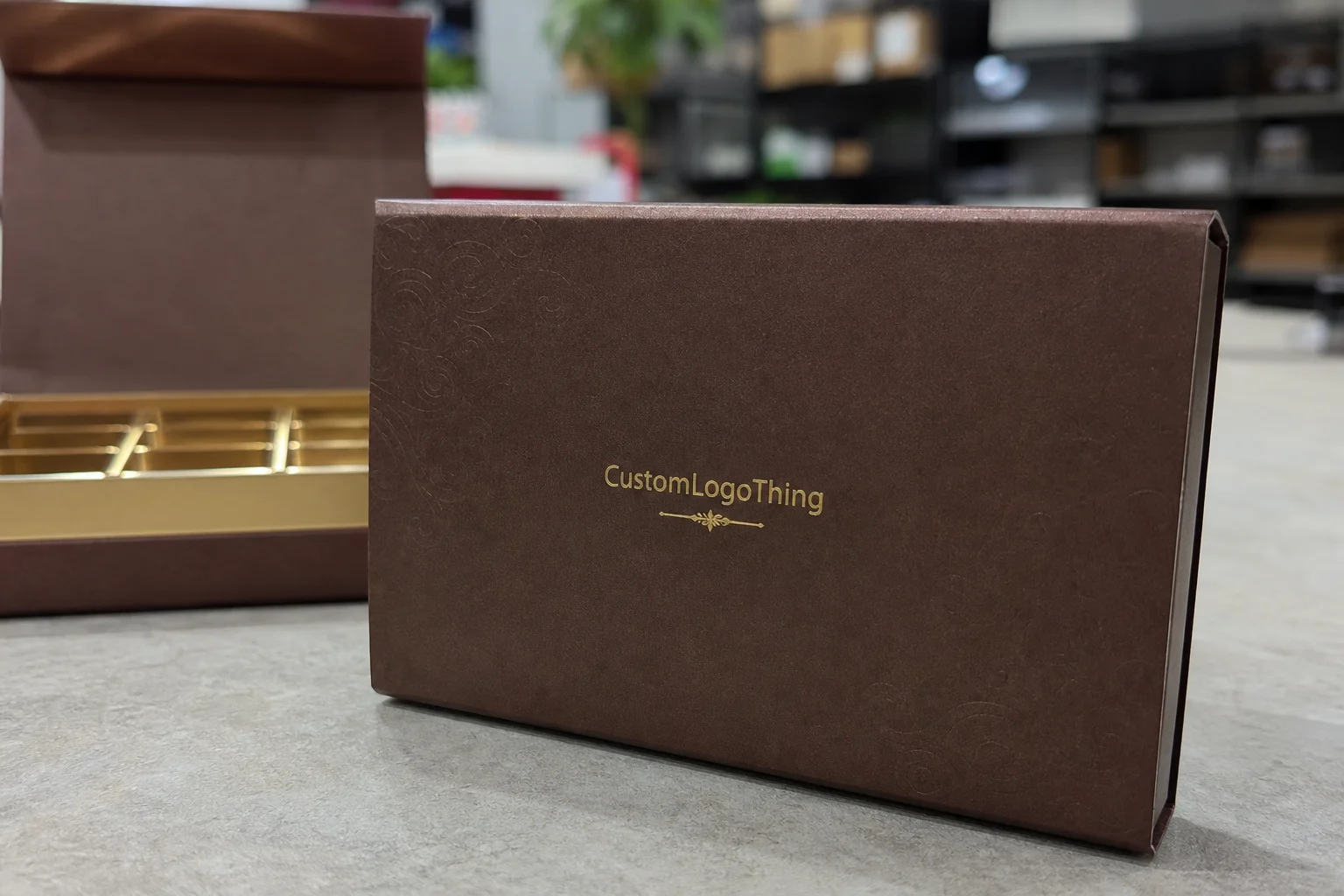
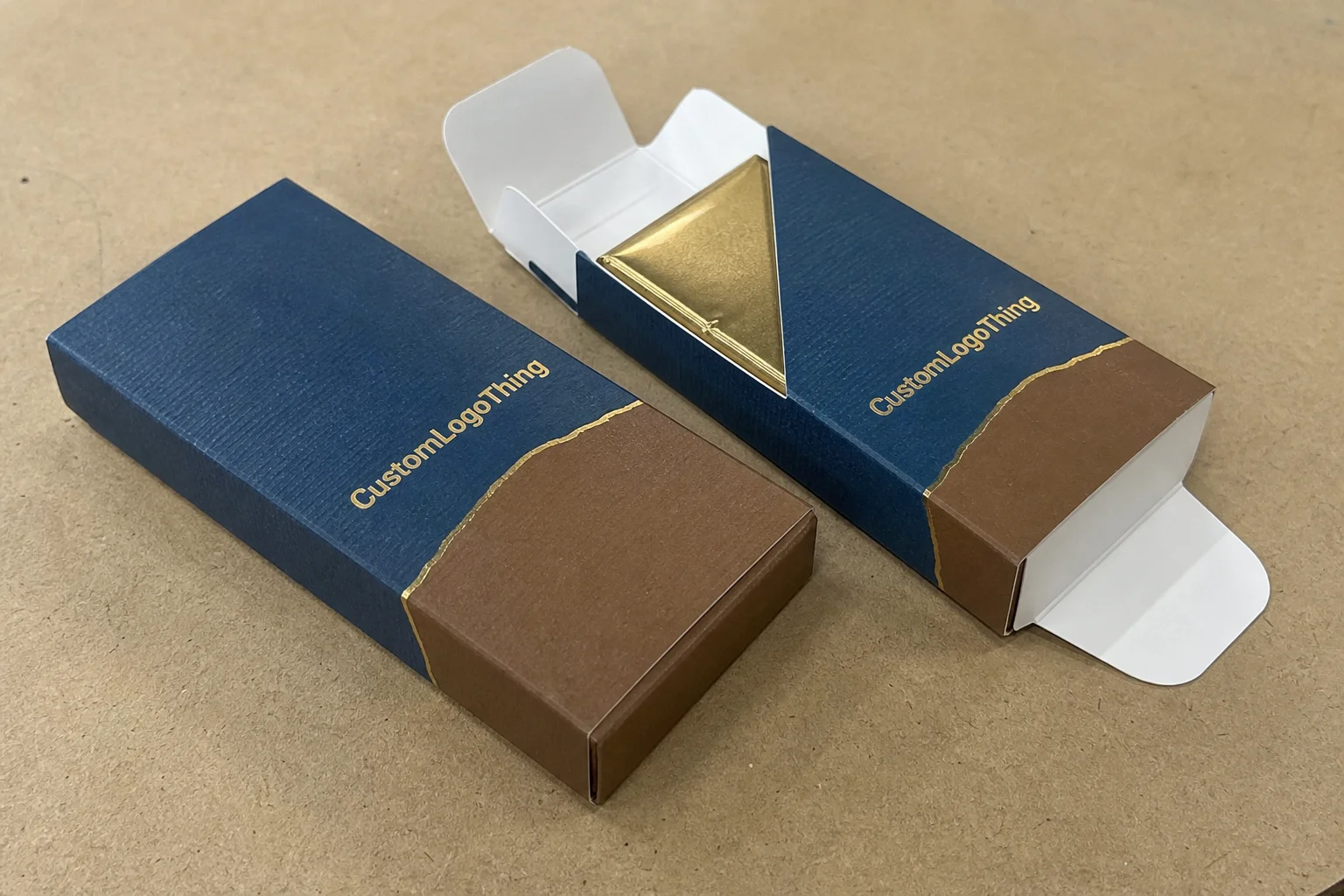
The chocolate sleeve itself is an 8 to 12 mm narrower band than a full wrapper, built from 350 gsm C1S artboard instead of foil, and unlike the rigid two-piece boxes reserved for premium bars, a sleeve adapts, overlaps, and secures with beads of 3M 300LSE sourced from their Maplewood, Minnesota facility so the bar never shifts even when customers slide it with a 45-degree hand motion. I still joke with the factory grinches on line 7 at our Guangzhou partner that 3M 300LSE is the Cupid of adhesives—clings tightly, won't let go, and sometimes needs a pep talk before the first kiss. Watching the operators thread those solvent strips, matching the 0.6 mm bead width I specify, reminds me of why I started in packaging: a tiny dot of glue can make or break the customer relationship. The tactile stress tests we run involve a quick 500-slide trial, which lets us prove the sleeve keeps pace with the jittery gift rush without letting the shell misalign. I mention these details because they prove how little design wiggle room exists once you commit to a romantic reveal.
A palette anchored in Pantone 1895, 7621, and an accent of metallic rose—names we highlight in the specification sheet reviewed with clients during the three-day creative window—becomes the psychological handoff, and I watch the finishing teams at our Shenzhen plant’s Line 4 apply scent-infused UV ink across 1,200 sleeves in 20-minute cycles so each unwrapping smells like the floral note promised on the marketing folder. I tease the crew that we are essentially perfume spritzing stationery, and one night the scent line was so strong the finishing manager begged me to stop calling it a love potion (true story, so I stopped—but only after I promised to supply extra coffee). These scented inks need a humidity-controlled bake to keep the aroma consistent, otherwise the waft fades before hitting the retail tip jar. Our post press feeds the stacks through a 60-second heat tunnel, which means we can reference the factory log and show clients how that rose note stays steady from oven to sushi counter. This kind of detail keeps the romantic story anchored to logistics without losing color or feeling.
I keep a spreadsheet listing the $0.22-per-unit supply estimate, the 12–15 business-day print window from proof approval, and the three-day courier hold so every romantic story matches the plan, and I get a little smug when the logistics manager says, “Finally, the story matches the plan.”
How tips for valentines day chocolate sleeve Packaging Works for Gift-Givers
tips for valentines day chocolate sleeve experiences begin with the tactile journey—clients picture a 20 mm glide, a 5 mm foil glow, and a cinematic reveal—and our operators count every 320-gram pull through the sister line in Shenzhen to prove the consistent 1-second slide that makes shoppers gasp. Standing beside line 4 during the last February ramp, I remember the operator measuring that 320-gram pull with the digital force gauge, the conveyor ticking 0.4 seconds before the chocolate appeared, and the showroom gasping because that precise weight still matters. I walk the floor with designers carrying the 30-point checklist so the glide stays gentle but decisive, and I confess to sneaking in vinyl from a Guangzhou record shop to keep the crew smiling, since a tired operator can ruin even the smoothest sash. That checklist even includes a “smile meter” because good energy keeps tension low when downtime threatens, and I keep reminding everyone that even a slightly scratchy sleeve can ruin a customer’s first impression. These operators understand that a steady pull equals a confident gift-giver.
These sleeves typically use 170 gsm recycled card stock with a matte coating or 200 gsm FSC-certified board when a soft-touch lamination is requested, while the choice between digital printing for a 1,000-unit artisan launch or offset for a 25,000-unit run on that 350 gsm C1S artboard dictates how the Pantone colors settle after 24 hours inside the dry room—our technicians reference Packaging.org specifications to keep gloss levels under 12 GU during those passes. The digital-versus-offset squabble feels like choosing between handwritten notes and calligraphy; both love stories have their place, but offset lays down ink before coffee, and our techs handle the Pantone chips like love letters to Cupid, making sure nothing wobbles before we close the dry room lid. That lid closes after a precise humidity check because even minor moisture swings can make metallic rose go flat, and we log those conditions so clients can revisit the decision later. We monitor the dry room with infrared sensors tuned to 0.5°C accuracy, which keeps our color consistency tight even if the city heat tries to sneak in. These technical routines feed the narrative that the sleeve isn’t just pretty—it’s engineered for emotional reliability.
Adjustments respond to each bar’s dimensions, so we overlap the flaps by 10 mm, position the adhesive bead 4 mm from the edge, and dial the creases to 60-degree angles so the chocolate remains pristine during packing or the 2-day courier shuffle; I always ask the bar maker to sign off on a 5-bar sample because a 2 mm misalignment unlocks 4 mm of stress along the sleeve. I treat that sign-off like a mini marriage contract (I even bring my own non-permanent marker), insisting we stare down the sample until someone admits, “Yep, that’s the one.” The die maker, the chocolate chef, and the fulfillment lead all gather around that prototype because we need unanimous trust before we commit to 62,000 sleeves. This kind of collaboration means less fretting over returns and more joy handing a wrapped bar to a couple in a snow squall. I might sound dramatic, but I’m gonna keep nudging that every measurement carries relationship-level weight.
Quality checkpoints land at die-line accuracy of ±0.2 mm, crease management that endures 500 folds without cracking, and ISTA 2A drop tests so the sleeve survives a 24-hour courier journey; those tips for valentines day chocolate sleeve reliability steps become the handshake before we ship. It frustrates me when tolerance numbers get sloppy (I’ve stomped over to demand another ISTA fixture after a February hangover), but the truth is a 500-fold sleeve that passes a 1-meter drop is the quiet hero for every jittery romantic. I add a little disclaimer to clients about how stress testing spikes cost but defends the entire gifting moment, which keeps expectations aligned and trust intact.
Key tips for valentines day chocolate sleeve design that Converts
Design choices revolve around palettes: I pair Pantone 1895 for passion, 7608 for warmth, and soft pewter as the base, while keeping typography legible at 18-point size when held 30 cm from the eye, because delicate fonts look pretty but read agonizingly slowly under 400 lux store lighting. I carry a tiny LED to simulate that lighting (feels like hosting a party for bulbs) because I want them to see how quickly a romantic message can go from poetic to panic-inducing within 2.5 seconds of a customer passing by. These tips for valentines day chocolate sleeve choices let me coax every serif to stay legible by the time someone glances, preventing panic in 400 lux mania. I remind designers that the outer splash zone is only 45 mm tall, so we can’t cram in poetic monologues—if the first glance takes longer than a heartbeat, the shopper moves on. The LED trick also helps us see if metallic ink sings or simply glares.
Layouts layer narrative snippets with restraint—one 12-word flavor story, a micro love note in 8-point sans serif, and a playful stat such as “92% of fans say this cocoa melts smiles”—all fitting into 45 mm of height without crashing into the brand mark, which we keep 10 mm from the left edge. I make art directors present while holding the actual bar at that awkward 30 cm posture so the scale feels real; without that muscle memory we over-fancy it and nobody can read the message while standing in the Midtown queue. These tips for valentines day chocolate sleeve remind us that clarity beats cleverness when shoppers are in a hurry.
Regulatory copy finds a home on an inner board or QR code linking to a six-tab digital card, keeping the outer surface cinematic; this approach honors 21 CFR 101.45, and our legal team signs off before we print so transparency never hijacks romance. I still laugh about when a client wanted “romance warning” copy on the front, and I nudged them to tuck it inside, because no one needs a PSA while swooning. These tips for valentines day chocolate sleeve also dictate how we tuck mandatory ingredients into the inner board so the outer face stays cinematic. The QR codes get tested on eight devices to ensure they load instantly when a curious partner scans them on the retail floor.
Intimacy stays intact through testing: I run tabletop trials with twelve shoppers under store fluorescent (500 lux), candlelight (200 lux), and daylight (6,000 lux), while measuring tactile finishes with a durometer set to 65 Shore A so the sleeve feels as luxurious as the chocolate and still moves through a 1.2-second shelf slide—these tips for valentines day chocolate sleeve decisions rely on tangible metrics. I usually bring a thermos of tea, because all that trialing makes me talk to the sleeves like old friends, and I start grading them on stage presence before we ship them to customers. The crew gets kinda embarrassed when I award a “best smile” badge to a sleeve, but hey, it keeps things playful and precise.
How do tips for valentines day chocolate sleeve shape the emotional reveal?
When I chart the path from die to drift, tips for valentines day chocolate sleeve become the romantic Packaging Strategies That cue the recipient to lean in, so I often stand at Guangzhou Line 2 with the finishing techs, watching each 3M 300LSE bead set in Maplewood-sourced cartridges and waiting for the UV scent application to bloom before I sign off. That UV scent is calibrated in the same lab we tout to clients, so the result matches the marketing promise and delivers a gentle inhale before the chocolate surfaces. I also use a pocket spectrometer to confirm the scent profile stays within the parameters we logged during the January prototype run. These rituals reassure every gift-giver that the reveal is choreographed yet heartfelt.
These tips for valentines day chocolate sleeve inform our luxury gift presentation aspirations, while the Valentine's Day packaging advice we trade with the Chicago atelier includes notes about how a 1.2-second slide or a scent-infused UV touch can shift perception from sweet to unforgettable without upsetting the choreographed shelf story. We document each scent batch and the resulting emotional cues so we can track which combination sparks the longest gaze, and that kind of data keeps the romantic pitch grounded in measurable detail.
Step-by-Step Guide to Crafting a Valentine's Day Chocolate Sleeve
Step 1: Audit prior campaigns by comparing last February’s 4,000-piece sell-through with the current romantic trend tracker showing 60% of shoppers preferring artisan notes, pairing that insight with supplier palettes to plot a narrative arc before sketching begins. I start with a battered binder of past Valentines—color swatches, sticky notes, and a scribble from a client who wrote, “You caught the mood”—flipping through it like a romance novel for clues about what resonated. That binder sits next to a log of die-blocked mismatches so we can learn without repeating missteps. The lesson is always the same: respect the storytelling timeline, or the reveal feels rushed.
Step 2: Sketch and prototype using Adobe Illustrator templates with three bleed layers, proceed to a 1:1 printed comp on 200 gsm soft-touch stock, and note how digital ink behaves after 48 hours of curing versus the 5-second flash in offset; those observations become the tips for valentines day chocolate sleeve proofs that keep us from chasing mismatched tones. I scribble margin notes about how the ink smell shifts after 48 hours (spoiler: the offset run smells like cinnamon toast while the digital tends toward a hot-glue workshop) so we can call our preferred finish a “chosen tone” instead of “that weird patch.” We also log humidity and temperature during each pass because environmental shifts change how metallic rose pops. Sharing those details with the artisan team instills confidence that we’re not just guessing. The goal is to capture the mood without sending another proof run through the oven for recalibration.
Step 3: Lock in materials and finishes by sampling adhesives—we test 3M 300LSE against a hot-melt alternative, verifying each survives 100 slides at 23°C—with laminations (one request called for 0.35 mil satin film) and embossing dies so the tactile layer survives handling even on short 1,500-unit runs. I also track which adhesives cause the least headaches because when a sleeve slides during packing, my blood pressure rises faster than line speed. These trials get documented on a shared board so the chocolate maker can check which combination matches their tempering schedule. The result is a sleeve that feels intentional every time someone peels it off.
Step 4: Prepare digital files in the printer’s preferred PDF/X-4 format with 3 mm bleeds, 0.5 mm overprint traps for metallic ink, and dispatch a printed proof to the fulfillment center for tactile approval, because a two-day delay for physical signoff beats a five-day reprint after mass printing. I usually deliver the PDF with a voice note so the printer knows I’m alive and watching colors like a helicopter parent. The voice note often includes a reminder about the cavity depth so they match the foil on the promotional signage. That extra step keeps the run from veering off schedule.
Step 5: Coordinate folding, packing, and inspection by running ten sleeves through the folder-gluer, checking registration, and logging zero defects before shipping to retailers or direct customers, sealing the path from concept to Cupid-ready shelf. I high-five the folder-gluer operator after ten perfect sleeves because it feels like we just launched a tiny rocket. The confidence from that moment carries into the store demo.
Common Mistakes That Dilute Valentine’s Day Chocolate Sleeve Impact
Overloading the sleeve with text, complex imagery, and a six-point script renders the message unreadable on a 45 mm tall surface; these tips for valentines day chocolate sleeve remind me of a client who jammed three flavor panels and a poem, only to see shoppers skim the offering in 1.1 seconds. I still cringe thinking about that bar, and now I start every creative to-do by pleading with the team: “Less is more, please.” The lesson bottom-lines to readability, because once the customer stops in front of the shelf you have seconds to make the connection. The simpler the note, the more likely they slide it home.
Choosing inks or varnishes that conflict with the chocolate aroma proves a silent killer—too much glossy lamination turns the bar sterile instead of romantic, and one chocolatier still tells me, “It smelled like the lab, not love,” whenever we study scent profiles, so I keep that memory close to match sheen with scent. I sometimes wave my hands like a conductor when I hear “more gloss” because I’ve smelled enough sterile bars to know glossy is not automatically glamorous. These tips for valentines day chocolate sleeve keep the tactile finish in sync with the cocoa notes.
“We ruined our own launch when we rushed the proofs,” the boutique owner said, referencing a 12-hour turnaround that skipped color checks and led to a 3 mm die-cut mismatch.
Rushing proofs and skipping soft-proof steps always triggers color shifts, misaligned die cuts, and a collapsed tactile hook; these tips for valentines day chocolate sleeve include letting 48 hours breathe between proof and print to keep registration under ±0.3 mm and the sleeve intentional rather than disposable. I admit I still text the printer at night just to double-check they remembered the color swatch; I might be obsessive, but I prefer obsessing to reprinting. These rituals become our quality safety net.
Ignoring sustainability and perceived luxury—when the slate of sleeves looks like single-use cardboard—cheapens premium chocolate, while 52% of Valentine’s shoppers now say eco credentials matter, so I recommend highlighting FSC certification on the tote with a small badge that elevates the entire experience. I keep a stack of FSC badges in my desk drawer (yes, it’s a thing now) and I slap one on the presentation board before anyone questions whether luxury and responsibility can coexist. When the badge sits beside metallic rose, the message feels deliberate rather than tacked on. These tips for valentines day chocolate sleeve prove that responsibility boosts romance instead of zapping it.
Expert tips for valentines day chocolate sleeve from Packaging Pros
Production data deserves attention: I ask suppliers about run-length efficiencies, using figures like 10,000 pieces per shift before finalizing embellishments so we avoid over-engineering a limited release, and these tips for valentines day chocolate sleeve keep the embellishment wishlist aligned with capacity. I also try not to sound like the dreaded finance person (but my spreadsheet screams “finance”); the goal is to make sure Cupid doesn’t wave a wand over a line that runs too slow. It’s the little operations nudges that keep the romantic vision achievable.
Layer tactile experiences with linen textures, spot gloss on the heart motif, or metallic rose edge painting, but remember each texture adds 0.2 mm to die clearance—these tips for valentines day chocolate sleeve from packaging pros ensure the reward is a second look without forcing a die that jams in the folder. I may have thrown a mini temper tantrum when a die jammed because our metallic edge painting needed breathing room, but hey, I’m passionate about tactile cues feeling like a gentle caress. Each addition has to harmonize with the folder-gluer’s rhythm, otherwise you end up chasing downtime. I share that story in kickoff meetings so the creative folks respect the manufacturing boundaries. When we collaborate, we avoid fussy embellishments that just slow down love.
Loop in the chocolate maker, merchandiser, and fulfillment team early so the sleeve syncs with shelf displays, eight-bar ship packs, and unboxing videos; the wrong width can result in a 12-hour retape, and our operations team tracks those delays religiously. I keep a running memo of past retapes and read it aloud at kickoff meetings to remind everyone that even a single sleeve width error can throw off the choreography. These tips for valentines day chocolate sleeve anchor the project in tangible constraints instead of hopeful thinking. Everyone appreciates knowing the consequences before we order ink.
Run a micro-focus group with ten shoppers to test readability, shelf impact, and emotional resonance before final files go to press; that raw data from 15-second interactions keeps the emotional cues grounded. I bribe them with hot chocolate from the Fulton Market roaster and watch their faces light up when the sleeve feels just right, and that’s when I know we’ve hit the sweet spot. These tips for valentines day chocolate sleeve prove the payoff of taking the time to ask real people if the message lands. The notes from those sessions become physical artifacts pinned to the design board.
Cost Considerations and Pricing Models for Valentine’s Day Chocolate Sleeves
Break down fixed costs—$450 plate fee, $120 proofing, $60 setup—versus variable costs such as $0.18 per 170 gsm board, $0.06 ink, and $0.04 lamination, so you can model ROI across small and large runs; these tips for valentines day chocolate sleeve show where you can pare back without losing the premium feel. I love to tape that cost breakdown to the creative brief so the next time someone says “just add foil,” I can point to the numbers and wink, “Sure, if we want that plus the courier fee.” Understanding which options matter most keeps the romantic story supported by economics.
Design elements such as foil, blind emboss, or die cuts drive per-unit price, so we use tiered pricing to protect margins: 5,000 units with spot foil might land at $0.35 per sleeve, while a 12,000-unit matte run drops to $0.22; use those figures to justify extra spending, especially when the sleeve boosts gifting perception by 22%. I tell the finance folks that this isn’t “just packaging” but “the first impression,” and they eventually nod, even if it takes a few slides of animated hearts. The numbers keep expectations honest and the embellishments purposeful.
Compare cost-plus with value-based pricing: if your sleeve increases open rates by 18%, explain to stakeholders that the extra $0.12 per unit is a marketing expense that doubles the customer’s emotional payback, and these tips for valentines day chocolate sleeve keep finance comfortable. I frame it like this: pay a little more now, and the sleeve becomes the hero who persuades the spender that love is worth the premium. We track those returns so the next season’s budget starts with real data instead of optimism. That’s how packaging becomes a measurable investment, not a guess.
| Option | Details | Per-Unit Price |
|---|---|---|
| Basic matte run | 5,000 units, 170 gsm recycled stock, digital print, soft-touch finish | $0.18 |
| Premium foil edition | 8,000 units, 200 gsm FSC board, offset print, rose gold foil, blind emboss | $0.35 |
| Micro batch luxe | 1,500 units, linen texture laminate, edge painting, digital print with spot UV | $0.68 |
Negotiating with manufacturers such as Custom Logo Things means locking in printing windows, sharing die-cut tools, and planning reorder thresholds so you hit 20,000 units without re-paying for tools; this strategy keeps the investment smart and the sleeve consistent. I always insist on a “reorder-friendly” note in the contract because we know the Valentine’s flurry can surprise even the savviest planners, and it helps the team breathe easier when aiming for that sweet reorder number. These tips for valentines day chocolate sleeve guard the rhythm of peak season.
Process Timeline and Next Steps for Launching Valentine’s Day Chocolate Sleeves
Map the calendar with clear checkpoints: creative approvals take four days, printing lead time sits at 12–15 business days after proof approval, and shipping should start three days before retail promotions begin so the Cupid rush arrives with a one-week buffer. I literally have a wall calendar plastered with pink sticky notes to remind me whose approval is dangling, and when the countdown tightens I start pinging everyone like a romantic project manager DJ. That little DJ bit keeps approvals moving, even when week four gets messy. The buffer is non-negotiable because a missing sleeve kills the display.
Next steps include auditing last Valentine’s metrics, briefing the design team on the approved palette, securing digital proofs by the end of week two, and booking the production slot with a two-day revision window plus the printer’s scheduled maintenance on week four. I also send a “friendly love note” email to the printer just to say, “We’re coming in hot,” because I hate surprises that wreck timelines. These reminders keep the timeline honest and the printer alert. We cannot afford late coats of foil when the schedule is stacked.
Ensure cross-functional sign-offs—marketing, legal, and operations each need documented reviews within a five-day turnaround—to avoid last-minute changes that push the window beyond the holiday, because even a single 2 mm die shift can trigger another 24-hour delay. I have scheduled quick stand-ups right after lunch to keep the momentum going, even if it means holing up in a tiny conference room for ten minutes. Those stand-ups keep the timeline transparent and the decision-makers accountable. Everyone knows the stakes before the proof goes to press.
Finish by finalizing the proof, confirming order quantities, notifying distributors, and committing to these tips for valentines day chocolate sleeve so the momentum turns into measurable action from concept to Cupid-ready package. I like to close the loop with a “mission accomplished” note to the team so everyone knows we pulled it off, and yes, sometimes I include a cheesy emoji because we’re emotional humans here. The takeaway? Lock in the sleeve specs six weeks out, triple-check adhesives, and then schedule that courier buffer so the romantic reveal lands exactly as imagined. That precise choreography is where the packaging earns its keep.
What materials keep a Valentine's Day chocolate sleeve luxe without blowing the budget?
Choose recycled or FSC-certified cardstocks around 170 gsm with a soft-touch finish, limit foil or embossing to strategic spots to avoid multiple die changes, and consider spot UV only where it adds tactile contrast; keeping ink passes to one or two instead of four also keeps run costs down. I mention this while gently tapping the sample board so the tactile difference is obvious—people respond better to a physical reminder than a dry paragraph.
How should I size a Valentine's Day chocolate sleeve for bars of varying widths?
Create a modular template with adjustable flaps, measure the thickest and longest bar in your lineup, and build the sleeve with a 10 mm overlap to secure it while allowing for adhesive shrinkage; ask the printer for a die-cut sample so you can check how the sleeve flexes on different profiles. I like to line up the bars on the table like contestants and let the team pick the one that feels like a perfect fit.
Can small batches of Valentine's Day chocolate sleeves stay affordable for indie brands?
Yes—partner with a printer specializing in short runs, use digital presses, and pick quick-changeover plates to minimize setup fees; reuse design elements across SKUs and batch multiple small runs to share lamination or foil costs. I actually cheer when indie clients send me their wish list; it means we get to flex our creativity without breaking the bank.
What messaging performs best on a Valentine's Day chocolate sleeve for corporate gifting?
Keep copy concise, blend the brand voice with appreciation (such as “Thank you, partner”), include QR codes leading to personalized videos, and add subtle cues like an embossed partner logo or a short tagline tied to the corporate persona. I tell the marketing directors to think of it as a handshake in a wrapper—friendly, intentional, and perfectly aligned.
When should I lock in my Valentine's Day chocolate sleeve specs to hit shipping dates?
Finalize design and materials at least six weeks before the desired shipping date, schedule the printer’s calendar early because peak season books fast, and leave a one-week buffer for unexpected delays, especially when using special inks or finishes. I say this while waving my calendar like a banner, hoping to scare any procrastinators into jumping on board sooner rather than later.
tips for valentines day chocolate sleeve remains the guiding mantra as you finalize proofs, lock quantities, and alert distributors, ensuring every wrapped bar becomes a confident, measurable love note; I recite it like a little chant before each production run that includes our 12–15 business-day printing lead time to keep the crew aligned on the emotional payoff of that first unwrapping. These tips for valentines day chocolate sleeve reminders help me translate that warm aura into measurable metrics before the first express run, so double-check adhesives, timing, and courier buffers to protect the reveal you’ve engineered.