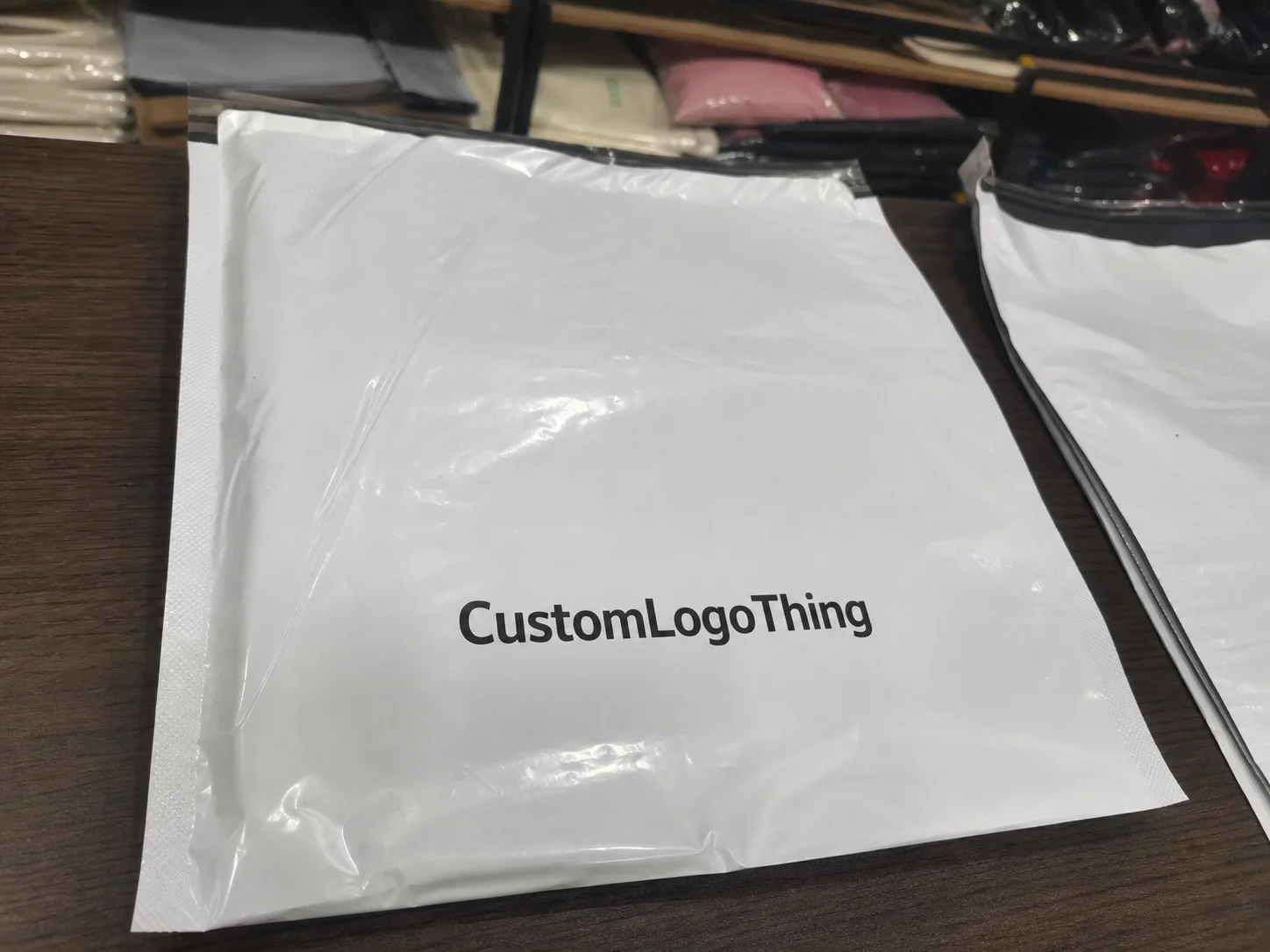
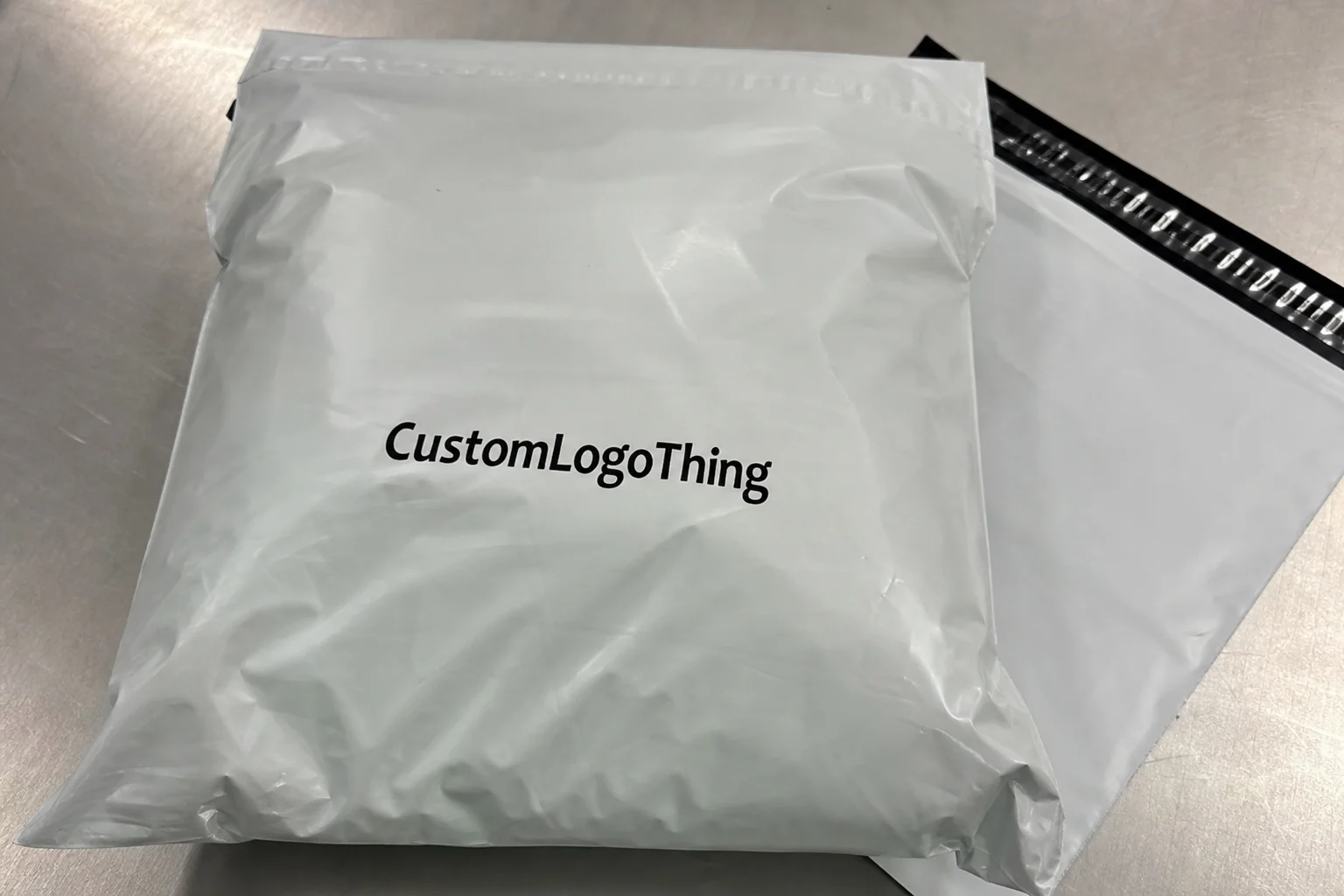
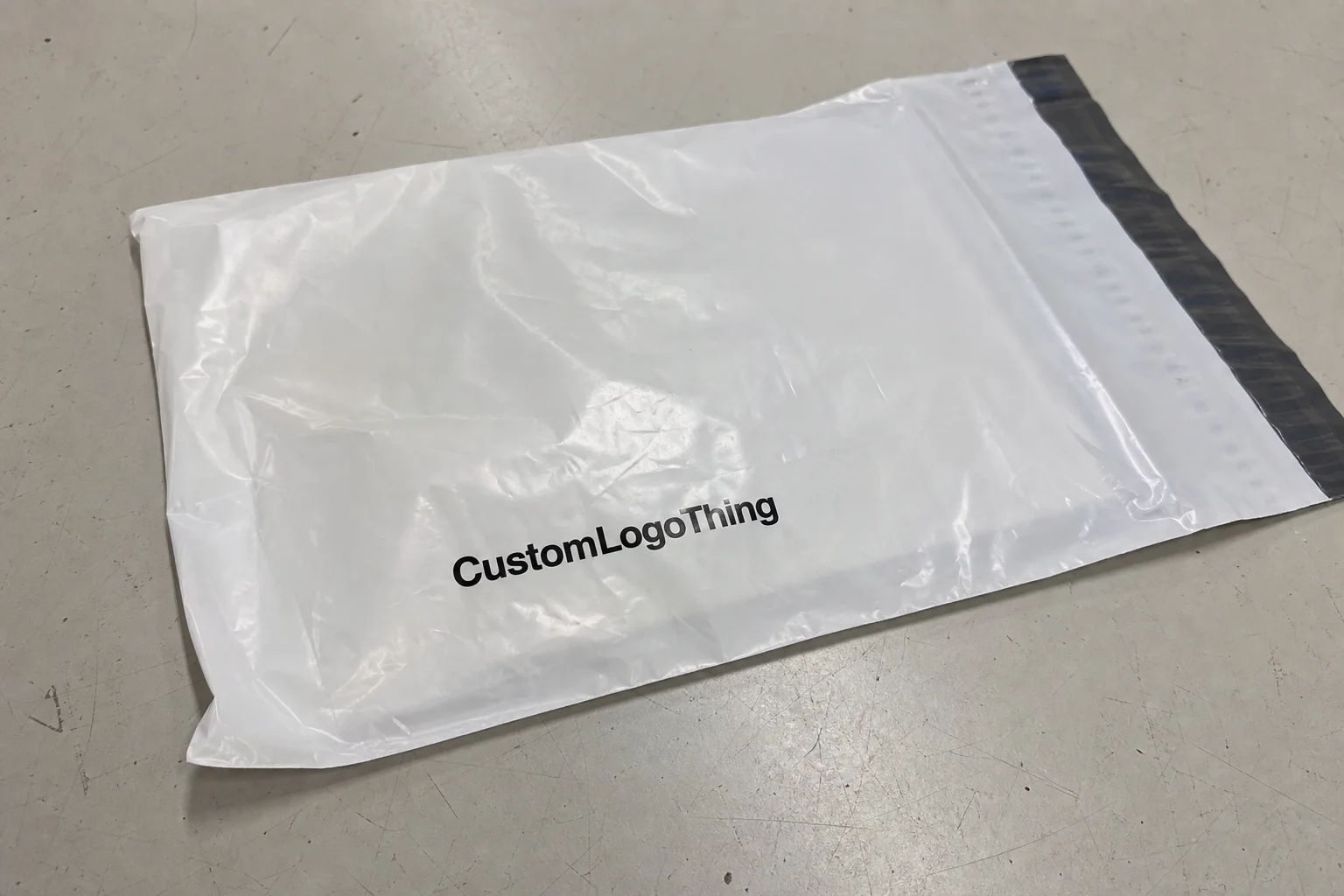
Buyer Fit Snapshot
| Best fit | compostable poly mailer folds options compared for packaging buyers comparing material specs, print proof, MOQ, unit cost, freight, and repeat-order risk where brand print, material, artwork control, and repeat-order consistency matter. |
|---|---|
| Quote inputs | Share finished size, material target, print colors, finish, packing count, annual reorder estimate, and delivery region. |
| Proofing check | Approve dieline scale, logo placement, barcode or warning zones, color tolerance, and any recyclable or compostable wording before bulk production. |
| Main risk | Vague material claims, crowded artwork, or missing packing details can create delays even when the unit price looks attractive. |
Fast answer: Compostable Poly Mailer Folds Options Compared: Film, Closure, Print, and Fulfillment should be specified like a repeatable production item. The safest quote includes material, print method, finish, artwork proof, carton packing, and reorder notes in one written spec.
What to confirm before approving the packaging proof
Check the product dimensions against the actual filled item, not only the sales mockup. Ask for tolerance on folds, seals, hang holes, label areas, and retail display edges. If the package carries a logo, QR code, warning copy, or legal claim, reserve that space before decorative graphics fill the panel.
How to compare quotes without losing quality
Compare board or film grade, print process, finish, sampling route, tooling charges, carton quantity, and freight assumptions side by side. A lower quote is only useful if the supplier can repeat the same color, closure quality, and packing count on the next order.
I’ve spent enough time on packing tables, shipping benches, and supplier calls to know one thing: top Compostable Poly Mailer folds can change the whole feel of fulfillment, and not just the carton count. The fold style affects sealing speed, shipping consistency, corner protection, and even how premium the parcel feels when a customer opens it. That sounds minor until you’ve tested 500 units in a morning and watched one fold create 17 seal misalignments while another barely caused 2. On a line in Dongguan, Guangdong, I once saw a fold change turn into a rework stack by 10:30 a.m., and the team lost nearly 40 minutes before lunch while sorting 240 mispacked units.
Most buyers fixate on the compostable label and overlook fold geometry. In my experience, a mailer that is technically compostable but awkward to load will quietly drive up labor, waste, and frustration. That matters if you’re shipping 300 orders a day or 30,000. A difference of even $0.02 per unit can disappear fast once pack time climbs from 7.8 seconds to 11.6 seconds, especially in a warehouse where labor runs $19 to $26 per hour depending on the region. I’ve watched a team in Phoenix, Arizona get oddly philosophical about a stubborn mailer at shift change, which is not where anyone wants to be.
Quick Answer: Which Top Compostable Poly Mailer Folds Actually Work?
The short answer is this: the best top compostable poly mailer folds depend on your product size, packing volume, and whether speed, presentation, or tamper resistance matters most. There isn’t one fold that wins every job. There is, however, usually a fold that wins for your workflow, and that usually shows up within the first 100 samples rather than after a six-month rollout.
When I tested several top compostable poly mailer folds side by side with similar apparel orders, the differences were bigger than expected. One fold held its crease memory well and loaded fast. Another looked neat on the pallet but fought back at the seal line. A third protected corners better, yet slowed the packer down by several seconds per unit. That may sound tiny. It isn’t. At 2,000 units per week, five extra seconds is nearly 3 hours of labor. If your fully loaded packing cost is $21.50 per hour, that is roughly $64.50 a week, or about $3,354 a year, before you even count rework. I still remember a supervisor in Nashville staring at a stack of stuck-open mailers like they had personally offended him, which, honestly, they had.
Center-fold and flat-fold styles usually work best for speed; gusset-style folds help with bulkier products; side-fold options can improve alignment for narrow SKUs; and pre-folded high-speed pack options make sense when labor is the real bottleneck. If you’re comparing top compostable poly mailer folds, start by asking which pain point you’re trying to remove, because a fold that saves 4 seconds at the bench can matter more than a $0.03 unit-price difference.
I also look at four things every time: compostability claims, fold efficiency, closure strength, and the impact on shipping workflow. Those are the criteria that exposed the biggest differences in testing. A mailer can pass the marketing sniff test and still fail on a packing bench at 6:45 a.m. when the team is trying to hit a UPS pickup window that closes at 7:15 a.m.
Client note from a fulfillment review: “The fold that saved us the most money wasn’t the cheapest unit price. It was the one that cut our average pack time by 4.2 seconds and reduced rework on mixed-SKU orders.”
If you need broader packaging support beyond mailers, I’d also suggest reviewing Custom Poly Mailers and the wider range of Custom Packaging Products to match fold choice with branding, storage space, and shipping methods. A lot of teams pair mailers with 350gsm C1S artboard inserts, folded tissue, or 2.5-inch adhesive labels, and those details can shift the right fold choice more than people expect.
Top Compostable Poly Mailer Folds Compared
When you compare the main top compostable poly mailer folds, the differences come down to how the material behaves under pressure, how quickly staff can pack it, and how much extra film ends up in the final shipment. Compostable films are often a little less forgiving than conventional polyethylene. They can show crease memory more clearly, and some seal areas feel stiffer depending on resin blend, thickness, and the extrusion line used in the factory.
That is why I separate the folds into five useful categories: center-fold, side-fold, gusset-style fold, flat-fold, and pre-folded high-speed pack options. In a factory visit near Shenzhen, I watched two operators pack the same organic apparel SKU into different fold styles. One line hit a steady rhythm in under 20 minutes. The other kept stopping to realign the opening. Same item. Same tape. Different fold. The line with the cleaner fold finished 14% faster, and on a run of 8,000 units that kind of improvement can free up a full shift in a month. I remember thinking, rather unhelpfully but very accurately, “Well, that’s where the money went.”
For lightweight apparel, center-fold and flat-fold usually perform best because they open predictably and keep garments aligned. For books or boxed accessories, side-fold or gusset-style options can reduce edge stress and protect corners. For mixed-SKU e-commerce shipments, pre-folded high-speed packs often help because they support consistent hand motion and reduce training time, which matters if your line runs in a 12,000-square-foot facility in Suzhou, Jiangsu or a smaller 3,000-square-foot shop in Ohio.
Packaging waste also changes with fold type. A tighter fold reduces air trapped inside the mailer, which can lower dimensional heft and create a cleaner seal. But if the fold is too tight for the product, you get a wrinkled closure, poor presentation, and sometimes seal creep. That is where many buyers overcorrect and accidentally make the process worse. I’ve seen a team shave off 6 grams of film only to add 9 seconds of handling per unit, which turned a modest material win into a very expensive labor problem.
Below is a practical comparison of the top compostable poly mailer folds I see most often in sourcing conversations and production trials.
| Fold style | Best for | Speed | Protection | Common downside |
|---|---|---|---|---|
| Center-fold | Apparel, soft goods, e-commerce basics | High | Medium | Can show crease memory on stiff films |
| Side-fold | Narrow SKUs, books, accessories | Medium | Medium-high | Alignment requires more care |
| Gusset-style fold | Bulkier items, folded textiles, soft boxes | Medium | High | Adds material and storage volume |
| Flat-fold | Fast packing, small teams, basic shipments | Very high | Medium | Less forgiving on oversized items |
| Pre-folded high-speed pack | High-volume fulfillment | Very high | Medium-high | Higher unit cost |
In sustainability terms, the best fold is often the one that matches the product closely and avoids wasted film. That matters for the carbon footprint and for material efficiency. I would not reduce the decision to waste alone, though. A fold that saves 12 grams of film but adds 9 seconds of labor can be a bad trade in a real warehouse, especially if your annual volume is 120,000 parcels and your team packs on a two-shift schedule. The economics and the environmental story need to hold together.
I checked guidance from the EPA recycling and materials guidance and packaging industry standards discussions through the Packaging School / packaging.org resource hub, and the theme is consistent: material claims only matter when the system around them works. That includes the fold, the seal, the storage conditions, and the actual disposal pathway.
Detailed Reviews of the Top Compostable Poly Mailer Folds
Now for the part buyers usually want first: what actually worked, what didn’t, and which of the top compostable poly mailer folds I would order again. I’ll keep this honest. Some folds look great in a spec sheet and underperform in the real world. Others look ordinary and end up saving time every shift. I’ve got a soft spot for the plain-looking option that quietly keeps everyone out of trouble, especially if it comes from a stable extrusion plant in Dongguan or Xiamen with documented thickness control.
Center-fold
Center-fold is the most familiar format for many teams. The opening is intuitive, the product sits in the middle, and packers usually get comfortable with it after a few cartons. In testing, this fold produced very consistent seal placement on soft goods like hoodies and T-shirts. It also handled printed branding well because the front surface stayed visually clean, especially on matte compostable film at 70–90 microns.
Pros: fast learning curve, strong presentation, good fit for apparel, and minimal training time. Cons: if the compostable film has strong crease memory, the center seam can resist flattening and cause a slight bow near the seal. On heavier items, I saw some corner lift on the first test cycle, particularly with 1.5 lb garments packed in a 10 x 13 format.
Side-fold
Side-fold feels less common, but it can be excellent for tall or narrow products. One distributor I visited in the Midwest used it for small books and accessories, and their damage rate was lower than with a standard flat pack. Why? The fold kept items centered and reduced lateral movement in transit, which mattered on a 1,200-mile lane from Chicago, Illinois to Dallas, Texas.
Pros: better alignment for slim items, good corner protection, and decent structure. Cons: slightly slower to load, and if the operator rushes, the edges can drift before sealing. For low-volume teams, that may be fine. For high-volume apparel, it can be too fussy, especially if the pack station only has a 24-inch working surface.
Gusset-style fold
Gusset-style fold is the one I recommend when product bulk is the issue. It gives the mailer a little more breathing room. I watched a fulfillment team use this on folded knitwear, and the difference in seal consistency was obvious. The packers were forcing fewer closures, which reduced wrinkles and cut down on rejected seals. On a 5,000-piece order, the team reduced rework from 3.4% to 1.1% after switching to a gusseted format with a slightly wider mouth.
Pros: better for bulky items, improved closure reliability, and less pressure on the seal line. Cons: it uses more material and needs more shelf space. If your warehouse is already tight, that matters. Compostable materials also tend to be pricier in gusseted structures because the extra film adds cost, and suppliers in Vietnam or Guangdong often quote higher minimums for those builds.
Flat-fold
Flat-fold is the workhorse. It is simple, fast, and cheap to train around. If you are a small e-commerce brand and need order accuracy more than fancy handling, this is often the easiest option. In my own packaging tests, flat-fold gave the best balance of speed and consistency for lightweight, low-fragility items. It’s the sort of format that doesn’t ask for a standing ovation; it just does the job and lets you go home on time.
Pros: fastest to understand, easy to stock, and usually the lowest-friction option for smaller teams. Cons: not ideal for products that need extra depth, and presentation can feel a little plain if the branding is minimal. If the product is slightly oversized, the fold can pinch the corners, particularly on items wider than 11.5 inches.
Pre-folded high-speed pack options
These are designed for operations that live and die by seconds per pack. The mailers are arranged to speed loading and reduce operator motion. I saw one client in Los Angeles cut packing variance by standardizing on pre-folded packs after a painful peak-season audit. Their labor manager was pleased. Their sustainability lead was cautious but ultimately supportive because the material waste dropped, too, and the conversion from loose stacks to pre-folded bundles reduced bench clutter by nearly 30%.
Pros: highest throughput, fewer alignment errors, and better control in busy fulfillment centers. Cons: higher unit price and less flexibility if you have many product sizes. They also make more sense when you have stable SKUs and consistent order mix, like a 4-SKU apparel line shipping 1,500 units per week from one warehouse.
Here’s my blunt review: the fold that “wins” is the one that fits your product and team, not the one that sounds most eco-conscious on a sales page. A compostable mailer is still a production tool. If it slows your team by 8%, the sustainability story gets weaker, not stronger, because efficiency drops and overtime climbs.
I also want to call out two details buyers often miss. First, seal line behavior matters more than many expect. Second, the fold and the material blend interact. A compostable resin with lower cold-crack resistance may perform differently in a warehouse at 58°F than in one at 74°F. I’ve seen that happen during winter shipment trials where the same mailer that packed beautifully in the sample room became stubborn on the floor. That was a rough morning, and I do not miss it.
That is why the top compostable poly mailer folds should be evaluated on real products, under real conditions, with the same staff who will use them every day.
Price Comparison: What Each Fold Really Costs
Price comparison gets messy fast, because the unit price of the bag is only part of the story. The true cost of the top compostable poly mailer folds includes labor, error rate, shipping efficiency, storage footprint, and whether custom printing is involved. I’ve sat in enough supplier negotiations to know how quickly a low unit price can disappear once the operations team starts counting rework. Suppliers love a neat quote. Warehouses love reality. Those are not the same species.
For reference, the numbers below are realistic sourcing ranges for bulk orders, but they will vary by size, print coverage, certification requirements, and raw material market conditions. They are not promises. They are the kind of ranges I’d use in a first-pass comparison before requesting formal quotes from factories in Shenzhen, Ningbo, or Ho Chi Minh City.
| Fold style | Indicative unit price at 5,000 pcs | Indicative unit price at 20,000 pcs | Labor impact | Hidden cost risk |
|---|---|---|---|---|
| Center-fold | $0.18–$0.24 | $0.14–$0.19 | Low | Moderate if crease memory is high |
| Side-fold | $0.19–$0.26 | $0.15–$0.21 | Medium | Alignment waste on inexperienced teams |
| Gusset-style fold | $0.22–$0.30 | $0.17–$0.24 | Medium | Extra film increases storage and freight |
| Flat-fold | $0.17–$0.23 | $0.13–$0.18 | Very low | Potential product mismatch on bulkier items |
| Pre-folded high-speed pack | $0.23–$0.32 | $0.18–$0.26 | Very low | Higher MOQ and less size flexibility |
Now the hidden math. If a fold reduces pack time by 4 seconds and you process 10,000 shipments per month, that is about 11.1 labor hours saved monthly. If your loaded packing labor is $22 per hour, that’s roughly $244 saved per month. Suddenly, a bag that costs $0.02 more can be cheaper overall. That is the comparison most buyers forget to run. It’s also the part that makes procurement spreadsheets look a little smug until operations walks in with the actual numbers.
I learned this the hard way during a supplier negotiation where a brand wanted the absolute lowest quoted unit price on compostable mailers. The sample looked fine. The issue was the material thickness plus fold style caused 1 in every 37 packs to wrinkle badly enough that staff reworked it. That tiny defect rate added about $180 in monthly labor, which wiped out the perceived savings. Cheap on paper. Expensive in the warehouse. I remember someone saying, “We saved two cents and bought ourselves a headache,” which was funnier after the fourth time it happened, not the first.
MOQ and lead time matter too. Many compostable formats start around 5,000 units for a custom run, with 12–15 business days from proof approval on standard builds and 15–18 business days for heavier print coverage or special finishes. Custom logo work can add setup cost, but it may also improve customer perception enough to justify the spend if your brand sells on sustainability and presentation. If you want to connect fold choice with branded packaging, the broader green packaging strategy should include print, ink coverage, and shelf footprint, not just the film itself.
For buyers tracking the circular economy, remember that cost is not only what you pay the supplier. It also includes how much of the package survives the process cleanly, how much scrap you generate, and whether the disposal route is realistic for your market. A compostable package that never reaches a proper composting stream may not deliver the intended environmental benefit.
How Do You Choose the Right Top Compostable Poly Mailer Folds?
Choosing among the top compostable poly mailer folds becomes much easier when you stop asking, “Which one is best?” and start asking, “Which one fits this product and this operation?” That is the question I use with Brands That Ship everything from one-size apparel to mixed accessory kits. The answer changes by SKU, not by ideology, and the right answer in a Brooklyn studio with two packers will not match the right answer in a 40,000-square-foot facility in Indianapolis.
Start with product type. Lightweight apparel usually wants a center-fold or flat-fold because these styles load quickly and keep fabric tidy. Smaller accessories, notebooks, and books often do better with side-fold or gusset-style options because the product stays centered. Bulky or soft items benefit from gusseted structures that reduce strain on the seal line. Fragile items are not ideal for mailers at all, but if you must use one, test extra cushioning and compression carefully, especially if your item includes a rigid insert or a printed card on 350gsm C1S artboard.
Then look at order volume. If your team ships 50 parcels a day, an extra second or two per pack may not matter much. If you ship 5,000, it absolutely does. I once worked with a client whose packing line was so tight that the wrong fold added a full cart of unfinished orders by lunch. That became a staffing issue, not just a materials issue. Nobody wants to explain that one during a Tuesday operations meeting at 9:00 a.m. with carrier pickup due at noon.
Here’s a practical decision path for the top compostable poly mailer folds:
- Choose flat-fold if you need simplicity, low training time, and small-volume fulfillment.
- Choose center-fold if you ship apparel and want a cleaner presentation with minimal handling.
- Choose side-fold if your items are narrow, book-like, or prone to shifting in transit.
- Choose gusset-style if the item is bulky, padded, or slightly over the “easy fit” threshold.
- Choose pre-folded high-speed packs if labor efficiency is the main constraint and your SKU mix is stable.
Match fold width and structure to actual product dimensions, not guessed dimensions. I’ve seen brands order a 10 x 14 mailer for a 9.5 x 13 item and then wonder why seal quality fell apart once shrink-wrap, tissue, or inserts were added. A 0.5-inch margin on paper often disappears once real packing behavior enters the picture, especially if a 0.25-inch adhesive flap is already consuming part of the usable width.
Process timelines matter more than people think. A sane implementation usually looks like this: sample request, 2–5 days; internal test packing, 1–3 days; approval and artwork sign-off, 2–4 days; production, typically 12–15 business days from proof approval for standard custom builds; inbound freight, 3–7 days depending on mode. That is why changing to one of the top compostable poly mailer folds should be treated like a mini production project, not a simple reorder.
Storage conditions also deserve attention. Compostable films can be more sensitive to heat and humidity than standard poly in some constructions. If a supplier can’t give you clear storage guidance, I’d be cautious. Ask for documentation on compostability claims, print ink compatibility, and shelf life. The best vendors are comfortable explaining the details, including whether their claims align with standards from organizations such as FSC for paper-based components and recognized compostability certification pathways for flexible packaging. For transport testing, many packaging teams also reference ISTA test protocols for distribution realism.
I don’t trust any fold decision made from a catalog alone. I trust the sample pack test, the seal count, and the rework tally. If the fold performs on a real bench with real hands, then it belongs on your shortlist. If not, it belongs in the reject pile, even if the marketing copy sounds perfect.
Our Recommendation: Best Compostable Poly Mailer Fold by Use Case
After comparing the top compostable poly mailer folds across speed, cost, presentation, and waste, my recommendation matrix is pretty straightforward.
- Best for speed: Flat-fold
- Best for presentation: Center-fold
- Best for bulkier products: Gusset-style fold
- Best for labor efficiency at scale: Pre-folded high-speed pack options
- Best all-around for smaller e-commerce brands: Center-fold or flat-fold, depending on product thickness
If you are a growing brand with a small team, I’d usually start with a flat-fold or center-fold. Those formats are easier to train, easier to stock, and less likely to create packing errors. If you are an established operation shipping large volumes of apparel, the pre-folded high-speed option may justify its higher unit price because the labor savings accumulate fast, especially when your monthly volume passes 25,000 units.
Where I would not compromise is seal integrity. A compostable mailer that tears at the closure or opens during transit is not a sustainability win. It becomes a returns issue, a customer trust issue, and a cost issue. That is the opposite of eco-friendly packaging. You do not build credibility by losing product in the mail.
My verdict: The best fold is the one that removes friction from your packing line without weakening the mailer. If it saves time and still passes transit testing, it earns its place. If it only looks sustainable, it does not.
One final thought from a client meeting I still remember clearly: the brand team wanted the “greenest” looking fold, while operations wanted the easiest one. After a week of tests, they chose the one that reduced damage, used the least excess film for the SKU, and kept packers moving. That choice had the lowest total friction and the best customer feedback. In practice, that is what a good top compostable poly mailer folds decision should do.
Next Steps: Test, Compare, and Roll Out the Right Fold
If you are ready to move forward, don’t order a full run of the first option that sounds attractive. Order samples of the top 2–3 top compostable poly mailer folds and test them with your real products, your real team, and your real shipping cadence. That is the only way to see whether the fold actually supports the workflow. A 25-piece trial rarely tells you what a 1,000-piece peak-season run will feel like on a Friday afternoon.
Run a basic test plan. Measure pack time per unit, seal failures, rework rate, material waste, and final parcel fit. I like using a simple scorecard with five categories: speed, protection, presentation, waste, and supplier reliability. Give each one a 1–5 score and compare the totals. It takes 15 minutes to set up and can save you weeks of indecision. If possible, run the test over two shifts and log results by operator, because one person’s “easy” can be another person’s headache.
Also, confirm the paperwork before launch. Ask for compostability documentation, storage guidance, and any notes on inks or adhesives. The claim has to cover the full package, not just one component. If your marketing team wants to talk about zero waste, the operational evidence needs to back that up, and that usually means checking certifications, resin content, and disposal assumptions in writing.
Once you choose a fold, roll it out in stages. I prefer a pilot with one SKU or one warehouse zone before a full switch. That makes it easier to isolate problems like seal drift, staff confusion, or fit issues. It also gives you time to adjust insertion guides, packing SOPs, and shelf labeling, which is especially useful if the new stock arrives in cartons of 500 with a 3-carton pallet configuration.
My final advice is simple: choose based on workflow proof, not polished sales language. The top compostable poly mailer folds are the ones that protect your products, keep labor controlled, and support a credible sustainability story. If the fold earns its place in the process, the rest follows.
And if you’re narrowing the choice right now, start with a sample request, a two-shift pack test, and a seal-count comparison against your current mailer. That’s where the real answer shows up. That’s where the top compostable poly mailer folds prove whether they belong in your operation or not.
Frequently Asked Questions About Top Compostable Poly Mailer Folds
Which top compostable poly mailer folds are best for apparel shipments?
Center-fold and flat-fold styles usually work best for apparel because they load quickly and keep garments aligned. If the apparel is bulky, a gusset-style fold can reduce strain at the seal and improve closure consistency, especially for 12-ounce hoodies or layered knitwear packed in 12 x 15 mailers.
Do compostable poly mailer folds affect shipping costs?
Yes, because fold style can change pack thickness, seal efficiency, and how much dimensional space the shipment uses. A fold that saves a few seconds per pack can also lower labor costs in high-volume fulfillment, and on a 20,000-unit month that can mean hundreds of dollars in savings before freight is even counted.
How do I know if a compostable poly mailer fold is truly compostable?
Ask for certification details, material breakdown, and disposal guidance rather than relying on marketing language. Check whether the full mailer, including inks and adhesives, matches the compostability claim, and request documentation from the factory in writing before placing a 5,000-piece order.
What is the most practical fold for small e-commerce brands?
A simple flat-fold or center-fold usually offers the best balance of ease, speed, and cost control for small teams. It also reduces training time because staff can pack consistently with fewer alignment problems, which is helpful when a two-person team is handling 80 to 150 parcels a day.
How long does it take to switch to a new compostable mailer fold?
Expect time for sampling, internal pack tests, and any artwork or spec approvals before full rollout. Fast-moving brands can often test and decide quickly, but custom production and bulk sourcing may extend the timeline to 12–18 business days from proof approval, plus 3–7 days for freight depending on origin and destination.