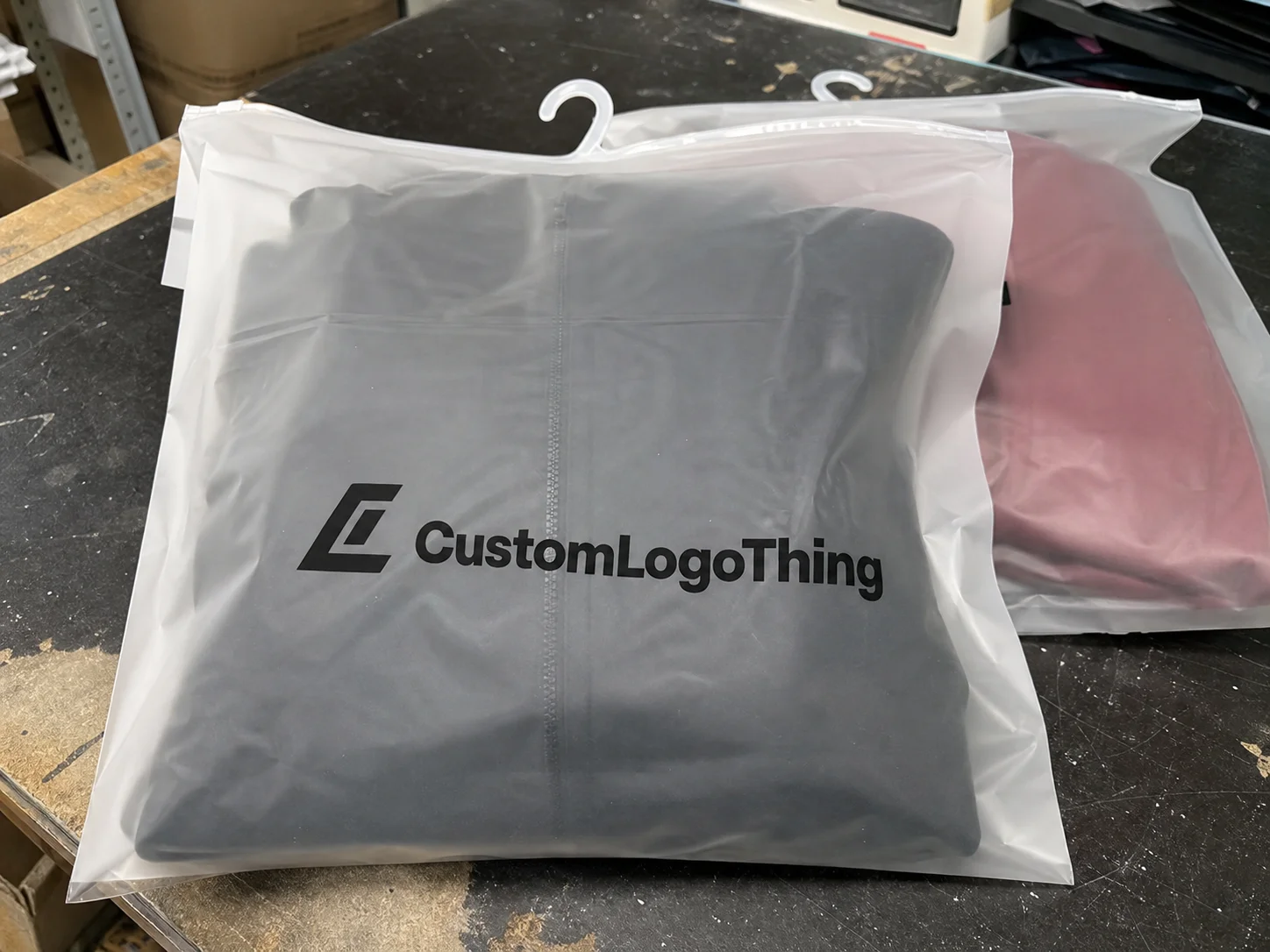
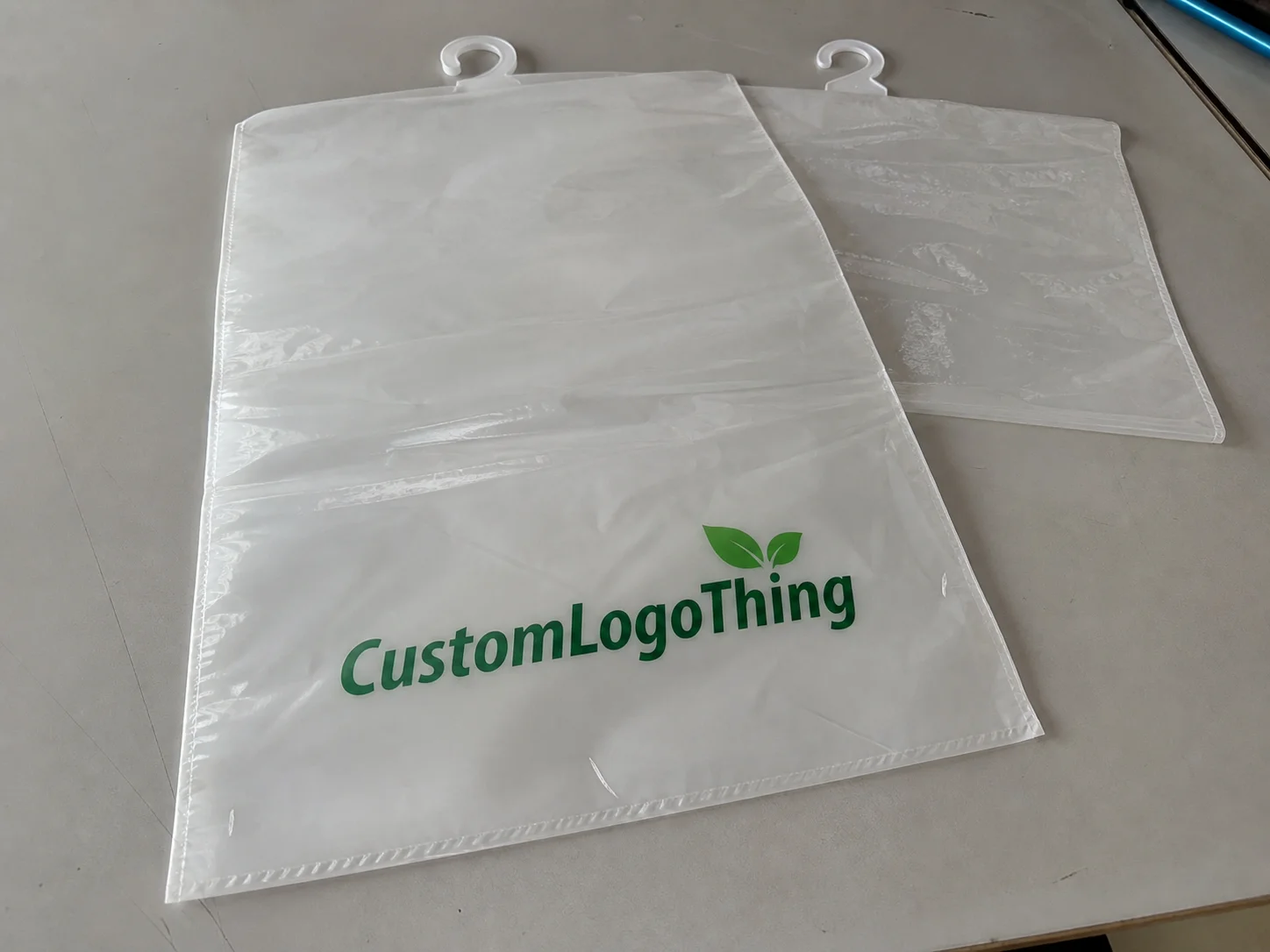
Buyer Fit Snapshot
| Best fit | Tiered Pricing for Packaging Partners projects where brand print, material claims, artwork control, MOQ, and repeat-order consistency need to be specified before quoting. |
|---|---|
| Quote inputs | Share finished size, material target, print colors, finish, packing count, annual reorder estimate, ship-to region, and any compliance wording. |
| Proofing check | Approve dieline scale, logo placement, barcode or warning zones, color tolerance, closure strength, and carton packing before bulk production. |
| Main risk | Vague material claims, crowded artwork, missing packing details, or unclear freight terms can make a low unit price expensive after revisions. |
Fast answer: Tiered Pricing for Packaging Partners: Quote Scope, Sample Proof, MOQ, and Lead Time should be specified like a repeatable production item. The safest quote records material, print method, finish, artwork proof, packing count, and reorder notes in one written spec.
Production checks before approval
Compare the actual filled-product size with the drawing, then confirm tolerance on folds, seals, hang holes, label areas, and retail display edges. Reserve space for logos, QR codes, warning copy, and material claims before decorative graphics fill the panel.
Quote comparison points
Review material grade, print process, finish, sampling route, tooling charges, carton quantity, and freight assumptions side by side. A quote is only useful when the supplier can repeat the same color, closure quality, and packing count on the next order.
What is Tiered Pricing for Packaging Partners? I’ve stood on enough pressroom floors in Dongguan, Shanghai, and Long Island City, watched enough corrugated die cutters, and sat through enough quote reviews to tell you this: the same exact box style can come back with three very different prices, and it usually has nothing to do with anyone “overcharging.” It has everything to do with how setup labor, material yield, tooling, and production efficiency get spread across the run. That’s why what is tiered pricing for packaging partners matters so much when you’re buying custom printed boxes, retail packaging, or any other form of product packaging. On a recent skincare carton project, a 1,000-piece run in 350gsm C1S artboard came back at $1.24 per unit, while 5,000 pieces dropped to $0.68 per unit after setup was absorbed across more cartons.
Buyers get twitchy the first time they see a quote that drops sharply at 5,000 units or 10,000 units. I get it. The first instinct is to assume somebody padded the small run and suddenly found religion at scale. Usually, it’s just the factory showing you where the numbers stop being annoying and start making sense. Once you understand what is tiered pricing for packaging partners, you can read quotes with a steadier hand, compare suppliers more accurately, and stop treating the lowest-looking unit price like it’s the holy grail. A quote that says $0.15 per unit for 5,000 pieces and $0.11 per unit for 10,000 pieces may look suspicious until you notice the die charge stayed flat at $420 and the press make-ready cost was the same either way.
For Custom Logo Things, this sits right at the center of smart packaging design and practical procurement. Whether you’re sourcing branded packaging for a direct-to-consumer launch, folding cartons for a cosmetics line, or mailers for a subscription program, tiered pricing can save real money when you use it well and cost real money when you ignore the fine print. Honestly, I think that’s why so many teams get burned on their first few packaging buys—they obsess over the box in the meeting room and forget the ugly little math underneath it. A plant in Foshan can quote a matte-laminated mailer at $0.54 at 3,000 units and $0.39 at 10,000 units, but that spread only matters if you know whether your warehouse in New Jersey can actually hold the extra 7,000 units.
What Is Tiered Pricing for Packaging Partners?
What is tiered pricing for packaging partners in plain language? It is a pricing model where the unit cost changes as your order quantity crosses preset volume bands. Those bands might start with prototype or sample quantities, then move into low-volume production, mid-volume production, and larger manufacturing runs, with each level priced differently based on how much work the factory has to absorb before the first finished piece ships. A supplier in Shenzhen may quote 100 sample units separately, then 500 to 999 units, then 1,000 to 4,999 units, then 5,000+ units, because the prepress and die costs are nearly identical at each stage.
I remember a folding carton job for a natural skincare brand where 1,000 cartons looked expensive next to 5,000 cartons, but the box itself had not changed one bit. Same SBS paperboard, same 4-color process, same matte aqueous coating, same tuck-top structure. The difference was that the die setup, press make-ready, and sheeting waste were being divided by a much larger run at the higher tier. That’s the math behind what is tiered pricing for packaging partners. Not magic. Just math with a dusty factory floor under it. At 1,000 units, the cartons came in at $1.08 each; at 5,000 units, they fell to $0.61 each because the 45-minute make-ready was no longer riding on a tiny order.
Packaging partners use tiers because the first pieces off a line are always the most expensive to make. Someone has to review the dieline, prepare plates or print files, calibrate the press, cut the die, test glue lines, check registration, and approve the first-off sample. Those costs exist whether you order 500 units or 50,000 units. Tiered pricing simply spreads those fixed costs over a bigger run when the volume increases. In my visits to plants in Guangzhou and Cleveland, I’ve seen a single folder-gluer setup run consume $180 to $900 before the first sellable carton even moved to packing.
What is tiered pricing for packaging partners also matters because it gives buyers a much clearer forecast. If you know the 1,000-unit level is $1.24 per box and the 5,000-unit level is $0.68 per box, you can decide whether the extra inventory is worth the lower unit cost. That is especially useful for seasonal launches, retail resets, and promotional packaging where timing and budget both matter. A beauty brand shipping into Target in Minneapolis can save $2,800 on a 10,000-unit carton order just by moving from a 2,500-unit tier to a 10,000-unit tier at the right time.
This pricing structure shows up across a lot of packaging formats: folding cartons, corrugated mailers, rigid boxes, inserts, labels, and retail-ready packaging. I’ve seen it in plants running water-based flexo on corrugated, offset litho on paperboard, and specialty finishing rooms where foil stamping, embossing, and window patching all add to the setup burden. No matter the format, what is tiered pricing for packaging partners usually comes down to the same question: how much fixed effort can we spread across more pieces? A 32 ECT corrugated mailer made in Qingdao at 2,000 units will almost always price differently than the same mailer at 20,000 units because the folder-gluer, stitcher, and pallet wrap time do not scale linearly.
“The quote only looked expensive until we compared the 2,500-piece run against the 10,000-piece run. Once the setup costs got spread out, the whole conversation changed.”
That came from a client meeting I still remember because it said the quiet part out loud. The goal is not just to buy boxes. The goal is to buy the right amount of packaging at the right production level, with enough clarity to support your product launch and your margins. A $0.15 unit price on 20,000 rigid mailers is useful only if your forecast supports a four-month sell-through and your supplier in Ho Chi Minh City can hold the artwork spec steady.
How Tiered Pricing for Packaging Partners Works
What is tiered pricing for packaging partners from the factory side? It is a quote structure built around fixed costs and variable costs. Fixed costs include die prep, plate making, prepress work, and machine setup. Variable costs include board, ink, glue, freight, and labor tied to each additional unit. As volume rises, the fixed costs stop dragging down the economics quite so hard, and the unit price falls. In a plant running 12-color offset in Shenzhen, the prepress bill might be $260, while the board and ink on a 10,000-piece carton order could be only $0.31 per unit.
Here’s a typical example I’ve seen in packaging plants serving consumer brands: 500 to 999 units, 1,000 to 4,999 units, 5,000 to 9,999 units, and 10,000+ units. Those are not universal breakpoints, and a rigid box shop will often use different tiers than a label converter or a corrugated plant, but the logic stays the same. The lower tiers carry more setup burden per unit, which is why what is tiered pricing for packaging partners tends to reward larger quantities. A carton factory in Dongguan might quote 500 pieces at $1.35 each, 2,000 pieces at $0.79 each, 5,000 pieces at $0.58 each, and 10,000 pieces at $0.44 each.
It is not always a straight-line drop. A carton might dip from $1.18 to $0.79 between two tiers, then only move to $0.72 in the next tier. Why? Because sheet size optimization, material nesting, press speed, and finishing line throughput can create pricing jumps rather than smooth declines. If a 28 x 40 sheet suddenly nests 16 cartons instead of 12 because the dieline was adjusted by a few millimeters, the economics can change fast. I once watched a supplier in Zhejiang shave 2.5 mm off a flap and recover nearly 8% more pieces per sheet, which turned a $0.67 unit price into $0.61 overnight.
| Quantity Tier | Example Unit Price | Main Cost Behavior | Typical Use Case |
|---|---|---|---|
| 500–999 | $1.35/unit | High setup cost per piece | Prototype launch, test market |
| 1,000–4,999 | $0.82/unit | Setup costs spread wider | Early-stage replenishment |
| 5,000–9,999 | $0.61/unit | Better material and labor efficiency | Stable sales volume |
| 10,000+ | $0.49/unit | Best setup dilution and scheduling efficiency | Ongoing branded packaging programs |
Those numbers are only illustrative, of course, because a 350gsm C1S artboard folding carton with soft-touch lamination will price very differently from a kraft corrugated mailer with one-color flexo. Still, the pattern is useful. What is tiered pricing for packaging partners if not a way of showing where your fixed costs finally stop dominating the job? A 350gsm C1S artboard carton made in Guangzhou might land at $0.52 in 10,000 units, while the same structure with foil stamping and embossing could jump to $0.78 because of the extra pass through finishing.
Quotes may include tooling, freight, proofing, plates, cutting dies, or specialty finishes, and that is where some confusion starts. One supplier might quote a low per-unit price but leave out the die charge. Another might bundle in all prepress work. I have seen buyers compare those two quotes and assume one partner is cheaper when, in fact, they were not quoting the same scope at all. If you are serious about understanding what is tiered pricing for packaging partners, you have to compare the full structure, not just the sticker price. Otherwise you end up picking the “cheap” quote and then staring at the final invoice like it personally betrayed you. A $0.39 unit quote with a $680 tooling line is not cheaper than a $0.46 all-in quote with a 12-business-day production promise from proof approval.
Another practical wrinkle: some packaging partners treat the first tier as a “pilot run” with more labor oversight, while others define it as a production run with standard QC. That difference can change both the price and the timeline. In a corrugated plant I visited in Ohio, the same style mailer had three tiers, but the lowest tier was hand-glued in part because the automated folder-gluer would have taken longer to set up than the job itself. That kind of detail is exactly why the question, what is tiered pricing for packaging partners, has to be answered with context. The 800-piece pilot was $1.10 per unit, while the 5,000-piece version dropped to $0.47 per unit after the handwork disappeared.
Key Factors That Shape Tiered Pricing for Packaging Partners
Material choice is usually the first big driver. Kraft corrugated, SBS paperboard, chipboard, rigid board, and specialty substrates all carry different base costs, and they also behave differently on the line. A 32 ECT corrugated mailer may be cheap to run in volume, but a rigid setup with wrapped chipboard and magnetic closure panels can take much longer to assemble and finish. That’s a big reason what is tiered pricing for packaging partners cannot be reduced to a single formula. A 24 pt SBS carton made in Shenzhen may start around $0.21 per unit in high volumes, while a 1.8 mm rigid box wrapped in printed art paper could start above $1.60 per unit before inserts are added.
Size and structure come next. Larger cartons use more board, and deep mailers or complex inserts can lower nesting efficiency on the sheet. If a converter can fit 18 units on a sheet instead of 14 because the footprint is tighter, the economics improve. But if the design forces a bigger caliper board or creates more waste at the corners, the price can jump even within the same tier. I’ve seen a 6 x 4 x 2 inch mailer in E-flute come in at $0.73 at 3,000 units, while a slightly wider 6.25 x 4.25 x 2.25 version landed at $0.81 because the board utilization dropped by nearly 9%.
Print and finish complexity matter just as much, and this is where branding decisions start showing up in the quote. CMYK plus one PMS color is not the same as four-color process with foil stamping, embossing, spot UV, and soft-touch lamination. A retail box with a window patch or a textured varnish also adds machine time and inspection time. I’ve watched a finishing operator in a New Jersey plant spend more time dialing in a foil panel than the actual print run, and that setup effort shows up in the quote every time. Brutal, but fair. A simple one-color mailer might price at $0.28 in 10,000 units, while the same mailer with foil and spot UV can climb to $0.46 because the finishing line needs an extra pass.
Lead time plays a major role too. Rush orders, off-cycle production, and short deadlines can push a job into a higher effective tier because the factory has to interrupt its schedule, source materials quickly, or rework machine planning. If your packaging partner has to airfreight board or pay premium rates for specialty film, the pricing structure changes even if the box design stays the same. That is why what is tiered pricing for packaging partners often includes scheduling considerations that buyers do not see at first glance. A standard quote from proof approval to shipment might be 12 to 15 business days, while a rush job could compress that to 7 business days and add 8% to 15% in premium labor and freight.
Order consistency can unlock better pricing as well. Repeated packaging runs, long-term forecasts, and multi-SKU consolidation help the factory plan ink, board, and labor more efficiently. If a brand knows it will need 3,000 units every month for six months, that is very different from calling every few weeks for emergency reorders. Consistent demand usually gives the partner enough confidence to hold a better rate, especially on branded packaging programs with stable artwork and structure. A cosmetics brand in Los Angeles that committed to quarterly 8,000-unit reorders got a price reduction from $0.63 to $0.57 per carton after the supplier in Dongguan could lock in board purchases for three months.
For buyers comparing suppliers, here is a useful way to think about the drivers:
- Material grade: 18 pt, 24 pt, 350gsm, E-flute, B-flute, or rigid board all behave differently.
- Decoration level: one-color print is not the same as foil, embossing, or matte lamination.
- Assembly burden: handwork drives labor cost far faster than most teams expect.
- Production utilization: better nesting and faster throughput improve pricing tiers.
- Forecast visibility: the more predictable the volume, the stronger the quote conversation.
If you want to see more packaging options that often get priced this way, our Custom Packaging Products page is a good place to compare formats and structures before you request a quote. I usually tell brands to start there with a real spec sheet: 350gsm C1S for cartons, 32 ECT or E-flute for shippers, and the exact print finish they actually plan to approve.
For brands that care about sustainability, one more factor matters: material sourcing. A supplier using FSC-certified board may quote differently than one buying commodity stock, and if recyclability or fiber content is part of your package branding, the tier structure can shift. The Forest Stewardship Council provides useful background on certified materials at fsc.org, while the EPA has practical guidance around packaging waste and recovery at epa.gov. In practical terms, a certified board source in Malaysia or Vietnam might add 2% to 6% to the base material cost, but it can also support retail requirements that commodity stock cannot.
How to Evaluate Pricing and Compare Packaging Quotes
What is tiered pricing for packaging partners worth if you cannot compare quotes correctly? Not much. I tell clients to start by making sure every supplier is quoting the exact same dimensions, material grade, print method, finish, insertion requirements, and delivery terms. A 6 x 4 x 2 inch mailer in 32 ECT B-flute is not the same job as a 6.125 x 4.125 x 2.125 inch mailer in E-flute, even if both look almost identical on paper. I once saw a client in Chicago compare a 10,000-piece quote on 24 pt SBS with a 10,000-piece quote on 350gsm C1S and assume the pricing gap was “just margin.” It was actually a material swap that changed the cost by $0.09 per unit.
Ask where the tier break happens and what changes between tiers. Some suppliers show the price drop clearly, while others bury setup fees into the low-volume price and make the larger tier look unusually attractive. I’ve seen a cosmetics buyer nearly approve the wrong supplier because the first quote looked $0.07 cheaper per unit, only to discover the die charge was added later. That kind of thing is exactly why understanding what is tiered pricing for packaging partners protects your budget. If the quote says $0.41 per unit at 5,000 pieces but adds a $360 plate fee and a $95 proof charge, the real number is not $0.41. It is closer to $0.49 before freight.
Always calculate total landed cost, not only the unit price. Add freight, warehousing, kitting, assembly, and any proofing or freight-recovery charges. A quote for $0.59 per unit may look excellent until you factor in a $480 die charge, $220 in freight, and $150 for hand insertion. Suddenly the “cheap” package is not so cheap. On a run shipped from Shenzhen to Long Beach, ocean freight, customs brokerage, and domestic pallet delivery can add another $0.04 to $0.12 per unit depending on carton count and cubic volume.
Request pricing at multiple quantities. A good packaging partner should be able to show the cost at 1,000, 3,000, 5,000, and 10,000 units, or whatever quantity bands make sense for the project. That lets you see the exact point where the larger run becomes economical. In my experience, that single chart often does more to clarify buying decisions than ten emails back and forth. Ask for exact unit prices like $0.89 at 1,000, $0.63 at 3,000, $0.52 at 5,000, and $0.45 at 10,000, then compare the delta against your forecasted sales pace.
Here is a simple comparison method that has saved clients a lot of confusion:
- Match the same structure and board spec.
- Confirm the same print coverage and finish.
- Check what is included: tooling, proofing, freight, and assembly.
- Compare unit price at several quantity bands.
- Review storage and usage timing before committing to the higher tier.
Also ask whether the supplier offers price protection, blanket orders, or forecast-based purchasing. For recurring product packaging, those arrangements can stabilize cost over multiple releases. That matters a lot when you are trying to hold margins on a subscription box, a private-label beauty line, or any retail packaging program with repeat demand. If the packaging partner can plan three or four runs together, the economics often improve enough to justify a better tier. A factory in Vietnam that knows you will order 12,000 units across three SKUs next quarter can often reduce the per-unit cost by $0.03 to $0.08 just by bundling the work.
One detail buyers sometimes miss is the approval standard behind the quote. A supplier quoting to ISTA handling requirements for transit-tested packaging may carry a slightly different cost structure than one quoting only to visual spec. If distribution damage is part of the risk profile, that extra engineering can be worth the money. For more on packaging performance standards, the International Safe Transit Association is a solid reference at ista.org. A shipper tested to ISTA 3A in a California distribution center may cost more upfront, but it can save a brand $1,200 in replacement product on a single damaged pallet.
Process and Timeline: From Quote to Production
What is tiered pricing for packaging partners if the job misses launch week? A missed launch can erase any savings. The normal workflow starts with a discovery call, then moves into dieline or artwork review, sample or prototype approval, material procurement, production scheduling, printing, converting, finishing, inspection, and shipping. Each stage affects both the price tier and the actual delivery date. On a standard carton job out of Dongguan, the full process typically takes 12 to 15 business days from proof approval, then another 3 to 7 business days for ocean or air freight depending on the destination.
Small runs may move faster, but not always. A 500-piece prototype order might seem simple, yet it can take just as much artwork review as a larger job. Larger tiers often require more material lead time and tighter scheduling, but the unit pricing improves because the factory can justify a fuller machine run. This is one of the most practical answers to what is tiered pricing for packaging partners: the factory is balancing speed, setup, and capacity utilization all at once. A 2,000-piece pilot may take 8 business days in a local U.S. plant, while a 20,000-piece run from Shenzhen may take 15 business days plus transit because the board must be booked before the press starts.
Common bottlenecks in packaging plants include plate making, die cutting, foil stamping, glue-line curing, and final QC. I’ve stood next to a folder-gluer where a simple glue-line issue delayed a run by six hours because the board coating was absorbing adhesive differently than expected. That sort of problem is routine in real production, and it is why a perfectly good quote can still change if the materials or artwork shift after approval. I’ve watched one 10,000-unit run in Hebei sit overnight because a clear varnish batch arrived 40 minutes late and the curing window had to be reset.
Proofing matters too. Digital proofs are quick, but they do not show every finishing detail. Physical samples take longer, yet they prevent costly rework when color, fold accuracy, or insert fit needs to be confirmed. A press check can add a day, sometimes two, but it can save thousands of units from being produced with a slight registration issue. In practice, better proofing often protects the pricing tier because it reduces waste and re-run risk. A hard sample approved in 4 business days can prevent a $900 reprint caused by a 1.5 mm fold shift.
If you are planning seasonal launches, retail resets, or promotional kits, build the timeline backward from the shelf date, not from the quote date. I’ve seen teams wait too long, then get pushed into a rush order that erased the savings from a lower price tier. That is where what is tiered pricing for packaging partners becomes a planning tool, not just a procurement detail. If your store reset is April 12, aim to approve final art by March 1, lock samples by March 8, and leave at least 7 business days for production before freight.
For packaging programs with multiple SKUs, consider consolidating artwork or structure where possible. If three products can share the same insert or shipper, the factory may be able to produce them in one run, which can lower setup cost and improve the tier you land in. That does not work for every brand, but when it does, the savings can be meaningful. A beauty kit with three vial sizes can sometimes share one 350gsm C1S insert with a minor die-cut adjustment, saving $0.06 to $0.11 per unit at 10,000 pieces.
Common Mistakes When Using Tiered Pricing for Packaging Partners
The biggest mistake I see is comparing only unit price and ignoring everything else. Freight, tooling, finishing, and assembly can change the real cost enough to flip the winner. A quote that is $0.05 lower per unit may still cost more overall if it carries a higher die charge or more expensive shipping. That is one of the simplest lessons in what is tiered pricing for packaging partners, yet it gets missed constantly. On a 7,500-unit run, a $0.05 difference is only $375; a $520 tooling fee wipes that out immediately.
Another problem is underestimating demand and ordering too little. If a brand burns through inventory fast and has to reorder at the smallest tier three times, it often pays the highest price three times. I saw that happen with a consumer wellness brand that insisted on “playing it safe” with 800-unit runs. By the third reorder, they had spent more than they would have on one 5,000-unit run, even after paying for storage. That was a painful meeting. The kind where everyone suddenly becomes fascinated by their laptops. Their total landed cost ended up $1.62 per box across three small buys, versus $0.77 per box if they had ordered 5,000 units once from a supplier in Xiamen.
Vague specifications create trouble too. If the board grade, finish, or dimensions change after quoting, the order may shift into a different tier or require rework. A 16 pt C1S carton and an 18 pt C1S carton are not interchangeable, and a soft-touch film is not the same as a matte aqueous coat, even if both look understated on the shelf. That kind of detail is why packaging design should be locked before price comparison begins. If the quote was built on 350gsm C1S artboard and you switch to 24 pt SBS after approval, expect the cost to move by $0.03 to $0.12 per unit depending on print coverage.
Another common miss is forgetting to ask about overages, underruns, and waste allowances. Print-heavy or specialty-finished packaging often needs a tolerance built into the order because press setup, cutting waste, and quality checks consume some material. If the supplier’s policy is unclear, you might receive fewer usable units than expected, and that changes the effective tier. A 5,000-piece order with a 2% underrun can leave you 100 boxes short, which matters if your launch is scheduled for a Monday morning in Atlanta and the cartons are already in transit.
Finally, brands sometimes buy into a lower tier without thinking about storage. A larger order can be the smartest choice on paper, but only if the warehouse can hold it dry, clean, and protected from crush or moisture. Corrugated should not sit against a damp wall, and paperboard cartons should not be stacked where humidity swings are severe. The pricing math works only if the inventory can survive long enough to be used. A 10,000-piece lot stored in a warehouse at 78% humidity in Houston is a bad idea, no matter how good the unit price looks.
Expert Tips for Getting Better Value from Tiered Pricing
Standardizing box sizes, inserts, or mailers across product lines is one of the fastest ways to improve pricing. If three SKUs can share a common shipper footprint, you can usually consolidate volume and qualify for a better tier. I’ve seen that work especially well in subscription packaging and ecommerce kits where the outer package matters more than a perfectly unique box for every product. One client moved from three separate 2,500-piece orders to one 7,500-piece combined run and dropped the unit cost from $0.64 to $0.51 on a plant out of Suzhou.
Share a 6- to 12-month forecast with your packaging partner. A factory can usually advise more accurately when it knows your likely reorder pattern. That visibility helps with board procurement, press scheduling, and even labor planning. In practical terms, it often means the difference between a rushed low-volume quote and a well-planned mid-volume run. If your supplier in Guangdong knows you need 4,000 cartons in May, 4,000 in July, and 4,000 in September, they can often hold a sharper price than if you place three emergency orders at random.
Design tweaks can reduce cost without hurting presentation. Simplifying the finish, adjusting board caliper, reducing ink coverage, or changing a deep tuck into a more efficient structure can all help. I’m not saying Every Brand Should strip back its package branding. Far from it. I am saying a smart change in packaging design can preserve shelf impact while improving the tier you qualify for. Sometimes the packaging looks better and costs less, which is rare enough to make you suspicious for about ten minutes. A switch from spot UV to matte aqueous on a 350gsm C1S carton can save $0.04 per unit at 10,000 pieces while keeping the look clean.
Combining SKUs into one production run can cut setup costs if the artwork and structure are close enough. A factory with a sheet-fed offset press, a die-cutting line, and a finishing room will almost always prefer one longer run over three tiny interruptions. That preference can work in your favor if your order plan is flexible. In one Seoul-to-Los Angeles packaging program, combining two carton SKUs into one 8,000-piece run cut the tooling burden by 40% and knocked 3 business days off the schedule.
Ask the factory to break out the cost drivers line by line. If the quote shows paperboard, printing, finishing, tooling, and assembly separately, your team can decide where to save money without hurting performance or presentation. A lot of buyers want a single number, but the line-item view is where the real learning happens. It shows exactly how what is tiered pricing for packaging partners turns into actual dollar decisions. If assembly is $0.18 per unit and the structure can be changed to reduce handwork to $0.07, that is real money, not a theoretical savings slide.
One more thing I’ve learned from years of supplier negotiations: price is not the whole story. A partner who responds in 24 hours, flags artwork problems early, and gives you honest feedback about finish complexity can save you more than a slightly cheaper vendor who disappears after the PO. That reliability matters when you are building branded packaging that has to look right and arrive on time. A supplier in Ningbo that turns proofs around in 2 business days and ships within 14 business days from approval can be worth more than a “cheaper” factory that takes 6 days just to answer a simple question.
If you want a practical filter, use this checklist before approving any tiered quote:
- Are the dimensions, material, and finish identical across suppliers?
- Does the quote include tooling, proofing, freight, and assembly?
- What is the exact quantity where the next tier begins?
- Can the supplier support future reorders at the same spec?
- Do storage, shelf life, and inventory rotation support a larger run?
That checklist has saved more than one client from buying the wrong run size. It is also the simplest way I know to turn what is tiered pricing for packaging partners from a confusing quote format into a decision-making tool. Use it before you sign off on a 10,000-piece order just because the unit price dipped from $0.58 to $0.49.
For readers who want to browse formats that often benefit from this pricing model, our Custom Packaging Products page shows how different structures, prints, and finishes can fit different volume bands. If you are comparing folding cartons, rigid boxes, or corrugated mailers, start with the material spec first and the quote second.
And if your packaging program has a sustainability target, ask your supplier whether they can support FSC-certified board, recyclable fibers, or reduced-material constructions. That can affect both the quote and the long-term fit of the package branding strategy. The important part is not just getting the cheapest box. It is getting the right box at the right tier, with the right performance. A sustainable structure out of 100% recycled E-flute might cost $0.03 more per unit, but it can also reduce landfill waste and satisfy retailer requirements in California and the EU.
FAQs
What is tiered pricing for packaging partners in simple terms?
It is a pricing model where the per-unit cost changes as order quantity increases. Higher volumes usually lower the unit price because setup costs are spread across more pieces, and that makes it easier to compare small-run and large-run packaging costs clearly. A 1,000-piece run might be $1.10 per unit, while a 10,000-piece run might be $0.46 per unit.
Why do packaging quotes drop at certain quantity levels?
Factories can use materials, machine time, and labor more efficiently at higher volumes. Setup costs like tooling, plates, and make-ready get divided across more units, and some quantity thresholds also improve sheet utilization and reduce waste. If a sheet fits 16 cartons instead of 12, the price can fall by 10% or more.
How do I know if a higher tier is actually worth it?
Compare the total landed cost, not only the unit price. Check whether the added inventory can be stored and used before the packaging changes or expires, and make sure the larger order aligns with realistic sales forecasts and launch timing. A 5,000-piece order at $0.61 may beat a 2,000-piece order at $0.79 only if you can sell through the extra 3,000 units in time.
Does tiered pricing apply to custom boxes and inserts too?
Yes, it is common for folding cartons, corrugated boxes, rigid boxes, inserts, labels, and kitting components. The tier structure may differ based on material, size, and finishing complexity, and more complex packaging usually has steeper setup costs. A die-cut insert in 18 pt SBS can price very differently from a printed mailer in 32 ECT B-flute.
What should I ask a packaging partner before approving a tiered quote?
Ask what is included in the price, such as tooling, proofing, freight, and finishing. Ask where the next pricing tier begins and what changes between tiers, and ask about lead times, overruns or underruns, and whether forecast-based pricing is available. Also confirm whether production will take 12 to 15 business days from proof approval or longer if specialty finishing is involved.
So, what is tiered pricing for packaging partners really teaching us? It teaches buyers to think like production planners, not just shoppers. Once you understand how setup, materials, scheduling, and volume bands affect the quote, you can make better decisions on branded packaging, custom printed boxes, and retail packaging without guessing your way through the process. In my experience, that shift alone can save a brand real money, reduce stress, and lead to smarter packaging design every single time. And if you can save $0.08 per unit on a 10,000-piece run in Dongguan because you asked the right questions, well, that’s not theory. That’s payroll. So start with the exact spec, ask for every tier in writing, and compare the full landed cost before you commit to the larger run.