A sticker can fail faster than a folding carton, and that catches plenty of buyers off guard. The problem usually shows up after a low-cost online order arrives, the stickers go onto chilled jars or shipping boxes, and the corners start lifting. Ink scuffs. Colors flatten under retail lighting. If you are asking where can i Buy Custom Stickers, the real issue is not only who prints them, but who can match the material, adhesive, finish, and format to the job.
Most failures trace back to a material mismatch rather than bad printing. A paper stock on a dry tissue seal behaves nothing like that same stock on a refrigerated bottle. An adhesive that bonds well to corrugated may struggle on low-surface-energy plastic. From a buyer’s side of the table, the value of a supplier is simple: they should connect the application to the production spec before the order goes to press.
That is why custom stickers remain one of the most useful low-cost tools in branded packaging and promotion. A run of 1,000 logo seals may cost less than a minor carton revision, yet those seals can sharpen the unboxing experience, clean up presentation, and help packaging feel more finished. They are inexpensive compared with many printed components, but highly visible once they are in the field.
The smart buying decision starts with use. Are the stickers meant for jars, tissue seals, shipping boxes, laptop decals, bottle labels, or event handouts? Each use changes the substrate, adhesive, finish, print method, and cost structure. The sections below focus on the details that separate a clean first order from a preventable reprint.
Where Can I Buy Custom Stickers Without Paying for the Wrong Specs?
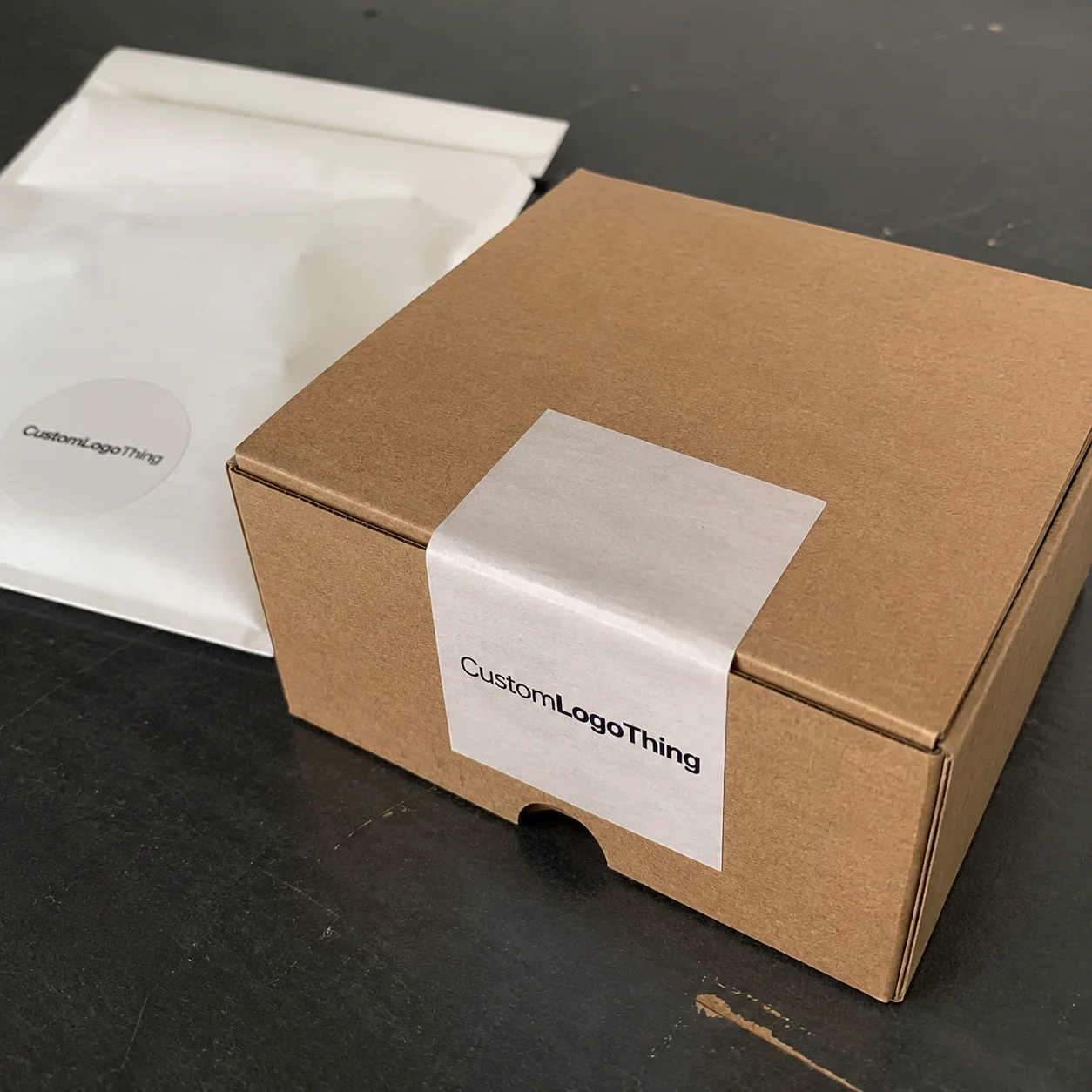
Buyers searching where can i buy custom stickers are usually not browsing for inspiration. They are close to ordering and trying to avoid a costly mistake. A capable supplier should narrow the application quickly and ask practical questions before quoting, because this is where many sticker orders begin to go wrong.
A useful first pass usually covers five common use cases:
- Product labeling: jars, bottles, pouches, tins, cartons
- Shipping seals: corrugated mailers, closure stickers, tamper tabs
- Promotional decals: giveaways, laptop stickers, merch inserts
- Retail graphics: price bursts, limited-edition badges, shelf callouts
- Presentation details: tissue seals, thank-you stickers, insert branding
Those uses look similar in an online calculator, but they behave very differently in production and in actual handling. A tissue seal can perform perfectly on a basic uncoated paper with standard permanent adhesive. A chilled beverage bottle usually cannot. A promotional decal may need thicker vinyl, stronger scratch resistance, and a laminate that keeps colors lively. A warehouse barcode label may need to favor scan reliability over decorative effects.
Catalog size is not a good shortcut. A supplier with dozens of stocks is not automatically more useful than one with a smaller, well-managed range. What matters is whether the recommendation is relevant, clearly explained, and tied to the surface, storage conditions, handling level, and budget.
Practical rule: If the same paper or vinyl stock is being recommended for freezer items, tissue seals, outdoor decals, and cosmetic jars, you are not getting real specification guidance.
Sticker buying also sits inside broader packaging design decisions. If the brand already uses matte Custom Labels & Tags, soft-touch surfaces, or metallic accents on cartons and inserts, the sticker should feel like part of that system. It does not need to mimic every finish, but it should not look like an afterthought either.
Choose the Right Sticker Type for Packaging, Retail, and Promotions
Not all stickers belong in the same category, even if they appear similar at first glance. Most orders fall into a handful of material families, and each one comes with its own cost, finish options, and performance limits.
Common sticker types buyers compare
- Paper stickers: lower-cost option for dry, indoor use and short product life cycles
- Vinyl stickers: durable and flexible, often used for promotional decals and outdoor exposure
- BOPP labels: polypropylene film with good moisture and oil resistance, common on jars and bottles
- Clear stickers: useful for a “no-label” look on glass or smooth plastic, often requiring white ink planning
- Foil stickers: metallic impact for premium branding, typically gold or silver
- Holographic stickers: high visual contrast for event promos and limited-edition packaging
- Waterproof film options: better for handling-heavy, refrigerated, or splash-prone environments
Paper is often the most economical choice for tissue seals, carton closures, bakery box labels, and indoor event stickers. Common paper facestocks often sit around 70gsm to 90gsm and are usually finished with gloss or matte varnish. They print crisply, especially for bold graphics and simple branding, but they tear more easily and lose integrity faster around moisture, oil, or repeated abrasion.
Film materials cost more, but the difference shows up quickly in use. White BOPP and vinyl hold up far better than standard paper when labels are exposed to water, oil contact, refrigeration, or repeated handling. For cosmetic jars, beverage bottles, pantry goods, and bath products, paying more for the right film stock is often cheaper than relabeling product later.
For many buyers, the cost gap is not as large as expected. Moving from basic paper to a film construction may increase the total order by roughly 15% to 40%, depending on quantity and finish. If the sticker is going onto product packaging that sits in a cooler, near a sink, in a shower, or in transit for days, that added cost is usually justified.
Format matters almost as much as material:
- Sheet stickers: efficient for hand application in smaller runs
- Roll stickers: better for higher volumes and faster manual or semi-automatic application
- Die-cut singles: ideal for giveaways, inserts, and merch packs
- Kiss-cut sheets: useful for carrying multiple shapes on one backing sheet
A matte paper seal may be enough for mailing boxes. A laptop decal or water bottle giveaway usually calls for individually cut vinyl with laminate. Food jars often work better with BOPP on rolls, especially if hand application speed matters. For custom printed boxes paired with a premium retail presentation, foil or clear labels can create the effect buyers expect on shelf.
The strongest suppliers do not push one stock across every order. They narrow the options, explain the tradeoffs, and recommend the construction That Actually Fits the job.
Materials, Adhesives, and Print Specifications That Affect Performance
Sticker quality comes from several layers working together: face stock, adhesive, liner, finish, thickness, and print resolution. Buyers naturally focus on color first. Production teams usually start with adhesion and material construction, because a beautiful sticker that lifts at the corners is still a failed order.
What actually affects performance
Face stock determines the visible surface and a large share of the sticker’s durability. Paper constructions often land around 3 to 4 mil total thickness, while film constructions commonly range from about 2.3 to 4 mil depending on the material and whether laminate is added. Liner stability affects die-cut accuracy, especially on roll labels. Adhesive determines whether the sticker bonds properly to a specific surface and under what conditions it will stay there.
Finish changes both appearance and wear profile. Gloss tends to give stronger color pop and can help shelf visibility. Matte reduces glare and often improves readability for fine text, QR codes, and barcodes. Soft-touch lamination adds a premium feel, though it costs more and makes far more sense on upscale presentation pieces than on rough shipping cartons.
If the sticker needs to resist specific conditions, say so clearly in the RFQ. “Waterproof” is too broad to be useful on its own. Buyers may need one or more of the following:
- Water-resistant or waterproof film
- Oil-resistant construction for cosmetics or food-adjacent use
- Freezer-grade adhesive for cold storage or chilled fill
- UV-resistant ink or laminate for outdoor exposure
- Scuff resistance for frequent handling or transit abrasion
- Removable adhesive for temporary campaigns or clean peel requirements
Surface type matters just as much as environment. Corrugated board, glass, PET, HDPE, metal tins, and flexible pouches all present different adhesion conditions. Textured corrugated often needs a more aggressive adhesive than a smooth coated carton. Some plastics, especially low-surface-energy materials, are more difficult to bond to than many buyers expect when they first request pricing.
Print accuracy deserves close attention too. CMYK is standard for most custom sticker work, but brands with tight color control should ask whether a Pantone match is available or whether the press setup supports a close process simulation. Clear stock introduces another variable: white ink placement. Without a white underlayer, colors can wash out badly or disappear against dark packaging.
Small design details are usually the first place production problems appear. Reverse text under 5 pt, hairlines below roughly 0.25 pt, and dense barcodes can all create avoidable issues. Intricate die lines may look elegant on screen but distort during finishing or become difficult to weed cleanly. If the application is high-risk, ask for material samples or a preproduction proof. A short delay before full production is far cheaper than a rerun.
Sourcing claims deserve the same level of scrutiny. If sustainability is part of the packaging program, verify chain-of-custody claims through organizations such as FSC. If the sticker is one component in a pack-out that must survive shipment, broader packaging testing standards from ISTA can also be relevant.
Sticker Pricing, MOQ, and Unit Cost: What Buyers Should Compare
Sticker pricing looks simple until two quotes are sitting side by side and one is dramatically lower. Size matters, but so do material, ink coverage, finish, quantity, cut complexity, packing format, and freight. White ink, laminate, and custom dies can change the price more than a small size increase.
MOQ, or minimum order quantity, often tells you what kind of buyer a supplier is built around. Small brands may need 50, 100, or 250 pieces to test artwork or gauge market response. Larger programs are usually focused on lowering unit cost at 5,000, 10,000, or 25,000 units. Neither approach is wrong. They simply reflect different operating needs.
Short runs carry higher per-piece costs because setup, handling, and finishing time are spread across fewer units. Larger runs bring the unit price down, sometimes sharply. A simple 3-inch round matte paper sticker may land around $0.18 to $0.28 each at 500 pieces, then drop closer to $0.05 to $0.11 each at 5,000 pieces, depending on coverage, packing method, and shipping zone. White BOPP roll labels often start higher in small quantities but become much more competitive once volume rises.
| Sticker Type | Typical MOQ | Estimated Unit Cost Range | Best Fit |
|---|---|---|---|
| Paper sheet stickers | 50-250 | $0.12-$0.35 | Indoor promotions, tissue seals, short-run branding |
| Die-cut vinyl singles | 50-100 | $0.35-$1.20 | Giveaways, laptop decals, merch packs |
| White BOPP roll labels | 250-500 | $0.04-$0.18 | Bottles, jars, cosmetics, pantry goods |
| Clear film labels with white ink | 250-500 | $0.08-$0.30 | Glass, premium retail packaging, no-label look |
| Foil or holographic stickers | 100-250 | $0.20-$0.75 | Limited editions, premium promos, event branding |
Those ranges are directional rather than universal. Region, shipping distance, and finishing method can move them up or down. Still, the pattern holds: construction and scale drive price more than sticker size alone.
Weak quotes often hide cost around the edges:
- Freight excluded from the headline price
- Charges for proof revisions
- Rush production fees
- White ink or specialty lamination upcharges
- Split-shipment costs
- Tooling or die fees for custom shapes
Format can also shift pricing more than expected. Sheet stickers may be more economical for low-volume hand application. Roll labels often become more efficient at higher quantities. Individually cut decals require more finishing labor and packing time, which pushes up unit cost even when the printed area is small.
A fair comparison means matching stock, adhesive, finish, quantity, cut style, and turnaround. Without that, two quotes are not really comparable. The higher quote can easily be the lower total-cost decision if the cheaper construction fails after one shipping cycle or one week in refrigerated storage.
Production Process and Turnaround Timeline From Quote to Delivery
Reliable sticker ordering comes down to process control. A standard job usually moves through eight steps: inquiry, spec review, artwork check, proof approval, printing, finishing, packing, and shipping.
The quickest quotes usually come from buyers who send complete information up front. That means finished dimensions, shape or dieline, quantity range, material preference if known, finish preference, intended use, surface type, shipping ZIP code, and a realistic in-hands date.
Proofing is often where the schedule either stays clean or starts to slide. Digital proofs can move quickly, sometimes within 24 to 48 hours, but every delayed approval pushes the full timeline. For straightforward sticker runs, production often takes 5 to 10 business days after proof approval. More complex jobs involving foil, white ink, custom dies, or specialty lamination may take 10 to 15 business days or longer. Transit time comes after that.
Rush service can help, but only if the printer has capacity and the material is available. A supplier promising unusually fast turnaround without checking artwork, stock, adhesive, and finishing details deserves a closer look. Sticker jobs usually slow down for familiar reasons: low-resolution files, missing bleed, unreadable barcodes, late spec changes, or unresolved adhesive questions.
Reorders are generally much easier. Once the material, finish, die, and approved artwork are already on file, repeat jobs can move faster and with fewer surprises. That matters for brands managing multiple SKUs or seasonal replenishment cycles.
Useful benchmark: Ask for two dates, not one — production lead time and transit time. “Ships in 7 days” does not mean “arrives in 7 days.”
Good production communication is rarely flashy. It is a supplier telling you what is realistic, what carries risk, and what may delay delivery before the job is committed. That kind of clarity prevents expensive misunderstandings.
How to Evaluate a Custom Sticker Supplier Beyond the Lowest Quote
If you are still weighing where can i buy custom stickers, narrow the list with a practical checklist instead of chasing the lowest number. Custom print is not a commodity purchase in the same way office labels are. One specification error can erase any savings from a bargain quote almost immediately.
A useful comparison framework includes:
- Sample availability: Can they send stock samples or material swatches?
- Proofing accuracy: Do proofs clearly show size, cut line, finish, and color notes?
- Material range: Do they offer paper, BOPP, vinyl, clear, removable, and freezer-grade options?
- Print consistency: Can they explain tolerances and repeat-order expectations?
- Response quality: Do they answer specification questions directly and clearly?
- Shipping reliability: Do they give realistic transit guidance and packing details?
Customer service matters more in custom print than many buyers expect. A vague answer on adhesive, laminate, or white ink can lead straight to waste. One of the better signals is a supplier willing to recommend a less expensive option because it fits the application better. That usually suggests they are paying attention to the job rather than the upsell.
There is also a meaningful difference between marketplace resellers and direct manufacturers. Resellers may offer convenience and easy storefront ordering, but they often have less control when a material or finishing issue appears late in the process. Direct manufacturers usually have more accountability around stock, press method, and finishing, though they may not always offer the same shopping interface.
Dependable vendors tend to share a few habits: transparent lead times, clear file-prep guidance, reasonable production tolerances, and a willingness to flag risks before the order goes to press. If the program may scale from a 250-piece test run to 25,000 roll labels across several SKUs, mention that early. Not every shop built for promo decals is prepared for ongoing product packaging work.
Consistency across the wider brand system matters too. If the stickers need to align with cartons, inserts, tags, or other custom printed boxes and packaging components, the supplier should understand how those pieces work together visually and operationally.
Next Steps to Order the Right Custom Stickers on the First Try
The quickest path to a good order is simple preparation. Before requesting a quote, define six basics: application surface, target environment, quantity range, preferred finish, artwork status, and deadline. That short checklist removes much of the ambiguity that leads to poor recommendations.
A practical vendor brief should include:
- Sticker size and shape
- Material preference, if known
- Permanent or removable adhesive
- Matte, gloss, clear, foil, or soft-touch finish
- Format: sheet, roll, kiss-cut, or die-cut singles
- Use case and surface type
- Shipping destination
- Desired in-hands date
Request samples if the sticker must survive moisture, cold storage, oil contact, or heavy handling. Ask for a digital proof on almost every custom order. A physical proof is worth the extra time if color accuracy is critical, the label will sit on premium retail packaging, or the application carries enough risk to justify a final live test before production.
For many brands, stickers are not a side purchase at all. They sit inside a wider packaging system that may include labels, inserts, mailers, and finishing details. The best comparison is not quote versus quote in isolation. It is total fit: correct specs, honest pricing, workable MOQ, repeatable quality, and delivery you can actually plan around.
So, where can i buy custom stickers That Fit the Job the first time? Buy from a supplier that asks how the sticker will be used before quoting, explains the tradeoffs between cost and durability, and gives realistic lead times based on the actual construction. That kind of guidance is usually worth more than the cheapest unit price on the page.
Where can I buy custom stickers in small quantities?
Look for suppliers that support low MOQs and short-run digital printing. Small-order tiers often begin at 50, 100, or 250 units. Check whether proofing, material choices, and finish options are still available at those quantities instead of being limited to a single entry-level stock.
What is the best material to order for custom stickers?
The best material depends on the application. Paper works well for dry, indoor, budget-sensitive uses such as tissue seals or event handouts. Vinyl or BOPP is usually better for moisture, oil exposure, refrigeration, and frequent handling. Match the stock to the surface, environment, and expected lifespan rather than choosing by price alone.
How much do custom stickers cost per unit?
Unit cost depends on size, quantity, material, finish, and cut format. Short-run stickers can cost several times more per piece than bulk roll labels because setup and finishing are spread across fewer units. Ask for line-item pricing that separates stock, finishing, shipping, and any rush fees so the comparison stays accurate.
How long does it take to get custom stickers made and delivered?
Production timing depends on proof approval, material choice, finishing complexity, and shipping method. Simple repeat jobs may move in 5 to 7 business days after approval, while first-time orders with custom dies, white ink, or foil can take 10 to 15 business days or more. Ask for both production lead time and transit time before placing the order.
Can I buy custom logo stickers with waterproof or removable adhesive?
Yes. Many suppliers offer waterproof film constructions and removable adhesive options, but the application needs to be specified clearly. Removable, permanent, freezer-grade, and outdoor adhesives perform differently. If the sticker must work on textured boxes, glass, or flexible plastic, ask for samples before committing to a larger run.