Buyer Fit Snapshot
| Best fit | wholesale compostable garment bags for packaging buyers comparing material specs, print proof, MOQ, unit cost, freight, and repeat-order risk where brand print, material, artwork control, and repeat-order consistency matter. |
|---|---|
| Quote inputs | Share finished size, material target, print colors, finish, packing count, annual reorder estimate, and delivery region. |
| Proofing check | Approve dieline scale, logo placement, barcode or warning zones, color tolerance, and any recyclable or compostable wording before bulk production. |
| Main risk | Vague material claims, crowded artwork, or missing packing details can create delays even when the unit price looks attractive. |
Fast answer: Wholesale Compostable Garment Bags: Specs, Pricing & Supply should be specified like a repeatable production item. The safest quote includes material, print method, finish, artwork proof, carton packing, and reorder notes in one written spec.
What to confirm before approving the packaging proof
Check the product dimensions against the actual filled item, not only the sales mockup. Ask for tolerance on folds, seals, hang holes, label areas, and retail display edges. If the package carries a logo, QR code, warning copy, or legal claim, reserve that space before decorative graphics fill the panel.
How to compare quotes without losing quality
Compare board or film grade, print process, finish, sampling route, tooling charges, carton quantity, and freight assumptions side by side. A lower quote is only useful if the supplier can repeat the same color, closure quality, and packing count on the next order.
The first time I watched a buyer realize their “eco” poly bag was still headed to the wrong waste stream, the room got quiet. That was on a dusty packing line in Dongguan, Guangdong, where the air smelled like cardboard, heat, and a little bit of panic. It changed the conversation fast. I remember thinking, very clearly, “Well, that didn’t age well.” Since then, I’ve helped brands compare wholesale compostable garment bags against standard polyethylene options, and the winning argument is usually simple: better alignment with sustainability goals, cleaner brand presentation, and fewer awkward procurement debates later. For a brand shipping 25,000 units a month, even a $0.02 difference in packaging perception can matter more than the bag itself.
I’m Sarah Chen. I spent 12 years in custom printing and packaging, and I’ve stood on enough factory floors in Shenzhen, Ningbo, and Ho Chi Minh City to know this: a compostable claim is only useful if the bag performs, the paperwork checks out, and your ops team isn’t left guessing. Wholesale compostable garment bags are not magic. They’re a sourcing decision. Like every sourcing decision, they need Specs, Pricing, MOQs, and lead times that make sense for the business, not just the marketing deck. A workable plan usually starts with a quoted MOQ of 3,000 to 10,000 pieces, a proof approval window, and a shipment date that doesn’t depend on wishful thinking.
Wholesale Compostable Garment Bags: Why Brands Switch
Brands switch to wholesale compostable garment bags for a few blunt reasons. One, customers notice packaging. Two, sustainability teams keep asking for measurable progress. Three, nobody wants to keep defending conventional plastic when the brand story is built around eco-friendly packaging and a lower carbon footprint. I’ve seen that pressure show up in client meetings from a $2 million DTC basics label in Los Angeles to a private-label retailer moving 40,000 units per month out of a warehouse in Columbus, Ohio. The bigger the brand, the bigger the spotlight, and the bigger the cost of a packaging choice that doesn’t match the message.
Most people get one part wrong: they treat compostable like a free pass. It isn’t. If the film is weak, the seal fails, or the bag gets stored in hot warehouse conditions for six months, you’ve bought yourself a problem with a green label on it. Wholesale compostable garment bags can support a circular economy strategy, but only if the material, closure, and handling match the real workflow. A bag can look saintly in a pitch deck and still behave like a tiny, expensive grudge in production. I’ve seen that happen with a 25-micron sample that passed visual review but failed after 48 hours in a 90°F loading dock.
I visited a knitwear client in Dongguan where the buying team had selected a low-cost bag that looked fine on a sample board. On the line, the bags were sticking together in humid conditions and slowing down packing by 18%. We switched to a 30-micron compostable film with better slip properties, and their packing rate recovered within two shifts. That’s the kind of detail that never shows up in a glossy brochure. It should, though. It would save people a lot of grief and a lot of overtime.
The best use cases are straightforward. Apparel shipping. Retail protection. E-commerce fulfillment. Seasonal programs. Private-label basics. If your team wants a cleaner unboxing experience without sacrificing dust protection or presentation, wholesale compostable garment bags are worth evaluating. They also help packaging buyers and sustainability stakeholders get on the same page, which, honestly, is rarer than it should be. A bag that protects a $48 shirt and still looks good under a retail spot is doing real work.
One thing I always tell clients: compostable does not mean unlimited shelf life. Film chemistry matters. Storage conditions matter. Seal method matters. Documentation matters. If your procurement team wants to use the claim in packaging copy, ask for the test reports before the purchase order goes out. That’s not being difficult. That’s buying like an adult. I’ve had people roll their eyes at that advice right up until a warehouse temperature spike turned a “premium” bag into a sticky mess. One client in Phoenix learned that lesson after a July heat wave pushed dock temperatures above 100°F for three days.
“We thought we were buying a green story. Sarah showed us we were actually buying a packaging spec problem first.” — a brand manager I worked with in Los Angeles
Product Details for Wholesale Compostable Garment Bags
Wholesale compostable garment bags come in a few common constructions, and the film choice drives most of the performance. I’ve seen PLA-based films used for good clarity and a cleaner retail look, PBAT blends chosen for flexibility and sealability, and starch-based options specified for certain eco-friendly packaging programs where compostability documentation is the priority. Some suppliers also offer compostable zipper closures or adhesive strips, though those options can change the cost pretty quickly. Packaging budgets have a funny way of acting calm until you add one tiny upgrade, then suddenly everyone needs a finance meeting and a revised forecast.
Formats vary more than most buyers expect. You can order flat bags for folded shirts and basics. You can choose gusseted garment bags for bulkier items like sweaters or hoodies. Hanging styles work for retail display or warehouse storage. Custom print variants are common if you want size markings, care instructions, or logo placement. Wholesale compostable garment bags are usually not one-size-fits-all. If your supplier says they are, ask better questions. A 14-inch by 20-inch flat bag may work for one folded tee line, while a 16-inch by 24-inch gusseted format may be better for a heavyweight hoodie program.
Functionally, buyers should look at clarity, tear resistance, and whether the film has a matte or glossy finish. Matte often looks more premium under store lighting, while high clarity can be better for visual inspection in fulfillment. Breathable constructions are available in some cases, but many apparel programs use non-breathable bags because the main job is dust and handling protection. Anti-static treatment can matter for certain synthetic garments, especially in dry storage environments in Nevada or northern China. I’ve had one warehouse manager tell me static was “basically the villain” in winter, and honestly, he wasn’t wrong.
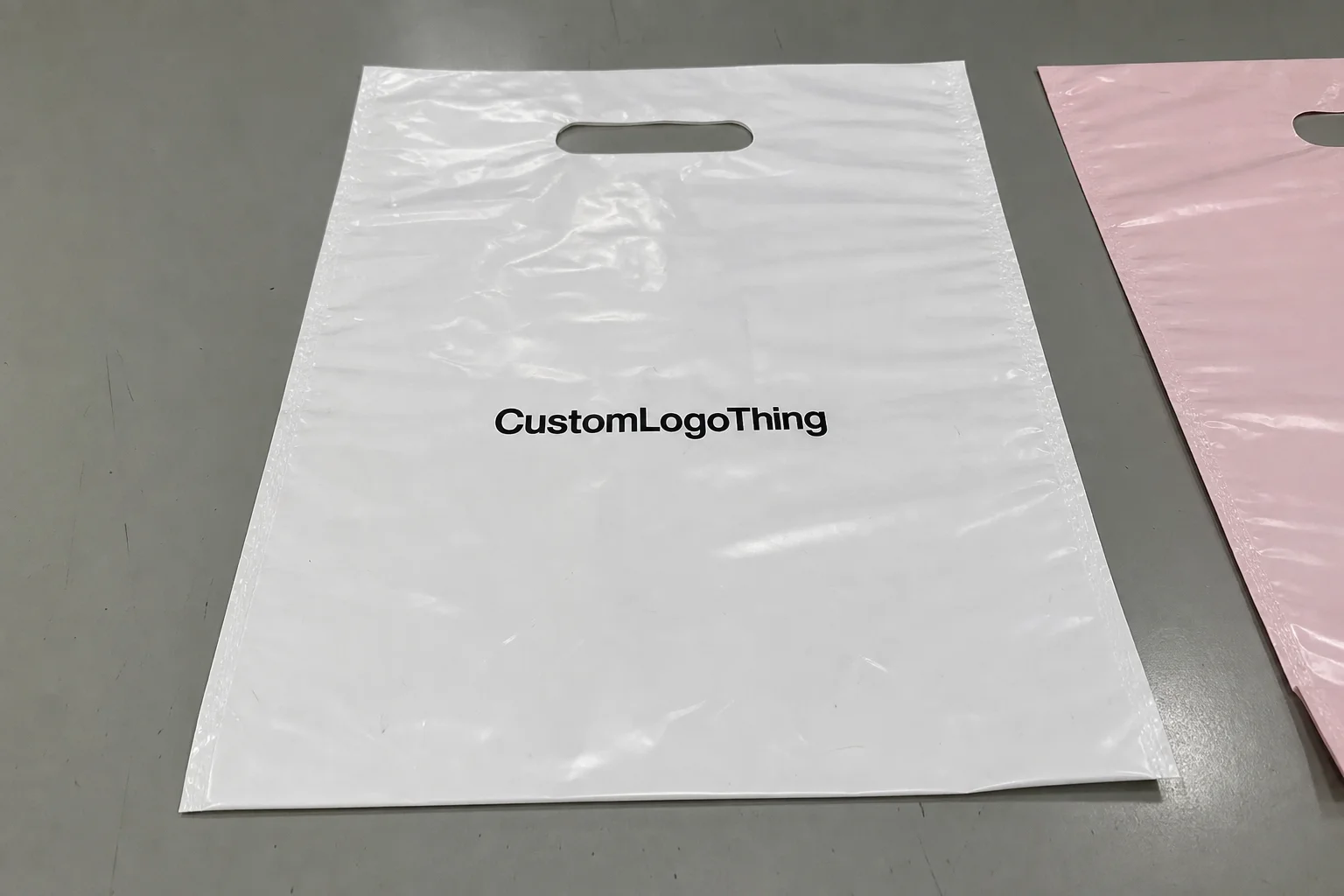
Branding matters too. Wholesale compostable garment bags can be printed with one-color logos, multi-color artwork, size codes, QR labels, or barcode panels. If your warehouse scans items by SKU, leave a clean print-free zone for labeling. I’ve seen brands print across the entire bag, then complain that the barcode label won’t stick. That’s not a supplier problem. That’s a planning problem. Or, to be less polite: that’s what happens when design and operations stop talking. A 30 mm blank area near the upper right corner can save an entire warehouse team from relabeling 8,000 units.
When sourcing, ask for the exact film composition, compostability certifications, print method, seal strength, and at least two sample units. If the bag is meant for hanging garments, check hanger hole dimensions and reinforcement around the top. If it’s for folded product, check whether the bag width and length allow one clean fold without overstretching the seam. Wholesale compostable garment bags should fit the product, not force the product to fit the bag. I’ve watched teams try to “make it work” with a size that clearly didn’t work. It never ends gracefully, especially when the first carton is opened on a packing line in Suzhou at 7:30 a.m.
Practical buying advice? Match the style to the shipping method and environment. If your garments go through a humid fulfillment center in Miami or a long ocean shipment from our Shenzhen facility, don’t assume the same film will behave identically everywhere. Heat and humidity can change how compostable film performs. That’s not a flaw. That’s chemistry. And, irritatingly, chemistry does not care about your launch date. It cares about temperature, dwell time, and whether your supplier used a 25-micron or 30-micron structure.
Wholesale Compostable Garment Bags: Specifications That Matter
Spec sheets are where the real decision starts. For wholesale compostable garment bags, the core specs include thickness in microns, bag dimensions, seal type, closure style, print coverage, and tolerance ranges. If a supplier can’t give you those numbers, they’re not ready for procurement. They’re ready for a sales pitch. There’s a difference, and it’s not subtle. A real spec sheet should read like a production plan, not a paragraph full of adjectives.
Thickness matters more than people think. A 20-micron film behaves differently from a 30-micron film, even if both are labeled compostable. The thinner option may save money, but it can also show wrinkles, puncture more easily, or feel flimsy in hand. For folded tees, 18–22 microns may be enough in some programs. For heavier coats or multi-item bundles, I’ve usually pushed clients toward 28–35 microns, depending on seal design and handling conditions. I remember one sample run where the bag felt great until we actually packed product into it; then the whole thing looked like it had been negotiated by a tired intern. A 32-micron film with a stronger bottom seal would have solved the issue in one round.
Size matching is where brands either get it right or order cartons of regret. A men’s T-shirt folded to 10 by 12 inches needs a different bag than a long dress, a wool coat, or a set of three separates bundled together. Wholesale compostable garment bags should be sized with room for a clean fold and a little extra tolerance for hand packing. Too tight, and you stress the seams. Too loose, and the presentation looks sloppy. It’s not glamorous, but it is the difference between “premium” and “why does this look like a rush job?”
Performance specs matter too. Ask for tensile strength, puncture resistance, shelf life, and recommended storage conditions. I’ve had suppliers quote very attractive pricing, then quietly admit the bags should be used within six months and stored below 77°F with controlled humidity. Fine. That’s useful. It needs to be written down before you approve the order. Otherwise you’re just collecting surprises for later, which sounds less like procurement and more like self-sabotage. In one case, a 180-day shelf life note on the spec sheet saved a client from over-ordering by 60,000 units.
Documentation is non-negotiable if your brand is using compostable claims on packaging or in marketing. Depending on your target market, you may need certification references tied to standards such as ASTM D6400, EN 13432, or other regional compostability frameworks. For broader packaging guidance and environmental context, I often point clients to the EPA’s recycling and materials resources at EPA recycling and materials information and industry reference points from The Packaging School / packaging resources. If a supplier waves away test reports, that’s a red flag. Not a small one either. Ask for the lab name, report number, and issue date before you approve anything.
I also recommend requesting pre-production samples and testing them with real product. Not a dummy shirt. The actual shirt. The actual hangtag. The actual packing table. I’ve watched teams approve a bag on a white table under showroom lights in Shanghai, then discover the closure tabs failed after a week in warehouse storage. Wholesale compostable garment bags should be judged in the environment where they’ll live. If that means dragging samples through a cold dock and a humid storeroom, so be it. Better a messy test than a messy rollout.
- Thickness: commonly 18–35 microns depending on garment weight
- Width/length: matched to folded apparel or hanging formats
- Seal type: side seal, bottom seal, or gusseted construction
- Closure: open top, adhesive strip, zipper, or hanger-ready top
- Print: one-color, two-color, or full custom logo print
- Documentation: test reports, compostability evidence, and production specs
If you want to sanity-check whether your packaging setup is even worth changing, compare the bag with your current packing workflow. If switching to wholesale compostable garment bags adds 12 seconds per unit and forces a second operator to help seal, the “better” material may actually cost more than the bag price suggests. Procurement math loves surprises like that. Nobody else does. I’ve seen that exact mistake sink an otherwise solid rollout plan because the team got dazzled by the word “compostable” and forgot to measure labor. Classic. One client in Toronto reduced that added time to 4 seconds by changing from an adhesive top to a simple open-top fold-in design.
Pricing & MOQ for Wholesale Compostable Garment Bags
Let’s talk money. Wholesale compostable garment bags usually cost more than standard poly bags. That is normal. The material is different, the supply base is smaller, and certification adds cost. If someone quotes you compostable pricing that is mysteriously equal to conventional polyethylene, I’d ask what got left out. Usually something did. Usually something important, like testing, print setup, or the extra margin built in for a rush order from a factory in Wuxi.
Pricing depends on several variables: bag size, film type, thickness, print colors, closure style, certification requirements, and order volume. A simple clear compostable bag with no print may land at one price point. Add a two-color logo, a zipper closure, and custom dimensions, and the number moves fast. For example, I’ve seen stock-style wholesale compostable garment bags quoted around $0.08 to $0.14 per unit at higher volumes, while custom printed versions can reach $0.16 to $0.32 per unit depending on spec and quantity. A realistic benchmark for 5,000 pieces of a 20-micron flat bag is around $0.15 per unit, while 10,000 pieces with one-color print can fall closer to $0.11 per unit. Those are working ranges, not promises. If a quote comes in way below that, I get suspicious. Fast.
MOQ is where a lot of brands get surprised. Stock-sized options may start at 3,000 to 5,000 pieces, sometimes more if the supplier is balancing production runs. Fully custom printed wholesale compostable garment bags often sit at 10,000 pieces or higher because setup and print efficiency need to make sense. I’ve also negotiated smaller pilot runs for launch programs, but the unit cost goes up. That’s just how factories work. They don’t love stopping a line for 1,200 bags unless the margin tells them to. And frankly, neither would I. In a factory outside Guangzhou, a 2,000-piece pilot can take almost the same setup time as a 20,000-piece production run.
Here’s a simple comparison buyers can use when budgeting. These numbers are broad and depend on film source, print complexity, and destination freight, but they’re closer to reality than the fantasy pricing some quote sheets show.
| Option | Typical MOQ | Indicative Unit Cost | Best For |
|---|---|---|---|
| Stock clear compostable bag | 3,000–5,000 pcs | $0.08–$0.14 | Basic apparel protection, faster launch |
| Custom printed compostable bag | 10,000+ pcs | $0.16–$0.32 | Branding, retail presentation, DTC programs |
| Gusseted or heavier-duty format | 8,000+ pcs | $0.18–$0.38 | Coats, bulk bundles, premium handling |
If you want to lower unit cost, standardize sizes across product lines. Limit print colors. Avoid overly complex closures. Consolidate SKUs wherever the fit allows. A brand I worked with cut packaging spend by 11% simply by moving three nearly identical shirt sizes into one bag dimension and using a small fold card for the visual difference. Wholesale compostable garment bags reward discipline. They punish chaos. That’s not me being dramatic; that’s just the truth wearing work boots. In one 18,000-unit order, trimming from four print colors to one saved $2,760 before freight.
There can also be sample costs, tooling charges, plate fees, or artwork setup fees. I’ve seen print setup land at $40 to $180 depending on the factory and printing method. Molds or special zipper tooling can cost much more if the design is unusual. Always ask what is included in the quoted price: bag cost, print setup, packaging, carton loading, export documentation, and freight. If those are not separated, compare quotes carefully. Apples to apples, not apples to a very expensive orange. A quote from Ningbo might look lower than one from Shenzhen until you add cartons, labels, and export paperwork.
The smartest way to evaluate wholesale compostable garment bags is total value, not just unit price. What’s the presentation worth to your brand? What’s the cost of a failed seal? What’s the savings if your team reduces damage claims or warehouse dust issues? On a monthly volume of 20,000 units, a $0.03 difference is $600. That’s real money. Not theory. I’ve watched teams shrug at that kind of number and then spend half a day arguing over a shipping surcharge. Human beings are weird. At 50,000 units, that same gap is $1,500 a month, or $18,000 a year.
Process & Timeline for Wholesale Compostable Garment Bags
The ordering process for wholesale compostable garment bags is straightforward if everybody does their homework. It starts with inquiry, then spec confirmation, artwork setup, sampling, approval, production, and delivery. Simple on paper. Less simple when a buyer sends a logo in a PowerPoint file and expects the factory to guess the rest. I wish I were exaggerating. A clean workflow usually begins with a PDF, AI, or EPS file and a target delivery window in writing.
In a normal project, I expect the first response from a serious supplier within 24 to 48 hours if the buyer has basic information ready. That means garment type, dimensions, quantity, print requirements, delivery location, and any certification needs. If the supplier needs to clarify film structure or closure choice, that’s fine. But they should be asking specific questions, not hiding behind vague “we will check.” I’m always relieved when I get a supplier who sounds like they’ve actually read the brief. A buyer in Chicago once got a same-day quote because they included the size, thickness, and carton count in the first email.
Samples are not a formality. They’re the gate between bad assumptions and actual production. For wholesale compostable garment bags, I use samples to check fit, seal strength, print registration, and handling feel. If the bag is meant for hanging garments, I also test the hanger hole or top opening. If it’s for folded apparel, I check how the fold sits after insertion and whether the printed logo stays centered after packing. The number of “looks good on screen” mistakes I’ve seen could fill a small landfill. Ironically. One test run in Melbourne revealed a logo shift of 8 mm that nobody caught in the proof stage.
Here’s the timeline I usually see for a custom order:
- Inquiry and quote: 1–3 business days if specs are complete
- Artwork setup and proofing: 2–5 business days
- Sampling: 5–10 business days depending on complexity
- Sample approval: 1–4 business days on the buyer side, if someone actually reviews it
- Production: typically 12–15 business days from proof approval for standard runs, or 12–20 business days for more complex orders
- Shipping: air freight in days, sea freight in weeks
Peak season changes those numbers. So do factory schedules. A factory running three print lines and two sealing lines may tell you 15 business days, then extend if another client suddenly drops a 50,000-piece holiday order in front of yours. That’s why I tell buyers to lock specs early. If your launch date depends on wholesale compostable garment bags, don’t wait until the artwork meeting is over before asking for the sample. The calendar does not care that everyone is “almost ready.” It also does not care that the holiday rush started in October.
Prepare these documents before you start:
- Garment measurements and packed dimensions
- Artwork files in vector format, ideally AI or PDF
- Target quantity and backup quantity
- Delivery address and incoterm preference
- Certification or claim requirements
- Desired packing format per carton
The right supplier should also tell you when a requirement is unrealistic. For example, a high-clarity compostable film with heavy ink coverage, super-low MOQ, and next-week shipping is usually not a clean fit. A trustworthy quote for wholesale compostable garment bags will flag those issues before you spend time on approvals. That is what good communication looks like. It saves money. It also saves a lot of “why didn’t anyone mention this earlier?” messages, which are my least favorite kind. A factory in Xiamen once saved a client from a doomed 7-day turnaround by recommending a lighter print layout and a 14-business-day production slot.
Why Choose Us for Wholesale Compostable Garment Bags
Custom Logo Things exists to help buyers source packaging that makes sense on paper and in the plant. We’re not a quote machine with a logo slapped on top. We work like packaging people. That means asking about dimensions, product weight, storage conditions, freight method, and how the bag will actually be used before tossing out a price on wholesale compostable garment bags. If your bag spec says 14 by 20 inches, but the folded product really needs 14.5 by 22 inches, we would rather catch that before production starts.
I’ve spent enough time in supplier negotiations to know the difference between a factory that can produce and a factory that can produce your exact spec. When I’m in a plant, I’m checking film quality, seal consistency, and print registration. Not staring at a spreadsheet pretending that solves anything. I’ve walked lines where one bad temperature setting caused seal weakness across an entire batch. I’ve also seen a supplier save a client $1,800 a month simply by adjusting film width to reduce waste. Details matter. A lot more than most sales decks would like to admit. In one facility near Ningbo, a 2 mm width adjustment cut trim loss by 6.4% across a 30,000-piece run.
We focus on the things buyers need most: clear specs, responsive quoting, realistic MOQs, and support with custom printing. If you need wholesale compostable garment bags for a retail rollout or e-commerce packaging refresh, we can help you compare bag styles, print options, and sourcing paths without dressing up weak information as “premium service.” A strong quote should tell you whether a flat bag at 20 microns or a gusseted bag at 30 microns is the smarter fit for your product and budget.
There’s also a risk-control side to this. We support sample approval, material verification, and straightforward communication on pricing and lead times. If a claim needs documentation, we ask for it. If a lead time looks tight, we say so. Procurement teams hate surprises. So do ops teams. So do I. I can live without another last-minute “urgent” thread that should have been started two weeks ago. A clean process saves more than time; it avoids expensive relabeling, rework, and freight upgrades.
Working with a manufacturer that understands both branding and operations saves time. A pretty bag that jams the line is a waste. A durable bag with no brand presence misses the point. Wholesale compostable garment bags have to do both jobs: protect the garment and present the brand. That balance is harder than it looks, which is exactly why experienced sourcing support matters. One client in Vancouver found that a simple one-color print at 15% coverage delivered better shelf appeal than a full-coverage design that cost 22% more.
We also help buyers align packaging decisions with broader eco-friendly packaging goals. That includes reducing unnecessary over-packaging, checking carton pack efficiency, and making sure the final spec fits the business rather than the mood board. If your team is moving toward greener packaging and wants to support a lower carbon footprint, we can help map the switch without overcomplicating it. A carton count reduction from 100 to 80 bags can cut shipping weight enough to change your freight class, which is a nice bonus nobody puts on a mood board.
If you want to see how our broader sourcing support works, review our Wholesale Programs. That page gives a better sense of how we handle volume orders, repeat runs, and packaging coordination across different product categories. For brands that need consistent reorder support, that matters more than a flashy one-time quote.
Next Steps to Order Wholesale Compostable Garment Bags
Before you request pricing for wholesale compostable garment bags, gather the basics. You need garment type, bag size, quantity, print artwork, target budget, and desired delivery window. If you can give me that in one email, I can usually tell you pretty quickly whether you need a flat bag, gusseted style, or a hanging format. If you send “send pricing” with no dimensions, that’s not a brief. That’s a scavenger hunt. A complete request should also mention whether you need a matte finish, a clear finish, or a specific microns target like 25 or 30.
The easiest way to compare quotes is to ask for 2 or 3 size options. For example, one fit for folded tees, one for shirts or lightweight knits, and one for outerwear. That gives your team a real side-by-side view of function and cost. Wholesale compostable garment bags are rarely a one-line decision. The right size can save packing time, reduce waste, and improve presentation. The wrong one can turn a normal packing shift into a low-grade disaster. A 13 by 18 inch option may work for a tee program, while a 16 by 24 inch format is often better for hoodies and light jackets.
Ask for a sample pack or digital proof before confirming production. If your supplier can’t show you how the logo will sit on the bag, how the seal will look, or whether the hanger hole is reinforced, keep looking. I’d rather lose a weak order than ship bad packaging. That sounds harsh. It’s also cheaper than remaking 20,000 bags. And far less embarrassing. In one case, a digital proof saved a buyer in New York from approving artwork that would have landed 12 mm too low on the finished bag.
Confirm compostability claims and documentation before you place the order. If your brand team wants to say compostable on packaging or in marketing, make sure the evidence supports the claim in the region where you sell. Standards and regional requirements vary, and that’s not a place to wing it. Wholesale compostable garment bags can be a smart choice, but only if the paperwork is as solid as the product. Ask for the standard reference, the lab report, the issue date, and whether the claim applies to industrial composting, home composting, or both.
Here’s the clean path forward: send specs, review the sample, lock the timeline, and schedule replenishment before stock gets low. That avoids rush freight, panic approvals, and the miserable “we need these by Friday” email that lands on a Wednesday afternoon. If you need wholesale compostable garment bags, start with a size spec and quantity—not a vague request and a prayer. I’ve never seen a prayer improve a purchase order. I have seen a 48-hour head start shave $900 off shipping, though.
Wholesale compostable garment bags are a practical packaging move for brands that care about presentation, operations, and sustainability in equal measure. Get the specs right, budget honestly, and work with a supplier who can talk like a manufacturer, not a brochure. That’s how you buy Packaging That Actually earns its keep. If your next run is 5,000 pieces or 50,000 pieces, the right details will matter more than any slogan ever could.
FAQ
What are wholesale compostable garment bags made from?
They’re commonly made from PLA, PBAT, starch blends, or other compostable film structures depending on performance needs. Ask for the exact resin composition and supporting documentation before using any compostable claim in packaging or marketing. A supplier should be able to name the material blend, the testing standard, and the production region, such as Guangdong or Zhejiang.
What is the typical MOQ for wholesale compostable garment bags?
MOQ depends on whether you choose stock sizes or custom printed bags. Stock runs often start at 3,000 to 5,000 pieces, while custom printed orders usually begin around 10,000 pieces because of setup, print efficiency, and production scheduling. A pilot run of 1,000 to 2,000 pieces is possible in some factories, but the unit cost typically rises to reflect the smaller lot size.
How do I know which size wholesale compostable garment bags to order?
Match the bag to garment length, width, thickness, and whether the item ships folded or on a hanger. Request samples in multiple sizes and test with your actual products before placing the full order. If your folded tee measures 10 by 12 inches, a 13 by 18 inch bag may fit well, while outerwear often needs 16 by 24 inches or larger.
Are wholesale compostable garment bags durable enough for shipping?
Yes, when the film thickness, seal type, and handling conditions are matched to the product. They should be tested for puncture resistance, seam strength, and warehouse storage conditions before rollout. A 28–35 micron film is often a better fit for heavier items, while lighter apparel may work with 18–22 microns if the seal design is strong enough.
How long does it take to produce wholesale compostable garment bags?
Timing depends on artwork approval, sample sign-off, order quantity, and shipping method. For many custom orders, production typically takes 12–15 business days from proof approval, with total lead time extending if sampling or freight adds days. The fastest path is to finalize specs early and approve samples quickly so production can start without delays.