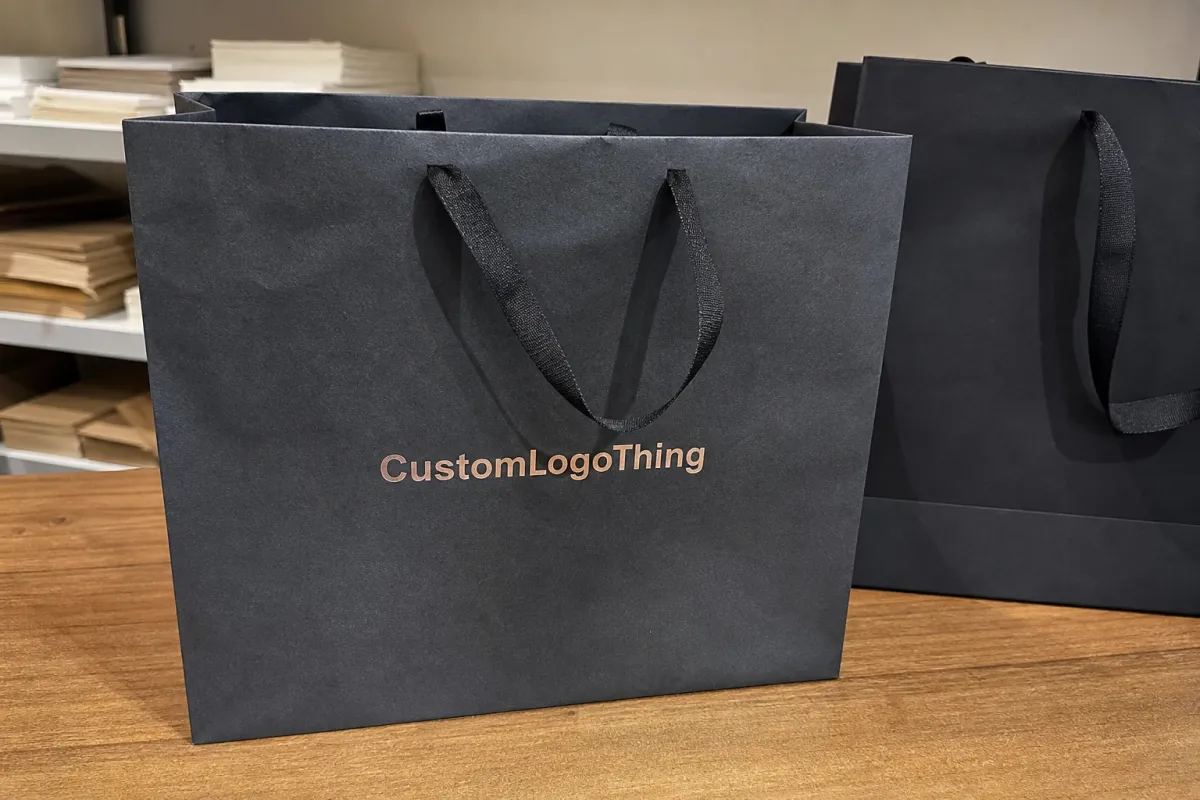
Buyer Fit Snapshot
| Best fit | Ai Designed Compostable Mailer Options projects where brand print, material claims, artwork control, MOQ, and repeat-order consistency need to be specified before quoting. |
|---|---|
| Quote inputs | Share finished size, material target, print colors, finish, packing count, annual reorder estimate, ship-to region, and any compliance wording. |
| Proofing check | Approve dieline scale, logo placement, barcode or warning zones, color tolerance, closure strength, and carton packing before bulk production. |
| Main risk | Vague material claims, crowded artwork, missing packing details, or unclear freight terms can make a low unit price expensive after revisions. |
Fast answer: Ai Designed Compostable Mailer Options: Material, Print, Proofing, and Reorder Risk should be specified like a repeatable production item. The safest quote records material, print method, finish, artwork proof, packing count, and reorder notes in one written spec.
Production checks before approval
Compare the actual filled-product size with the drawing, then confirm tolerance on folds, seals, hang holes, label areas, and retail display edges. Reserve space for logos, QR codes, warning copy, and material claims before decorative graphics fill the panel.
Quote comparison points
Review material grade, print process, finish, sampling route, tooling charges, carton quantity, and freight assumptions side by side. A quote is only useful when the supplier can repeat the same color, closure quality, and packing count on the next order.
On a cold morning at a contract packing line in Edison, New Jersey, I watched a supervisor cut shipping waste by nearly 11% without changing the product at all, and it happened because the team rethought the mailer size, panel layout, and seal area instead of just swapping in a greener film. That kind of result is exactly why AI designed compostable mailer options are drawing attention: not because AI is magic, but because smarter layout decisions can trim material, dead space, and freight weight in ways the eye misses. In that Edison facility, the team was running roughly 14,000 outbound orders a week, so even a small cube reduction mattered fast.
Custom Logo Packaging buyers usually start with the material story, but the real savings often live in the geometry. I’ve seen e-commerce fulfillment centers, co-packers, and short-run specialty production lines all make the same mistake: they buy the “best” material and still overpack the item by 20 mm to 40 mm on each side, then wonder why unit cost stays high and sealing throughput drops. AI designed compostable mailer options tackle that problem by using data to size, shape, and spec the mailer with less guesswork. For a brand shipping 30,000 units a month from Columbus, Ohio, a 25 mm size trim can change pallet counts as much as the material choice itself.
If you want a practical sustainable packaging path, the conversation gets more interesting here. The goal is not just a compostable mailer. The goal is a mailer that protects the product, runs on the line, presents well at unboxing, and matches the disposal route your customer actually has. That balance is where AI designed compostable mailer options can prove their value, especially for DTC brands shipping from Los Angeles, Nashville, or Charlotte where transit times and customer expectations can differ by zone.
AI Designed Compostable Mailer Options: What They Are and Why They Matter
In plain terms, AI designed compostable mailer options are mailers whose structure, size, material usage, and print specs are optimized with AI-assisted tools before production starts. The software may analyze product dimensions, order history, transit damage rates, packing labor, and carrier dimensions, then recommend a mailer format that uses less film or paper while still passing handling tests. That could mean a flat mailer with a tighter gusset, a paper-based composite with a narrower seam, or a compostable film system with a smarter fold pattern. A common spec might be a 280 mm x 360 mm flat mailer made from a 40 micron certified compostable film or a 350gsm C1S artboard-based composite for premium presentation.
People sometimes lump together compostable, recyclable, biodegradable, and plastic-free, but those words do different jobs. Compostable usually means a material can break down under specified conditions into water, CO2, biomass, and inorganic compounds, subject to recognized standards and actual facilities. Recyclable means the material can be collected and processed into a new stream, which depends heavily on local infrastructure. Biodegradable is broader and, honestly, often vague in marketing copy. Plastic-free just means no plastic in the structure, which does not automatically make a package compostable or even environmentally better. The fine print matters here, especially if you are building eco-friendly packaging claims that need to survive legal review in California, the EU, or Canada.
What brands are really chasing is a lower carbon footprint without wrecking the fulfillment operation. The best AI designed compostable mailer options reduce excess film, trim empty headspace, and cut dimensional weight charges. In a facility I visited outside Atlanta, the team was packing soft goods into oversized poly bags and paying for air all day long; once they resized the mailer by 18%, their cube utilization improved enough to save a noticeable amount on outbound freight. On one 5,000-unit pilot, the change cut carton fill void by 1.6 liters per shipment, which sounds small until you multiply it by a month of volume.
There’s also a branding side to this. A mailer is often the first physical touchpoint in the customer journey, and if it looks thoughtful, feels deliberate, and opens cleanly, it supports a premium perception. That matters in direct-to-consumer fashion, supplements, beauty, and subscription goods, where the unboxing experience is part of the product. A well-executed compostable mailer can support a green packaging message without looking flimsy or improvised, especially if it uses crisp one- or two-color print on a 90 to 120 gsm paper face with a clean matte finish.
For brands trying to move toward a circular economy model or a more genuine zero waste posture, the packaging structure has to support the story. That means minimizing mixed-material layers when possible, confirming certifications, and choosing the simplest stack-up that still performs. I’ve seen too many teams add three extra coatings and then wonder why the supplier says “compostable” with a lot of hesitation in their voice. A simpler stack, such as a paper-based exterior bonded to a certified compostable barrier layer, often wins on both compliance and manufacturing consistency.
How AI Designed Compostable Mailer Options Are Created
The workflow usually starts with product dimensions and shipping requirements. The packaging engineer—or sometimes the AI model itself, fed by a purchasing or fulfillment dataset—looks at the item’s length, width, thickness, fragility, and whether it needs padding, moisture resistance, or tamper evidence. Then the system generates several structure options: flat, gusseted, padded, or hybrid paper-film concepts. The point is not to guess; it is to narrow the field before anyone spends money on tooling or a print plate. A project for a 180 mm x 240 mm apparel item may produce three build-outs in the first 48 hours, each with different seal widths and flap lengths.
Here’s a simple way to think about it. If you ship a 250 g accessory in a rigid box, you need a different mailer than a 900 g textile item that can be compressed but hates moisture. AI can analyze order data from, say, 12,000 shipments, compare parcel sizes against carrier thresholds, and flag where the existing mailer is oversized by 22 mm or where damage spikes at certain routes. That helps create AI designed compostable mailer options that fit the product instead of forcing the product to fit the package. A route into Phoenix in July may need different thermal tolerance than the same order heading to Portland in October.
Material selection comes next, and this is where the factory-floor reality starts to matter. A compostable film may seal at a different temperature than a paper-based laminate. A bio-based adhesive may behave differently at 60% humidity than at 35%. Certified inks can hold color beautifully on one substrate and feather on another if the coating system is wrong. In my experience, the best suppliers talk about not just what the material is, but how it runs on equipment, how it behaves in storage, and what happens after 1,500 cycles on a pouch-making line. For example, a supplier in Shenzhen may recommend a 42 micron film with a 105 to 120 degree Celsius seal window, while a converter in Tijuana might suggest a different adhesive blend for faster dwell times.
Machine compatibility is one of those details that sounds boring until it shuts down production. If your line uses form-fill-seal or pouch-making equipment, the mailer stock has to feed cleanly, seal reliably, and release without blocking. I once sat through a client meeting where a “sustainable” sample looked great on paper, but the seal bar fouled twice in the first 40 minutes because the coating softened too early. We solved it by changing dwell time and moving to a slightly different compostable layer, but that fix cost a week and a half of schedule. Good AI designed compostable mailer options should reduce those surprises before they hit the floor. On a busy line in Richmond, Virginia, a 10% slowdown can mean 600 fewer units packed before the 4 p.m. carrier pickup.
Prototyping and validation close the loop. That means drop testing, seal integrity checks, moisture resistance evaluation, and print adhesion testing. If the mailer will travel through hot trailers, cold warehouses, or humid last-mile nodes, the sample has to survive those conditions, not just look nice under studio lights. Many teams use standards such as ISTA procedures for transit simulation and packaging validation, because the lab data helps confirm what the line crew already suspects: the real world is less gentle than the showroom. A typical validation set may include 10 drop tests from 1.2 meters, 24-hour humidity exposure at 85% RH, and a seal peel test on at least 30 samples.
A practical development timeline often looks like this:
- Discovery — 3 to 5 business days to capture product specs, order volumes, and shipping methods.
- Design — 5 to 8 business days for AI-assisted structure concepts and initial artwork layouts.
- Sampling — 7 to 12 business days for prototype manufacturing and internal review.
- Revisions — 3 to 7 business days for size changes, print tweaks, or material swaps.
- Production approval — 2 to 4 business days after final sign-off.
- Rollout — timing depends on order quantity and converting schedule, often 12 to 18 business days for many custom runs.
The exact pace depends on tooling, line capacity, and whether your supplier already has a qualified compostable substrate on hand. If they do, things move faster. If not, expect more testing, especially for any of the more specialized AI designed compostable mailer options that aim to balance sustainability with print quality and shipping durability. A factory in Monterrey, Mexico, with stock film and a pre-approved die line will usually move quicker than a new launch in a smaller plant outside Des Moines.
Key Factors That Affect AI Designed Compostable Mailer Options
The first filter is certification. A supplier may describe a structure as compostable, but you still need to know whether it meets ASTM D6400, ASTM D6868, EN 13432, or another relevant standard, depending on where you sell and how you communicate the claim. If the package uses a paper or fiber component, you may also need to consider FSC-certified material sourcing, and if that’s part of your brand story, verify it with documentation rather than a brochure sentence. For packaging buyers, trust is built with paperwork as much as with samples, and a certificate from a third-party lab in Chicago or Rotterdam carries far more weight than a vague email promise.
Product characteristics come next. Weight, sharp edges, temperature sensitivity, and moisture exposure all influence the mailer design. A soft apparel item can usually live comfortably in a lighter structure, while a cosmetics kit with glass components may need more puncture resistance and a better seal architecture. I’ve seen a 90 g mailer perform beautifully for a T-shirt order and fail miserably for a razor-kit bundle because one tiny metal edge kept working through the film during conveyor transfer. AI designed compostable mailer options are only as smart as the product data you feed them, and a 70 mm glass bottle neck is a very different risk than a folded knit top.
Branding needs can pull the design in a different direction. High-coverage print, tactile finishes, spot color precision, and window features all influence substrate choice. A paper-based compostable mailer may take ink beautifully but scuff faster in a wet dock area. A matte compostable film can photograph well for social media, yet it may also show creasing sooner than expected. I’m a fan of simple graphics and strong type when sustainability is the hero; too much decoration often adds complexity without improving conversion. A two-color flexographic build on 120 gsm kraft can often outperform a four-color version on a lower-caliber substrate in both cost and appearance.
Shelf life and storage are easy to ignore until inventory sits in a humid warehouse for six weeks. Compostable materials can be sensitive to moisture, heat, and stacking pressure, so you need to know how the rolls or finished mailers will behave before they are opened. This is especially true in fulfillment centers in the Gulf Coast, Southeast, or any facility without strong climate control. In one supplier negotiation I sat through, the buyer wanted the lowest price on a compostable laminate but also planned to store pallets near an open dock door. That combination is asking for curl, blocking, and seal inconsistency, especially in Houston in August or Savannah in late spring.
Pricing drivers are straightforward, even if the math gets messy. Raw material cost, converting complexity, print setup, sampling, testing, and freight all show up in the quote. A mailer with one-color flexographic print, standard sizing, and a simple seal can be very different from one with custom gusseting, multi-panel branding, and specialty coatings. AI designed compostable mailer options can help here by identifying where over-specification is inflating cost. If the model shows that a mailer is 15 mm too wide and consumes 8% more material than necessary, that is not an aesthetic issue; that is money leaving the building. On a 25,000-unit order, that 8% can be the difference between a manageable budget and a painful one.
AI is especially useful for finding hidden waste. It can compare current pack-out dimensions against the actual product cube, then suggest a tighter format that lowers material usage and may improve pallet density. That is good for both the budget and the carbon footprint. It also helps reduce dead air in a carton, which means less shipping waste and less chance of the item shifting around during transit. In practice, that can cut carton void by 12% to 18% and improve trailer loading efficiency by a few percentage points.
Cost and Pricing: What Businesses Usually Pay
There is no single price for AI designed compostable mailer options, and anyone who gives you one without asking about size, print coverage, and order volume is probably oversimplifying. The main cost components are raw material, converting, print setup, sampling, testing, and freight. If the project includes specialty coatings or a tightly controlled compostable adhesive system, the cost rises again. That doesn’t mean the package is too expensive; it means the materials and process are more demanding. A 200 mm x 300 mm mailer with full bleed branding will not price like a plain white 150 mm x 220 mm shipping sleeve from a stock warehouse in Atlanta.
In practical terms, standard poly mailers can be cheaper on unit price, while compostable options usually carry a premium for the material itself and for the tighter process control required during production. On a short run of 5,000 units, I have seen simple compostable mailers land around $0.18 to $0.35 per unit depending on size and print. For 25,000 or more, the range can drop materially, sometimes closer to $0.10 to $0.22 per unit for more basic structures. Exact numbers depend on width, gauge, certification, and whether you want full coverage graphics or just a logo and small brand mark. One quote I reviewed for a Midwest apparel brand came in at $0.15 per unit for 5,000 pieces on a one-color flat mailer with a 40 micron certified compostable film and no specialty coating.
| Option | Typical Unit Price at 5,000 Units | Typical Lead Time | Best Fit |
|---|---|---|---|
| Basic compostable flat mailer | $0.18–$0.28 | 12–15 business days | Apparel, lightweight accessories |
| Compostable gusseted mailer | $0.24–$0.35 | 14–18 business days | Bulkier soft goods, bundled items |
| Paper-based composite mailer | $0.22–$0.38 | 15–20 business days | Premium branding, lower plastic perception |
| Custom printed specialty compostable structure | $0.30–$0.55 | 18–25 business days | High-touch DTC, regulated presentation needs |
The higher price tag sometimes surprises people, but I’ve watched companies save money in other places. A better-sized mailer can reduce dimensional weight fees, lower damage returns, and trim packing labor by a few seconds per order. Multiply those seconds across 20,000 monthly shipments and the labor savings become very real. That is one reason AI designed compostable mailer options are worth evaluating on total landed cost, not just per-piece cost. In one St. Louis order profile, a 3-second pack-time reduction saved almost 17 labor hours a month across two shifts.
Hidden costs matter too. A weak first run can create rework, and a mailer that seals slowly can reduce throughput by 8% to 15% on a busy line. If the film tears in packing or the adhesive fails during storage, customer complaints climb fast. I’d rather see a buyer spend an extra $0.03 per unit for a structure that runs cleanly than save pennies and spend twice as much on damage replacement and labor. That is the kind of honest tradeoff that gets missed when decisions are made only from a spreadsheet, especially if the first production lot ships from a converter in Dallas or Nashville with no trial run.
Budgeting gets easier if you ask for tiered pricing. Request quotes at 5,000, 10,000, and 25,000 units, then compare the landed cost, not just the FOB price. Ask for samples of at least two structures, and if possible, try a paper-based composite against a compostable film. That side-by-side review often reveals which AI designed compostable mailer options are cost-effective in practice, not just on paper. A 10,000-unit tier in particular can show whether the price curve drops enough to justify a slightly larger opening order.
Step-by-Step Guide to Choosing the Right Mailer
Start with the product itself. Measure the item at its largest packed dimension, not its retail footprint, because the zipper, tag, corner, or insert can change the final cube more than people expect. Note whether the product is fragile, sharp, moisture-sensitive, or likely to shift inside the package. A flexible scarf and a boxed candle are not the same packaging problem, and the mailer should reflect that difference. A 140 mm scarf bundle and a 90 mm candle box may end up in entirely different specs, even if they ship under the same brand.
Next, match the application to the mailer style. A flat mailer is often enough for soft goods and slim bundles. A gusseted mailer is better when thickness varies order to order. A padded or paper-based composite option can make sense when the item needs some shock absorption or a more premium feel. If you are buying Custom Poly Mailers today and considering a compostable upgrade tomorrow, compare the sealing behavior and gauge carefully so you don’t lose the packing speed your team depends on. A 350gsm C1S artboard insert can also help with stiffness if your product needs extra structure in transit.
Then review your sustainability goals with a little skepticism. What claim do you actually want to make? Compostability? Reduced plastic content? FSC sourcing? Lower material usage? Each one has different evidence requirements and different disposal realities. A mailer that is technically compostable but only in industrial facilities may not match how customers dispose of it. That is why honest labeling matters just as much as the material stack. The best AI designed compostable mailer options support the story you can substantiate, not the one that sounds best in a sales deck. If your claim cannot be verified in Toronto, Seattle, or Berlin, it should not be printed in bold type.
Request samples and test them on your actual packing line. I cannot stress this enough. A lab sample handled by one technician is not the same as a live production shift with four packers, two label printers, a tote stack, and a carrier cutoff clock ticking down. Run the sample through your real workflow, your actual sealing temperature, and your normal shift cadence. If the mailer causes jams, slows the line, or forces operators to re-press seals, that is a real cost. A 9 a.m. pack-out in Newark can expose failures that a 2 p.m. studio test never will.
Validation should include a pilot program. Ship a few hundred units through your normal carrier mix, then track damage rate, customer complaints, material usage, and pack time. If you can, run the pilot across at least two zones and one humid week so you are not fooled by perfect weather. Many teams forget that the real test is not whether the package can survive a careful demo; it is whether the package can survive a Tuesday in a live fulfillment center. I’d rather see 300 pilot orders leave a Chicago warehouse and return with data than approve 10,000 units on a mockup alone.
Here’s a simple checklist I use with buyers:
- Protection — Does the mailer prevent punctures, moisture issues, and shifting?
- Branding — Does the print quality match the brand standard and shelf presentation?
- Cost — Does total landed cost work at your annual volume?
- Machinability — Does the format run cleanly on your current equipment?
- End-of-life pathway — Can customers realistically dispose of it as intended?
If all five boxes are checked, you are close. If two or three are shaky, keep testing. Strong AI designed compostable mailer options should make the choice clearer, not more confusing. A mailer that looks good at a trade show in Las Vegas but fails in a 38% humidity warehouse in Tampa is not a finished spec.
Common Mistakes When Selecting AI Designed Compostable Mailer Options
The most common mistake is assuming all compostable materials behave the same. They do not. One structure may have excellent printability but weak moisture resistance. Another may seal beautifully but scuff during handling. A third may meet a certification standard while still being too sensitive for your climate. People often focus on the sustainability claim and forget the mechanics, and that is where the expensive surprises begin. A mailer that passes a lab test in Minneapolis can still fold badly after 72 hours in a humid warehouse outside Miami.
Another mistake is buying a mailer that looks sustainable but fails in the field. I’ve seen gorgeous samples with soft-touch finishes that scratched badly on conveyor guides, and I’ve seen paper-based mailers collapse under moderate humidity because the storage room sat near a loading dock. A good package has to survive the actual conditions of your operation, not the ideal conditions of a photo shoot. That is true for AI designed compostable mailer options just as much as any other packaging format, whether the line runs in Phoenix, Newark, or Birmingham.
Overlooking disposal behavior can also undermine the whole effort. If your customer base does not have access to industrial composting, the package may end up in general waste anyway. That doesn’t mean you should abandon compostable design, but it does mean you should be careful with claims and expectations. The disposal pathway matters, and a truthful communication strategy is part of responsible packaging. A customer in rural Montana and a customer in downtown San Francisco do not have the same end-of-life options, and your messaging should not pretend they do.
Ignoring line realities is another costly error. Heat settings, dwell time, pressure, and line speed all affect how a compostable structure behaves. A supplier may say a material is suitable for your equipment, but if your operator has to slow the line by 15% to keep seals consistent, the hidden cost can erase the savings from the material change. I’ve had customers call me after their first run and say, “It worked, but not at the speed we need.” That sentence usually means the spec is not finished yet. On a conveyor line in Indianapolis, that 15% slowdown can translate into a missed carrier cutoff at 5:30 p.m.
Finally, don’t let design trends override transit needs. Heavy or sharp-edged products require honest engineering, not just nice looking branding. The fanciest visual treatment in the world will not save a mailer that splits on the corner of a metal tool kit. AI designed compostable mailer options should be selected for performance first, then dressed up for the brand. If you need a reinforced flap, a 5 mm wider seam, or a stiffer 350gsm C1S artboard component, those details matter more than a decorative pattern.
Expert Tips for Better Results and a Smoother Launch
Use AI as a decision aid, not a final judge. The model can flag the most efficient dimensions, the likely material savings, and the pack-out pattern that uses the least substrate, but a human still needs to verify how the sample behaves in the plant. In my experience, the best launches happen when data and floor experience sit at the same table. A pack lead in Chicago and a packaging engineer in Boston will catch different problems, and both perspectives save money.
Ask suppliers for specification sheets, certification proof, and process recommendations before you approve artwork. That includes compostability documentation, print compatibility notes, seal temperature ranges, and storage guidance. If a supplier hesitates to share those details, I get cautious fast. Packaging vendors with real experience usually know their material down to the seal window and blocking risk. That confidence is worth more than a slick mockup, whether the supplier is converting in Dongguan, Ho Chi Minh City, or Guadalajara.
Keep the design as simple as the brand allows. Fewer layers, fewer incompatible components, and fewer special coatings usually make for better compostability and easier production. A clean logo, clear product ID, and one or two brand colors often outperform a crowded design that complicates converting. I’ve seen brands spend $2,000 more on print embellishment only to realize that a simpler version looked better in-hand and ran faster on the line. A well-registered two-color print on a kraft face can outperform a heavy five-color build on a less forgiving substrate.
Coordinate packaging, fulfillment, and sustainability teams early. The packaging team cares about seal integrity and artwork fit, fulfillment cares about speed and pack accuracy, and sustainability teams care about claims and end-of-life pathway. If those groups are not aligned, the project stalls at approval or gets changed after samples are already made. Good AI designed compostable mailer options make those conversations more productive, but they don’t replace them. A 30-minute kickoff in Newark can prevent a 30-day delay later.
Plan a rollout with clear KPIs. Track damage rate, packing speed, material usage per order, customer feedback, and complaint volume. If you have a baseline from your current mailer, compare against that. I like to watch at least one full replenishment cycle because the first 500 units can hide issues that only show up after operators settle into the process. If your current line averages 42 seconds per order, a new spec that adds 4 seconds may not sound dramatic until you annualize it across 240,000 shipments.
Build a reordering strategy that protects the approved spec. Packaging substitutions happen more often than people admit, especially when sourcing gets tight or a supplier changes a coating. Keep the approved dimensions, substrate, artwork file, and certification references in one place so future orders do not drift. That discipline keeps the AI designed compostable mailer options you selected from turning into “close enough” versions six months later. A reprint in Dallas should match the same 40 micron film and same seal settings as the original run in February.
If you want a broader sustainability benchmark, it can help to reference environmental guidance from the EPA and packaging sourcing resources from the Packaging School / packaging.org ecosystem when you are comparing claims and material pathways. Those resources are useful for grounding your internal conversations in recognized language instead of marketing shorthand, especially when your procurement team is comparing suppliers across Ohio, Texas, and the Netherlands.
Next Steps: How to Evaluate AI Designed Compostable Mailer Options
Create a shortlist of three candidates that match your item dimensions, shipping method, and sustainability targets. One should be your conservative baseline, one should be your best-value option, and one should be your most ambitious compostable structure. That comparison makes the tradeoffs obvious and keeps everyone focused on the same metrics. If your team is moving toward custom logo packaging with stronger eco-friendly packaging credentials, this is where the numbers start to matter. For a beauty brand shipping from Nashville, the shortlist may be a flat mailer, a gusseted mailer, and a paper-based composite.
Request samples, certification documents, and pricing tiers from at least two or three manufacturers. Ask for the exact material stack, the recommended sealing settings, the minimum order quantity, and any storage warnings. If a supplier says “it should be fine” but cannot give you a sealing range or compostability proof, keep looking. Strong vendors know that AI designed compostable mailer options have to be engineered, not guessed. Ask whether the unit price changes at 5,000, 10,000, and 25,000 pieces so you can see the real curve.
Test the samples on your actual packing line and in real transit conditions. Ship a small pilot batch through the carriers you already use, including any regional ground services that tend to be rougher than average. Then compare the damage rate, labor time, and customer feedback with your current packaging. A difference of 1% or 2% in damage rate can outweigh a small unit-price increase very quickly. I’ve seen a 1.4% damage improvement save more than $8,000 in returns and replacements over a single quarter.
Compare total cost, not just unit price. Include labor, defect risk, freight, print setup, and return handling. If one option costs $0.04 more per unit but saves 12 seconds of pack time and cuts damage claims by half, it may be the better financial choice. That’s the kind of calculation I’ve seen win over skeptical buyers more than once. A plant in Jacksonville may pay more up front for a better structure, then recover the difference in labor by the second month.
Document the approved specification so future orders stay consistent. Keep the substrate name, thickness, print file version, seal settings, and certification references together. That way, if a reorder comes through six months later, you’re not re-creating the decision from scratch. For companies serious about sustainable packaging and a cleaner carbon footprint, that consistency is part of the win. A finalized spec sheet with a 40 micron film callout, a 10 mm seal width, and proof approval date can prevent expensive drift.
“The smartest mailer isn’t always the thickest one or the greenest-sounding one. It’s the one that protects the product, runs well on the line, and still makes sense when the customer opens the box.” — a packaging manager I worked with in Columbus, Ohio, after a very expensive first-run mistake
So if you’re evaluating AI designed compostable mailer options, keep the decision grounded in what happens on the factory floor, in the warehouse, and at the customer’s doorstep. Choose the Best AI designed compostable mailer options by balancing protection, cost, machinability, and the real-world disposal path, and you’ll end up with packaging that supports both the brand and the operation. A well-run launch in Newark, Atlanta, or Phoenix can tell you more than a dozen polished mockups ever will.
FAQs
What are AI designed compostable mailer options made from?
They may use compostable films, paper-based structures, bio-based adhesives, and certified inks. The exact material stack depends on the product weight, seal requirements, and required shelf performance, so a 120 g apparel mailer can look very different from a 900 g accessory mailer. A common build might use a 40 micron certified film or a 120 gsm kraft face with a compostable inner layer.
Are AI designed compostable mailer options more expensive than standard mailers?
Usually yes on unit price, especially for small runs or specialty structures. However, AI can help reduce waste, oversizing, and failed packaging choices, which can improve total cost over time by lowering freight waste, damage claims, and rework. For example, a 5,000-piece order may price at $0.15 per unit for a simple spec, while a more complex version can move into the $0.30 range.
How do I know if a compostable mailer will work on my packing line?
Test sample runs at your actual sealing temperature, line speed, and dwell time. Check whether the mailer feeds, seals, and holds up without slowing down operations, and if possible run it through at least one full shift rather than only a short demo. A 12-15 business day sample cycle from proof approval is common if the material is already qualified and stock is available.
What should I ask a supplier before ordering AI designed compostable mailer options?
Ask for material specs, compostability certifications, print compatibility details, and minimum order quantities. Also request sample pieces and guidance on best storage and sealing conditions, because humidity and heat can change how the material behaves in production. If possible, ask for exact spec details such as seal width, substrate thickness, and whether the production site is in Shenzhen, Monterrey, or Chicago.
How long does it take to develop custom compostable mailers with AI support?
The timeline typically includes discovery, design, sampling, revisions, and production approval. Simple projects can move quickly, while highly branded or performance-sensitive mailers may need additional testing, especially if the structure is new to your line or requires special certification review. A straightforward project often lands in 12 to 18 business days after proof approval, while more complex builds can take 18 to 25 business days.