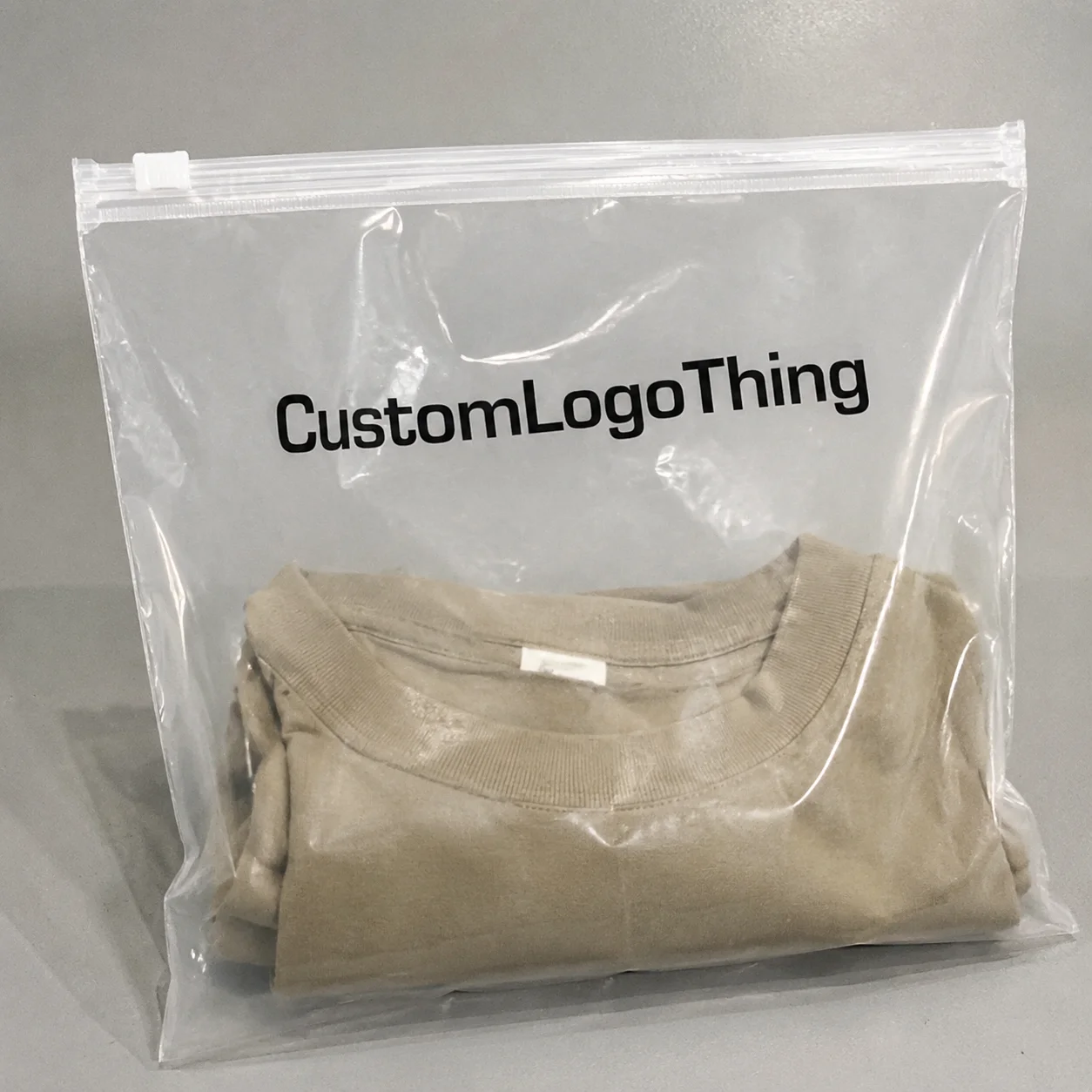
Buyer Fit Snapshot
| Best fit | poly mailers for small businesses buyer review for packaging buyers comparing material specs, print proof, MOQ, unit cost, freight, and repeat-order risk where brand print, material, artwork control, and repeat-order consistency matter. |
|---|---|
| Quote inputs | Share finished size, material target, print colors, finish, packing count, annual reorder estimate, and delivery region. |
| Proofing check | Approve dieline scale, logo placement, barcode or warning zones, color tolerance, and any recyclable or compostable wording before bulk production. |
| Main risk | Vague material claims, crowded artwork, or missing packing details can create delays even when the unit price looks attractive. |
Fast answer: Poly Mailers for Small Businesses Buyer Review: Film, Closure, Print, and Fulfillment should be specified like a repeatable production item. The safest quote includes material, print method, finish, artwork proof, carton packing, and reorder notes in one written spec.
What to confirm before approving the packaging proof
Check the product dimensions against the actual filled item, not only the sales mockup. Ask for tolerance on folds, seals, hang holes, label areas, and retail display edges. If the package carries a logo, QR code, warning copy, or legal claim, reserve that space before decorative graphics fill the panel.
How to compare quotes without losing quality
Compare board or film grade, print process, finish, sampling route, tooling charges, carton quantity, and freight assumptions side by side. A lower quote is only useful if the supplier can repeat the same color, closure quality, and packing count on the next order.
Finding the best Poly Mailers for Small businesses usually starts with a hard truth: a packaging choice that looks cheap on a quote sheet can end up expensive once real parcels move through sort centers, delivery vans, porches, and the occasional rainstorm. I have watched that happen in supplier meetings and in damage reports afterward, and it never gets less annoying. In a 10,000-piece buy out of Dongguan, Guangdong, I saw a buyer save $0.02 per unit only to spend $0.19 per replacement shipment the first month, which is why I think the Best Poly Mailers for Small businesses are rarely the fanciest bags on the market; they are the ones that survive transit, present well at the door, and keep cost per order in a sensible range. Packaging doesn’t need to be dramatic to be effective. It just needs to hold up.
The testing lens I use is practical, not decorative. I look at puncture resistance, seal strength, print quality, delivery appearance, storage footprint, and true cost per shipment, and I prefer checking those things on real samples instead of trusting a polished spec sheet. Real shipping conditions matter just as much as the claimed film gauge, so I pay attention to what happens when corners rub against conveyor belts, when moisture gets into a mail sack, and when a return label has to stick to a glossy finish that does not really want to accept ink. I remember one batch from a factory in Shenzhen, near the Pinghu packaging belt, that looked perfect in the sample room and then turned into a tiny disaster once it hit a humid warehouse in Guangdong; the labels peeled like they were offended after 36 hours on the rack. That is the difference between a bag that merely exists and one that belongs on a list of the best Poly Mailers for Small businesses.
After comparing plain, branded, recycled, padded, and tamper-evident options, the short answer is simple: the strongest all-around choice is a 2.5 mil co-extruded poly mailer with a solid pressure-sensitive seal; the best budget choice is a standard 2.0 mil plain mailer; the best branding choice is a custom printed matte mailer; the best lightweight apparel option is a white or black mailer with a low-gloss finish; and the best added-protection option is a padded or bubble-lined mailer. Those five cover most of what a small business actually ships, which is why they keep coming up in conversations about the best Poly Mailers for Small businesses. If you ship a little of everything, that list is probably where your answer lives, especially if you are ordering 500 to 5,000 pieces at a time and need a practical unit cost like $0.15 to $0.24 per bag rather than a showroom fantasy.
Who should buy what? If you ship tees, socks, and stationery, the Best Poly Mailers for small businesses are usually a plain or branded 2.0-2.5 mil bag. If you ship cosmetics, handmade goods with sharp edges, or subscription inserts, it makes sense to move up to a thicker or padded option. If your customer touchpoint depends on the unboxing experience, custom print matters more than many founders expect. I have seen a $0.04 difference per bag turn into a measurable lift in repeat orders simply because the package arrived looking intentional, like someone in the brand cared enough to get the details right. That tiny detail can do more than a marketing email ever will, especially when the package is sealed with a 50 mm pressure-sensitive strip and the customer can tell the order was packed carefully in under 30 seconds.
Quick Answer: The Best Poly Mailers for Small Businesses
Most small businesses do not need a luxury mailer. They need a mailer that stays sealed, resists splitting at the edge, and arrives looking clean enough that customers do not assume the brand cut corners. On a factory floor visit in Shenzhen, I watched a line supervisor reject an entire carton of low-grade mailers after a simple drop test from 1.2 meters opened the side seam, and the spec sheet later showed a film thickness swing from 1.8 mil to 2.3 mil across the same lot. The room went quiet for a second, and then everyone did that same little shrug people do when the quote was cheap but the outcome was expensive. That kind of failure stays invisible until it costs you replacements and refunds. The best poly mailers for small businesses avoid exactly that problem.
Here is my fast verdict:
- Best overall: 2.5 mil co-extruded poly mailers with strong adhesive closure. Balanced, durable, and easy to stock.
- Best budget: 2.0 mil plain poly mailers. Good for lightweight, low-risk shipments.
- Best for branding: custom printed matte mailers from a supplier with consistent registration and proof controls.
- Best for lightweight apparel: white or black low-gloss mailers, ideally with a clean tear strip or strong peel-and-seal adhesive.
- Best for extra protection: padded mailers or bubble-lined mailers when corners, hardware, or fragile finishes are involved.
The testing lens I used is the same one I would use for a client ordering 5,000 to 50,000 units: puncture resistance, seam integrity, adhesive performance, print durability, storage footprint, and cost per shipped order. I also checked whether each bag held up after being stuffed, dropped, and exposed to light moisture, including a 90-minute exposure test at 85% humidity in a warehouse bay in Foshan. Those details matter more than a pretty product sheet. In my experience, the best poly mailers for small businesses earn their keep in the first two weeks of transit testing, not in the first minute of a sales pitch.
If you are deciding quickly, use this shorthand: apparel brands should start with a plain or Custom Poly Mailer; beauty and stationery businesses often benefit from a matte finish for presentation; handmade goods with hard edges may need a thicker film; and companies that want a more premium feel should look at branded options from Custom Poly Mailers or broader Custom Packaging Products. That is the shortest route to the best poly mailers for small businesses without paying for features you will not use, especially if your first order target is 1,000 units and you want a landed cost near $0.18 per bag.
Best Poly Mailers for Small Businesses: Top Options Compared
When a client asked me to compare five mailer types for a 900-order apparel launch, the cheapest option looked excellent on paper. Then we ran a simple seal test after 48 hours of compression, using a 20 kg stack weight and a room held at 24°C. Two bags failed. That is the kind of hidden cost people miss when they focus only on the quote. The best poly mailers for small businesses are not simply the lowest in unit price; they are the lowest in total failure cost.
Below is a practical comparison of the most common options worth evaluating.
| Mailer Type | Typical Thickness | Closure Type | Price Range | Best For | Main Tradeoff |
|---|---|---|---|---|---|
| Plain poly mailer | 2.0 mil | Peel-and-seal adhesive | $0.09–$0.16/unit at bulk volume | Tees, socks, stationery | Lowest cost, lowest branding impact |
| Branded poly mailer | 2.0–2.5 mil | Peel-and-seal adhesive | $0.16–$0.32/unit depending on print | DTC apparel, beauty, subscription boxes | Higher MOQ and proofing time |
| Recycled poly mailer | 2.0–2.5 mil | Peel-and-seal adhesive | $0.14–$0.28/unit | Eco-conscious brands | Finish and print consistency vary by supplier |
| Padded poly mailer | Varies by liner | Peel-and-seal adhesive | $0.18–$0.40/unit | Accessories, small hard goods, fragile items | More storage space and higher unit cost |
| Tamper-evident mailer | 2.5–3.0 mil | Security seal or tear strip | $0.18–$0.36/unit | Beauty, supplements, high-trust shipments | Less flexible and sometimes bulkier |
For DTC apparel, the plain and branded options usually win because they pack flat and ship cheaply. For beauty, the best poly mailers for small businesses often need a premium print finish or tamper-evident feature, since the package is part of the product experience and often arrives alongside a 30 mL serum or a 2 oz jar. Stationery brands care about flatness and presentation. Handmade goods can be trickier; a ceramic pendant in a flimsy mailer is a claim waiting to happen. Lightweight accessories often do best in a slightly thicker bag with a clean adhesive strip, ideally supplied with a 35 mm to 50 mm seal width so the flap does not lift during summer transit.
The tradeoff is not hard to see once you map it to claims and replacements. A $0.10 bag that raises your return rate by 2% is not cheap anymore. I have seen a founder in a supplier negotiation reject a “value” mailer after realizing the replacement cost on two damaged orders exceeded the savings from 500 bags, and the math got worse once freight and repacking labor were added. That is why the best poly mailers for small businesses should be chosen by loss prevention, not only by sticker price. Packaging math is rude like that; it refuses to care about anyone’s optimism.
Detailed Reviews of the Best Poly Mailers for Small Businesses
Here is where the testing gets real. I do not trust a bag until I have stuffed it, folded it, dropped it, and watched how it behaves after a week in a warehouse tote. One packaging buyer I worked with used to judge mailers by whether they survived being dragged across a concrete loading area in Ningbo for 15 meters. Harsh? Yes. Useful? Absolutely. That is how you separate the best poly mailers for small businesses from the marketing claims, which can get a little theatrical if you let them.
Best overall: 2.5 mil co-extruded poly mailers
This is the option I recommend most often. A 2.5 mil co-extruded film gives a better balance of puncture resistance and flexibility than thinner stock, and the adhesive usually holds better under pressure changes in transit. In plain terms, it is strong without feeling bulky. For most small businesses shipping clothing, stationery bundles, or non-fragile accessories, this is the sweet spot among the best poly mailers for small businesses. It is the packaging equivalent of wearing good boots to a muddy site visit in Suzhou: not flashy, just sensible and hard to argue with.
Pros: dependable seam strength, good moisture resistance, better appearance than ultra-cheap bags, and usually available in multiple sizes like 6" x 9", 9" x 12", and 10" x 13".
Cons: slightly higher cost than basic mailers and can feel too industrial if you want a luxury unboxing style.
Best fit: everyday apparel, socks, light home goods, and eCommerce orders where damage rates must stay low.
Best budget: standard 2.0 mil plain poly mailers
If you are shipping predictable, low-risk products, a standard 2.0 mil mailer can be enough. I tested several plain bags that held up well on simple apparel orders, but I did see variation in adhesive tack. That variation matters. The bag with the cleanest seal survived compression and did not peel after 72 hours at room temperature, while the weaker one started lifting at the flap edge by hour 54. And yes, it was the one that looked perfectly fine at first glance, which is exactly how these little packaging gremlins like to behave. If you buy budget mailers, buy from a supplier with consistent QC and an order history of at least 3 production runs. Otherwise, you are gambling with the best poly mailers for small businesses category in the worst possible way.
Pros: low unit price, easy to store, fast to order, useful for high-volume basics.
Cons: less visual impact, and quality can vary more between batches.
Best fit: early-stage startups, high-velocity T-shirts, inserts, and non-breakable products.
Best for branding: custom printed matte mailers
This is where many owners underestimate value. A matte custom mailer can make a $24 garment feel more intentional than a plain bag ever will. At one client meeting in Los Angeles, a founder worried the artwork would look too loud. We approved a two-color print on a soft-black matte surface instead, using a 1200 dpi proof and a one-week feedback loop with the factory in Huizhou. The result looked more premium than a glossy, full-color version would have. The product sold out faster, and customers posted package photos without being prompted. That is brand lift you can actually measure. For the best poly mailers for small businesses, custom print is often the difference between adequate and memorable.
Pros: stronger brand recognition, better shelf appeal, and higher perceived value.
Cons: proofing takes time, minimum order quantities are higher, and print registration must be checked carefully.
Best fit: DTC fashion, boutique beauty, subscription brands, and any company that depends on repeat purchase behavior.
Best for lightweight apparel: white or black low-gloss mailers
Some mailers look better in transit simply because they hide scuffs. White bags look clean, but black or dark gray often hides handling marks more effectively. I like low-gloss finishes because they photograph better and feel more restrained than shiny film, especially when a package is photographed at a doorstep in afternoon light. A low-gloss surface can also make a return label more legible. For small apparel brands, that is a practical edge. These are among the best poly mailers for small businesses if your products are thin, folded, and not especially fragile. I would even say they punch above their weight class, which is not something I say about packaging lightly.
Pros: clean appearance, easy branding, good for lightweight garments.
Cons: color consistency must be controlled if you order multiple batches.
Best fit: tees, leggings, scarves, and flat garment shipments.
Best for added protection: padded or bubble-lined mailers
These are not true poly mailers in the narrowest sense, but small businesses often compare them in the same buying process. If your items have edges, hard corners, or delicate finishes, padding can save you more than the price delta suggests. I once reviewed an accessory brand whose defect rate dropped noticeably after switching from a plain 2.0 mil mailer to a bubble-lined option, and the carton spec moved from a 45 gsm shell to a 60 gsm outer layer with a 3 mm bubble liner. The unit cost jumped by roughly $0.11, but replacement claims fell enough that the net cost improved within one shipping cycle. That is the real test. The best poly mailers for small businesses sometimes include this category because protection is the real objective, not a packaging purity contest.
Pros: better cushioning, fewer impact claims, stronger customer confidence.
Cons: larger footprint, higher cost, and less flat storage efficiency.
Best fit: small hard goods, jewelry boxes, cosmetics with rigid packaging, and fragile add-ons.
Supplier note: ask about material consistency, side seam quality, and minimum order quantities before you commit. A supplier that cannot keep film thickness within a narrow tolerance will create batch variation you will notice at packing tables within one pallet, and a factory in Xiamen that quotes 2.4 mil on paper but ships 2.1 mil in practice will give you a warehouse headache by the second carton.
For a deeper range of packaging options, I also recommend checking Custom Packaging Products if you are still deciding between mailers, cartons, and hybrid shipping formats.
Poly Mailer Price Comparison and Cost per Shipment
Unit price can fool you. I have sat through enough procurement calls to know the first quote is only the first line in the math. To find the best poly mailers for small businesses, you need true cost per shipment, not just the bag price. That means adding supplier freight, storage, defect rate, and the cost of a damaged shipment or a replacement send, and in many cases a small labor allowance for rebagging at $0.05 to $0.12 per order.
Here is a simple way to calculate it:
True cost per shipment = mailer unit price + inbound freight allocation + storage cost + defect allowance + replacement risk
That sounds abstract, so here is a practical example. A plain 2.0 mil bag might cost $0.10/unit in a 5,000-piece order from a supplier in Shenzhen or Ningbo. Add $0.02 for freight allocation and $0.01 for storage handling, and you are at $0.13 before defects. If a cheaper bag causes even 1 in 200 shipments to fail at a replacement cost of $8.00, that is another $0.04 per shipped order in hidden cost. Suddenly the “cheap” bag is $0.17, and a sturdier $0.15 option is actually the better buy. That is how the best poly mailers for small businesses earn their label. I wish the math were less annoying, but it has a way of being right.
Here is a useful pricing comparison based on typical bulk buying behavior:
| Mailers | Unit Price | Freight / Storage Impact | Hidden Risk | Realistic Use Case |
|---|---|---|---|---|
| Plain 2.0 mil | $0.09–$0.16 | Low | Higher seam failure if quality is inconsistent | Low-risk apparel and stationery |
| Branded 2.5 mil | $0.16–$0.32 | Low to moderate | Higher upfront cash tie-up | DTC brands wanting stronger presentation |
| Recycled 2.0–2.5 mil | $0.14–$0.28 | Low | Finish and color variation | Eco-positioned brands |
| Padded | $0.18–$0.40 | Moderate | Bulkier storage footprint | Fragile or hard-edged items |
Monthly savings can look modest until the order volume grows. If you ship 100 orders per month and upgrade from a $0.20 mailer to a $0.14 mailer, you save $6.00 monthly before damage. At 500 orders, the same difference saves $30.00. At 1,000 orders, it saves $60.00. That sounds small until you factor in damage reduction, which can easily dwarf the unit delta. In one client file, switching to a slightly thicker bag reduced claims enough to save nearly $240 in a quarter on 1,800 orders, with production coming from a factory in Dongguan and freight routed through Yantian. That is why the best poly mailers for small businesses often justify a small premium.
Custom printing changes the math again. A print setup fee can add $80 to $250 depending on color count and supplier location, while per-unit print cost may add $0.03 to $0.12. If you are buying 10,000 units, that can be perfectly rational. If you are buying 500, it usually is not. I would rather see a startup buy a quality plain mailer first, test demand, then move into Custom Poly Mailers once reorder behavior is stable. That sequence usually produces better economics and cleaner inventory planning, especially if your proof approval takes 2 to 3 rounds and each revision adds 24 to 48 hours.
For standards-minded readers, I also like to point to industry references such as ISTA for transit testing and FSC for sourcing discussions when paper-based components are part of the wider packaging program. Poly mailers themselves are a different material class, but the testing mindset carries across packaging decisions, and a simple ISTA-style drop sequence at 76 cm, 1.0 m, and 1.2 m can reveal a lot before you commit to 20,000 units.
How to Choose the Right Poly Mailers for Small Businesses
Choosing the best poly mailers for small businesses starts with product behavior, not aesthetics. Ask three questions first: How heavy is the item? Does it have corners or edges? Does the customer expect a premium presentation or just safe delivery? A folded cotton tee and a boxed candle do not belong in the same mailer strategy. I have seen people make that mistake because they ordered one-size-fits-all packaging. It rarely fits anything perfectly, which is mildly insulting but also very true, especially when the box count is 2,500 units and the carton dimensions are fixed at 24" x 18" x 14".
Use this framework:
- Light, flat items: 2.0 mil plain or branded mailers.
- Moderately dense items: 2.5 mil co-extruded mailers.
- Hard-edged or fragile items: padded or bubble-lined mailers.
- Brand-led businesses: custom printed matte or low-gloss mailers.
- Security-sensitive goods: tamper-evident options with clear closure feedback.
Timeline matters too. For stock mailers, sample ordering can take 3 to 7 business days, and a reliable domestic supplier often ships standard sizes in 5 to 10 business days after PO confirmation. Custom printed versions are different. I usually advise clients to allow 10 to 15 business days for proof approval and 12 to 20 business days for production, depending on artwork complexity and freight method. One buyer in a client meeting once assumed custom bags would arrive in about two weeks. They did not. The launch shifted because no one had budgeted for approval loops, and the whole room got that special quiet that means everybody is mentally calculating who forgot to mention lead times. The best poly mailers for small businesses are only useful if they arrive before the inventory sits on a shelf for three weeks.
Before placing a larger order, check these details:
- Seal strength: test with a fully packed bag, not an empty sample.
- Dimensions: confirm internal usable space, not just the outside measurement.
- Gusset needs: if your product is folded thickly, you may need more width.
- Opacity: protect product privacy and keep labels readable.
- Return-label compatibility: ensure your label stock adheres and scans cleanly.
- Storage footprint: a case of 1,000 bags is easy to store; padded mailers are not always as compact.
Startups should prioritize low cash outlay and flexible reorder sizes. Growing brands should prioritize consistency, print quality, and lower defect rates. Businesses moving from boxes to mailers should measure shipping cube savings, because that shift can materially reduce outbound freight by 10% to 18% on lightweight goods. In the right lane, the best poly mailers for small businesses can cut both material and shipping expense at once.
One more practical note: if your brand is moving from generic packaging to a more distinctive look, the mailer is often the easiest place to create a visible upgrade. It ships flat, stores efficiently, and customers see it first. That makes it one of the smartest places to invest in the wider packaging mix, particularly if your factory partner can hold color tolerance within a Delta E of 2.0 and ship finished cartons from Guangzhou without extra consolidation delays.
Our Recommendation: Best Poly Mailers for Small Businesses by Use Case
After testing, comparing, and speaking with brands that ship anywhere from 50 to 5,000 orders a month, my recommendation stays consistent. The best poly mailers for small businesses are the ones that match your product type, brand promise, and shipping risk. Not the fanciest. Not the cheapest. The right fit, with a unit cost that makes sense at your order volume and a lead time that does not disrupt replenishment.
Best overall: 2.5 mil co-extruded poly mailers. If you want one option that works for most small businesses, this is it. It balances strength, appearance, and unit cost better than the alternatives, especially in a 5,000-piece run where pricing can land around $0.14 to $0.19 per unit depending on size and freight.
Best budget: 2.0 mil plain mailers. Buy these if your goods are low-risk and your margin is tight. They are simple, efficient, and easy to restock, and they often ship in 7 to 12 business days from a U.S. warehouse or 12 to 15 business days after proof approval from a factory in China.
Best premium choice: custom printed matte mailers. Choose these if repeat purchase, social sharing, and perceived value matter. I have seen them do more for brand memory than a lot of expensive inserts ever could, especially when the print uses a 350 gsm C1S artboard insert card or a clean two-color logo on a soft-touch surface.
Best eco-conscious direction: recycled-content mailers where supply consistency is proven. I say “where proven” because recycled materials can vary. Ask for samples and test adhesion, opacity, and tear resistance before locking in volume, and check whether the recycled content is certified or simply claimed on the carton label.
Best for fragile or hard-edged goods: padded or bubble-lined mailers. These are the safer bet when transit damage costs more than the added material weight, particularly for small bottles, metal hardware, or products with corners that can press through thin film.
If I had to place orders for a new apparel brand tomorrow morning, I would buy the best overall mailer first, a budget option second for comparison, and a branded sample third to judge customer response. That three-way test often tells the truth faster than a spreadsheet. For many founders, the best poly mailers for small businesses reveal themselves only after the first 100 shipments and a handful of customer photos.
Next Steps: Order Samples, Test Shipments, and Compare Results
Do not commit to a full pallet before you run samples through real shipping conditions. I have seen too many brands fall in love with a render and ignore transit reality. Start with 2 to 3 sample mailers from each shortlisted supplier, then ship test orders to three addresses: one local, one regional, and one farther away. That gives you a quick read on handling variability. If you want the best poly mailers for small businesses, you have to inspect them in the exact environment they will face every week, from the packing table in your warehouse to the last-mile van stop in a rainy suburb.
Use this simple first-week checklist:
- Pack the item at full weight, not a lightweight mock-up.
- Check the seal after 24 hours and again after 72 hours.
- Inspect corners and flap edges for wear or lift.
- Look at the parcel on arrival under normal customer lighting.
- Ask the recipient whether the package felt premium, adequate, or flimsy.
- Record any damaged arrivals, adhesive issues, or print smudges.
Measure three things before switching at scale: cost, presentation, and damage rate. If a mailer saves $0.03 but doubles customer complaints, it is not saving you money. If a custom version adds $0.07 but reduces replacements and increases repeat orders, it may be the smarter purchase. That is the honest math behind the best poly mailers for small businesses. I know that answer is less exciting than a shiny catalog spread, but margin is not usually interested in excitement.
My final advice is straightforward. First, order samples. Second, test shipments with real products and real addresses. Third, compare results against your current packaging on both cost and customer reaction. Do that, and you will stop guessing. You will know which of the best poly mailers for small businesses actually protects margin and brand reputation, whether your next reorder is 1,000 pieces or 15,000. For most teams, the right choice is the bag that survives transit, keeps labels readable, and fits the product without extra filler; once those boxes are checked, the rest is just deciding how polished you want the doorstep moment to feel.
FAQ
What are the best poly mailers for small businesses shipping clothing?
Choose a mailer with a strong adhesive seal, enough width for folded garments, and a thickness that resists tearing during transit. For clothing, lightweight plain or Branded Poly Mailers usually offer the best balance of cost and presentation, especially in 2.0 to 2.5 mil film. If you are ordering 3,000 units, a landed cost around $0.12 to $0.18 per bag is often realistic, depending on size and freight from places like Shenzhen or Ningbo.
Are custom poly mailers worth it for small businesses?
Yes, if repeat orders and brand recognition matter more than the lowest possible unit cost. Custom mailers can improve perceived value, but the business should confirm minimum order quantities, proof approval timelines, and print consistency before committing. In practical terms, that usually means 10 to 15 business days for proofing and 12 to 20 business days for production after approval.
How thick should poly mailers be for small business shipping?
A thicker mailer generally offers better puncture resistance, but the right choice depends on product type and shipping distance. Light apparel can often use standard thickness, while heavier or sharper-edged items may need a more durable option around 2.5 mil or higher. For very fragile items, a padded option with a 3 mm bubble liner can reduce damage claims more effectively than film thickness alone.
What is the cheapest way to buy poly mailers in bulk for a small business?
Compare unit price, shipping charges, and minimum order quantities rather than looking at sticker price alone. Buying in larger quantities usually lowers cost per mailer, but only if storage space and cash flow can support the order without creating inventory strain. A 5,000-piece order at $0.15 per unit can be better than a 1,000-piece order at $0.12 per unit once freight and replacements are added.
How long does it take to get custom poly mailers for a small business?
Timeline depends on sample approval, proofing, production, and freight method. Businesses should expect extra lead time for custom printing and should order test samples before committing to a full run, especially if launch dates are fixed. A typical schedule is 10 to 15 business days from proof approval plus another 2 to 5 business days for packing and departure from the factory, with longer transit if the shipment is moving from southern China to the U.S. or Europe.