Buyer Fit Snapshot
| Best fit | Price Match Custom Poly Mailers for Startups projects where brand print, material claims, artwork control, MOQ, and repeat-order consistency need to be specified before quoting. |
|---|---|
| Quote inputs | Share finished size, material target, print colors, finish, packing count, annual reorder estimate, ship-to region, and any compliance wording. |
| Proofing check | Approve dieline scale, logo placement, barcode or warning zones, color tolerance, closure strength, and carton packing before bulk production. |
| Main risk | Vague material claims, crowded artwork, missing packing details, or unclear freight terms can make a low unit price expensive after revisions. |
Fast answer: Price Match Custom Poly Mailers for Startups should be specified like a repeatable production item. The safest quote records material, print method, finish, artwork proof, packing count, and reorder notes in one written spec.
Production checks before approval
Compare the actual filled-product size with the drawing, then confirm tolerance on folds, seals, hang holes, label areas, and retail display edges. Reserve space for logos, QR codes, warning copy, and material claims before decorative graphics fill the panel.
Quote comparison points
Review material grade, print process, finish, sampling route, tooling charges, carton quantity, and freight assumptions side by side. A quote is only useful when the supplier can repeat the same color, closure quality, and packing count on the next order.
price match Custom Poly Mailers for startups is not just a pricing request; it is usually a margin-protection strategy hiding inside a packaging decision. I’ve seen startup founders celebrate a $0.03 per unit savings on mailers, then lose that gain the first time a weak seal fails in transit or a bland mailer undercuts the brand they spent months building. That is the trap. The smart move is to compare a quote against a quote, not a headline number against a guess. Honestly, a lot of packaging budgets get wrecked because people fixate on unit price and ignore the part where the package still has to survive a shipping network across Dallas, Newark, or Los Angeles.
Packaging is often the first place a new brand quietly bleeds cash. A founder will obsess over creative, ad spend, and inventory buys, then treat shipping materials like a commodity line item. It is not. A mailer that costs $0.18 instead of $0.15 can be the better buy if it reduces damage claims, lowers re-ship costs, and gives the customer a stronger first impression. That is the real logic behind price match Custom Poly Mailers for startups. I remember one launch where the founder was so proud of shaving pennies off packaging that we ended up doing the math on replacement orders, and the “savings” vanished like a bad magic trick after 43 replacements shipped from a New Jersey fulfillment center.
Why price match custom poly mailers for startups can protect margins
Startup budgets are tight in a way larger brands do not always understand. When I sat in on a launch-planning meeting for a three-person apparel brand in Austin, the founder had $8,000 for first inventory, photography, shipping materials, and paid media. Losing even a few hundred dollars to packaging inefficiency mattered. For that reason, price match Custom Poly Mailers for startups can be a practical way to preserve cash without sacrificing presentation. I’ve been in enough of those early-stage meetings to know the vibe: everybody nods at “small” costs until one of those small costs keeps showing up with receipts from the warehouse in Ontario, California.
The cheapest mailer is rarely the cheapest option. A competitor may quote a lower unit price, but that quote may use a thinner 60-micron film, a smaller print area, or a freight charge that sits in the fine print. I have seen brands save $120 on the mailer line and then spend $260 on replacement shipments after split seams showed up during parcel handling. That is not a win. That is a hidden loss. And yes, it is irritating to explain that a 2-cent “win” just turned into a headache with tracking numbers and customer emails from Philadelphia to Phoenix.
When startups ask for price match Custom Poly Mailers for startups, they are usually trying to solve three problems at once. First, they want a branded shipping format that looks polished on arrival. Second, they need a supplier who understands low-volume buying. Third, they want to avoid overpaying before product-market fit is proven. That combination matters more for a startup than for a mature brand with predictable reorder cycles, especially if the first run is only 1,000 or 2,500 pieces.
Good value is simple to define, even if vendors sometimes try to make it sound complicated. A good poly mailer should have:
- Durable film that resists punctures and abrasion in parcel networks
- Reliable seal adhesive that stays closed under normal handling
- Accurate print reproduction so the logo does not look muddy or off-color
- Low damage rates that keep replacements and refunds in check
- Clean unboxing impact that supports branded packaging and package branding
I remember a client meeting with a skincare startup in Chicago that had shifted from plain mailers to Custom Printed Mailers after two months of sales. Their return rate did not change much, but their social media mentions did. Customers posted the unopened mailers because the design felt intentional, and the brand saw a 14% lift in repeat visits to its product page over the next quarter. That is the comparison most founders miss. A slightly better mailer can influence repeat purchase behavior in a way a spreadsheet cannot easily capture.
Packaging industry groups such as the Institute of Packaging Professionals consistently emphasize the role of pack performance and brand presentation together, not separately. I agree with that view. In the startup world, those two factors are linked. If the mailer dents confidence, the brand pays for it later, sometimes in the form of 3-star reviews written from an apartment in Brooklyn at 11:40 p.m. after a damaged delivery.
“We thought packaging was the easiest place to save money. Then the first batch of returns taught us otherwise.” — a founder I worked with on a 500-unit apparel launch in Los Angeles
That quote is not unusual. Too many first-time buyers treat packaging like office supplies. It is closer to product marketing with postage attached. Also, if anyone tells you packaging “doesn’t matter that much,” they have probably never sat through a customer complaint about a ripped mailer arriving after a delayed shipment from a regional hub in Memphis. That kind of email makes you age five years in one afternoon.
What you get with custom poly mailers
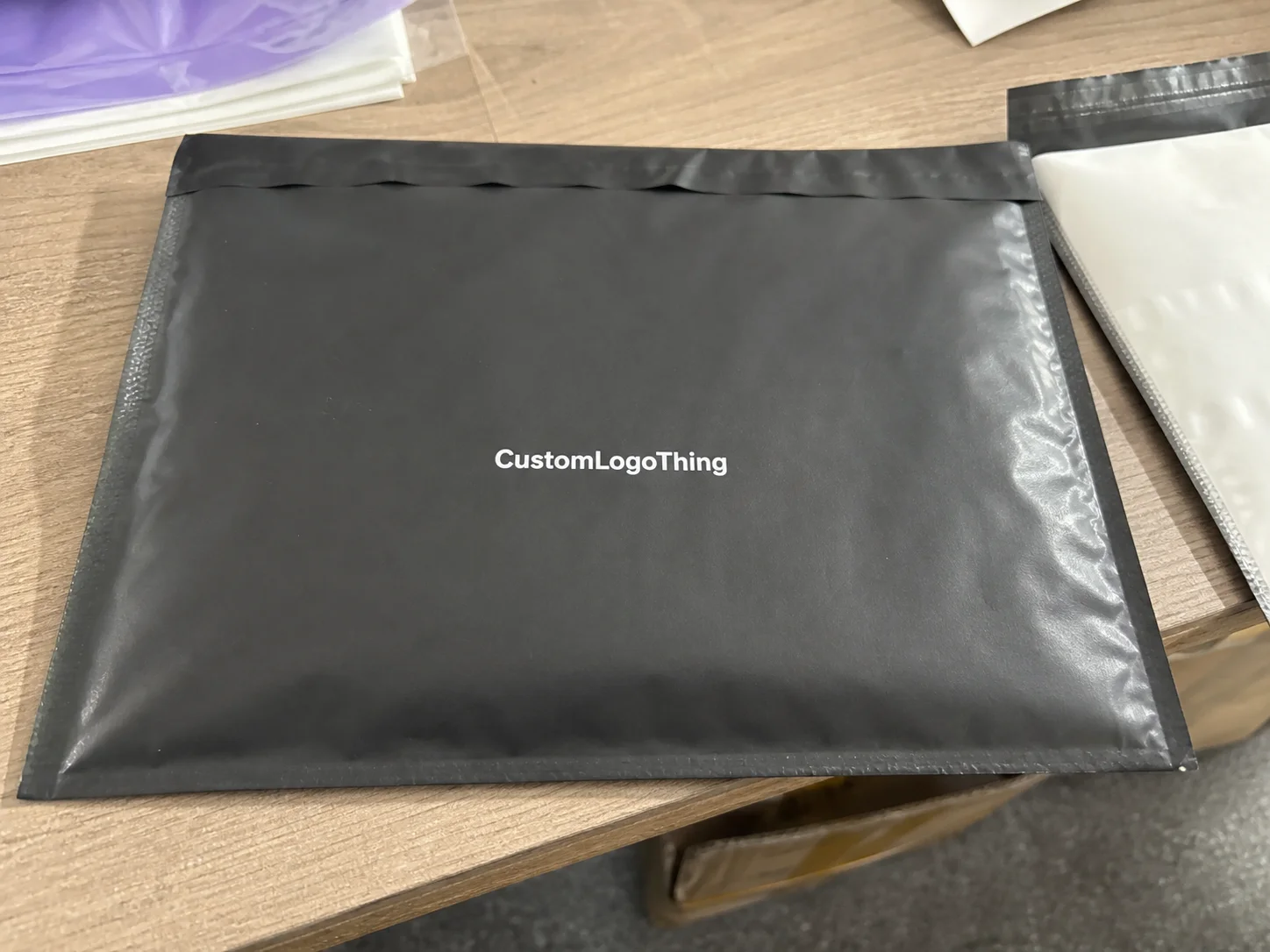
price match custom poly mailers for startups starts with understanding what the product actually is. Custom poly mailers are lightweight, water-resistant shipping mailers made from polyethylene film, usually LDPE or a blended PE structure with a self-seal adhesive strip. They are commonly used for apparel, accessories, soft goods, printed merchandise, and other non-fragile products that do not need the crush protection of corrugated packaging.
The best use cases are easy to spot. If a startup is shipping T-shirts, leggings, socks, hats, tote bags, or folded promo kits, poly mailers usually outperform heavier Retail Packaging on cost and speed. They pack faster. They store flat. They weigh less than boxes. And for many brands, they create a sharper branded packaging experience than a plain kraft carton with a generic label. I’m pretty opinionated here: if the product is soft and the presentation matters, poly mailers are often the sensible choice, not the “cheap” choice people make them out to be, especially for a first release of 500 to 5,000 units.
Customization is where the value shows up. Typical options include logo printing, full-color graphics, brand color matching, size selection, inside or outside messaging, and different finish choices. I have seen founders choose simple one-color printing because it kept unit price at $0.18 for 5,000 pieces, while another client chose full-coverage artwork at $0.31 per unit because their visual identity depended on bold color blocking. Both choices were valid. The right answer depends on product positioning and margin structure, and on whether you are packing in a warehouse in Atlanta or a third-party fulfillment center outside Toronto.
Here is a straightforward comparison of common mailer formats:
| Mailer type | Typical use | Typical weight impact | Branding impact | Typical price range |
|---|---|---|---|---|
| Plain poly mailer | Basic shipping | Very low | Minimal | $0.08-$0.12/unit |
| Custom printed poly mailer | Startup apparel and DTC orders | Very low | High | $0.15-$0.35/unit |
| Custom printed boxes | Fragile or premium product packaging | Higher | Very high | $0.65-$2.50/unit |
| Padded mailer | Small protectable items | Moderate | Moderate | $0.20-$0.60/unit |
That table tells the story plainly. For many startups, custom poly mailers are the sweet spot between product packaging impact and shipping efficiency. They are not the answer for everything. I would never recommend them for fragile glass jars or premium electronics. But for the right catalog, they do a lot of work for not much money, particularly when the pack-out team is shipping 150 to 300 orders a day from a facility in New Jersey or Southern California.
Operationally, they help the warehouse too. One contract pack-out team I visited in Newark told me they shaved 11 seconds per order by switching from folding boxes to pre-stored poly mailers. Eleven seconds sounds small. Multiply that by 1,000 orders and you get real labor savings. That is exactly why price match custom poly mailers for startups should be viewed as a supply-chain decision, not only a design choice.
The branding upside is just as practical. A mailer travels through a postal network and lands at a doorstep, dorm, office, or storefront pickup counter. It becomes a moving billboard. That matters for startups that cannot afford broad reach through advertising alone. Strong packaging design can produce repeated brand impressions long after a paid ad stops running, whether the parcel is routed through USPS in Dallas or delivered by courier in Seattle.
If you are comparing options, it helps to browse a broader set of Custom Packaging Products and then narrow down to the format that matches your order profile. For apparel and soft goods, our Custom Poly Mailers page is usually where the discussion gets real.
Specifications that affect quality and price
Every serious discussion about price match custom poly mailers for startups comes back to specs. Two quotes can look similar and still be miles apart in real performance. The differences usually sit in film thickness, print method, size, adhesive, finish, and artwork complexity.
Film thickness is one of the first variables. Poly mailers are often measured in microns or gauge, depending on supplier preference. A thicker film can improve puncture resistance, opacity, and feel, but it can also increase price. For example, a 60-micron film may be enough for light apparel, while an 80- to 100-micron film makes more sense for denser product loads or more demanding shipping lanes. I have seen brands regret choosing thinner stock after seasonal spikes led to crushed corners and seam stress during multi-stop routes from Chicago to Miami. That part is never fun to explain after the fact, especially when the customer service inbox is already doing laps around the office.
Print method also affects cost. One-color printing usually requires less setup than multi-color art. Full-coverage graphics, metallic inks, and highly detailed artwork often require more time, more precision, and more quality checks. If your logo is a simple mark in black or white, you can usually keep the unit price lower. If you want edge-to-edge color, expect the quote to move. That is normal, and on a 5,000-piece run it can mean the difference between $0.17 and $0.29 per unit.
Size matters more than people think. The mailer should match the folded product, the insert thickness, and the final pack-out style. A medium mailer may work for one folded hoodie, while a large size might be needed for two tees plus an insert card. Choosing oversized mailers wastes material and shipping efficiency. Choosing undersized mailers leads to stress on the seal and a poor presentation. Neither is good value, especially if your fulfillment center in Phoenix charges by cubic volume.
Finish is another piece of the puzzle. Matte tends to feel more premium and can reduce glare in photos. Glossy often looks brighter and can support a sharper retail packaging look. I have watched founders in a supplier negotiation argue over finish because they were comparing samples under different lighting conditions in a room with cold fluorescent fixtures. That happens more than you would expect. The better move is to compare under consistent light and with the actual logo artwork applied. Otherwise you end up debating “warm white” versus “slightly-less-warm white,” which is a fantastic way to waste a Thursday.
Adhesive and tear features deserve attention too. A strong self-seal strip is not just convenience. It reduces pack-out time and helps protect the shipment. A tear strip can improve opening for the customer. A tamper-evident seal can matter for certain product categories. None of these features should be treated as decoration. They influence both quality and price, and they matter whether your order is heading to a studio in Nashville or a warehouse in Ontario, California.
Artwork readiness affects cost as much as material selection. Clean vector files, correct bleed, and clear color references reduce proof revisions. That means fewer delays and fewer surprises. I once worked with a startup that submitted a raster logo pulled from Instagram. It took three proof rounds and added five business days before production even started. A proper file would have avoided the delay entirely. This is where price match custom poly mailers for startups can go wrong if the quote seems comparable but the artwork burden is not.
For suppliers that follow industry expectations, testing standards matter too. Shipping performance can be informed by methods aligned with ISTA transit testing and material considerations used across packaging operations. If a supplier cannot explain how the mailer performs under real transit conditions, that is a problem. For reference, the ISTA site is a useful authority on transit testing standards.
Environmental claims should be handled carefully. Some films may incorporate recycled content or be designed for downgauging, but not every “eco” claim is equal. If sustainability is part of your buying criteria, ask for proof, not just a label. The EPA has useful guidance on waste reduction and packaging-related environmental considerations. That does not solve supplier selection for you, but it gives you a better baseline for asking questions, especially if your product team is asking about recycled content percentages or local sourcing in the Midwest.
When evaluating a quote, I recommend judging these five points together:
- Material spec — thickness, opacity, and feel
- Print spec — colors, coverage, and registration tolerance
- Size spec — usable interior dimensions, not just outer dimensions
- Seal spec — adhesive strength and closure reliability
- Artwork spec — file readiness, proof time, and revision count
If those five elements do not match, then the comparison is not truly apples-to-apples. That is the first rule of price match custom poly mailers for startups.
Pricing, MOQ, and how price matching works
price match custom poly mailers for startups works best when the buyer understands exactly what is being matched. A legitimate comparison includes the same size, film thickness, print coverage, quantity, shipping destination, and any special finishing. If one quote is for 3,000 units at 60 microns and another is for 5,000 units at 80 microns, those are not the same purchase. They are different projects, and the factory in Shenzhen or Dongguan will price them accordingly.
In the supplier conversations I have sat through, the final price usually changes for six reasons:
- Higher print coverage across more of the mailer surface
- Custom sizing outside a standard tooling range
- Special finishes such as matte or soft-touch-style appearance
- Rush production that compresses scheduling
- Freight destination and shipping mode
- Proof changes after the first artwork review
MOQ, or minimum order quantity, is not just a factory rule. It is a pricing mechanism. Smaller runs reduce inventory risk, which matters for startups testing product-market fit. Larger runs usually lower unit cost because they spread setup and production costs over more pieces. A startup shipping 250 orders a month may prefer a 1,000-piece order. A brand with a confirmed bestseller might jump to 5,000 or 10,000 pieces to protect margin. The right choice depends on sell-through speed, storage space, and reorder predictability in your Los Angeles or Atlanta fulfillment plan.
Here is a practical pricing frame I use when reviewing quotes:
| Order scenario | Quantity | Typical unit price | Best for | Risk level |
|---|---|---|---|---|
| Test run | 1,000 pieces | $0.22-$0.38 | Launch testing | Lower cash risk, higher unit cost |
| Early scale | 5,000 pieces | $0.15-$0.25 | Stable orders | Balanced |
| Growth order | 10,000 pieces | $0.11-$0.20 | Known demand | Higher inventory commitment |
That table is directional, not a promise. Actual pricing depends on supplier geography, print setup, shipping method, and current material conditions. A factory in Guangdong may quote differently than a converter in Vietnam or a domestic printer in Texas because labor, resin, and freight costs all move. Still, it gives founders a realistic frame. If a quote sits far outside these ranges, ask why before approving it. That is how you protect margin.
What should you ask for in a quote? Ask for the base unit price, setup fees, any plate or print charges, freight, sample cost, and whether artwork revisions are included. You want the total landed cost, not a partial number. A supplier who gives only the unit price is leaving out the most useful part of the conversation. If the quote lands at $0.15 per unit for 5,000 pieces with domestic freight included, that is very different from $0.15 per unit plus $180 to ship from California to New York.
I have also seen startups get distracted by a supplier’s willingness to “beat” a competitor by a few cents. That can be smart, but only if the product spec remains stable. A lower quote with inferior film, weaker adhesive, or lower print fidelity is not a price match worth taking. The best price match custom poly mailers for startups is the one that protects the total order value, not the headline price.
If a mailer saves you $0.02 but increases damage, slows pack-out, or cheapens brand perception, it costs more than it saves. That math is brutal and common. Startups feel it fastest because there is less room to absorb error. I honestly think that is why seasoned operators get a little suspicious when a quote looks “too easy.” They’ve been burned before, usually after the first 2,000-piece run landed with adhesive inconsistency or off-register printing.
“We matched the cheaper quote, then learned the adhesive failed on humid delivery routes. We paid twice.” — e-commerce founder, Southeast region
That is the sort of lesson that changes buying behavior. Once a founder has paid for a replacement shipment, the conversation becomes much more specific. Width, seal type, print density, freight class, and reorders all matter, down to the difference between a 10 x 13.5 inch mailer and a 12 x 15.5 inch mailer.
How do price match custom poly mailers for startups work?
price match custom poly mailers for startups works by comparing equal specs, then adjusting for transparent cost factors like freight, setup, and print coverage. The supplier reviews the competitor quote, checks the material details, and confirms whether the offer is truly comparable. If the thickness, size, and artwork are different, the match needs to be recalculated rather than copied line for line. That protects buyers from a misleading low price that only looks better on paper.
In practice, the best matches come from clear input. If you send the size, quantity, logo file, shipping ZIP code, and a competitor quote, the response is much more accurate. If the quote is based on a 5,000-piece run but your startup only needs 1,000 pieces, the supplier should explain the difference rather than pretending the numbers are identical. That kind of clarity helps founders make Smarter Buying Decisions and keeps packaging budgets grounded in reality.
The smartest comparisons also include sample review. A physical sample can reveal whether the seal feels strong enough, whether the print reads cleanly, and whether the film has the right balance of flexibility and stiffness. Those details matter just as much as the quote itself, especially for brands that care about branded packaging, package branding, and the customer’s first tactile impression.
Order process and production timeline
The ordering workflow for price match custom poly mailers for startups is straightforward if you prepare the right information up front. It usually starts with inquiry, quote review, artwork submission, digital proof, approval, production, and shipping. The process is predictable. The delays are what change it, especially when the design team is in Brooklyn and the buyer is trying to keep a Monday sign-off.
From my experience, startups lose the most time in three places: missing dielines, incorrect color specs, and slow proof approvals. A logo exported as a low-resolution JPG can slow everything down. So can vague instructions like “make it look clean.” Clean to whom? On what background? Under which lighting? Specificity matters, and it matters even more when the proof is coming from a plant in Shenzhen or a press room in Los Angeles.
A realistic timeline often looks like this:
- Sample request and review — 3 to 7 business days depending on stock and location
- Proof preparation — 1 to 3 business days if artwork is complete
- Production — 12 to 15 business days after proof approval for many standard orders
- Freight — varies by destination and mode
That timeline can stretch when orders are larger, artwork is more complex, or tooling changes are required. If a project needs a new print setup, expect additional time. If you are reordering the same configuration, things usually move faster. That is one reason startups should keep specs stable once a format proves itself, because changing from a matte 60-micron film to a glossy 80-micron film can reset the schedule.
One client of mine in the wellness category sent final artwork late on a Friday, then expected production to begin Monday morning. It could not. The proof still needed review, and one of the brand colors needed clarification against a Pantone reference. Two days disappeared because the file package was incomplete. The fix was simple, but the delay was real. I mention this because price match custom poly mailers for startups can only deliver its full benefit if approval timing is tight. Nobody enjoys explaining to the team that “the printer is waiting on us,” but, well, that sentence has a way of showing up anyway.
My practical tip: prepare your logo files, preferred size, and color references before requesting comparison quotes. If you already have a competitor offer in hand, include it. That helps the supplier compare like for like and avoid back-and-forth. It also shows that you are serious, which tends to improve response quality. A complete request with vector art and a delivery ZIP like 90021 or 30318 usually gets a better answer than a vague note with no quantities attached.
Another timing issue is reorder planning. Too many startups wait until the last box is gone before asking for more. That creates rush freight, higher stress, and fewer pricing choices. A better system is to reorder when 25% to 30% of stock remains, especially if production and shipping together may take three to five weeks. That buffer protects continuity.
In packaging operations, timing is never just time. It is cash flow, labor scheduling, and customer expectation management. I have seen a small apparel brand shift its launch calendar because the mailer proof held the project for four days. Nobody likes that, but it happens. The companies that do best are the ones that plan around it, from the first sample round to the 10,000-piece reorder.
Why startups choose us for custom poly mailers
At Custom Logo Things, the conversation stays factual. That matters more than hype. With price match custom poly mailers for startups, founders want clear pricing, transparent specs, and a quote that does not hide cost in the freight line or sneak in extra setup charges. That is exactly the way we prefer to work, whether the order is shipping into California, New York, Texas, or a distribution node in Illinois.
Startup-friendly support is more than being “nice.” It means helping buyers balance brand impact with budget constraints. If a startup can get the same visual effect with a simpler print layout, I will say so. If a competitor’s offer looks cheaper because it uses a lower grade film, I will point that out. I would rather lose a quick sale than set up a client for reorders and complaints later. That probably sounds blunt, but packaging is not the place for cheerful guesswork, especially when a 5,000-piece run is on the line.
I have spent enough time on factory floors to know what consistent production looks like. A well-run line checks print registration, seal integrity, and film consistency before packing cartons. That is where reliability comes from. You cannot fake it with marketing copy. You can only build it through repeatable process control and honest spec sheets. I still remember walking a line in a Guangdong facility where the operator checked every batch against a light table before cartonizing. That is the sort of detail you do not get from a glossy product page.
There is also a useful scalability angle. The same mailer format can support a 500-piece launch and a 20,000-piece growth run if the design system is planned properly. That means founders do not need to redesign their packaging every time they grow. They can keep the same package branding and update quantities, artwork accents, or insert cards as needed, whether fulfillment stays in-house or shifts to a 3PL in Tennessee.
Compared with buying from generic marketplaces, a direct custom order gives you more control over dimensions, print quality, and lead time. It also reduces the odds of discovering an off-color logo after delivery. I have watched brands buy “custom” mailers online only to receive something with fuzzy print and a different shade of blue than the approved sample. That is a bad use of time and money, and it gets worse when the first 1,500 units are already committed to a launch.
For brands that also use custom printed boxes or mixed retail packaging programs, keeping one supplier relationship focused on the mailer line can simplify procurement. It is not always necessary to source every component from the same place, but it helps to have a vendor who understands how the packaging design system fits together. The mailer should complement the box, not compete with it, whether the box is a 350gsm C1S artboard carton or a rigid setup with a matte aqueous coating.
That matters for product packaging consistency. If your box arrives one way and your mailer another, the brand feels disjointed. Startups that think carefully about branded packaging usually perform better on repeat purchase and referral behavior. No, the mailer does not create brand loyalty by itself. But it absolutely contributes to the overall impression, especially when the customer is opening the package in a studio apartment in Chicago or a storefront in Miami.
We also keep an eye on standards. If a project requires transit testing alignment, material documentation, or sustainability-related claims support, we can discuss the specifics clearly. I prefer that approach. It builds trust fast, and it keeps everyone honest about what the mailer can and cannot do.
That is why founders seeking price match custom poly mailers for startups often want a supplier that can do more than quote a number. They want a partner who can explain the number.
Next steps to request a price match quote
If you are ready to request price match custom poly mailers for startups, gather the details before you submit anything. The cleanest quote requests include a competitor quote, preferred size, estimated quantity, logo files, print color count, and shipping zip code. If you have a sample image or a current mailer spec sheet, include that too. The better the input, the tighter the quote, and the better the chance of getting a useful comparison instead of a generic answer.
Before asking for a match, compare the offers carefully. Check whether the competitor included freight, whether the size is identical, whether the thickness is the same, and whether the print coverage is truly equivalent. If one quote includes 5,000 pieces and the other is based on 3,000, you are not looking at the same economics. This is where many buyers get misled by a low subtotal. The subtotal is a sneaky little gremlin, honestly, especially when a $0.15 unit price hides a $225 freight line.
If your startup is still testing product-market fit, ask for both a sample and a formal quote. Samples help you judge print clarity, seal quality, and overall feel before you commit inventory dollars. I have seen that step prevent expensive mistakes more than once. A buyer may think they want glossy black, then realize matte white better suits the product line and photography style, especially for a 2,000-piece launch in a clean studio aesthetic.
Here is the action sequence I recommend:
- Gather your competitor quote and spec details
- Confirm size, thickness, print coverage, and quantity
- Send logo files in vector format if possible
- Provide your shipping destination and timeline target
- Review the proof carefully before approval
- Confirm production schedule and freight method
That process keeps the decision grounded in facts. It also helps you avoid the common trap of approving a cheaper quote that does not actually fit your product or brand. In a startup setting, that matters. Every order should earn its place in the budget, whether the unit price lands at $0.15 for 5,000 pieces or $0.24 for a smaller test run.
If you want one final rule, make it this: use price match custom poly mailers for startups when both margin and brand matter, and only after the specs are truly comparable. That is how you protect cash, reduce surprises, and build a packaging system you can scale.
FAQ
How do price match custom poly mailers for startups work?
The quote is compared against the same size, material, print coverage, and quantity. Shipping, setup, and finishing details must also be included so the comparison is valid. If those elements do not match, the price match is not meaningful, even if the headline price looks lower by $0.02 or $0.03 per unit.
What MOQ should startups expect for custom poly mailers?
MOQs vary by print method and customization level, but startups should ask for the smallest run that still keeps unit pricing efficient. Lower MOQs are useful for testing designs, validating demand, and reducing inventory risk before larger reorder commitments, especially for first runs of 1,000 to 3,000 pieces.
Can I get a price match if my competitor uses a different thickness?
Usually no, unless the thickness and total material spec are truly comparable. A thinner film may look cheaper, but it may not offer the same puncture resistance, sealing performance, or branding quality in transit. A 60-micron mailer is not the same product as an 80- or 100-micron option.
How long does production take after artwork approval?
Production begins after proof approval and payment confirmation. Lead time depends on order size, customization complexity, and freight method, but many standard orders move in about 12 to 15 business days after final approval, with freight adding several more days depending on whether the shipment goes to New York, Texas, or California.
What files do I need to request a custom poly mailer quote?
A logo file, target size, estimated quantity, and any competitor quote you want matched. Providing color references and shipping location helps generate a more accurate price and reduces proof delays. Vector files such as AI, EPS, or PDF usually produce the cleanest results.