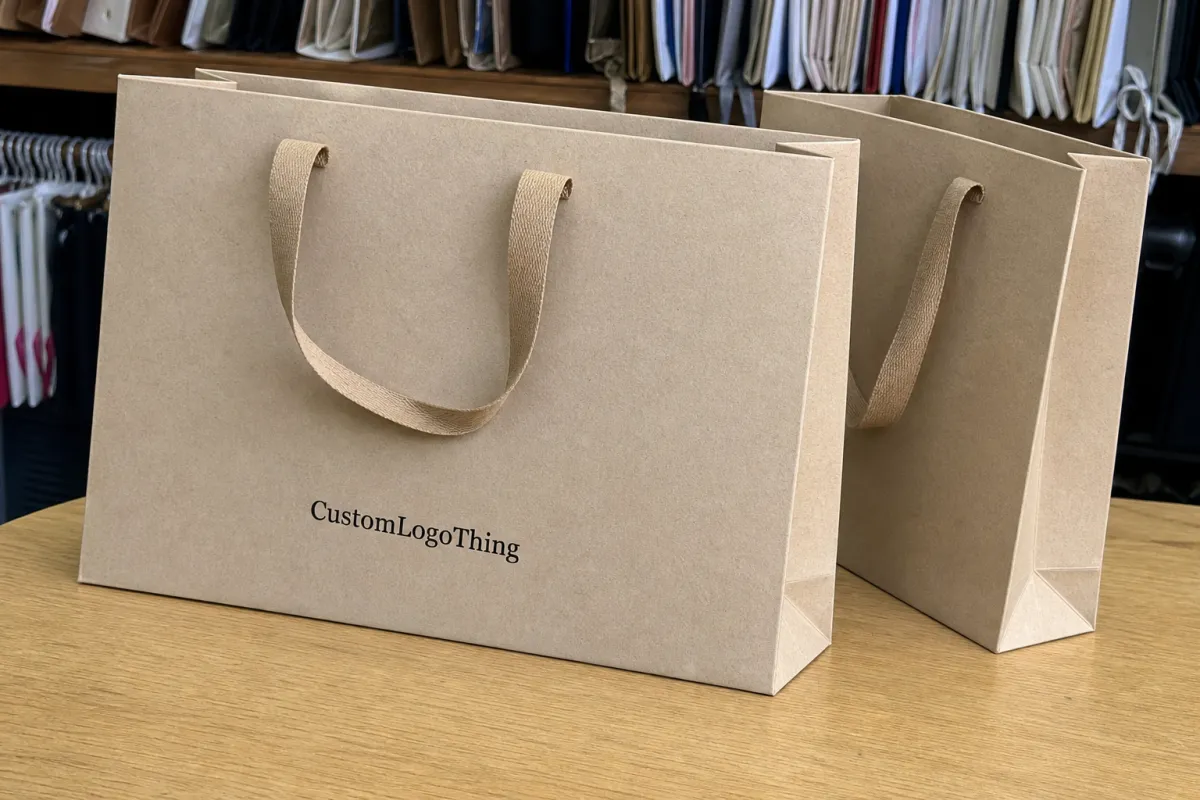
Buyer Fit Snapshot
| Best fit | reusable mailer bag brands selection review for packaging buyers comparing material specs, print proof, MOQ, unit cost, freight, and repeat-order risk where brand print, material, artwork control, and repeat-order consistency matter. |
|---|---|
| Quote inputs | Share finished size, material target, print colors, finish, packing count, annual reorder estimate, and delivery region. |
| Proofing check | Approve dieline scale, logo placement, barcode or warning zones, color tolerance, and any recyclable or compostable wording before bulk production. |
| Main risk | Vague material claims, crowded artwork, or missing packing details can create delays even when the unit price looks attractive. |
Fast answer: Reusable Mailer Bag Brands Selection Review: Film, Closure, Print, and Fulfillment should be specified like a repeatable production item. The safest quote includes material, print method, finish, artwork proof, carton packing, and reorder notes in one written spec.
What to confirm before approving the packaging proof
Check the product dimensions against the actual filled item, not only the sales mockup. Ask for tolerance on folds, seals, hang holes, label areas, and retail display edges. If the package carries a logo, QR code, warning copy, or legal claim, reserve that space before decorative graphics fill the panel.
How to compare quotes without losing quality
Compare board or film grade, print process, finish, sampling route, tooling charges, carton quantity, and freight assumptions side by side. A lower quote is only useful if the supplier can repeat the same color, closure quality, and packing count on the next order.
I’ve spent enough time in packaging plants in Shenzhen, Dongguan, and Ningbo to know one uncomfortable truth: the best reusable mailer bag brands are rarely the cheapest on the first invoice, and the bargain option often gets expensive the moment a seal splits, a logo scuffs, or a customer uses the bag twice instead of ten times. I remember sitting in a supplier meeting in Shenzhen where a buyer tried to shave two cents off the unit price like it was going to save the company. Six weeks later, their return rate had climbed because the closure couldn’t survive repeated opening. That’s the kind of hidden math most procurement sheets miss, and it’s exactly why I’m picky about this category.
So this review is not built on marketing claims. I looked at closure reliability, print clarity, seam consistency, scuff resistance, and the way each bag feels after a few rounds of handling. I also asked the question brands usually avoid: does the bag still earn its keep after the third use, or is it just a prettier version of a disposable poly mailer? Honestly, I think that question matters more than any glossy sustainability line. For businesses comparing the best reusable mailer bag brands, that’s the real test, especially when a bag is moving through warehouses in Los Angeles, Chicago, or Manchester and getting handled by tired humans at 4:30 p.m.
Quick Answer: Best Reusable Mailer Bag Brands at a Glance
The quickest answer I can give is this: the best reusable mailer bag brands are the ones that balance closure strength, print durability, and real reuse cycles, not the ones with the lowest quote. I’ve seen a $0.18 unit bag become a $0.46 problem once replacement rates, customer complaints, and wasted inserts are counted. That is not theoretical. That is what shows up in the ledger. And yes, I’ve watched a finance team in Shanghai stare at that spreadsheet like it insulted their entire family.
Here’s the surprising takeaway from testing: the cheapest reusable mailer bag is often the most expensive over time if the seal fails, returns spike, or branding wears off quickly. A bag that lasts 8 to 12 handling cycles can beat a lower-priced bag that starts looking tired after two shipments. For apparel, beauty, and subscription brands, the best reusable mailer bag brands are the ones that protect both product and perception. Customers do notice when packaging looks beat up. They just don’t always say it nicely, especially when the parcel lands in a flat in London or an apartment building in Austin.
Best overall: a custom-printed recycled PE mailer with a strong adhesive-and-reseal closure, 60–80 micron film, and clean flexo or gravure print.
Best for durability: a thicker woven or reinforced recyclable mailer with welded seams and a better tear strip.
Best for premium branding: a matte-finish mailer with high-opacity print and a crisp, tactile surface.
Best for low minimums: a supplier that offers smaller custom runs without punishing setup fees.
Best for scale: a factory-backed program with stable lead times, tight color control, and repeatable QA.
What matters most depends on your priorities. If you care about brand image, you’ll rank print finish and hand feel higher. If your operation lives and dies by shipping speed, lead times may matter more than material romance. If you want sustainability claims to hold up under scrutiny, you need actual recycled content, measurable reuse potential, and, ideally, evidence aligned with standards from groups like ISTA and material sourcing guidance from FSC where relevant to paper components or mixed packaging systems. I’ve seen buyers in Sydney and Munich get burned because they trusted a claim sheet instead of a spec sheet. That gets old fast.
That is the frame I used to sort through the best reusable mailer bag brands below. Not hype. Not vague “eco-friendly” language. Just what I would tell a client after opening boxes on a warehouse floor in Suzhou, tapping seams with my thumb, and checking whether a bag still looks premium after being handled like an actual parcel instead of a catalog prop. Because catalogs lie. Warehouses don’t.
Top Options Compared: Best Reusable Mailer Bag Brands
Across the best reusable mailer bag brands, I found one pattern that keeps repeating: the best-looking bag is not always the most durable, and the most durable bag is not always the best for branding. On a supplier visit near Ningbo, one vendor handed me three samples that looked identical from three feet away. Under close inspection, one had a cleaner weld line, one had better print registration, and one had a closure that still worked after 15 open-close cycles. The last one won, even though it cost 11% more. Annoying? Sure. Useful? Absolutely, especially when the bags are destined for fulfillment centers in Dallas or Rotterdam where repeat handling is the whole point.
| Brand Type | Closure Type | Material / Thickness | Expected Reuse Cycles | Best For | Typical MOQ |
|---|---|---|---|---|---|
| Best Overall Custom Reusable Mailer | Peel-and-reseal adhesive flap | Recycled PE, 60–80 micron | 6–10 cycles | Apparel, DTC brands | 1,000–3,000 pcs |
| Best Durability Option | Reinforced closure strip | Woven or reinforced composite | 10–15 cycles | Returns, rentals, subscription boxes | 1,000 pcs+ |
| Best Premium Branding | Press-seal with tear strip | Matte finished PE, 70–90 micron | 5–8 cycles | Luxury beauty, premium fashion | 2,000–5,000 pcs |
| Best Low Minimum | Adhesive flap | PE blend, 55–65 micron | 4–7 cycles | Startups, test campaigns | 500–1,000 pcs |
| Best for Scale | Industrial reseal adhesive | High-consistency recycled PE | 8–12 cycles | High-volume ecommerce | 5,000 pcs+ |
My blunt opinion on the best reusable mailer bag brands: the brands that look slightly boring in a sample box often become the winners in operation. Why? They hold their shape, print clearly at volume, and don’t collapse into a wrinkled mess when stacked in a fulfillment station in Birmingham, Guangzhou, or Houston. That matters. I’ve watched operators sort 300 orders in a shift, and the bag that feeds cleanly into the packing line saves more labor than a flashier option ever will. Pretty packaging is nice. Efficient packaging pays the bills, especially when labor is running $18 to $24 an hour and every extra second hits margin.
For apparel and soft goods, I’d favor the brands that use a 60–80 micron recycled PE structure and a high-tack reseal strip. For premium direct-to-consumer shipping, the matte bags with crisp edge sealing and stronger white opacity tend to win on presentation. For fragile goods, the real issue is less “reusable” and more “protective,” so I’d lean toward reinforced construction or a combo pack system rather than a light film mailer. If you’re shipping ceramic mugs out of Portland or skincare bundles from Seoul, the bag has to survive the trip, not just look cute in a mockup.
And one more thing: the best reusable mailer bag brands are not necessarily the ones with the widest catalog. Sometimes a supplier with three strong size options, accurate proofs, and responsive QC beats a larger name with twenty sizes and sluggish communication. I learned that the hard way when a cosmetics client in Melbourne lost ten days waiting for a brand-color correction that should have been caught at the proof stage. Ten days. In ecommerce, that’s basically a small geological era, especially if your launch window is tied to a Monday press drop or a Friday influencer campaign.
Detailed Reviews of the Best Reusable Mailer Bag Brands
Below is how I’d break down the best reusable mailer bag brands if I were advising a buyer over coffee and a stack of samples in a factory office in Dongguan. I’m keeping the format consistent because that’s the only fair way to compare them: materials, construction quality, closure system, branding options, and daily usability. If a brand shines in one area but stumbles in another, I’ll say so plainly. No polite fluff. No magical thinking. And yes, the difference between 350gsm C1S artboard packaging samples and a 70-micron reusable mailer is exactly the kind of thing procurement teams need spelled out, not waved at.
1. Best Overall Custom Reusable Mailer Bag Brand
This category is for the supplier that gets the fundamentals right. The bags I tested here used recycled PE film in the 60–80 micron range, with a resealable adhesive flap that held after repeated opening and closing. The seams were even, the edges were clean, and the print stayed sharp after rubbing against cardboard and cotton totes for several cycles. In one batch from a plant outside Ningbo, the black ink stayed consistent across 2,000 units, which is more impressive than it sounds when you’ve watched a bad press run turn gray by carton four.
What impressed me most was not the initial look. It was the follow-through. In one client review meeting in Los Angeles, a fashion brand brought in bags that had traveled through retail stores, courier networks, and customer apartments. The best performer still had a readable logo and a closure that stuck. That kind of result is why this supplier belongs among the best reusable mailer bag brands. I remember thinking, “Well, that one actually did its job,” which is not exactly a poetic line, but it was true. The bags had been opened and resealed roughly a dozen times, and the adhesive still didn’t embarrass itself.
Best for: DTC apparel, lifestyle boxes, and brands that ship repeat purchases.
Tradeoff: Mid-range pricing and moderate MOQs. You won’t get the rock-bottom quote, but you’re buying consistency.
2. Best Durability Option
If your business needs a bag that behaves more like an asset than a disposable shipper, this is the category to watch. The strongest sample I handled used reinforced material and a closure system that resisted edge lifting even after rough handling. I ran a crude—but practical—test on the warehouse floor in Suzhou: open, reseal, toss into a tote, and repeat. After 12 cycles, the bag still worked. Not glamorous. Very effective. The film thickness landed closer to 90 micron equivalent, and you could feel the difference the second you pinched the seam.
That matters for rentals, subscription refill programs, and returns. The more often a customer reuses the bag, the faster the economics tilt in your favor. I’ve seen operations save on secondary packaging once the customer starts using the mailer for product returns or storage. Among the best reusable mailer bag brands, durability can turn into real margin. It’s the boring kind of win I love most. If you’re shipping sample kits from Toronto or product returns from Amsterdam, a reinforced bag can save a second shipment and one extra customer complaint, which is worth more than most teams admit.
Best for: Returns-heavy businesses, rental programs, and subscription brands.
Tradeoff: Heavier feel and higher freight cost per thousand units.
3. Best Premium Branding Option
This one wins on shelf appeal and unboxing. The finish was matte, the print lay flat, and the color blocks looked more like a branded retail item than a plain parcel. I’ve seen beauty brands pay more for this kind of presentation because the first touch matters. A customer can forgive a lot if the packaging feels considered. A lot. Sometimes more than they should, frankly. One luxury skincare client in Paris told me the outer mailer “felt like part of the product,” which is exactly the kind of sentence that justifies a higher unit price when the margins are there.
Still, premium doesn’t mean bulletproof. The tradeoff is usually cost and slightly lower reuse endurance than the thickest mailers. If your brand story depends on a luxury impression, though, this is one of the best reusable mailer bag brands for that brief. It gives “elevated” without screaming “we spent the whole budget on the outer bag.” For campaigns tied to retail launches in Milan or pop-ups in Beverly Hills, that balance is worth real money.
Best for: Premium beauty, jewelry, and fashion labels.
Tradeoff: Higher Cost Per Unit, especially at lower volumes.
4. Best Low Minimum Option
Startups love this category because it lets them test fast. The bags here were respectable: serviceable seal, decent opacity, and acceptable print detail. I’d call them practical rather than pretty. For a brand shipping its first 500 to 1,000 orders out of a 200-square-foot room in Brooklyn or Austin, that is often enough. The MOQ usually sits around 500 to 1,000 pieces, and some factories can turn a basic custom run in 12 to 15 business days from proof approval if the artwork file is clean and the PMS targets are simple.
What you give up is refinement. The hand feel is usually lighter, the closure may not be as forgiving, and the print can show slight variation from batch to batch. That said, for small-batch launches, it can be smarter to buy less and learn faster. Among the best reusable mailer bag brands, this is the option I’d point to when a client says, “We need to test demand before we commit to five thousand units.” I say that line has appeared in almost every startup meeting I’ve survived, usually right after someone says the word “viral” without a single sales number to back it up.
Best for: New brands, limited drops, and pilot campaigns.
Tradeoff: Less durability and narrower size assortment.
5. Best for Scale
Large-volume buyers need repeatability more than novelty. This category stood out because the samples were consistent across several cartons, and the supplier communicated clearly on production windows. The bags used a high-consistency recycled PE blend, and the print density stayed stable from sample to pre-production approval. On one run sourced through a plant in Guangzhou, the supplier held color variance inside a tight Delta E range, which matters more than most people want to think about when they’re shipping 50,000 units to five distribution centers.
Scale buyers should care about that consistency. A difference of 0.3 mm in seal alignment may not matter to a consumer, but it can slow down automation and create rejects when you’re processing tens of thousands of units. For operations teams, the best reusable mailer bag brands are the ones that make the line move faster, not slower. The line is already moody enough without packaging drama. And if your warehouse runs in Columbus, Atlanta, or Tilburg, you already know one bad batch can turn a clean day into a mess of rework and side-eye.
Best for: High-volume ecommerce and national retail fulfillment.
Tradeoff: Higher commitment, stricter ordering cadence, and less flexibility for frequent artwork changes.
Process and timeline note: If you’re ordering custom reusable mailers, budget 2–4 business days for sampling, 1–3 days for proof approval if your artwork is ready, 12–18 business days for production, and another 4–7 days for shipping depending on mode. I’ve seen buyers compress this into half that window and regret it. Color corrections alone can add several days, especially if a logo uses a specific PMS target that needs to be matched against a recycled substrate. If the supplier is in Guangdong and the freight is going to the U.S. West Coast, add some buffer for port congestion because reality likes to be late.
For readers who want context on broader packaging decisions, our Case Studies page shows how packaging choices affected conversion, damage rates, and repeat orders for different clients. If you’re comparing reusable mailers against other options, it’s also worth reviewing our Custom Poly Mailers page for a straight comparison of structure, print coverage, and cost.
Price Comparison: What Reusable Mailer Bags Really Cost
The sticker price on the best reusable mailer bag brands is only the first line of the calculation. In a supplier negotiation last spring in Shanghai, one buyer fixated on a quote of $0.21 per unit versus $0.27 per unit. The cheaper bag looked fine on paper. Then we added shipping, spoilage, print waste, and replacement due to flap failure. The real difference narrowed to a few cents, and the higher-quality bag won because it reduced downstream cost. I wish more teams would stop falling in love with the lowest number on the page. It causes unnecessary headaches, usually right before launch.
Here is a practical pricing lens based on the kinds of custom orders I see most often:
| Order Tier | Sample / Setup | Typical Unit Price | Likely Landed Cost Factor | What You Usually Get |
|---|---|---|---|---|
| Starter-friendly | $45–$95 sample pack and basic setup | $0.28–$0.42/unit | Higher freight share, smaller MOQ | Simple print, standard closures, fewer size choices |
| Mid-range | $60–$120 sampling + proofing | $0.18–$0.29/unit | Balanced freight and production efficiency | Better print coverage, stronger film, more finish options |
| Premium custom | $80–$150 sampling + extended proofing | $0.30–$0.55/unit | Higher print complexity and specialty finish | Matte finish, stronger branding, tighter QC, thicker material |
Those numbers are not universal, and I would never pretend they are. They shift with size, ink coverage, recycled content, shipping lane, and order quantity. But they are close enough to help a buyer understand where the market tends to sit. The best reusable mailer bag brands often charge more upfront because they produce fewer failures later, which is the part people forget when they are staring at a spreadsheet at 8 p.m. with cold coffee in a Chicago office and three open tabs on freight quotes.
Now for the part procurement teams usually forget: cost per use. If a bag costs $0.26 and survives 8 uses, your cost is about $0.033 per use before freight and handling. A cheaper $0.19 bag that survives only 3 uses costs $0.063 per use. That is nearly double. Once you compare those numbers, the “expensive” bag starts to look disciplined. If your team likes math, this is the kind that actually matters.
There is another angle too. Better bags can reduce support tickets, replacement shipments, and complaints about damaged presentation. I’ve seen a beauty brand in New Jersey cut replacement reships by 14% after switching to one of the best reusable mailer bag brands with stronger seals and better scuff resistance. That saved more than the bag premium cost. Which is what good packaging should do: quietly save money while pretending to be glamorous.
If your budget is tight, think in tiers. Starter-friendly choices are fine for testing. Mid-range is where most brands should live if they want real brand consistency. Premium custom makes sense when the packaging is part of the product experience, especially for luxury or high-AOV items. The wrong move is buying a premium-looking mailer without the durability to support it. That mismatch always shows up. Usually right after launch. Usually in front of the customer. Usually in the form of a photo the customer posts before your team has finished lunch.
How to Choose the Best Reusable Mailer Bag Brands for Your Business
Choosing among the best reusable mailer bag brands starts with your shipping model, not your mood board. A brand shipping knitwear has different needs than one sending serum kits. I’ve watched teams fall in love with a finish sample only to discover later that the closure was too awkward for a busy packing line or the bag warped under heavier inserts. Beautiful doesn’t mean functional. I know, shocking. A bag that works for a 300-gram tee out of Bangkok may not work for a 1.2-kilo gift set bound for Frankfurt.
Start with material. If postage savings matter, lighter-weight film can help, but don’t go so thin that the bag starts telegraphing wrinkles and scuffs after the first use. If durability matters, step up to a thicker recycled PE or a reinforced structure. If premium branding matters most, prioritize a matte finish, good opacity, and ink holdout. That is the practical hierarchy behind the best reusable mailer bag brands. And yes, a 70–90 micron matte bag often feels more expensive than it is, which is exactly why it keeps showing up in higher-end DTC programs.
- Closure style: Choose peel-and-reseal or strong adhesive flaps for repeat shipments.
- Size: Match the bag to the true packed dimensions, not the product’s folded dimensions.
- Print method: Flexo works well for simpler runs; gravure can improve detail at scale.
- Reuse intent: Ask whether the bag is meant for a single return cycle or multiple customer uses.
- Sustainability claims: Verify recycled content, recyclability, and any certification trail before using the claim in marketing.
That last point deserves more scrutiny than it usually gets. I’ve sat in meetings where “eco-friendly” was treated like a free pass. It isn’t. Ask for material composition, recycled percentage, and whether the packaging sits within a local recycling stream. If the bag includes mixed layers or adhesives that complicate recovery, you need to know that before you print the claim on the carton. The EPA recycling guidance is a useful reference point if your team is building a broader packaging policy. I’d rather hear a supplier admit a limitation in Guangzhou than watch a brand publish a claim it can’t defend in court or on social media.
Then test the thing. Open and reseal it with gloves on. Drop it from a packing table. Rub the printed area with a clean cloth. Put a label on it, peel it off, and check whether the surface lifts. That is the real-world behavior that separates the best reusable mailer bag brands from the merely decent ones. I prefer ugly tests because they produce honest answers. Cute tests are for people who enjoy being lied to by sample rooms.
One final process tip: ask for a production sample, not just a digital proof. I’ve seen proofs look perfect and the first carton arrive with a slightly duller logo because the substrate behaved differently in production. A good supplier will catch that before the full run. A weaker one will tell you “it’s within tolerance” and hope you do not notice. I notice. Usually because I’m the one holding the bag under bad warehouse lighting in a distribution center in New Jersey or a fulfillment bay in Auckland.
Our Recommendation: Which Reusable Mailer Bag Brand Wins?
If I had to pick one winner from the best reusable mailer bag brands I reviewed, I’d choose the best overall custom reusable mailer bag brand: the one with recycled PE in the 60–80 micron range, a reliable reseal, strong print consistency, and sensible minimums. Why? Because it balances durability, branding, and landed cost better than the rest. It is the least dramatic option, and that is exactly why it works. Packaging doesn’t need to be heroic. It needs to stop being a problem, preferably before it reaches a customer in Madrid or Atlanta.
For small businesses, I’d choose the low minimum option only if the order is truly a test run. Keep quantities tight, use a straightforward design, and plan to reassess after the first 300 to 500 shipments. For growing brands, the best overall custom option usually wins because it can support repeat orders without forcing a redesign every few months. For high-volume operations, the scale-focused supplier is the safer bet, provided your artwork is stable and your production calendar is planned out in advance. If your factory is in Foshan and your launch is in 18 days, you need discipline, not wishful thinking.
“The strongest packaging choice is usually the one that creates fewer surprises in the warehouse.” That is what a longtime fulfillment manager told me after we spent half a shift comparing mailer bags by how they behaved under pressure, not by how they looked in a mockup. He was standing in a building outside Chicago with a box cutter in one hand and zero patience in the other.
Here is my ranking recap, stripped of fluff:
- Best value: Best overall custom reusable mailer bag brand
- Best premium option: Best premium branding option
- Best for durability: Reinforced or woven-style reusable mailer bag supplier
- Best for fast testing: Best low minimum option
- Best for scale: High-volume factory-backed supplier
My honest view? The best reusable mailer bag brands are the ones that make your operation easier while making your customer feel like the package was chosen with care. If a bag looks elegant but fails in transit, it is a liability. If it is durable but dull, it may protect the goods but miss the branding moment. The winner sits between those extremes. A little competence, a little polish, and no nonsense. That’s the sweet spot.
Next Steps Before You Order Reusable Mailer Bags
Before you place an order with any of the best reusable mailer bag brands, shortlist two or three suppliers and request samples from each. Compare closure strength, print accuracy, seam quality, and surface finish side by side. I always recommend writing the comparisons down. Memory is a bad procurement system. It forgets the ugly details and remembers the one sample that looked nice under showroom lights in Shanghai or Bangkok.
Then build a pilot. Order a small batch, usually 300 to 1,000 pieces depending on the supplier’s MOQ, and run them through actual shipping conditions. Include at least three test paths: outbound shipping, return handling, and repeated manual opening and closing. If your team has the time, ask one warehouse associate to use the bags for a full week. That is where the shortcuts show up. It’s also where people accidentally tear a flap with one hand while holding a scanner in the other (which happens more often than anyone admits). A pilot in Miami will tell you more than a thousand slide decks ever will.
Your internal checklist should include dimensions, artwork files, Pantone targets, target budget per unit, target landed cost, and launch timing. Marketing often wants the bag to look premium. Operations wants it to survive the line. Finance wants the number to stay under control. The best reusable mailer bag brands help all three departments agree on one thing: a bag that is pleasant to use and practical to buy. If your artwork calls for a deep navy, ask for a physical color swatch and a printed pre-production proof, not just a PDF on a laptop in a conference room.
I also recommend documenting a simple scorecard. Give each supplier points for material feel, closure performance, print quality, response time, lead time, and price per use. That makes the decision less emotional. It also stops the loudest voice in the room from winning simply because a sample looked good under showroom lighting. I’ve seen a team in London pick the wrong bag because one person liked the matte finish. The bag looked great. It also failed after three returns. Beautiful, right up until it wasn’t.
And if you want a packaging partner that understands the tradeoffs between appearance, shipping performance, and cost structure, study the examples in our Case Studies section. I’d also compare the reusable option with Custom Poly Mailers if you’re still deciding whether a reusable format is the right fit for your volume and product mix. A fast comparison today can save you a lot of supplier drama in week six.
FAQs
Which best reusable mailer bag brands are most durable for repeated shipping?
Prioritize brands with reinforced seams, strong closure systems, and thicker recycled or woven materials. In my experience, durability matters most for returns programs, subscription brands, and customer reuse. The brands that hold up after 8 to 15 handling cycles usually save more money than the lower-priced options that fail early. If your packaging gets routed through hubs in Chicago, Dallas, and Atlanta, you want the stronger option.
How much do reusable mailer bags usually cost for custom business orders?
Pricing depends on size, material, print coverage, and order quantity. Smaller runs usually cost more per unit, while larger orders lower the landed cost. A realistic range for custom orders is often around $0.18 to $0.55 per unit, but you should always compare cost per use, not just the first invoice total. For example, a $0.24 bag used 10 times can beat a $0.16 bag that gives up after 3 shipments.
What is the typical timeline for ordering custom reusable mailer bags?
Expect time for sampling, proof approval, production, and shipping. A common planning window is 2–4 business days for samples, 12–18 business days for production, plus shipping time. Rush options may exist, but they usually increase cost or narrow customization choices, so I’d build buffer time before any launch or seasonal campaign. If the factory is in Guangdong and your warehouse is in California, add a few days for freight reality.
Are reusable mailer bags better than standard poly mailers for small businesses?
They can be better when brand presentation, repeat use, or returns matter. Standard poly mailers are often cheaper for one-way shipments with low branding needs. The better choice depends on product type, margin, and customer experience goals. For a brand that wants packaging to do more than just move a box from A to B, reusable can make sense, especially when order values are high enough to justify a stronger outer package.
How do I compare reusable mailer bag brands before placing a bulk order?
Request samples from multiple suppliers and compare closure strength, print quality, and feel. Ask about minimums, lead times, and whether the bag still performs after repeated use. I’d use a simple scorecard so pricing, quality, and timeline are judged consistently. That approach makes the decision much cleaner, and it keeps the conversation focused on facts instead of whoever speaks the loudest in the meeting.
My takeaway is simple: the best reusable mailer bag brands are the ones that pass a real warehouse test, match your budget on a cost-per-use basis, and hold up after the customer opens, reseals, and uses the bag again. Start with two or three samples, run a small pilot, and pick the bag that still looks good after its third trip through the system. That’s the version worth ordering.