Buyer Fit Snapshot
| Best fit | Custom Mailer Boxes Supplier projects where brand print, material claims, artwork control, MOQ, and repeat-order consistency need to be specified before quoting. |
|---|---|
| Quote inputs | Share finished size, material target, print colors, finish, packing count, annual reorder estimate, ship-to region, and any compliance wording. |
| Proofing check | Approve dieline scale, logo placement, barcode or warning zones, color tolerance, closure strength, and carton packing before bulk production. |
| Main risk | Vague material claims, crowded artwork, missing packing details, or unclear freight terms can make a low unit price expensive after revisions. |
Fast answer: Custom Mailer Boxes Supplier: Structure, Print Proof, Packing, and Reorder Risk should be specified like a repeatable production item. The safest quote records material, print method, finish, artwork proof, packing count, and reorder notes in one written spec.
Production checks before approval
Compare the actual filled-product size with the drawing, then confirm tolerance on folds, seals, hang holes, label areas, and retail display edges. Reserve space for logos, QR codes, warning copy, and material claims before decorative graphics fill the panel.
Quote comparison points
Review material grade, print process, finish, sampling route, tooling charges, carton quantity, and freight assumptions side by side. A quote is only useful when the supplier can repeat the same color, closure quality, and packing count on the next order.
I’ve watched brands obsess over foil stamps, spot UV, and colored inserts, then get blindsided by a crushed corner on the first shipment. Annoying? Yes. Expensive? Also yes. That’s why a Custom Mailer Boxes supplier guide matters more than most founders expect: the supplier’s structure choices, board quality, and consistency often shape customer experience more than graphics do. In one Chicago fulfillment center, a brand spent $1,400 on metallic ink and lost nearly 200 units to edge crush because the board spec was too light for parcel handling in winter humidity. Fancy ink. Bad outcome. Classic packaging drama.
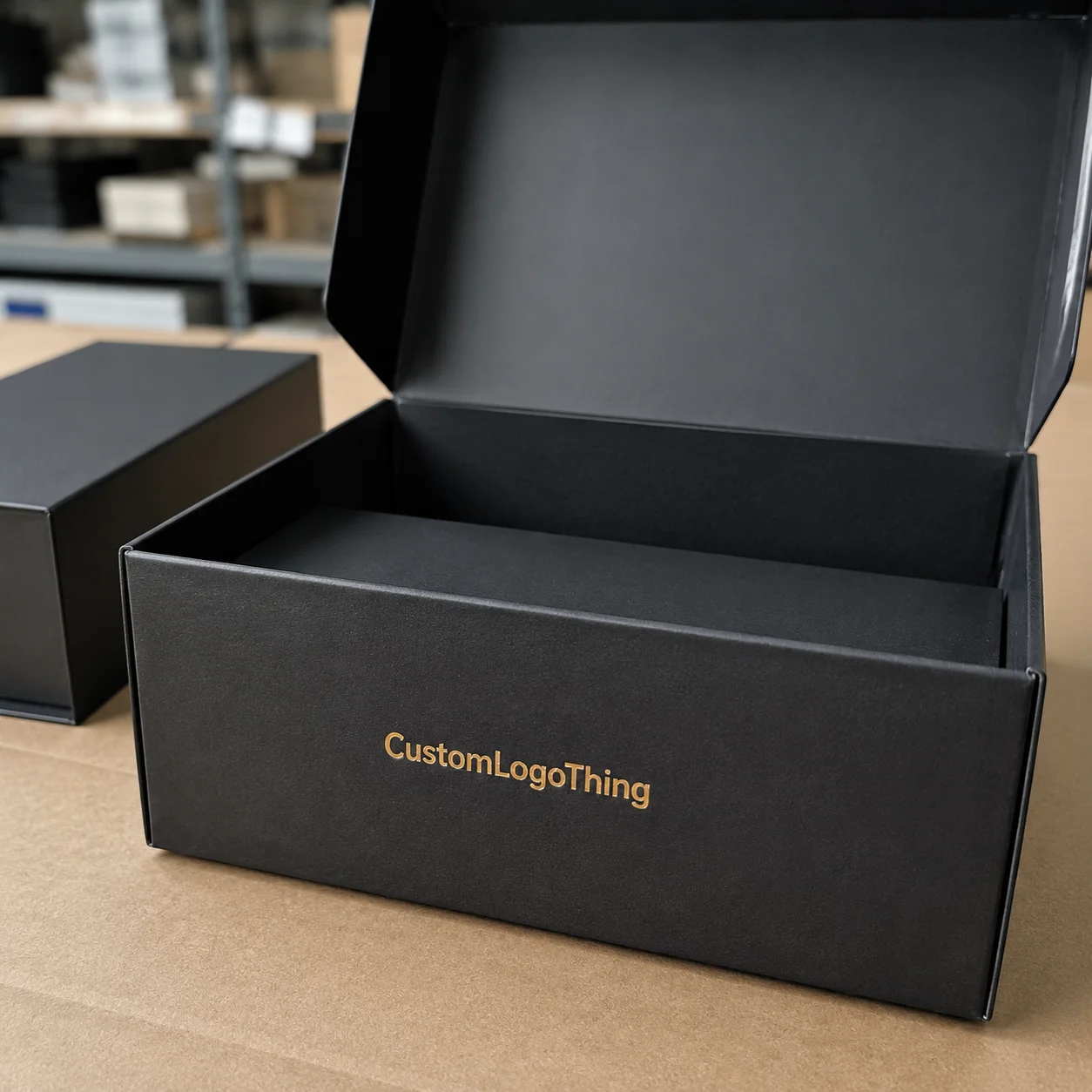
Custom Mailer Boxes are corrugated boxes built to ship product, protect it, and present it well at the same time. A strong custom mailer boxes supplier guide should help you compare real-world performance, not just a shiny mockup that looks great in a PDF and falls apart the second it meets a conveyor belt. In my experience, the box that arrives intact, opens cleanly, and fits the product with 3 to 5 mm of clearance is the one customers remember. The pretty one that collapses in transit? That one gets you a refund request and a very cranky email from customer support. I’ve seen that email. It reads like a crime scene report.
For Custom Logo Things, I’m framing this as a practical evaluation tool. No sales pitch. No magical packaging fairy dust. Just the questions I’d ask if I were sourcing for a beauty brand, a coffee subscription, or a DTC apparel line with 2,000 monthly shipments. If the factory quote is vague, I want to know why. If the board spec is “industry standard,” I want an actual number like 32 ECT, 44 ECT, or a laminated 350gsm C1S structure. Specifics keep everyone honest.
What Custom Mailer Boxes Are and Why Supplier Choice Matters
A custom mailer box is a corrugated box designed to do three jobs at once: survive shipping, protect the contents, and carry your brand. That sounds simple. It isn’t. The difference between a standard RSC shipping carton and a well-made mailer box is usually in the closure style, board construction, print quality, and how the supplier handles tolerances. A Custom Mailer Boxes supplier guide should start there, not with logo placement. Honestly, too many buyers get hypnotized by artwork and forget the box has to do an actual job. A logo can’t stop a corner dent in transit from Shenzhen to Dallas.
Here’s the surprising part: many brands think print quality is the first thing customers notice. Often, it’s not. They notice whether the lid stays closed, whether the box opens with a clean edge, and whether the insert keeps the product from rattling. On a client visit in Newark, New Jersey, I saw a skincare brand lose 7% of its first batch to crushed product corners because the mailer looked premium but used a lighter board than the sample. The print was excellent. The structure was not. I remember standing there thinking, “Great, the logo is gorgeous. The product is still smashed.” That was a fun morning. By fun, I mean absolutely not fun.
Supplier choice affects burst strength, print consistency, insert compatibility, turnaround time, and damage rates. A supplier that quotes an 18-pt board equivalent but actually runs a thinner structure on a low-cost line can create expensive problems later. And that’s before you factor in shipping distance, humidity, and how your fulfillment team packs the box. Packaging is weirdly unforgiving like that. Tiny shortcuts turn into big headaches. A box that works in Los Angeles can fail in Houston after one humid week in a warehouse without climate control.
Compared with folding cartons, mailer boxes are better when the product needs shipping durability and a branded unboxing experience. Compared with poly mailers, they’re better when the product can’t be compressed or bent—think candles, glass jars, premium apparel, or subscription kits with accessories. If you are shipping soft goods only, Custom Poly Mailers may be the cheaper fit. But once you need structure, inserts, or a presentation moment, custom printed boxes usually win. In my notes from a supplier visit in Dongguan, the cost gap between a basic mailer and a printed poly mailer was about $0.11 per unit at 5,000 pieces, and the damage rate told the real story anyway.
Honestly, the biggest mistake is treating packaging like a graphic design project. It’s a logistics item first and a branding tool second. A good Custom Mailer Boxes supplier guide keeps both in view. If your supplier doesn’t understand that, keep moving. The factory floor in Kunshan won’t care that your mood board looked expensive if the tuck flap is 4 mm too tight and the packing line starts jamming.
“We thought the box was a marketing choice. It turned out to be a fulfillment choice too.” That’s what a home fragrance founder told me after switching from a weak board to a sturdier E-flute mailer and cutting transit damage by 41% over two reorders. The reorder volume was 8,000 units, the lead time was 14 business days from proof approval, and the change paid for itself in one peak season.
For broader packaging benchmarks and industry terminology, the PMMI packaging resource hub is useful, especially when you want to sanity-check material language and test methods. If a supplier in Mexico City says “premium corrugate,” you still want the actual flute type and ECT rating. Words are cheap. Test specs cost more.
How a Custom Mailer Boxes Supplier Works
A supplier usually starts with sizing, then moves into structure, artwork, production method, finishing, and delivery. The cleanest process is not the fastest one. It’s the one that catches mistakes early. A solid Custom Mailer Boxes supplier guide should spell out the workflow clearly so you know where the risks sit. I’ve seen rushed projects unravel because nobody paused long enough to ask the boring questions. Boring questions save budgets. Glamorous ones do not. One missed dieline note in a Shanghai order once cost a brand an extra 6 days and a second round of proofs. Nobody was thrilled.
Step one is inquiry and discovery. The supplier should ask for product dimensions, product weight, how the box will ship, and what the unboxing moment should feel like. If they don’t ask whether the customer is using bubble wrap, molded pulp, or an insert, that’s a warning sign. On a visit to a Guangdong converting line, I saw a brand approve a gorgeous rigid-style layout for a mailer box without telling the supplier that the product had a 1.2 kg glass component. The result was a box that looked great on screen and failed a drop test from 30 inches. Everyone stared at it like it had personally betrayed us. Fair enough, honestly. The sample survived the desk. It did not survive reality.
Step two is material selection. Many mailer boxes use E-flute or B-flute corrugated board, depending on print needs and protection requirements. A lighter board may save a few cents per unit, but it can also increase deformation in long-haul shipping. Good suppliers will discuss liners, flute type, and whether you need kraft, white, or coated outer stock. For premium e-commerce brands, I often see 350gsm C1S artboard laminated to E-flute in a hub like Yiwu or Dongguan when the visual finish matters and the box still needs enough crush resistance.
Step three is design prep. This is where dielines matter. A dieline is the flat template showing score lines, cut lines, flap dimensions, and bleed. If your artwork team builds to the wrong dieline, the supplier can still produce the box, but the closure points, logo alignment, and panel transitions may be off by several millimeters. That’s enough to make a premium product packaging program look sloppy. And yes, I’ve had a designer insist “nobody will notice.” Customers notice. They are shockingly good at noticing things that cost them money or make the box harder to open. A 2 mm shift on a front panel sounds tiny until it puts the logo halfway into the score line.
Step four is proofing and sample creation. A digital proof confirms layout, but it doesn’t confirm behavior. A physical sample tells you whether the lid holds, whether the insert stays put, and whether the print looks muddy on the chosen board. In one factory meeting in Ningbo, I saw a buyer approve a full-color mailer from a screen proof alone. The final box was 18% darker than expected because the coated stock absorbed ink differently than the sample substrate. That was a fun conversation. By fun, I mean miserable. A hard proof in hand would have saved two revision cycles and one very annoyed brand manager.
Step five is production. This can involve digital printing, flexographic printing, lithographic lamination, die-cutting, gluing, and finishing such as matte lamination, gloss varnish, foil stamping, or embossing. Not every supplier offers all of these in-house. And that matters because handoffs between vendors can add variability. More handoffs usually means more room for something to go sideways. Packaging production loves a good plot twist. In Suzhou, I once watched a supplier outsource lamination to a second plant 30 kilometers away and lose half a day on truck timing alone.
Step six is shipping and fulfillment. A supplier that can palletize cleanly, protect corners, and label carton counts correctly will save you time at receiving. A supplier that ships mixed SKUs with weak pallet wrap may create warehouse chaos. I’ve seen 4,000 boxes arrive with one crushed pallet corner because the freight team skimped on edge protectors. That kind of issue is invisible in the quote sheet, which is exactly why people get burned. Freight from Shenzhen to the U.S. West Coast can add 8 to 14 days depending on the port, so sloppy pallet prep is not a small problem. It’s a delay with a tracking number.
What you need to provide before quoting
If you want a useful quote, send the supplier exact dimensions, product weight, print coverage, quantity, target ship date, and whether you need inserts. Add the shipping environment too. Will the box travel by parcel network, pallet freight, or direct to retail packaging stores? That one detail changes board recommendations. Leave it out, and you’ll get a quote that’s technically a quote but practically a guess. If your box is going to Atlanta by UPS Ground, the specs should not be the same as a retail display box headed to a boutique in Portland.
- Dimensions: length, width, and height in mm or inches
- Product weight: unit weight and packed weight
- Print details: 1-color, 2-color, CMYK, or full coverage
- Quantity: trial run and reorder volume
- Finish: matte, gloss, soft-touch, foil, embossing
- Timeline: proof deadline, launch date, warehouse receiving date
Timeline expectations
A realistic timeline is usually 7 to 12 business days for sampling, 10 to 20 business days for production after proof approval, plus freight time. Small artwork changes can add 2 to 4 days. If a supplier promises a fully customized structure, sample approval, and delivery in under a week, I’d ask for the exact production line capacity and ask again in writing. Speed is possible. But it is rarely free. And if it sounds too tidy, it probably is. In practice, I’ve seen a typical run in Foshan take 12 to 15 business days from proof approval when the art is locked and the board is already sourced.
Custom Mailer Boxes Supplier Guide: Key Factors to Compare
This is the section where a custom mailer boxes supplier guide stops being theoretical and becomes a buying tool. You need to compare suppliers on structure, print quality, customization, quality control, service, and sustainability documentation. If you only compare price, you will miss the part that costs you money later. I’ve made that mistake once, and I still remember the invoice. My soul did not enjoy it. The factory in Shenzhen looked cheap on paper and expensive in the postmortem.
Material strength and flute type come first. E-flute is common for sharper print and a smoother surface. B-flute is thicker and often better for crush resistance. Double-wall options exist for heavier product packaging, but they add weight and cost. Ask the supplier what board grade they use, what the edge crush test rating is, and whether the material is suitable for your packed weight. If they dodge the question, that tells you something. Usually not something good. A real answer sounds like “32 ECT for a 1.1 kg packed load, or 44 ECT if the box ships cross-country in winter.”
Printing capabilities matter more than many buyers realize. Digital printing is usually best for short runs, multiple SKUs, or fast changes. Flexographic printing works well on larger orders with simpler artwork. Lithographic lamination can create a premium finish, especially for branded packaging with rich colors and image-heavy designs. The best custom mailer boxes supplier guide doesn’t crown one method as superior; it matches the method to the order size and brand goal. A 500-piece test run in Mumbai should not use the same setup logic as a 20,000-unit restock in Dongguan.
Customization depth is where suppliers separate. Can they make a box exactly to your size, or are you choosing from a narrow template range? Can they add inserts, window cutouts, interior print, embossing, foil, or specialty coatings? Do they support package branding inside the box as well as outside? If you sell subscription kits or influencer mailers, interior print can be worth the extra 8 to 15 cents per unit because it boosts shareability. People love opening a box and feeling like someone actually thought about the inside too. A printed inside panel in a warehouse in Wenzhou can do more for perceived value than a second logo on the lid.
Quality control should be specific, not vague. Ask how many inspection points they use, what tolerance range they accept on dimensions, and how they handle defects. I once reviewed a supplier audit where the team relied on final inspection alone. That sounds neat. It is not enough. Good suppliers check board caliper, print registration, glue joints, and flap alignment during production, not just after the batch is done. Final inspection only catches the mess after the mess already happened. I want numbers: ±1.5 mm on dimensions, glue bead checks every 2,000 units, and carton count verification at pallet wrap.
Service and communication can save or sink your project. A responsive project manager who understands packaging design is worth more than a cheap quote from someone who replies every 48 hours. You want technical guidance, not cheerleading. If they can explain why a 2 mm change affects tuck fit, they probably understand the job. If they only say “no problem” to everything, be careful. That phrase is the corporate cousin of “trust me, bro.” In practice, I prefer a supplier in Guangzhou who asks three annoying follow-up questions over one in Bangkok who nods at everything and sends a bad proof.
Sustainability claims deserve documentation. Ask whether the paper is FSC certified, whether inks are water-based, and whether the box is recyclable in typical curbside systems. Don’t accept “eco-friendly” as a substitute for facts. The FSC site explains certification clearly, and the EPA’s materials guidance can help you check claims around recycling and waste reduction: EPA recycling resources. If a supplier can’t provide a certificate number from a mill in Canada or Indonesia, the claim needs a second look.
| Supplier Feature | What to Ask | Why It Matters |
|---|---|---|
| Board grade | E-flute, B-flute, or double-wall? | Changes crush resistance and box weight |
| Print method | Digital, flexo, or litho lamination? | Impacts image quality, setup cost, and lead time |
| Customization | Can you add inserts and interior print? | Affects unboxing, fit, and retail packaging appeal |
| QC process | What tolerances and inspections do you use? | Reduces defects and inconsistency across batches |
| Sustainability | Can you document FSC and recyclable materials? | Protects your eco claims from being challenged |
My honest view? A supplier that can explain the tradeoff between material cost and damage reduction is usually a better long-term partner than a supplier that simply undercuts everyone by 12%. A strong custom mailer boxes supplier guide should reward technical clarity, not just low pricing. Cheap is great until you’re dealing with dented boxes and annoyed customers. I’d rather pay $0.04 more per unit than replace product in a warehouse in Ohio because the board collapsed under stack pressure.
Cost, Pricing, and What Actually Drives the Quote
Pricing for custom mailer boxes is not mysterious, but it is easy to misread. The unit price depends on size, board thickness, print coverage, finishes, insert complexity, and quantity. A small order of 500 boxes can cost far more per piece than 5,000 boxes because setup costs get spread over fewer units. That’s basic math, yet I still see buyers compare quotes as if the unit price exists in a vacuum. It doesn’t. It never has. A 500-piece run in Ho Chi Minh City might be $1.12 per unit, while a 5,000-piece run drops to $0.15 per unit for the same structure. Volume does the heavy lifting.
Here’s a practical example from a recent supplier comparison I reviewed: a 9 x 6 x 3 inch mailer with 1-color exterior print came in at $0.82/unit for 1,000 pieces, $0.54/unit for 3,000 pieces, and $0.38/unit for 10,000 pieces. Add a custom insert, and the cost rose by $0.09 to $0.24 per unit depending on material. That spread is normal. The low-volume premium is real. No one loves it, but pretending it won’t exist doesn’t make it disappear. I’ve also seen a 12 x 9 x 4 inch box with a two-color print and matte aqueous coating land at $0.27/unit at 5,000 pieces out of Dongguan, before freight. The quote was reasonable because the specs were clean.
Low unit price can be misleading if setup fees are high. A supplier may quote $0.32 per box, then add a $180 plate charge, a $95 proof fee, $220 freight, and a $140 artwork correction charge because your dieline needed a fix. Suddenly your “cheap” order is not cheap. This is one reason a custom mailer boxes supplier guide should include total landed cost, not just box price. I’d rather see a slightly higher quote with fewer surprises than a bargain number that turns into a scavenger hunt of add-ons. I’ve been in a factory office in Zhongshan where the “discounted” quote quietly skipped die-cut tooling. That’s not a discount. That’s a trap with better stationery.
There are also hidden costs that show up after the quote. Prototype fees. Reprint risk. Warehousing. Rush production. Freight from port to warehouse. And if the first batch is off-spec, the real cost may be in returns or replacement product, not the packaging itself. I once worked with an apparel brand that saved $1,100 on packaging and then spent $3,800 replacing crushed hat boxes during peak season. That was a painful lesson, and an avoidable one. The kind of lesson you only need once, preferably not at the worst possible time. A missed edge crush spec can erase a month of savings in one afternoon.
Short runs make sense when you’re testing packaging design, launching a seasonal product, or operating multiple SKU versions. Bulk orders make sense when the structure is stable and your forecast is reliable. Economies of scale matter because the setup work—plates, die creation, proofing, calibration—stays similar whether you print 1,000 or 10,000 units. That’s why suppliers often price aggressively at larger volumes. A 10,000-piece order in Foshan can cut tooling impact enough to drop the price by 28% versus a 1,000-piece test.
To get apples-to-apples quotes, standardize everything:
- same dimensions
- same board specification
- same print coverage
- same finish
- same quantity
- same delivery terms
Also specify whether you want FOB, EXW, or delivered pricing. If one supplier quotes ex-warehouse and another quotes landed-to-your-facility, the numbers are not comparable. A good custom mailer boxes supplier guide should teach buyers to compare the same math, not just the same-looking line items. Ask for the quote to show origin city, pallet count, carton quantity, and freight lane—say, Ningbo to Long Beach or Shenzhen to Chicago—so the numbers actually mean something.
Simple cost comparison framework
If you are evaluating three suppliers, ask each one to quote the same order under the same assumptions. I like to compare price against lead time, damage risk, and communication quality. A quote that is 8% higher but reduces transit damage from 4% to 1% can be a better business decision. Packaging should protect margin, not just consume it. That’s not me being dramatic. That’s me watching rework costs eat lunch budgets. On a 20,000-unit run, even a $0.02 increase per unit can be worth it if the defect rate falls from 2.8% to 0.6%.
| Cost Driver | Typical Impact | What to Confirm |
|---|---|---|
| Size | Large boxes use more board and shipping space | Exact internal and external dimensions |
| Quantity | Higher volume lowers unit price | Breakpoints at 1,000 / 3,000 / 10,000 units |
| Print coverage | Full coverage costs more than a single logo | Number of colors and coverage percentage |
| Finish | Foil, embossing, and coating add setup cost | Whether finish is on one side or both |
| Shipping | Freight can erase a low unit price | Origin, destination, and pallet count |
Step-by-Step Process for Choosing the Right Supplier
The best selection process is methodical. Not fancy. A strong custom mailer boxes supplier guide gives you a sequence so you can compare suppliers without getting seduced by one slick sample. I’ve seen a polished black mailer with gold foil win a meeting in 10 seconds and then fail a simple crush test from 24 inches. Pretty does not equal ready.
Step 1: define your packaging goals. Decide what matters most: protection, shelf appeal, subscription unboxing, shipping efficiency, or retail packaging presentation. If your product weighs 1.8 kg and ships across the country, protection leads. If you’re sending lightweight cosmetics to influencers, brand story may matter more. Both are valid, but the structure changes. A candle box in Toronto and a skincare box in Miami should not have the same board spec unless you enjoy risk.
Step 2: gather supplier candidates. Use samples, referrals, case studies, and capability checks. I like to see whether a supplier has produced similar items before—beauty, supplements, apparel, candle boxes, or electronics accessories. A supplier with real experience in custom printed boxes for your category will usually anticipate problems faster. That experience saves time. And time, as every operations person knows, is the thing everyone swears they have until launch week. A factory in Xiamen that has done subscription kits before will ask better questions than one that mostly does generic cartons.
Step 3: request matching quotes. Send each supplier the same spec sheet. Ask for material, print method, finishing, MOQ, sample cost, production lead time, and freight estimate. If one supplier includes a dieline service and another doesn’t, note that separately. A quote without comparable details is just a guess dressed up as a number. Nice suit, wrong information. Also ask for a revision cap; some suppliers include two proof rounds, while others quietly charge after the first round.
Step 4: order samples or prototypes. I always recommend physical testing. Load the product. Shake the box. Drop it from tabletop height. Check flap fit and print alignment. If the box is for e-commerce, test it through a real packing workflow. In one warehouse audit, a box that looked perfect on a bench jammed the packing line because the tuck flap was 4 mm too tight for the team’s speed. The packers were not amused. Neither was I. A good test on a production sample beats a hundred nice photos.
Step 5: confirm production details in writing. Lock down board type, dimensions, proof approval process, delivery window, carton counts, and who signs off on changes. If the supplier suggests an alternative board or substitution, ask for a written note. I’ve seen more disputes come from “small substitutions” than from major mistakes. Small changes are where suppliers get creative and buyers get surprised. Written approval matters even more when the factory is in another region, like Zhejiang or Guangdong, and the production manager changes mid-project.
Step 6: launch with a controlled order. Start with one SKU or one region before scaling across your entire product packaging line. That gives you a clean read on damage rates, fulfillment speed, and customer reaction. It’s much cheaper to adjust after 1,000 units than after 20,000. Also, your team will thank you for not throwing them into a full-volume mess on day one. I’d rather catch a print shift on a 1,200-unit pilot in Ohio than on a 12,000-unit national roll-out.
“We treat the first order like a technical pilot, not a final verdict.” That line came from a sourcing manager at a health brand, and it’s excellent advice. They tested 600 units in September from a supplier in Ningbo, then re-ordered 6,000 after the insert dimensions were tweaked by 3 mm.
If you need to expand your packaging program beyond mailers, browse Custom Packaging Products to see how related formats can fit into a wider package branding system. Sometimes the smarter move is a mailer for one channel and a folding carton for another. Same brand. Different job.
Common Mistakes Buyers Make with Custom Mailer Boxes Suppliers
Most buyer mistakes are predictable. The good news is that means they’re avoidable. The custom mailer boxes supplier guide you actually need is the one that tells you what not to do. I’ve seen all of these fail in factories from Dongguan to Houston, and they fail for the same reasons: rushed decisions and vague specs.
Choosing the cheapest quote without checking board quality is mistake number one. A price that is 15% lower can hide weaker corrugation, inconsistent glue, or poor registration. If your packaging arrives looking uneven, customers interpret that as a brand problem, not a supplier problem. One batch in Vietnam looked fine at 100 units and started splitting at the score line by unit 700. Cheap is fun until it isn’t.
Providing incomplete specs is number two. If you omit product weight or insert thickness, the supplier is forced to guess. That’s how you end up with a box that looks right but fails in packing. I’ve watched buyers send just the outer dimensions and then act surprised when the insert steals 6 mm of internal space. That’s not a supplier failure. That’s a briefing failure. And yes, someone always says, “I thought they’d figure it out.” No. They are a supplier, not a mind reader. If the inner tray is 18 mm thick, say that upfront.
Skipping samples is a costly shortcut. Digital mockups are useful, but they do not show board stiffness, print darkness, or how the lid closes after the box has been packed ten times. A sample can reveal whether your soft-touch finish is too smudgy or whether the interior print rubs off on inserts. A physical mailer from a factory in Wuxi will tell you more in 30 seconds than a screen proof tells you in 30 minutes.
Ignoring shipping realities is another trap. If your products are heavy, sharp-edged, or shipped over long distances, the box must be designed for abuse. Think about compression, stacking, humidity, and parcel handling. For technical references on testing methods, the ISTA site is worth reviewing, especially if you want to understand transit testing and packaging performance benchmarks. A box that survives a desk drop in Minneapolis may still fail in a truck convoy through Texas heat.
Overlooking timeline buffers causes launch stress. Proofing, revisions, sample approval, and freight delays all eat into the calendar. A supposedly 14-day project can become a 28-day project if artwork needs two revisions and the port gets congested. That’s normal enough to plan for, but only if you build in margin. I like adding 5 business days on top of the supplier’s estimate, especially if the boxes are coming from southern China to a U.S. warehouse.
Assuming eco claims are verified is the last big mistake. Ask for FSC numbers, material documentation, and ink details. “Recyclable” means little if the coatings or laminations complicate acceptance in your local waste stream. The best custom mailer boxes supplier guide asks for evidence, not slogans. If the supplier can’t show the certificate, the claim is just decoration.
Expert Tips for Getting Better Results from Your Supplier
Once you’ve narrowed suppliers, the goal is to get better output from the one you choose. That starts with better communication. I’ve seen clean briefings cut quote revision cycles from five emails to one. That matters when you’re trying to launch fast and keep your team sane. A supplier in Guangzhou can move faster when they don’t have to decode a vague email that says “make it more premium.” Premium is not a spec.
Prepare a packaging brief. Include dimensions, product photos, packed weight, brand colors, print rules, shelf or shipping goals, and warehouse handling notes. If the box will be packed by hand, mention that. If the product shifts in transit without an insert, mention that too. The more practical the brief, the better the supplier can steer you toward the right structure in your custom mailer boxes supplier guide process. I’ve seen a brief with a 3D mockup, a pallet photo, and a note that the box had to fit in a 14 x 10 x 6 inch shipper. That supplier nailed the first proof.
Ask for tolerance ranges before production starts. A small change in flap length or score depth can affect closing force and packing speed. I once helped a beverage subscription brand reduce line slowdowns by asking the supplier to tighten the tolerance range from ±2.5 mm to ±1.5 mm. That sounds tiny. In a packing room, it is not. The team went from awkwardly forcing boxes shut to actually moving at a sane pace. Miracles do happen. A 1 mm score correction in Suzhou can save 20 minutes per shift.
Build a simple scorecard. Give each supplier a score from 1 to 5 for price, lead time, communication, quality, flexibility, and documentation. You can weight quality and delivery higher if your brand has a low tolerance for defects. Here’s the part people miss: the best supplier is not always the lowest bid; it’s the one that gives you the lowest total risk. A supplier at $0.19/unit with clean documentation can beat a $0.16 quote that keeps changing specs.
Plan around seasonality. If your brand peaks in Q4 or during summer launch periods, don’t wait until the last minute to reorder. Supplier capacity shifts quickly. I’ve seen a 15,000-unit reorder go from a 14-day estimate to 26 days because multiple seasonal buyers hit the same production window. A calendar note would have saved that headache. A calendar note and maybe some self-respect. If your supplier is in Guangdong and your peak lands in November, place the reorder in September. Your future self will thank you.
Negotiate on total value, not just unit price. If a supplier can improve print consistency, reduce damage, or simplify fulfillment, those savings matter. A box that lowers returns by 2% can pay for itself faster than a cheaper box that causes complaints. That’s the mindset behind a serious custom mailer boxes supplier guide: value, not vanity pricing. The factory may shave $0.03 off the unit rate, but if the damage rate rises by 1.5%, you didn’t save money. You bought a headache.
After the first run, ask for a post-launch review. What did the warehouse notice? Did the lid hold up? Were there print shifts? Did customers comment on the unboxing experience? Fixing a second run is always cheaper than correcting a third. Honestly, I think the best packaging teams treat every first run like a rehearsal with consequences. One retailer in Dallas sent back 300 samples because the inside print bled slightly on a warm truck. That feedback saved the next 8,000 units.
Next Steps: Turn Your Supplier Research into a Working Plan
If you’ve read this far, you probably already know that choosing a supplier is less about finding “the best” one and more about finding the best fit for your product, your budget, and your timeline. That’s the real lesson of any custom mailer boxes supplier guide. The supplier that works for a candle brand in Portland may be the wrong choice for a supplement company in Miami. Different product. Different pressure. Different outcome.
Start with a one-page spec sheet. Include size, product weight, print details, quantity, timeline, insert needs, and shipping method. Then shortlist three to five suppliers and send the same request to each one. Keep the briefing identical. If one supplier quotes faster, that’s useful. If another asks sharper questions, that’s also useful. You’re looking for evidence, not a polished sales script. Polished sales scripts are nice. Evidence keeps operations alive. I’d rather have a supplier in Dongguan ask about pallet height than a supplier in Bangkok tell me everything is “no problem.”
Next, order at least one sample or prototype and test it with real products. Do not test with empty boxes and assume success. Weight changes everything. A 320 gsm artboard fold behaves differently from a 26 ECT corrugated structure, and a box that feels strong in your hands may behave differently once it’s loaded and taped. I’ve learned not to trust “feels solid” as a technical metric. My hands are not a lab. Put a 1.5 kg product in the sample and see what actually happens.
Then compare suppliers using a simple matrix: cost, quality, communication, turnaround, and flexibility. If you want a backup supplier, add them now. Dual sourcing sounds cautious because it is. But it also protects you when one production line gets overloaded or a freight lane slows down. I’ve seen a backup supplier in Jiangsu save a brand when the primary factory missed a critical deadline by 9 business days.
Finally, recheck specs before every reorder. Product dimensions change. Inserts evolve. Artwork updates. Even a 2 mm shift can ripple through your entire packaging design. A disciplined supplier relationship keeps custom printed boxes consistent as the brand grows, and that consistency is one of the quietest forms of trust you can build. The best brands I’ve worked with treat spec control like bookkeeping: boring, exact, and absolutely non-negotiable.
For brands expanding into new formats, explore Custom Packaging Products to keep your branded packaging system aligned across mailers, cartons, and shipping components. If your core mailer ships from Shenzhen today and your retail carton is produced in Vietnam next quarter, consistency matters more than anyone wants to admit.
My closing advice is simple: don’t choose a supplier because the sample looks nice on your desk. Choose the one that can repeatedly deliver durable, accurate, well-printed mailers at the right cost and on the right schedule. That is the real value of a custom mailer boxes supplier guide, and it’s the difference between packaging that merely ships and packaging that supports the brand every single time. A good supplier in Guangzhou, Ningbo, or Dongguan should make your life easier at unit 1 and at unit 10,000. If they can’t do both, keep looking. Your next reorder will be a lot less chaotic if the first one is built on real specs, real samples, and real accountability.
FAQs
What should I ask in a custom mailer boxes supplier guide comparison?
Ask about materials, print methods, minimum order quantities, sample options, lead times, and quality controls. Also request examples of similar projects and clarify how the supplier handles defects or artwork revisions. If they can’t explain their process in plain language, that’s a red flag. I’d also ask for the exact board spec, like E-flute with 32 ECT or a laminated 350gsm C1S structure, plus the factory city and proof timeline.
How long does it usually take to produce custom mailer boxes?
Timeline depends on design approval, sampling, production capacity, and shipping distance. A realistic plan includes time for proofing, sample review, production, and freight—not just manufacturing. For many projects, 7 to 12 business days for sampling plus 10 to 20 business days for production is a more honest range than a “quick turnaround” promise. In practice, production often lands at 12 to 15 business days from proof approval in places like Dongguan or Foshan when the structure is already finalized.
What affects custom mailer box pricing the most?
Size, material grade, print coverage, finishing, inserts, and order quantity are the biggest drivers. Setup fees, shipping, and rush charges can also change the total cost significantly. The lowest unit price is not always the best total buy. For example, a 5,000-piece order might price at $0.15 per unit for a simple one-color mailer, while a smaller 500-piece order could cost $0.90 or more per unit because the setup cost is spread across fewer boxes.
How do I know if a supplier is good for small orders?
Check whether they support low minimums, digital printing, and flexible sampling. Make sure small-run pricing does not hide large setup or freight costs. A good small-order supplier should also be able to explain how they keep quality consistent across shorter runs. Ask if they can produce 300, 500, or 1,000 units out of facilities in regions like Guangdong or Zhejiang without forcing you into oversized inventory.
What is the biggest mistake in choosing a custom mailer boxes supplier?
The biggest mistake is selecting based on price alone. A better choice balances durability, print quality, communication, and timeline reliability. The cheapest quote can become the most expensive problem if it leads to damage, delays, or a poor customer experience. I’d rather pay $0.03 more per unit than replace 400 damaged boxes and spend two weeks apologizing to customers.