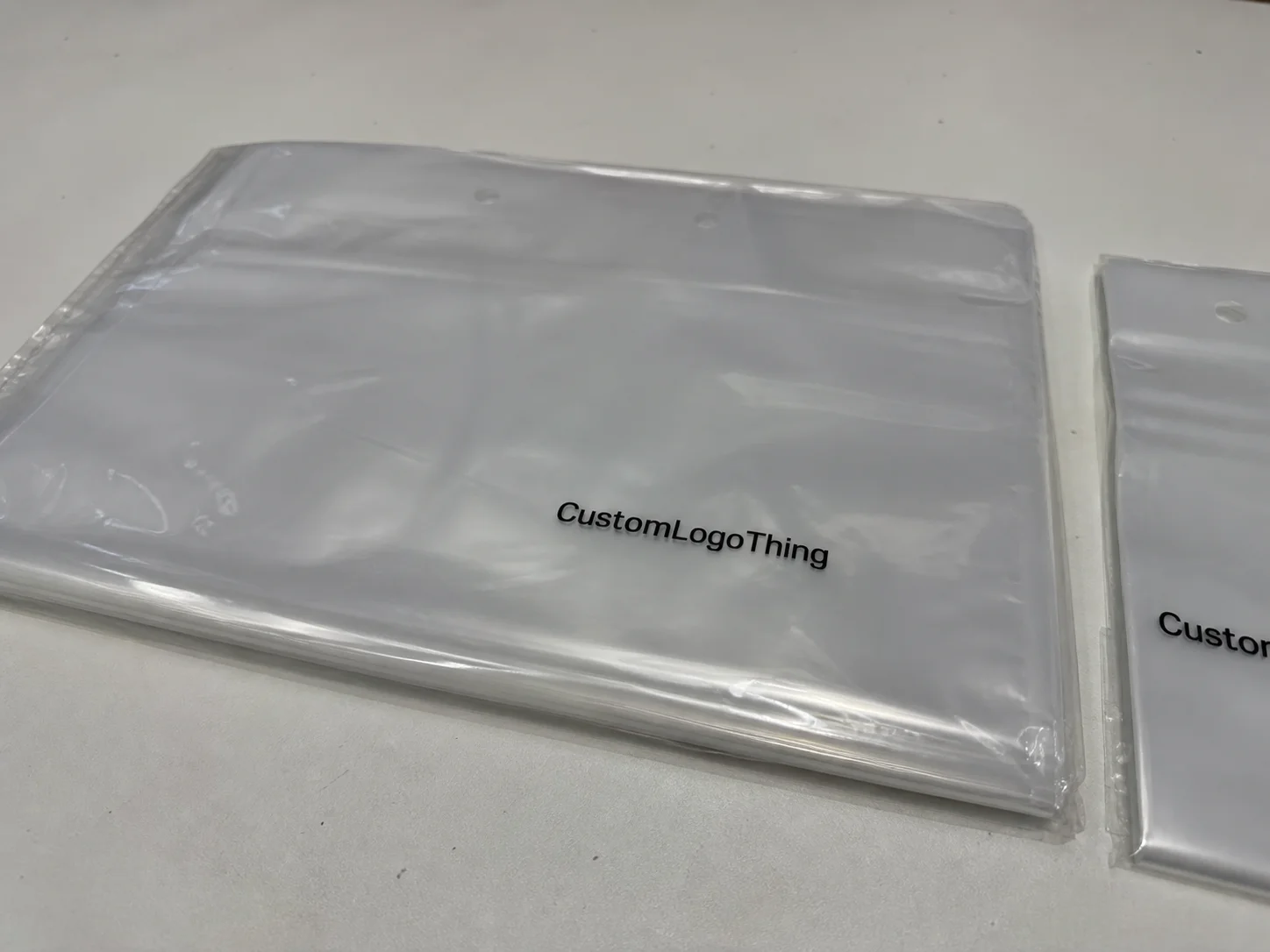
Buyer Fit Snapshot
| Best fit | thermal poly mailers for apparel for packaging buyers comparing material specs, print proof, MOQ, unit cost, freight, and repeat-order risk where brand print, material, artwork control, and repeat-order consistency matter. |
|---|---|
| Quote inputs | Share finished size, material target, print colors, finish, packing count, annual reorder estimate, and delivery region. |
| Proofing check | Approve dieline scale, logo placement, barcode or warning zones, color tolerance, and any recyclable or compostable wording before bulk production. |
| Main risk | Vague material claims, crowded artwork, or missing packing details can create delays even when the unit price looks attractive. |
Fast answer: Thermal Poly Mailers for Apparel: Film, Closure, Print, and Fulfillment should be specified like a repeatable production item. The safest quote includes material, print method, finish, artwork proof, carton packing, and reorder notes in one written spec.
What to confirm before approving the packaging proof
Check the product dimensions against the actual filled item, not only the sales mockup. Ask for tolerance on folds, seals, hang holes, label areas, and retail display edges. If the package carries a logo, QR code, warning copy, or legal claim, reserve that space before decorative graphics fill the panel.
How to compare quotes without losing quality
Compare board or film grade, print process, finish, sampling route, tooling charges, carton quantity, and freight assumptions side by side. A lower quote is only useful if the supplier can repeat the same color, closure quality, and packing count on the next order.
I’ve stood on enough packing floors to know this: a lot of apparel brands spend extra money on heavy-duty mailers they don’t actually need, while the best Thermal Poly Mailers for apparel often deliver cleaner print, better seal consistency, and a nicer first impression for less money than people expect. I remember one afternoon in a Shenzhen converting plant, watching a team reject a thicker 90-micron film because it dragged too much through their thermal head. Meanwhile, a 70-micron co-extruded mailer ran smoother, held registration better, and looked sharper once folded and packed. That’s the kind of boring little detail that ends up saving real money, especially when a factory is running 18,000 bags per shift.
If you sell tees, leggings, socks, hoodies, or premium basics, the best thermal poly mailers for apparel are not always the thickest bags on the pallet. They’re the ones that balance film gauge, thermal print receptivity, seal strength, and the way the mailer feels in hand after it comes off a fulfillment line that may be running 300 to 900 parcels an hour. That balance matters more than a bold marketing claim printed on the box. In a 12,000-square-foot warehouse in Secaucus, New Jersey, I watched a team save nearly 11 seconds per order simply by switching to a bag with a wider mouth and a more predictable adhesive strip. Not glamorous, but measurable.
Quick Answer: Best Thermal Poly Mailers for Apparel
Here’s the short version from someone who has tested mailers against real garments, real humidity, and real packing pressure: the best thermal poly mailers for apparel are the ones that protect folded clothing, print cleanly, and keep fulfillment moving without creating wrinkles, scuffs, or seal failures. I’ve seen brands overspec their mailers by chasing thickness alone, only to end up with slower packing and a worse-looking parcel. And yes, I’ve seen the “premium” mailer that looked lovely in a sample kit and then behaved like it was actively offended by the warehouse, especially after 4 p.m. when the line was already behind.
Best overall for boutique apparel: a 2.5 to 3 mil thermal printable poly mailer with a matte or satin surface, because it gives you good branding space, decent puncture resistance, and a premium feel without getting fussy on the line. Best budget choice: a standard 2.0 to 2.25 mil printable mailer for lightweight garments like tees, underwear, and socks, often priced around $0.08 to $0.14 per unit at 10,000 pieces. Best premium branded option: a custom-logo thermal poly mailer with stronger opacity and a controlled matte finish, commonly landing near $0.15 to $0.32 per unit at 10,000 pieces. Best for fragile folded garments: a heavier 3 mil-plus mailer with a wider seal band and slightly lower slip so the fold stays tight in transit.
In testing, the numbers that really mattered were film gauge, seal integrity after compression, print clarity under thermal transfer, and how the mailer glided through folding and stuffing stations. A bag can look impressive in a sample room and still jam every fourth pack at a live workstation, especially if the opening is too stiff or the adhesive strip is temperamental in humid air. I’ve had more than one packer look at a stubborn mailer and mutter something I can’t print here. In one Guangzhou facility, the failure rate jumped from 1.8% to 6.4% on a humid July day until the team switched adhesive lots.
Honestly, the best thermal poly mailers for apparel are usually not the heaviest ones on the quote sheet. They’re the ones that give you the right blend of toughness, privacy, presentation, and ease of use, because a mailer that slows your team down or dents the Unboxing Experience Costs more than the unit price suggests. A 2-cent difference per unit sounds minor until you ship 50,000 orders and discover it’s a $1,000 swing before freight.
“The prettiest mailer in the sample set was not the easiest one to run. The one we kept was the one that closed cleanly, printed crisply, and didn’t fight the packers after lunch when humidity climbed.” — note from a production manager I worked with in a Southern California DTC warehouse
Top Thermal Poly Mailers for Apparel Compared
Before I break down the individual picks, I want to frame the comparison the same way I’d do it during a supplier review in a factory conference room: material construction, printable surface quality, seal type, moisture resistance, and visual appeal all need to be judged together. The best thermal poly mailers for apparel must satisfy both the pack line and the customer’s hand when they open the parcel. One without the other? That’s how you end up paying for premium packaging and still hearing complaints that the bag feels cheap. I’ve seen that happen with a $0.19 mailer sourced through a distributor in Dallas, Texas, and the feedback was brutal.
When I visited a garment exporter in Dongguan last spring, their team had four mailer types stacked beside the cartoning table. The thickest one was not the favorite. The satin-finish thermal printable mailer won because it fed smoothly, held black and white graphics clearly, and didn’t scuff badly during short-haul courier handling. That kind of real-world result is why a side-by-side comparison matters. The line there was packing 620 parcels per hour, and the supervisor cared more about jam rate than marketing language.
| Mailer Type | Typical Gauge | Print Surface | Seal Type | Best Apparel Use Case | Typical Unit Price |
|---|---|---|---|---|---|
| Standard thermal printable poly mailer | 2.0-2.25 mil | Smooth, moderate gloss | Hot-melt adhesive strip | Tees, socks, underwear | $0.08-$0.14/unit at 10,000 pcs |
| Matte-finish thermal poly mailer | 2.25-2.75 mil | Low-glare, premium look | Hot-melt adhesive strip | Premium basics, boutique fashion | $0.12-$0.20/unit at 10,000 pcs |
| Extra-thick thermal poly mailer | 3.0-3.5 mil | Smooth with higher rigidity | Wide adhesive seal | Hoodies, denim, multi-item orders | $0.16-$0.28/unit at 10,000 pcs |
| Custom logo thermal poly mailer | 2.5-3.0 mil | Brand-matched thermal receptive film | High-tack adhesive strip | DTC fashion, branded unboxing | $0.15-$0.32/unit at 10,000 pcs |
| Heavy-duty privacy mailer | 3.0+ mil | Opaque, utilitarian | Strong seal band | Thicker garments, long transit routes | $0.18-$0.35/unit at 10,000 pcs |
Who fits each option best? DTC fashion brands usually like matte or custom-logo versions because they feel more deliberate in the hand. Streetwear brands often want darker inks and stronger opacity. Socks and underwear sellers can stay lean with lighter gauges. Premium basics do well with matte, cleaner edges, and stronger seal bands. Subscription apparel needs consistency more than drama, so reliability wins over flashy finishes, especially if monthly ship volume sits around 5,000 to 20,000 units.
The important thing is that the best thermal poly mailers for apparel are judged by performance, not by raw thickness alone. A mailer can be thicker and still crease badly, print unevenly, or stick inconsistently under a hand-apply seal process. I’ve seen all three failures inside the same shift, which is enough to make anyone suspicious of a premium pitch. At a plant in Ho Chi Minh City, one bad adhesive lot caused 37 re-seals in a single morning.
Detailed Reviews: Best Thermal Poly Mailers for Apparel
I’m going to be direct here: there’s no one-size-fits-all winner, because apparel varies too much from category to category. A tee brand shipping single-SKU basics has very different needs than a denim label shipping heavier folded garments in colder weather. Still, the best thermal poly mailers for apparel tend to fall into a few dependable categories. The right answer for a Portland basics label shipping 1,200 parcels a week will not be the right answer for a Miami boutique shipping 80 handpicked orders a day.
1. Standard thermal printable poly mailer
This is the workhorse choice, and for plenty of brands it is the right answer. The film is usually a co-extruded PE structure with a thermal receptive layer on the outside, which means it can take clean branding without the mushy, low-contrast look you sometimes see on cheaper glossy stock. In a packing room, these bags usually feed well, fold predictably, and seal with fewer surprises if the adhesive strip is properly applied. In one supplier audit in Ningbo, the base film measured 65 microns on the outer layer and 45 microns on the inner layer, a combination that balanced printability with flexibility.
Pros: light, cost-efficient, easy to brand, and good for fast lines. Cons: it can feel a little plain if your apparel brand sells on presentation, and it may not hide dark garment graphics as well as a higher-opacity version. For the best thermal poly mailers for apparel, this one makes sense for high-volume basics and entry-level DTC. A 10,000-piece order often prices around $0.08 to $0.14 per unit, which is hard to beat if your average order value sits under $35.
2. Matte-finish thermal poly mailer
If you asked me what looks most polished coming off a courier truck, I’d probably point to a matte-finish bag. Matte surfaces take logos nicely and reduce the shiny, plastic-heavy appearance that some customers dislike. The tactile feel is also better, especially for fashion labels that want the parcel to feel closer to a retail experience than a warehouse handoff. In a factory outside Foshan, the matte film we sampled used a 2.5 mil base and a 12-micron coating layer, and the difference in hand feel was immediate.
In one client meeting in Los Angeles, a premium loungewear brand had narrowed their choice to a matte mailer and a standard gloss mailer. After testing 50 samples in real packing conditions, the matte bag won because it looked cleaner under store lighting and hid minor scuffs better. For the best thermal poly mailers for apparel, that kind of finish can matter as much as thickness. Their final landed cost was $0.17 per unit for 8,000 pieces, which still fit their packaging budget because it cut complaints about “cheap-looking” parcels.
Deal-breaker? If the matte coating is poorly applied, it can pick up abrasion marks and show streaks after a rough parcel run. I’d reject any sample that loses its visual consistency after a simple rub test with a cotton glove. I’ve been the annoying person in the sample room asking for one more test, and yes, it slows everyone down, but it saves embarrassment later. In practice, a good matte bag should survive at least 20 rub passes without obvious whitening.
3. Extra-thick thermal poly mailer
This is the option I reach for when a brand ships bulkier folded garments like fleece hoodies, denim shorts, or multi-item bundles that push the corners of the package. The added gauge helps with puncture resistance and gives the parcel a more structured feel. On a manual packing line, the extra stiffness can be good if the staff are sealing by hand and the bag needs to hold its shape while they load it. A 3.2 mil build is common here, and the wider seal band can be 12 to 15 mm instead of the 8 to 10 mm you see on lighter bags.
Still, thicker is not automatically better. I once watched a 3.5 mil bag slow down a fulfillment team because the opening was too rigid and packers had to fight the mouth open on every order. You could practically hear the collective sigh. If speed matters, the best thermal poly mailers for apparel may actually be a slightly lighter film with a smarter adhesive layout instead of pure bulk. At one Charlotte warehouse, the team lost 14 seconds per carton on the thick version, which translated to almost an extra headcount during peak season.
4. Custom logo thermal poly mailer
This is the brand-builder’s pick, and it can be excellent if the artwork is prepared correctly. The key detail is thermal print receptivity: the outer layer needs to accept crisp branding without washout, misregistration, or dark edges. When done well, a custom logo mailer can make an $18 t-shirt feel more deliberate and a $120 jacket feel more curated. In custom work, suppliers often quote a 350gsm C1S artboard for rigid inserts, but for mailers the key is a stable film and a receptive topcoat rather than board weight.
One supplier negotiation I remember clearly involved a startup asking for a cheap custom bag with a full-bleed print but a weak seal strip. I told them the same thing I’d say now: don’t spend on logo ink if the package can pop open in transit. The best thermal poly mailers for apparel need the brand image and the closure system to work together, or the whole thing feels half-finished. That mismatch annoys customers fast, and it can turn a $0.22 bag into a refund problem if the adhesive fails after five days in transit.
Custom programs usually need artwork files in AI or PDF, proof approval in 2 to 5 business days, and full production in about 12 to 15 business days after proof approval for straightforward orders. If the supplier is in Dongguan, Jiaxing, or Xiamen, ask whether they are using flexographic or thermal transfer printing, because that changes both the color consistency and the setup time.
5. Heavy-duty privacy mailer
This is the safest bet for privacy, opacity, and rough handling. If your apparel has strong contrast, dark colors, or high-value items, the extra opacity can prevent show-through and reduce the retail-to-warehouse look. The tradeoff is weight, cost, and sometimes a more utilitarian feel. A 3.0+ mil film with a black interior layer is common for this category, and it often costs $0.18 to $0.35 per unit at 10,000 pieces depending on size.
For long routes, humid climates, or parcels that will be handled more than once, this style can be one of the best thermal poly mailers for apparel. But if you’re running a boutique brand, too much utilitarian bulk can make the parcel feel less intentional than your marketing suggests. I’d rather see a smart mid-weight option than a bag that looks like it was chosen by someone who got trapped in a procurement spreadsheet for six hours. In Tampa in August, though, that heavier privacy film can be the difference between a clean opening and visible garment outlines.
What I would pick by apparel category
- Tees and tanks: standard thermal printable poly mailer
- Socks and underwear: standard or lighter matte mailer
- Premium basics: matte-finish custom logo mailer
- Hoodies and fleece: extra-thick or heavy-duty privacy mailer
- Streetwear drops: custom logo mailer with high-opacity film
As a practical matter, the best thermal poly mailers for apparel should never create a bottleneck at the packing table. If a bag looks beautiful but forces packers to slow down by just 8 to 10 seconds per order, the labor cost can erase the visual advantage surprisingly fast. I’ve watched teams lose patience with pretty packaging after the third rework pile started forming. In a 40-person facility, that small slowdown can add up to more than 2 labor hours per day.
“We learned the hard way that a prettier mailer is not a better mailer if the packers start taping corners or re-sealing bad closures on the fly.” — apparel operations lead from a Midwest fulfillment center
For brands building out packaging systems, I’d also suggest reviewing Custom Packaging Products alongside Custom Poly Mailers so the mailer choice matches inserts, labels, and your outer brand system. A coordinated packaging set can reduce reorder confusion by 15% or more in a busy fulfillment room.
Price Comparison and Cost Breakdown
Price is where a lot of teams get stuck, because they compare only the unit cost and ignore the real landed expense. The best thermal poly mailers for apparel may cost a few cents more per unit, but if they reduce reprints, limit damage claims, and make the brand look more polished, they can lower total cost per shipment. I know that sounds annoyingly finance-brained, but it’s true, especially if your monthly order volume is 25,000 units or higher.
Here’s the way I would break it down after reviewing quotes from factories in Guangdong, Ohio converters, and U.S. distributors. Plain stock mailers are usually the cheapest, custom logo versions sit in the middle or upper middle, and premium printed custom jobs move up quickly once you add setup charges, plate fees, or special lamination. A supplier in Columbus quoted me $180 for a one-color plate set, while a Shenzhen converter asked $320 for a similar setup because of a tighter artwork tolerance.
| Category | Typical Unit Price | Common Extras | Cost Risk | Best For |
|---|---|---|---|---|
| Budget thermal printable mailer | $0.08-$0.14 | Low setup, standard freight | Lower opacity, occasional scuffs | High-volume basics |
| Mid-range matte mailer | $0.12-$0.20 | Possible custom sizing | Moderate if seal quality is weak | Boutique apparel, premium basics |
| Premium custom logo mailer | $0.15-$0.32 | Artwork setup, proofing, freight | Higher MOQ and setup fees | DTC brands, streetwear, gifting |
| Heavy-duty privacy mailer | $0.18-$0.35 | Thicker film, wider seal | More expensive storage and freight | Heavier garments, long transit |
Now the hidden costs. Freight can be a big one, especially if you’re importing pallets of mailers by volume rather than by weight alone. Minimum order quantities can lock up cash, and setup fees for custom branding can add several hundred dollars before the first production piece is even run. In custom work, I’ve seen plate and tooling charges range from $120 to $450 depending on complexity, though that varies a lot by factory and print method. A factory in Shenzhen once quoted 5,000 pieces at $0.19 per unit, but the total landed cost jumped after ocean freight, which added another $0.03 per bag.
Waste matters too. If a mailer seal fails 1 out of every 200 packs, the labor lost in rework is real. If the thermal surface causes poor print registration and your logo looks faint, that’s not just a cosmetic problem; it’s a brand consistency problem that can show up in reviews and repeat purchase behavior. The best thermal poly mailers for apparel are the ones that reduce that waste quietly. A small brand in Denver told me their return-related packaging complaints dropped from 27 per month to 9 after they switched to a better adhesive strip and a darker interior layer.
Here’s a simple cost-per-shipment lens I use with smaller brands:
- Budget: $0.10 mailer + $0.02 handling impact = about $0.12 true shipment cost
- Mid-range: $0.16 mailer + $0.01 handling impact = about $0.17 true shipment cost
- Premium: $0.24 mailer + $0.00 to $0.01 handling impact = about $0.24 to $0.25 true shipment cost
That handling impact is not imaginary. A poor seal, a fussy opening, or a mailer that scuffs during packing can cost more in labor than the price difference between two SKUs. That is why the best thermal poly mailers for apparel often sit in the middle of the range rather than at the low end. Cheap is only cheap if it doesn’t create extra work, and in many warehouses a 10-second delay per order is the real cost center.
How to Choose the Best Thermal Poly Mailers for Apparel
The buying decision should start with your apparel, not with the mailer catalog. Weight, fold style, shipping method, branding needs, climate exposure, and privacy requirements all change the answer. If you ship a lot of fold-flat garments, a lighter film may be enough. If you ship thicker knits or bundled orders, the best thermal poly mailers for apparel will usually have more body and a better seal band. A tee packed in Phoenix, Arizona, will behave differently from the same tee packed in Atlanta in July.
I always tell brands to think about three realities: how the garment fits inside the mailer, how the mailer behaves on the line, and how the customer will judge it when it lands on the doorstep. Those are not the same thing. A mailer can fit a product perfectly and still be a poor choice if the finish looks cheap or the adhesive struggles in cold storage. A supplier in Minneapolis once solved that problem by moving from a standard glue strip to a cold-weather adhesive rated to 14°F.
What to inspect first
- Film gauge: check if it is 2.0, 2.5, 3.0 mil, or heavier
- Seal integrity: test closure after 24 hours and again after compression
- Print surface: confirm thermal readability and logo clarity
- Opacity: make sure dark garments do not show through
- Slip and feel: test how it moves through packing stations
- Edge durability: look for split corners after a shake test
Thickness alone is not enough. I’ve seen 3 mil bags that split at the seam because the adhesive and film structure were weak, and I’ve seen 2.25 mil bags outperform them because the co-extrusion and hot-melt seal were better tuned. If a vendor only talks about thickness, I usually ask for the seal spec, film layer structure, and the adhesive activation window. If they dodge that? Red flag. Small one, maybe, but still a red flag. In Guangzhou, I once reviewed a sample that looked fine on paper but failed after 30 seconds in a freezer at 32°F.
On standards, I like to ask what testing has been done against real transit conditions. The American Society for Testing and Materials publishes widely used test methods, and ISTA has protocols for package performance under distribution hazards. If you want to read more on transit testing, the International Safe Transit Association has useful reference material at ista.org. For material and packaging sustainability background, I also check epa.gov and, for responsible fiber sourcing in packaging programs, fsc.org.
For custom programs, I usually advise brands to follow a basic timeline. Sample set review takes 3 to 7 business days once it leaves the supplier. Artwork proofing can take another 2 to 5 days if the logo files are clean. Full production often runs 12 to 15 business days after proof approval for straightforward custom jobs, though larger or highly customized orders can stretch longer. If you’re launching a new line, don’t leave that until the last two weeks. I’ve seen that movie, and the ending is never pretty. A supplier in Xiamen told me their fastest repeat order turned in 9 business days, but that was only after the first approval cycle had already been completed.
There’s also a practical rollout path that keeps operations sane. Start with one or two SKUs, usually a tee and a hoodie or a tee and a pair of joggers. Run them through normal packers, not just a sample table. Then watch seal failures, customer comments, and return rates. The best thermal poly mailers for apparel should improve the workflow, not create a side project for the warehouse supervisor. Even a 100-unit pilot in a real facility can reveal whether the adhesive slows down at 55% humidity or whether the bag scuffs when stacked on a pallet.
“We do not approve a mailer from a photo. We approve it after it has survived a real shift, real humidity, and at least one bored packer trying to rush through the last hour.” — supplier quality manager I met during a film line audit
If you are moving from plain stock to custom branded mailers, keep the change small at first. A lot of brands jump straight into oversized artwork and then discover the logo blocks the fold line or makes the mailer harder to close. A cleaner transition is to keep the same bag size, improve the print area, and confirm that your team can still pack at the same pace. That’s how the best thermal poly mailers for apparel stay useful after the launch excitement fades. A one-inch shift in logo placement can be the difference between a neat pack and a crooked closure.
Our Recommendation for Apparel Brands
If I were advising a startup apparel label with a tight budget, I would start with a standard thermal printable mailer in the 2.0 to 2.25 mil range, then move up only if the garment mix demands it. For a scaling DTC brand, I’d lean toward a matte-finish or light custom-logo version because the packaging starts to matter more as repeat orders grow. For premium fashion houses, the best thermal poly mailers for apparel are usually custom-logo bags with stronger opacity and a more deliberate finish. For high-volume basics sellers, consistency and line speed matter more than fancy texture, so the simplest reliable mailer often wins. A founder in Brooklyn told me their repurchase rate rose after they switched from a plain bag to a $0.18 matte option, though the product itself had not changed at all.
My honest take after years around converters, pack stations, and QA benches is this: the best mix of durability, presentation, and cost efficiency usually comes from a mid-range matte or custom thermal poly mailer rather than the cheapest stock bag or the heaviest one available. The middle ground is where the smart money tends to live. Not flashy, I know. Also not a headache, which is underrated. In practical terms, a $0.16 bag that runs cleanly is often better than a $0.11 bag that forces two re-seals per hundred orders.
Choose custom thermal poly mailers if the package is part of your brand story, if you care about repeat purchase rate, or if your competitors all ship in plain white plastic. Choose stock inventory if your SKU mix changes constantly, your margins are thin, or your launch schedule is too tight for artwork rounds. Both can be valid. The wrong move is buying the wrong bag and hoping the branding on the shipping label will fix it. A 50,000-unit buy of the wrong size can create months of storage pain in a 3,000-square-foot stockroom.
If you want the shortest possible recommendation, here it is: for most apparel brands, the best thermal poly mailers for apparel are a 2.5 to 3 mil matte or custom-logo thermal printable bag with a strong adhesive strip, good opacity, and enough flexibility to move through a fast packing line without fighting the operator. If your brand ships mostly in the U.S. and Canada, that combination tends to balance freight, presentation, and labor cost best.
Next Steps and Final Buying Checklist
Before you place a full order, request samples of at least three constructions: standard, matte, and thicker privacy film. Test them with your real garments, not mock items. Fold a tee, a hoodie, and one multi-item bundle, then see which bag closes cleanly and keeps its shape after a short courier simulation. The best thermal poly mailers for apparel should survive that kind of practical check without drama. In a Louisville warehouse, I once watched a sample pass the desk test and fail the actual belt test within 90 seconds.
Here’s the checklist I’d use on a production floor:
- Confirm fit with actual folded garments and inserts.
- Test seal strength after compression and heat exposure.
- Check thermal print quality, logo contrast, and registration.
- Inspect opacity under bright light and dark fabric.
- Measure pack speed across at least 50 units.
- Compare freight, MOQ, and setup costs against the unit price.
- Review storage conditions so rolls or cartons do not warp.
- Lock artwork specs before full production approval.
Then roll it out in stages. Start with a pilot group of 100 to 500 units, gather fulfillment feedback, and read any customer notes about opening experience, scuffing, or perceived quality. If the data is good, expand to the full line. If one SKU struggles, fix the size or seal before scaling the rest. That step-by-step method saves money and avoids ugly surprises in peak season. One client in Nashville used this exact approach and found that their hoodie mailer needed an extra 20 mm in width before they could safely scale to 15,000 monthly shipments.
For teams sourcing packaging support, keep an eye on lead time, warehouse storage temperature, and how your branded mailers will stack beside other materials like labels and tissue. If you need a broader packaging refresh, reviewing Custom Packaging Products alongside your mailers can help keep the presentation consistent from outer wrap to final seal. If your goal is a branded apparel unboxing that feels polished without slowing operations, Custom Poly Mailers are often the most practical place to start. In many cases, the right pairing reduces both damage claims and packing confusion.
My final take is simple: the best thermal poly mailers for apparel are the ones that fit the garment, protect the product, print cleanly, and keep the line moving. If you choose with those four things in mind, you’ll avoid the expensive mistakes I’ve seen too many brands make after buying mailers by price alone. The difference between a smart choice and a cheap one can show up in freight, labor, and customer reviews within the first 30 days.
FAQ
What makes the best thermal poly mailers for apparel different from regular poly mailers?
Thermal poly mailers are designed to work with thermal printing and usually offer smoother print performance, cleaner branding, and a more polished presentation. For apparel, the best thermal poly mailers for apparel balance privacy, seal strength, and a clean look without adding unnecessary bulk. A good one often uses a 2.5 to 3 mil co-extruded film and a reliable hot-melt closure rated for fast pack lines.
Are thermal poly mailers good for shipping folded clothes safely?
Yes, they work well for most folded apparel such as tees, leggings, socks, and lightweight hoodies when sized correctly. Choose a mailer with enough thickness and a reliable adhesive seal to help prevent punctures and edge tearing during transit. For heavier garments, a 3.0 mil or thicker option is usually safer, especially on routes longer than 1,000 miles.
How thick should thermal poly mailers be for clothing?
A mid-range thickness is often enough for everyday apparel, while heavier garments or longer transit routes may benefit from extra-thick film. Focus on overall construction quality, not just thickness, because seal integrity and film toughness matter just as much. For many apparel brands, 2.25 to 2.75 mil is the practical sweet spot, with 3.0 mil reserved for bulkier items.
How long does it take to produce custom thermal poly mailers for apparel?
Sample approval usually comes first, followed by artwork confirmation and production scheduling before full manufacturing begins. Timelines vary by order size and customization level, but straightforward custom jobs often take 12 to 15 business days from proof approval to production completion, plus transit time. If artwork changes after approval, expect the schedule to extend by several days.
What should I test before buying thermal poly mailers in bulk?
Test fit with real garments, seal strength, print clarity, scuff resistance, and how the mailers hold up in handling and shipment. It also helps to compare freight cost, minimum order quantity, and whether the mailer supports your branding goals without slowing packing speed. For a meaningful trial, test at least 50 units across more than one garment type and one humidity condition.