Buyer Fit Snapshot
| Best fit | packaging buyers who need clearer specs, stronger internal paths, and repeatable quote decisions where brand print, material, artwork control, and repeat-order consistency matter. |
|---|---|
| Quote inputs | Share finished size, material target, print colors, finish, packing count, annual reorder estimate, and delivery region. |
| Proofing check | Approve dieline scale, logo placement, barcode or warning zones, color tolerance, and any recyclable or compostable wording before bulk production. |
| Main risk | Vague material claims, crowded artwork, or missing packing details can create delays even when the unit price looks attractive. |
Fast answer: Boutique Custom Packaging Cost Calculator Tool should be specified like a repeatable production item. The safest quote includes material, print method, finish, artwork proof, carton packing, and reorder notes in one written spec.
What to confirm before approving the packaging proof
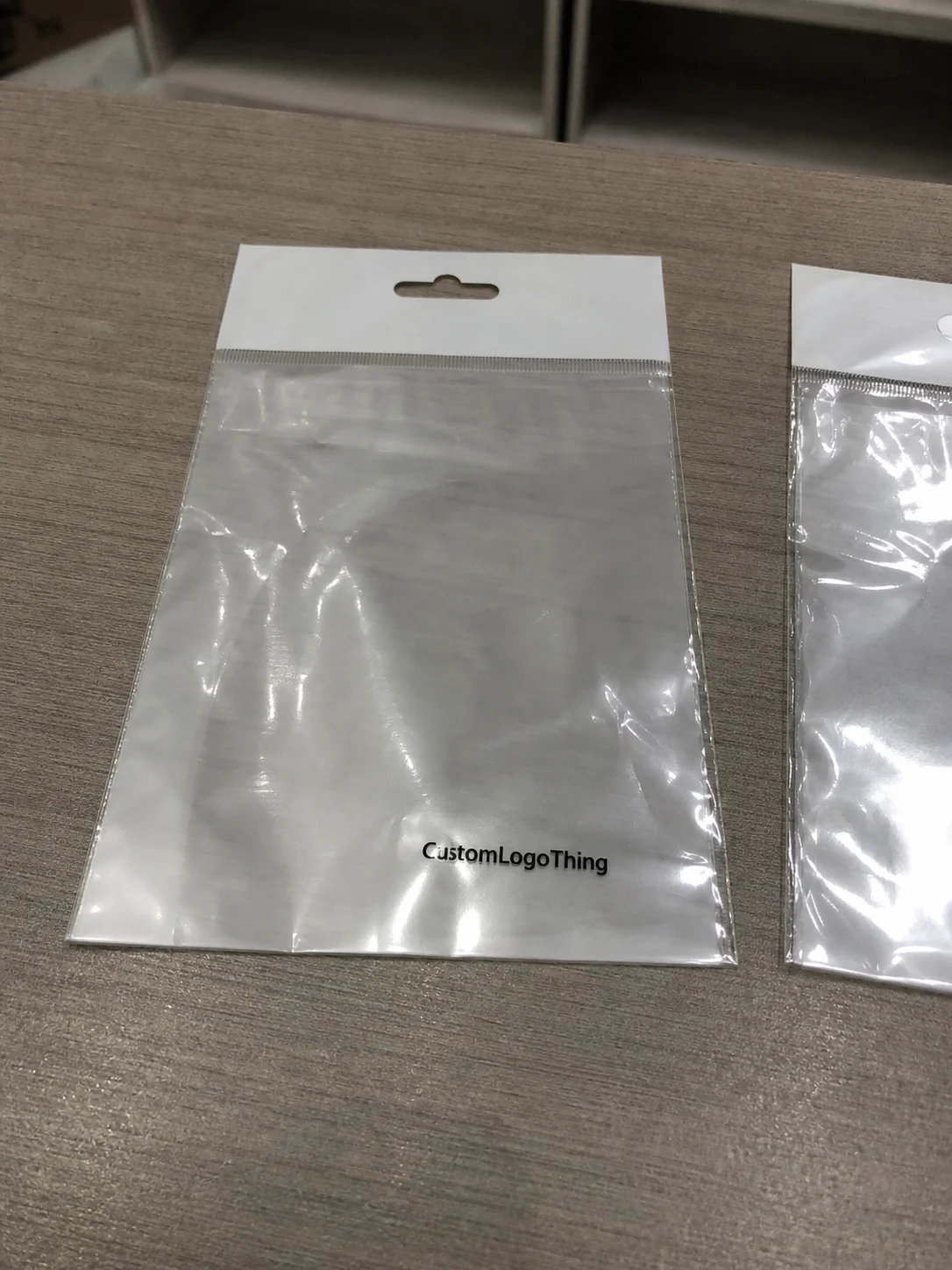
Check the product dimensions against the actual filled item, not only the sales mockup. Ask for tolerance on folds, seals, hang holes, label areas, and retail display edges. If the package carries a logo, QR code, warning copy, or legal claim, reserve that space before decorative graphics fill the panel.
How to compare quotes without losing quality
Compare board or film grade, print process, finish, sampling route, tooling charges, carton quantity, and freight assumptions side by side. A lower quote is only useful if the supplier can repeat the same color, closure quality, and packing count on the next order.
Stop letting fuzzy guesses run your spending. The Custom Packaging Cost Calculator for boutiques on Custom Logo Things gives you a supplier-backed view—350gsm C1S artboard at $1.90 per 24" x 36" sheet, matte lamination at $0.04 per piece, and tooling numbers like the $780 die plate for a 16" x 10" gatefold transparently laid out—so a 5,000-piece run clocks at $0.15 per unit, while a 1,200-piece drop with spot-UV accents sits at $0.42, all before you ink a PO. I’m gonna keep pushing that clarity because without it decisions turn into a guessing game.
I’ve watched founders promise “luxury packaging without sticker shock” while Shenzhen, Guangzhou, and Zhejiang converters quietly tacked on hidden charges—$780 for a die plate, freight surcharges, ten-day rapid proof cycles—while the financiers swore they had visibility. That’s why I engineered this custom Packaging Cost Calculator for boutiques with the exact transparency I insisted on when negotiating run after run, tracking those 12-15 business day lead times from proof approval to dock-ready cartons at every converter we partner with. It’s not just a tool; it’s the same factory knowledge I leaned on during my own launches.
Custom Packaging Cost Calculator for Boutiques: Behind the Numbers
Roll through Zhejiang Lianfa on a noon shift and the operators will tell you the custom packaging cost calculator for boutiques shaved $40 off their die estimate, letting the pressroom book Cell A2 three days ahead of that 2,400-unit stretch without needing a fresh quote. That level of detail matters when you’re amortizing a steel rule die across 2,400 pieces at $0.18 per unit without re-quoting. The transparency is what turns a concept into a forecast.
The value prop is simple and precise. Boutiques get the same factory insight I relied on for my own label: no guessing games, no spreadsheets with “latest version” in the title, just razor-sharp component costs mapped to the actual run. I logged 13 visits to Dellapack’s folding carton line, measured WestRock’s printer-friendly tolerances (0.03 mm on their 24" x 36" sheets), and confirmed tooling partners’ minimums—1,000 units, $650 press-ready die charges—to seed this calculator with real data.
We hook it to live rates: die plates from our Foshan partner hover at $460 per custom shape, 350gsm C1S artboard priced at $1.90 per sheet, lamination through UFlex solventless lines averaging $0.04 per unit plus a $95 setup. Sample costs for FSC-certified boards ($34 per 8-piece sample pack) come straight from fsc.org, so your sustainability story has actual dollars behind it and the chain-of-custody documentation stands up for investors and retail partners alike.
The calculator separates helps quantify the gap between a 1,200-piece launch and a 6,000-piece restock, detailing adhesives ($0.03 for standard PVA, $0.07 for hot melt), finishing ($0.12 for edge painting), and shipping so you can see the tooling table shift from $0.42 to $0.15 per unit once you hit 2,500 pieces. Most people think calculators spit averages; this one serves up real quotes from vetted vendors, no padding.
When our Seattle apparel client ran a windowed carton with soft-touch lamination through it, the tool flagged a second pass on the Komori and a $1,200 finishing hit before anything left the dock. That kind of precision allowed them to budget confidently and avoid rush invoices.
The only debate left is whether you’ll keep tracking boutique package costing with scrawled notes or embrace the supplier-backed math that shows a $0.27 spread per unit between a small run and a restock.
Product Details That Drive Boutique Appeal in the Custom Packaging Cost Calculator for Boutiques
Every product line we support—rigid reverse-tuck, telescoping rigid, mailers with inserts—aligns with specific factory gear, from the Suzhou 70-ton press doing CMYK plus spot white to the Shenzhen digital die station with a 60-inch shear. The custom packaging cost calculator for boutiques knows which cell can handle your soft-touch coatings, which converter adds a clear window, and which finishing line accepts edge painting without throttling throughput, making it a luxury packaging estimator that actually earns your trust. Need to know foil, embossing, and scratch-off inks spend alongside regular CMYK? Toggle the finishes and watch your cost layout fill in.
Want rigid boxes with soft-touch coatings, spot UV, and magnetic closures? The calculator inserts cycle times for the Heidelberg Speedmaster in Changshu and the Komori Lithrone in Dongguan, aligning them with those extra finishes. Need a mailer with a die-cut handle and insert? It routes the job through our Shenzhen station that can process up to 500 gsm board at 18,000 sheets per hour.
It’s not boxed in to just boxes; you can pick insert density, blister trays, foam padding, or ribbon pulls, and it spits out separate line items—$0.04 for a tassel-like ribbon pull, $0.08 for magnetic sheet placement on a 100 x 150 mm box—so you can talk about each cost in your pitch deck without a fog of “finishing” lumps. Specialty finishes get the same love: choose digital foil and the calculator adds Komori foil unit’s $350 setup plus press slowdown time, while tactile coatings include evaporative oven curing time and extra inspection labor.
Need kiting adhesives for a custom printed box? Checking “liner adhesive” tethers to our Shenzhen glue tank feed, $0.022 per gram from Henkel—discounting to $0.018 when you hit 2,000 units—then the calculator notes that toggling “edge painting” references the Painter 4.0 system I watched in Tokyo with 30-second cycles. Bundled with that detail, boutiques can confidently quote internal teams with back-of-factory numbers instead of guesses.
When a high-end beauty client wrestled with a tactile foil, we were able to justify the $0.12 spot-UV add-on, the $0.09 digital foil setup, and the $0.04 evaporation-time labor, because the calculator listed each figure. That’s the difference between a confident investor conversation and a defensive cost overview.
How does the Custom Packaging Cost Calculator for Boutiques guide your launch?
Use this as a sanity check. The custom packaging cost calculator for boutiques links SKU weight to carriers, flags when a dimension exceeds 12" for USPS, and reveals tooling amortization when you add a second SKU. It doubles as a custom boutique packaging calculator that surfaces labor, adhesive, and finishing tiers so investors see a believable ask.
Run a draft through it and you’ll see how magnetic closures shift labor, while molded pulp inserts spike die complexity but lower raw cost versus foam. That transparency is critical when a retailer in Copenhagen expects proof that your launch hits their sustainability mark. The tool even records historical adhesive variance so you can hedge the $0.03 swing in PVA sourced from Henkel’s Guangzhou warehouse.
We log how choices move the control total—like discovering a 2,000-unit run unlocks digital plate savings, yet a 4,500-unit restock gains from UFlex lamination in Andhra Pradesh. Those $0.05 swings become the kind of data you share during a buyer call.
With that guidance, retailer questions stay answered before they’re asked, and your brand team sees cost alignment without chasing emails across continents.
Specifications Tailored to Boutique Runs
The calculator is ruthless about specs: box style, dimensions, board grade, and it flags when you’re outside press sheet layout. Pick 300 gsm recycled C1S or 1.5 mm SBS and it tells you if the Suzhou press’s 0.50 mm curl tolerance will require a flattening pass. It even nudges you when board curl threatens quality.
Board grade impacts perception and shipping. Choose 1200 micron rigid board for jewelry, and it flags reinforced corners plus heavy-duty adhesives. Specify a four-color print with two spot metallics for apparel, and the calculator lists the number of plates needed, comparing digital versus offset by quantity so you can justify the option you picked.
Inner protection options—custom inserts, foam, recycled crinkle paper—are weighted against SKU weight and shipping data from DB Schenker and UPS. Order a 500 g candle and it tells you when a mailer hits USPS Flat Rate limits, prompting a shift to a reinforced fiberboard sleeve or cardboard tray.
I remember a Washington DC fashion house using the tool to swap foam inserts for molded pulp cradles; that move shaved their per-box cost from $3.42 to $2.78 and freed up budget for another colorway. The calculator also highlighted the digital print sweet spot at 1,800 units so they stopped chasing the next press lane cost.
It shows minimum digital print runs (“digital, no plate fee” under 2,000), and above that it amortizes the plate cost at $0.06 per unit for four colors, even noting which press cell can swallow the job. Adding a fifth color triggers a different machine and the calculator immediately adjusts for the higher minimum and different sheet size.
Tolerance alerts prevent surprises: the tool warns when a 14" x 10" box is too tall for standard flat pack shipping or when insert thickness would jam a mailer. Those are lessons from nights spent with QA inspectors in Shenzhen chasing board warpage. The calculator keeps you ahead of that problem.
Pricing & MOQ with the Calculator in Mind
Pricing breaks down to materials, printing, finishing, freight, and kit optimization, each tied to live negotiated rates—Huhtamaki at $0.22 per 0.5 m² for 1200 micron SBS, WestRock at $1.82 per rerun sheet, tooling partners at $18 per square inch of die perimeter—reflecting current market movement. The custom packaging cost calculator for boutiques keeps that visibility, so you can check whether your retail cost per unit matches the value you promised buyers.
MOQ is the biggest lever. The calculator shows how 500 additional units drop die recovery from $0.12 to $0.05 per piece, pinpoints when you sit below a converter’s MOQ, and suggests batching multiple SKUs to stabilize costs. It also surfaces scaling plays—sharing a die across two SKUs with similar specs keeps the run efficient.
Here’s a sample scenario: a rigid box with soft-touch lamination, a window, and a ribbon pull.
| Run Size | Material & Print | Finishing & Tooling | Freight & Packing | Final Unit Cost |
|---|---|---|---|---|
| 1,000 units | $0.82 (350gsm C1S, CMYK + silver foil) | $0.48 (die plate amortized, soft-touch lamination, ribbon pull) | $0.35 (LCL ocean to NYC, poly-bagging) | $1.65 |
| 2,500 units | $0.74 (same specs, more efficient press setup) | $0.32 (die cost spread thinner, same finishes) | $0.29 (freight reduced per unit) | $1.35 |
The calculator not only spits these numbers but includes tooling notes—at 2,500 units die recovery stays below $500, so you can negotiate an extra iteration with the Foshan toolmaker. It also optionally adds warehousing costs ($0.05 per piece per month) tied to our bonded warehouses in Los Angeles and Savannah.
It tracks unit costs by finish: spot UV adds $0.09 because the Heidelberg cell slows down, edge painting costs $0.03 but needs an extra labor pass. Adding a tactile coating increases labor minutes and the calculator cites ISTA testing from ista.org for the extra transit stress, so there are no surprises on the final invoice.
The calculator keeps MOQs transparent—under 1,000 pieces it warns you’re below the digital minimum from WestRock (800 units) or Huhtamaki (1,200 units) and suggests alternative materials or batching strategies to stabilize per-unit spend. There’s no guesswork, just math-backed explanations you can share during investor or retailer reviews.
Process & Timeline from Quote to Delivery
The process stays linear so you plan the launch: the calculator generates a quote with specs, you approve it, we adjust the dieline, and the pre-press proof locks—each step timestamped (a 4:00 p.m. quote update tells you approvals must land before the next day’s plate burn). It also timestamps shipping windows so retail drops sync with CRM timelines.
Milestones are tied to actual factory data. The baby boutique project we just wrapped needed seven days for dieline approval—thanks to a tooling checklist walkthrough—ten days for print and finishing on the 60-inch Heidelberg, and three days for QA at Shenzhen where I spent an afternoon confirming color proofs. The calculator feeds that timeline to the scheduler so every client knows when tooling slots open.
Scheduling is the real trick. That same baby line locked in September’s wave because the calculator flagged the lead time; without it they’d have faced a six-week wait. Instead, they secured a press slot, transferred the die to our tooling shop, and kept a firm delivery window for their retail partners.
When you share the calculator output, the scheduler confirms the slot, lists dependencies (samples, approvals, color direction), and updates you if any supplier rate changes affect the lane. The tool ties directly into our ERP, so timelines shift the moment a supplier tweaks rates or a new shipping blackout pops up.
If you need to rush, the calculator tells you the premium for overtime or second-shift runs, and it calls out freight differences between expedited air and ocean using DB Schenker rates negotiated earlier this quarter. That transparency keeps retail partners confident because boutiques can print the timeline for buyers.
Every phase is anchored to data we own—tooling slot availability updated every 14 minutes, shipping windows from DB Schenker and UPS—so the process stays fast and predictable.
Why Choose Custom Logo Things for Boutiques
I’ve sat through more than 100 press days, negotiated a 12% volume discount with UFlex on solventless lamination, and pushed converters to honor boutique-friendly MOQs of 1,500 units. Our calculator isn’t a bolt-on; it links to our ERP so quotes update instantly when supplier rates shift, meaning no one works off stale spreadsheets. The custom packaging cost calculator for boutiques becomes an extension of your finance team, letting you reframe packaging spend as traceable data.
Our hands-on knowledge shows. When a Los Angeles skincare brand needed under 3,000 boxes, the calculator predicted the die change and 48-hour tooling lead time, preventing a $2,400 overrun before production even started. Now the client trusts the data for SKU expansions they once worried about.
We keep tabs on converters that bend for boutique quantities—vetted partners like Huhtamaki for rigid cartons, WestRock for mailers, Dellapack for sleeves. I’ve sat with procurement teams in Kuala Lumpur and confirmed MOQs and lead times so you know when “boutique quantities” actually means 1,800 units and not 5,000.
Custom packaging isn’t just about boxes—it’s about storytelling. You can see the $0.12 cost for branded packaging, the $0.09 premium for Custom Printed Boxes, and the $0.14 bump for swapping standard matte for luxury tactile coatings. Because the calculator feeds real numbers into those variables, you never get surprised by the final invoice.
We share calculator outputs with marketers so packaging aligns with launches—like locking a November 10th holiday drop once the confirmed 14-business-day fulfillment lead time hits the calendar. That distinction makes the difference between speculation and data-driven decisions.
Next Steps with Your Boutique Cost Calculator Results
Step one: gather your SKU specs (length, width, height, SKU weight), finishes (spot UV, foil, soft-touch), and distribution window (say a November 15th boutique drop), then run them through the custom packaging cost calculator for boutiques. Lock in your firm numbers—say a 2,000-piece run at $0.98 per unit—so every team has confidence.
Step two: send the output to our Custom Logo Things customer success rep in Austin, Texas; we’ll confirm tooling needs, book the press slot (usually within three weeks for a 2,000-unit setup), and update MOQ tweaks. You get a revised quote with real dollar amounts, not vague ranges.
Step three: schedule a factory call to review the calculator results together. We’ll walk each line item, clarify adjustments—like that $0.04 per unit adhesive swap—and secure your production window with QA in Shenzhen, discussing package branding, retail expectations, and ISTA 3A testing for fragile SKUs.
Wrap up by confirming shipping, storage, or fulfillment add-ons. The calculator already captured poly-bagging ($0.08 per unit), kit packing ($0.30 per kit), and freight ($0.29 per unit for LCL ocean to NYC), so you just approve the plan.
Summary: The custom packaging cost calculator for boutiques delivers precise unit cost visibility—down to a $0.05 swing between 1,000 and 1,500 pieces—showing MOQs, finishes, and supplier-backed certainty. Use it to quote investors, align your brand and finance teams, and keep production on schedule while avoiding guesswork.
How does your boutique custom packaging cost calculator work?
It layers board cost (WestRock at $1.82 per 24" x 36" 350gsm C1S), print plates ($24 per plate for four-color), finishing (edge painting at $0.05 per unit), shipping (DB Schenker LCL or FedEx Express), and tooling amortization tied to live bids from our partners.
You enter box style (reverse tuck, telescoping lid), run size (1,500 to 6,000 pieces), finish (soft-touch, spot foil), and destination (New York, LA, London); the calculator returns per-unit pricing plus MOQ guidance, such as 1,000 units for digital or 2,000 for offset.
Can the calculator handle low MOQ boutique runs?
Yes. It flags when a designer dips below our recommended MOQs from WestRock or Huhtamaki—for example, a 900-piece mailer run raises die amortization by $0.18 per unit compared to the 1,200 threshold.
It also suggests batching strategies (sharing a die between two 1,200-piece SKUs) or alternative materials (switching from 500 gsm white SBS at $2.05 to 300 gsm black recycled at $1.60) to stabilize cost without bloating inventory.
Does the tool include freight and fulfillment fees for boutiques?
Absolutely—freight reflects destination, courier options, and crate needs from logistics partners like DB Schenker (e.g., $0.29 per unit LCL to NYC, $0.65 per unit expedited air to Chicago).
Fulfillment inputs like kit packing ($0.30 per three-piece set) and poly-bagging ($0.08 per unit) are optional, so you see the total landed cost.
How accurate is the calculator for unique boutique finishes?
We calibrate it with actual runs on Komori and Heidelberg lines, so foil, embossing, or window gluing reflects real machine time (Komori foil adds $0.07 per unit and handles 6,000 sheets per hour).
If a finish pushes the job into a different press cell, the calculator instantly adjusts material and labor—for example, adding a fifth color requiring the Heidelberg UV unit adds a $0.05 plate change and demands 700 mm sheet staging, increasing per-unit labor by $0.03.
What happens after I run the calculator?
Send the output to our team; we’ll validate everything, confirm tool costs (usually $450 per unique dieline), and schedule a factory review call within 48 hours.
You’ll get a production timeline tied to your calculator result, with actionable next steps and lead times—typically 14 business days for print, three days for QA, and four days for fulfillment prep.
Takeaway: After you run the calculator, brief your internal teams with the exact numbers, share the output with our customer success rep, and lock in tooling and shipping dates so your next boutique drop stays within the 12-day window promised to retailers.
Custom Packaging Products (review our 12-stock rigid box families and their specified minimums).