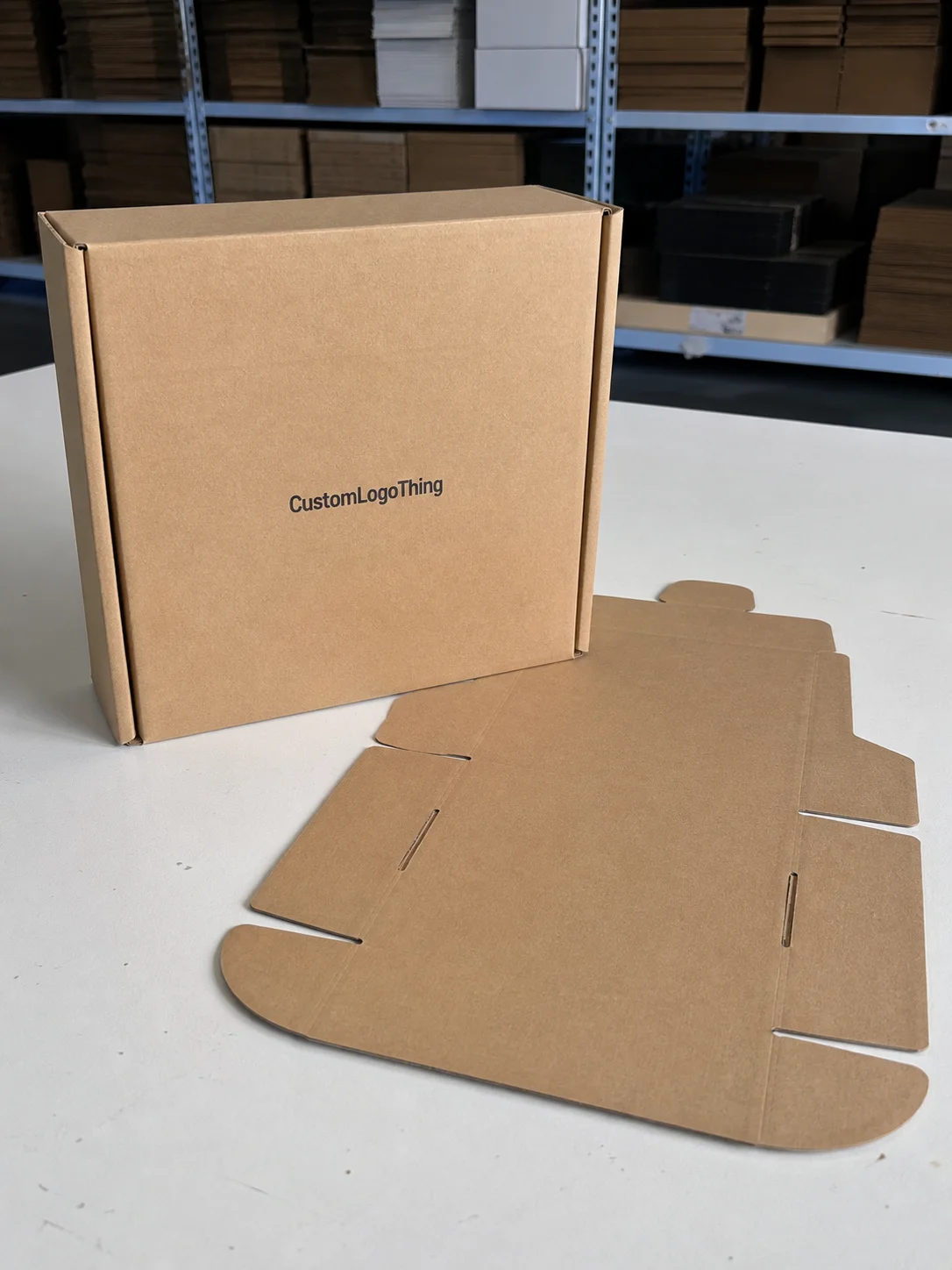
Buyer Fit Snapshot
| Best fit | Branded Packaging Supplier projects where brand print, material claims, artwork control, MOQ, and repeat-order consistency need to be specified before quoting. |
|---|---|
| Quote inputs | Share finished size, material target, print colors, finish, packing count, annual reorder estimate, ship-to region, and any compliance wording. |
| Proofing check | Approve dieline scale, logo placement, barcode or warning zones, color tolerance, closure strength, and carton packing before bulk production. |
| Main risk | Vague material claims, crowded artwork, missing packing details, or unclear freight terms can make a low unit price expensive after revisions. |
Fast answer: Branded Packaging Supplier: Artwork Proof, Packing Count, and Landed Cost should be specified like a repeatable production item. The safest quote records material, print method, finish, artwork proof, packing count, and reorder notes in one written spec.
Production checks before approval
Compare the actual filled-product size with the drawing, then confirm tolerance on folds, seals, hang holes, label areas, and retail display edges. Reserve space for logos, QR codes, warning copy, and material claims before decorative graphics fill the panel.
Quote comparison points
Review material grade, print process, finish, sampling route, tooling charges, carton quantity, and freight assumptions side by side. A quote is only useful when the supplier can repeat the same color, closure quality, and packing count on the next order.
When I walk a client through a branded packaging supplier guide, I usually begin with a story from a folding-carton line I visited in New Jersey: the print was beautiful, the board was right, and yet the premium box still looked wrong because one color register had drifted by about 1.5 millimeters. That tiny slip turned a $48 skincare set into something that felt closer to a $12 commodity. Packaging can do that. It can also rescue a product from the same fate, which is why a branded packaging supplier guide matters more than most brands admit. Honestly, I think packaging gets underestimated because it sits there quietly doing its job until it fails spectacularly. Then everyone suddenly becomes an expert (my favorite kind of meeting).
Custom packaging is never just a box. A serious branded packaging supplier guide needs to show how structure, print, finishing, and logistics work together to shape shelf appeal, unboxing, product protection, and perceived value. I’ve seen brands invest heavily in the product itself, then lose customers because the carton crushed in transit or the package branding looked flat under store lights. That kind of mismatch is expensive. It is also avoidable. I remember one launch where the serum inside was excellent, but the outer carton looked like it had been designed by someone who had never seen a retail shelf in daylight. Brutal. And entirely preventable.
What follows in this branded packaging supplier guide is the practical side of the process: how suppliers actually work, which materials make sense, what drives pricing, how long production really takes, and where brands get burned by rushed decisions. I’ll also show you how to compare custom printed boxes, request samples, and pick a partner who understands both packaging design and production reality. I am going to keep this anchored in numbers, because packaging is one of those places where a 0.5 mm score line or a $0.03 material change can alter the whole project.
Branded Packaging Supplier Guide: What It Means and Why It Matters
A branded packaging supplier guide starts with one basic truth: a packaging supplier should do more than quote dimensions and send a price. In practice, the supplier should know how to build a structure, select the right board, manage print quality, finish the surface, inspect the run, and get the cartons or mailers to the right warehouse without damage. That sounds simple. It rarely is. Prepress, converting, quality control, and shipping often sit in separate teams, sometimes across two or three facilities in places like Dongguan, Suzhou, and Los Angeles, which is why one weak handoff can break an otherwise good job.
Many brands use the word supplier when they really mean vendor. A vendor can sell you a box. A supplier that deserves a place in a branded packaging supplier guide can explain why 18pt SBS paperboard is a better fit than 24pt for a cosmetic sleeve, or why a 32 ECT corrugated shipper may be enough for one product but not for a 6-pack with glass jars. The difference shows up in reprints, delays, and damaged goods. In plain English: one person is taking your order; the other is trying to save your launch from itself. On a 5,000-piece run, that distinction can be the difference between a $0.42 carton and a $0.58 carton that survives shipping.
“The box was technically correct, but it didn’t feel premium until we fixed the coating and tightened the fold score by half a point.” That was a line I heard from a plant manager in Ohio, and it stuck with me because it captures what packaging people know instinctively: tiny process changes can transform the customer’s first impression.
Branding works hard in the package. On a retail shelf, a clean retail packaging presentation can lift perceived value in seconds. In e-commerce, the outer mailer, insert, and inner print all shape the unboxing moment and whether the customer posts a photo or complains about damage. A strong branded packaging supplier guide should help you think across channels, not just inside one box style. For example, a matte black mailer with one-color white flexo print may outperform a laminated carton in a subscription program if it stacks better in a warehouse in Pennsylvania and cuts freight weight by 11%.
One more point: good packaging is not always the most decorated packaging. I’ve seen kraft mailers with a single-color flexo print outperform glossy cartons because the brand story felt honest and the structure held up through UPS handling. That is the kind of judgment a real branded packaging supplier guide should encourage. And yes, I have absolutely watched a “luxury” box arrive dented and then try to pretend it was intentional. It was not. It looked like a packaging apology, and the replacement order cost the brand an extra $0.24 per unit plus a two-week delay.
If you want to compare the kinds of finished products brands usually order, our Custom Packaging Products page gives a useful starting point before you speak with a supplier. A quick look at a 350gsm C1S artboard folding carton, a 1.5 mm rigid setup box, and a 32 ECT corrugated mailer can make the quoting conversation far less abstract.
How a Branded Packaging Supplier Works From Quote to Delivery
A practical branded packaging supplier guide should walk you through the production flow, because most problems start when a brand assumes the process is faster or simpler than it really is. It usually begins with a brief: product size, weight, quantity, shipping method, target audience, and any retail or compliance constraints. From there, the supplier reviews the dieline, checks whether the structure fits the item, and decides whether the job needs structural packaging development or can move straight to artwork prep. On a standard folding carton project in Illinois, that first review can take 1-2 business days if the brief includes final dimensions, but it can stretch to a week if the brand is still deciding between 250 ml and 300 ml bottle heights.
The next stage is usually proofing. Depending on the job, that may mean a digital proof, a white mockup, or a full physical prototype. On a rigid box job I watched in Shenzhen, the team made three prototypes before approving the insert height because the bottle neck sat 2 mm too low and rubbed against the lid. That 2 mm would have been invisible on a screen, which is exactly why a good branded packaging supplier guide treats the sample stage as non-negotiable. I remember thinking, very clearly, “this is why screens lie to us for a living.” The prototype itself cost about $85 for two sample units, which was cheaper than discovering the problem after 5,000 boxes were wrapped.
After approval, the supplier moves into production: offset printing for high-volume cartons, flexographic printing for corrugated and some labels, or digital printing for short runs and fast approvals. Then come die cutting, foil stamping, embossing, debossing, lamination, varnishing, gluing, and final packing. If the box needs a window patch or an insert, those operations get folded in too. A supplier who understands all of that can warn you early if a matte film will scuff too easily, or if foil coverage on textured stock will break apart in the folds. A 12-point foil panel on a 2.5 mm rigid wrap behaves very differently from the same detail on 350gsm C1S artboard, and a competent plant in Guangzhou or Mexico City will explain that before tooling starts.
Coordination is the part many branded packaging supplier guide conversations skip. The packaging team has to stay aligned with the designer, procurement, and shipping departments. If artwork changes after the dieline is approved, the plates or digital files may need revision. If the substrate changes from coated art paper to kraft, the color shifts. If the freight schedule slips, cartons may sit in a warehouse and miss a launch window. Small changes add up fast. A 2 mm move here, a color shift there, and suddenly everybody is pretending the delay “was always part of the plan.” Sure. I have seen a simple Pantone adjustment add $180 in plate edits and three business days to a production schedule in Ohio.
A typical timeline looks something like this:
- Brief and quote: 1-3 business days for standard work, longer for complex rigid boxes.
- Dieline and artwork review: 2-5 business days depending on revisions.
- Prototype or sample stage: 3-10 business days for many custom printed boxes.
- Production: 10-20 business days for folding cartons, longer for specialty finishes.
- Freight and receiving: 3-12 days depending on destination and mode.
The exact numbers shift by factory, quantity, and finish set, but the point stays the same: a branded packaging supplier guide should help you budget time for revision loops, not just factory lead time. The fastest way to stall a launch is to approve artwork before the structure is locked. I know that sounds obvious. I also know how often teams still do it because someone in a meeting says, “We can fix it later.” Translation: no, you cannot. A carton revised after prepress often adds 2-4 business days, and if you are coordinating export freight from Shanghai or Savannah, that extra time gets expensive quickly.
When a supplier catches issues early, that is worth real money. I once saw a carton spec for a heavy candle line where the board was fine, but the glue tab width was too narrow for the compression load. The supplier flagged it before print, saved the client from a weak top flap, and avoided a full re-run. That is exactly the kind of practical value a strong branded packaging supplier guide should teach you to look for. Quite frankly, it is the difference between a supplier and a very expensive problem generator. On that job, changing the glue tab from 9 mm to 14 mm and switching to a stronger 24pt SBS board cost an extra $0.02 per unit, but it prevented a breakage rate that would have been far more painful.
Key Factors in Choosing the Right Branded Packaging Supplier
Choosing the Right partner is where a branded packaging supplier guide earns its keep. Start with material expertise. If you are making a lightweight skincare carton, SBS paperboard might be the right call because it prints cleanly and handles fine type well. If you need shipping strength, corrugated board gives you better crush resistance. For rigid gift boxes, wrap stock and chipboard thickness matter, because a 1.5 mm grayboard wrapped with printed art paper behaves very differently from a 2.5 mm board with a soft-touch film. Kraft stock can work beautifully for an earthy brand look, but it will show ink shifts more obviously than bright white board. A 350gsm C1S artboard sleeve in a 4-color process job can look crisp at 2,000 units, while the same art direction on uncoated kraft may need a simpler palette to stay legible.
Print quality comes next. Ask how the supplier handles Pantone matching, ink density, and tolerances on color variation. A serious supplier will talk about proof standards, not just “looking good enough.” If they use offset printing for retail packaging, they should be able to maintain consistency across a 10,000-unit run. If they use digital printing for a short run, they should explain where color drift may appear and how they control it. I’m biased here: if a supplier shrugs at color management, I start mentally moving on before they finish the sentence. In my experience, factories in Suzhou and Guadalajara that calibrate against a Delta E target under 2.0 tend to produce fewer surprises than shops that rely on “match by eye.”
Minimum Order Quantity matters too. Some factories can support 250 or 500 units for startups, especially on digitally printed mailers or sleeves. Others need 3,000 or 5,000 units to make tooling worthwhile. A thoughtful branded packaging supplier guide should push you to ask whether the supplier can support both launch quantities and replenishment programs, because a partner that can’t grow with you becomes a problem later. For a 5,000-piece folding carton order in the Midwest, an MOQ-friendly supplier may quote $0.18 per unit, while a larger offset house may drop closer to $0.09 per unit at 20,000 pieces.
Cost drivers are usually straightforward once you know them:
- Board grade: 16pt, 18pt, 24pt SBS, corrugated flute type, or rigid chipboard.
- Print complexity: 1-color flexo, 4-color process, or specialty inks.
- Tooling: custom die, plate charges, foil dies, embossing tools.
- Finishes: gloss lamination, matte film, soft-touch coating, spot UV, foil stamping.
- Size and structure: larger cartons and inserts consume more board and labor.
- Logistics: pallet configuration, domestic freight, or export packing.
Communication matters just as much. I’ve sat in supplier meetings where the sales rep was pleasant but the plant had no packaging engineering support, and that gap showed up in every answer. A reliable branded packaging supplier guide should point you toward teams that can explain why a box needs a longer glue flap or a different score line, not just teams that know how to send a quote. If you want to compare supplier capability with real project examples, our Case Studies page gives a better sense of how custom jobs perform after launch. It is easier to trust a supplier after you have seen a 12,000-unit retail program shipped from Dallas without corner crush than after a polished sales deck alone.
For broader industry standards and sustainability context, I also recommend reviewing the Institute of Packaging Professionals and the FSC, especially if your brand is choosing certified papers or wants to document sourcing claims. FSC chain-of-custody paperwork, for example, can add 1-2 days to documentation review, but it gives your compliance team a clearer audit trail.
Branded Packaging Supplier Guide to Pricing, Quotes, and Budget Planning
Pricing is where many projects get fuzzy, so a branded packaging supplier guide has to be specific. A quote should spell out substrate, print method, finishing, tooling, assembly, packing, and freight assumptions. If those details are missing, you are not comparing apples to apples. You are comparing three different apples, two oranges, and one cardboard pear. I say that with love, but also with deep irritation because I’ve watched teams celebrate the “lowest” quote and then act shocked when the real invoice turns out to be a scavenger hunt. One quote may include delivery to a warehouse in New Jersey, while another excludes pallet wrap and domestic freight entirely.
A low unit price can still be expensive if the box fits badly, damages product, or requires reprints. I worked with a beverage client that chose the lowest quote on a bottle neck insert, only to discover the insert flexed during transit and caused a 4% breakage rate. The savings vanished after the second claim report. A strong branded packaging supplier guide should remind you that total cost includes rejects, not just factory invoice lines. In that case, the initial quote saved $0.03 per unit, but replacement product and customer service costs added nearly $1,200 over a single 8,000-unit shipment.
| Quote Element | What It Usually Covers | Typical Cost Impact | What to Watch For |
|---|---|---|---|
| Substrate | SBS board, corrugated, chipboard, specialty paper | High | Thicker board increases material cost and freight weight |
| Printing | Offset, flexo, digital, specialty inks | Medium to high | More colors and tighter color matching increase setup time |
| Finishing | Foil stamping, embossing, coating, lamination | Medium to high | More finishing passes can add labor and inspection time |
| Tooling | Dies, plates, embossing tools, foil dies | Often one-time | May be amortized across reorders or charged upfront |
| Freight | Pallets, cartons, domestic or export shipping | Variable | Dimensional weight can surprise brands on bulky rigid boxes |
For budgeting, I usually advise clients to reserve money for one prototype round, one revision cycle, and a small contingency line if artwork or dimensions are still moving. If you are planning a launch with custom printed boxes and inserts, a 5% to 10% buffer is often more comfortable than squeezing the quote to the last cent. That buffer matters because one change to the insert depth can affect the outer box size, which then affects board usage and freight. And yes, the universe does seem to have a personal grudge against last-minute packaging edits. On a 10,000-unit run, a 1 mm dimensional change can alter freight class enough to add $120 to $300 in shipping depending on the route.
There are also smart ways to save without hurting quality. Standardizing sizes across multiple SKUs can lower tooling and simplify production. Simplifying from soft-touch plus foil plus spot UV to matte lamination plus one foil accent can reduce cost while keeping the premium feel. Choosing a standard carton style instead of a fully custom structural shape can save both engineering time and die cost. A solid branded packaging supplier guide should point out these tradeoffs clearly. For instance, moving from a full rigid setup with wrapped lid to a tuck-end carton may cut unit cost from $1.90 to $0.32 on a 5,000-piece run if the customer experience still works for your channel.
Here is a practical comparison for planning purposes:
| Packaging Option | Typical Use | Approx. Unit Range | Lead Time |
|---|---|---|---|
| Digital folding carton | Short runs, launch tests, limited editions | $0.35-$1.10 | 7-14 business days |
| Offset printed carton | Retail packaging, mid to high volume | $0.12-$0.45 | 12-20 business days |
| Rigid box with wrap | Premium gifting, luxury product packaging | $1.10-$4.50 | 15-28 business days |
| Corrugated mailer | E-commerce shipping and subscription kits | $0.28-$1.20 | 10-18 business days |
Those ranges are not universal, and they move with quantity, finish set, and shipping destination, but they give you a grounded way to sanity-check a quote. A dependable branded packaging supplier guide should always say, “Ask what is included,” before it says, “That price looks good.” I would also ask for a line-item breakdown at 1,000 units, 5,000 units, and 10,000 units, because the price curve often drops sharply once tooling is spread across a larger order.
For compliance-heavy or sustainability-driven programs, be sure to ask how recycled content, FSC chain-of-custody paperwork, or packaging waste reduction goals affect cost. The EPA recycling resources are a helpful reference if your team is building internal packaging sustainability criteria. If your supplier can offer 100% recycled corrugate from a facility in Ohio or Tennessee, ask for the mill spec and the recycled content percentage in writing.
Timeline and Production Process: What to Expect at Each Stage
A realistic branded packaging supplier guide has to respect time. Packaging schedules are not just factory schedules; they are launch schedules, retailer schedules, and sometimes freight schedules tied to a trade show booth or a seasonal promotion. If you miss a retail window by 10 days, the damage can last months. I have seen teams spend six months dreaming up a launch and then treat the packaging calendar like a loose suggestion. That always ends in someone saying, “Why didn’t anyone tell us?” A better answer starts with a calendar that counts backward from the sell date in Chicago, not forward from the purchase order date in week one.
Here is the usual flow I’ve seen on solid projects. First comes the initial brief, where the supplier gathers product size, packaging purpose, shipping method, and finish preferences. Then the designer or supplier creates a dieline, which the brand checks against artwork. After that comes proofing, where digital mockups help you visualize layout but do not tell the whole story. Physical samples are the real checkpoint, because they show fold behavior, print contrast, and whether your insert actually holds the item. On a 3-piece cosmetic kit I reviewed in Dallas, a printed proof looked perfect, but the 2 mm gap in the insert made the jar wobble; the sample caught it before production.
Mass production should not start until the sample is approved in writing. That sounds obvious, yet I’ve watched teams move too quickly because the launch date was fixed and everyone felt pressure. Once production begins, the factory schedules printing, curing, cutting, finishing, and packing in a specific sequence, and changes made mid-run can waste several hundred units. A disciplined branded packaging supplier guide always emphasizes approval discipline. In a plant near Ho Chi Minh City, I watched a 7,500-unit run paused after 800 sheets because the soft-touch coating showed micro-scuffing under bright light; correcting that after approval would have added at least four business days.
Lead times are affected by five main variables:
- Artwork revisions that require new proofs or plate updates.
- Material availability, especially specialty papers or custom board grades.
- Finishing complexity like foil, embossing, or multiple coatings.
- Run quantity, since larger orders take longer to print, cure, and inspect.
- Freight timing, which can add several days depending on route and mode.
One beauty brand I worked with had a strong launch calendar but moved their final logo tweak three times. Each tweak was minor, just a spacing adjustment and a bolder type weight, but the schedule slipped by nearly two weeks because the supplier had already prepared the proofs and prepress files. That’s why a practical branded packaging supplier guide should tell you to lock artwork early and protect the approval chain. A three-round proof process is common for complex rigid boxes, but a straightforward folding carton often needs only one digital proof and one physical sample if the dieline is final.
For seasonal drops, I usually recommend backward planning from the sell date, not forward planning from the PO date. If you need product on shelf by October 1, count back for freight, receiving, sticker application if needed, QA inspection, and possible correction time. Otherwise, the boxes can arrive exactly when they are least useful. There is nothing quite like staring at a beautiful stack of cartons that missed the launch window by four days. Ask me how fun that is (hint: not at all). In a typical domestic program, freight from a factory in Los Angeles to a warehouse in Texas might take 3-5 business days; ocean freight from Ningbo to Long Beach can take 18-28 days, plus customs and drayage.
Common Mistakes Brands Make When Choosing Packaging Suppliers
A good branded packaging supplier guide should probably save you from the mistakes I see most often, because many of them are preventable with one better question at the beginning. The first mistake is approving artwork before the dieline is final. That leads to logos sitting too close to fold lines, copy getting clipped, or barcodes landing in the wrong panel area. I’ve seen a full pallet of retail packaging rejected because the UPC sat 3 mm too low for the retailer’s scan spec. A retailer in Atlanta may be forgiving about color drift, but they are rarely forgiving about scan placement.
Another common error is ignoring board caliper. A box can look perfect in a PDF and still fail in the hand if the paperboard is too thin or the corrugated flute is wrong for the product weight. The same is true for finish choice. A glossy coating may look vivid, but if the box rides through conveyor systems, that gloss can show scuffs. A matte or soft-touch finish can feel premium, but it may show fingerprints or corner rub if the ink coverage and coating system are not matched correctly. A 24pt SBS carton with a matte aqueous coat behaves differently from a 350gsm C1S artboard shell with soft-touch film, and the difference is obvious once you hold the samples.
Price-only buying creates its own headache. The cheapest quote often hides weak engineering, rushed proofing, or less attentive quality control. That does not always mean the cheapest supplier is bad, but a serious branded packaging supplier guide should make you ask why the price is low. Is the board lighter? Is there no lamination? Is freight excluded? Are the dies reused? Those are fair questions. I have seen a quote in Vietnam come in 18% lower than a U.S. domestic option simply because palletization and inland freight were not included.
Vague specifications cause rework. If you send a note that says “need a premium box,” the supplier may fill in the blanks differently than you would. Premium to one plant means foil and rigid board; premium to another means a stronger carton and a custom insert. Strong project briefs include dimensions, product weight, quantity, use environment, and finish expectations. That level of detail saves time and, frankly, saves everyone from having to pretend they understood each other when they absolutely did not. A brief that includes “5,000 units, 160 x 90 x 35 mm, 18pt SBS, matte aqueous, one Pantone spot color, ship to Atlanta warehouse” is far more useful than a sentence that says “make it look expensive.”
A plant supervisor once told me, “The job looked easy until we realized nobody agreed on whether the product would ship in a master carton or display on shelf.” That one missing sentence changed the whole production setup.
Testing is another area where brands get caught. If you are shipping direct-to-consumer, you should be looking at drop tests, compression tests, and transit simulation standards such as ISTA where appropriate. If your retail box sits on a shelf, scuff resistance and color rub become more important. A good branded packaging supplier guide should encourage testing that matches the channel, not generic testing for the sake of paperwork. For transit testing resources, the ISTA site is a solid reference point. A 30-inch drop on a 2 kg glass product is not the same as a shelf-ready carton sitting on a display in a climate-controlled store in Denver.
What should a branded packaging supplier guide include before you request a quote?
A useful branded packaging supplier guide should include your product dimensions, weight, quantity, channel, finish preferences, and timing requirements before you request a quote. If you can also share the shipping destination, retail requirements, and whether you need inserts or master cartons, the supplier can build a more accurate estimate. I would also add artwork readiness, because a final dieline plus approved copy creates a very different quote than a rough concept still in revision. One line in the brief can shift the whole cost structure: “ship to Texas, 8,000 units, 24pt SBS, matte aqueous, one foil accent, no inserts” tells a supplier far more than “premium carton needed by fall.”
Expert Tips for Getting Better Results from Your Branded Packaging Supplier
If you want better results from a branded packaging supplier guide process, start by giving the supplier enough information to think like an engineer. Product dimensions alone are not enough. Share the product weight, how it will be packed, whether it ships in humid warehouses, whether it sits on retail hooks, and whether the package has to survive e-commerce handling. Those details help the supplier recommend the right structure and finish from the start. A carton for 120 ml glass jars in Miami needs different moisture resistance than a carton for aluminum tubes stored in Phoenix.
Request samples. Not just any samples, but relevant samples. If you are launching wellness products, ask for similar folding cartons or rigid boxes with comparable board and finish. If you are planning corrugated subscription packaging, ask for examples with the same flute and print style. A sample pack tells you more than a quote ever can, especially when you check print clarity, corner strength, and glue integrity under real light. I like to ask for a sample made on the same 18pt board or 2.0 mm chipboard the supplier plans to use, because a visual comp on unlisted stock can be misleading.
Think in systems. That means the outer shipper, the inner carton, inserts, labels, and protective materials should all work together. I’ve seen brands treat those as separate purchases, then wonder why the unboxing feels disconnected. The best branded packaging supplier guide approach looks at the entire package flow, from warehouse to customer handoff. A subscription box shipped from Charlotte and a retail gift kit sold in Portland may need different secondary packaging even if the primary carton design stays the same.
Create a packaging spec sheet and keep it updated. It should include dimensions, substrate, coating, print colors, barcode location, artwork version, approved sample date, and reorder rules. That one document can save hours on repeat orders and reduce drift between production cycles. For brands with multiple SKUs, it is one of the best habits you can build. A spec sheet that states “350gsm C1S artboard, matte varnish, 1 Pantone spot, no lamination, approved sample dated May 14” is far easier to use than a freeform email trail.
Build the relationship over time. Suppliers tend to be more flexible when they know your forecasting patterns, approval habits, and seasonal peaks. I’ve seen better pricing on a third or fourth order simply because the buyer shared a real 6-month forecast instead of a last-minute emergency. A branded packaging supplier guide should not make supplier relationships sound transactional only; the strongest ones are partnerships built on clear expectations and steady volume. In practical terms, a supplier in South Carolina or Guangdong is more likely to hold capacity for a brand that reorders 4,000 units every quarter than for one that appears once a year with a rush request.
Next Steps for Working with a Branded Packaging Supplier
If you are ready to move from planning into production, a branded packaging supplier guide should leave you with a simple next step: gather your product specs, brand files, budget range, and target timing before you ask for quotes. That preparation changes the quality of the conversation immediately. Instead of asking a supplier to guess, you give them the information needed to recommend a structure that fits your brand and your channel. I would also include the target quantity, shipping destination, and whether the order needs master cartons, retail-ready packing, or kitting services in-house.
Next, shortlist suppliers based on capability, not just location. Ask who has handled the same substrate, the same finish set, or the same retail channel. Then compare their assumptions in writing. If one supplier quotes 5,000 units with lamination and another quotes without it, the unit prices are not comparable. A proper branded packaging supplier guide should help you insist on matched assumptions. A factory in New Jersey may be ideal for a rush order, while a plant in Shenzhen might make more sense for a 20,000-piece seasonal run with foil stamping and embossing.
Make your briefing document specific. Include quantity, product dimensions, product weight, print method preference, shipping destination, and any regulatory or retailer requirements. If your box has to pass a certain drop test, say so. If the packaging has to be FSC-certified, say so. If the brand wants a matte tactile feel with one foil accent, say so. The clearer the brief, the cleaner the quote. A brief that says “12,000 units, 160 x 110 x 45 mm, 24pt SBS, matte aqueous, one gold foil, ship to Texas distribution center” gets a much more accurate price than a brand deck filled with adjectives.
Set your internal approval path before samples arrive. One person should own final sign-off, or you will lose days chasing opinions from too many departments. I’ve seen teams with marketing, operations, and sales all giving conflicting feedback on one carton proof, and that kind of indecision can push a launch past the calendar window. A disciplined branded packaging supplier guide always includes decision-making structure. In practice, the best setup is one owner, one backup approver, and a 24-hour turnaround on comments so the supplier is not waiting through the weekend for a color decision.
If you take nothing else from this branded packaging supplier guide, remember this: the best supplier is not the one that says yes to everything, but the one that tells you what will work, what will fail, and what will cost more than it should. That kind of honesty saves time, saves product, and usually saves money too. And if they can explain it without making you feel like you need a manufacturing degree just to order a box, even better. I’d also add that a clear sample trail, a signed spec sheet, and a realistic 12-15 business day production window from proof approval can do more for a launch than almost any last-minute marketing flourish.
FAQ
What should I ask in a branded packaging supplier guide comparison?
Ask about materials, print methods, finishing options, minimum order quantities, sample process, lead times, and quality control. I also recommend asking for examples of similar projects, because that tells you whether the supplier has actually handled your type of packaging and not just something close to it. If they dodge that question, I get suspicious fast. A useful comparison might include a quote for 5,000 folding cartons in 18pt SBS, a 2-piece rigid box in 1.5 mm chipboard, and a corrugated mailer made with 32 ECT board so you can see how their pricing changes by structure.
How do I know if a branded packaging supplier is right for custom packaging?
Look for packaging engineering support, clear communication, realistic timelines, and the ability to explain material and finishing choices in plain language. A strong supplier should recommend structures based on protection, branding, and budget rather than simply taking the order and hoping the spec works. If they can tell you why a matte aqueous coat is better than soft-touch on a 10,000-unit retail run, or why a glue flap needs to move from 8 mm to 12 mm, that is a good sign.
What affects the cost in a branded packaging supplier guide quote?
Main cost drivers include box style, board grade, print colors, special finishes, tooling, quantity, and shipping. Sampling and revisions can also change the final budget, especially if artwork or dimensions shift after the first proof or if you move from a standard carton to a more complex custom structure. A quote for 1,000 units might sit at $0.62 each, while the same design at 10,000 units could drop to $0.19 each because tooling and setup are spread across a larger run.
How long does branded packaging production usually take?
Timing depends on the complexity of the structure, print method, approvals, and material availability. Simple digital or short-run projects can move faster, while rigid boxes, custom inserts, and specialty finishes usually take longer because they involve more setup, more inspection, and more handwork. For many folding carton projects, production is typically 12-15 business days from proof approval, while specialty rigid packaging may need 18-28 business days plus freight from the factory in places like Dongguan, Los Angeles, or Nuevo León.
What is the biggest mistake in choosing a branded packaging supplier guide approach?
The biggest mistake is focusing only on unit price and ignoring fit, finish, durability, and communication quality. A slightly higher quote can be the better value if it reduces damage, reprints, and launch delays, especially when the packaging has to support retail presentation and e-commerce shipping at the same time. If a supplier saves $0.04 per unit but creates a 3% damage rate, the cheaper option quickly becomes the more expensive one.