Buyer Fit Snapshot
| Best fit | Branded Paper Sleeves Wholesale projects where brand print, material claims, artwork control, MOQ, and repeat-order consistency need to be specified before quoting. |
|---|---|
| Quote inputs | Share finished size, material target, print colors, finish, packing count, annual reorder estimate, ship-to region, and any compliance wording. |
| Proofing check | Approve dieline scale, logo placement, barcode or warning zones, color tolerance, closure strength, and carton packing before bulk production. |
| Main risk | Vague material claims, crowded artwork, missing packing details, or unclear freight terms can make a low unit price expensive after revisions. |
Fast answer: Branded Paper Sleeves Wholesale: Specs, Pricing, MOQ should be specified like a repeatable production item. The safest quote records material, print method, finish, artwork proof, packing count, and reorder notes in one written spec.
Production checks before approval
Compare the actual filled-product size with the drawing, then confirm tolerance on folds, seals, hang holes, label areas, and retail display edges. Reserve space for logos, QR codes, warning copy, and material claims before decorative graphics fill the panel.
Quote comparison points
Review material grade, print process, finish, sampling route, tooling charges, carton quantity, and freight assumptions side by side. A quote is only useful when the supplier can repeat the same color, closure quality, and packing count on the next order.
Branded paper sleeves Wholesale: Specs, Pricing, MOQ is the kind of phrase that only gets real once a product has to ship, show up on shelf, and survive a buyer with opinions. A sleeve lets you change the message, the season, the retailer callout, or the campaign without rebuilding the whole carton. That is the point. Less waste. Less waiting. Less warehouse clutter. Less nonsense, frankly.
Packaging buyers like sleeves for a simple reason: they solve a real problem without turning the rest of the pack upside down. Branded paper sleeves wholesale can protect margin, keep inventory cleaner, and give marketing room to move faster than a full reprint cycle. The result is Practical Packaging That actually earns its place instead of just looking nice in a deck.
If you are comparing branded paper sleeves wholesale suppliers, the real question is not whether the sleeve can look good. Of course it can. The question is whether the sleeve fits the product, the run size, the shipping route, and the budget you still have after everyone else has taken their bite.
Why Branded Paper Sleeves Wholesale Beat Full-Box Reprints
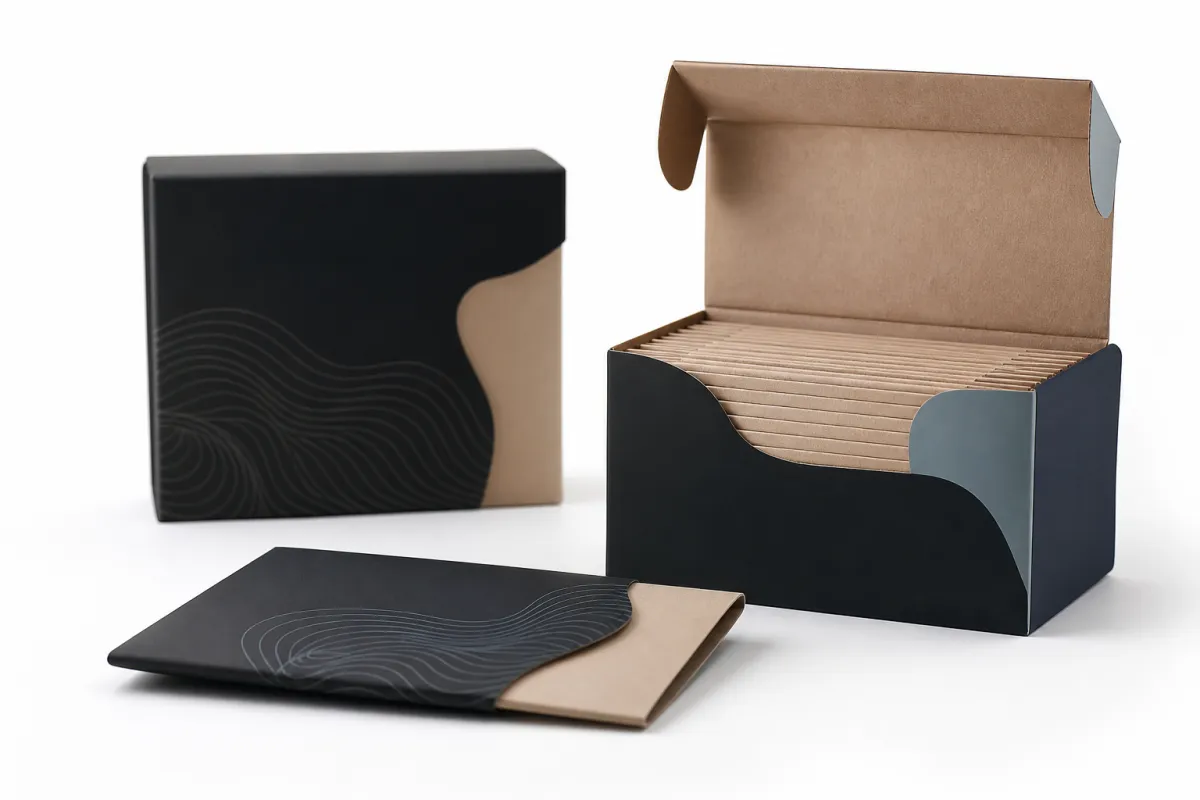
There are plenty of cases where branded paper sleeves wholesale make more sense than starting over with a new carton. A product line with a stable inner pack does not need a fresh structural reprint every time the campaign changes. A sleeve gives you a visible update on the outside while the base box stays in use. That is why buyers reach for sleeves during seasonal runs, retailer exclusives, and short promotions.
The cost math is pretty plain. Full-box reprints usually force larger print runs, more storage, and higher risk if the artwork changes again soon. Branded paper sleeves wholesale shift the spend to one outer layer instead of replacing every component. That reduces obsolete cartons, cuts dead stock, and keeps the warehouse from filling up with packaging that will never see a shelf. If you have ever stared at a pallet of old art and thought, “well, that was dumb,” you already understand the appeal.
Timing matters too. A launch slips. A retailer changes a claim. Someone finds a typo two days before approval. A sleeve is easier to revise than a fully engineered pack. Branded paper sleeves wholesale can move from art approval to shelf-ready packaging with less friction, especially when the carton size is already locked and only the presentation needs work.
For buyers, sleeves also lower the penalty of testing. If a new SKU underperforms, you are not stuck with thousands of printed cartons collecting dust. If the design works, the same branded paper sleeves wholesale spec can roll into a larger reorder without changing the whole packaging strategy. That is a practical way to learn before you commit to a bigger packaging bet.
"A sleeve is cheap until it is wrong. Fit, print, and fold quality decide whether it saves money or creates another problem."
That is why many brands treat sleeves as controlled spend, not a compromise. For product lines with stable dimensions, branded paper sleeves wholesale can improve speed to market, reduce storage burden, and keep the message flexible without rebuilding the pack from scratch. If you want to see how that plays out in real projects, our Case Studies show packaging choices that hold up after repeat orders.
Sleeves are especially handy when the inner pack is expensive to change. A paper sleeve can refresh a plain carton, a rigid tray, or a clear gift box without touching the structure underneath. That makes branded paper sleeves wholesale a smart fit for programs where the outer look matters more than the shell.
For buyers managing several SKUs, the inventory win is hard to ignore. One stable pack. A rotation of sleeves. Cleaner forecasting. Fewer packaging variants sitting in storage waiting for the next campaign to rescue them.
Branded Paper Sleeves Wholesale Formats for Retail, Food, and DTC
Not every sleeve should behave the same way. Branded paper sleeves wholesale come in a few common formats, and each one solves a different packaging problem. Wraparound bands, tuck-in sleeves, belly bands, and die-cut display sleeves all do the job in different ways. The right choice depends on how the product is sold, handled, and opened.
Wraparound bands are the lightest option. They suit candles, small boxed gifts, and cosmetic sets where the branding needs to stay simple and the packing line needs speed. Tuck-in sleeves add more retention, which helps when products ship flat or get handled repeatedly. Belly bands work well for a minimal wrap with clean branding. Die-cut display sleeves create a more premium presentation and can expose part of the product for better shelf visibility.
Food brands use branded paper sleeves wholesale differently than DTC brands do. A bakery sleeve may need grease resistance and fast hand assembly. A supplement sleeve may need clear panel placement for ingredients and barcode visibility. A candle line may want a tight band that signals gift value without covering the lid. Subscription products often need a sleeve that holds the set together and makes a strong first impression when the customer opens the parcel.
Design changes perception quickly. A sleeve that fits closely and sits square on the pack can make a modest product look more deliberate. In retail, that matters more than people like to admit. Buyers often use branded paper sleeves wholesale to create a stronger shelf block, organize product information, or unify a family of items that otherwise looks scattered. That helps a parent brand look more coherent across several SKUs.
Start with geometry, not artwork. Measure the pack. Check the fold sequence. Think about how many seconds a line operator has to place the sleeve. If the item travels through a parcel network, ask whether the sleeve needs to survive abrasion, compression, or corner crush. If it only gets placed by hand before display, the structural demands can stay lighter. That is the sort of decision that keeps branded paper sleeves wholesale from turning into expensive decoration.
The simplest rule is still the best one: use the lightest sleeve that protects the message and survives handling. Overbuild it and the cost rises without much payoff. Underbuild it and you get scuffed print, loose fit, and returns nobody wanted. The best branded paper sleeves wholesale format is the one that disappears during production and shows up in the shelf result.
Core Specifications: Materials, Printing, Finishes, and Fit
Material choice drives more of the final result than most buyers expect. Branded paper sleeves wholesale are often produced on paperboard in the 250gsm to 400gsm range, and 300gsm to 350gsm is a common middle ground for retail sleeves that need decent stiffness without turning bulky. Recycled kraft stock can work well for natural or artisanal positioning, while coated artboard gives sharper image detail and cleaner solids for high-contrast branding.
Printing method matters just as much. CMYK is the default for full-color graphics, but spot colors deserve a conversation if your logo has to match a strict brand standard or if you want a dense solid panel. Some branded paper sleeves wholesale orders use one-sided print to keep costs down, while others print both sides because the inside of the fold shows during assembly or opening. Flood coating can help visual consistency, especially when the design uses large color fields that need to look even across the sheet.
Fit is where good packaging buyers save money. A sleeve should not float around the product, and it should not fight the line worker. Ask for exact measurements on width, depth, seam allowance, lock style, and fold style. In many cases, a tolerance of about 1 to 2 mm is acceptable, but that depends on the product finish and whether the sleeve must slide over a rigid carton or wrap a softer pack. Branded paper sleeves wholesale get expensive when the dieline is guessed instead of measured.
Finish changes both appearance and handling. Matte finish reads more restrained and hides fingerprints better. Gloss gives stronger color pop, but it also shows scuffs faster if the packs move through a busy packing line. Soft-touch lamination adds a premium hand-feel, yet it changes the cost structure and may not earn its keep on a short campaign. Aqueous coating is a practical middle option for many branded paper sleeves wholesale projects because it adds a basic layer of protection without making the pack feel overworked.
For food-adjacent uses, ask about grease resistance and whether the inks or coatings suit contact-adjacent applications. The right answer depends on the product and the route to market, so no supplier should pretend one finish solves every use case. If your brand also has a sourcing policy, ask for FSC-certified paper and verify the chain-of-custody claim. The FSC framework gives buyers a recognizable way to document responsible fiber sourcing.
Transit gets ignored right up until the first carton arrives dented. If the sleeve will travel through parcel networks, align your pack test expectations with a recognized standard such as ISTA. That is not extra caution for its own sake. It is basic risk control. Branded paper sleeves wholesale orders are easier to approve when the packaging team can point to a known test method instead of hoping a sample survives the trip.
Specification discipline also improves reorder consistency. When a sleeve has a locked dieline, a fixed paper grade, and a stable finish, the second order usually comes back closer to the first one. That matters because branded paper sleeves wholesale buyers often care less about a dramatic look than about repeatability across six months of launches and replenishment.
If you are sourcing for more than one product line, keep the spec sheet tight. Document the exact paper grade, print coverage, finish, fold direction, and assembly method. It sounds small until you are trying to sort out a quote thread full of contradictions. Then it sounds smart. And yes, you really do want that level of boring detail.
Branded Paper Sleeves Wholesale Pricing, MOQ, and Cost Drivers
Pricing for branded paper sleeves wholesale is driven by a handful of variables that show up fast: stock grade, size, color coverage, finishing, die-cut complexity, and total quantity. A simple one-color sleeve on standard paperboard sits in a different cost band from a full-bleed, soft-touch, die-cut presentation sleeve. That sounds obvious. Buyers still get tripped up when they compare only the unit price and ignore setup or tooling.
MOQ is easiest to think about as a tradeoff between setup efficiency and inventory risk. Lower quantities usually cost more per unit because fixed costs spread across fewer pieces. Larger runs pull the unit price down, but they also raise upfront spend and increase the amount of stock you need to store. For branded paper sleeves wholesale, the right MOQ is usually the smallest quantity that still gives the printer a sensible run and gives you enough pieces to judge shelf performance.
Here is a practical comparison buyers can use during quote review:
| Sleeve Type | Typical MOQ | Estimated Unit Price | Best Fit | Main Cost Driver |
|---|---|---|---|---|
| Simple wraparound band | 500-1,000 pieces | $0.18-$0.32 | Small retail sets, short campaigns | Basic print setup and standard board |
| CMYK tuck-in sleeve | 1,000-3,000 pieces | $0.12-$0.24 | Cosmetics, candles, gift items | Artwork coverage and folding complexity |
| Die-cut display sleeve | 3,000-5,000 pieces | $0.22-$0.45 | Premium retail and shelf-facing packs | Tooling, die-cutting, finish selection |
| Soft-touch premium sleeve | 3,000-10,000 pieces | $0.28-$0.55 | High-value gift or subscription packaging | Lamination and premium appearance targets |
Those numbers are directional, not universal. A small size change can move the quote more than buyers expect because paper yield changes across the sheet and waste rises with awkward dimensions. A second color can also add more than the ink cost itself, especially if it changes setup time or color correction. For branded paper sleeves wholesale, the quote should separate unit cost from setup cost, sampling cost, shipping, and any art or prepress charges.
That breakdown matters because it changes how the offer reads. A quote that looks higher on unit price may actually be cheaper overall if setup is lower, the sample charge is smaller, or the freight is more efficient. The reverse happens too. A low unit price can hide the real spend if the supplier charges heavily for proofing or structural revisions. Good buyers compare the full landed cost, not just the first line on the page.
"A low unit price is not a victory if the sleeve needs three artwork fixes and arrives a week late."
In many branded paper sleeves wholesale programs, the best comparison is not sleeve versus sleeve. It is sleeve versus a full carton reprint. If the sleeve lets you keep the base box, reduce scrap, and refresh the campaign quickly, the total business case usually wins even when the sleeve itself costs a bit more than expected. That is especially true for seasonal launches, multi-retailer promotions, and product lines that change copy or claims often.
If you are building a repeat order plan, our Wholesale Programs page outlines how reorders are handled once the dieline is approved. That is usually where branded paper sleeves wholesale become most efficient: after the first round, once the spec is stable and the work shifts from design problem to production routine.
The useful question is not "what is the cheapest sleeve?" It is "which spec gives the best total spend for this launch cycle?" That cuts through a lot of noise and keeps branded paper sleeves wholesale decisions grounded in actual packaging economics.
Order Process and Timeline for Branded Paper Sleeves Wholesale
The order path is usually straightforward, but each step matters. Most branded paper sleeves wholesale jobs start with a brief, move into spec review, then artwork checking, proofing, production, finishing, packing, and shipment. Repeat runs are faster because the dieline and color references are already approved. New sizes or new finishes create more review, and buyers should expect that from the start.
Timing is where projects either stay calm or turn into a mess. A clean repeat order can move quickly. Simple jobs often need 24 to 48 hours for quoting, 1 to 3 days for prepress review, and about 7 to 12 business days for production after proof approval, depending on the plant schedule and finishing method. Custom dies, special coatings, or intricate folds can add time. With branded paper sleeves wholesale, the biggest mistake is assuming the print phase is the whole lead time. It is not. Proofing and freight can matter just as much.
The way to avoid delays is to send complete information early. Include exact product dimensions, a proper dieline if you have one, barcode details, copy that has already been checked internally, and any finish notes before proofing starts. If the sleeve needs to match another package in the range, include a reference sample or a controlled color target. That reduces revision rounds and keeps the branded paper sleeves wholesale order moving on schedule.
Color matching deserves real attention. A screen file may look fine, but paper, coating, and ink all change the result on press. If your brand depends on a specific Pantone match, say so early. If the sleeve sits next to an existing carton, compare against the actual pack, not just a digital proof. These small details separate clean packaging programs from expensive do-overs.
Freight timing can make a good production run feel late. If goods travel by sea, build the transit buffer before the campaign date. If air freight is the backup plan, confirm the cost before approving artwork. With branded paper sleeves wholesale, shipping can wipe out a manufacturing gain if the schedule gets tight and the freight mode has to be upgraded at the last minute.
Use a disciplined packaging checklist instead of treating it like a rushed print buy. The best suppliers confirm dimensions, check the file, approve the sample, release production, and lock packing format. That sounds basic because it is. It is also what keeps mistakes out of repeat branded paper sleeves wholesale orders.
Ask who signs off on what. A clean workflow has one person responsible for art accuracy, one for physical fit, and one for delivery timing. When those roles blur, the order slips. When they stay clear, the process becomes predictable. That predictability is part of what buyers pay for.
Why Choose Us for Branded Paper Sleeves Wholesale
Buyers usually want three things from a supplier: consistency, speed, and honest communication. Branded paper sleeves wholesale should deliver all three. If a supplier cannot hold print color steady, cannot repeat the size accurately, or cannot explain the quote without hiding half the cost in setup, the order will feel cheap only until the problems show up.
A good wholesale partner is judged by process, not slogans. You want clear artwork feedback before production starts, realistic MOQ guidance, and repeatable sizing across reorders. You also want a supplier that can scale from pilot runs to higher-volume branded paper sleeves wholesale programs without changing the basic spec every time the quantity changes. When that works, the packaging line becomes easier to plan and the marketing team gets fewer surprises.
Quality control should be visible, not assumed. Check whether the supplier reviews print registration, fold accuracy, and cut tolerance before shipment. Ask how samples are handled and whether the team can provide a match reference from a previous run. For branded paper sleeves wholesale, those details matter more than a polished sales pitch because they decide whether the sleeves arrive ready for production or ready for rework.
Our Case Studies show how real packaging specs hold up across different products, while our Wholesale Programs are built for repeat orders that need clear pricing and stable production logic. That matters to buyers planning beyond a single launch. They need a supplier that can support a run this month and the same spec six months later without moving the goalposts.
Practical prepress support also matters. A strong supplier should flag bleed issues, fold conflicts, barcode placement problems, and image resolution concerns before the press run starts. That is not a luxury. It is basic risk management. In branded paper sleeves wholesale, a few minutes of file review can save an entire production slot.
We also pay attention to the details that affect shelf readiness. Sleeves should arrive flat, counted, packed in a way that is easy for your team to open, and labeled clearly enough that receiving does not waste time. If a customer needs barcode verification or a simple remeasure on the first batch, that should be part of the service. Buyers do not want surprises at intake; they want a packaging component that drops into the workflow without drama.
That is the practical reason people stay with a packaging supplier. Not because every order is exciting. Because the order is boring in the right way. Branded paper sleeves wholesale should feel controlled, documented, and repeatable. If that is the standard, the packaging decision gets easier every time you reorder.
Next Steps to Order Branded Paper Sleeves Wholesale
The fastest way to get a useful quote is to send complete information the first time. Gather the product dimensions, sleeve style, estimated quantity, artwork files, finish preferences, print sides, shipping destination, and target deadline. If the sleeve has a barcode, regulatory copy, or a retailer-specific placement rule, include that too. Branded paper sleeves wholesale quotes become much cleaner when the supplier does not need to chase the basics.
If you are still deciding on spec, start with the practical checklist below:
- Stock type: coated, uncoated, recycled kraft, or premium board
- Print coverage: one-sided, two-sided, CMYK, or spot color
- Finish: matte, gloss, soft-touch, or aqueous coating
- Assembly method: tuck-in, wraparound, belly band, or die-cut display style
- Quantity: test run, launch run, or repeat order
- Shipping: destination, lead time, and whether the order must arrive by a fixed shelf date
A smart first order does not try to solve everything. It tests one design, confirms the fit, checks the shelf effect, and reviews handling during packing or fulfillment. If the sleeve performs well, scale the same branded paper sleeves wholesale spec into the next run instead of reinventing it. That is how buyers cut both risk and waste.
One more detail: if the product is likely to change seasonally, keep the structure stable and swap the graphics. That keeps your branded paper sleeves wholesale program flexible while the underlying pack stays predictable. It is a cleaner buying model, and it usually produces better pricing over time because the supplier is not rebuilding the spec from scratch.
Send the dimensions, the artwork, the target quantity, and the finish preference, and branded paper sleeves wholesale becomes a production question instead of a guessing game. The right quote is the one built from complete information, not the one assembled after three correction emails and a rushed approval.
Frequently Asked Questions
What is the usual MOQ for branded paper sleeves wholesale?
MOQ depends on size, print method, and finishing, but lower-volume custom runs usually cost more per unit than larger repeat orders. For branded paper sleeves wholesale, a simple wrap can sometimes start around 500 to 1,000 pieces, while more complex die-cut or premium sleeves often sit higher. Ask whether the quote separates setup costs from unit pricing so you can compare small and large runs accurately. Otherwise you are comparing apples to packing tape.
How much do branded paper sleeves wholesale orders usually cost?
Pricing is driven by stock thickness, print coverage, custom die work, finish, and the total quantity ordered. Simple one-color sleeves with standard sizing are generally cheaper than full-bleed, coated, or die-cut premium versions. A useful comparison is unit cost versus the savings from avoiding a full packaging reprint, because branded paper sleeves wholesale often win on total program cost rather than on the lowest sticker price.
What information do I need to request branded paper sleeves wholesale pricing?
Provide product dimensions, sleeve style, quantity, artwork files, desired finish, and delivery location. Include any special requirements such as grease resistance, barcode placement, or display-ready folding. The more complete the spec, the more accurate the quote and timeline will be, which is especially true for branded paper sleeves wholesale orders that need consistent reorders later.
How long does branded paper sleeves wholesale production take?
Production time depends on proof approval, tooling needs, order size, and finishing complexity. Repeat orders are usually faster than first-time custom runs because the dieline and print setup are already approved. Build in extra time for color review, shipping, and any revision rounds before production starts, particularly if the branded paper sleeves wholesale order must hit a retailer date or launch window.
Which businesses benefit most from branded paper sleeves wholesale?
Retail brands, food producers, cosmetics companies, candle makers, and subscription sellers often use sleeves to add branding without changing the base package. Sleeves are especially useful for seasonal campaigns, promotional bundles, and product lines that change frequently. They work well when you need a stronger shelf presence but do not want the expense of a full custom carton, which is why branded paper sleeves wholesale keeps showing up in practical packaging plans.
Actionable takeaway: before you request quotes, lock the product dimensions, the sleeve format, the finish, and the reorder plan. That one move cuts the noise, makes branded paper Sleeves Wholesale Pricing easier to compare, and keeps you from paying for a pretty sleeve that does not fit the job.