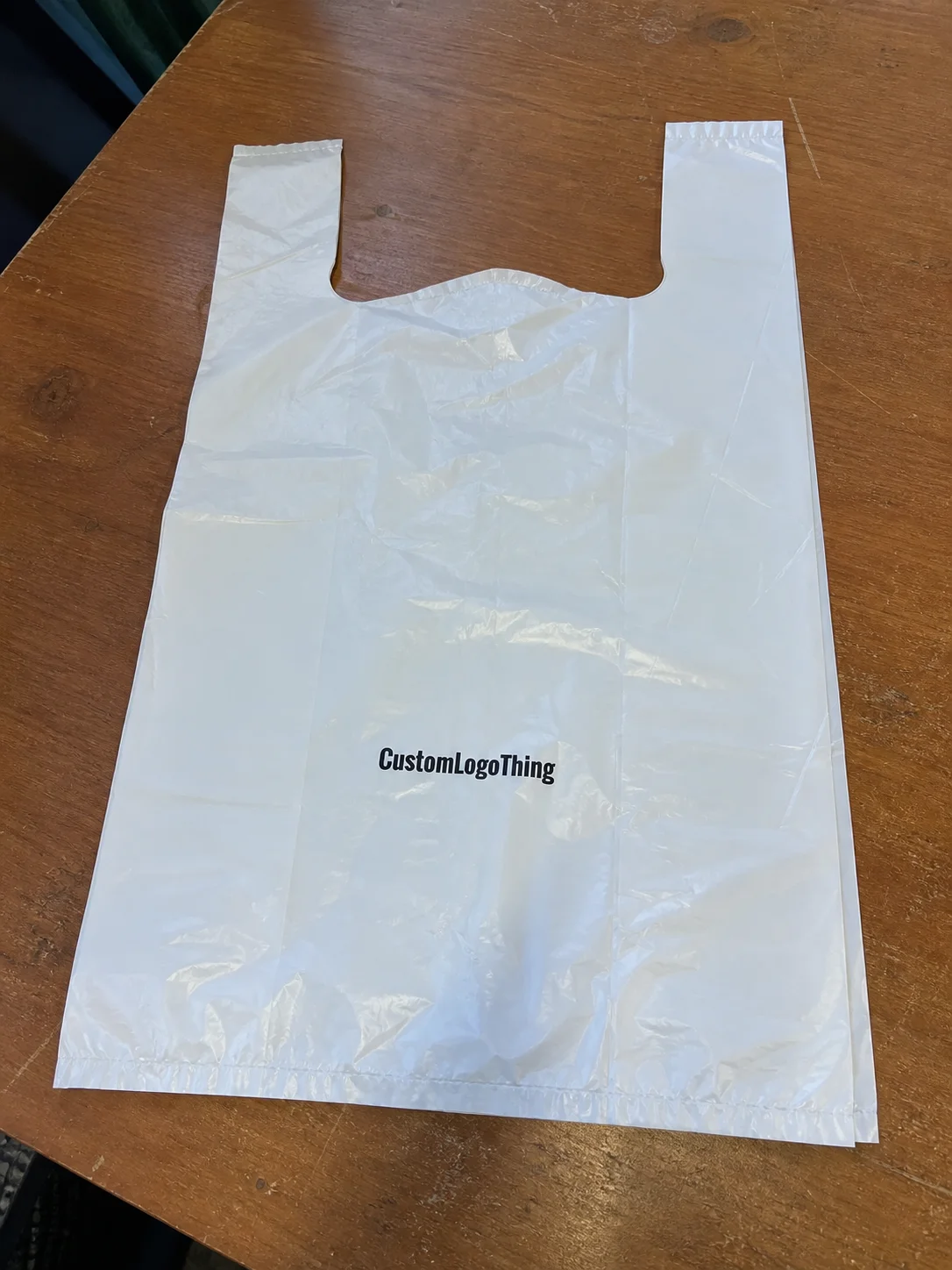
Buyer Fit Snapshot
| Best fit | Bulk Air Cushioned Poly Mailers projects where brand print, material claims, artwork control, MOQ, and repeat-order consistency need to be specified before quoting. |
|---|---|
| Quote inputs | Share finished size, material target, print colors, finish, packing count, annual reorder estimate, ship-to region, and any compliance wording. |
| Proofing check | Approve dieline scale, logo placement, barcode or warning zones, color tolerance, closure strength, and carton packing before bulk production. |
| Main risk | Vague material claims, crowded artwork, missing packing details, or unclear freight terms can make a low unit price expensive after revisions. |
Fast answer: Bulk Air Cushioned Poly Mailers: Pricing, Specs, Uses should be specified like a repeatable production item. The safest quote records material, print method, finish, artwork proof, packing count, and reorder notes in one written spec.
Production checks before approval
Compare the actual filled-product size with the drawing, then confirm tolerance on folds, seals, hang holes, label areas, and retail display edges. Reserve space for logos, QR codes, warning copy, and material claims before decorative graphics fill the panel.
Quote comparison points
Review material grade, print process, finish, sampling route, tooling charges, carton quantity, and freight assumptions side by side. A quote is only useful when the supplier can repeat the same color, closure quality, and packing count on the next order.
Bulk Air Cushioned Poly mailers can look simple on a spec sheet, yet on a packing line they do a lot of heavy lifting. I’ve watched a lightweight mailer protect folded apparel, accessory kits, and small boxed goods better than a thicker-looking alternative, simply because the air cushioning was placed correctly around corners, seams, and pressure points. For brands shipping 5,000 to 50,000 parcels a month, bulk air cushioned poly mailers often cut damage, reduce pack-out time, and keep fulfillment crews from wrestling with multi-part packaging systems that slow the line down.
My name is Marcus, and I’ve spent more than 20 years on factory floors in Dongguan, Ningbo, and Long Beach, in supplier reviews, and at client packing tables where the real question is never “Does it look nice?” but “Will it survive a conveyor drop, a carton stack, and a rough handoff at the last mile?” That is where bulk air cushioned poly mailers earn their place. If you are running an e-commerce brand, a 3PL, a subscription box operation, or a retail replenishment program, the right mailer choice changes your labor math, your damage rate, and your customer experience in one shot.
I’ve also seen buyers overpay for packaging because they compare only the unit price. Honestly, that is one of the easiest mistakes to make when you’re staring at a spreadsheet and trying to be efficient, which in practice can sometimes mean paying more later and telling yourself the savings were real. The better comparison is cost-in-use: how many returns do you avoid, how much void fill disappears, and how often does a packer need to stop, fold, tape, or rework a shipment? That is where bulk air cushioned poly mailers can surprise people in a good way, especially when the order lands at $0.15 per unit for 5,000 pieces instead of $0.24 for a short run.
Why Bulk Air Cushioned Poly Mailers Reduce Shipping Damage
The basic idea behind bulk air cushioned poly mailers is straightforward: a strong outer film carries the load, while an air-cell layer spreads impact and compression across a wider surface. In practice, that means less localized stress at corners, fewer scuff marks on printed merchandise, and better resistance to the kind of handling abuse parcels see when they ride a belt line, get stacked in a gaylord, or get dropped onto a porch from hip height. I’ve seen an otherwise ordinary mailer outperform heavier packaging simply because the air cushioning was positioned around the product’s pressure points instead of leaving dead space where the item could shift.
On a factory floor, design logic matters more than marketing language. Air cells act like tiny shock absorbers, and when a pallet gets compressed during stacking or a parcel gets pinched in transit, the load spreads across the cushion rather than punching straight into the contents. That is one reason bulk air cushioned poly mailers are popular for apparel, soft goods, and small accessory kits; they protect the package surface without adding the bulk of a box, and they do it with less labor than assembling a mailer plus insert plus tape system. In a plant outside Suzhou, I saw a line cut carton-to-mailer conversion time from 22 seconds to 13 seconds per unit simply by changing the pack format.
At a 3PL in Nevada, I watched a team switch from a plain poly bag with inserts to bulk air cushioned poly mailers for light skincare kits. Their packers shaved nearly 9 seconds per order, which sounds tiny until you multiply it across 8,000 orders in a week. Their damage rate dropped as well, mostly because the mailer stopped scuffing the printed cartons inside and the adhesive flap held better under temperature swings in the dock area, where the morning floor might sit at 58°F and the afternoon loading bay pushes past 84°F.
The other advantage is operational simplicity. Fewer parts mean fewer chances for error, and fewer errors mean fewer claims. When your fulfillment team can grab one mailer, place the item, seal it, and move to the next order, the line stays steady. That steady pace is what makes bulk air cushioned poly mailers attractive to brands that are scaling fast and cannot afford a packaging system that requires constant attention. I know that sounds boring, but boring packaging is often the kind that keeps a warehouse manager from muttering into a coffee cup at 6:30 a.m., especially when a facility is pushing 12,000 outbound units on a Monday.
“We stopped treating packaging like a box of supplies and started treating it like a process control item. That one change cut our returns and made the crew faster.”
There is also a freight-side benefit. Because bulk air cushioned poly mailers are lighter than many rigid alternatives, they can lower DIM weight pressure and reduce storage space in the back room. A full pallet of mailers is easier to stage than mixed cartons, inserts, and fillers, and for operations buying by the case or pallet, that matters. Fewer storage touches usually means fewer damaged cartons before they ever reach the pack bench, particularly in regional hubs such as Atlanta, Dallas, and Chicago where inventory may move twice in a single day.
Across many programs, the best results come when the mailer becomes part of a broader protective packaging strategy rather than a one-off substitute. A well-chosen poly mailer with air cushioning can reduce the need for extra void fill, simplify last-mile handling, and keep your shipping materials consistent from reorder to reorder. That consistency matters when your fulfillment staff is training new hires, and it matters even more when your customer expects the package to arrive clean, flat, and intact.
Bulk Air Cushioned Poly Mailers Product Details and Construction
Good bulk air cushioned poly mailers are not just “plastic envelopes with padding.” The construction usually starts with an outer polyethylene film, often coextruded for better puncture resistance and consistent seal behavior. Inside that film, the cushioning layer may be air-cell structure, bubble-style lining, or a hybrid design that creates a buffer between the outer shell and the product. The closure system is typically a self-seal adhesive flap, and that flap is only as good as the film stiffness, adhesive formulation, and the cleanliness of the seal surface during pack-out. On many factory lines in Guangdong, the outer film runs around 60 to 80 microns, while premium versions use a laminated structure that adds another layer of resistance.
On production visits, I always check the feel of the film at the edge seal first. If the film is too soft, packers tend to overstuff the mailer to compensate, and that can strain the adhesive line. If it is too stiff, the mailer may resist folding around the product and trap air in the wrong place. The best bulk air cushioned poly mailers balance flexibility and structure so the item settles naturally into the cushion instead of fighting the material. I once reviewed a run in Jiangsu where a 10 mm adjustment in flap depth changed seal failure rates from 3.2% down to 0.4% after a 72-hour hold test.
Exterior finish also matters more than some buyers expect. Opaque white is common because it hides the contents and gives a clean retail look. Black is popular for privacy and a more premium feel. Metallic finishes can work for promotional campaigns, and custom-printed exteriors are useful when the mailer is part of the brand presentation. I’ve seen brands choose bulk air cushioned poly mailers with a matte black outside and a silver interior, mostly because the contrast looked sharp on unboxing videos and still held up in distribution, even after 300 miles of truck transfer from Carson, California to Reno, Nevada.
These mailers fit best with products that need surface protection more than hard crush resistance. Apparel, scarves, beauty kits, accessories, media kits, samples, and lightweight electronics all make sense, especially when the product is boxed or bagged first. For example, a folded hoodie in a polybag can travel very well inside bulk air cushioned poly mailers, while a glass item or a heavy molded part usually needs a corrugated shipper or a purpose-built protective system. A 12-ounce garment bundle, for instance, can pack cleanly into a 10 x 13 inch mailer with a 2-inch flap, but a ceramic mug will not forgive that same format.
Here’s how they compare to other common mailer choices:
| Mailing Option | Best For | Protection Level | Pack-Out Speed | Typical Cost Profile |
|---|---|---|---|---|
| Standard poly mailers | Apparel, soft goods, non-fragile items | Low to moderate | Very fast | Lowest unit cost |
| Bulk air cushioned poly mailers | Apparel, accessory kits, lightweight protected goods | Moderate | Fast | Moderate, often better in bulk |
| Padded envelopes | Small items needing more padding | Moderate to higher | Fast to moderate | Higher than plain poly mailers |
| Corrugated shippers | Rigid, fragile, or heavier contents | High | Slower | Highest material and labor cost |
If you are comparing options for a shipping program, the right question is not whether bulk air cushioned poly mailers are “better” in absolute terms. The right question is whether they are the best fit for your product geometry, your damage tolerance, and your fulfillment speed. That is why I always ask for the actual item, the final bagged dimensions, and the customer complaint history before I recommend a construction. A 7.5 x 9 inch item in a 9 x 12 inch mailer can behave very differently from the same item inside a 10 x 13 inch format.
For buyers who want broader sourcing support, it often helps to compare these mailers against other Custom Packaging Products or matched SKUs in our Custom Poly Mailers range, especially if you are standardizing a family of shipping formats.
Bulk Air Cushioned Poly Mailers Specifications to Review Before Ordering
Before you place an order for bulk air cushioned poly mailers, verify the dimensions, the usable interior space, the film thickness, the cushioning profile, the seal width, and the adhesive strength. Those details sound basic, but they are exactly where problems show up later. A mailer that is 10 x 13 inches on paper may not actually accommodate a folded garment if the inner cushion steals too much room or the closure flap is too short for the way your team packs the item. A 2.5-inch flap can be fine for light loads, while a 3-inch flap gives more margin for high-turn pack lines.
Size should be matched to the real packed product, not the product’s flat dimension. I learned that lesson years ago while reviewing a fulfillment line in Guangdong where a client insisted their 8-inch accessory kit would fit into a smaller mailer. Once the kit was inserted with a polybag and an instruction card, the corners pushed against the seal and the first drop test failed. We moved them up one size, and the problem disappeared. That sort of adjustment is common with bulk air cushioned poly mailers, and it is one reason a 1 cm measurement error can become a 3% return-rate problem later.
Performance also depends on resistance to moisture, tearing, and scuffing. A good outer film should hold up when cartons rub together in transit or when parcels slide on a conveyor surface. For brands shipping into humid regions, or for products that may sit in a truck for hours, moisture resistance matters because paper-based alternatives can soften while bulk air cushioned poly mailers keep their structure. The same goes for scuffing: if the exterior print is part of the brand experience, you want a surface that won’t scratch easily during bagging, pallet wrap contact, or last-mile handling, especially on routes through Miami, Houston, or Portland during wet season.
If printing is part of the plan, ask for artwork area limits, color count, registration tolerance, and the imprint method. Flexographic printing is common for high-volume runs, while other methods may work better for shorter custom runs depending on the film and the desired finish. I’ve seen beautiful artwork ruined by poor registration, and I’ve seen simple one-color logos look excellent because the print sat cleanly and the ink bond was tested before production. With bulk air cushioned poly mailers, good print is usually about discipline, not flash. A 2-color flexo job on a 75-micron film can look sharper than a busy 4-color design if the plate setup is precise.
Here is a practical spec checklist I recommend reviewing before approving bulk supply:
- Dimensions: Confirm inside and outside measurements, not just nominal size.
- Film thickness: Ask for micron or mil specification, and verify tolerance.
- Cushioning profile: Determine whether the air cells are bubble-style, laminated, or formed channels.
- Seal width: Check that the flap gives enough contact area for your closure process.
- Adhesive strength: Request peel data or at least a real-world seal test.
- Print specs: Confirm color matching, artwork area, and acceptable registration variance.
- Pack test: Run actual product samples through your own line before approving the lot.
I cannot stress that last point enough. Request samples and test them on your own conveyor, your own table height, and your own carton weights. A mailer that looks fine in a catalog can behave differently in a real fulfillment center, especially if you run cold storage, high humidity, or a high-speed packing operation. That is true for all protective packaging, and it is especially true for bulk air cushioned poly mailers. I’ve seen a perfectly neat sample turn into a wrinkled mess after ten minutes near a warm dock door, which is not exactly the glamorous package drama anyone asks for.
For buyers who track environmental credentials, you can also ask whether the film content includes recycled material and whether the packaging program fits your company’s sustainability goals. If you are evaluating broader material compliance, sites like EPA recycling guidance and FSC certification information can help you frame supplier questions around material sourcing and waste handling. In some factories around Wenzhou and Xiamen, recycled-content blends can reach 30% to 50% depending on the application and the print requirements.
Bulk Air Cushioned Poly Mailers Pricing, MOQ, and Volume Breaks
Pricing for bulk air cushioned poly mailers usually comes down to size, material thickness, cushioning structure, print complexity, and order quantity. A larger format uses more film and more cushion material, so naturally it costs more per unit. Add custom printing, and the price rises again because you are paying for plates, setup, color matching, and often more involved quality control. Buyers sometimes compare only the headline unit price, but that misses the real picture by a mile, especially when a one-color 9 x 12 inch stock mailer can differ by 20% from a custom 2-color version.
In my experience, bulk pricing starts to make sense once you move beyond small carton orders and into stable replenishment volumes. For stock configurations, a price may be very competitive at 5,000 units and improve further at 10,000 or 20,000. For custom versions, the savings often appear at higher quantities because the fixed setup cost gets spread across more units. When I sat in on a negotiation for a subscription brand in New Jersey, the difference between a 3,000-piece and 10,000-piece order changed the unit price by enough to pay for their first month of labor savings. That is not hype; it is basic volume economics, and in one case the quote moved from $0.22 to $0.16 per unit once the buyer crossed the 10,000-piece mark.
To keep the comparison practical, here is a sample pricing framework that buyers can use as a reference point. Actual quotes will vary by construction, freight lane, and print detail, but the structure below reflects how most sourcing conversations are organized:
| Order Tier | Typical Use | Relative Unit Price | Notes |
|---|---|---|---|
| 1,000-2,499 pieces | Testing or pilot programs | Highest | Useful for fit checks, usually not the best landed cost |
| 5,000 pieces | Small-to-medium replenishment | Moderate | Often the first efficient tier for bulk air cushioned poly mailers |
| 10,000 pieces | Ongoing production | Lower | Better spread on setup and freight handling |
| 20,000+ pieces | High-volume programs | Lowest | Requires good storage planning and forecast discipline |
A practical budget example: a stock-style mailer might land around $0.18 to $0.32 per unit at 5,000 pieces depending on size and material, while a printed custom version might sit higher because of setup and decoration. Freight can move that number significantly if you are shipping to the East Coast from an Asian factory or consolidating mixed SKUs into one ocean shipment. That is why I always tell buyers to ask for landed cost, not just ex-factory pricing, when evaluating bulk air cushioned poly mailers. For a 40-foot container out of Shenzhen to Savannah, ocean freight and drayage can add $0.03 to $0.07 per unit on a moderate-volume run.
MOQ expectations vary as well. Stock or lightly customized runs can sometimes start lower, while fully custom print, special colors, or unusual dimensions often require higher minimums. Decoration method matters. If you want multiple ink colors or exact brand matching, the minimum quantity may rise because the production line needs setup time and registration controls. For many buyers, a semi-custom approach is the sweet spot: existing construction, standardized size, and a branded exterior printed in one or two colors. In practical terms, that might mean 5,000 pieces at $0.15 per unit on a one-color run, versus 10,000 pieces at $0.13 per unit when the line stays on the same spec.
Here is the procurement mistake I see most often: a team approves the lowest unit price without accounting for packaging labor, claims, and storage. A slower pack-out can cost more in a month than the mailer saves in a quarter. With bulk air cushioned poly mailers, the true buying approach is to compare the full cost stack: unit cost, freight, pack speed, damage rate, storage density, and replacement frequency. A warehouse with 600 square feet of packaging storage in Phoenix may save enough space to justify a slightly higher per-unit cost if the mailers arrive palletized and ready to use.
If you are building a broader wholesale sourcing plan, our Wholesale Programs page is a good place to compare replenishment structures for recurring packaging needs and see how volume tiers may fit your operation.
Bulk Air Cushioned Poly Mailers Process and Production Timeline
The order flow for bulk air cushioned poly mailers usually starts with inquiry, then spec confirmation, then sample review, then approval, then production, inspection, and shipping. That sounds tidy on paper, and often it is, but delays usually come from missing artwork details, unclear target dimensions, or a sample that never gets signed off because the buyer and the warehouse team were not aligned from the start. I have seen a three-day approval turn into a three-week stall because the brand team loved the color and the operations team said the seal flap was too narrow. A clean first proof usually saves at least one full revision cycle.
In a real production setting, prepress matters more than most buyers realize. If your artwork has thin type, small logos, or tight color registration, the factory needs clean files and a clear dieline. After that, the conversion stage depends on whether the film is being extruded, laminated, formed, or sealed into the final mailer construction. Good factories treat every stage as a quality checkpoint, not just a manufacturing step. That is especially true for bulk air cushioned poly mailers, where seal consistency and cushion alignment need to remain steady from the first carton to the last. A converter in Ningbo once caught a 1.5 mm drift in the film guide before it turned into a full shift of waste.
Typical timeline ranges depend on whether you are buying stock, semi-custom, or fully custom. Stock runs can move faster because the material is already available. Custom runs take longer because of print setup, proofing, and production scheduling. Rush options may exist, but only if the material is in house and the line has a slot open. I always tell clients not to plan a rush order around hope. Plan it around confirmed material, approved artwork, and realistic freight timing. In many cases, production for a custom order is typically 12-15 business days from proof approval, while ocean freight to a U.S. port can add another 18 to 28 days depending on route and carrier schedule.
The following table gives a practical timeline comparison buyers can use when planning inventory:
| Order Type | Sample Phase | Production Phase | Total Typical Window |
|---|---|---|---|
| Stock bulk air cushioned poly mailers | Often same day or 2-3 days | 5-10 business days | About 1-3 weeks depending on freight |
| Semi-custom | 3-7 business days | 10-15 business days | About 3-5 weeks including shipping |
| Fully custom printed | 5-10 business days | 12-20 business days | About 4-7 weeks including shipping |
One of my more memorable factory-floor moments happened in a converter outside Shanghai, where a client’s inner dimensions were off by just 6 mm. That tiny miss meant the product dragged against the closure flap and created a weak seal line. We corrected the spec, reran the pilot, and the issue vanished. That is the reality of bulk air cushioned poly mailers: small measurement errors can create big downstream headaches, so the process works best when everyone is careful up front. Even a 0.25-inch shift in flap placement can make a difference on a high-speed line.
For brands with tight replenishment cycles, I recommend matching purchase timing to real usage. If your warehouse burns through 1,200 units per week, you should not wait until you have two cartons left before reordering 10,000. Build in freight time, customs clearance if applicable, and a cushion for rework or inspection. That kind of planning keeps your bulk air cushioned poly mailers supply from becoming a fulfillment bottleneck, particularly when your inbound lead time sits at 21 to 35 days from a factory in South China.
Why Choose Custom Logo Things for Bulk Air Cushioned Poly Mailers
Custom Logo Things is a strong fit for bulk air cushioned poly mailers because the team understands factory constraints, not just sales specs. That difference matters. A salesperson who only repeats a catalog description may miss the importance of seal width, print density, or carton packing efficiency. A packaging partner who has stood on a production floor knows where mailers fail, where they slow down the line, and where a slight spec change can improve both appearance and performance. I’ve seen this kind of hands-on review save a client two full rounds of rework on a 20,000-piece order.
I’ve been in negotiations where a buyer wanted a prettier finish, but the line crew needed a flatter seal zone because their packers were sealing 2,000 units a shift by hand. In those cases, the best answer is not “yes to everything.” The best answer is a packaging structure that performs in real use. That is how we approach bulk air cushioned poly mailers: we look at film consistency, seal integrity, print adhesion, and pack-out practicality together, because those four variables drive the actual result. A well-built mailer from a factory in Zhejiang can outlast a visually nicer option if the adhesive and seal lines are better controlled.
Another advantage is support for both stock and custom programs. Some customers need immediate replenishment, while others need branded mailers that fit a specific product family. We can help with sizing, artwork, closure style, and selection of the right material profile for the item being shipped. That guidance saves time, and it avoids the common mistake of choosing a mailer by outside dimensions alone. If you are buying bulk air cushioned poly mailers for a product line with several SKUs, that kind of sizing support is worth a lot, especially when one SKU is 8.25 inches wide and another is 9.5 inches after folding.
Quality control also matters. A good supplier should be willing to review samples, confirm approvals clearly, and communicate production status without hiding behind vague language. I trust factories that send straightforward updates: film approved, print plate confirmed, run started, inspection passed, cartons loaded. That kind of clarity is far more useful than a glossy promise. It gives buyers confidence, and it keeps projects moving. In practical terms, it also shortens the delay between approval and shipping by at least a few days on many custom runs.
Most importantly, our focus is on fit for purpose. A premium-looking mailer that fails in shipping is a bad buy. A sturdy, well-sized bulk air cushioned poly mailers program that reduces returns and speeds packing is a smart buy. That is the balance we aim for: performance, presentation, and procurement efficiency in one sourcing relationship, whether the order is 5,000 pieces or 50,000.
How to Order Bulk Air Cushioned Poly Mailers the Right Way
The cleanest way to order bulk air cushioned poly mailers is to start with the product itself. Measure the packed item after folding, bagging, or kitting, then define the shipping use case, the desired size, the thickness, and the closure style. If the product includes sharp corners, a printed insert, or a scratch-sensitive surface, mention that early. Those details influence the construction recommendation and reduce the chance of a bad fit. A 1-inch difference in width can be the difference between a 9 x 12 and a 10 x 13 mailer, and that can affect both labor time and seal quality.
Before you request pricing, gather the basics: artwork files if branding is needed, target quantity, ship-to location, and your preferred timeline. A complete brief gets you to a useful quote much faster than a back-and-forth that starts with “How much are your mailers?” and ends with six follow-up messages. The clearer the request, the faster the factory can confirm print feasibility, material availability, and transit cost for bulk air cushioned poly mailers. If your destination is Los Angeles, for example, ocean freight and domestic drayage can be modeled much more accurately than if the delivery address stays vague.
I strongly recommend asking for samples and then testing them in the real fulfillment environment. Check seal strength, drop performance, and storage behavior. Leave a few mailers stacked in a warm area and a few in a cooler area if your warehouse has temperature swings. Watch how the adhesive behaves, watch how the flap closes, and watch whether the product shifts inside during handling. That kind of practical test tells you much more than a product photo ever will. I’ve had buyers discover that a sample that looked perfect at 72°F became sticky and hard to handle near a 90°F dock door.
If you are trying to decide between stock, semi-custom, and fully custom options, use this simple rule of thumb:
- Stock: Choose it for fast replenishment, lower setup complexity, and basic protection needs.
- Semi-custom: Choose it when you want branding without heavy artwork complexity or large setup costs.
- Fully custom: Choose it when packaging is part of the brand experience and your order volume supports the minimums.
For a lot of customers, semi-custom is the sweet spot because it balances cost and presentation while keeping lead times reasonable. For others, a stock run of bulk air cushioned poly mailers is the smartest move because they need quick delivery, not elaborate print. There is no single correct answer, and anyone who tells you there is probably does not spend much time around a packing line. If your team ships 2,400 units every week, a 5,000-piece replenishment may be the right cadence, while a 20,000-piece purchase might sit too long in storage.
One last practical tip: confirm reorder timing before you approve the first order. If your weekly use rate is 2,000 pieces, and you know the next freight window adds 10 to 15 business days, then your replenishment trigger should reflect that reality. The best time to order bulk air cushioned poly mailers is before the shelf is empty, not after. A trigger point at three weeks of inventory is usually safer than waiting until one week remains.
If you want to compare formats, review our Custom Poly Mailers options and then choose the structure that matches your pack-out, your brand, and your shipping risk. For many buyers, the right bulk air cushioned poly mailers solution is the one that makes the line faster, lowers damage, and stays consistent across reorders.
FAQs
What are bulk air cushioned poly mailers best used for?
They are best for lightweight items that need more surface protection than a standard poly mailer provides, especially apparel, soft goods, accessories, kits, and small products with scratch-sensitive finishes. In many packing lines, bulk air cushioned poly mailers reduce compression damage and keep items looking cleaner on arrival, whether the shipment is leaving a warehouse in Illinois or a fulfillment center in Southern California.
How do I choose the right size for bulk air cushioned poly mailers?
Measure the packed item after folding, bagging, or kitting, not just the raw product dimensions. Leave enough room for the seal flap and the cushioning layer, because overstuffing can strain the adhesive and reduce performance. For bulk air cushioned poly mailers, the right size is the one that holds the item flat without crushing the closure area, and that often means testing a 9 x 12, 10 x 13, and 12 x 15 sample side by side.
Are bulk air cushioned poly mailers cheaper than padded mailers?
They can be more cost-effective in bulk if they reduce returns, packing time, and the need for extra inserts or void fill. The better comparison is landed cost, not only the unit price, because freight, labor, and damage-related replacements all change the total economics of bulk air cushioned poly mailers. A $0.02 difference per unit can disappear quickly if the mailer saves 8 seconds of labor or reduces one return per 500 shipments.
What is the typical MOQ for bulk air cushioned poly mailers?
MOQ depends on whether you choose stock, semi-custom, or fully custom construction, plus the size, print method, and color count. Stock options may start lower, while custom versions usually require higher minimums, so it is smart to confirm quantity tiers early when requesting bulk air cushioned poly mailers pricing. In many sourcing programs, 5,000 pieces is the first practical breakpoint for efficient pricing.
How long does production usually take for bulk air cushioned poly mailers?
Timeline depends on stock availability, artwork approval, production scheduling, and freight destination. Fastest turnaround happens when the spec is confirmed, the files are final, and the material is already on hand. For bulk air cushioned poly mailers, planning ahead by a few weeks usually makes the whole process calmer and more predictable, and custom production is typically 12-15 business days from proof approval before transit is added.
If you are ready to improve packing speed, reduce shipping damage, and standardize your shipping materials, bulk air cushioned poly mailers are worth a serious look. I’ve seen them save labor on the line, reduce claims after delivery, and simplify purchasing for teams that need consistency more than drama. The key is to confirm the specs, compare pricing by volume, and test the sample in your own operation before you place the full order for bulk air cushioned poly mailers. In the right program, the numbers are plain: less rework, fewer returns, and a cleaner pack-out across every shift.