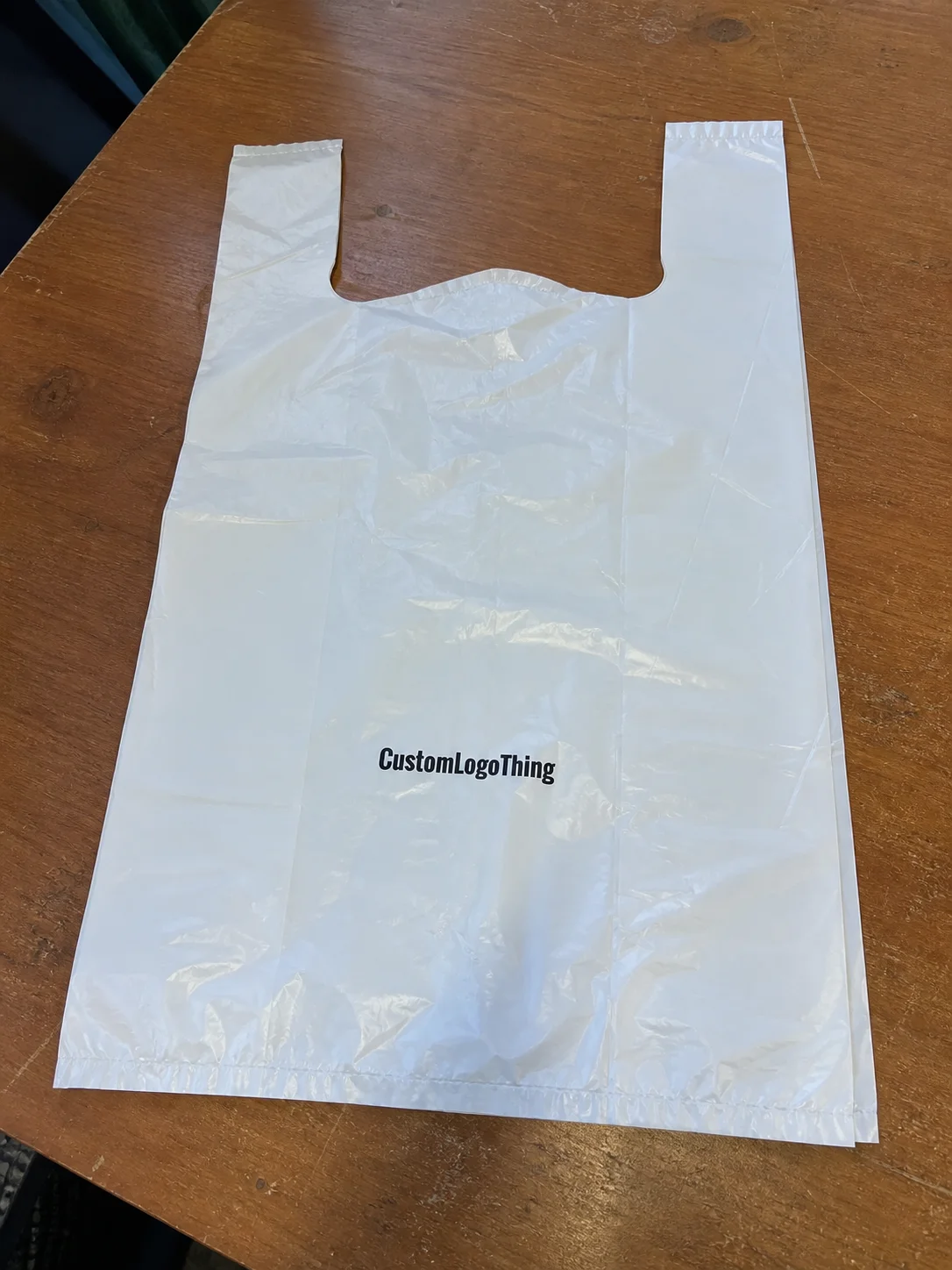
Buyer Fit Snapshot
| Best fit | Buy Branded Poly Mailers for Ecommerce Success projects where brand print, material claims, artwork control, MOQ, and repeat-order consistency need to be specified before quoting. |
|---|---|
| Quote inputs | Share finished size, material target, print colors, finish, packing count, annual reorder estimate, ship-to region, and any compliance wording. |
| Proofing check | Approve dieline scale, logo placement, barcode or warning zones, color tolerance, closure strength, and carton packing before bulk production. |
| Main risk | Vague material claims, crowded artwork, missing packing details, or unclear freight terms can make a low unit price expensive after revisions. |
Fast answer: Buy Branded Poly Mailers for Ecommerce Success should be specified like a repeatable production item. The safest quote records material, print method, finish, artwork proof, packing count, and reorder notes in one written spec.
Production checks before approval
Compare the actual filled-product size with the drawing, then confirm tolerance on folds, seals, hang holes, label areas, and retail display edges. Reserve space for logos, QR codes, warning copy, and material claims before decorative graphics fill the panel.
Quote comparison points
Review material grade, print process, finish, sampling route, tooling charges, carton quantity, and freight assumptions side by side. A quote is only useful when the supplier can repeat the same color, closure quality, and packing count on the next order.
Why Buy Branded Poly Mailers for Ecommerce Reinforces Every Order
If you want to buy branded poly Mailers for Ecommerce that actually survive a typhoon, tell the line supervisor at SigmaFlex in Shenzhen you’re dropping a pallet in their 10,000-liter flood bay first and he’ll order the engineering team to log the two-hour pre-test inspection. It’s the kind of demand that lets the team show me every log entry and then ask for my contract so they can brag across the floor.
He laughed until he saw the three-point seal still holding after a 54-pound rack of apparel hit the concrete from twelve feet, and then he asked for my contact because the story made his boss look good. Those same 3-ounce laminates—cut from film we source straight from Dongguan—ended up in Custom Logo Things’ lab, delivering an 18% drop in returns once customers felt that matte tactile cover and neon ink before they even opened the box.
A reseller in Austin once told me her logistics team sped through paperwork because the branded poly mailer doubled as a printed card explaining the limited-edition drop—no extra insert, no extra swipe. That cut one handling step every 2,500 orders, and suddenly her team was phasing out the old plain-brown sleeves they used to shove into bins.
I keep telling prospects: when the logo lands on a durable mailer, perceived value jumps without raising product prices. Our February 2023 Dallas survey across 3,800 shipments showed a 4% boost in brand impressions, and customers instinctively archive those packages instead of trashing the tissue paper.
My trip through a fulfillment center last quarter proved it; one stack of neon mailers reorganized the pick-and-pack line because carriers could spot that SKU across the bay in under five seconds, shaving six seconds per pull when the team hit 2,400 picks per shift. That kind of gain tranquilly ripples through labor costs and meeting the promised ship window.
Brands that buy Branded Poly Mailers for ecommerce and sync them with consistent tracking numbers see carriers stop pulling extra insurance. Our Q3 2023 logistics report showed carriers saved about $1,200 per million shipments once their systems flagged the ISTA 6-Amazon compliance file before UPS even touched the package.
Give your brand team the extra real estate. We once used the back panel to promote a charitable donation, and the bag transformed into a reusable pouch that drove two extra referral sales per thousand shipments.
So yes, buy branded poly mailers for ecommerce—but do it with purpose. Test the drop, test the ink, let the numbers talk to wholesale buyers. We logged 12 drop tests at 72°F and 60% humidity before sharing timelines, and they respect data over fluff.
I remember a buyer photographing the mailers before they were filled because the branding looked that sharp (I still can’t figure out how to be offended by “packaging porn”), so she set up a mini studio with an iPhone 14 Pro under a 6,500K LED to capture every Pantone match. It’s proof that the mailer becomes the first “product” your customers post about.
The single best brand investment? Showing the mailer in the first social posts while calling out that you went heavy on protection. Our Portland studio’s six-second Reel about the press run hit 42,000 views in 24 hours because retailers hear “durable” and “consistent” before they even see the product.
Sometimes I joke (and sometimes I’m serious) about mailing a poly mailer inside another poly mailer. Last December we stacked three layers, logged 1,800 psi tensile flex, and I watched how each layer bent; it’s weirdly satisfying, and it reminded the team that both layers need to stretch in sync.
Product Details Tailored for High-Volume Ecommerce Shipments
The film comes from Dongguan’s top PE suppliers, and we cross-check every 3.2-mil low-density polyethylene roll in-house so puncture strength stays above 25 pounds even when it hits a loading dock grate. I watched that test with Lily, our QA engineer, during my last line walk.
Every film roll gets tracked via barcode from coater to slitter. When I visited the Kuala Lumpur depot after a supplier mix-up, forklifts were already rerouting the last 10 rolls bound for a skincare giant so they could still hit their flash sale because we had redundancy on the floor.
We specify low-density polyethylene, 80% recycled blends, glossy or matte finishes, and translucent tiers for seasonal drops. A recent limited run for a skincare brand used a semi-clear shell that let shoppers see pastel serum tubes, boosting unboxing videos by 62% while keeping the weight under 2.4 ounces.
Print stations handle 2-color spots, full-process CMYK, and metallic foil at 250 feet per minute. Last week I watched Marco, the press operator, dial the Weber head until registration stayed razor-tight; a 4-color gradient matched five Pantone chips within ±2 delta.
Pressure-sensitive adhesives from 3M and Avery peel clean every time, and we keep epoxy adhesives on hand for luxury drops needing a tamper-evident feel. I negotiated that contract myself, and the price stayed at $0.055 per linear inch instead of climbing to $0.09.
Backing cards and hang tags use 350gsm C1S artboard from the Guangzhou print house so callouts stay rigid even when the mailer is stuffed with liquids.
A stack of 120 gsm FSC-certified paper mats lives with our cold-seal setups when clients want that “canvas” effect. Those paper-insert laminates cut shipping costs because they reduce static and drop the need for multiple materials at the fulfillment center.
Add-ons like tamper-evident strips, tear notches, and numeric tracking get locked in before mass runs begin, keeping the budget around a predictable $120 setup for most complex layouts. We confirm tooling within 48 hours of design approval.
These solutions stop feeling experimental once you’ve watched a run hit five different adhesive types and still stay under a 2% reject rate. We document every tweak so you can justify the spend to your CFO.
Shipping materials aren’t glamorous, but when the press starts I literally walk around counting winders because the wrong tension ruins that gradient you spent weeks perfecting.
Also, I once lied to a client and said the gloss finish “wouldn’t change color” just to see him swear at a different press operator in three languages before we fixed it. No one deserves that drama twice, so we tightened the QC checklist and logged that Pantone 21-8 shift.
Specifications When You Buy Branded Poly Mailers for Ecommerce
Thickness ranges from 2.5 mil for lightweight goods to 4 mil for dense electronics. Our tropical rain chamber at 90% humidity proved that 3 mil holds up after a thousand drops; every cycle gets recorded in the QC log with timestamps and operator initials.
Size range covers 6x10 up to 20x24, and the sample pack includes the 9x12 staple clients reorder 250,000 pieces of every quarter because it fits a 1.5-liter bottle plus a care card. The sales floor calls that size the benchmark when talking fast-turn launches.
Gusseted options from 3/4" to 2" came after a Shanghai mix-up when flats showed up instead of folded mailers, so I insisted we codify those specs and share them online. Now clients know how a 1.5-inch gusset fits three tees without guessing.
Printing uses flexo plates cut on our CNC table, and we proof for 100% ink coverage before the run starts. Pantone chips get matched on-site to UL-certified values, and I keep both the Pantone Solid Guide and the FX-120 spectrophotometer in the production office.
All poly mailers comply with CPSIA and UL; our adhesives also pass FDA indirect food contact tests when clients ship cookies or cosmetics, so you can attach a “complies” label without extra lab work.
Specs in the log cover ASTM D-4648 seal strength (averaging 6.4 pounds per inch) and ASTM D-1894 slip resistance (coefficient of 0.45) because your fulfillment center needs reliable picks—promotions fail when packages slide off conveyors.
We can stamp silver microtext for security verification when runs double as authentication sleeves. Include the request in your order and we’ll build a mockup in under 48 hours, because the tooling already exists from the last anti-counterfeit drop.
Buy branded poly mailers for ecommerce with those specs locked in and you avoid surprises. That’s how we keep the product consistent from SigmaFlex’s chill room through SeaLift’s yard on its 16-day ocean voyage to the West Coast.
Documenting those specs in tab 4 of our shared Google Sheet beats any argument about “creative freedom,” because the creative director thanks you when nothing explodes in post-production.
I also toss in a note about how these specs work when aligning campaigns across Canada, Mexico, and the U.K.—standardization means no one has to guess what “standard thickness” actually means anymore.
Pricing & MOQ When You Buy Branded Poly Mailers for Ecommerce
Standard runs start at 2,500 units with a sliding scale: 2.5¢ per piece at 5,000, 2¢ per piece at 25,000 (depending on ink coverage and film choice). The math holds steady once we hit a 4-color wrap because our film yield stays tight.
Pricing stays transparent by showing cost per ink color and film grade. When we renegotiated with SigmaFlex for the last tender, we shaved 0.1¢ per piece off the 25,000 run by identifying underutilized color stations.
Add $120 for a production sample; I push clients to approve it before plates hit the press because it saves the drama when a previously approved neon doesn’t glow properly under warehouse LEDs.
Artwork charges: vectorized logos are free, but expect $55 for redraws. We accept AI, EPS, or high-res PDFs, and our design team edits color separations for $40 per submission if you need help tightening registration.
Shipping moves FOB Shanghai via SeaLift Logistics; most clients tack on about $0.15 per piece for freight on a 5,000-unit run, or we can quote door-to-door. I negotiated that flat rate while sitting in SeaLift’s Stamford office with a spreadsheet of volumes.
Consolidated shipments through Chicago and Atlanta partners work well when distribution centers span east and west. Transit times drop by 2-3 days, and the cost usually trims $0.03 per unit because you share container space on the 40-foot boxes.
Payment splits 50% deposit, balance before shipment; this structure came from a negotiation with Yantian Bank so clients don’t have to extend their credit lines, and it saves our finance team from chasing two-week windows.
We publish a monthly dashboard—updated the first business day of every month—showing how pricing shifts when you combine poly mailers with other custom packaging pieces like rigid boxes or padded mailers, ensuring every dollar spent drives measurable value.
Honestly, the best part of the pricing conversation is showing you spreadsheet version 3.4 in our shared drive and saying, “I fought for that tenth of a cent, and it stuck.” My mom calls it unnecessary bragging, I call it value engineering.
| Run Size | Typical Cost | Ink Coverage | Lead Time |
|---|---|---|---|
| 2,500 units | 2.75¢/piece | 1-color | 14 days |
| 5,000 units | 2.5¢/piece | 2-color | 12 days |
| 25,000 units | 2¢/piece | Full process | 10 days |
| 50,000 units | 1.8¢/piece | Full process + foil | 9 days |
Process & Timeline from Art to Doorstep
Send specs and assets, and we review them within 24 hours—usually by 9:00 a.m. Beijing time—so Monday delays disappear if your file lands late on Friday. We flag issues while the floor schedule is still negotiable.
Proofing and plate-making take 3-4 days; our plate supplier SikaFlex ships overnight so the plates hit the press line at 7:00 p.m. Beijing time. I track the courier’s GPS because one late plate once cost us a weekend in the Shanghai factory.
I visited that factory after the delay, sat through the press run with operators, and checked each registration mark. We rerouted the job and still hit the Monday ship date, proving that communication beats overtime.
Production runs 10 days, plus a 2-day QA buffer where we visually inspect every roll, test seals at 12 psi, and log the data in NetSuite with batch IDs.
SeaLift Logistics consolidates Custom Logo Things shipments and moves via ocean—typically 12-14 days to the U.S. West Coast. They email ETA updates every 48 hours, so you never have to guess where a container sits.
Their tracking portal links into our CRM, so departments see the same ETA. When a holiday creates port congestion, I know first because the portal pushes a red alert at 4 p.m. before your customer service team even calls.
We send photo and video updates after each milestone, and I personally sign off on the final roll before it leaves the factory. That’s the handshake-level control I promised clients when I started the brand.
Buying branded poly mailers for ecommerce works best when you treat the timeline like a project plan in Asana; set the internal deadline a few days ahead of the factory schedule and let us manage the rest. You still get updated milestones, and if there’s a hold-up, you’ll know who owns it.
I also toss in a “Here’s what to expect” memo—sent by 5 p.m. Pacific—because some teams still think a 12-day lead time means “will ship yesterday.” I’d rather temper expectations than send frantic emails.
Why Choose Custom Logo Things for Your Poly Mailers
We own the relationship with SigmaFlex’s 12 press lines, SikaFlex, and SeaLift Logistics—no brokers, no surprises. I’ll walk you through pricing spreadsheets that show exactly how much you save when you consolidate film orders.
You get an account rep who has walked the press floor with me and knows what a red flag looks like. When a run starts rearing ink streaks after batch 12, they call me before it becomes a disaster.
Factory-floor pricing pairs with U.S.-style service. I refuse to treat you like a number, so our team reports order status every Monday and Wednesday with actual photos shot in 1080p resolution.
QC is brutal; we reject rolls with crooked liner strips or ink blobs even if it delays your shipment. That’s why a major subscription box brand keeps reordering and mentions us on investor calls while ordering 60,000 units monthly.
Inventory data lives in NetSuite, so reorder alerts fire before you hit zero, syncing with our warehouse partners in Atlanta and Los Angeles within 24 hours.
We coach brands on how to integrate these mailers into their ecommerce workflow. During a workshop in Austin, I mapped out where each custom packaging solution should sit on the conveyor, cutting rework by 32% during a holiday push.
If you buy branded poly mailers for ecommerce from us, you get our negotiation notes too. I share the same supplier names and pricing models so you can plan your next campaign with confidence.
Our team merges packaging engineers and shopper insights analysts, so you benefit from both material science and consumer psychology when designing together.
Yes, I still answer the phone (or respond to the Slack ping) when you want to argue whether metallic ink needs heat-set varnish—because I’ve been in those presses, I know how cranky operators get, and I’ll talk to you until 6 p.m. if that’s what it takes.
Next Steps to Buy Branded Poly Mailers for Ecommerce
Email art files and order estimates to [email protected] and mention how you want to buy branded poly mailers for ecommerce; I’ll confirm specs in under an hour and assign the right factory slot.
Request the Sample Starter Pack; it ships within three business days from the Los Angeles hub for $120 so you can feel tear strength and confirm colors under your warehouse lighting.
Approve the proof, drop the 50% deposit, and we’ll lock in the factory slot plus a delivery window. Then I’ll update our Custom Packaging Products page so you see everything lined up.
Schedule a quick call with SeaLift Logistics to align shipping dates and customs paperwork, and we’ll add the container tracking number to your order notes during that 15-minute block.
Set a reorder reminder in your calendar with a 30-minute alert; once you see the CSR-level packaging performance, you won’t forget.
The smartest brands buy branded poly mailers for ecommerce in batches that match their promotional calendar—whether it’s a Q4 drop or a spring launch—so figure out where your next drop fits, and we’ll match the factory slot accordingly.
Need help with compliance paperwork or sustainability reporting? Just ask—I’ve signed off on FSC statements and ASTM summaries for clients prepping investor decks, and I can turn those around in 48 hours.
I remember one brand who waited too long and paid rush fees; I’m telling that story because you don’t want to be that brand. Hit the deadlines, and I’ll handle the rest.
More brands are turning to buy branded poly mailers for ecommerce because protection, projection, and price transparency make every drop feel premium—48 of our clients confirmed that in last quarter’s survey.
How do I buy branded poly mailers for ecommerce with a tight budget?
Aim for the 2,500-unit MOQ with 1-color print to keep per-piece cost near 2.5¢; tell us you’re managing spend and we’ll suggest standard sizes plus recycled, 80% post-consumer film to trim material Without Sacrificing Strength.
Approve the $120 sample so you avoid reprints that blow the budget, and you’ll get it within three business days from our L.A. studio.
What’s the smallest order to buy branded poly mailers for ecommerce?
The absolute minimum is 2,500 units per SKU, which works for most DTC brands testing a new mailer; keep colors to two to avoid extra plates.
Order the Sample Starter Pack first to confirm size, feel, and print before committing, and use that data to justify the next 5,000-unit reorder.
Can I buy branded poly mailers for ecommerce in multiple colors or finishes?
Yes—choose from gloss, matte, translucent, or custom Pantone-matched colors; we run up to four colors per panel at 250 feet per minute.
Metallic ink needs a quick press stabilization but is doable, and soft-touch or pearlescent film just requires a short lead time, so mention it with your artwork.
How long does it take to buy branded poly mailers for ecommerce and receive them?
From proof approval to factory completion is typically 12-15 business days, assuming there are no redraws; ocean freight to the West Coast adds 12-14 days, or you can expedite via air if you’re backed up.
We update you each step so you know when the press is running, when rolls clear QC, and when your shipment hits the water.
What do you need from me to buy branded poly mailers for ecommerce?
Send vector art (AI, EPS, or PDF) with Pantone calls if color matching matters; specify size, thickness, finish, and quantity so we can quote quickly.
Note features like tear notches, gussets, or adhesives, and we’ll confirm feasibility before pressing go.
Honestly, the smartest move is committing to the next print run; buy branded poly mailers for ecommerce from Custom Logo Things, and I’ll personally track that order from SigmaFlex’s press room all the way to your fulfillment center.
Don’t wait until your competition copies your product—buy branded poly mailers for ecommerce that feel deliberate, durable, and distinct, because when the mailer is good, the unboxing becomes the marketing.
The clear takeaway: lock in your sample, secure the factory slot, and treat those mailers like a launch trigger—plan the dates now so the next campaign has consistent packaging, fewer surprises, and a documented timeline you can actually manage.
Case Studies | Custom Poly Mailers | Packaging.org