Buying Custom Plastic Bags with logo sounds simple until quotes arrive and bags that look similar on paper turn out to differ in film feel, handle strength, print quality, carton count, and freight cost. A small change in thickness can affect durability and shipping weight. A size change can alter packing efficiency. Print method can determine whether a logo looks crisp or slightly soft.
For most buyers, the important questions are practical: will the bag carry the product safely, present the brand clearly, meet local requirements, and stay within budget? The best result usually comes from building the spec around the product rather than buying by category name alone.
Why custom plastic bags with logo still matter

A plain bag gets merchandise out the door. A printed bag does the same job while keeping the brand visible. That still makes sense for retailers, boutiques, salons, museum shops, event vendors, and many food-adjacent businesses.
These bags are used for different jobs:
- Die-cut handle bags for cleaner retail presentation
- Patch handle bags where extra reinforcement matters
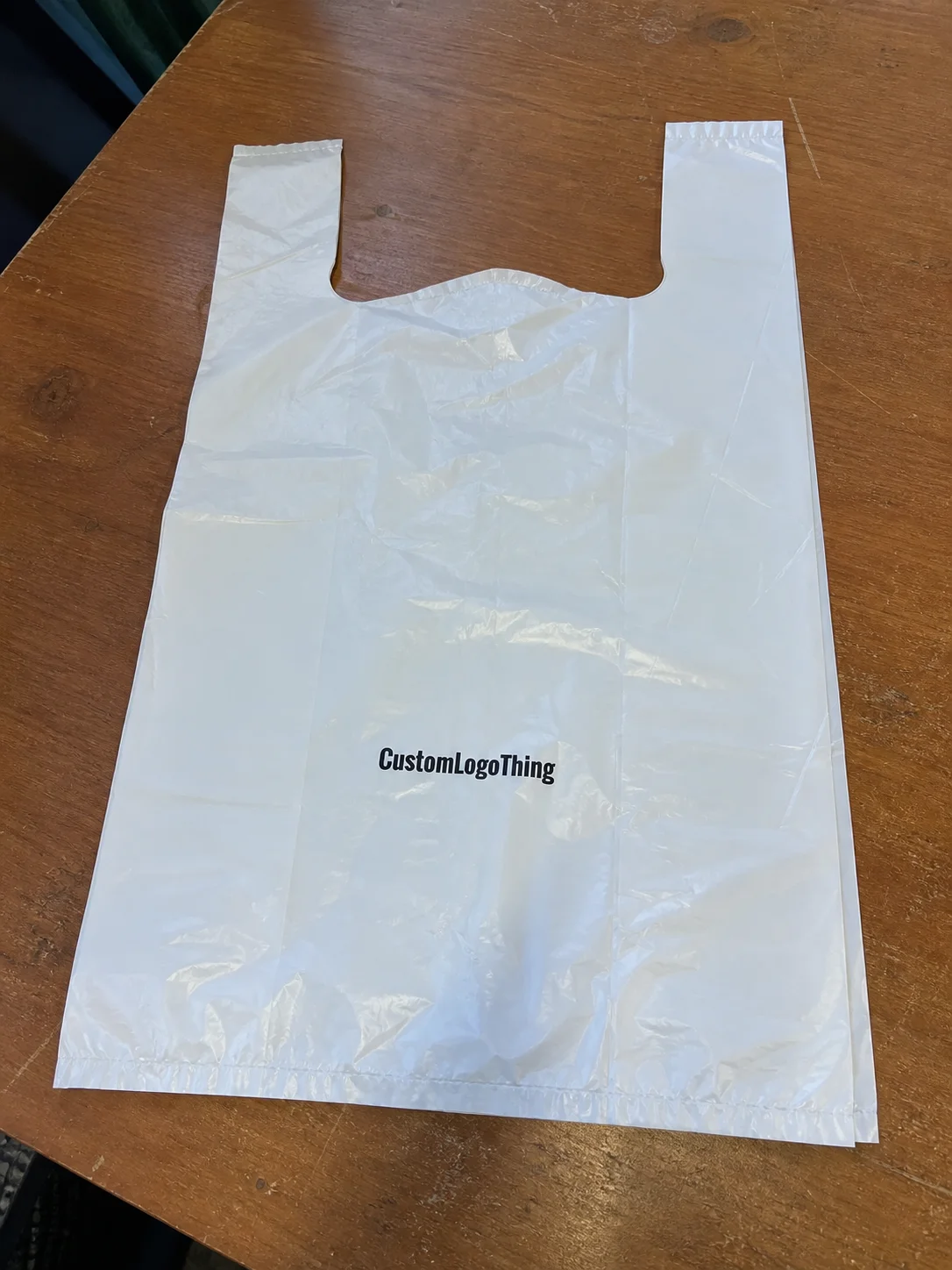
- T-shirt bags for economical, high-volume carryout
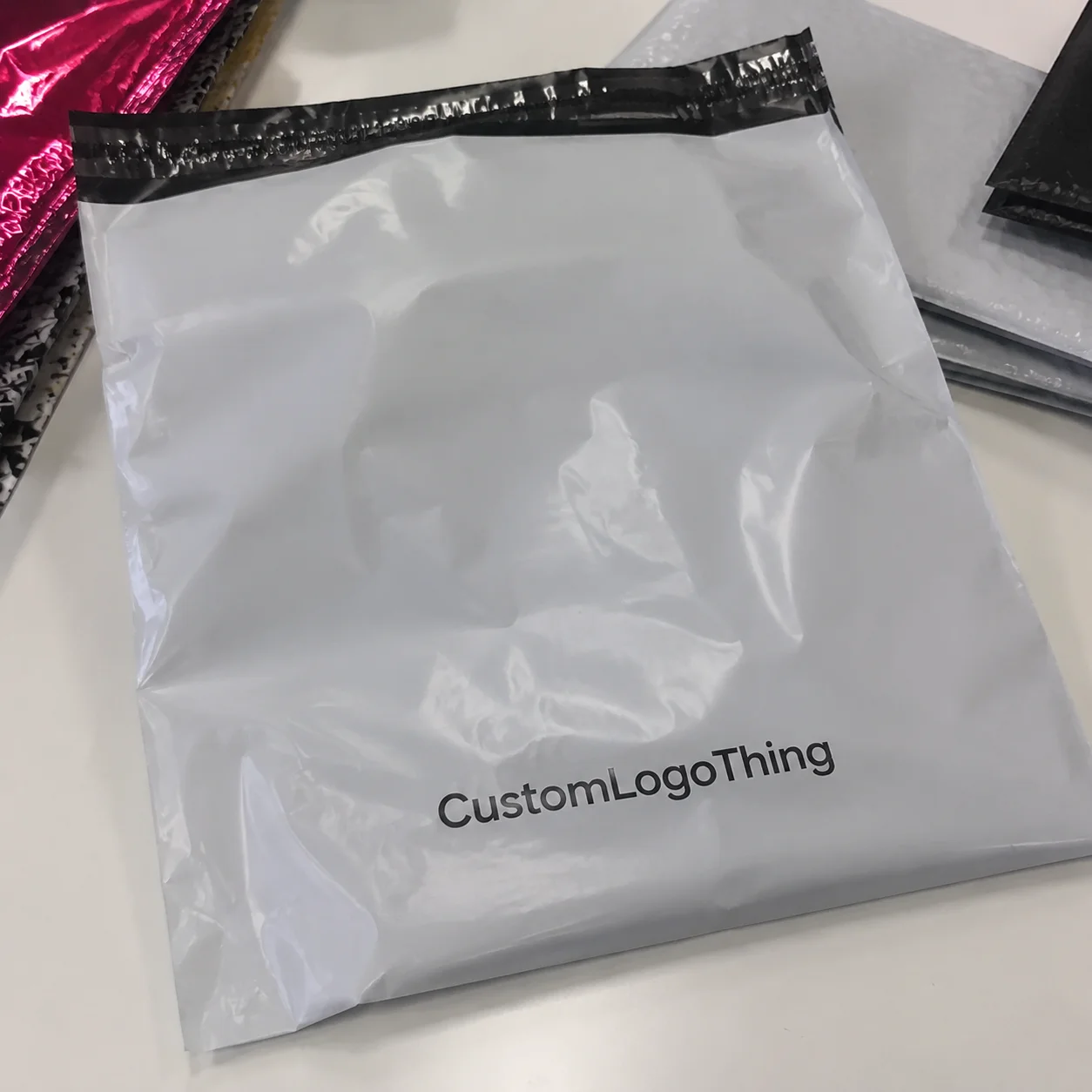
- Poly mailers for lightweight shipping rather than in-store carry
Plastic remains common for a few clear reasons. It resists moisture better than paper, usually ships at lower weight, and often delivers strong logo contrast with simple artwork. On a per-unit basis, it can be one of the lower-cost branded packaging formats for routine retail use.
- Low unit cost on many standard runs
- Moisture resistance for damp conditions or rainy weather
- Light weight for freight and handling
- Strong logo visibility with spot-color printing
- Reuse potential when film and handles are specified correctly
It is not always the right choice. Some regions restrict certain bag types, require recycled content, or limit claims about recyclability. Premium brands may prefer paper or rigid formats. Those checks belong at the start of the project, not after artwork is approved.
For sustainability claims and disposal guidance, the EPA recycling guidance is a useful starting point. Local rules still control what can be distributed, labeled, collected, or recycled.
Materials, styles, and printing: how these bags are actually built
Most bag performance comes down to three things: film type, construction, and print method.
Common film options include LDPE, HDPE, PP, and co-extruded blends.
- LDPE is softer and more flexible, often used for retail carry bags.
- HDPE has a crisper feel and is common in economical carryout bags.
- PP is chosen when clarity and a cleaner presentation matter more.
- Co-ex blends are useful where toughness or puncture resistance matters.
Thickness is usually specified in mils or microns. Thicker is not automatically better. Extra gauge increases material cost, shipping weight, and storage bulk. If the product is light and soft-edged, heavier film may add no real value. But under-specifying thickness creates the opposite problem: split seams, stretched handles, and poor carry comfort.
Products with corners or concentrated weight, such as candles, bottles, skincare sets, or hardware, usually need more structure than folded apparel. Handle style matters here too. A die-cut handle may be fine for light loads, while patch or fold-over reinforcement may be better for heavier use.
Common constructions include:
- Die-cut handle bags for retail, events, and promotions
- Patch handle bags for extra handle reinforcement
- Vest or T-shirt bags for fast, economical checkout
- Fold-over reinforced handle bags for heavier or more premium loads
- Zip bags for kits, bundles, and organization
- Poly mailers for shipping lightweight goods
Printing adds another tradeoff. Flexographic printing is common for standard volume runs because it balances cost and efficiency. Gravure printing is more often used for large runs where consistency matters across high volume. Digital or short-run methods can work for lower quantities or versioned graphics, though unit cost is usually higher.
Artwork complexity affects price quickly. One-color, one-side printing is usually the simplest path. Add more colors, second-side printing, tight registration, or large flood areas, and cost rises. On flexible film, simple logos usually reproduce better than highly detailed artwork.
If the bag needs to match boxes, inserts, or mailers, it helps to review the full packaging system at once. That broader Custom Packaging Products approach usually improves color consistency and brand hierarchy.
The specs that matter before you request a quote
A vague RFQ produces vague pricing. “Please quote logo bags” is not enough if you want to compare suppliers accurately.
At minimum, define:
- Width
- Gusset, if applicable
- Height
- Film type
- Thickness
- Handle style
- Print colors
- Print sides and coverage
- Quantity
- Carton packing preference
- Delivery ZIP code and in-hands date
Start with the product. Measure the item that goes inside, including awkward details such as bottle necks, box corners, lids, or hang tags. Then allow enough room for loading and presentation. Bags that are too tight slow packing and increase stress at seams and handles. Bags that are too large look sloppy and may raise cost for no benefit.
Use case changes the priority:
- Apparel: fit, appearance, and comfortable carry
- Gifts, candles, jars, boxed items: base width and puncture resistance
- Events: room for mixed item sizes and stronger handle performance
Finish affects both appearance and print readability. Clear film shows contents. Frosted film softens the look and hides small packing variation. White opaque film supports strong logo contrast. Black can look premium but changes how lighter inks read. Matte and gloss also shift the visual result.
Compliance should be listed as a spec, not treated as an afterthought. Recycled content, recyclable structures, and printed sustainability language may all be regulated by region. Buyers distributing across multiple locations should confirm requirements before proofing.
Cost, pricing, MOQ, and what moves the number fastest
Pricing is usually driven by film type, thickness, dimensions, handle construction, print colors, print coverage, quantity, and freight. Most quote confusion comes from missing one of those variables.
MOQ matters because custom printing carries setup cost. Plates or cylinders, proofing, press setup, production waste, and packing labor all have to be absorbed across the order. On small runs, that setup is spread across fewer bags, so unit cost stays high. On larger runs, unit cost generally drops.
| Order profile | Typical cost behavior | Best for |
|---|---|---|
| Small run, 1 color, limited coverage | Setup cost is spread over fewer bags, so unit price stays high | Events, pilots, short campaigns |
| Mid-volume, 1-2 colors, standard size | Usually the best balance of setup efficiency and manageable inventory | Ongoing retail use |
| Large volume, multiple colors, broad coverage | Lowest possible unit cost, but tooling, freight, storage, and cash flow become bigger factors | Chains, seasonal programs, recurring distribution |
In broad terms, simple printed bags may land in the cents-per-bag range on larger standard runs, while short custom runs, reinforced handles, heavier film, or more complex printing can raise pricing noticeably. Freight can also be a meaningful share of total cost, especially for bulky orders or long shipping distances.
The three fastest cost movers are:
- Quantity — higher volume usually lowers unit cost until storage becomes the bigger issue.
- Film and thickness — material use adds up quickly.
- Print complexity — more colors, two-side printing, and heavy coverage add cost.
Also check for proof charges, tooling, PMS matching, sample fees, freight, duties, warehousing, and split-shipment costs. A lower quoted unit price is not necessarily a lower landed cost.
Compare quotes only when the specs match exactly: same size, gauge, film, handle style, color count, print sides, packing method, and shipping terms. If one quote uses thinner film or fewer print colors, it is a different bag.
For packaging terminology and standards context, packaging.org can be a useful reference.
Process and lead time: from art approval to delivery
The normal sequence is simple: confirm specs, submit artwork, review proof or dieline, approve colors and layout, schedule production, pack the finished bags, and ship.
Delays usually come from unresolved details: missing dimensions, low-resolution files, late color changes, unclear compliance requirements, or unrealistic in-hands dates. International freight adds possible customs delays.
Digital proofs are useful for copy, placement, and layout, but they do not fully show how ink will read on the chosen film. Physical samples are better for evaluating construction, feel, and handle comfort. Production lead time usually starts after approvals are complete.
Artwork quality matters. Vector files are preferred. Fonts should be outlined. Fine details, thin rules, and small reversed text need caution on flexible film. A web screenshot may work for a mockup, but rarely for production-quality printing.
For many standard programs, a practical benchmark is about 12 to 15 business days from proof approval, plus transit time. Specialty materials, large volumes, and complex constructions can take longer.
For store openings, promotions, and seasonal launches, a safer planning window is usually 4 to 8 weeks before the in-hands date. That allows room for revisions, samples, production, and normal freight movement.
How to choose the right bag for your business
The buying process is easier if you keep it in order:
- Define the use case. Consider product weight, moisture exposure, packing speed, and carry distance.
- Choose the structure. Match handle style and construction to the load.
- Select the film. Decide whether softness, stiffness, clarity, toughness, or price matters most.
- Set the thickness. Enough for the product, not just enough to sound durable.
- Finalize dimensions. Test with actual merchandise.
- Simplify artwork if needed. Flexible film usually favors cleaner design.
- Request comparable quotes. Make sure the same specs are being priced.
- Review proofs and samples carefully. Then order a quantity that fits usage and storage.
Storage is often overlooked. A lower unit cost does not help much if the order takes too much space, sits too long, or becomes obsolete because branding, product sizes, or local rules change.
What to check before you approve a logo bag
Before approving production, focus on the details that affect actual use:
- Product fit: the item should load easily without forcing corners into the film
- Base support: boxed or bottle-shaped products should sit properly
- Handle strength: the handle area should stay secure under real load
- Film gauge: enough for the job without unnecessary material
- Print clarity: the logo should read clearly at normal viewing distance
- Color expectation: confirm whether exact PMS matching is required
- Regulatory fit: confirm local restrictions, recycled-content rules, and labeling requirements
A basic physical test tells you more than a render. Load the real product, carry it by the handle, set it down, and check the seams, handle area, and print under actual lighting.
Common mistakes buyers make
Most problems come from routine shortcuts:
- Choosing by dimensions alone without testing the product inside
- Buying the thinnest film available and expecting premium performance
- Using overly detailed artwork for the print method and substrate
- Ignoring local rules until after approvals
- Comparing mismatched quotes as if they describe the same construction
- Ordering too much just to chase the lowest unit cost
- Reordering too late and paying rush charges
Quote mismatch is especially common. A difference in film gauge, print sides, or handle reinforcement means the suppliers are not quoting the same item.
Real-world testing is the other missed step. An empty sample on a desk does not show how the handle feels under weight or how opacity changes once the product is inside. If transport durability matters, especially for mailers or bags moving through distribution, the ISTA standards are a useful reference point for shipping and handling tests.
Build a better spec sheet and test samples properly
Before requesting pricing, build a short spec sheet with product dimensions and weight, target bag size, preferred film, approximate thickness, handle style, print color count, print sides, estimated quantity, delivery ZIP code, and in-hands date. That alone usually improves quote quality.
If possible, request physical samples close to your intended construction, not just any sample on hand. The sample should be near the same film family, gauge, and handle style as the quoted bag.
Then test it properly. Load the actual product. Try it in the real retail or shipping environment. Check print legibility from a few feet away and under the lighting your customer will see.
For repeat programs, track monthly usage and seasonal spikes. That makes reordering easier and helps balance unit cost against storage limits. The best results usually come from a correct size, appropriate film, printable artwork, realistic lead time, and clear quote terms from the start.
What is the best material for custom logo plastic bags?
There is no single best material for every use. LDPE is often chosen for a softer retail feel, HDPE for more economical carryout, PP for clarity and presentation, and co-ex films for added toughness. The right choice depends on product weight, desired appearance, budget, and whether the bag needs to resist punctures or moisture.
How much do custom plastic bags with logo usually cost?
Price depends on size, film type, thickness, print colors, print coverage, quantity, and freight. Simple larger-volume runs may land in the cents-per-bag range, while small custom runs or reinforced constructions can cost noticeably more. The delivered price matters more than the headline unit price, so freight and setup should always be included in comparison.
What is the typical MOQ for printed plastic bags?
MOQ varies by style, printing method, and production setup. Standard custom runs usually require higher quantities than short-run digital or stock-imprint options because setup costs have to be spread across the order. The right quantity is the one that balances unit cost with storage and actual usage.
How long does it take to produce plastic bags with a company logo?
For many standard orders, production is often around 12 to 15 business days after proof approval, with transit time added after that. Specialty materials, large volumes, art revisions, and freight delays can extend the schedule. Buyers planning for an event or launch are usually safer allowing 4 to 8 weeks total.
Can custom plastic shopping bags with logo be recyclable or made with recycled content?
Yes, many programs can use recyclable film structures or include post-consumer recycled content, depending on the bag design and local regulations. Availability varies by thickness, performance needs, and region. Any sustainability claim printed on the bag should be checked carefully against current local rules before production.