Two Custom Plastic Bags with handles can look nearly identical in a photo and perform very differently once loaded. One carries a folded sweatshirt, water bottle, receipt, and insert card without strain. The other pulls at the handle, warps at the side seals, and makes the brand look careless.
The difference usually comes from structure, not the logo: handle style, film thickness, material, gussets, and seal construction. Those details decide whether the bag feels cheap, carries comfortably, stacks well, or survives the walk from checkout to car.
This guide focuses on the buying decisions that matter most: style, specs, cost, MOQ, lead time, printing limits, and common failure points.
Custom plastic bags with handles look simple, but small spec choices change everything
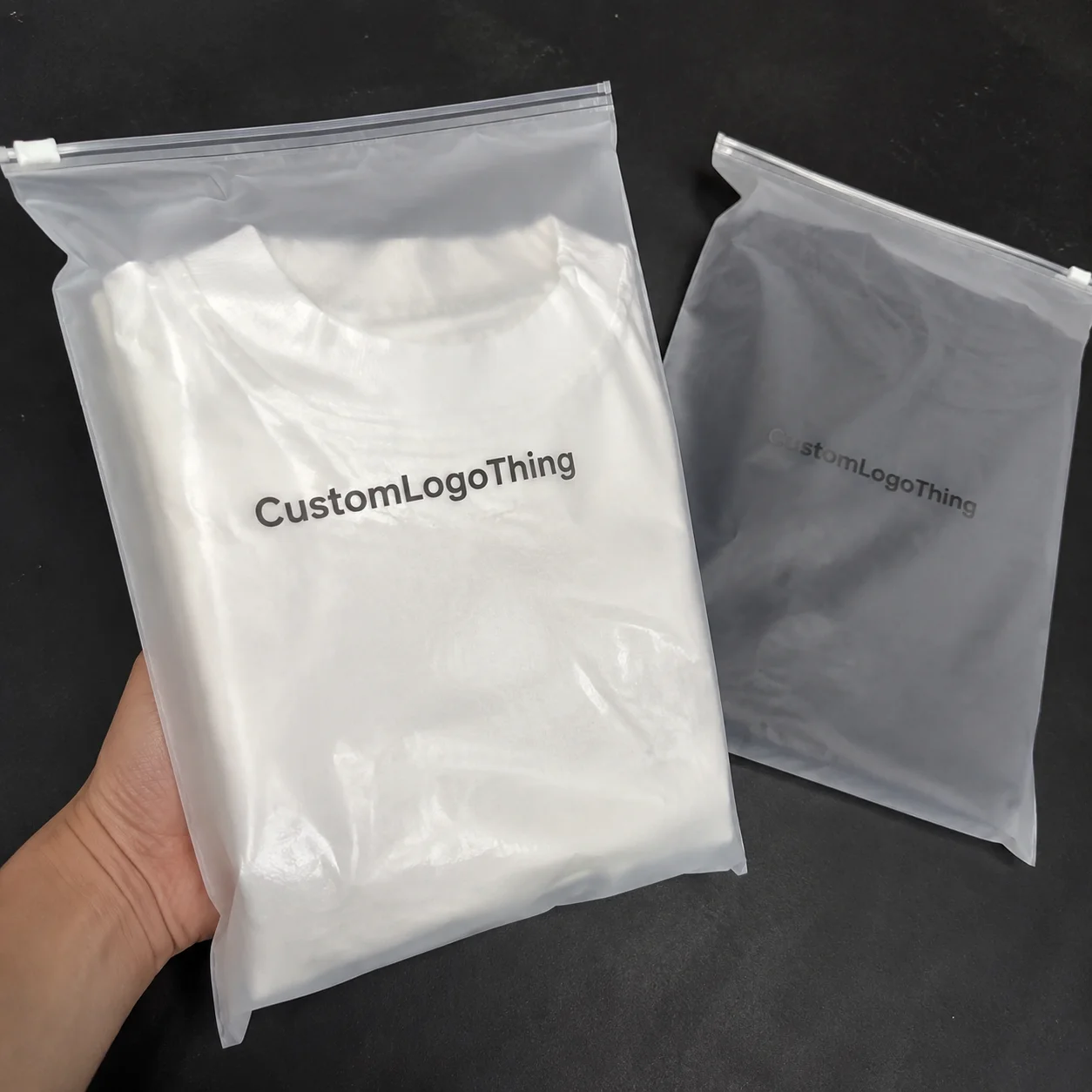
The most common mistake is choosing by appearance first. A frosted bag with a sharp logo can look premium in a mockup and still be underbuilt for the actual load.
Small spec changes affect performance fast:
- Handle style affects comfort, tear resistance, and perceived quality.
- Film gauge affects stiffness, strength, opacity, wrinkling, and cost.
- Material affects texture, noise, flexibility, and print appearance.
- Gussets and bottom construction affect usable capacity and load distribution.
A die-cut handle bag and a patch handle bag may share the same dimensions and artwork, yet behave very differently under weight. Light die-cut bags often work for handouts or a T-shirt. Reinforced patch handles are usually safer for denser retail items. Soft loop bags improve comfort and presentation, but they also increase storage volume and freight.
That matters for apparel, cosmetics, event kits, gift packaging, and any program that also includes tissue, inserts, or other Custom Packaging Products. A weak carry bag can cheapen the whole package.
Simple rule: buy for the loaded bag, not the empty sample.
What these handled plastic bags are and how each style works
Most handled plastic bags fall into four common categories.
Die-cut handle bags
These have a handle opening punched directly into the film. They store flat, ship efficiently, and are often the lowest-cost handled option for custom printing. They work well for lighter retail use, event giveaways, literature packets, and small soft goods.
The limitation is the handle area itself. If the bag is too large for the weight or the film is too thin, the handle opening is usually where failure starts.
Patch handle bags
Patch handle bags add a reinforced film patch around the handle opening. That extra layer improves tear resistance where the load concentrates. For stacked apparel, gift items, or denser merchandise, patch handles are often the best middle ground between cost and performance.
Soft loop handle bags
These use attached loop handles and generally provide the most comfortable carry. They are common in boutique retail, cosmetics, jewelry, and branded gift packaging where presentation matters.
The tradeoff is cost and cube. Soft loop bags usually take more carton space and cost more to convert and ship.
Drawstring-style plastic carry bags
These are less common for standard checkout use but can work for event kits, promotional bundles, and presentation-focused packaging.
Material matters too. LDPE tends to feel softer and more flexible. HDPE is usually crisper, lighter, and noisier. Frosted film can look upscale, but it is not automatically stronger.
Structure affects capacity as much as material. A flat 12" x 15" bag carries differently from a 12" x 15" bag with a bottom gusset. Side gussets add expansion across width. Bottom gussets give contents a base instead of forcing them upward into the handle zone. For boxy or bulky products, gussets often determine whether the bag looks clean or overstressed.
Printing is often done with spot-color flexography for simple artwork. More complex graphics may require different print methods depending on supplier capability and quantity. Handle cutouts, folds, seals, and gussets all reduce printable area, so artwork that looks centered on a flat proof may not feel centered on the finished bag.
If the bag is being compared with mailers, boxes, or other Custom Packaging Products, keep its role clear. A handled bag is a carry solution first. It supports presentation, but it will not correct weak structural packaging elsewhere.
Key specs that matter before you request a quote
A useful quote starts with complete information. “I need custom bags with my logo” is not enough for accurate pricing or a reliable material recommendation.
Have these details ready:
- Bag width and height
- Gusset depth, if needed
- Packed product dimensions
- Expected loaded weight
- Handle type
- Film material
- Film thickness or mil target
- Film color or finish
- Print colors and coverage
- Order quantity
- Delivery ZIP code and required in-hands date
Thickness should be chosen against real load, not guesswork. For lighter promotional use, bags around 1.5 to 2.0 mil may work depending on size and construction. For retail carry use, especially with reinforced handles or larger formats, 2.5 to 4.0 mil is a more common working range. Larger bags can stress the handle more even at the same weight because the contents shift more.
Finish also affects the result. Clear film shows the product. White opaque film usually gives strong print contrast. Frosted film can look more elevated but may show wrinkles or scuffs more easily. Gloss makes color pop but can also highlight handling marks.
Artwork limits are real. Fine reverse type, very thin lines, and details placed too close to seams, folds, or handle openings are common failure points. Flexible film is not a rigid carton panel, so artwork often needs simplification.
Compliance may matter as well. If the bags will be used around food service, events, campuses, or in regions with plastic restrictions, check local rules before ordering. If the bag is part of a larger packaging program, teams may also review chain-of-custody standards for paper components through groups such as FSC.
Do not ignore storage. Five thousand premium handled bags can take more space than many buyers expect, especially in soft loop styles. Carton dimensions, pack counts, pallet height, and receiving conditions all affect total cost.
Custom bag process and lead time: from artwork to delivered cartons
The production flow is straightforward: confirm specs, review artwork, approve proofs, prepare plates or setup, produce film, print, convert, pack, and ship. Most delays come from missing or changed information at the start.
Lead times vary by construction and sourcing route. A stock-size bag with simple printing may move in roughly 10 to 20 business days after proof approval. Fully custom sizing or custom film color often takes 3 to 6 weeks in production. Overseas orders can stretch to 8 to 12 weeks or more once ocean freight and port variability are included.
Typical delay causes include low-resolution artwork, missing vector files, unclear dimensions, Pantone changes after quoting, added print colors, or a late switch in film finish.
Proofing should be treated in stages:
- Sample review for size, feel, and construction reference.
- Artwork proof for placement, orientation, and print intent.
- Production approval for the final run.
A stock sample does not prove final print registration. A digital proof does not prove handle comfort under load. Those are separate checks.
If the bags are tied to a store opening, launch, or trade show, build in schedule buffer. Rush reorders usually cost more than planning ahead.
If the handled bag is part of a shipped kit rather than only a carryout program, some teams also compare assumptions against distribution standards such as those from ISTA.
Cost and MOQ: what drives pricing more than most buyers expect
Pricing is mostly driven by six factors: size, film thickness, handle construction, print complexity, quantity, and freight.
| Style | Typical MOQ Range | Approx. Unit Cost Range | Best For | Main Tradeoff |
|---|---|---|---|---|
| Stock-size die-cut, 1 color | 1,000-3,000 | $0.18-$0.35 | Events, light retail, promo handouts | Less strength at the handle area |
| Patch handle, custom size, 1-2 colors | 3,000-5,000 | $0.28-$0.55 | Boutique retail, gift items, denser merchandise | Higher setup and unit cost |
| Soft loop handle, premium finish | 3,000-5,000 | $0.40-$0.85 | Apparel, cosmetics, upscale presentation | More storage space, higher freight |
These are broad market ranges, not fixed offers. Oversized bags, special film colors, higher gauge, extra print colors, and volatile freight can push pricing up quickly.
MOQ means minimum order quantity. Lower-volume custom jobs cost more per unit because setup, plates, machine time, and freight preparation are spread across fewer pieces. If a supplier offers a very low minimum, check what is being standardized to make that possible, such as stock sizes or reduced print area.
Thicker film and reinforced handles increase piece cost, but underbuilt bags create visible failure costs: replacements, complaints, and poor presentation.
Buyers also forget secondary costs:
- Plate or setup charges
- Freight to destination
- Warehouse space or overflow storage
- Split shipments
- Rush fees on reorders
- Waste from ordering the wrong size first
Sometimes a stock-size bag is the better buy even for a polished brand program. If the product fits efficiently into a standard format, the savings in setup and lead time can outweigh the value of a fully custom dimension.
How to choose the right handled bag step by step
Start with the packed product, not the artwork.
- Measure the packed item, including tissue, inserts, boxes, or folded garments.
- Estimate loaded weight realistically, including extras added at checkout.
- Choose a handle style: die-cut for lighter use, patch handle for reinforcement, soft loop for comfort and premium presentation.
- Select material and thickness to match that load and bag size.
- Decide whether a gusset is needed so contents sit properly instead of pushing into the handle area.
- Keep print practical, especially if one-color artwork will do the job well.
- Request quotes with full specs so recommendations reflect the actual project.
A lightweight event kit might work in a 12" x 15" die-cut LDPE bag around 2.0 mil with one-color print. A boutique apparel order that may hold denim or multiple folded items is usually better served by a patch handle or soft loop bag at a heavier gauge.
If your packaging includes tissue, inserts, labels, stickers, or small boxes, account for that bulk early. Bags often fail visually before they fail structurally.
Best buying habit: test dimensions with the actual packed product before approving a large run.
Common mistakes that make plastic handle bags look cheap or fail fast
The biggest mistake is ordering film that is too thin because the empty sample seemed fine. Once loaded, stress shifts to the handle zone, corners, and side seals.
Wrong sizing is close behind. If the contents sit too high, bunch to one side, or press into the handle opening, the bag looks awkward even before tearing starts.
Artwork placement also causes avoidable trouble. Logos or text too close to folds, seams, gussets, or handle cutouts can distort easily. Approve art on the actual dieline, not just a centered mockup.
Finish choice can backfire too. Frosted and glossy films often look sharp in samples, but some show creases, rub marks, or transit wrinkles more readily than expected. If the bags will be packed tightly or moved between locations, ask how the film behaves in cartons.
Freight and storage are also common blind spots. Heavier-gauge bags and soft loop constructions usually take more cube, more cartons, and more warehouse space.
Another recurring mistake is reordering too late. If the bag is part of repeat retail packaging, set a reorder point well before the last cartons are opened.
Next steps: how to compare options and place a smarter order
The cleanest way to compare suppliers is to build a one-page spec sheet before requesting quotes. Include dimensions, packed product size, expected load, handle type, material, target thickness, print colors, quantity breaks, delivery ZIP code, and in-hands date.
Then compare two or three constructions side by side instead of asking for one “best” option. A die-cut, patch handle, and soft loop version may all be valid depending on weight, presentation, storage limits, and budget. Judge them on four points:
- Strength under real load
- Appearance in use, not just in mockups
- Total landed cost
- Lead time and reorder flexibility
Ask for quantity breaks. Pricing at 1,000, 3,000, and 5,000 pieces often reveals more than a single MOQ quote. Sometimes the next tier lowers unit cost enough to justify buying more. Sometimes it only adds storage cost.
If film feel, handle comfort, or presentation matter, request samples. Also confirm proofing method, production timing, shipping mode, and carton packing before approval.
The short version: better Custom Plastic Bags with handles come from accurate specs, honest load estimates, and comparison of total value rather than the first low quote.
What is the best material for custom plastic bags with handles?
There is no single best material for every use. LDPE is often chosen for a softer, more flexible feel. HDPE tends to feel crisper and lighter. The better decision usually comes from matching the material, thickness, bag size, and handle construction to the actual load.
How much do custom plastic bags with handles cost per unit?
Unit pricing usually depends on size, thickness, handle style, print colors, quantity, and freight. A basic stock-size die-cut bag may land around $0.18-$0.35 each at moderate quantities, while reinforced or premium soft loop styles often fall around $0.40-$0.85+. Oversized formats, custom film colors, and higher print complexity can push costs above those ranges.
What is the usual MOQ for custom plastic bags with handles?
Many custom runs begin around 1,000 to 5,000 pieces, depending on style and level of customization. Stock sizes with simple one-color printing often allow lower minimums. Fully custom sizing, special finishes, and premium handle constructions usually require higher quantities.
How long does it take to produce custom plastic bags with handles?
A straightforward stock-size order can sometimes be produced in 10 to 20 business days after proof approval. Fully custom jobs often need 3 to 6 weeks in production, and overseas freight can extend delivery much further. The fastest way to stay on schedule is to provide complete specs and vector artwork at the start.
Which handle style is strongest for custom printed plastic carry bags?
Patch handle bags are a common choice when added reinforcement is needed because the stress around the handle opening is better supported. Soft loop bags can also perform well in heavier retail presentations. Die-cut handles are usually better for lighter loads unless material, gauge, and dimensions are carefully matched to the product.