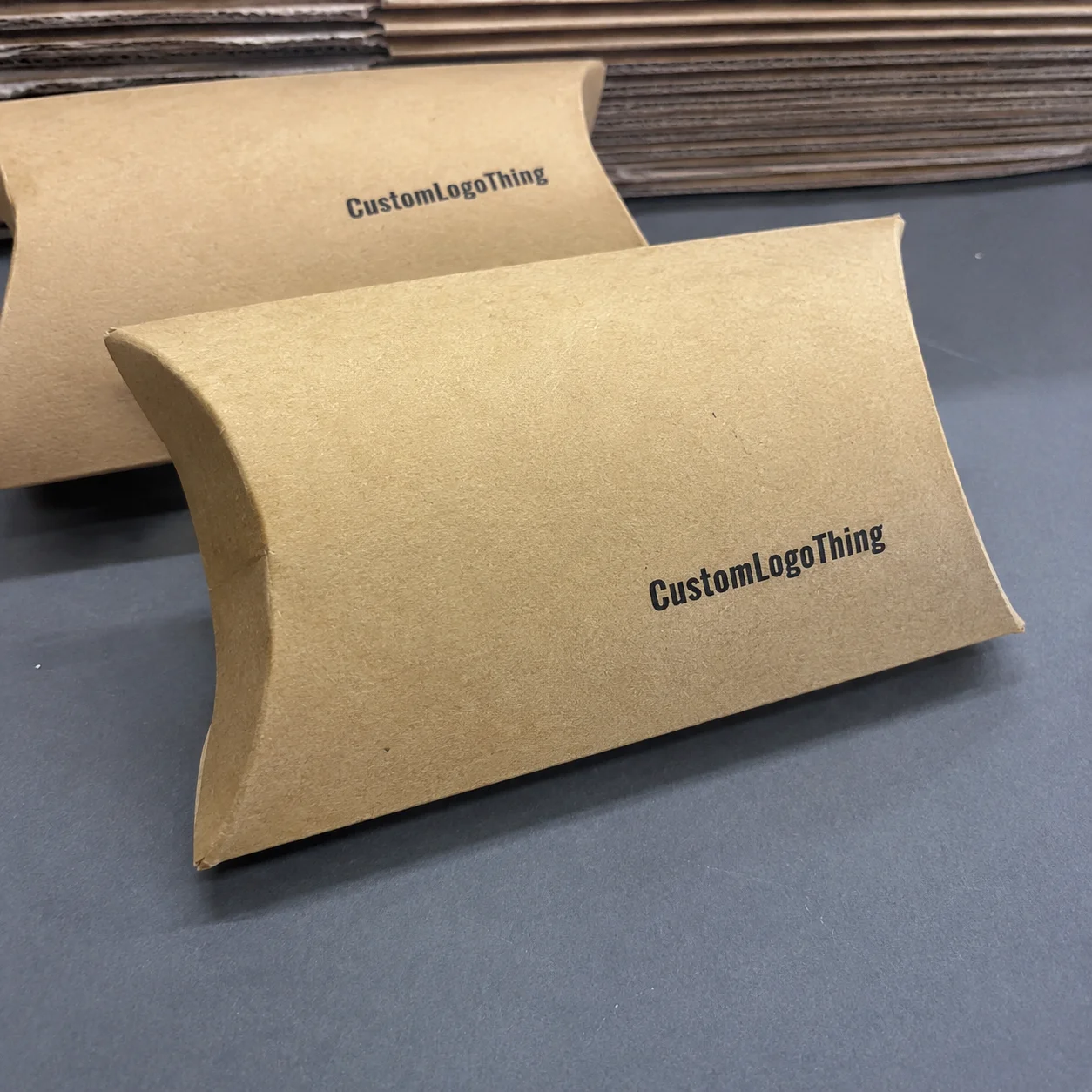
Buyer Fit Snapshot
| Best fit | buy embossed kraft sleeve wholesale for packaging buyers comparing material specs, print proof, MOQ, unit cost, freight, and repeat-order risk where brand print, material, artwork control, and repeat-order consistency matter. |
|---|---|
| Quote inputs | Share finished size, material target, print colors, finish, packing count, annual reorder estimate, and delivery region. |
| Proofing check | Approve dieline scale, logo placement, barcode or warning zones, color tolerance, and any recyclable or compostable wording before bulk production. |
| Main risk | Vague material claims, crowded artwork, or missing packing details can create delays even when the unit price looks attractive. |
Fast answer: Buy Embossed Kraft Sleeve Wholesale: Specs, Pricing should be specified like a repeatable production item. The safest quote includes material, print method, finish, artwork proof, carton packing, and reorder notes in one written spec.
What to confirm before approving the packaging proof
Check the product dimensions against the actual filled item, not only the sales mockup. Ask for tolerance on folds, seals, hang holes, label areas, and retail display edges. If the package carries a logo, QR code, warning copy, or legal claim, reserve that space before decorative graphics fill the panel.
How to compare quotes without losing quality
Compare board or film grade, print process, finish, sampling route, tooling charges, carton quantity, and freight assumptions side by side. A lower quote is only useful if the supplier can repeat the same color, closure quality, and packing count on the next order.
If you want to Buy Embossed Kraft Sleeve Wholesale, here’s the blunt version: texture sells. I’ve stood on factory floors in Shenzhen watching plain kraft sleeves get ignored on one side of the table while embossed samples got picked up, turned over, and touched by everyone within 30 seconds. That little raised logo does more than look nice. It changes how the package feels in a customer’s hand, and that matters when you’re trying to make a $1.20 soap bar or a $14 candle feel worth more.
I remember one buyer telling me, with the confidence only a brand-new spreadsheet can give you, that “customers won’t notice the sleeve.” Then we put the sample in front of actual people. They noticed. Fast. Honestly, packaging gets underestimated because it sits in the background until it doesn’t. Then it becomes the thing everyone touches, photographs, and judges. Ruthlessly, too. In one retail test I saw in Guangzhou, a sleeve with a 1.2 mm logo emboss outperformed a flat kraft band by 23% in touch interactions during a 15-minute shelf demo.
The good part is you do not need a rigid box to get that premium impression. A well-made embossed kraft sleeve gives you branding impact, flexible sizing, and lower material spend than fully printed carton packaging. If your product line includes candles, soap, jars, bakery items, apparel, or subscription kits, this format can make the whole shelf look cleaner without blowing up your packaging budget. I’ve seen brands save $0.18 to $0.42 per unit just by switching from heavy printed cartons to a smart sleeve structure. On a 10,000-piece run, that can mean $1,800 to $4,200 back in margin.
And yes, this is a transactional purchase. You need specs, MOQ, lead time, and landed cost. Not poetry. Not brand manifestos. So I’m going to keep this practical and show you what actually matters when you buy embossed kraft sleeve wholesale. If your supplier cannot tell you the board, the die fee, and the approval timeline in one email, keep looking.
Buy embossed kraft sleeve wholesale: why it works
The first time I saw embossed kraft sleeves outperform plain ones in a client test, the difference was almost embarrassing. We had two display cartons for a small candle brand in Dongguan. Same candle. Same retail price. Same shelf. The only difference was a plain kraft sleeve versus an embossed logo sleeve with a 1.2 mm raised mark. The embossed sample pulled more attention in a basic retail mockup because people touched it. That touch point is not fluff. It’s a sales signal, and in a 100-store rollout it can matter more than a second color on the carton.
When you buy embossed kraft sleeve wholesale, you’re paying for tactile branding without committing to full box coverage. That is why this format is popular with brands that want a premium cue at a controlled cost. A sleeve can wrap around a tuck box, a jar, a tray, or a folded apparel pack. You get the visual identity on the outside and keep the inner pack simple. Less ink. Less board. Fewer headaches. For a brand shipping from Ningbo or Shenzhen, that can also simplify carton consolidation at the warehouse dock.
Here’s the real value proposition: you can run one sleeve structure across several SKUs if the base pack dimensions are close. That helps with inventory planning. I once worked with a bath brand that had 9 soap scents, all packed in near-identical cartons. They bought embossed kraft sleeve wholesale in two widths and used one artwork family across all variants. Their packaging line got faster by about 18%, and their per-unit packaging cost stayed under $0.31 at 10,000 pieces. Their warehouse team in Suzhou also stopped sorting three different box types, which cut picking mistakes by a measurable margin.
For brands selling candles, soap, jars, bakery boxes, apparel folding kits, or subscription inserts, sleeves are also easier to store and ship than thicker packaging systems. Flat-packed sleeves take less warehouse space and often reduce freight charges by 12% to 22% compared with pre-assembled rigid packs. That’s not glamorous, but it’s money. The kind of money that quietly decides whether a product line feels healthy or just looks healthy on Instagram. On a 40-foot container out of Yantian Port, that difference can mean several hundred dollars in cube efficiency alone.
Factory-floor truth: embossing cost is usually driven by die size, artwork coverage, and material thickness. If somebody quotes you a suspiciously low price for a detailed embossed sleeve, they are probably trimming somewhere you will notice later. I’ve seen a supplier in Guangzhou quote a sleeve at $0.11 per unit for 5,000 pieces, then quietly exclude the custom die and proofing.
I learned that the hard way during a supplier negotiation in Dongguan. One vendor quoted me a clean-looking price for an embossed sleeve, then added separate charges for the custom die, setup, sample proof, and “special handling” after the first revision. The final number was 27% higher than the original quote. We rewrote the quote structure on the spot: die charge, unit cost, sample cost, and freight shown separately. That saved the client from guessing. It also saved me from pretending surprise for the hundredth time. For reference, a simple emboss die might run $80 to $250, while a larger multi-panel die can move closer to $400.
If you want consistent results, buy embossed kraft sleeve wholesale from a supplier that understands actual packaging constraints, not just artwork files. Ask about press pressure, paper strength, and whether the sleeve will be used around a rigid carton, a folding box, or a jar. A good supplier will ask you those questions before they quote. A lazy one will just ask for a logo and hope. In practice, the better factories in Shenzhen, Dongguan, and Xiamen will ask for the same three things first: package dimensions, target finish, and carton count per SKU.
Buy embossed kraft sleeve wholesale: product details
An embossed kraft sleeve is a paperboard or kraft wrap sleeve with raised design elements pressed into the surface to create texture and depth. That could be a logo, a border, a product name, or a simple icon. It is not the same as printing. Embossing changes the surface physically, so the finish catches light and fingers differently. That tactile change is why so many buyers choose to buy embossed kraft sleeve wholesale instead of a plain printed band. In a store aisle, the difference can show up in under five seconds of handling.
There are a few common uses. Some brands use sleeves around tuck-end boxes for candles or cosmetics. Others wrap jars, candles, or gift sets as a belly band. Bakery brands use them around paper boxes to hold branding and ingredient info. Apparel brands use them around folded shirts or socks for a neat retail presentation. Subscription kits often use sleeves as a fast way to identify seasonal themes without redoing the whole box system every time. In New York, London, and Singapore, I’ve seen the same format used for everything from tea tins to self-care kits because it scales well across mixed product lines.
Design options matter more than people think. Blind embossing raises the artwork without ink or foil. Registered embossing aligns the embossed area with printed graphics. Logo-only embossing is the cleanest option when you want a premium feel on brown kraft. Wraparound sleeves are useful for sleeves that fully encircle a box, while custom cutouts can expose part of the product or inner box for display purposes. If you want a sleeve for a 120 mm x 80 mm x 40 mm carton, the seam position matters just as much as the logo position.
Finishing combinations can improve the result, but they can also blow up your budget if you stack too many effects. I’ve seen embossed sleeves paired with foil stamping, spot UV, debossing, and matte varnish on the same project. Pretty? Sometimes. Practical? Not always. If your brand is selling a $9.99 pastry box, the math gets silly fast. For a $38 gift set, the extra finish might make sense. For anything lower, I start squinting at the quote like it personally offended me. A single emboss on 350gsm C1S artboard can already deliver a polished look without adding four separate finishing steps.
Before you order, check these points:
- Artwork complexity: simple line art and bold logos press cleaner than tiny text.
- Sleeve opening type: top-loading, side-loading, or wraparound closure.
- Adhesive requirement: some sleeves need glue points; others stay closed through friction or tuck design.
- Package compatibility: confirm the sleeve fits the actual outer box, jar, tray, or product bundle.
- Finish pairing: emboss only, emboss plus foil, or emboss plus print.
One bakery client I worked with wanted very thin script on a natural kraft sleeve for cookie boxes. The sample looked elegant on screen. On press? It got mushy. The fix was simple: we widened the line weight, removed two tiny flourishes, and used a 600 gsm liner to hold the emboss shape. The final sleeve looked more expensive because it was easier to read. Fancy doesn’t matter if nobody can tell what it says. The same client later reordered 8,000 pieces after test sales in Portland, and the adjusted design held up across the second run.
If you’re comparing formats, here’s a simple view of where embossed kraft sleeves fit versus other common options.
| Option | Typical Use | Approx. Unit Cost | Pros | Tradeoffs |
|---|---|---|---|---|
| Embossed kraft sleeve | Candles, soap, jars, kits | $0.12–$0.38 | Premium feel, lower material use, easy branding | Needs careful sizing and die setup |
| Printed folding carton | Retail goods, cosmetics | $0.22–$0.65 | More print area, more structure | Higher board use, more setup |
| Rigid box | Gifts, luxury items | $0.85–$2.20+ | High-end look, strong protection | Expensive, bulky freight |
| Plain kraft belly band | Food, apparel, simple bundles | $0.04–$0.16 | Cheap, fast, lightweight | Less premium unless design is very strong |
That table is not theoretical. It reflects the kind of pricing spread I’ve seen across real projects where the only differences were board thickness, finish, and quantity. If you buy embossed kraft sleeve wholesale, the sleeve usually sits in the sweet spot between cheap and fancy. That’s why it keeps showing up in fast-growing product lines. A retailer in Melbourne once told me she preferred sleeves because they let her refresh the look every 90 days without changing the core carton inventory.
Buy embossed kraft sleeve wholesale: specifications
If you want clean results, start with the specs. Not the artwork. Specs. I know that sounds boring. It also prevents expensive mistakes. When clients ask me to help them buy embossed kraft sleeve wholesale, the first thing I ask for is the packaging size, the sleeve style, and the finish target. Without those, quotes are guesswork dressed up as confidence. A supplier in Yiwu can give you a prettier email than a supplier in Dongguan, but neither one can quote accurately without dimensions.
Core specs usually include kraft type, GSM or paper thickness, sleeve dimensions, emboss depth, color, print method, and surface finish. Natural brown kraft is common because it gives that earthy retail feel and works well with blind embossing. Bleached kraft is better if you want brighter print contrast. Recycled kraft can support a sustainable brand message, but the surface variation is usually more visible. Premium textured kraft stocks cost more, but they can make a simple logo look more deliberate. For sleeve work, I often ask buyers to choose between 300gsm kraft for lighter packs and 400gsm to 450gsm stock for sturdier retail presentation.
Here’s the kind of paper range I usually discuss with buyers:
- 300–400 gsm: light sleeves for slim cartons, folded packs, and low-profile bands.
- 450–600 gsm: stronger sleeve wraps for retail boxes, jars, and shipping presentation packs.
- 700 gsm and above: more rigid presentation bands or heavy-duty wraps, depending on the structure.
Emboss depth also matters. A shallow emboss around 0.3 mm to 0.5 mm works for fine details and small marks. A deeper emboss around 0.8 mm to 1.5 mm gives stronger tactile impact on thicker stock. Go too deep on thin kraft and you risk cracking or a weak impression. I’ve seen this happen on a cosmetic sleeve where the client wanted a large floral pattern. The design looked great in Adobe Illustrator. On the press, the paper fiber fought back. We changed the depth, widened the negative space, and the problem disappeared. In that case, a 0.9 mm emboss on 350gsm C1S artboard held far better than the original 1.4 mm target.
Artwork should be designed with embossing in mind. Bold logos, clean outlines, and simple icons are your friends. Tiny text is not. Thin hairlines can blur. Highly detailed illustrations can flatten. If your logo is complicated, ask for a simplified emboss version or use a mixed finish like foil plus emboss to separate the mark from the background. That is usually smarter than forcing a fine-detail design into a raised pattern that the paper cannot hold cleanly. In a real production line, even a 0.25 mm stroke can disappear once pressure is applied.
Size is where many people mess up. Measure the outer package carefully, then allow enough slack for easy slipping without making the sleeve feel loose. For a sleeve around a 120 mm x 80 mm x 40 mm box, I’d usually ask for a dieline with a 1.5 mm to 2 mm tolerance buffer, depending on how the sleeve is applied. If the sleeve is too tight, production slows down. If it is too loose, the whole thing looks cheap. Packaging is cruel like that. At a factory in Xiamen, I once saw a 0.8 mm error create a full day of rework on a 6,000-piece order.
Sample approval should include a physical proof, a dieline check, registration review, and a test fit with the actual product packaging. If the supplier only sends a flat JPEG, that is not enough for me. I want to see the paper, the fold, the emboss edge, and the fit. In one client meeting, a beauty brand approved a mockup based on a screen image and then discovered their jar label interfered with the sleeve seam. That cost them four days and one very annoyed warehouse team. A real sample would have caught it immediately, and the reprint would have stayed on schedule.
For teams that care about standards, I also like to ask whether test methods align with common packaging and shipping references such as ISTA for distribution testing and EPA recycling guidance when sustainability claims are part of the sales pitch. If your customer is asking for FSC-certified material, you should confirm the paper chain before you send anything to print. A paper trail from Hebei or Zhejiang is only useful if the certification documents match the mill batch.
One more practical tip: if you plan to buy embossed kraft sleeve wholesale in repeat runs, keep the dieline version controlled. I’ve had clients send me “final_final_v7” files. That is how people accidentally reorder the wrong seam position. Use one locked file, one approved sample, and one recorded spec sheet. No drama. Or at least less drama, which in packaging is basically a luxury item. A stored die in Guangzhou is far cheaper than a second round of tooling.
Buy embossed kraft sleeve wholesale: pricing and MOQ
Pricing is where people get dreamy and then get irritated. So let’s be specific. If you buy embossed kraft sleeve wholesale, the unit price is driven by size, paper stock, emboss area, print colors, finishing steps, and order quantity. If any supplier gives you a quote without asking for all five, they are either guessing or planning to surprise you later. Neither is charming. A quote from Shenzhen that omits die cost is not cheaper; it is incomplete.
Smaller runs cost more per unit because die-making and setup are fixed costs. That’s true for almost every embossed job I’ve ever handled. A 500-piece run might land at $0.42 to $0.78 per sleeve depending on size and finish. At 3,000 pieces, the same sleeve might fall to $0.19 to $0.34. At 10,000 pieces, it can drop further if the design stays simple and the material is standard. Those are not promises. They are realistic working ranges. For a straightforward natural kraft sleeve, I’ve seen $0.15 per unit for 5,000 pieces when the emboss area is small and the artwork is clean.
The MOQ logic is simple. Embossing requires tooling, and tooling has to be paid for somehow. Some suppliers can go lower on MOQ if the design is simple, the sleeve size is standard, or they have leftover die capacity. I’ve negotiated 300-piece trial orders before, but the unit price was ugly. That was fine because the client wanted a market test, not a forever solution. Frankly, I’d rather pay a little more on a test run than discover too late that the sleeve looks lovely in a PDF and awkward on an actual box. A buyer in Toronto once used a 400-piece test run to validate a holiday gift set before ordering 12,000 units three weeks later.
Here’s a straightforward pricing framework I use when clients want to buy embossed kraft sleeve wholesale:
| Order Quantity | Typical Unit Price | Best For | Notes |
|---|---|---|---|
| 300–500 pcs | $0.42–$0.85 | Sampling, pilot launches | High setup impact, limited savings |
| 1,000–3,000 pcs | $0.19–$0.45 | Small retail runs | Balanced cost and flexibility |
| 5,000–10,000 pcs | $0.12–$0.32 | Growing brands | Better tooling spread, lower freight per unit |
| 20,000+ pcs | $0.09–$0.24 | Established product lines | Strong pricing, must manage storage |
Those numbers are useful only if you also know the hidden costs. Die charges can run $80 to $250 for a simple emboss die and more for oversized or complex artwork. Plate fees may add $40 to $120 if print is involved. Sampling can cost $25 to $75 depending on proof type and courier method. Freight depends on whether you ship air or ocean, and packaging format affects cube. Small sleeves are cheap to make and expensive to rush. That’s the tradeoff. Air freight from Shenzhen to Los Angeles can cut transit time to 3 to 5 business days, but the landed cost can jump fast if you’re moving a bulky carton count.
One client I advised was quoted a beautiful-looking $0.16 unit price by three suppliers. Nice. Then we found the die charge was separate, sample charges were separate, and freight was calculated on a ridiculously padded carton count. After the comparison, the actual landed cost was closer to $0.29. That is why I tell buyers to compare total landed cost, not just factory price. The cheap quote is often just a well-dressed lie.
Negotiation helps, but only if you ask the right questions. Ask for tiered pricing at 1,000, 3,000, and 5,000 units. Ask if the die can be stored for repeat orders without a storage fee. Ask whether the supplier can combine shipping with another carton job to save freight. Ask for one sample adjustment included in the quote. These are small moves. They save real money. I also ask for a written note on whether the quote includes glue points, seam location, and one round of pre-production proofing.
If you want a direct route, check our Wholesale Programs page for ordering support. I’m not saying every project belongs in wholesale. I am saying that if you already know your packaging size and you plan to reorder, wholesale pricing usually beats piecing everything together one small batch at a time. A repeat run out of Guangdong at 10,000 pieces is usually easier to manage than three scattered 2,000-piece emergency orders.
One more detail: embossing on natural kraft can vary slightly by paper lot. That does not mean the supplier is incompetent. It means paper is a natural material and fiber behavior changes with moisture and thickness. A good factory will condition sheets before pressing and run alignment checks before the full batch starts. A bad one will keep pressing and hope the client “won’t mind.” Spoiler: they mind. Every single time. In a humid month in Foshan, that difference shows up fast.
How much does it cost to buy embossed kraft sleeve wholesale?
If you are trying to estimate budget fast, use three buckets: setup, unit cost, and freight. The setup bucket covers tooling, sampling, and proofing. The unit cost covers board, embossing, cutting, and packing. Freight covers the part everyone forgets until the carton count arrives on a screen and starts looking accusatory. For most buyers, the cheapest quote is not the best quote. The best quote is the one that still looks honest after shipping, especially if the order ships from Shenzhen, Dongguan, or Xiamen.
For lower quantities, setup can account for a surprisingly large share of the total. At 500 pieces, a die charge of $120 can distort the whole project. At 10,000 pieces, that same die charge becomes nearly invisible. That is why wholesale runs are usually the right move if the design is stable. A 2% change in paper thickness may sound minor, but on a large print run it can alter both emboss quality and freight weight.
If you need a rough planning number, I’d treat the following as a practical starting point: a simple sleeve on standard kraft at 5,000 pieces often lands in the mid-teens per unit in cents, while a more detailed sleeve with print and extra finishing can climb into the 30-cent range or beyond. Add freight, and the real number depends on your destination, carton size, and shipping method. It is not glamorous, but it is predictable enough to plan around if you ask the right questions early.
Buy embossed kraft sleeve wholesale: process and timeline
The order flow is simple if the buyer is organized: quote, dieline confirmation, artwork setup, sampling, approval, production, quality control, and shipping. The hard part is getting the buyer to stop changing the design after approval. I’ve watched a six-day sample cycle turn into a three-week mess because someone decided the logo should move 8 mm to the left. That tiny change forced a new alignment check and delayed the whole batch. Tiny changes love creating giant problems. It’s a weird talent.
When you buy embossed kraft sleeve wholesale, the first chunk of time usually goes to artwork and die prep. If the design is straightforward and the dieline is already locked, this can move fast. If dimensions are unclear or the logo file is low resolution, everything slows down. A good supplier will ask for vector files, final dimensions, Pantone references, and the exact seam position before starting. A factory in Dongguan can usually confirm a simple dieline within 1 to 2 business days if the brief is complete.
Typical timing looks like this:
- Quote and brief review: 1–2 business days.
- Dieline confirmation: 1–3 business days if dimensions are clear.
- Tooling and sample prep: 3–7 business days.
- Sample approval: 1–5 business days depending on your response speed.
- Production: 10–18 business days after approval for standard runs.
- Shipping: 3–7 business days by air or 18–35 days by ocean, depending on route.
Factory detail matters here. Embossing is not just “press and go.” The paper has to be conditioned so moisture levels don’t ruin the press result. Pressure has to be calibrated. Alignment needs to be checked across the sheet because even a 1 mm drift can make a logo look crooked. I’ve stood beside a platen press watching operators test three different pressure settings on the same sheet until the raised edge held cleanly without cracking. That level of control is what separates a decent supplier from a messy one. In a well-run plant in Guangzhou, you can see the press operator logging temperature and humidity before the first sheet goes through.
Things that slow the timeline down are usually avoidable. Vague dimensions. Low-resolution logos. Delayed approvals. Last-minute artwork changes. Unclear finish selection. If you want to buy embossed kraft sleeve wholesale without chaos, send one clean brief and answer supplier questions quickly. I know that sounds basic. It still gets ignored more often than it should. A 24-hour delay on approval can become a 5-day slip if the supplier batches your order behind another customer’s rush job.
Here’s a buyer checklist that actually helps:
- Final package dimensions with mm accuracy.
- Artwork in AI, EPS, or PDF vector format.
- Pantone numbers or acceptable color references.
- Required emboss depth or finish style.
- Quantity by SKU.
- Target delivery ZIP code.
- Whether the sleeve must be FSC-certified.
If your packaging is going to be tested in transit, ask about distribution testing methods aligned with ISTA. That is especially useful for subscription kits and e-commerce packs, where sleeves can scuff if the inner structure shifts around. I also ask for clean edge tolerance, because a sleeve that looks fine on a desk can still catch during packing if the fold lines are off by even a couple of millimeters. For a warehouse in Dallas or Rotterdam, that small tolerance difference can mean fewer rejected units during fulfillment.
One more anecdote. I once had a client in home fragrance insist on changing the emboss from a single logo mark to a full-wrap pattern after sample approval. Beautiful idea. Terrible timing. The press had to be reset, the die had to be adjusted, and the lead time jumped by eight business days. The final sleeves were lovely. The schedule was not. So yes, design changes are allowed. Just don’t pretend they are free. That change alone pushed a planned 12-business-day run closer to 20 business days from proof approval.
Buy embossed kraft sleeve wholesale: why choose us
Why work with a manufacturer instead of a reseller? Control. Direct pricing. Better material sourcing. And fewer people in the chain pretending to know what emboss depth means. When you buy embossed kraft sleeve wholesale from a supplier that actually handles production, you get faster answers on substrate, tooling, and print compatibility. That matters when you need a real quote, not a recycled one. A factory in Shenzhen or Dongguan can usually give you a clearer answer on stock choice than a trading desk sitting two provinces away.
I’ve visited enough factories to know the difference. The good ones have consistent emboss depth on the sample table, clean edges on the cut sheets, and operators who can explain why one stock performs better than another. The weak ones smile a lot and give you a vague promise. After too many factory visits, it’s obvious which suppliers can actually hold tolerance on emboss alignment and which ones are hoping the client will be too busy to measure. If the sample edge is rough on a 300-piece proof, it will not magically improve at 15,000 pieces.
Quality control is where real value shows up. The right supplier checks emboss depth consistency, clean edges, color matching, and flat-packed shipping to reduce freight costs. That is especially important for larger wholesale orders, where a loose stack can get crushed in transit or pick up corner damage before it reaches your warehouse. A proper pack-out plan keeps cartons compact and protects the sleeve edges. I like to see unit counts per master carton, carton dimensions, and carton weight listed before the freight booking is made.
Customization support matters too. Dieline help saves time. Material recommendations prevent weak embossing. Sample guidance avoids unforced errors. Fast communication keeps the schedule on track. I like suppliers who tell me the truth about a logo that is too detailed or a paper stock that will crack under pressure. I do not need a cheerleader. I need somebody who can say, “That won’t press well, here’s the fix.” In practice, that might mean recommending a switch from a fragile 280gsm kraft to a sturdier 350gsm C1S artboard.
Our approach is simple: we quote the structure clearly, confirm the spec before production, and keep the approval chain tight. If a client wants a natural brown kraft sleeve with blind embossing and no print, we price that differently than a registered emboss with foil. Obviously. If they need a sleeve for a 4-ounce candle box, we size it differently than a 250 ml jar pack. Also obvious. Yet people still assume all sleeves are basically the same. They are not. A sleeve for a soap bar in Bath, England is not the same as one for a premium candle set in Los Angeles, even if the brand colors match.
That is why clients who buy embossed kraft sleeve wholesale with a real production partner usually get fewer surprises. You know the board, the emboss, the finish, the lead time, and the freight assumption before the order starts. That is not fancy. That is just competent packaging management. It is also how you keep a 10,000-piece repeat run from turning into a 14,000-piece headache.
Buy embossed kraft sleeve wholesale: next steps
If you want an accurate quote, send five things: package dimensions, quantity, artwork file, desired finish, and delivery ZIP code. That gives a supplier enough information to estimate material, die setup, production, and freight. If you leave out any of those, expect a rough placeholder number. I say that with love and a little irritation. A supplier in Guangzhou can quote a sleeve in under 24 hours when the dimensions are clean and the file is vector-based.
Request a physical sample or at least sample photos before placing a large order. Flat artwork files do not tell you how the paper feels or how the emboss catches light. Compare quotes on total landed cost, not unit price alone. Confirm lead time, reorder terms, and die retention for future runs. If the die will be stored for repeat use, that should be written down. No hand-waving. For a typical repeat order, I’d want the supplier to confirm whether the die is held for 6 months, 12 months, or indefinitely.
Also, think about how the sleeve fits into your broader packaging system. If you already use a standard carton from another supplier, confirm the sleeve dimensions against that carton. If your brand is moving toward recycled material or FSC-certified stock, ask for the paper certification up front. If sustainability claims matter to your retail partners, check that the paperwork aligns with the actual material source. The FSC framework is a good place to start when certification is part of the decision. A 2024 retail audit in Amsterdam found that buyers asked for proof of certification before approving custom packaging on more than half of reviewed SKUs.
Here is the cleanest action plan: gather your dimensions, prepare your logo file, decide whether you want blind embossing or print plus emboss, and ask for a tiered quote at 1,000, 3,000, and 5,000 pieces. If you are ready to buy embossed kraft sleeve wholesale, that is the fastest way to get a real number instead of a fuzzy estimate. If you are still comparing options, keep the spec sheet handy and ask for a sample before you commit. That one step has saved me from more expensive mistakes than I can count. For brands ordering from Shenzhen or Dongguan, a one-sample delay is still cheaper than a full reprint.
Final word: if you want premium texture, scalable branding, and a cleaner packaging cost structure, it makes sense to buy embossed kraft sleeve wholesale from a supplier that knows paper, dies, and timing. Send the specs, ask the right questions, and buy embossed kraft sleeve wholesale with your eyes open. That’s how you get a sleeve that sells the product instead of just covering the box.
FAQ
Can I buy embossed kraft sleeve wholesale with a low MOQ?
Yes, but the unit price is usually higher because embossing setup and die costs are fixed. Simple designs and standard sleeve sizes are easier to run at lower quantities. Ask for a tiered quote so you can compare 500, 1,000, and 3,000-unit pricing. A trial order of 300 pieces may be possible in Shenzhen or Dongguan, though it often costs more per unit.
What artwork works best when I buy embossed kraft sleeve wholesale?
Bold logos, clean lines, and simple icons produce the best embossing results. Tiny text and overly detailed illustrations can lose sharpness in the press. If your logo is complex, ask for a simplified emboss version or a combined finish like foil plus emboss. A 0.5 mm stroke is usually safer than a hairline when the stock is 350gsm or thinner.
How do I check the size before I buy embossed kraft sleeve wholesale?
Measure the outer package width, height, and wrap length carefully. Leave enough room for easy application, but avoid extra slack that makes the sleeve look loose. Request a dieline and test fit with a sample before approving production. For a 120 mm x 80 mm x 40 mm carton, a 1.5 mm to 2 mm tolerance buffer is a practical starting point.
What affects the price when I buy embossed kraft sleeve wholesale?
Main cost drivers include paper stock, sleeve size, emboss area, print colors, and quantity. Extra charges may apply for die creation, sampling, and special finishing. Shipping method and packaging format also affect total landed cost. A simple sleeve might be $0.15 per unit for 5,000 pieces, while the same format at 500 pieces could be several times higher.
How long does it take to buy embossed kraft sleeve wholesale and receive delivery?
Timeline depends on artwork approval, die making, sampling, and production capacity. Fast approvals shorten the process significantly; delays usually come from unclear specs or last-minute changes. Ask for a production schedule before placing the order so you can plan inventory properly. In many factories, it is typically 12-15 business days from proof approval to finished production, plus 3-7 business days for air shipping.