Pillow Boxes Bulk Orders make sense for a simple reason: the format gives a product a finished look without forcing the buyer into a heavy, space-hungry carton. The box ships flat, folds fast, and stores in a fraction of the room a rigid package would need. That matters more than most teams admit, especially once the order moves from a one-off campaign to a recurring program.
For gift sets, jewelry, cosmetics, sample kits, seasonal favors, and small apparel accessories, the packaging is doing two jobs at once. It has to protect the item, and it has to sell the item before anyone opens it. If the quantity is high enough to affect freight, storage, and reordering cycles, pillow boxes bulk is worth quoting on its own terms instead of treating it like a decorative afterthought.
Pillow boxes bulk: the smartest way to cut pack costs
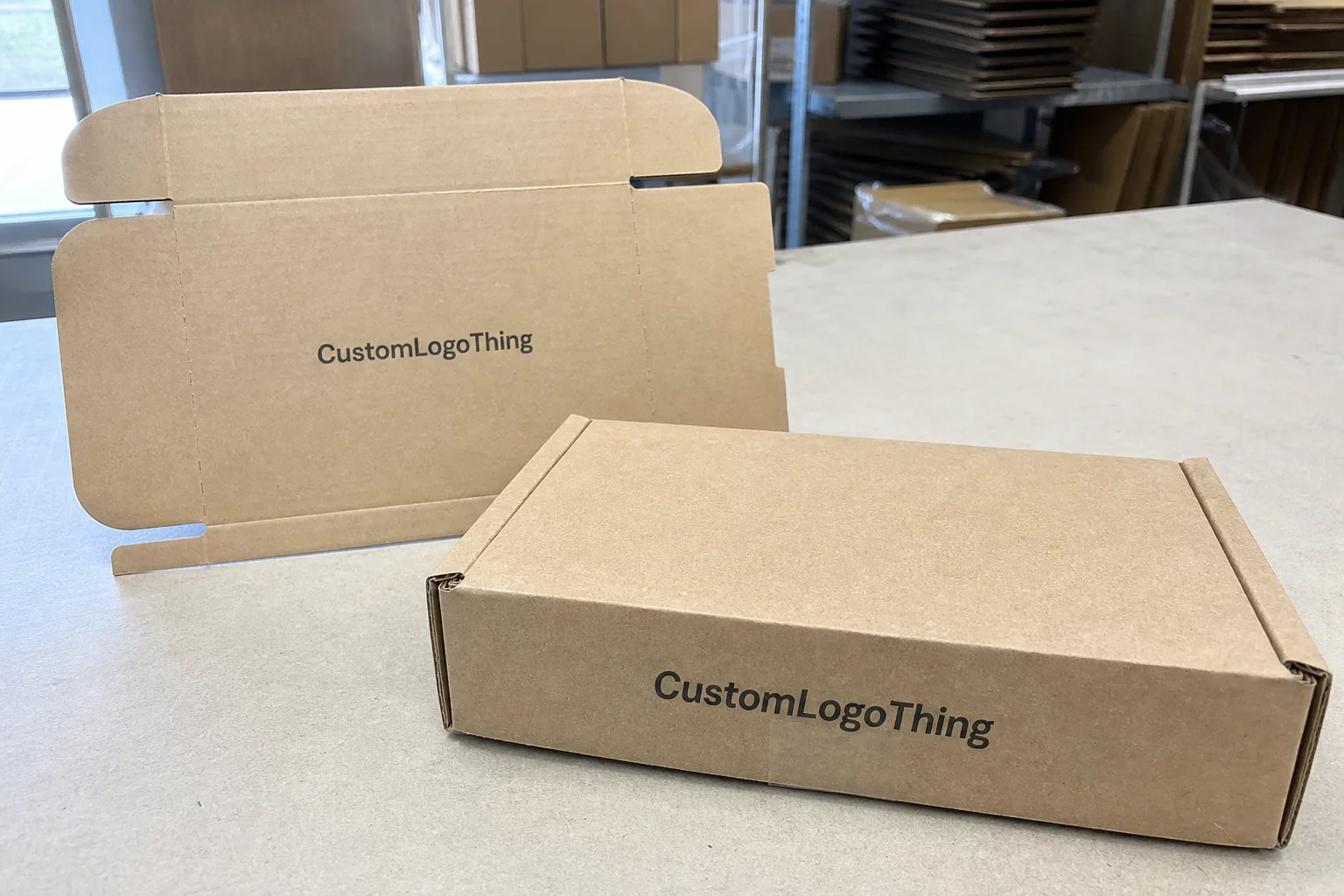
A pillow box works because it solves a narrow problem very well. It wraps a small, light product in a shape that feels polished, but the structure itself stays simple. No rigid setup. No extra assembly labor unless the design adds inserts or specialty features. No reason to pay for structural complexity if the item does not need it.
The savings are not limited to the unit price. Bulk orders reduce handling time at receiving, keep warehouse space under control, and lower the pressure to reorder early just because storage is tight. That is often the hidden cost in packaging decisions. A box that stacks flat and folds quickly can be more valuable operationally than a slightly cheaper package that takes up twice the room.
The format tends to work best for:
- Small gift items and holiday giveaways
- Jewelry, watches, and fashion accessories
- Cosmetic samples and travel-size products
- Subscription inserts and influencer kits
- Wedding favors and branded event handouts
- Light apparel accessories such as ties, socks, or cuffs
The business case is straightforward. If the product is light, the presentation needs to look intentional, and the order volume is large enough to spread setup costs across a run, pillow boxes bulk deserves a real quote. In that situation, the expensive option is often not the nicer-looking package. It is the one that uses more board, more freight space, and more labor than the product justifies.
For buyers comparing packaging programs, broader sourcing can be handled through Custom Packaging Products, while recurring volume is easier to manage through Wholesale Programs if the same spec keeps coming back.
“The first number on a quote is rarely the whole number. Ask whether freight, sampling, tooling, and finishing are included before comparing suppliers. A low unit price can disappear fast once the real costs are added.”
Sizes, materials, and print finishes that actually sell
Start with internal dimensions. Not the style name. Not the product family. The usable cavity inside the box decides whether the item sits snugly or rattles around like an afterthought. Too much room makes the package look cheap. Too little room can deform the box or make assembly frustrating on the production line.
For most custom runs, paperboard commonly falls in the 250gsm to 400gsm range. That spread is wide because the right answer depends on product weight, how much compression the box will see in transit, and whether the package is meant for retail display or short-term promotional use.
As a rule of thumb:
- 250gsm to 300gsm suits samples, inserts, and very light gifts
- 350gsm to 400gsm is safer for cosmetics, jewelry, and retail sets
- Heavier board helps the box hold its form, but it also adds cost and can make folding more labor-sensitive
Finish choice changes the result quickly. The same structure can feel understated, bright, or luxury-adjacent depending on how the surface is treated.
- Matte lamination gives a quieter, more restrained look and hides minor fingerprints better
- Gloss lamination boosts color contrast and works well for promo packaging or image-led graphics
- Soft-touch coating adds a velvety feel, but it can show surface wear if the box is handled constantly
- Foil stamping and embossing are useful when a logo needs physical presence, not just ink coverage
There is a tradeoff behind every finish. Gloss can look louder under retail lighting but reveal glare in photos. Matte can feel refined, yet it mutes saturation. Soft-touch feels premium, though it tends to be less forgiving in transport. That is not a flaw in the material. It is simply a matter of matching the surface to the selling environment.
Window cuts, inside print, and special folds all increase complexity. Sometimes that is worth it. Sometimes the box is carrying an item so small that the customer cares more about the product than the package. Decorative features should earn their place, not be added because a catalog page makes them look attractive.
| Spec | Best for | Typical tradeoff |
|---|---|---|
| 250gsm to 300gsm board | Samples, inserts, light gifts | Lower cost, less crush resistance |
| 350gsm to 400gsm board | Retail sets, cosmetics, jewelry | Better shape, slightly higher unit price |
| Matte lamination | Minimal branding, premium feel | Less color punch than gloss |
| Gloss lamination | Bright graphics, promo packaging | Shows glare and fingerprints more easily |
| Soft-touch finish | Beauty and gift retail | Higher cost, more surface sensitivity |
FSC-certified paperboard is worth asking about if sustainability claims are part of the sales story. That is a material specification, not a slogan. If the packaging is meant to support an environmental claim, the paper trail should be in order before production starts.
Specs that determine fit, durability, and shelf impact
The spec sheet needs to settle the basics before anyone approves production: internal dimensions, product weight, bleed, safe area, closure style, fold lines, and any barcode or compliance space. Leave those vague and the job starts drifting. One round of ambiguity is enough to turn a straightforward order into a chain of revisions.
Board thickness has a real effect on performance. Too light, and the box loses shape or crushes in transit. Too heavy, and the package costs more without adding useful strength. The right stock usually lands in the middle, chosen according to product mass and how many hands the box will pass through before the customer opens it.
Fit matters more than many buyers expect. A well-sized pillow box stays visually clean and supports the product instead of fighting it. A box that is too large can make even a premium item look low-value. A box that is too tight can wrinkle the panel, distort the closure, or stress the score lines before the first shipment leaves the facility.
Shelf impact is not only about loud graphics. It is also about contrast, panel size, logo placement, and how the artwork behaves once the board is folded. A mark that looks balanced on a flat proof can disappear when it crosses a curve or lands on a crease. Dieline review is not paperwork for its own sake. It is what prevents a good design from failing in the real structure.
For fragile or distribution-sensitive products, some teams also use third-party test logic to judge whether the pack-out is realistic. General packaging reference material is available through Packaging School, and ISTA testing standards are useful if a package needs to survive a more demanding shipping path. Those checks matter most when the item is delicate, the route is long, or the product is being repacked into another carton afterward.
Artwork prep is part of the spec, not a separate problem. Send vector logos, outlined fonts, high-resolution images, and accurate color references. If the dieline is still open to interpretation, production should not begin. Most delays in bulk packaging are not caused by the press. They start upstream, with incomplete files or decisions that keep changing after proofing.
There is also a practical limit to how much design can survive on a small carton. Tiny text, heavy gradients, and busy reversals often look acceptable on screen and weak in print. Buyers who want cleaner output usually keep the artwork disciplined: one clear logo, one or two brand colors, and enough breathing room for the structure to do its job.
Cost, pricing, MOQ, and quote drivers
Pricing comes down to a handful of predictable factors: size, board weight, print coverage, finish complexity, quantity, and any extras such as inserts, windows, or Custom Die Cuts. Packaging pricing is rarely mysterious. It is mostly setup cost plus material cost, then finishing layered on top.
MOQ exists because tooling, cutting, press setup, and proofing all cost money before the first box is shipped. For custom jobs, a typical minimum often sits around 500 to 1,000 units, although simpler specifications can sometimes start lower and more complex jobs may need a larger run. The logic is straightforward: the setup costs do not scale down just because the order is small.
For straightforward printed packaging, pillow boxes bulk pricing may fall around $0.18 to $0.42 per unit at 5,000 pieces, depending on stock thickness, print area, and finishing choices. Add foil, embossing, spot UV, a window, or inside print, and the number moves upward. That is expected. A quote that ignores those variables usually becomes a problem later.
| Order factor | Typical impact on price | Buyer takeaway |
|---|---|---|
| Higher quantity | Lower unit cost | Best way to improve the price break |
| Thicker board | Moderate increase | Worth it for retail presentation and crush resistance |
| Full-color print | Higher than one-color branding | Necessary for consumer-facing shelves |
| Foil, embossing, or spot UV | Noticeable increase | Use only where the visual payoff is real |
| Windows or inserts | Extra tooling and labor | Ask whether the product actually needs them |
Ask about these costs before approving the order:
- Sampling or prototype fees
- Tooling and die-cut charges
- Freight and delivery method
- Color matching or press correction costs
- Rush fees for compressed schedules
Always compare landed cost, not just unit price. A quote with cheap boxes and expensive freight is not a good price; it is just a delayed surprise. Tiered pricing helps because it shows where the real breakpoints are and whether stepping up in quantity produces a meaningful enough savings to justify the extra inventory.
If the packaging program repeats through the year, wholesale-style pricing is usually easier to manage than a one-off quote each time. That gives the buyer a cleaner view of the real economics across product cycles instead of re-running the same math every quarter.
Process, turnaround, and lead time from proof to delivery
The production path is predictable: brief, dieline, artwork, proof, approval, production, packing, shipment. If any step is unclear, revisions multiply. The fastest projects are rarely the most complicated; they are the ones where the buyer sends complete information early and sticks with it.
Typical lead times depend on quantity and finishing, but a simple custom run often lands around 12 to 18 business days after proof approval. More complex work can take longer, especially if it includes foil, embossing, inside print, or multiple die-cut elements. If a supplier offers a short turnaround, ask which part of the process is being compressed. That answer tells you more than the promise itself.
The most common delays are not mysterious:
- Missing dimensions or unclear product measurements
- Artwork that is still being revised
- Late changes to color, warnings, or barcode copy
- Approval delays on the buyer side
- Revisions after the proof has already been reviewed
That last point causes more schedule damage than most teams expect. A packaging line can move only as quickly as the proof approval allows. If the launch date is fixed, build buffer into the schedule. Waiting for packaging after inventory is already sitting in the warehouse creates friction that should have been avoided at the quoting stage.
For recurring programs, keep the approved dieline, print specs, and color references on file. That shortens the next order and reduces the chance of a version mismatch when different people are involved later. It also makes reorders less dependent on memory, which is a weak system for production data.
One more practical check: verify the fold direction, closure, and logo placement on the actual structure, not just on a polished PDF mockup. A design can look balanced on screen and still fail once it wraps around the curves and scores of the finished carton.
Why buyers keep reordering the same bulk spec
Once a pillow box spec fits the product and prints cleanly, most buyers prefer to keep it. That is not conservatism. It is risk control. A proven structure removes guesswork, and guesswork is expensive when a packaging run is measured in thousands of units.
Consistency matters because bulk runs expose small defects that smaller test orders can hide. A slight dimensional error becomes a large waste problem at scale. A color shift that slips by on a sample can look careless in a retail rollout. Repeat business is usually built on boring strengths: stable folding, consistent dimensions, predictable print output, and a format that does not create headaches in storage or shipping.
The support value also increases after the first order. Once the dieline, artwork, and approved spec are on file, the next production cycle is faster to quote and easier to correct. Buyers do not stay with a reliable supplier because the packaging is exciting. They stay because the process is disciplined and the outcomes are repeatable.
The logistics side is hard to ignore. Flat-packed boxes store efficiently, protect better than flimsy alternatives, and scale without taking over a warehouse bay. That makes pillow boxes bulk useful for programs that need multiple drops through the year rather than one large order and a cramped storage problem afterward.
If the product line expands, the same structural logic can usually be adapted to new sizes with minimal redesign. That keeps brand presentation consistent across SKUs while still giving each item the right fit.
Next steps to order without delays
The best quote requests are specific. Send the exact product dimensions, target quantity, print sides, finish preference, and delivery date. Vague requests create vague quotes, and vague quotes waste time on both sides.
Include logo files, brand colors, and any compliance copy in the first message. If artwork is not final, say so. If the buyer has a target budget, include it. That allows the spec to be shaped around a realistic price band instead of forcing a quote to guess at the finish line.
For retail launches, premium gift sets, or anything with strict visual expectations, a sample or digital proof is worth requesting before the full run starts. Catching a layout error early is cheap. Catching it after 2,000 units are printed is not.
If the order is tied to a fixed launch calendar, lock the production slot after the dieline is approved and the price break is confirmed. That is the cleanest way to get pillow boxes bulk into production without dragging the job through avoidable revisions.
The point is not to add more process. The point is to keep the process simple enough that the packaging arrives on time, fits the product, and survives the way the product will actually be handled.
FAQ
What is the usual MOQ for pillow boxes bulk orders?
MOQ depends on size, print coverage, and finish complexity, but custom runs usually have a minimum because setup costs need to be spread across the order. Simple one-color jobs often start lower than multi-finish or full-color packaging. Ask for tiered pricing so you can see where the unit cost drops enough to justify a larger run.
How much do pillow boxes bulk orders cost per unit?
Unit cost is driven by stock thickness, size, print coverage, finishing, and quantity. A simple printed run can often sit in the $0.18 to $0.42 range at 5,000 pieces, while specialty finishes push the number higher. Compare landed cost and check whether sampling, freight, and tooling are included before deciding on a quote.
Can pillow boxes bulk be printed on both sides?
Yes. Most custom pillow box specs can be printed outside, inside, or both, depending on the structure and artwork setup. Inside printing adds cost and usually tightens the timeline because registration and coverage need more control. If the box opens with a reveal moment, inside print can make sense. If not, it may add expense without improving the sale.
How long does turnaround take for bulk pillow boxes?
Turnaround depends on order size, finish complexity, and how quickly the proof is approved. A straightforward run often takes about 12 to 18 business days after approval, while foil, embossing, windows, or custom inserts can extend the schedule. The clock starts moving once the proof is signed off, not when the first inquiry is sent.
What details should I send to get an accurate quote for pillow boxes bulk?
Send product dimensions, quantity, print sides, finish preference, and delivery deadline. Add logo files, color references, and any regulatory copy so the quote reflects the actual job. If there is a target budget, include it as well. That narrows the spec and keeps the estimate tied to the real order.
Are pillow boxes a good choice for shipping?
They are better for presentation and light product protection than for heavy-duty transit on their own. For shipping, they usually work best inside a master carton or as part of a pack-out that includes cushioning or secondary protection. If the product is fragile, test the full shipping path instead of assuming the decorative carton can handle the whole route.
If the goal is a package that ships flat, stores efficiently, and still looks deliberate on shelf, pillow boxes bulk is usually the practical answer. The spec has to be right, the artwork has to fit the structure, and the quote should reflect the full landed cost. That is enough to keep the order useful without turning it into a packaging exercise in theory.


