Cake boxes personalized for your bakery do more than move dessert from the counter to the car. They shape the first impression, control a little bit of damage risk, and quietly tell the customer whether the business pays attention to details. A cake can be excellent and still feel less valuable if the box is flimsy, too large, or printed poorly.
From a buyer's point of view, packaging has to do three jobs at once. It should protect the product, present it cleanly, and fit the way the bakery actually sells. Pickup orders, delivery routes, chilled storage, and wedding cakes all ask something different from the box. That is why the best result usually comes from matching the structure to the real use case instead of starting with graphics.
Personalization is not only a logo on the lid. It can include board strength, internal dimensions, closure style, window placement, finish, inserts, and how the printed panels line up once the carton is folded. Ignore those details and the box can look good on a proof while failing in service. That happens more often than people want to admit.
Cake boxes personalized: why the right box changes the sale
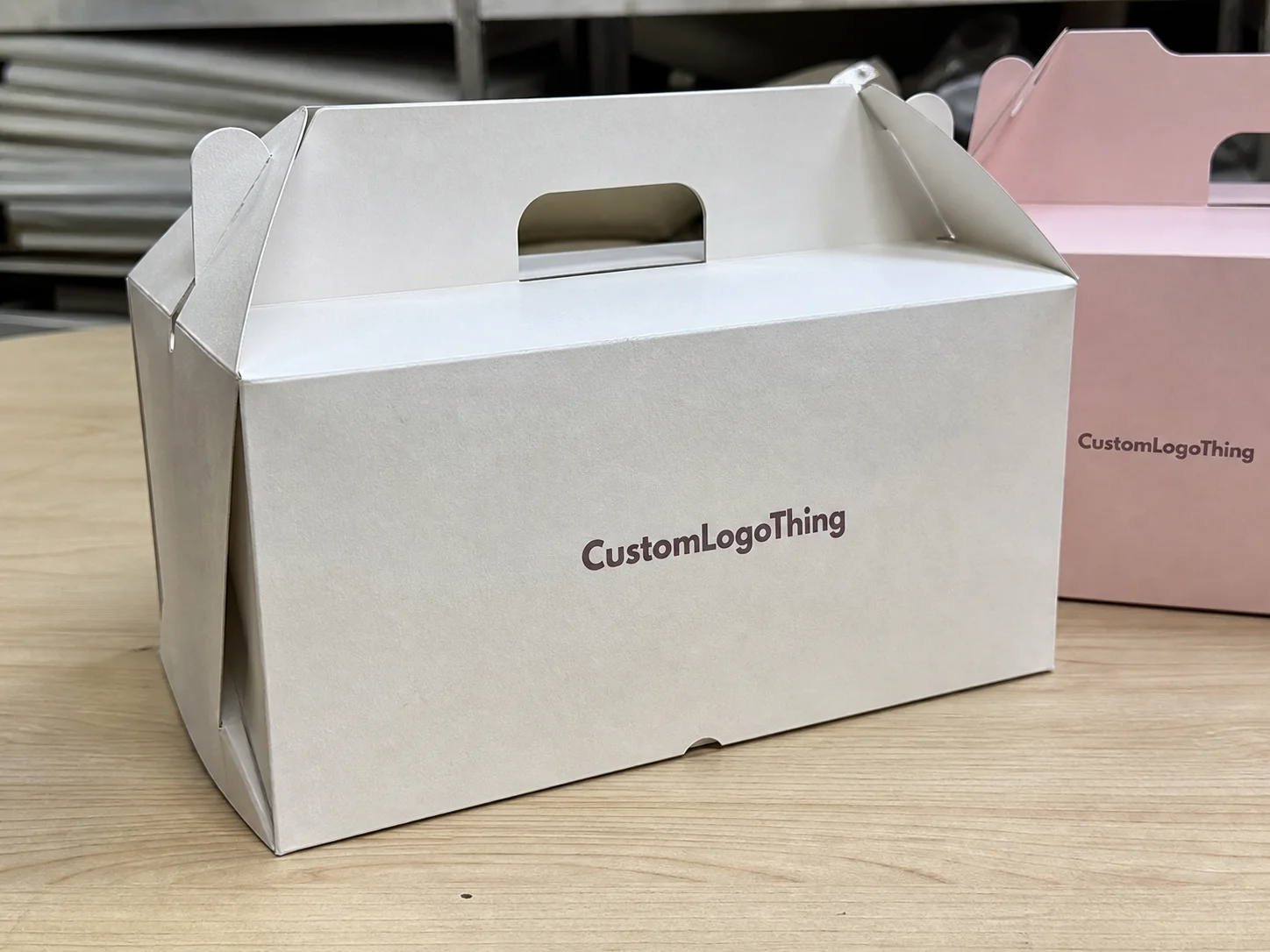
A cake is a visual product. The box frames that visual before the first slice ever gets cut. If the carton looks generic, the dessert has to carry all the perceived value on its own. If the packaging looks deliberate and fits properly, the order reads as more premium even before the customer opens it.
There are three practical reasons custom bakery packaging matters. First, presentation. A clean printed box makes the order feel finished instead of improvised. Second, transport. A correctly sized box limits shifting, lid pressure, and sidewall collapse. Third, brand memory. People remember the package they carried home almost as much as the cake itself, especially when the box is sturdy enough to make the experience feel easy.
Fit is where many buyers get caught. Too wide, and the cake slides. Too short, and buttercream borders or toppers get crushed. Too much empty headspace, and the product starts moving every time the box gets lifted. Even a one-inch error can matter once frosting, decorations, and cake boards are included.
The right box also saves time for the staff packing it. If the closure is awkward, the panel flexes, or the bottom bowing starts before the cake is loaded, your team notices immediately. That is not a cosmetic issue. It turns into a service issue by lunch rush.
A good cake box does not try to outshine the dessert. It protects it, frames it, and keeps the customer from noticing the mistakes packaging is supposed to prevent.
That is the real reason cake boxes personalized to the product matter. They reduce the gap between how the cake looks in the shop and how it arrives in the customer’s hands. If you sell premium cake, the packaging should not look like an afterthought.
How the customization process works
The order process is usually straightforward once the bakery has a clear spec. Start with the cake style, finished dimensions, average weight, and the way the box will be used. A supplier should then confirm structure, print area, material, and any extras such as a window, handle, insert, or reinforced base.
Most jobs move through the same sequence: quote, artwork review, proof, revisions if needed, approval, production, finishing, packing, and shipment. The more precise the first information packet is, the less time gets burned on email loops later. That part is boring, but it saves real money.
Dielines matter. A dieline is the flat layout that maps folds, glue areas, bleed, and safe print zones. If the logo sits too close to a crease or the copy lands on a glued flap, the finished box may look off once folded. That is not a defect in the press. It is a layout issue, and the proof stage is where it should be caught.
Proofing should be treated as a technical check, not a design mood board. Verify the dimensions, spelling, logo size, panel placement, contact details if they are included, and whether the window or insert lands where it should. If anything feels slightly off, fix it before approval. Structural changes after approval can shift the timeline.
The best quote requests are specific. Have these details ready:
- Finished cake diameter, height, and topper clearance.
- Average cake weight and whether the box must support stacked layers.
- Pickup, delivery, or shipping use.
- Preferred quantity and rough repeat-order volume.
- Artwork files in vector format, plus brand colors if they matter.
A clean logo file is worth more than a screenshot with good intentions. Vector artwork prints sharper, scales properly, and reduces back-and-forth. If the vendor also offers Custom Packaging Products, it can help to compare bakery box formats alongside the other boxes you already use for pastries, trays, or retail kits.
Material, size, and print choices that affect performance
What sits under the print matters more than the print itself. A lightweight paperboard may be fine for single-layer cakes, cupcakes, or light pastries. Heavier cakes, stacked tiers, and long delivery routes need more stiffness so the box does not buckle in someone’s hand or flatten in a tote.
Common bakery packaging uses paperboard in the rough range of 250gsm to 400gsm. Some applications need corrugated or chipboard reinforcement, especially if the cake is tall, heavy, or likely to travel on a hot day. For simple retail pickup, a clean SBS or C1S board often works well. For transport-heavy orders, stronger construction is usually the smarter place to spend the budget.
Size should be planned from the inside, not the outside. Measure the finished cake, including frosting borders and decoration, then allow room for the board and a little movement control. Headspace matters too. If the lid touches rosettes, flowers, or a tall topper, the cake loses its finish before it reaches the customer. That is avoidable if the measurement is done honestly.
Print choices change both appearance and cost. Full-color graphics work well for retail shelves, seasonal campaigns, and bakery brands with strong visual identity. One-color branding can look cleaner and often feels more restrained. It also tends to be easier on the budget. Matte finish usually reads softer and more premium. Gloss brightens colors and can improve visibility under store lights, but it shows handling marks more easily.
The print method matters too. Offset printing is often favored for crisp branding and larger runs. Flexographic printing can be efficient for simpler designs and repeated production. Digital printing can make smaller runs more practical when artwork changes often. None of these is automatically better. The right choice depends on quantity, detail, and the level of consistency the bakery needs.
Food contact and moisture should be treated as real conditions, not footnotes. The box usually does not touch the cake directly, but condensation, buttercream smears, refrigeration, and brief holding periods can still affect the finish. Ask about grease resistance and coating options instead of assuming any printed carton will behave the same once it leaves the pressroom.
Window placement is useful, but not free. A clear panel helps sell the product without opening the box, which is handy in retail settings. It also removes some paperboard from the structure. If the window is too large or too close to the edge, the box can lose rigidity. A smaller window placed high on the lid often gives enough visibility without weakening the whole panel.
For buyers comparing options, the table below is a practical shorthand.
| Option | Best For | Typical Cost Impact | Performance Notes |
|---|---|---|---|
| Plain stock bakery box | Simple pickup orders, low-decoration cakes | Lowest unit cost | Fast to source, limited branding, basic fit options |
| Printed folding carton | Retail display, repeat branded use | Moderate | Good balance of appearance and production efficiency |
| Windowed custom box | Retail merchandising, premium presentation | Higher than plain print | Better product visibility, needs careful structural design |
| Reinforced custom bakery box | Delivery, stacked cakes, heavier desserts | Highest | Better rigidity and protection, usually worth it for transport-heavy use |
If you want a broader industry reference point, the Packaging Machinery Manufacturers Institute at packaging.org is useful for general packaging context, and the International Safe Transit Association provides transit-testing guidance that becomes relevant when delivery damage is part of the discussion. Those sources will not pick the design for you, but they do reinforce the point that structure should be evaluated instead of guessed.
Cost and pricing factors to compare before you quote
Pricing usually comes down to six variables: size, board thickness, print coverage, finish, quantity, and custom features. If two quotes look wildly different, the first thing to check is whether they are actually quoting the same specification. A cheaper quote on a thinner board or with less print coverage is not really the same product.
Quantity matters more than many buyers expect. Small runs carry a higher unit price because setup, proofing, tooling, and production changeover get spread across fewer boxes. Larger runs lower the per-piece cost because those fixed costs are distributed across more units. That is why bakeries often decide between a test order and a fuller rollout.
Structural changes usually cost more than artwork changes. Swapping a logo is simple. Adding a window, reinforced base, handle, or custom insert means more material handling and often a different die or conversion step. That extra cost can be justified, but it should be part of the comparison from the start.
There are also costs that do not show up on the first quote. Freight can be significant because packaging ships in bulky cartons. Storage matters if you are ordering enough to last several months. If the supplier quotes only the box price and leaves out shipping, the real landed cost is still hidden.
For smaller bakeries, the price difference between plain stock and cake boxes personalized for retail can be modest on paper and meaningful in practice. A basic stock box might land in the low cents or low-dollar range per unit, depending on size and quantity. Custom printed folding cartons usually move higher, and reinforced or windowed versions higher again. The range is broad because size and order volume swing the price more than people expect. There is no useful shortcut here: ask for the exact spec and compare like for like.
Here is a practical way to compare quotes:
- Match the internal dimensions, not just the outside size.
- Confirm board type and thickness.
- Ask whether the print covers all panels or only selected areas.
- Check whether windows, inserts, coatings, and liners are included.
- Verify shipping terms, minimum order quantity, and reprint policy.
That level of comparison keeps a low quote from turning into an expensive mistake. Boxes that bend, arrive late, or need to be replaced after a service issue are not cheaper. They are just deferred costs with better graphics.
Timeline, lead time, and production steps
The workflow is usually simple: artwork review, proof approval, production scheduling, printing, finishing, packing, and shipment. The total lead time depends on structure, order size, and how quickly approvals move, but the approval stage is the part buyers control most.
Simpler printed runs can move fairly quickly when the size is standard, the artwork is ready, and the vendor does not need custom tooling. Projects that need specialty coatings, inserts, windows, or multiple proof rounds take longer. If the boxes are tied to a holiday launch, wedding season, or retail reset, the schedule should include buffer time instead of assuming best-case timing will hold.
Most delays are predictable. Missing dimensions create questions. Low-resolution logos cause artwork corrections. Late copy changes after proofing starts another revision cycle. None of that is unusual, but each one adds days. Sometimes weeks if the order is large or the structure is custom.
In real terms, many buyers should expect a faster turnaround for standard formats and a longer window for fully custom jobs, especially once tooling and freight are included. A rough planning range for custom bakery packaging is often a few weeks after approval for straightforward runs, with longer lead times for complex specs or larger quantities. If a supplier promises something unusually fast, ask what stage they are starting from. A quote is not the same as an approved production file.
If the packaging needs to arrive before a fixed date, work backward. Leave room for proof corrections, transit time, and inspection on arrival. A bakery that books cakes before the boxes are confirmed is gambling on timing it does not control. That usually ends the same way.
Common mistakes when ordering personalized bakery boxes
The most common mistake is measuring only the cake board. The finished product is usually larger. Frosting spreads outward, borders add width, and toppers add height. If the box is sized only to the board or the pan, the cake can touch the lid or scrape the sidewalls before it leaves the kitchen.
Another frequent problem is choosing for appearance alone. A pretty sample does not tell you whether the board will hold up on a delivery route or in a refrigerated hold. If the base flexes when lifted at the corners, that is a warning sign. Heavy cakes make weak boxes obvious fast.
Artwork placement can go wrong too. Logos too close to folds, edges, or glue areas may distort once the carton is converted. Busy layouts may look fine on screen and cluttered on the finished box. Simple graphics often print cleaner, are easier to keep consistent across sizes, and age better when the packaging is reordered later.
Seasonal demand causes trouble for a lot of bakeries. The packaging plan looks fine in slow months, then a holiday rush or wedding spike hits and inventory runs short. Reordering too late pushes the bakery back to generic stock boxes, which undercuts the brand work already done.
Storage is another easy miss. If boxes sit in a damp storeroom, warping can happen before they are ever used. If the packaging is expected to handle chilled product, the coating and board need to reflect that. A printed carton can look excellent and still fail in service if the environment was never part of the spec.
Quality control should not be an afterthought. A solid receiving check usually includes panel alignment, color consistency, crease quality, glue adhesion, window placement, and a real fit test with the intended cake size. If the first sample does not sit right, do not assume the whole production run will magically behave better.
Honestly, that is where many packaging problems start. Not with the artwork. With the assumption that one box can fit every cake and every route.
Practical next steps for ordering with confidence
The cleanest way to start is to gather the basics before requesting a quote: cake dimensions, average order volume, preferred print style, brand files, and any structural needs such as a window or insert. If your cakes vary a lot, size the box around the largest regular product and work backward from there. Designing around the actual product is far safer than hoping the packaging will adapt later.
Ask for a proof that shows more than color. You want to see artwork placement, final dimensions, panel orientation, and any structural features that affect assembly or display. If the supplier can provide a plain mockup or sample, review it with the real cake board or a dummy cake size. That is the fastest way to catch clearance problems before production starts.
If you are deciding between stock packaging and a custom run, compare both on the same sheet. Include unit cost, setup, freight, storage, visual impact, and the damage risk each option carries. For many bakeries, the right answer is not the cheapest box and not the flashiest one. It is the box that performs consistently for the order type they sell most often.
Check minimum order quantity, lead time, and freight terms before you commit to a launch date. Those three details decide whether the packaging plan is realistic. A box that looks right but arrives after the first rush is not a solution.
When the fit is correct, the print is clean, and the schedule is realistic, cake boxes personalized to the product do exactly what they should: protect the dessert, support the brand, and give the bakery a packaging standard it can repeat without reworking the whole process every time.
FAQ
What size should cake boxes personalized for my bakery be?
Measure the finished cake, not just the pan, and include frosting, borders, and toppers. Leave enough headspace so the lid does not touch delicate decoration, and account for the cake board and any insert when you set the final internal size.
How much do personalized cake boxes usually cost?
Price depends on quantity, size, board thickness, print coverage, finish, and any added features. Smaller runs usually cost more per unit because setup is spread across fewer boxes. Plain stock boxes are the least expensive option, while windowed and reinforced versions cost more.
What is the typical lead time for custom cake boxes?
Lead time depends on artwork approval, order size, and whether the box needs special tooling. Straightforward jobs move faster when the specs are ready from the start. Complex orders, larger quantities, and multiple proof rounds add time, so build in a buffer if the boxes are tied to a launch or holiday rush.
Can personalized cake boxes work for delivery orders?
Yes, but the box needs to be built for transport, not just display. A stronger board, secure closure, and enough clearance for decorations help reduce damage. If delivery is frequent, ask about inserts, reinforced bases, and moisture-resistant coatings.
What artwork works best on cake boxes personalized for retail use?
Simple logos, strong brand colors, and clear contact details usually print well and stay readable. Avoid overcrowding the panels, because folds and seams interrupt busy layouts. Clean, restrained artwork often looks more premium than a box that tries to use every surface at once.
Should I choose a windowed cake box?
Choose a window if product visibility Helps You Sell the cake or if customers need to inspect the decoration before pickup. Skip it if the cake is delicate, the box needs maximum stiffness, or the design needs a fully covered lid for branding. Window size and placement matter more than the idea itself.
What should I inspect when the boxes arrive?
Check print quality, crease accuracy, glue joints, color consistency, and fit with the actual cake board. Open a few cartons, assemble them, and test the closure. If the first batch has weak corners, warped panels, or bad registration, catch it before the whole inventory goes into rotation.

