Cheap labels printed are not a vanity line item. They are one of the fastest ways to make a clothing line look organized without swallowing budget on packaging that does not move product. The right label improves legibility, feels better on the garment, and survives the wash. That matters more than winning a quote by two cents and then paying for a reprint later.
From a buyer’s angle, the target is usually modest and practical: get a label that fits the garment, keeps the brand consistent, and holds up from first delivery through reorder. Savings live in the spec discipline. They do not live in squeezing a fragile label so hard that it fails the minute it leaves the bag.
Why low-cost labels still need to look sharp
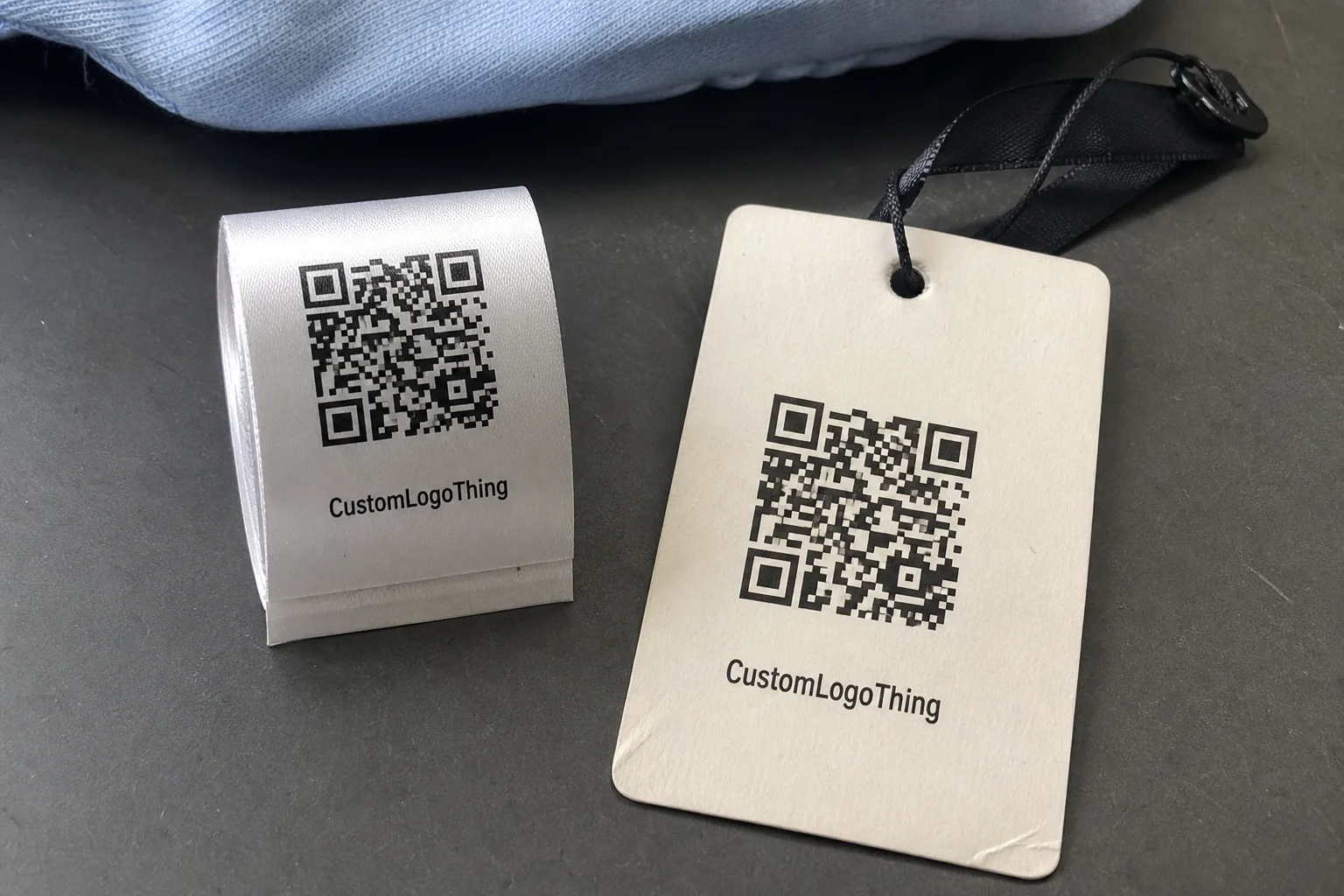
Cheap does not have to look cheap. Plenty of first-time buyers still treat labels as throwaway inventory, even though the label is one of the few brand elements that gets touched, read, and photographed repeatedly. If the type is muddy, the edge finish is rough, or the label scratches the skin, people notice right away.
The best low-cost labels usually avoid unnecessary complexity. One or two colors. A standard size. A fold style that matches the garment. Clean artwork. That is how you reduce cost without creating a label that feels flimsy or unreadable.
The money goes fastest when the spec gets fussy. Extra colors, custom cuts, oversized artwork, and detail levels that belong on a hangtag instead of a neck label all push the quote up. A soft tee does not need the same build as a heavyweight hoodie. A work shirt does not need the same finish as a boutique fashion piece. Good buyers match the label to the garment, not the mood board.
Lowest unit price is not the same thing as lowest cost. If a label comes back too small, too busy, or weak after washing, the real expense is the second order. That is not savings. That is a delay wrapped in a reprint.
If you want a faster route to a quote, start with Custom Labels & Tags and lock the basics first: label type, size, placement, and finish. The more guessing you leave in the order, the more room there is for the spec to drift.
Label options that fit real clothing jobs
There are five formats that show up repeatedly in apparel work: woven labels, printed satin labels, cotton labels, heat transfer labels, and care labels. They solve different problems. The mistake is choosing one because it sounds premium instead of because it suits the fabric, the stitch plan, and the customer experience.
Woven labels are the classic brand badge. They feel substantial and hold detail well if the artwork is not too fine. They usually cost more than printed options, but for neck branding they still make sense when texture and a finished look matter.
Printed satin labels are a strong fit for lower-cost runs. They are smooth, readable, and friendlier on delicate garments. If the goal is cheap labels printed without making the garment feel rough, satin is often the first place to look.
Cotton labels fit natural, casual, or heritage-style clothing. They read as softer and more organic, although the texture limits crisp detail. Heat transfer labels work well for tagless branding when the buyer wants almost no scratch factor. Care labels are the practical and legal layer: fiber content, country of origin, wash symbols, and size information.
| Label type | Best use | Feel | Relative cost | Main tradeoff |
|---|---|---|---|---|
| Woven | Neck branding, premium basics | Textured, durable | Medium to high | Cost rises with color count and fine detail |
| Printed satin | Neck labels, side seams, soft garments | Smooth, lightweight | Low to medium | Needs strong contrast for small type |
| Cotton | Natural apparel, casual lines | Soft, matte | Medium | Fine detail can blur if the artwork is crowded |
| Heat transfer | Tagless branding, activewear, kidswear | Flat, barely there | Medium | Application depends on correct temperature and pressure |
| Care label | Compliance, fiber content, wash instructions | Functional | Low | Must stay readable after laundering |
For most basic apparel, the cheapest-looking option is not always the cheapest to run. If a label frays, rubs off, or becomes illegible after one wash cycle, the buyer pays again. The better choice is the format that survives the actual use case, not the mockup.
There is also a packaging side to label buying. If paper components matter to your brand, look at certified sourcing through FSC-certified paper sourcing. That does not solve every sustainability issue, but it gives buyers a clearer paper trail and usually a better story for retail accounts that care about material origin.
Specs that control the final look and feel
Label pricing and appearance are controlled by specs, not magic. Size, fold style, attachment method, print coverage, and edge finish all shape the final result. Overbuild any one of them and the unit price climbs. Underbuild them and the label starts reading like a rush job.
Width and height matter because they control readability and waste. A 1 x 2 inch neck label behaves very differently from a 1 x 3 inch side seam label. Clean type can fit into a smaller area, but cramped copy is a mistake when you need wash instructions or a long brand name to stay legible.
Fold style affects both the look and the sewing plan. End fold, center fold, mitre fold, and straight cut each suit different placements. End folds are common for sewn-in labels. Center folds help with neck branding. Straight cut works when the label is sewn or heat applied in a controlled way.
Artwork quality is another direct price lever. Vector files are the safer choice. Solid lines reproduce more cleanly than tiny gradients. If the type is too thin, it can disappear in production. If the logo contains three tiny icon details that nobody can see at label size, that is not sophistication. That is just detail tax.
- Use readable type sizes, especially for care text and size marks.
- Keep contrast honest; light gray on cream looks restrained on screen and weak on fabric.
- Avoid extra colors unless the branding actually needs them.
- Match the garment; babywear, heavyweight fleece, and workwear should not share one generic spec.
Think in terms of behavior, not adjectives. A soft tee wants a lighter label with a smoother edge. A hoodie can handle a thicker woven or satin label. Kidswear usually benefits from softer finishes and cleaner text. That is how you keep costs down without paying for features the product never uses.
Cheap labels printed: pricing, MOQ, and unit cost
The price drivers are consistent: material, size, color count, fold style, cut type, quantity, and shipping method. Add rush production or multiple proof rounds and the number climbs. Nothing mysterious there. The quote looks cheap until the spec starts growing extra limbs.
MOQ matters because it tells you how much setup cost gets absorbed into each unit. Small runs work for launch batches and sample collections, but the unit price is usually higher. Once production volume increases, the per-piece cost drops quickly and then starts flattening out. That is normal, not a sales trick.
For standard sizes and clean artwork, buyers often see something like this:
| Quantity | Typical unit cost | What drives it | Buyer takeaway |
|---|---|---|---|
| 250-500 pcs | $0.20-$0.55 | Setup cost and proofing overhead | Fine for samples, not ideal for scaling |
| 1,000-2,500 pcs | $0.10-$0.28 | Still setup-heavy, but less painful | Common launch range for small brands |
| 5,000+ pcs | $0.04-$0.16 | Production efficiency and lower setup share | Best value if the spec is already proven |
Those ranges are not universal. Print coverage, backing, sewing requirements, and shipping choices can move the price either way. The pattern stays the same, though: the more standard the spec, the better the cost control.
Rush orders can wipe out the discount that made the quote look attractive. So can artwork fixes after proof approval, split shipments, or a late change from one fold style to another. Cheap labels printed are only cheap if the order stays stable long enough to be produced correctly.
Packaging and shipping testing groups such as ISTA are useful when you want a broader view of what happens after goods leave the printer. The label itself is small, but the cartons it ships in are not. A good print run still needs a sensible shipping plan, especially if the order is crossing borders or passing through multiple warehouses.
Process, proofing, and turnaround from file to shipment
The production path is straightforward if the buyer stays organized. First, send the label type, quantity, size, placement, and artwork. Then review the proof. Then approve a sample or mockup if the order is new or complex. Only after that should production start. Skip those steps, and the invoice usually grows in unhelpful ways.
Most timelines are driven by approval speed, not machine speed. A simple run may move in about 7-12 business days after proof approval. More complex orders, custom finishes, or larger quantities may take longer. If the art is ready and the buyer answers quickly, the schedule usually stays predictable. If the proof sits in an inbox, the calendar slips.
Every proof should be checked for the same details, because the same mistakes repeat:
- Spelling and punctuation on brand name, size, and care text.
- Final dimensions so the label fits the garment and the sewing plan.
- Fold direction so the label reads correctly once attached.
- Color placement because tiny shifts matter more on fabric than on a screen.
- Type legibility at the actual label size, not at poster size.
Express service makes sense when a launch date is fixed or a replenishment order is at risk of stockout. It does not make sense if the delay came from missing artwork or a half-finished approval cycle. Fast production does not cure bad planning. It only makes bad planning more expensive.
For compliance-heavy products, keep the care label copy aligned with the garment content and the target market’s rules. That is basic discipline, not special sauce. Buyers who handle it cleanly usually get fewer surprises and fewer reorder corrections.
What buyers should expect from a label supplier
Buyers do not come back for hype. They come back because the process is clear and the output is consistent. The spec gets understood, the artwork gets translated correctly, and the labels print the same way across runs. Boring is good here. Boring means predictable.
Small brands need flexible MOQs so they can test a launch without locking cash into a giant first order. Larger brands need repeatable quality across seasonal reorders, which is a different kind of pressure. A supplier that can handle both usually keeps the account, because nobody wants to explain label drift to a retail buyer.
That is where a vendor such as Custom Labels & Tags earns attention: not through broad promises, but through the basics that keep production moving. Clean print. Readable text. A spec that survives real use. The useful test is simple: does the label still look right after it has been sewn, packed, shipped, and washed?
What matters most in a reorder relationship?
- Consistent color matching from one batch to the next.
- Readable text at the actual sewn-in size.
- Simple reordering when the same spec needs to be repeated.
- Shipment coordination that keeps the labels from becoming the bottleneck.
That is the real value. Not buzzwords, not overbuilt specs, and not a promise that every order will be flawless. Just labels that behave the way the buyer expects. In label buying, that is rarer than it should be.
How cheap can printed clothing labels get without looking low quality?
The lowest workable price usually comes from standard sizes, simple artwork, and higher quantities. Going cheaper than that usually hurts readability, wash performance, or reorder consistency. Cheap labels printed can still look sharp if the spec is controlled instead of squeezed to the point of failure.
What affects the price of cheap labels printed the most?
Material, size, color count, fold style, and quantity move price faster than most buyers expect. Rush production, custom finishing, and multiple revisions can push the cost up quickly. If you want a cleaner number, trim the spec before you ask for the quote.
What is the MOQ for printed clothing labels?
MOQ depends on the label type and production method, but small test runs are usually possible. The lower the quantity, the more setup cost gets absorbed into the unit price. That is normal, not a trick.
How long does it take to get cheap labels printed?
Turnaround is usually driven by proof approval, quantity, and shipping choice more than the print itself. If the artwork is ready and approved quickly, production can move faster than a revised order. A simple project can move in about 7-12 business days after approval, but complex runs need more time.
Can I order a sample before a bulk label run?
Yes, and for a new clothing line it is the smart move before committing to a full order. A sample helps confirm size, feel, color, and fold direction before money is tied up in bulk. If the sample is wrong, the bulk order will be wrong in a bigger, more expensive way.
If you want cheap labels printed that actually support the garment, start with one tested spec, get the proof right, and only then scale into volume. That is the cleanest way to keep costs down without buying a reprint.