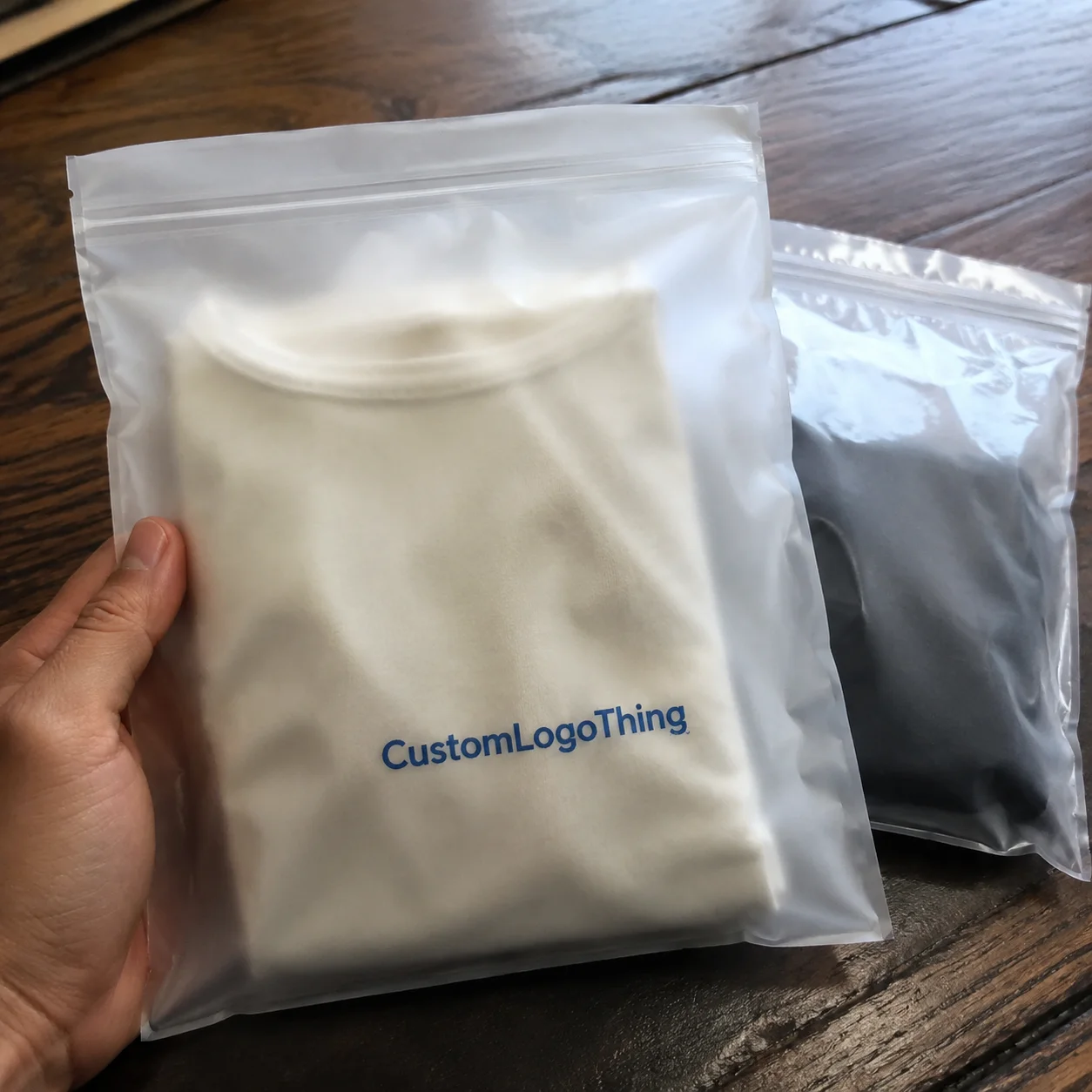
Frosted Zipper Bags Reorder Plan for Steady Stock
When Frosted Zipper Bags Run Out, Sales Slow Down

Packaging shortages rarely arrive with a clean warning. They show up as a warehouse message at 4:17 p.m.: “Do we have enough branded pouches for the next release?” By then, the answer is already late.
A Frosted Zipper Bags reorder plan keeps purchasing teams away from rushed approvals, substitute packaging, last-minute air freight, and uneven brand presentation. That matters because custom frosted zipper bags are not usually sitting on a shelf in the exact size, film, zipper style, print color, and carton pack a brand used last quarter. Artwork, material, production time, packing, and freight have to line up before the first carton reaches receiving.
Frosted zipper pouches occupy a practical middle ground. They soften the package, hide light scuffs better than glossy clear film, and still let customers read product shape, color, or fill level. That is why they appear in ecommerce restocks, retail refills, subscription boxes, apparel accessories, cosmetics, wellness products, sample kits, and small components that need to stay clean and organized.
The risk is not only running out. It is replacing a known package with something close but not quite right. A printed frosted pouch has a memory: the previous size, zipper feel, opacity, print location, carton pack, and shipping lane all shape the reorder. Miss one detail and the bag may still hold the product, but it may not hold the brand standard.
Good reorder planning is quiet: the approved bag arrives before old stock runs out, cartons are labeled clearly, and fulfillment does not have to improvise with off-brand packaging.
The goal is controlled inventory, not piles of aging packaging. Enough dependable stock on hand so the product ships in the right pouch, with the right logo, in the right condition. A workable plan protects pouch size, repeatable print color, zipper placement, carton flow, and enough buffer to absorb a normal sales spike without turning every purchase order into a drill.
Product Details for a Frosted Zipper Bags Reorder Plan
A custom frosted zipper pouch is usually a plastic bag with press-to-close zipper tracks, heat-sealed side edges, and either a flat bottom seal or a bottom gusset. Some formats leave an open lip above the zipper for fast hand loading. Others add a tear notch, hang hole, or tamper-style top section when retail handling or consumer opening needs tighter control.
Material choice should follow the product, not just the preferred look. Frosted LDPE is flexible, economical, and common for light items such as accessories, printed inserts, small kits, and soft goods. Frosted CPE has a softer apparel-style feel and a more premium hand, often chosen for garments, socks, fabric items, and products where touch affects the unboxing impression. Laminated frosted films can add stiffness, better barrier properties, and a cleaner print surface when the product needs more structure or stronger shelf presence.
Film thickness changes both performance and price. A light apparel or insert bag may work near 2 mil. A heavier retail item, boxed component, or product with sharper corners may need 3 mil or more. Very thin film saves money until it slows packing, wrinkles badly, or fails at the seal. Heavier film feels better, but it can increase unit cost, carton weight, and freight.
Print method has the same trade-off pattern. One-color spot printing is often the cleanest, most controlled choice for logo work. Multi-color printing, white ink underbase, larger ink coverage, and matte-compatible finishes can improve presentation, but they add proofing time and raise the stakes for color approval. Frosted plastic diffuses light. A logo printed directly on translucent film will usually look softer than the same art printed on coated paper.
Zipper details deserve more attention than they get. Track strength, zipper color, opening width, lip height, and reseal feel all shape the customer experience, especially for bags opened and closed repeatedly. A 2-inch jewelry pouch, a 9-by-12-inch apparel bag, and a gusseted wellness kit pouch should not automatically use the same zipper profile or film gauge.
Functional add-ons should earn their place. Hang holes support peg display. Vent holes release trapped air from soft goods and can make carton packing less bulky. Write-on panels help with picking or sample identification. Suffocation warnings, recycle marks, lot codes, and inner carton labels can support compliance, warehouse control, or customer communication where the product category calls for them.
A real reorder plan starts from the approved sample, dieline, artwork file, and previous purchase specifications. Those records give the next run the best chance to match the last one within normal production tolerances.
Specifications to Lock Before the Next Order
Before approving a reorder, confirm the working specification line by line: width, height, bottom gusset if any, film thickness, zipper location, opening direction, print colors, print position, carton quantity, and shipping destination. These details sound basic until one changes quietly. Then the fit, cost, or delivery date shifts with it.
Film thickness is usually discussed in mils or microns. Thinner films reduce cost and can work well for light items, sample literature, small accessories, or short-use packaging. Heavier gauges improve hand feel, puncture resistance, and shelf presence for products with edges, weight, inserts, or repeated handling. The right answer depends on the product and the packing method, not a universal chart.
Sizing needs a floor-level check. The bag needs enough clearance for easy loading, especially if staff are packing hundreds or thousands of units per shift. Too little room slows the line and can stress the side seals. Too much empty space makes the product look undersized, increases film consumption, and reduces carton efficiency. Freight cost can rise even when the unit bag price looks attractive.
Product changes are easy to miss during reorders. A new folded apparel size, larger insert card, added desiccant, different fill weight, or retail barcode label can affect dimensions or print placement. If a label lands under the zipper track or a barcode curves over a gusset, the bag may technically match the purchase order while still frustrating the packing team.
Color control needs plain language. Pantone references, retained samples, and white backup ink can help align expectations, but printed colors on frosted film will not always match coated paper drawdowns or glossy clear packaging. ASTM test methods are often used across plastics and custom flexible packaging work to define measurements such as film properties and seal performance; buyers can review broader standards activity through ASTM International when formal testing language is required.
Custom flexible packaging also has normal manufacturing tolerances for film thickness, finished size, seal width, print registration, and final count. A sensible Frosted Zipper Bags reorder plan defines the acceptable range before production starts, not after receiving opens the cartons.
| Specification | Typical Decision Range | Why It Matters on Reorder |
|---|---|---|
| Film thickness | About 2-4 mil for many retail and ecommerce pouch uses | Affects hand feel, puncture resistance, weight, and unit cost |
| Print method | 1-color spot to multi-color coverage | Controls logo clarity, proofing needs, and repeat color expectations |
| Zipper placement | Commonly set below the open top or tear area | Impacts loading clearance, reseal function, and visible branding space |
| Carton pack | Often 500-2,000 bags per carton, depending on size and gauge | Changes warehouse handling, freight class, and receiving efficiency |
How Reorder Planning Prevents Stockouts
A frosted zipper bags reorder plan prevents stockouts by linking actual usage to production lead time. The math is not complicated. It just has to include more than the number of bags left on a shelf.
Weekly consumption, current inventory, pending sales, promotion timing, proof approval, production days, transit time, and safety stock all belong in the same calculation. Consider a team using 8,000 bags per week. If a normal reorder cycle takes five weeks from proof to receiving, the operation needs 40,000 bags just to cover the cycle. Add two weeks of safety stock and the reorder trigger becomes 56,000 bags, not 10,000.
That gap is where many packaging emergencies begin.
Reorder planning also protects consistency. Inventory replenishment is easier when the buyer knows which frosted pouch specification is current, which artwork file is approved, and which carton pack the warehouse expects. Without that discipline, a reorder can turn into a reconstruction project. People search email threads. Someone measures a used bag. A logo file is pulled from an old campaign folder. A buyer approves a proof without noticing the zipper moved by half an inch.
The best plans create one source of truth: approved bag size, film, gauge, zipper details, print colors, packing method, shipping address, and reorder trigger. Packaging becomes a managed supply item instead of a recurring surprise.
Safety stock should reflect real volatility. A product with steady weekly movement may only need a modest buffer. A seasonal SKU, influencer-driven launch, subscription box, or promotional bundle needs more room because demand can move faster than a custom packaging schedule. Expedited freight can solve some timing problems, but it rarely solves them cheaply.
MOQ, Pricing, and Unit Cost Factors
Reorder pricing usually comes from bag size, film type, thickness, print coverage, number of colors, zipper style, added features, order quantity, packing method, and freight destination. No single price table fits every frosted pouch. A small 3-by-5-inch one-color LDPE bag and a 12-by-15-inch gusseted laminated bag with heavier ink coverage move through different material and production economics.
MOQ is practical, not mysterious. Higher quantities generally lower unit cost because setup, printing plate or cylinder preparation, material handling, machine changeover, and quality checks are spread across more bags. A short run may protect cash flow, but it can also keep the unit price high and force frequent replenishments. That cycle becomes expensive when demand is predictable.
Many buyers request price breaks at several levels: a near-term restock, a three-month supply, and a larger inventory build. Depending on size, film, print, and volume, a simple printed frosted pouch may land around $0.12-$0.38 per unit at moderate quantities. Larger constructions, gussets, heavier film, fuller print coverage, special packing, or unusually tight specifications can move above that range. Freight, duties if applicable, and receiving requirements can change the landed cost quickly.
A useful reorder plan compares more than the printed unit price. A cheaper bag loses its advantage if cartons are inefficient, freight is expedited, or the order quantity forces too many small replenishments. The better comparison is bag cost plus freight plus receiving effort plus stockout risk.
Some reorder costs may be lower or faster than the first order. If artwork, dieline, and print tooling are already approved and unchanged, quoting can often move faster and may avoid certain first-order setup steps. Material pricing, labor, freight, and the production queue still need current confirmation. A repeat run is not immune to resin price movement, carrier delays, or a congested print schedule.
Buyers who participate in larger volume purchasing can review Wholesale Programs for order planning options. If matching matters, provide the last order details or a physical sample so size, opacity, zipper feel, and print location can be checked before the reorder is released.
Reorder Process and Lead Time
A clean reorder follows a defined sequence: confirm previous specs, review artwork files, update barcode or compliance copy, approve the digital proof, confirm quantity and shipping details, start production, inspect packed cartons, and arrange shipment. Skip one step and the schedule may still move, but the risk moves with it.
Lead time depends on material availability, print method, quantity, production queue, proof approval speed, and freight mode. Buyers should plan from the required in-hands date backward instead of ordering only when inventory is nearly gone. A repeat custom bag may still need 12-20 business days from proof approval for production in many normal scenarios. Freight can add several days or several weeks, depending on the lane and service level.
Proofing still matters on repeat work. Check logo position, finished bag size, text, warnings, print colors, zipper location, SKU labels, and any barcode area before giving approval. Even a small copy change can pull in an old file, shift a logo, or preserve a warning statement that no longer matches the product category.
A pre-production sample or retained sample becomes more useful when there has been a material change, artwork revision, new size, or a move from simple spot printing to fuller coverage artwork. If the construction is unchanged and the previous sample is approved, a digital proof and retained reference may be enough. The decision depends on the buyer’s tolerance for variation and the project requirements.
Production completion is not delivery. Packed cartons may be ready at the factory or warehouse before transit begins, and ocean, air, ground, or courier shipping will each affect the final arrival date and cost. ISTA procedures are often used to think through distribution testing and packaged-product handling; for buyers shipping fragile or higher-value goods, the International Safe Transit Association is a useful authority to know.
Set an internal reorder trigger using weekly usage, current on-hand quantity, incoming purchase orders, expected promotions, and safety stock. If the team uses 8,000 bags per week and a normal reorder cycle takes five weeks from proof to receiving, waiting until 10,000 bags remain is already a problem. A practical frosted zipper bags reorder plan turns that math into a calendar reminder before pressure starts.
Repeat-Run Controls That Protect Consistency
Repeat orders fail in small ways first. The logo is a shade lighter. The pouch lip is shorter, so packers have less room to open the bag. The carton count changes and receiving has to recount partial cases. None of these issues sounds dramatic in isolation. Together, they create friction across purchasing, fulfillment, and customer experience.
Custom Logo Things supports repeat custom plastic bag orders with organized specifications, proofing, and option comparisons. The strongest reorder files usually include the previous invoice or order number, approved dieline, production artwork, print color references, current product dimensions, preferred carton pack, delivery address, and any retained sample notes. That information reduces clarification time and improves quote accuracy.
Technical support matters because frosted packaging behaves differently from clear or glossy film. Film thickness affects hand feel and stiffness. Zipper construction affects opening and reseal performance. Print contrast changes with opacity, ink color, and the use of a white underbase. Carton packing affects freight and warehouse flow. None of these details is decorative.
Some repeat runs should stay exactly as they are. A brand may keep the current frosted LDPE bag because it packs well, looks familiar, fits the carton plan, and has no meaningful complaint history. Other runs deserve revision. A buyer may move to a thicker film, add a hang hole, change zipper color, improve print readability, or adjust carton quantity because the product mix or fulfillment process has changed.
Quality-control checks should match the risk. For a routine repeat, confirm finished size, film appearance, zipper function, seal integrity, print placement, carton count, and outer carton labeling. For a revised construction, add closer review of fit, barcode readability, hanging display position, and product loading speed. A pouch can pass a desk review and still fail the packing bench if the opening is too tight.
Clear quote details, artwork review, production coordination, and practical communication around lead time, shipping, and reorder quantities keep the plan useful after the first order. Teams that need general ordering answers before sending files can use the FAQ to confirm basic process details.
Checks Before You Approve the Reorder
Start with the count. Check current inventory, calculate average weekly usage, identify the date stock must arrive, pull the last invoice or spec sheet, gather artwork files, and confirm whether the product, insert, label, warning copy, or barcode has changed. Those checks take less time than fixing a rushed reorder after proof approval.
Send a photo of the current bag next to a ruler if the original specs are incomplete. A physical sample is better when exact size, opacity, zipper feel, or print placement must be matched closely. A sample can reveal details that a short description misses: frosted film softness, zipper color, seal width, gusset depth, logo distance from the zipper, or the way the bag opens during packing.
Confirm shipping details early. Provide the delivery address, pallet or carton receiving limits, preferred freight method, appointment requirements, and whether split shipments are needed for multiple warehouses or fulfillment partners. Freight planning belongs in the quoting stage, not after production is finished.
Ask for quantity price breaks and an estimated schedule at the same time. A 5,000-piece reorder may protect cash. A 15,000-piece reorder may lower unit cost. A 30,000-piece reorder may make sense before a major promotion if storage space is available. The right choice depends on budget, carton storage, demand forecast, and tolerance for stockout risk.
A disciplined frosted zipper bags reorder plan is less about buying more bags and more about removing avoidable uncertainty. Confirm the spec. Check the usage rate. Build in time for proofing and freight. Keep a retained sample. Then reorder while there is still enough inventory to make a careful decision.
FAQ
How early should I start a frosted zipper bags reorder plan?
Start before inventory drops below your safety stock level. Many buyers work backward from the required arrival date and allow time for proof approval, production, packing, and freight. Printed, custom-sized, or less common frosted films usually need more planning time than plain stock bags.
Can a reorder match my last frosted zipper bag exactly?
A reorder can be matched closely when the original specs, artwork, material, print method, and approved sample are available. Small production tolerances in size, film thickness, opacity, and print registration are normal in flexible packaging, so exact matching should be discussed before approval.
What affects the cost of custom frosted zipper bag reorders?
Cost drivers include bag dimensions, film thickness, material type, print colors, ink coverage, zipper style, quantity, carton packing, and freight method. Reorder planning helps compare those variables before a buyer commits to the next run.
What MOQ should I expect for printed frosted zipper bags?
MOQ depends on the construction, size, film, print method, and production setup, so it should be quoted from the actual bag specifications. Several quantity breaks will show where the unit cost improves and whether a larger reorder makes sense for storage and cash flow.
What files or details are needed to reorder frosted zipper pouches?
Provide the previous order number if available, bag size, film type or thickness, print artwork, print colors, quantity, shipping address, and required in-hands date. If any product, insert, label, warning copy, or barcode has changed, flag it before proofing so the reorder does not repeat an outdated detail.