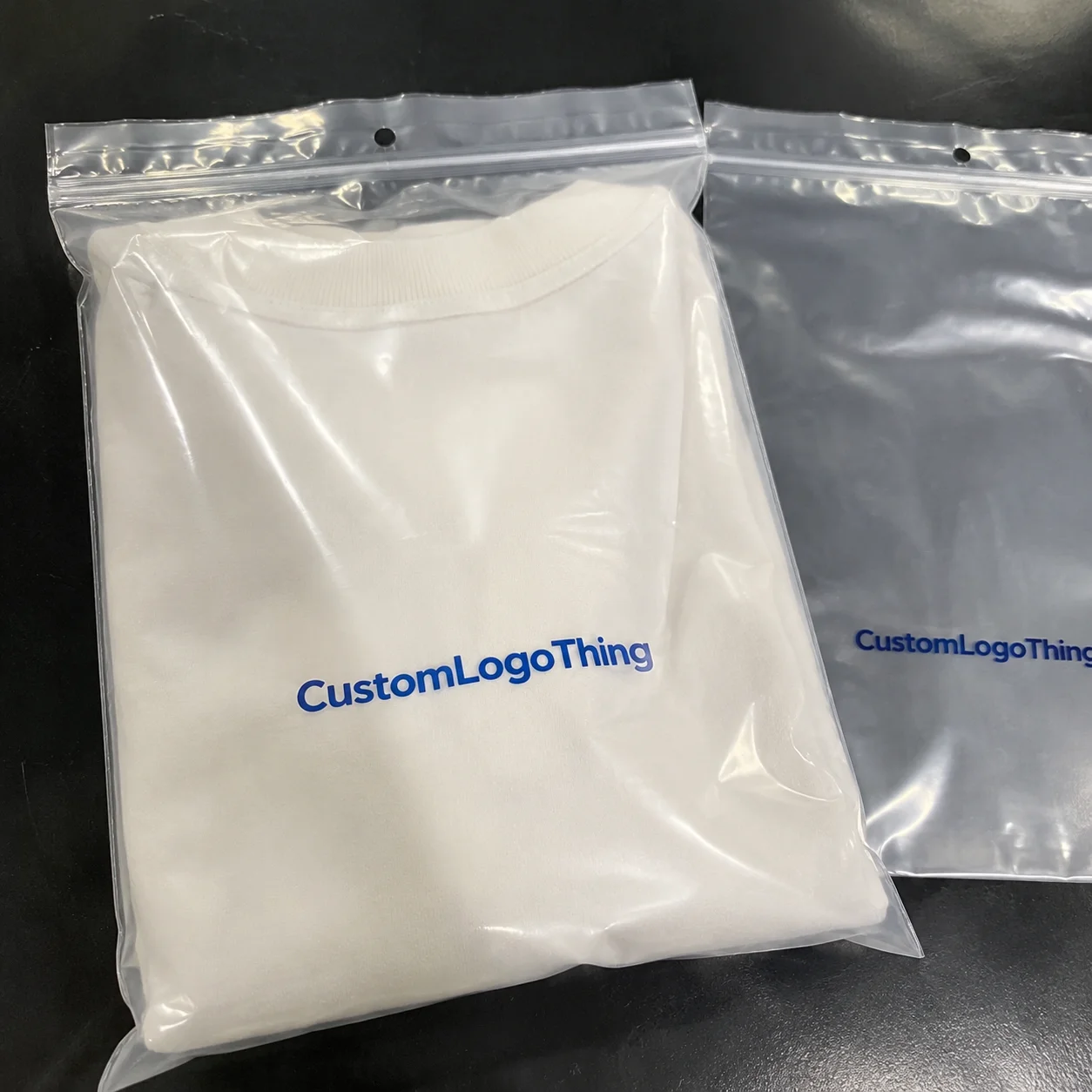
A parcel can leave the packing table looking fine and still arrive with a split seal, smeared print, or lifted flap. That gap between dispatch and delivery is why supplier choice matters. A useful private label printed Courier Bags Supplier should help you Choose the Right film, size, seal, print method, and packing format for how the bag will actually be used.
Private label means the bag is made to your spec and branding rather than pulled from stock with a minor print change. That can include custom dimensions, opaque film, return strips, POD pouches, warning text, and logo placement that matches your fulfillment process.
Common formats include LDPE/HDPE co-ex mailers, opaque satchels, tamper-evident e-commerce mailers, POD pouch variants, and double-seal return bags. They may look similar in product photos, but in use they can differ sharply in opacity, puncture resistance, seal strength, and print consistency.
Why courier bags fail at the worst moment—and what a private label printed courier bags supplier actually provides

Most courier bag failures happen after dispatch: a bag tears on a crate edge, the flap corners lift after pressure, or the film is too transparent under strong light. Some issues are less obvious but still costly, such as undersized bags that slow packers or print drift that makes branded parcels look low grade.
A capable supplier is not just printing film. They are reducing avoidable failure points through material selection, seal construction, adhesive choice, size control, and converting quality. That matters because a lightweight apparel mailer and a heavier satchel for mixed soft goods are not interchangeable.
Custom production also solves problems stock bags cannot. Generic mailers lock you into standard widths, flap sizes, and film assumptions. A good supplier can match the bag to the packed product and your packing line rather than forcing the warehouse to adapt.
- Co-ex polyethylene courier bags for balanced toughness and opacity
- Opaque satchels for privacy in apparel and soft goods shipping
- Tamper-evident mailers with permanent adhesive closure
- POD pouch options for invoices, labels, or delivery notes
- Return-seal bags with a second strip for reverse logistics
Any serious supplier should be able to explain where each style fits, what tradeoffs come with it, and where it is likely to fail. Strong print does not compensate for weak adhesive, and thin mailers do not replace cartons for sharp or fragile products.
How printed courier bags work in real shipping conditions
A courier bag is simple in structure—film, seals, flap, adhesive—but each element affects performance. The film must resist puncture and abrasion, the seals must hold under shifting loads, and the flap must close quickly on the line and stay closed in transit.
Higher-performing mailers often use co-extruded PE film, combining LDPE and HDPE properties across layers. That helps balance flexibility, opacity, puncture resistance, and printability. For many custom mailers, a practical range is 50 to 80 microns. Lightweight garments may work at 50 microns, while mixed soft goods or rougher handling often push buyers toward 60 or 70 microns.
Thickness alone is not enough. Film structure, resin quality, seal settings, and converting control can make two bags with the same stated micron perform very differently.
The adhesive strip deserves close attention. A proper tamper-evident closure should bond fast, resist casual reopening, and distort the film if someone tries to peel it back. If it opens neatly after ordinary transit stress, the bag has failed one of its main jobs.
Printing on flexible film also has limits. One- and two-color designs are usually easier to control than dense multicolor layouts. Large dark flood areas can scuff more easily, and very fine reverse text or tiny barcodes may not hold well. If you need item-level identification or variable data, it is often cleaner to use Custom Labels & Tags for information density and keep the bag focused on brand and privacy.
Courier bags are efficient and weather resistant, but they are not universal packaging. Sharp corners, heavy multi-item orders, and fragile contents may still need inner protection or a carton. For more demanding transit conditions, the test framework from ISTA is a useful reference before locking the spec.
The specs that matter most when comparing suppliers
Weak quotes usually come from weak specifications. To compare suppliers properly, define the bag before asking for price.
Core specs to define before requesting quotes
- Bag dimensions: width x length, plus flap length
- Usable packing area: interior space after seal and flap allowance
- Film thickness: often 50, 60, 70, or 80 microns
- Material structure: mono-layer or co-ex film
- Color: white outside/black inside is common for opacity
- Print coverage: one side or both, logo-only or flood print
- Closure style: permanent seal, return seal, POD pouch, tear line
Virgin resin usually gives cleaner color and more consistent print results. Recycled content may support sustainability goals, but it can affect brightness, feel, odor, and batch consistency. If recycled content matters, ask what percentage is post-consumer versus post-industrial and whether supporting documentation is available.
Most custom mailers use flexographic printing. Bold logos, open typography, and sensible line weights are usually safer than intricate gradients or delicate reverse details. Before approval, ask about minimum line thickness, registration tolerance, and barcode recommendations.
Do not treat strength as a synonym for gauge. Seal integrity, puncture resistance, tear behavior, and opacity all matter. Privacy is especially important for apparel, personal goods, and accessories.
Compliance questions often include REACH or RoHS. Recyclability is more conditional because film collection varies by market. The U.S. EPA recycling guidance is a reasonable starting reference at epa.gov.
Outer packing also matters more than many buyers expect. Carton count, carton dimensions, and pallet layout affect storage, receiving, and line replenishment. A large carton count may lower handling cost on paper but be inconvenient in a crowded packing area.
Practical rule: build the specification around actual shipping use first, then refine artwork.
What should you ask a private label printed courier bags supplier?
Specific questions usually tell you more than broad ones.
- What film structure do you recommend for my packed product, and why?
- What micron tolerance do you hold in production?
- How is the flap adhesive specified for permanence and tamper evidence?
- What print limitations should I account for before artwork approval?
- Can you provide both material samples and a production proof?
- What are the standard carton counts, carton weights, and pallet quantities?
- How are repeat orders controlled so print and dimensions do not drift?
A reliable supplier should answer plainly, with usable detail rather than generic claims. One especially useful question is: What claims or failures do you see most often on this type of bag? The answer often reveals whether the supplier understands transit performance or only the sales side.
Process and lead time: from artwork approval to delivered bags
Custom courier bag production usually follows the same path:
- Inquiry and use-case review
- Specification confirmation
- Formal quotation
- Artwork check and layout approval
- Plate or cylinder preparation
- Sample or proof approval
- Film extrusion or material allocation
- Printing
- Bag conversion and sealing
- Packing, inspection, and shipment booking
Delays usually come from missing packed dimensions, low-resolution artwork, absent Pantone references, or late changes to flap length or return-strip position. Sampling can also be misunderstood: a digital mockup confirms layout, a material sample shows film and adhesive style, and a production proof comes closest to real output.
For many standard custom jobs, production lead time falls around 12 to 20 business days after final approval. Print complexity, size, order volume, material availability, and queue load can move that window. Freight is separate: air may add a few days, while ocean may add several weeks depending on route and customs.
Repeat orders often move faster because artwork tooling already exists, but scheduling and material supply still matter. Ask for milestone dates—approval, tooling completion, print start, packing finish, and dispatch—rather than relying on one broad promised ship date.
Pricing, MOQ, and unit cost: what shapes the quote
Courier bag pricing is mainly driven by resin type, film thickness, bag size, print colors, ink coverage, tooling, packing method, and freight mode.
MOQ exists because extrusion and flexographic printing carry setup cost. Many Custom Printed Mailers begin around 5,000 to 10,000 pieces for standard sizes with simple graphics. Unusual dimensions, return strips, POD pouches, or heavier print coverage often push the minimum higher.
Higher volume usually reduces unit cost, but overbuying a size or artwork version that changes later can erase the savings.
| Specification Example | Typical MOQ | Estimated Unit Cost | Notes |
|---|---|---|---|
| Standard white/black co-ex bag, 50 micron, 1-color print | 5,000 pcs | $0.07-$0.12 | Simple custom run with low print complexity |
| Medium custom satchel, 60 micron, 2-color print | 10,000 pcs | $0.09-$0.16 | Common for apparel and soft goods |
| Large return-seal bag, 70 micron, 2-3 colors, POD pouch | 10,000-20,000 pcs | $0.14-$0.24 | Extra adhesive and pouch increase converting cost |
| Heavy-duty mailer, 80 micron, high-coverage print | 10,000+ pcs | $0.18-$0.30 | Used where puncture resistance matters more than minimal cost |
These figures are directional, not fixed. Resin and freight can move quickly, and print complexity affects waste. Still, realistic ranges are more useful than vague pricing claims.
Secondary costs matter too:
- Printing plate or cylinder charges
- Proofing or sample fees
- Freight and cargo insurance
- Customs duties or brokerage
- Warehousing for split deliveries
- Artwork revision charges on reorders
When comparing quotes, line up the same variables across suppliers:
- Micron and film structure
- Finished dimensions and tolerance
- Number of print colors and print sides
- Bag count per carton and carton weight
- MOQ and tooling charges
- Incoterms and freight assumptions
- Production lead time after approval
There are sensible ways to cut cost without hurting performance: standardize a few bag sizes, keep artwork to one or two colors where possible, avoid unnecessary gauge, and move detailed variable information to Custom Labels & Tags.
Common mistakes buyers make with custom shipping mailers
Most problems start in the spec sheet, not on the press.
The classic sizing mistake is working from bare product dimensions instead of packed reality. A folded garment with tissue, inserts, and closure allowance needs more space than the product alone suggests.
Artwork approval is another common trap. Buyers check the logo but miss barcode size, orientation after sealing, reverse text legibility, bleed, and safe area. Flexible film printing is less forgiving than a polished PDF preview suggests.
Gauge selection by instinct is expensive in both directions. Overspecify and you pay for resin you do not need. Underspecify and you invite splits and punctures. If unsure, test adjacent options with real pack-and-ship checks.
Adhesive quality is often under-reviewed. For return-heavy or theft-sensitive categories, closure performance is central. If the supplier cannot describe the adhesive style and expected bond behavior clearly, treat that as a warning sign.
Another preventable mistake is failing to document acceptable variation before issuing the PO. Recycled content level, print tolerance, micron tolerance, seal width, and carton counts should be written into the order.
Reality check: if one quote is dramatically cheaper, compare the specification line by line before assuming it is the better buy.
Smart next steps before you request samples or place an order
Before contacting suppliers, gather the inputs that shape a usable quote: target bag sizes, packed product dimensions, average order weight, common order combinations, climate exposure, artwork files, and expected usage volume.
Three requests should usually go out together:
- A formal quote based on a defined specification
- A material sample set in comparable gauges and styles
- A proof approval process showing artwork and production signoff steps
When samples arrive, test them like a warehouse would. Pack real orders, seal them, leave them overnight, try to peel the flap back, hold them against strong light for opacity, and check scuffing against rough carton edges. These are simple checks, but they expose obvious weaknesses quickly.
If you are comparing more than one source, use a scorecard and rate each on material quality, quote clarity, technical depth, response speed, timeline detail, and total landed cost.
Once a supplier is selected, lock the repeat-order spec in writing: dimensions, tolerance, micron, material structure, color references, print position, seal style, carton counts, and acceptable variation. If your packaging system also uses inserts or identification components, align the mailer with related items such as Custom Labels & Tags so the parcel feels consistent.
FAQ
How do I evaluate a private label printed courier bags supplier before placing a bulk order?
Start with material type, micron, print method, adhesive style, MOQ, and carton packing details. Then request physical samples and check seal strength, opacity, print clarity, odor, and dimensional consistency. A clear timeline with approval checkpoints is more reliable than a single broad ship-date promise.
What is the typical MOQ for a custom printed courier bag supplier?
Standard sizes with simple one- or two-color artwork often begin around 5,000 pieces. Unusual dimensions, return-strip designs, POD pouches, or more complex print layouts often require 10,000 pieces or more.
How much does a private label courier bag cost per unit?
A rough working range for many custom Printed Courier Bags is about $0.07 to $0.24 per piece, with heavier-duty or feature-rich versions priced above that. Final cost depends on resin grade, thickness, bag size, print coverage, order volume, and freight.
What artwork files should I send to a printed courier bags supplier?
Vector artwork is usually safest—typically AI, EPS, or a print-ready PDF. Include brand color references, ideally Pantone numbers, along with final bag dimensions and placement notes. Before tooling begins, ask the supplier to confirm bleed, safe area, orientation, and minimum line thickness for flexo production.
How long does production take with a custom courier bags supplier?
Many standard custom orders take about 12 to 20 business days after final approval, with shipping time added afterward. Timing depends on artwork readiness, material availability, print complexity, and order size. Sampling and proof approval should be treated as separate stages.