Coffee Roaster Stand Up Pouches Cost: What Actually Drives It
A roaster can ask for two quotes that look almost identical and still end up with very different coffee roaster Stand Up Pouches cost. Size alone rarely explains the gap. The real drivers usually sit in the laminate structure, zipper type, one-way valve, print coverage, and the amount of conversion work needed to finish the pouch cleanly.
That is why experienced buyers treat coffee roaster Stand Up Pouches cost as a package-level expense, not a single unit price. The pouch protects aroma, carries the brand, helps the packing line move, and can reduce the need for cartons or wraps. A design that speeds filling or trims freight volume can save money in places the quote sheet never shows. The lowest number on the page does not always produce the lowest total cost. I have seen roasters chase a bargain pouch, then spend the savings fixing seals, replacing scuffed bags, and answering customer complaints. That kind of math is not cute.
The main price levers are usually easy to spot once you know where to look. Material structure sets the baseline. A simple PET/PE laminate will not price the same as a metalized high-barrier film. Thickness changes the math too, since heavier film often costs more and can improve puncture resistance. Surface finish matters as well. Matte, gloss, and soft-touch each bring a different production burden. Add a zipper or a degassing valve and the quote changes again. Print layout affects the number too, because one-sided graphics usually cost less than full-wrap artwork with dense ink coverage or metallic effects.
Coffee packaging works hard for the money. A stand up pouch offers shelf presence, freshness protection, and efficient filling in one format. That can reduce the need for extra labels, cartons, or inserts. The format also ships well and stacks neatly, which is useful for small roasters that need a polished shelf look without moving into rigid containers. Measured against all of that, coffee roaster Stand Up Pouches cost can be a strong value, even when the unit price looks higher than a simple bag.
The cheapest pouch is not always the least expensive choice. A weak seal, a zipper that fails after a few openings, or a finish that scuffs in transit can create waste, returns, and brand damage. Those costs show up later and usually show up loudly. A better comparison pairs coffee roaster stand up pouches cost with fill speed, shelf life, freight efficiency, and reorder consistency.
Product Details: Materials, Features, and Print Options
The structure of the pouch does most of the financial work, so that is where the review should begin. PET/PE laminate is a common choice for coffee because it balances print quality, seal performance, and price. Metalized barrier film usually delivers stronger oxygen and light protection, which helps preserve roast character longer, especially for premium beans or wholesale accounts. Kraft-looking laminations can create a natural look, but the outer layer may simply be printed film, not actual paper. That is why the final coffee roaster stand up pouches cost depends on what the structure really is, not only on how it looks on screen.
Function carries just as much weight as appearance. A one-way degassing valve is close to standard for freshly roasted coffee because it lets CO2 escape without letting oxygen back in. Resealable zippers make the pouch more useful after opening. Tear notches, rounded corners, and euro slots can feel like small details, yet they affect die cutting, conversion time, and retail presentation. Clear windows can help a bag stand out, though they may weaken barrier performance if they are not integrated carefully. Each feature changes coffee roaster stand up pouches cost a little; together, they can move the number by a lot.
Print method is another major fork in the road. Short runs often make more sense with a stock pouch and custom label, especially for seasonal coffee or a test launch. Full-color process printing creates richer branding and stronger shelf impact, but setup, proofing, and plate or cylinder work can add meaningful expense. Spot color printing can be efficient for simpler brand systems. Dense photography, layered gradients, and special effects usually raise ink usage and conversion complexity. A buyer comparing coffee roaster stand up pouches cost should ask whether every quote includes the same print method and the same assumptions.
The table below shows how common choices tend to affect performance and price. Exact numbers shift with run size, film source, and print method, but the pattern stays consistent across most coffee packaging projects.
| Structure or Feature | Typical Use | Cost Impact | Buyer Note |
|---|---|---|---|
| PET/PE laminate | Entry to mid-level coffee pouches | Lower base cost | Good balance of print quality and seal performance |
| Metalized barrier film | Longer shelf life and stronger aroma protection | Moderate increase | Often worth it for premium or export programs |
| Kraft-look laminate | Natural or artisan branding | Moderate to higher increase | Check whether the look comes from print or a paper layer |
| One-way valve | Fresh roasted coffee | Small to moderate increase | Usually a smart cost rather than a luxury feature |
| Resealable zipper | Retail and subscription coffee | Small increase | Improves end-user experience and repeat use |
| Soft-touch matte finish | Premium shelf presentation | Higher increase | Looks refined, but adds conversion and material expense |
Buyers comparing quotes should avoid the simplest question, which is “Which pouch is cheapest?” A better one is “Which structure gives the right shelf life, appearance, and fill-line behavior for this roast program?” That line of thinking keeps coffee roaster stand up pouches cost tied to actual business value instead of a single line item. It also helps avoid a familiar mistake: choosing a lower-cost pouch that slows production, forces extra inserts, or triggers more complaints after launch.
For broader packaging context and industry references, Packaging.org offers useful industry information, while ISTA publishes package testing standards that help frame transit durability expectations. Those references matter when a roaster wants to look past the artwork and think about the package as a working system.
Specifications That Affect Fill, Shelf Life, and Pricing
Size planning starts with roast weight, but it does not stop there. A 12 oz pouch, a 1 lb pouch, and a sample size may seem close at first glance, yet gusset depth, headspace, and zipper placement can change how the bag fills and how it sits on shelf. Artwork can also behave differently across sizes. A layout that works on one bag may need adjustment on another, which means the same brand can trigger different setup charges depending on the final dimensions. That is one reason coffee roaster stand up pouches cost should never be quoted without the exact pouch size and fill target.
Barrier performance deserves more attention than cosmetic features. Coffee loses quality through oxygen exposure, moisture ingress, and aroma migration, so the film must match the product and the expected shelf life. A roaster selling locally with fast turnover may not need the same barrier level as a brand shipping across the country or sitting in wholesale inventory for weeks. If the film is underbuilt, a lower coffee roaster stand up pouches cost can disappear fast in the form of stale product and shorter sell-through. If the film is overbuilt, the package may cost more than the market can support. The right answer usually sits in the middle.
Machine compatibility affects both price and performance. Valve placement can interfere with certain print zones, zipper position can change the fill workflow, and gusset depth affects how the pouch opens on automated or semi-automated lines. A pouch that looks beautiful on a retail shelf but jams filling equipment is expensive in a different way. That is why a technical quote should include not only the bag dimensions, but also how the pouch will move through the line. When a supplier understands those details, coffee roaster stand up pouches cost becomes easier to predict and easier to control.
Quality control matters just as much as the spec sheet. Food-safe materials, lot consistency, seal integrity, and print registration all affect whether a run performs the same from carton to carton. Seal testing often follows ASTM F88-style seal strength methods, while shipping durability may be evaluated against standards published through bodies like ISTA. For paper-based components, FSC certification can matter if the brand wants to document responsible sourcing. None of those references replace a production sample, but they give a buyer a sound framework for asking sharper questions.
If a roaster needs a simple checklist, start with these points:
- Fill weight: 4 oz, 8 oz, 12 oz, 1 lb, or larger retail formats.
- Shelf life target: short local turnover or longer distribution window.
- Barrier need: basic freshness protection or high oxygen barrier.
- Line compatibility: hand-fill, semi-automatic, or automated packing.
- Display needs: matte look, window, metallic effect, or full coverage print.
Those details may look small, yet they shape the entire buying process. They also help prevent a common pricing mistake: asking for a quote on a “coffee pouch” instead of a specific pouch with a clear function. The more exact the spec, the more useful the coffee roaster stand up pouches cost quote will be.
Coffee Roaster Stand Up Pouches Cost, MOQ, and Quote Factors
Price breaks usually begin with quantity because setup expenses get spread across more or fewer pieces. A small order can carry a much higher unit cost than a larger one, even when the bag construction stays the same. For custom printed coffee packaging, that spread is normal. The supplier may need to recover tooling fees, plate charges, color setup, proofing, and other production setup charges. Once those costs are diluted over a larger run, the cost per piece falls and bulk pricing starts to matter.
MOQ belongs near the top of the buying checklist. For some structures, the minimum order quantity can stay modest if the pouch is stocked or digitally printed. For fully custom printed pouches, the MOQ is usually higher because press economics and conversion work need a certain volume to make sense. A quote that looks attractive at 1,000 pieces may not hold up at 10,000 pieces, and the reverse can also be true. That is why coffee roaster stand up pouches cost needs to be discussed with the exact MOQ attached to the same pouch structure, not just the same product family.
Real pricing questions usually break into a few controllable variables:
- Quantity: Larger runs generally lower the unit cost.
- Print complexity: More colors, more coverage, and specialty effects raise the cost per piece.
- Material choice: Barrier level, finish, and outer appearance all influence the quote.
- Accessories: Zippers, valves, windows, and hang holes each add cost.
- Logistics: Freight destination, carton count, and delivery method affect the total landed price.
The range starts to make sense once the variables are separated. At low volumes, a custom run may land in a higher coffee roaster stand up pouches cost band because the setup expense is spread thin. At mid-volume, the same pouch can become much more competitive. At higher volume, the supplier can often offer better bulk pricing, but only if the spec stays constant. Change the film weight or upgrade to a premium finish, and the price can climb again even on a large order.
Apples-to-apples discipline pays off here. Ask each supplier whether the quote includes the valve, zipper, freight, proof, and any tooling fees. Ask whether the bag is printed on one side or both. Ask whether the finish is matte, gloss, or soft-touch. Ask whether the artwork is already set up on the correct dieline. If one supplier includes those items and another leaves them out, the quoted coffee roaster stand up pouches cost is not truly comparable.
Sample and proof charges deserve attention too. Some projects need a physical sample, a printed proof, or a pre-production check to confirm size, appearance, and seal behavior. Those steps are often worth the expense because they reduce the odds of a costly mistake on the full run. A first custom order should budget for that possibility, even if the charges seem small next to the full project. Clean approval steps tend to produce a cleaner final coffee roaster stand up pouches cost outcome.
A quote only helps when the spec is complete. If the bag size, valve, zipper, print coverage, and freight assumptions are not written down, the number on the page is only a rough starting point.
Overbuying can create its own problem. A very low per-piece price may look attractive, but unused bags sitting in storage can drain cash and occupy warehouse space. The best coffee roaster stand up pouches cost is the one that fits projected usage, reorder cadence, and the actual pace of sales. Experienced buyers usually balance MOQ, production timing, and storage capacity together rather than chasing the lowest quote in isolation. A roaster that sells through a design in six weeks does not need the same order strategy as a regional brand pulling inventory all quarter.
Process and Timeline From Quote to Production
The path from inquiry to finished packaging is usually simple on paper, though every step serves a purpose. A solid supplier will begin with a spec review, move to a quote, then handle file checks, proof approval, production, quality review, packing, and shipment. Skip one of those steps or rush it too hard, and the pouch can look fine on a monitor while creating trouble at the filler or on the shelf. That is why coffee roaster stand up pouches cost should always be considered alongside the project timeline.
Artwork readiness is often the biggest variable. If files need dieline adjustments, color correction, barcode placement, or regulatory text edits, the schedule can stretch quickly. A roaster launching a new blend often learns that a brand asset is not the same thing as production-ready packaging artwork. The difference between those two can add days, sometimes more, to the job. Good planning reduces that friction and helps protect coffee roaster stand up pouches cost from creeping up through avoidable revisions.
Lead times vary by method and complexity. A repeat order with no spec changes can move faster because the supplier already has the approved structure and artwork on file. A first-time custom pouch with a valve, zipper, and specialty finish takes longer because each piece has to be checked. Simple reorder jobs may be ready in roughly 12-15 business days after approval, while more customized projects often need additional time, especially if proofing or sample signoff is part of the process. Freight time should be added separately, because production completion is not the same as delivery at your dock.
Delays tend to appear in predictable places. Final art arrives late. A last-minute copy change comes in after approval. A sample gets requested after the file was already signed off. Shipping details are missing. Or the production team finds a practical issue that needs correction before the line runs. None of that is unusual, and none of it is fatal, but each item affects the calendar and can create hidden cost pressure. In that sense, coffee roaster stand up pouches cost depends on process discipline as much as on film structure.
A clean project flow usually looks like this:
- Confirm pouch size, fill weight, and finish.
- Review the print method and accessory choices.
- Approve the quote with MOQ and freight assumptions.
- Check artwork on the correct dieline.
- Approve a proof or sample if needed.
- Run production and verify quality.
- Pack, ship, and track the order to arrival.
That sequence keeps surprises to a minimum. It also makes the final coffee roaster stand up pouches cost easier to defend internally, because each line item can be traced to a real production decision. For roasters managing seasonal launches, wholesale commitments, or private label accounts, that level of clarity matters more than a vague promise of “fast and cheap.”
Why Choose Us for Coffee Packaging Orders
At Custom Logo Things, the focus stays on practical support rather than packaging theater. A roaster needs clear specifications, honest options, and a quote that actually reflects what will be produced. That starts with responsive communication and a willingness to compare structures without pushing a one-size-fits-all answer. The right pouch for a small-batch local roast may not be the right pouch for a wholesale program, and the right coffee roaster stand up pouches cost for one business can be a poor fit for another.
Consistency is a major part of the value. If a brand reorders the same design every month, film consistency, print placement, and seal performance need to stay steady. A bag that varies too much from run to run creates headaches on the packing line and uncertainty for the customer. That is why repeatability matters as much as the first purchase price. A stable supply chain supports better planning, and better planning keeps coffee roaster stand up pouches cost from turning into a moving target.
Technical guidance matters too. Coffee packaging is not just a graphic project; it is a barrier, sealing, and handling project as well. The pouch needs to protect aroma, open cleanly, reseal properly, and survive transit without scuffing or splitting. When a supplier can explain why a stronger seal zone or a different laminate may be a better fit, the buyer gets a better result. That kind of advice can save money in the long run even if the initial coffee roaster stand up pouches cost is not the lowest number on the page.
For a buyer scaling from a neighborhood roaster to a wider retail or wholesale footprint, that balance is especially useful. The goal is not simply a lower quote. The goal is the right relationship between appearance, shelf life, fill efficiency, and reordering rhythm. If the packaging supports the product and the operation, the packaging cost becomes easier to justify and easier to manage.
FSC is a useful reference if your coffee brand wants to discuss responsibly sourced paper components, while ISTA helps frame transit testing expectations for package performance. Those standards do not replace a real quote, but they do show the kind of detail that belongs in a serious packaging conversation. That is the mindset we bring to coffee roaster stand up pouches cost: practical, measurable, and tied to how the package will actually be used.
Next Steps: What to Prepare Before You Request a Quote
The fastest way to get a clean quote is to send complete information the first time. Start with the target fill weight, the annual volume you expect, and whether you need a zipper, valve, window, hang hole, or rounded corners. Add the desired finish, since matte, gloss, and soft-touch each change the total. If this is the first run, say so. If it is a reorder, say that too. Those details help a supplier calculate coffee roaster stand up pouches cost with fewer assumptions.
Artwork should be included whenever possible, even if it is only a rough concept. A supplier can usually spot problems early if the file is attached, and that shortens the path from quote to proof. If the pouch has machine constraints, note those as well. Some filling equipment is sensitive to gusset depth, zipper placement, or overall bag width. If those limits are not shared, the quote may look fine on paper but fail on the floor. Better input produces a better coffee roaster stand up pouches cost estimate and avoids rework later.
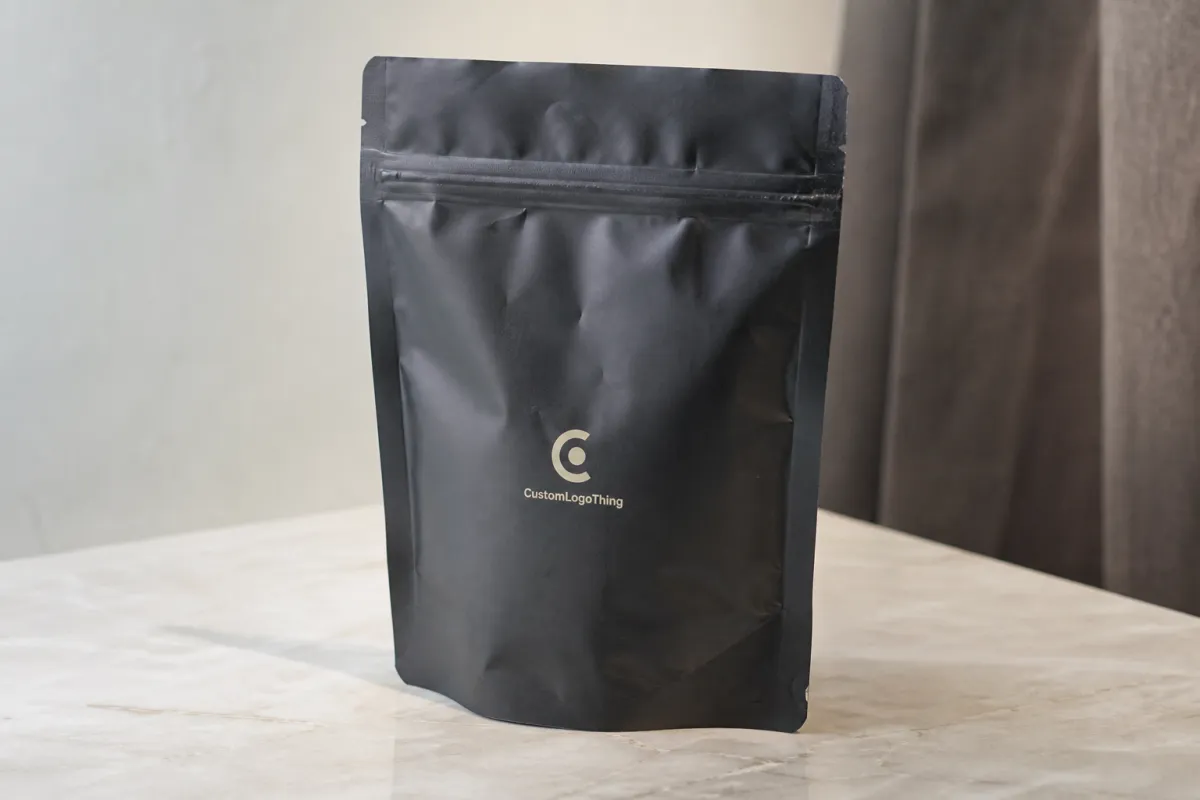
It also helps to think through the presentation you want. Do you want a natural kraft look? A rich matte black? A window that shows the bean color? A high-contrast premium layout with dense coverage? Sample photos or material swatches help when texture or clarity matters to the brand story. A matte film can look very different from a gloss film under store lighting, and that visual difference can justify a different price point. Buyers who are clear about presentation usually get a more useful coffee roaster stand up pouches cost recommendation on the first pass.
Here is a short checklist you can use before sending the request:
- Target fill weight and pouch size.
- Estimated annual usage or first-order quantity.
- Valve, zipper, window, and finish preferences.
- Artwork file or rough design direction.
- Machine limits, shipping destination, and delivery timing.
That checklist keeps the conversation focused and practical. It also makes it easier to compare multiple quotes side by side, because every supplier is responding to the same spec. If you want a number that reflects reality instead of a placeholder, give the supplier enough detail to evaluate the film, print, finishing, and logistics together. That is how a buyer gets a quote that can actually be used to budget, plan, and place the Order With Confidence. For any roaster trying to control coffee roaster stand up pouches cost, this is the cleanest path forward.
Gather the facts, send the artwork, and define the function of the bag as clearly as the look. The more specific the brief, the easier it is to compare options, understand MOQ, and see where the real savings live in coffee roaster stand up pouches cost. If the spec is tight, the quote will be tight too. That is the takeaway.
How much do coffee roaster stand up pouches cost per unit?
The coffee roaster stand up pouches cost per unit depends mostly on quantity, film structure, print method, and added features such as zippers or degassing valves. Smaller runs usually carry a higher unit cost because the supplier still has to cover setup work, proofing, and any tooling fees. Once the run size increases, the cost per piece drops and bulk pricing becomes more favorable. A useful quote always matches the same size, same accessories, and same print coverage across suppliers.
Does a degassing valve increase coffee roaster stand up pouches cost a lot?
A valve usually adds cost, but it is often a moderate add-on rather than the main driver of coffee roaster stand up pouches cost. The valve adds material and assembly steps, which is worth it for fresh roasted coffee that needs to vent CO2 after roasting. If shelf life and aroma retention matter, the valve is often a practical cost, not a luxury feature. For most roasters, the added expense is easier to justify than replacing stale product or dealing with swollen bags.
What MOQ should I expect for custom coffee pouches?
The MOQ depends on the print method, pouch size, and whether the pouch is fully custom or based on an existing structure. Custom printed orders usually require more units than stock options because the supplier needs to recover setup costs and production preparation. A larger pouch or a premium finish can also change the threshold. Ask for MOQ by exact spec, because a generic product name will not tell you much about real coffee roaster stand up pouches cost.
How long does production usually take after approval?
Lead time depends on artwork readiness, current production load, and the level of customization in the pouch. Simple repeat orders usually move faster than first-time custom jobs that need proofing or sample approval. Once production starts, the timeline still depends on film source, print complexity, and finishing steps. Freight time should be added separately so the delivery date reflects both production and shipping. That is the most reliable way to plan around coffee roaster stand up pouches cost and launch timing together.
What should I send to get an accurate quote?
Send the pouch size, fill weight, estimated annual usage, and the features you need such as zipper, valve, or window. Include print files or a rough artwork idea, plus any machine or packing constraints that affect dimensions. If possible, share a target budget so the supplier can recommend a structure that fits the project instead of guessing. The more complete the brief, the less likely the final coffee roaster stand up pouches cost will change after the quote is issued.