Buyer Fit Snapshot
| Best fit | compare custom die cut shipping inserts for packaging buyers comparing material specs, print proof, MOQ, unit cost, freight, and repeat-order risk where brand print, material, artwork control, and repeat-order consistency matter. |
|---|---|
| Quote inputs | Share finished size, material target, print colors, finish, packing count, annual reorder estimate, and delivery region. |
| Proofing check | Approve dieline scale, logo placement, barcode or warning zones, color tolerance, and any recyclable or compostable wording before bulk production. |
| Main risk | Vague material claims, crowded artwork, or missing packing details can create delays even when the unit price looks attractive. |
Fast answer: Compare Custom Die Cut Shipping Inserts: Material, Print, MOQ, and Cost should be specified like a repeatable production item. The safest quote includes material, print method, finish, artwork proof, carton packing, and reorder notes in one written spec.
What to confirm before approving the packaging proof
Check the product dimensions against the actual filled item, not only the sales mockup. Ask for tolerance on folds, seals, hang holes, label areas, and retail display edges. If the package carries a logo, QR code, warning copy, or legal claim, reserve that space before decorative graphics fill the panel.
How to compare quotes without losing quality
Compare board or film grade, print process, finish, sampling route, tooling charges, carton quantity, and freight assumptions side by side. A lower quote is only useful if the supplier can repeat the same color, closure quality, and packing count on the next order.
I still remember a client meeting in Newark, New Jersey where the cartons looked perfect, the tape was clean, the outer branding was sharp, and yet 4.8% of the units arrived with cracked corners. The failure wasn’t the box. It was the insert. That’s why I tell brands to compare Custom Die Cut shipping inserts before they sign off on anything else. The inside of the package usually decides whether ecommerce shipping goes smoothly or turns into a claims headache. And yes, I learned that lesson the annoying way—standing in a warehouse at 6:45 a.m., staring at broken product while everyone tried to blame the carrier. Classic.
In my experience, the fastest route to better protection is not always the thickest material. It is the Insert That Actually holds the product still, survives compression in transit, and makes sense for order fulfillment at scale. If you compare Custom Die Cut shipping inserts against foam, molded pulp, stock void fill, and partitions, the differences show up quickly in damage rates, packing speed, and brand presentation. A 350gsm C1S artboard tray may look fantastic for a lightweight inner pack, but it will not replace a properly engineered corrugated cavity for a 14 oz glass bottle. Honestly, a lot of teams obsess over the outer box because it’s easier to approve in a meeting. The insert is where the real engineering happens.
Most buyers start in the wrong place. They ask, “What looks premium?” instead of “What survives a 24-inch drop, a rough conveyor ride, and a pallet stack in summer heat?” That question matters. Especially for fragile glass, premium cosmetics, electronics, and multi-piece kits, compare Custom Die Cut shipping inserts is not just a sourcing exercise; it is a packaging design decision with real cost consequences. I’ve sat through enough supplier calls in Chicago and Shenzhen to know this: pretty packaging that shatters in transit is just expensive confetti.
Quick Answer: Compare Custom Die Cut Shipping Inserts Fast
Here’s the plain-English version: compare Custom Die Cut shipping inserts if your product has an odd shape, needs repeatable placement, or has to feel more polished than a bag of loose void fill can deliver. Die cut inserts beat stock kraft paper, air pillows, and random cushioning when you need a defined cavity, consistent retention, and a cleaner unboxing. They do not always beat foam on shock absorption, and they are not always the cheapest option up front. That tradeoff is the whole story, especially when a 5,000-piece run lands at $0.15 per unit for a simple corrugated die cut insert and jumps to $0.42 when you add print, tighter tolerances, and a second cavity.
I’ve seen this play out on a factory floor in Edison, New Jersey where a skincare brand was using loose crinkle paper inside custom printed boxes. The boxes looked elegant on the shelf, but the jars were colliding in transit because the fill shifted by an inch or two. Once they switched to a corrugated die cut insert with two precise cavities, damage dropped sharply. Not zero. Sharply. That distinction matters if you’re comparing custom die cut shipping inserts for real shipment conditions rather than for photos. I remember the production manager just staring at the pile of returns like it personally offended him. Fair enough.
Use this quick rule:
- Choose die cut inserts if the product must stay fixed in place and the brand experience matters.
- Choose molded pulp if sustainability and fiber-based positioning matter more than crisp visual finish.
- Choose foam if you need the highest shock absorption for very delicate items.
- Choose stock void fill if the product is resilient and the main goal is low-cost separation, not exact retention.
If your product is fragile, premium, irregularly shaped, or shipped as a kit with multiple components, compare custom die cut shipping inserts early. If the item is a standard, durable SKU in a clean shipping box, you may not need full custom work. The core tradeoff is simple: better fit and presentation versus tooling, lead time, and upfront cost. That balance changes by material, order volume, and how much damage you can tolerate. I’ve seen brands save $0.12 per unit and then burn it all back in returns. Brilliant strategy. Not.
“We thought the outer box was the problem,” a fulfillment manager in Allentown, Pennsylvania told me during a supplier review, “but the insert let the bottle move three quarters of an inch. That was enough.” He was right. Three quarters of an inch can be the difference between a perfect arrival and a return.
One more decision shortcut: if you need samples in under 10 business days and your artwork is still changing, start with a simpler corrugated or paperboard insert. If the launch is six weeks away and the product is sensitive to vibration or crush, compare custom die cut shipping inserts across at least two materials, not one. Otherwise you end up approving a design that looks great in CAD and behaves like a bad joke in transit. I’ve watched that happen in a Detroit pilot run where the “final” insert got revised four times before the line was ready.
Top Options Compared: Compare Custom Die Cut Shipping Inserts
When I compare custom die cut shipping inserts side by side, I look at five things: protection, presentation, sustainability, weight, and packing speed. Those five variables tell you far more than a sample sitting on a sales rep’s desk. A sample can look immaculate and still be a pain to pack at 600 units per hour. And believe me, nobody on a line cares how elegant the sample looked if their hands are cramping by lunch.
| Insert Type | Protection | Presentation | Sustainability Position | Weight | Best Use Case |
|---|---|---|---|---|---|
| Die cut corrugated | Good for restraint and moderate crush protection | Clean, printable, practical | Strong fiber-based story | Light | Cosmetics, subscription boxes, retail packaging, kitted products |
| Die cut foam | Excellent shock absorption | Premium, technical, dense | Harder to position environmentally | Light to medium | Electronics, fragile glass, high-value parts |
| Molded pulp | Very good for nesting and stacking | Natural, molded, less polished | Usually strong recyclable narrative | Medium | Eco-forward brands, bottles, appliance components |
| EVA foam | Very high for delicate retention | Premium, structured, luxury feel | Weaker sustainability story | Light | Luxury kits, optics, instruments, presentation packs |
| Paperboard supports | Fair to good for light products | Minimal, brand-friendly | Good fiber story | Very light | Retail packaging, lightweight accessories, accessories in custom printed boxes |
Die cut corrugated is the workhorse. I’ve specified it for subscription kits, candle sets, and small electronics because it is forgiving on cost and reliable in high-volume order fulfillment. It usually holds up well in ecommerce shipping if the product is not ultra-fragile. A typical 32 ECT single-wall insert for a 5,000-piece run often lands around $0.18 to $0.26 per unit, while a heavier 44 ECT build with two cavities can move closer to $0.31 to $0.45. The downside is that it can feel plain unless the print, cut geometry, or structure is carefully designed. Still, plain is better than broken. I say that with the weary confidence of someone who has opened too many damaged cartons on too many Monday mornings.
Die cut foam is the specialist. It wins on shock control and product retention, especially for irregular components. A client in medical accessories in Minneapolis once told me the foam sample “felt like a luxury tray.” It did. But after 20,000 units, labor complained because the pockets were a little too snug and insertion times crept up by 18 seconds per pack. In packaging, 18 seconds is a lifetime. In a warehouse, it’s also a very effective way to make everyone glare at you.
Molded pulp often wins the sustainability conversation, and fairly so. It is a strong fit for brands trying to signal lower material intensity or better recyclability. But I’ve seen molded pulp underperform when the product has sharp edges, inconsistent finish, or a need for very precise show-through. It is not a universal answer, and anyone saying it is probably hasn’t watched a line worker wrestle with a warped tray at 7:00 a.m. in a humid plant in Guangzhou, where optimism tends to go die quietly.
EVA foam sits near the premium end of the spectrum. It can make branded packaging feel expensive before the outer carton is even opened. That said, if your product is heavy, oily, or unusually shaped, EVA can be overkill, and overkill can become dead inventory. I’ve watched sales teams fall in love with the presentation and ignore the warehouse reality. That mistake costs money. It also tends to create awkward silence in meetings, which is always fun for me in a deeply un-fun way.
Paperboard supports are the quiet option. They are lighter, often cheaper, and easier to recycle in many systems, but they only work when the product is already fairly stable. A 350gsm C1S artboard inner support can work beautifully for accessory kits, refills, and lightweight components, especially in product packaging systems where the insert is more about organization than cushioning. If you need a tray that folds flat and ships efficiently from Suzhou or Dongguan, paperboard usually wins on simplicity.
When you compare custom die cut shipping inserts for automation, corrugated and paperboard often pack faster because they stack flat, are easy to count, and can be pre-creased for line-side use. Foam and molded pulp can be more cumbersome if the line is manual. I’ve seen a plant in Columbus, Ohio gain 11% throughput simply by switching from a nested foam insert to a flat-shipped die cut board that workers could pop and place in one motion. They were thrilled. The supervisor looked like he had just gotten his life back.
How to Compare Custom Die Cut Shipping Inserts by Material
If you really want to compare custom die cut shipping inserts properly, you have to test how they behave under compression, vibration, drop impact, and stacking pressure. Not on paper. In the actual box. That means loading the real product, sealing the carton, and running it through basic transit abuse: corner drops, edge drops, and shake tests. ISTA test methods are useful references here, and the standards body publishes practical guidance for distribution testing at ista.org. I know testing sounds boring until you see a bottle crack on the third drop. Then it becomes very interesting, very fast.
Die cut corrugated
Corrugated inserts excel when the product needs restraint, not suspension. A die cut cavity can stop lateral movement, protect surfaces from scuffing, and keep multi-item kits organized. I like corrugated for custom printed boxes because it can carry branding with print, spot color, or even plain natural kraft if you want a restrained look. The material is also easy to spec: 32 ECT for lighter loads, 44 ECT or more for heavier components, and thicker flute options like E-flute or B-flute if the product needs extra rigidity. A well-made insert from a plant in Xiamen or Dallas can be turned quickly, usually in 12 to 15 business days from proof approval for a standard run.
Where it fails is shock. If the product is glass with thin walls or electronics with sensitive internals, corrugated alone may not absorb enough impact unless the geometry is smart. An engineered fit matters more than a thicker sheet. I’ve seen brands add more thickness and still get breakage because the product had room to rebound inside the pocket. More board is not magic. If only packaging were that easy, I’d be retired on a beach somewhere.
Die cut foam
Foam is the strongest performer for vibration and drop protection. That is why compare custom die cut shipping inserts often ends with a foam sample on the table for premium electronics or delicate instruments. The product sits tight, the cavity is precise, and the assembly feels controlled. But the buyer should ask about compression set, scuff resistance, and odor. Yes, odor. More than one buyer has approved a beautiful sample that smelled like a solvent closet for three days after unpacking.
I’ve seen die cut foam work exceptionally well for metal components with coated finishes and for products that must not rattle during transit. I’ve also seen it create frustration because some operators struggle with alignment on high-speed packing lines in Phoenix, Arizona. The tighter the cavity, the more important the tolerance. That is not a flaw; it is a reality. I remember a line lead telling me, “The insert is beautiful, but it fights me like it has a personal grudge.” He wasn’t wrong.
Molded pulp
Molded pulp is the material many sustainability teams want to champion, and for good reason. It carries an honest fiber-based story and often supports recyclable packaging narratives better than foam-heavy solutions. For bottle-shaped items, molded pulp can cradle and stack very well. It also helps with paper-based packaging systems where the goal is to reduce mixed materials. If your brand is serious about sourcing, the EPA’s packaging and waste reduction guidance at epa.gov/recycle is a useful place to benchmark waste assumptions.
Still, molded pulp is not always the most elegant answer. It can be dusty, slightly variable in finish, and less precise on premium retail packaging. A client in the home fragrance category once approved pulp trays because they loved the eco story, then rejected the final pack because the surface showed small fibers under bright retail lights in Los Angeles. That is a real tradeoff, not a theoretical one. The tray was functional. The buyer just didn’t want their candle line to look like it had been assembled in a barn.
EVA foam
EVA foam sits in the premium zone. It feels dense, polished, and intentional. For luxury kits and high-value items, that matters. A good EVA insert can make package branding feel serious, especially when paired with printed lids, foil details, or high-end unboxing structure. But EVA is not the right answer for every budget. It usually costs more, can be harder to justify on sustainability grounds, and may create a “too precious to throw away” reaction that does not always fit the brand story. At 5,000 pieces, I’ve seen quotes start around $0.60 per unit and climb to $1.20 or more once the cavity count and finish requirements get fancy.
I think EVA is often chosen for visual status before functional analysis. That is backwards. Start with the fall height, the product mass, and the breakage sensitivity. Then decide whether the premium feel earns its cost. If you cannot justify the extra material and tighter tooling, choose something simpler. No one gets a medal for paying more just because it looked impressive on a sample table.
Paperboard supports
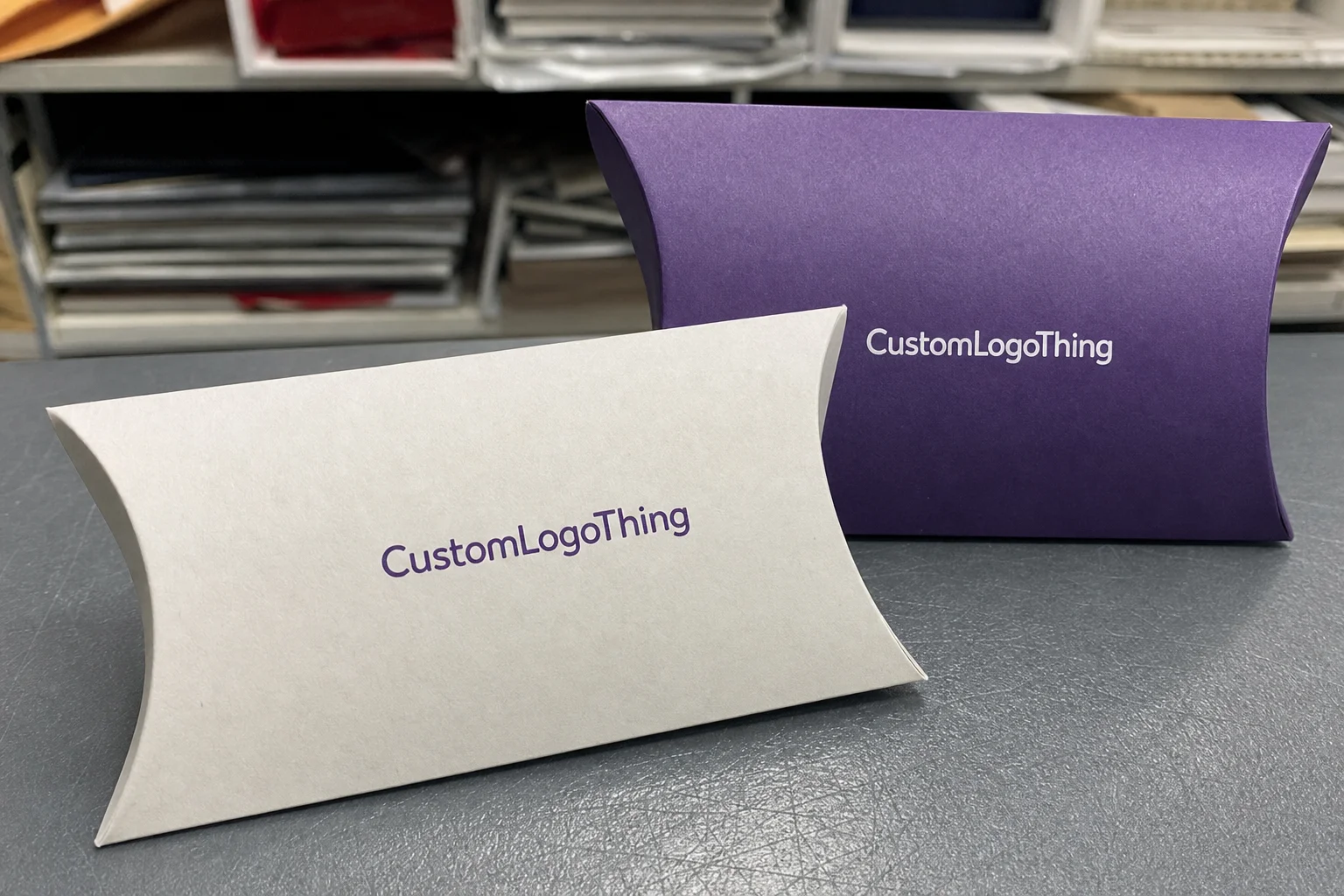
Paperboard inserts are underrated. They are not flashy, but they can be highly effective for lightweight product packaging. They work especially well in custom printed boxes and branded packaging systems where the insert must keep items from sliding without adding much weight. They are also fast to assemble when the die lines are clean and the locking tabs are well designed. A 350gsm C1S artboard insert with one lock tab can often be produced in southern China or northern Vietnam in 8 to 15 business days, which is helpful when the launch calendar is tighter than anyone would like.
What they do not do well is absorb hard impact. If the product is fragile or heavy, paperboard alone may be too thin unless it is engineered into a layered structure. I like it for accessories, modular kits, and lower-risk DTC shipments. I would not trust it for a high-value glass bottle unless the outer pack has significant secondary protection.
To compare custom die cut shipping inserts accurately, I use five practical tests during pilot runs:
- Assembly speed in seconds per pack.
- Product retention during a 3-foot drop simulation.
- Scuff resistance after 20 insert/removal cycles.
- Stacking performance under carton weight.
- Unboxing feel from the customer’s point of view.
Price Comparison and Total Cost
Pricing is where many brands get tripped up. They compare custom die cut shipping inserts by unit price only, then discover that tooling, minimum order quantities, and revisions changed the real cost picture. A better method is to compare the total landed cost per shipped order, not the insert price alone. I’ve watched teams cheer over a low quote, then quietly panic when the quote doubled after revisions. Packaging math has a sense of humor, apparently.
| Material | Typical Unit Range | Tooling / Setup | Typical MOQ | Lead Time |
|---|---|---|---|---|
| Die cut corrugated | $0.18–$0.42/unit at 5,000 pieces | $150–$600 | 1,000–5,000 | 10–18 business days |
| Die cut foam | $0.35–$1.10/unit at 5,000 pieces | $250–$900 | 500–3,000 | 12–20 business days |
| Molded pulp | $0.28–$0.75/unit at 10,000 pieces | $800–$2,500 | 5,000–10,000 | 20–35 business days |
| EVA foam | $0.60–$1.80/unit at 5,000 pieces | $300–$1,200 | 500–2,500 | 12–25 business days |
| Paperboard supports | $0.12–$0.30/unit at 10,000 pieces | $120–$500 | 1,000–10,000 | 8–15 business days |
Those figures move around with board grade, foam density, cavity count, print complexity, and geography. I’ve seen a simple corrugated insert jump from $0.22 to $0.31 because the brand wanted a second-color print and a tighter die tolerance. That is normal. It is also why I tell people not to compare custom die cut shipping inserts from two suppliers unless the specs are identical. Otherwise you are comparing apples to oranges and somehow blaming both for being fruit.
Tooling is the first hidden cost. A die cut tool may be inexpensive at low complexity, but more intricate geometry, multiple layers, or a branded reveal can add expense quickly. Then there is labor. If the insert takes 12 extra seconds to assemble and you ship 30,000 units, the labor math becomes a real business issue. At $18 per hour loaded labor, those seconds add up faster than most finance teams expect. I’ve had warehouse managers in Atlanta practically memorize that sentence.
Storage is another overlooked line item. Bulk molded pulp can take more warehouse space. Foam trays may nest better, but if they arrive bulky or compressed, inbound handling changes. Rush production can also trigger premiums. I’ve seen quotes rise 8% to 15% when a launch date was pulled forward by two weeks because the buyer did not leave enough time for a sample loop.
To compare custom die cut shipping inserts apples-to-apples, ask every supplier for the same six details:
- Product dimensions and weight
- Outer carton size and board grade
- Exact cavity count and tolerances
- Annual volume and first order quantity
- Print or branding requirements
- Target transit test level, such as ISTA-style drop and vibration targets
If you need the insert to align with broader branded packaging or Custom Packaging Products, compare not just cost but how the insert fits the full system. A $0.10 savings on the insert can be meaningless if you need a heavier shipping box, additional void fill, or a return allowance because of scuffs.
Process and Timeline: From Sample to Production
The fastest projects still follow the same sequence: product measurements, CAD or dieline creation, prototype, fit test, revisions, and production. Skip one of those steps and you usually pay for it later. When I visited a facility in Guangdong, the packaging engineer told me their shortest successful cycle was 9 business days from approved measurements to first prototype, but only because the product was a standard rectangle and the outer box had already been locked. That kind of speed is great right up until someone says, “Oh, can we also change the bottle?”
For most programs, this is a realistic timeline:
- Day 1–2: Collect measurements, product photos, and sample units.
- Day 3–5: Dieline or CAD development.
- Day 6–10: Prototype creation and ship-out.
- Day 11–15: Fit testing, revisions, and approval.
- Day 16–25: Production, depending on material and volume.
What slows everything down? Three things. First, unclear dimensions. Second, product variation across batches. Third, the wrong sample being used for testing. I’ve seen teams approve a beautiful insert with the show sample, then discover the production run had a slightly wider neck finish or a sharper corner radius. That is why I insist on testing actual production units whenever possible. I’d rather have the awkward conversation early than the “why did 2,000 units fail?” conversation later.
Manufacturers need more than length, width, and height. They need weight, surface sensitivity, target carton size, packing sequence, and whether the product has any protrusions, caps, cables, or accessories. If you’re planning a line with custom shipping boxes or Custom Shipping Boxes, send the box spec and insert spec together. Separating them creates fit risk. In a Taiwan production run I reviewed last year, the insert was perfect but the carton depth was 4 mm too shallow, and that tiny gap cost two days of rework.
Rush projects usually fail in one of two places: either the buyer approved a sample too quickly, or the supplier guessed at tolerances to save time. I’m not anti-rush. I’ve saved launches with fast-turn programs. But if you compare custom die cut shipping inserts under a tight deadline, you should expect fewer choices, more compromises, and a higher chance of revision. That’s not cynicism. That’s just the receipts talking.
How to Choose the Right Insert for Your Product
The easiest way to choose is to build a simple matrix across five variables: fragility, weight, shape, branding goals, and budget. If a product is light, durable, and simple, a paperboard or corrugated solution may be enough. If it is heavy, irregular, or highly breakable, you may need foam or a more engineered hybrid structure. That is the practical answer. Not the romantic one. The romantic one is usually what gets approved in the first meeting and regretted in the third.
Here is the decision pattern I use with clients:
- Low fragility + high volume: Die cut corrugated or paperboard.
- Medium fragility + strong sustainability goal: Molded pulp.
- High fragility + premium presentation: EVA foam or engineered foam-corrugated hybrid.
- Mixed-component kits: Layered corrugated with multiple cavities.
- Luxury retail packaging: Structured insert with print, reveal, or coated finish.
For DTC brands, the insert has to protect the product and support the unboxing moment. For retail packaging, the insert may need to carry the product upright on a shelf without showing wear. For B2B shipments, the insert may matter less visually but more in terms of pallet stability and downstream handling. Those are different jobs. A 2 kg tool kit shipped from Milwaukee does not need the same tray finish as a 6 oz serum kit headed to Sephora in Paris.
Sustainability deserves straight talk. Corrugated and molded pulp are easier to position as recyclable in many markets, but the greener option is not automatically the one with the lowest recycled content story. If a fiber insert causes more breakage, uses a heavier outer carton, or forces a second shipment, the environmental math gets worse. The best packaging choice is the one that uses the least material while still protecting the product reliably.
One of the most common mistakes I see is over-specifying because the sample “feels nice.” Another is under-specifying because the quote was attractive. In a supplier negotiation in Chicago, a buyer told me they wanted the lowest possible unit price. Two months later, they were paying for returns and replacement inventory. The insert saved pennies and cost dollars. That is a hard lesson, but it repeats often. I wish I could say it only happened once. It does not.
If your product line includes both fragile and durable SKUs, consider a shared insert architecture. That means using one outer carton family and a few internal variations. It can lower complexity in order fulfillment and make inventory planning easier. It can also make branded packaging look more consistent across the range, which helps package branding and reduces confusion at packing stations.
For brands already using Custom Poly Mailers, the insert conversation is still relevant. Mailers solve shipping weight and dimensional efficiency, but they do not protect fragile products on their own. If the item breaks in a mailer, the mailer was the wrong starting point. I say that bluntly because too many teams try to fix structural problems with a cheaper outer layer. That’s like putting a nicer hat on a broken roof.
Before you compare custom die cut shipping inserts with suppliers, ask yourself three questions: What failure are we trying to stop? What does the pack need to look and feel like? How many seconds can we add to packout before labor cost becomes painful? Those answers narrow the field fast.
Our Recommendation and Next Steps
My recommendation is simple: choose the material based on the product risk, not the sample drama. For most brands shipping fragile but not highly technical products, die cut corrugated gives the best balance of cost, protection, and presentation. For very delicate items, go foam or a hybrid. For strong sustainability positioning, molded pulp is often the best story, provided the fit is solid. For premium retail moments, EVA can be worth it if the budget and volume justify it. A 5,000-piece corrugated program in Atlanta may run at $0.21 per unit; a comparable foam program could land at $0.74. That spread matters when you sell tens of thousands of units per quarter.
If you want the best all-around approach, start by comparing custom die cut shipping inserts in corrugated and molded pulp first, then bring foam into the discussion only if the transit test data says you need more shock protection. That sequence saves time. It also keeps the conversation grounded in actual performance instead of supplier preference. And it saves you from the very expensive habit of falling in love with the first sample someone sends over.
Here is the fastest next-step checklist I use with clients:
- Measure the product in three places, not one: body, widest point, and fragile point.
- Record unit weight to the nearest 0.1 oz or 1 gram.
- Share carton dimensions and target ship method.
- Provide monthly and annual volume forecasts.
- Send photos of the current packout and any damage examples.
- Request two samples: one ideal, one cost-optimized.
If you want a faster proposal, send a supplier a simple package sheet with the product dimensions, weight, surface finish, carton size, shipping method, target MOQ, and whether you need print or unprinted material. That is enough for a serious estimate. Add your acceptable lead time in business days, because vague timelines create vague quotes. Suppliers are not mind readers, despite what some procurement teams seem to hope. If a factory in Dongguan tells you 12 to 15 business days from proof approval, hold them to the proof approval date, not the first email.
My honest take after years around packaging lines, supplier calls, and damage audits: the brands that win are the ones that compare custom die cut shipping inserts with discipline. They compare on fit, not just looks. They compare on assembly speed, not just sample beauty. They compare on landed cost, not just unit price. That is how you get packaging design that works in the warehouse and still supports product packaging, retail packaging, and branded packaging goals.
If you are ready to move, compare custom die cut shipping inserts across at least two materials, request real samples with actual products loaded, and keep the outer carton and insert spec tied together from the start. That one habit can save months of rework and a meaningful share of damage claims. I’ve seen it happen, and I’ve seen the opposite happen too many times. Trust me, you want the first version.
How do I compare custom die cut shipping inserts for fragile products?
Compare protection under drop, vibration, and compression, not just appearance. Ask for prototypes loaded with the actual product and test fit before you place a full order. If the item has a sharp edge or heavy center of gravity, test the worst-case orientation, not just the easiest one. I’d also keep an eye on product movement inside the cavity—tiny shifts become ugly cracks fast. For a 12 oz glass bottle, even 2 mm of extra play can matter.
Are custom die cut shipping inserts more expensive than foam inserts?
Sometimes the unit price is lower for corrugated, but tooling and complexity can raise upfront cost. Foam may cost more per piece yet reduce damage better for very delicate items. The real answer depends on your breakage rate, packing speed, and whether the insert replaces extra void fill or a heavier box. I’ve had quotes where foam looked outrageous until the returns line item showed up. Then it suddenly looked very reasonable.
What is the fastest way to compare custom die cut shipping inserts from suppliers?
Send the same product dimensions, weight, packaging goals, and volume forecast to each supplier. Use identical specs so you can compare quotes, lead times, sample quality, and revision speed fairly. If one supplier asks for more information, give it to everyone else too so the quotes stay comparable. Otherwise you are basically comparing guesses, and nobody needs that kind of chaos. A clean brief from Boston, for example, should produce a clean quote from any factory in Vietnam or Mexico.
How long does it take to make custom die cut shipping inserts?
Simple designs can move from dieline to prototype quickly, but revisions and approvals add time. Complex or highly branded inserts usually take longer because fit testing matters more. In practical terms, simple corrugated inserts may be ready in about 10 to 18 business days, while molded pulp and elaborate foam structures often take longer. If the sample process starts getting “creative,” add buffer time. Creativity is great for design. Not so great for ship dates.
Which material is best when comparing custom die cut shipping inserts for sustainability?
Corrugated and molded pulp are usually easier to position as recyclable or fiber-based options. The best choice depends on how much material is actually needed to prevent damage. A lighter insert that fails in transit is not sustainable in any meaningful sense, because replacement shipments and returns increase waste. If a 350gsm C1S artboard tray keeps a cosmetic kit intact from Shanghai to Dallas, that can beat a heavier foam option with a higher damage rate.