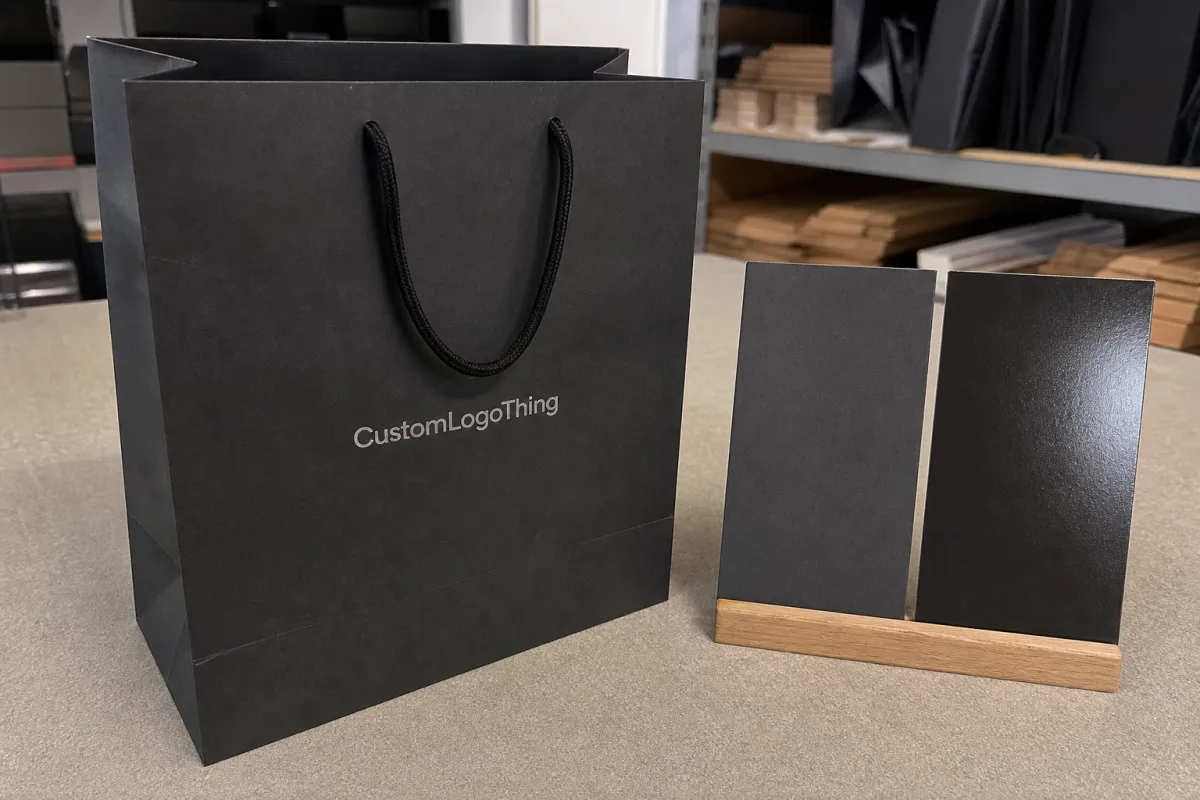
Buyer Fit Snapshot
| Best fit | compare eflute vs bc flute corrugated for packaging buyers comparing material specs, print proof, MOQ, unit cost, freight, and repeat-order risk where brand print, material, artwork control, and repeat-order consistency matter. |
|---|---|
| Quote inputs | Share finished size, material target, print colors, finish, packing count, annual reorder estimate, and delivery region. |
| Proofing check | Approve dieline scale, logo placement, barcode or warning zones, color tolerance, and any recyclable or compostable wording before bulk production. |
| Main risk | Vague material claims, crowded artwork, or missing packing details can create delays even when the unit price looks attractive. |
Fast answer: Compare Eflute vs Bc Flute Corrugated: Material, Print, MOQ, and Cost should be specified like a repeatable production item. The safest quote includes material, print method, finish, artwork proof, carton packing, and reorder notes in one written spec.
What to confirm before approving the packaging proof
Check the product dimensions against the actual filled item, not only the sales mockup. Ask for tolerance on folds, seals, hang holes, label areas, and retail display edges. If the package carries a logo, QR code, warning copy, or legal claim, reserve that space before decorative graphics fill the panel.
How to compare quotes without losing quality
Compare board or film grade, print process, finish, sampling route, tooling charges, carton quantity, and freight assumptions side by side. A lower quote is only useful if the supplier can repeat the same color, closure quality, and packing count on the next order.
I still remember a client in Shenzhen who sent me a pristine mockup and said, “Sarah, this box is perfect.” Then we loaded it with a 4.8 kg glass set, stacked four pallets high in a Dongguan warehouse, and watched the top layer bow like a cheap folding chair. That was the moment I told them to compare eflute vs bc flute corrugated before ordering 30,000 units and hoping the universe would do quality control for them.
That’s the whole job in one sentence: compare eflute vs bc flute corrugated based on what the box has to survive, not what looks nicest in a CAD render. E flute is slimmer, prints cleaner, and feels more premium on shelf. BC flute is thicker, tougher, and better when cartons get stacked, tossed, or dragged through a warehouse like they owe somebody money. If your product is under 1 kg and the journey is short, E flute often makes sense. If you’re shipping from Guangzhou to Los Angeles by mixed freight, BC usually earns its keep.
At Custom Logo Things, I’ve seen brands waste $8,000 to $20,000 because they chose a box on appearance alone. I’ve also seen the opposite: a skincare brand spent an extra $0.14 per unit on stronger board and saved about $3,200 in one month by avoiding breakage, reships, and customer refunds. So yes, the “best” flute is often not the strongest one. It’s the one that lowers total cost on a 5,000-piece or 10,000-piece run.
This guide breaks down how to compare eflute vs bc flute corrugated with real production logic: thickness, print quality, freight, lead time, and use cases. I’ll keep it blunt. If you need retail packaging for a lighter product, E flute usually wins. If the box needs to survive heavier contents or ugly shipping conditions, BC flute is the better call. No poetry. Just board, ink, and the occasional warehouse disaster.
Quick Answer: Compare eflute vs BC flute corrugated
If you want the short answer, here it is: compare eflute vs bc flute corrugated by asking one question first — what failure is more expensive, bad presentation or broken product? E flute is thinner, cleaner, and better for graphics. BC flute is thicker, more protective, and better for transit abuse. That’s the real tradeoff. Everything else is packaging people making the same point with more adjectives and a nicer font.
I once reviewed a subscription box for a skincare brand in New York that looked gorgeous in E flute. Soft-touch coating. Crisp edges. Foil logo. It was one of the prettiest cartons I’ve approved. Then the brand started shipping to fulfillment centers in New Jersey that stacked cartons under heavier mixed inventory, and the corners started crushing after only 2 to 3 weeks of receiving. Not every route is gentle. That’s why I always tell clients to compare eflute vs bc flute corrugated with the actual shipping lane in mind, not the sample room fantasy.
Rule of thumb? Use E flute for lighter products, retail presentation, and sharper print. Use BC flute when crush resistance, stacking strength, and rough handling matter more than a sleek profile. If you’re shipping via parcel, pallet, or mixed freight, BC can prevent a lot of stupid loss. I say “stupid” because half the time the box failed, not the product. The product was fine. The carton was the weak link.
One more thing people miss: the best box is not always the thickest one. I’ve seen overbuilt boxes cost more in freight, take more warehouse space, and still not solve the root problem because the product was loose inside. Sometimes you need a tighter fit, a molded pulp insert, or a better closure style. So when you compare eflute vs bc flute corrugated, don’t just stare at the board thickness. Stare at the total landed cost, the 3PL handling, and whether the carton has to survive 72 hours under stack pressure.
“We switched from a prettier board to a stronger one after losing 4% of units in transit. The new box cost $0.11 more, but we stopped replacing $3,000 worth of damaged product every month.” — a logistics manager I worked with in Los Angeles
Top Options Compared: Eflute vs BC flute corrugated
To compare eflute vs bc flute corrugated properly, you need to think in terms of structure, print behavior, shipping performance, and handling. People love to reduce this to “thin versus thick.” That’s lazy. A thinner board can be exactly right if the product weighs 6 ounces and the box is mostly there to impress customers. A thicker board can be the wrong call if you’re paying an extra $220 in freight just to move air across the Pacific from Ningbo to Long Beach.
| Feature | E flute | BC flute |
|---|---|---|
| Typical structure | Single-wall, fine flute profile | Double-wall, combining B and C flutes |
| Thickness | About 1.2-1.8 mm depending on board spec | About 6-7 mm depending on liner and flute combination |
| Typical liner spec | 250-350gsm C1S artboard or white-top liner on premium runs | Kraft liner on both sides or white-top outer liner with kraft inner liner |
| Print quality | Excellent for high-detail graphics | Good, but texture can show more on delicate art |
| Durability | Moderate | High |
| Stacking strength | Fair to good | Very good |
| Shipping weight | Lighter | Heavier |
| Best use case | Retail, cosmetics, accessories, lightweight e-commerce | Bulk, fragile, heavy, or high-risk shipping |
E flute is the nicer presenter. It folds cleanly, takes detailed graphics well, and lets you do small branding details without the print getting swallowed by a coarse surface. On an actual production line in Guangzhou, that matters. I’ve watched rich black ink on 350gsm C1S artboard look crisp under warm LED retail lighting, while the same artwork on thicker board looked duller and a little tired. If the box is supposed to sell the product, that difference matters on a shelf in Paris, Chicago, or Seoul.
BC flute is the bruiser. It’s built for protection first, aesthetics second. Because it combines two flute profiles, it handles compression better and gives more cushion against rough treatment. I’ve had factories in Dongguan recommend BC for 12-bottle kits, power tool sets, and heavy electrical kits where the carton gets stacked six-high in a warehouse and then shipped across multiple legs. That’s not paranoia. That’s basic survival, especially when cartons sit in a 40-foot container for 18 to 24 days.
When you compare eflute vs bc flute corrugated, coatings also matter. E flute usually pairs beautifully with aqueous coating, matte lamination, and spot UV because the surface is smoother. BC flute can still take coatings, but you need to be realistic. Very delicate gradients, tiny type, and photo-heavy art may not reproduce as cleanly on a thicker, rougher structure. Not impossible. Just less forgiving, especially on a 1-color kraft outer or a heavy ink coverage run.
Die cuts and inserts tell the same story. E flute handles precise cut lines and tighter folds well, which helps with drawer-style cartons, mailers, and luxury sleeves. BC flute works better when the design needs extra rigidity or internal walls to cradle the product. If you’re packaging a bottle set with molded pulp or EPE foam, BC gives the system more backbone. I’ve specified 1.5 mm EVA foam inserts in BC cartons for ceramic mugs, and that extra structure saved an entire launch in Osaka.
Here’s the blunt version: if the product looks expensive and ships gently, E flute usually wins. If the product is heavy, fragile, or likely to be dropped, BC flute usually wins. That’s the practical way to compare eflute vs bc flute corrugated without getting hypnotized by sample swatches. Board samples are nice. Damage claims are not.
Detailed Reviews: Where Eflute wins and where BC flute wins
Let me be specific. I’ve used E flute for cosmetics, skincare kits, wireless accessories, candle sets, and subscription boxes where the unboxing moment mattered as much as the item itself. If you want sharp logos, clean folds, and a more premium shelf presence, E flute is usually the stronger design choice. That’s especially true if your carton is staying under 2 kg and the insert does most of the protective work. I’ve seen a 180 mm x 120 mm x 50 mm E flute carton feel more luxurious than a much thicker box because the printing was cleaner and the crease lines were tighter.
I worked with a beauty brand in New York that insisted on heavy board because they thought thicker always meant better. We tested two versions: one in E flute with a custom paperboard insert, one in BC flute with the same layout. The E flute version looked better, shipped lighter, and cost less to move by about $0.09 per unit on freight. The BC version survived abuse better, sure, but it also added 28% more stack height and more bulk the brand didn’t need. So we went with E flute and kept the product safe with a 300gsm insert and a tighter cavity fit.
BC flute wins when the box is doing real structural labor. Think glass bottles, bulk parts, industrial kits, or products with odd weight distribution. If one side of the box carries most of the load, or if the carton will sit under pressure on a pallet, BC gives you more breathing room. I’ve seen warehouses in Los Angeles and Atlanta stack BC cartons with far fewer corner crush issues than E flute cartons, especially on longer routes through third-party logistics centers that nobody wants to monitor closely. When a box is going to be handled by six people and one forklift, structure matters.
Where E flute performs best
- Cosmetics and skincare with products under 1 kg
- Electronics accessories like chargers, cables, earbuds, and cases
- Subscription boxes that need premium presentation
- Light retail kits with inserts holding each component in place
- E-commerce mailers where shipping weight matters
Where BC flute performs best
- Fragile glass and bottled goods
- Heavier retail packs over 2 kg
- Bulk shipping and palletized freight
- Industrial components and hardware kits
- High-risk routes with rough handling or long transit times
On print quality, E flute usually gives the cleaner result. I’ve stood beside press operators at a Guangzhou facility while they checked micro-text on both board types, and the fine details read better on E flute every time. If your design relies on tiny ingredients text, thin line art, or full-bleed photography, you’ll notice it. BC flute can still look good, but the surface profile is not as elegant for very intricate work. For a 7 pt legal disclaimer, I’d rather have E flute and a calmer life.
On durability, BC flute is the safer bet. It resists edge crush better and handles compression much more comfortably. That matters if your cartons are going through parcel networks where boxes get tossed, stacked, slid, and generally treated like nobody owns them. I’ve seen a brand lose 2.7% of shipments with E flute because of corner collapse on a route from Shenzhen to Dallas. We changed the insert and upgraded the board, and the problem dropped sharply. No magic. Just basic engineering and a less fragile carton.
Here’s a packaging lesson most people learn the expensive way: sometimes the product fit, not the flute, is the real issue. I’ve seen a brand switch to BC flute when a better insert would have fixed the damage at half the cost. That’s why I always push clients to compare eflute vs bc flute corrugated alongside the insert design, closure style, and transit method. Board choice is one piece of the puzzle, not the whole picture. A 2 mm gap can ruin a $2,000 shipment faster than a weak flap.
For industry standards, I often reference ISTA transit testing and ASTM compression expectations when a client asks how much abuse a box can take. If you’re shipping internationally or across rough domestic lanes, that testing conversation matters. You can review general packaging guidance through the ISTA and EPA recycling resources, especially if you want to balance protection with material reduction. I’m a fan of using the least board that still passes the test. More cardboard is not a personality trait, despite what some suppliers in Ningbo seem to think.
Price Comparison: compare eflute vs bc flute corrugated costs
Now for the part everyone cares about first and should care about second: money. To compare eflute vs bc flute corrugated on price, you need to look beyond the box unit price. Yes, BC usually costs more because it uses more material. But the landed cost story can flip if BC lowers damage, reduces claims, or lets you consolidate freight better. I’ve seen a $0.15-per-unit difference disappear the moment one retailer charged back for crushed cartons.
For a 5,000-piece order, I’ve seen plain printed E flute mailers land around $0.42 to $0.68 per unit, depending on size, print coverage, and whether you’re doing basic kraft or a white-top liner. A BC flute box of similar footprint often lands around $0.58 to $0.92 per unit. Add specialty coating, inside print, or custom inserts, and both numbers climb fast. A simple 240 mm x 180 mm x 90 mm E flute carton with 1-color print can land around $0.15 per unit for 5,000 pieces in lower-cost regions like Shenzhen, while a heavier double-wall BC version of the same footprint may sit closer to $0.33 to $0.55 per unit. The flute type matters, but the specs around it matter just as much.
Here’s the practical pricing logic I give clients after years of quoting from Shenzhen, Ningbo, and a few frankly annoying suppliers in Dongguan:
- E flute usually has lower material usage and lighter freight weight.
- BC flute usually has higher board cost, more storage volume, and sometimes higher carton shipping fees.
- Print coverage can change the price more than people expect, especially with full-bleed art.
- Custom die cuts and inserts often outrun the board cost difference.
- Damage reduction can make the pricier box cheaper overall.
I had one client shipping ceramic mugs in E flute to save $0.06 per box. That looked smart on the quote sheet. Then breakage and reships ate almost $4,000 in one quarter, and customer service spent 19 hours replying to angry emails. We moved them to BC flute with tighter partitions and a stronger outer structure. The per-box cost increased by $0.12, but their net cost dropped because claims fell hard. That is how you compare eflute vs bc flute corrugated like an operator, not like a spreadsheet romantic.
Here’s a simple cost comparison framework I use:
| Cost factor | E flute | BC flute |
|---|---|---|
| Unit material cost | Lower | Higher |
| Freight by volume/weight | Usually lower | Usually higher |
| Storage footprint | Smaller | Larger |
| Damage risk on rough lanes | Moderate | Lower |
| Reprint/claim risk | Can be higher if underspecified | Often lower for heavy goods |
MOQ and tooling also matter. A simple E flute mailer might have a lower die cost and faster approval. A BC flute box can require a more careful structural review, especially if the design has locking tabs, partitions, or a big front opening. I’ve seen tooling runs start at $180 for a simple die and climb into the $400 to $750 range for more complex shapes in Shanghai and Foshan. That’s not the board price. That’s the setup work that nobody wants to budget for until invoice day.
Lead time affects cost too. If your launch gets delayed by one week because the board choice wasn’t settled, that delay can cost more than the box upgrade. I’ve watched a client miss a retail placement window in Chicago because they were arguing over E flute versus BC while the buyer waited for samples. That missed placement cost them far more than the packaging delta. So yes, compare eflute vs bc flute corrugated, but don’t do it in a vacuum.
Process and Timeline: from quote to production
The production path is usually the same whether you choose E flute or BC flute, but the amount of structural review changes. First comes the dieline review. Then board selection. Then sample or prototype approval. After that, print proofing, production, finishing, and freight booking. Simple on paper. Messy in real life. If your supplier is in Shenzhen and your freight forwarder is in Ningbo, even a tiny artwork correction can add two extra days.
E flute often moves faster if the artwork is straightforward and the box structure is standard. A clean sleeve, straight tuck, or mailer with simple graphics can sometimes be approved and produced faster because the board behaves predictably. BC flute can take longer because thicker board may need more testing for folds, closures, and compression. If the structure is complex, your supplier might ask for an additional prototype round. That’s not them being difficult. That’s them avoiding a failed shipment and a blame game after 20,000 cartons are already packed.
I had a supplier in Xiamen tell me, very calmly, “Sarah, if you want this BC box to hold 18 kilograms and still look nice, we need a sample first.” He was right. We ran the sample, tweaked the insert depth by 4 mm, and avoided a disaster. That is exactly why I tell clients to ask for sample photos, a physical prototype, and at least one stress check before ordering full production. Fancy rendering software does not stop corner crush, and neither does optimism.
Where delays usually happen
- Artwork revisions after the dieline is already approved
- Insert changes that affect internal fit
- Coating or finish changes, especially matte laminate versus aqueous
- Late-stage structural tweaks after sampling
- Freight booking delays during peak shipping periods
If you want fewer surprises, send a tight spec sheet. Include product weight, dimensions, shipping method, stacking expectations, and whether the box will go retail-facing or straight to parcel networks. That one page can save days of back-and-forth. When I’m helping a client compare eflute vs bc flute corrugated, I always ask for the product sample first. Not a theory. Not a mood board. The actual item. A 350gsm C1S artboard insert or a 1.2 mm foam tray changes the quote faster than people expect.
Also, ask your supplier whether they’ve tested the board under compression. If they mention ISTA or ASTM, good sign. If they just say “strong enough,” that’s not a technical answer. That’s packaging karaoke. For useful packaging standards and sustainability context, I recommend reviewing the Packaging Machinery Manufacturers Institute and FSC if you need certified paperboard options.
In practical timing terms, I usually tell clients to allow 12 to 15 business days from proof approval for straightforward E flute runs, and 15 to 20 business days for BC flute when structure or testing is more involved. Complex printed cartons with custom inserts can stretch to 25 business days, especially if the supplier is in Guangdong and the artwork team keeps changing the Pantone. If a supplier promises miracles, fine. Just get it in writing.
How to Choose: compare eflute vs bc flute corrugated by use case
The best way to compare eflute vs bc flute corrugated is to match the box to the actual job. Not the fantasy version. Not the pitch deck version. The real one. If the product is light, the ship route is short, and the box is sitting on a shelf where branding matters, E flute is usually the smart call. If the carton is heavy, fragile, or headed into rough handling, BC makes more sense. I’ve watched a 280 g candle kit look beautiful in E flute and survive just fine on a 2-day domestic route from Dallas. Same product. Different route. Different answer.
Here’s the framework I use with brands before I quote anything:
- Product weight: under 1 kg usually favors E flute; 1.5 kg and up often favors BC.
- Shipping method: parcel and pallet stacking push you toward BC.
- Retail display: sharp shelf presentation points toward E flute.
- Fragility: glass, ceramics, and mixed assemblies often justify BC.
- Budget: if freight and storage are tight, E flute can reduce hidden costs.
For cosmetic and premium lifestyle brands, E flute is usually my first choice. It prints better, feels refined, and doesn’t make the box look overbuilt. I’ve watched a $28 serum kit look like a $28 serum kit in E flute and like a warehouse carton in BC. That might sound harsh, but buyers notice. Retail buyers especially notice. They don’t say, “Nice flute profile.” They say, “This feels premium.” Same box. Different reaction.
For hardware, supplement kits, bottled goods, and heavier electronics, BC flute is often worth the extra material. It gives you more margin for error. And margin matters because warehouse handling is rarely delicate. If the carton is going from factory to port, port to distributor, distributor to fulfillment center, then fulfillment to customer, each touch point adds risk. That’s why I always tell clients to compare eflute vs bc flute corrugated using the whole route, not just the factory exit. A carton that survives in Shanghai can still fail in Toronto after a rough transfer.
Testing should be part of the decision. Ask for drop tests, compression tests, and pallet stacking feedback. If possible, test against the same fill weight and the same closure style. A box that survives one 24-inch drop may still fail under a stacked pallet for 72 hours. Real shipping lanes are rude. I’ve seen boxes pass a pretty sample review and fail a warehouse test in less than a day, usually because the insert was 3 mm too loose or the flap score was too shallow.
Don’t forget about inserts. A good insert can let you stay with E flute and still protect a product well. A bad insert can make BC flute feel insufficient. That’s the part people skip because it’s less glamorous than board choice. But in packaging, boring details save money. Always have. Always will. A 2 mm tighter cavity often matters more than a thicker outer wall.
Our Recommendation: the smarter pick for most brands
If I had to choose one answer for most brands, I’d say this: E flute is the better all-around choice for retail-facing, lighter products; BC flute is the safer bet for tougher logistics. That’s the cleanest way to compare eflute vs bc flute corrugated without pretending there’s one magic material for every product line. A carton for a 120 g face cream jar in Seoul does not need the same structure as a 9 kg countertop appliance in Atlanta.
There are exceptions. Of course there are. If you ship a small but fragile item over long distances, BC can win even when the product itself isn’t heavy. If your fulfillment center is rough or your cartons are stacked too high, BC can save you from a mess. I’ve seen a tiny perfume brand move from E flute to BC because their third-party warehouse in New Jersey stacked mixed SKUs like a Jenga competition. After that switch, the damage rate dropped enough to justify the extra board within 6 weeks.
Here’s my practical recommendation process, the one I’ve used in supplier negotiations where every dollar mattered:
- Get the exact product weight and dimensions.
- Decide whether the box is for display, shipping, or both.
- Ask for two quotes: one E flute, one BC flute.
- Request a prototype for the recommended option and the backup option.
- Compare not just unit price, but freight, storage, and damage risk.
If you want the blunt founder answer, here it is: the cheapest carton is not the cheapest outcome if it fails in transit. I’d rather see a client spend an extra $0.10 on the right flute than lose 3% of shipments to damage. That math gets ugly fast. And unlike fancy branding language, the math doesn’t care how nice your logo looks or whether the supplier sends you a very polite PDF from Foshan.
So, if you’re trying to compare eflute vs bc flute corrugated for your next order, start with product weight, shipping route, and how much abuse the box will take. Then ask for samples. Then test them. That process beats guessing every time, and it beats expensive heroics after the boxes are already on a boat. I’ve seen too many brands learn that lesson after the first 500 cartons arrive crushed in Long Beach.
FAQ
Is eflute or BC flute better for e-commerce shipping?
E flute is usually better for lighter e-commerce products because it looks cleaner and costs less to ship. BC flute is better when the package is heavy, fragile, or likely to be stacked in transit, especially on routes longer than 1,500 miles or across multiple warehouses.
How do I compare eflute vs bc flute corrugated for fragile products?
Check both drop resistance and compression strength, not just thickness. For fragile items, BC flute usually wins unless the product is very light and the insert does most of the protective work. If you can, test a 24-inch drop and a 72-hour stack test before placing a 10,000-piece order.
Does BC flute always cost more than E flute?
Usually yes, because it uses more board and more material. But total landed cost can be lower if BC reduces damage, returns, or re-shipments. On a 5,000-piece run, the unit difference might be $0.12 to $0.25, while a single damage cycle can burn through $2,000 or more.
Which flute gives better print quality for branding?
E flute generally gives sharper print and a smoother presentation surface. BC flute can still print well, but the thicker structure is usually chosen for protection first. If your artwork has tiny type under 7 pt or detailed photography, E flute usually reproduces it more cleanly.
What should I ask a supplier before choosing a flute?
Ask for board samples, compression expectations, lead time, MOQ, and freight impact. Also ask whether the box needs inserts or a stronger closure before upgrading to a heavier flute. If they can’t give you a proof-to-production timeline like 12 to 15 business days, keep pushing for specifics.
Related packaging resources
Use these related guides to compare specs, costs, quality checks, and buyer decisions before making the final call.
- Shipping Carton MOQ for Startups: Pricing and Lead Times
- Wholesale Box Dividers for Glassware: Specs and Pricing
- Branded Void Fill Kraft Paper: Smarter Shipping Basics
- Zipper Pouches with Logo: Shipping Packaging Guide