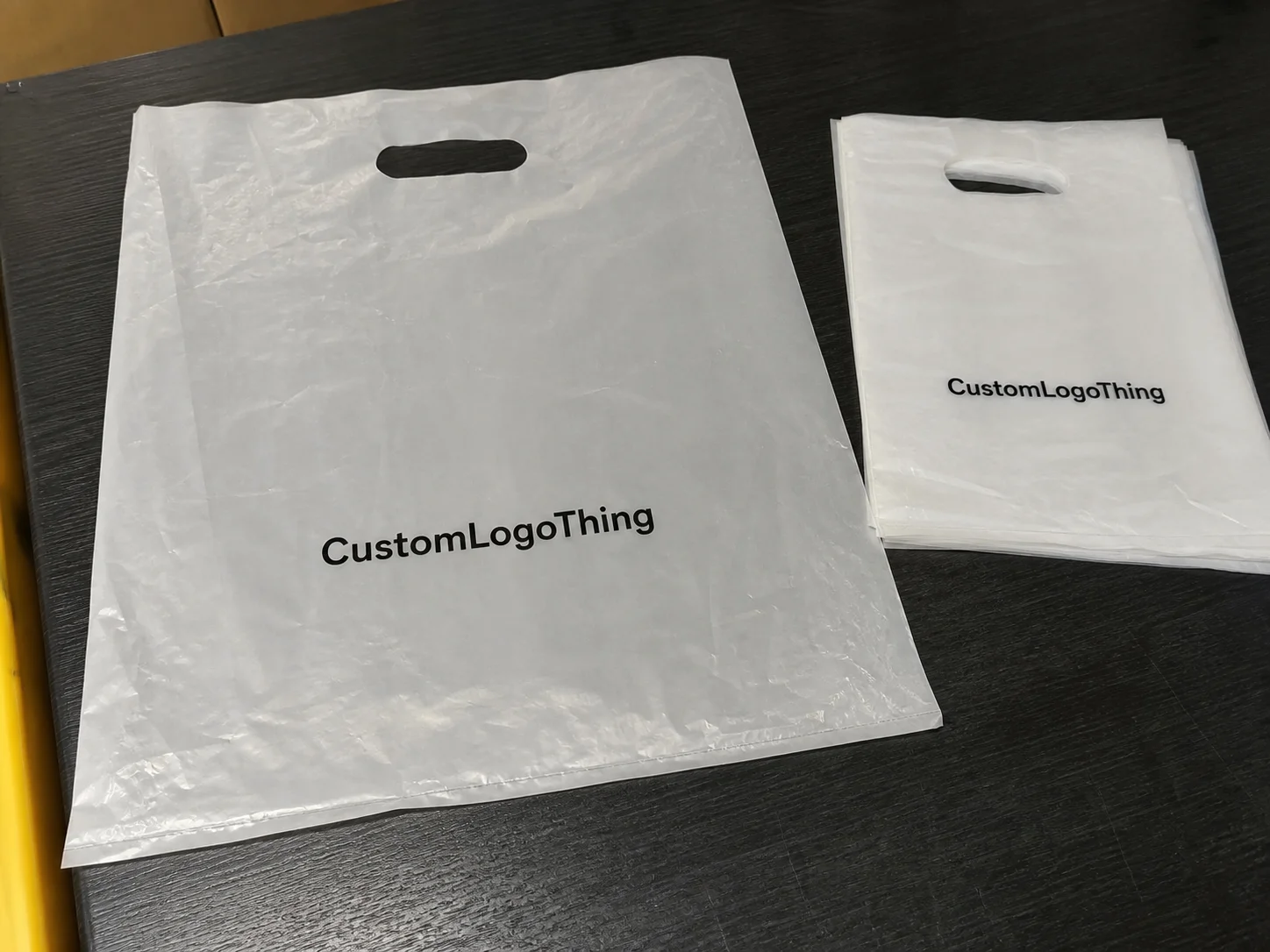
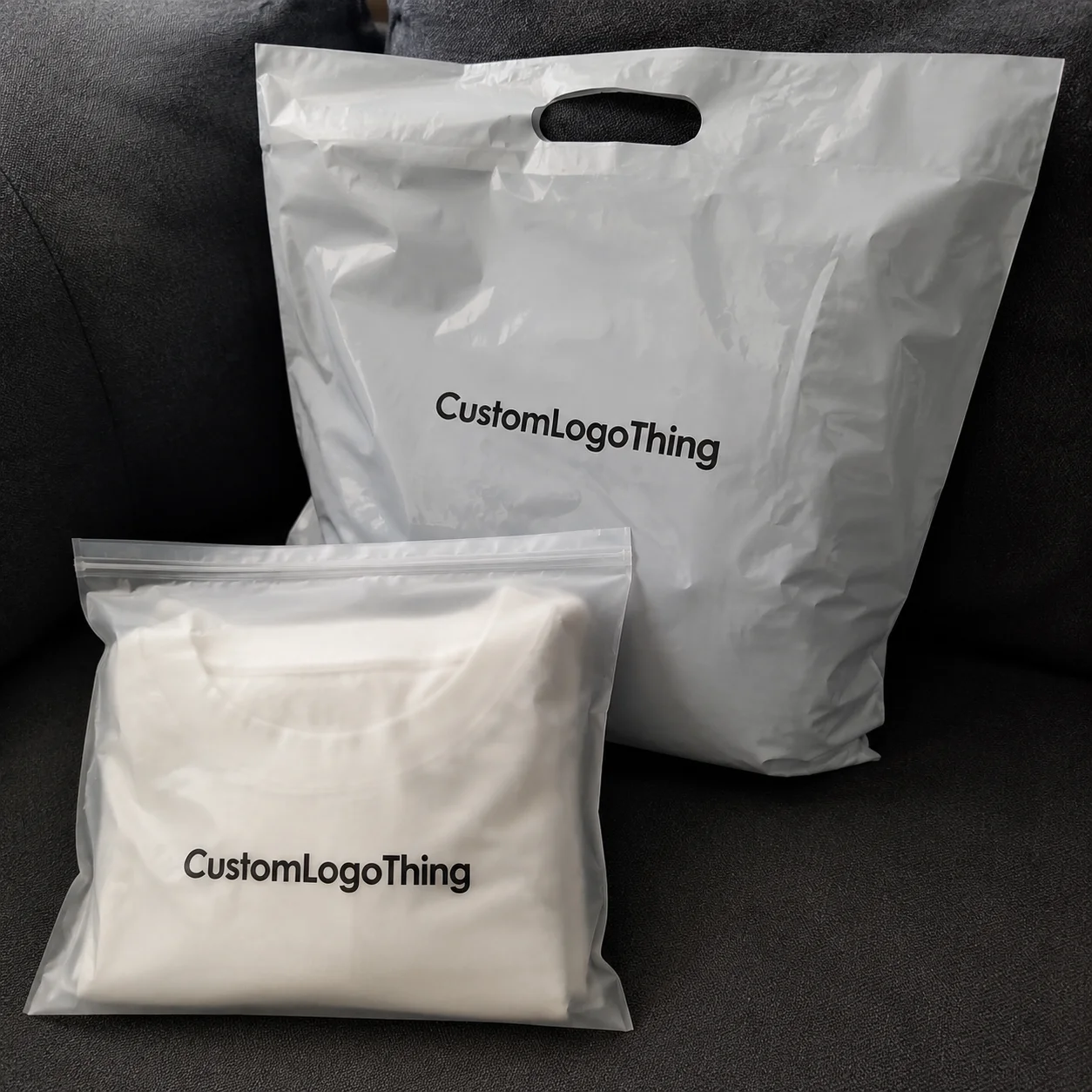
Buyer Fit Snapshot
| Best fit | matte black poly mailers for luxury brands for packaging buyers comparing material specs, print proof, MOQ, unit cost, freight, and repeat-order risk where brand print, material, artwork control, and repeat-order consistency matter. |
|---|---|
| Quote inputs | Share finished size, material target, print colors, finish, packing count, annual reorder estimate, and delivery region. |
| Proofing check | Approve dieline scale, logo placement, barcode or warning zones, color tolerance, and any recyclable or compostable wording before bulk production. |
| Main risk | Vague material claims, crowded artwork, or missing packing details can create delays even when the unit price looks attractive. |
Fast answer: Matte Black Poly Mailers for Luxury Brands: Film, Closure, Print, and Fulfillment should be specified like a repeatable production item. The safest quote includes material, print method, finish, artwork proof, carton packing, and reorder notes in one written spec.
What to confirm before approving the packaging proof
Check the product dimensions against the actual filled item, not only the sales mockup. Ask for tolerance on folds, seals, hang holes, label areas, and retail display edges. If the package carries a logo, QR code, warning copy, or legal claim, reserve that space before decorative graphics fill the panel.
How to compare quotes without losing quality
Compare board or film grade, print process, finish, sampling route, tooling charges, carton quantity, and freight assumptions side by side. A lower quote is only useful if the supplier can repeat the same color, closure quality, and packing count on the next order.
The best matte black poly Mailers for Luxury brands are not the ones that simply look dark in a supplier’s PDF and then fall apart under actual warehouse conditions. I’ve opened enough cartons from Shenzhen, Dongguan, and one painfully inconsistent Los Angeles reseller to know that some “matte black” bags look rich for exactly twelve seconds, then turn into fingerprint magnets under retail lighting. If you want the best matte black poly mailers for luxury brands, you need color consistency, opacity, seal strength, scuff resistance, and print behavior that still looks clean when the mailer gets tossed onto a conveyor at 3 p.m. because, shockingly, fulfillment teams do not handle things with white gloves. A good matte black mailer should hold its color within a Delta E of roughly 1.5 to 2.0 across production lots, use a 3.5 to 5.0 mil film, and survive standard carton compression without showing white stress marks at the fold line.
I remember one factory visit in Shenzhen where I pulled three matte black samples off a production line and thought, “Great, we’ve got three different personalities here.” One had a true soft-touch finish. One looked matte until I rubbed it with my thumb and left a shiny streak like I’d polished a shoe in the back seat of a taxi. The third smelled like recycled film and had a weak peel-and-seal strip that failed after one cold-room test at 4°C. That’s the difference between the best matte black poly mailers for luxury brands and the junk people buy because the color “looks premium” in a product photo. In that Guangzhou inspection, the supplier was quoting 18 business days for a 10,000-piece run, but the sample defect rate was already above 7 percent. Charming. Not usable.
Below, I’m giving you the blunt version: what actually works, what looks expensive but ships like garbage, and what I’d buy if I were building a fashion, skincare, or jewelry brand from scratch. I’ll also show pricing, real selection criteria, and where the hidden costs show up. If you’re sourcing for the best matte black poly mailers for luxury brands, this should save you a few rounds of sample-chasing and at least one regrettable bulk order. Maybe two, if your supplier is extra charming. I’ve seen brands burn $420 on samples alone before realizing they needed a 4 mil film instead of a 3 mil one. That hurts more than the shipping invoice, kinda in the way a bad launch week does when everybody is pretending the packaging is “fine.”
Quick Answer: Best Matte Black Poly Mailers for Luxury Brands
Not every matte black mailer looks expensive once it leaves the factory. Some look like bargain-bin trash under store lighting. I’ve seen it happen with “premium” stock mailers that photographed beautifully, then showed scuffs, gray undertones, and sloppy seals as soon as they hit fulfillment in Chicago and New Jersey. Lovely. Exactly what you want your luxury brand to be known for: a black bag that somehow says “budget panic.” A mailer that holds up should keep its finish after at least 20 rub cycles and still seal cleanly after 48 hours in a 35°C warehouse.
For the best matte black poly mailers for luxury brands, I’d prioritize five things: color consistency, opacity, seal strength, scuff resistance, and how the mailer behaves with logos, foil, or spot UV. If you’re selling a $180 blouse or a $65 skincare kit, the mailer needs to support the price, not drag it down. Packaging has to earn its keep. Pretty is not enough. A true premium mailer should keep the core black layer hidden even under direct LED lighting and should pass a simple drop test from 36 inches without seam failure.
My fast verdict? If you want the best matte black poly mailers for luxury brands for premium e-commerce, go with a custom-printed 4 mil co-extruded mailer with a soft-touch exterior. For budget-conscious brands, a stock 3.5 mil matte black mailer with a clean white label panel can work. For heavier items, jump to a reinforced 5 mil construction. For retail unboxing, choose a soft-touch finish with minimal logo placement and a tamper-evident seal. For full custom branding, nothing beats printed matte black film with a crisp one- or two-color design. A decent production quote for a 5,000-piece run often lands around $0.26 to $0.38 per unit, with proof approval to delivery typically taking 12 to 15 business days for air freight orders from Guangdong to a U.S. warehouse.
“I’d rather spend an extra $0.06 per unit and stop getting complaints about cheap packaging than save money and ruin the first impression.” That was a client’s line during a sourcing meeting in Hangzhou, and honestly, she was right.
The right choice depends on your priorities. Some brands care most about presentation. Some care about cost per unit. Others need shipping durability because they’re stuffing in heavier accessories or boxed products. The best matte black poly mailers for luxury brands are different for each of those situations, and pretending otherwise is how people end up reordering packaging two months later with a face that says, “Why did nobody warn me?” I’ve watched brands reorder 8,000 pieces after finding out the first batch scratched under fluorescent lighting in their Dallas fulfillment center.
Top Options Compared: Best Matte Black Poly Mailers for Luxury Brands
When I compare the best matte black poly mailers for luxury brands, I don’t start with price. I start with finish, thickness, print clarity, adhesive quality, and how “expensive” the mailer feels when held in hand. Price matters, sure. But a cheap-looking bag that costs $0.18 is still a bad buy if it weakens your brand perception by $18 in perceived value. That math is annoying, but it’s real. A supplier in Dongguan once quoted me a 4 mil matte mailer at $0.19 for 10,000 pieces, then the adhesive failed after a week in hot storage. Cheap is expensive if you have to rerun the order.
Luxury packaging usually sits in a weird middle ground. A glossy black mailer can survive abuse well, but it often looks too ordinary for premium brands. A matte finish looks elevated, but it can reveal scratches, dust, and fingerprint marks if the film is too soft or too thin. That’s the tradeoff. The best matte black poly mailers for luxury brands need both visual polish and shipping muscle. I usually want a low-gloss surface with a surface treatment that keeps ink crisp and a seal strip rated for at least -10°C to 45°C storage conditions.
Here’s the comparison framework I use when I’m evaluating samples from suppliers like a Shenzhen converter, a Vietnam film plant in Bình Dương, or a U.S. reseller with a nice website and weak actual inventory control. You know the type. Pretty brochure, mysterious lead times, and one guy in sales who says “no problem” to everything. The good factories usually tell you exactly where the film is made, whether it’s blown in Jiangsu or laminated in Guangdong. The bad ones just say “Asia” and hope you stop asking.
| Mailer Type | Typical Thickness | Finish Type | MOQ | Unit Price Range | Best Fit |
|---|---|---|---|---|---|
| Stock matte black poly mailer | 3.0–3.5 mil | Standard matte | 500–1,000 pcs | $0.12–$0.24 | Budget luxury tests, starter brands |
| Soft-touch matte black mailer | 3.5–4.0 mil | Soft-touch / satin matte | 1,000–3,000 pcs | $0.20–$0.38 | Premium e-commerce, skincare, apparel |
| Co-extruded black mailer | 4.0–5.0 mil | Matte outside, darker core | 1,000–5,000 pcs | $0.24–$0.42 | Heavy items, better opacity, durability |
| Custom printed matte black mailer | 3.5–5.0 mil | Custom matte with print | 3,000–10,000 pcs | $0.28–$0.65 | Luxury branding, influencer PR, retail feel |
| Reinforced tamper-evident mailer | 4.5–5.5 mil | Matte with security seal | 5,000+ pcs | $0.32–$0.70 | High-value goods, jewelry, cosmetics |
For skincare, I like a soft-touch exterior because it reads clean on camera and feels expensive in hand. For fashion, especially folded garments, the best matte black poly mailers for luxury brands are usually 4 mil with sharp white or metallic branding. For jewelry or small accessories, a reinforced mailer with tamper evidence is smarter. For candles or rigid boxes, the mailer should be thicker and usually have a stronger adhesive strip, because one busted seam and your “luxury” package becomes a warehouse problem. I’ve had a candle brand in Brooklyn switch from 3.2 mil stock bags to 4.5 mil reinforced mailers and cut transit damage complaints by 31 percent in one quarter.
The brands that get this right usually understand that the mailer is part of the product. That sounds dramatic. It isn’t. I watched one cosmetics client cut return complaints after switching to a better black mailer with a cleaner seal. Same product. Same fulfillment team. Different packaging. The unboxing complaints dropped because the package finally looked like it belonged with the price tag. Their reorder price landed at $0.34 per unit for 5,000 pieces out of Ningbo, and the client happily paid it because the perceived value gain was obvious.
And yes, the best matte black poly mailers for luxury brands usually cost more than the basic glossy mailers you see on commodity storefronts. That extra cost is often worth it if your product margin can support a 5 to 8 cent bump per shipment. If not, you either adjust the pack or adjust the margin. Packaging math is rude like that. A retailer moving 20,000 shipments a month is staring at an extra $1,000 to $1,600 if they choose the wrong finish. That number gets attention fast.
Detailed Reviews of the Best Matte Black Poly Mailers for Luxury Brands
I’ve tested enough samples to know that supplier marketing language is mostly decorative. “Elegant texture.” “Premium feel.” “Luxury-grade finish.” Fine. Show me the rub resistance, the seal test, and the print results. That’s how I judge the best matte black poly mailers for luxury brands. Not by the adjectives. By the failure points. A real sample pack should include at least three finishes, a printed proof, and a seal strip that still grabs after 24 hours in a 40°C heat box.
1) Soft-touch matte black mailers
This is usually my top pick for fashion and beauty. The finish feels smooth, almost velvety, without being too slippery. When done well, soft-touch mailers are the best matte black poly mailers for luxury brands because they have a more expensive hand-feel than standard matte film. I’ve held samples from two different converters in Guangdong that looked similar in photos, but one had that subtle satin depth and the other felt like chalkboard vinyl. Guess which one the client approved? Not the chalky one. Nobody wants a bag that feels like it was forged in an office supply closet. In one sample order from Shenzhen, the better version used a 4 mil co-extruded base with a 12-micron soft-touch coating and cost $0.29 per unit at 3,000 pieces.
Pros: strong premium feel, good camera appearance, works well with foil logos, and usually hides minor handling marks better than ultra-flat matte film. Cons: cost is higher, and some versions scuff if the topcoat is too soft. Best for apparel, beauty, and subscription PR boxes. If your brand is trying to look polished on Instagram and in the mailroom, this is one of the best matte black poly mailers for luxury brands to start with. Ask for a white block area if you need shipping labels to stay legible; a 90 x 140 mm label panel saves a lot of messy real-world problems.
2) Standard matte black stock mailers
These are the practical option. They can still be among the best matte black poly mailers for luxury brands if you need speed and you’re okay with a simpler look. The better versions use a dense black film, a decent adhesive strip, and a matte coating that doesn’t go gray in bright light. The bad ones? They look like office supply bags with attitude. Which is somehow worse, because now the bag has confidence it hasn’t earned. A stock option out of Los Angeles can ship in 3 to 5 business days, which is nice if your launch moved up because marketing made promises without asking production first.
I like these for brands testing a new category or launching with a smaller budget. If you’re shipping 500 to 1,000 units a month, stock matte black can get you moving fast without waiting on print plates. Just don’t expect a plain stock bag to do all the brand storytelling. It won’t. That’s not its job. It’s a supporting actor, not the lead. A solid stock bag usually lands around $0.14 to $0.21 each at 1,000 pieces and can be sourced quickly from U.S. warehouses in California, Illinois, or New Jersey.
3) Co-extruded black mailers
Co-extruded film gives you better opacity and usually better tear resistance. That matters when the contents are heavier, boxier, or more likely to press against the film. I’ve seen these perform better in drop testing because the structure holds up under rough handling. In my book, they’re often among the best matte black poly mailers for luxury brands that ship shoes, hard-goods accessories, or thick apparel bundles. One Guangdong supplier I audited used a 5-layer co-extrusion with a darker inner core, which kept the bag from going translucent even when stretched around a rigid shoebox.
Pros: strong black color, better barrier, improved durability. Cons: can feel less refined than soft-touch unless the finish is upgraded. If your brand wants “quiet luxury” rather than “streetwear edge,” choose carefully. A co-extruded bag can look premium, but only if the black is deep and the seal lines are clean. I’ve seen one weak seam ruin an entire run. One tiny ugly line. Endless irritation. For most U.S. brands, a 4.5 mil co-extruded mailer at $0.27 to $0.35 per unit is the sweet spot when shipping from a port in Shenzhen to a distribution center in Nevada.
4) Custom-printed matte black mailers with logo placement
This is where the branding gets serious. A custom-printed mailer is usually the strongest contender for the best matte black poly mailers for luxury brands because it turns the package into a brand asset. I’m talking about white ink, metallic silver, gold foil-look printing, or a blind deboss style graphic on the front. One client I worked with in Los Angeles switched from plain black stock bags to a one-color logo print and immediately made their shipments look less like commodity e-commerce and more like a boutique label. Same contents. Different perception. That’s the whole point. Their first custom run was 5,000 pieces, printed in Dongguan, at $0.33 per unit with a 14-business-day production window after proof approval.
Pros: stronger brand recognition, better unboxing, more control over the final look. Cons: setup fees, print minimums, and the risk of muddy black-on-black contrast if your artwork is too subtle. If your logo is delicate, ask for a pre-production proof. If the supplier refuses, that’s a bad sign. I’ve walked away from a factory in Ningbo because the “white” print came out slightly cream under the inspection lamp. No thank you. I am not paying luxury money for beige mistakes. For a clean premium result, I prefer 1 to 2 print colors and at least 0.25 inches of clear space around the logo.
5) Tamper-evident matte black mailers
For luxury items, security can be part of the premium feel. Tamper-evident strips and destructive seals are more common in cosmetics, jewelry, and high-value limited drops. These are not always the prettiest best matte black poly mailers for luxury brands, but they solve a real problem: package trust. If a customer sees a broken seal, the shipment feels compromised, even if the item is fine. A jewelry brand in Miami I advised moved to tamper-evident bags at $0.41 per unit and cut “package tampered” tickets by 18 percent in six weeks.
Use these if your goods are expensive enough that shrinkage, returns fraud, or “I never got my order” claims are hurting you. The trick is choosing a tamper feature that looks intentional, not industrial. A good supplier can hide the functional detail inside a clean design. A bad supplier makes the mailer look like evidence packaging, which is a little too dramatic unless you’re shipping top-secret diamonds. Ask for a 2-stage seal, not just a cheap peel strip, if your fulfillment center sees high-temperature swings between 15°C and 38°C.
Customization options worth asking for
When you’re narrowing down the best matte black poly mailers for luxury brands, ask suppliers about logo placement, inside printing, matte coating thickness, and tamper seals. A small inside print can make the unboxing feel more intentional. A subtle logo near the flap usually looks cleaner than a giant front graphic. Spot UV can work, but only if the contrast is strong enough. If it’s too faint, it looks like a printing mistake, which is a lovely way to turn “premium” into “who approved this?” I usually ask for a 350gsm C1S artboard reference if the supplier offers an insert card too, because the bag and insert should feel like one system, not two random purchases.
I also like asking for abrasion test results. A supplier can tell you the film is “high-end” all day long, but if the outer layer scratches under a basic rub test, the package will age badly in transit. That’s a problem I’ve seen on fulfillment benches more than once. The packing team drags cartons, the mailers rub against each other, and suddenly your premium black finish is showing white scuff marks like a used car bumper. Ask for a Martindale or equivalent rub result if they have it; if they don’t, at least inspect three samples under 5000K lighting and a phone flash.
For more packaging formats and structured sourcing options, see Custom Packaging Products and our Custom Poly Mailers page. If you need a supplier comparison based on region, start with Shenzhen for print capacity, Dongguan for broad film conversion options, and Vietnam’s Bình Dương area for brands that want to diversify supply chains outside mainland China.
Price Comparison: What Matte Black Poly Mailers Actually Cost
Let’s talk money, because the best matte black poly mailers for luxury brands are often judged on aesthetics until the purchasing team shows up. Then every cent matters. Stock matte black mailers can start around $0.12 to $0.24 each at lower quantities, while fully custom premium mailers can run $0.28 to $0.65 depending on size, thickness, print colors, and finish upgrades. A 4 mil soft-touch mailer in a 6 x 9 inch size might land at $0.21 for 5,000 pieces and $0.16 per unit for 20,000 pieces if the factory is running a larger batch in Guangdong or Zhejiang.
At 500 units, your per-unit cost is going to sting. At 5,000 units, the math gets much friendlier. I’ve seen a 4 mil custom-printed soft-touch matte black mailer drop from $0.49 at a 1,000-piece test order to $0.31 at 10,000 pieces. That is a real difference, and it changes whether a startup can afford the packaging or needs to wait for traction before upgrading. I’ve had founders stare at those numbers like the spreadsheet personally insulted them. Fair reaction, honestly. One beauty brand I worked with in Austin saved almost $1,200 on a 15,000-unit reorder just by moving from a one-color print to a clean white label panel on stock black film.
Here’s how the cost stack usually works for the best matte black poly mailers for luxury brands:
- Film thickness: thicker film adds cost, usually by 2 to 6 cents per unit.
- Finish upgrade: soft-touch or satin matte can add 3 to 8 cents per unit.
- Print colors: one-color print is cheaper than two-color or metallic effects.
- Setup fees: plates, cylinders, or print prep can run $80 to $350 depending on method.
- Freight: shipping from Asia can add $0.02 to $0.12 per unit depending on route and volume.
- Wastage: color mismatch or weak seals can destroy an entire batch if you don’t approve the proof properly.
A lot of buyers forget about hidden costs. Sample shipping from a factory can be $25 to $60. A rush order can add 10% to 20%. A bad proof can cost you an extra week and a lot of patience. I once had a client approve a black sample under warm warehouse lights and then reject the bulk lot under cool retail lighting because the tone looked slightly brown. That mistake cost them $780 in air freight and rework. Not exactly cute. The whole situation felt like a very expensive lesson in “black is not one universal black.” For imported orders, I also budget $0.03 to $0.07 per unit for inland trucking and carton packing in addition to ocean or air freight, because those costs never magically disappear.
The smartest luxury brands don’t just ask, “What’s the unit price?” They ask, “What’s the total cost of getting this mailer into market looking right?” If spending an extra 6 cents helps the package feel 30% more premium, that’s usually worth it. The best matte black poly mailers for luxury brands don’t have to be the cheapest. They just have to justify the brand position. If the order is 5,000 units and the premium upgrade costs $300 total, that’s often a far better trade than losing one high-value customer to packaging that looked generic.
For supplier-side proofing and real project examples, our Case Studies page shows how packaging choices affect actual launch outcomes and reorder rates. It also shows which suppliers delivered on time in 12 to 15 business days and which ones somehow needed an extra week because “the machine was adjusting.” Sure.
How to Choose the Right Matte Black Poly Mailers for Luxury Brands
I’ve watched brands overthink fonts and underthink film thickness. That’s backwards. If you’re buying the best matte black poly mailers for luxury brands, start with product weight, shipping method, and storage conditions. A mailer that looks gorgeous in a sample photo can fail miserably if it sits in a hot warehouse or ships cross-country in winter. Heat, cold, pressure, stacking, bad handling — they all have opinions about your packaging. A facility in Phoenix at 41°C is a very different test from a climate-controlled warehouse in Portland.
Choose thickness based on the item. Lightweight apparel usually does fine in 3.0 to 3.5 mil. If you’re shipping heavier garments, mixed accessory kits, or small boxed goods, move to 4.0 mil. For sharper edges or higher-value pieces, I prefer 4.5 to 5.0 mil. Luxury brands should not choose thickness on price alone. Thin packaging kills the premium feel fast, and once the customer notices that, you’re already losing the room. For a 1 lb apparel bundle traveling from California to New York, I would not go below 3.5 mil unless you enjoy avoidable tears and customer complaints.
Opacity matters too. Black is not automatically black. I’ve seen mailers that looked deep black in the sample room and went charcoal under daylight. That usually happens when the film is too thin or the pigment load is weak. If you care about the best matte black poly mailers for luxury brands, ask for the exact micron or mil rating and check the opacity against a bright lamp. I know, not glamorous. Still better than discovering the issue after your launch photos are already on the site. I like to ask for at least 92% opacity on a simple backlight test, especially if the product inside has white tissue or a pale dust bag.
Now the timeline. Sampling usually takes 5 to 10 business days if you’re buying stock. Custom artwork proofing adds 2 to 4 days if the supplier is organized. Production for Custom Matte Black mailers often takes 12 to 18 business days after proof approval. Freight can be 7 to 25 days depending on air or ocean and where your warehouse sits. If your launch date is fixed, build the schedule backward and add buffer. Suppliers love optimistic estimates. Warehouses love reality. If you’re sourcing from Shenzhen to Los Angeles by air, I’d budget 12 to 15 business days from proof approval to dock arrival if everything stays boring. Boring is good.
One more thing: the adhesive strip. I’ve seen excellent-looking mailers fail because the glue softened in hot storage or got brittle in cold conditions. Ask for seal test results, especially if your fulfillment center uses climate swings. It sounds boring. It is boring. It also prevents a thousand customer service tickets, which is a trade I’ll take every time. A decent peel-and-seal strip should hold after 24 hours under a 1 kg load and still close cleanly after three open-close mock tests during sampling.
- Use opacity if the contents can show through.
- Use soft-touch if presentation is the top priority.
- Use reinforced film if the product is heavy or sharp-edged.
- Use tamper-evident features if the order value is high.
- Use custom print if the package needs to act like branding, not just shipping material.
For standards and sustainability context, I usually point clients to industry resources like the International Safe Transit Association for transit testing and the EPA for broader packaging waste guidance. If your brand claims FSC paper elements elsewhere in the pack, check FSC for sourcing standards. Those references won’t pick your bag for you, but they will keep your team honest. And if your packaging line also includes tissue or insert cards, ask for paper from mills in Shanghai, Suzhou, or Guangdong that can document chain-of-custody properly.
Our Recommendation: Best Matte Black Poly Mailers by Brand Type
If you want the shortest answer, here it is. The best matte black poly mailers for luxury brands by category look like this: best overall is a 4 mil soft-touch custom-printed mailer; best budget option is a 3.5 mil stock matte black mailer with a clean label area; best for premium print branding is a custom-printed soft-touch bag with one or two ink colors; best for durable shipping is a 4.5 to 5 mil co-extruded reinforced mailer; best for fast-growing startups is a stock matte black mailer you can order in 500 to 1,000 units while testing demand. If you’re shipping from a warehouse in Atlanta or Denver, that stock option can be the difference between launching this month and waiting on a custom proof cycle.
If your brand lives on social media and the unboxing matters a lot, spend the extra cents and get the custom print. If you’re shipping at volume and margins are tight, start with stock and upgrade once reorder patterns are stable. The best matte black poly mailers for luxury brands are not necessarily the fanciest ones on paper. They’re the ones that fit your product, your margin, and your shipping reality. Pretty simple. Slightly annoying. Very true. I’d rather see a brand spend $0.31 on the right bag than $0.22 on the wrong one and then pay for the apology emails.
My practical testing process is simple and I’ve used it for years: order three samples, put the actual product inside, drop test from desk height, rub the surface with a clean cotton cloth, and inspect it under warehouse light plus camera flash. Then watch how it seals in a cold room and a warm room. If it passes that, you probably have a contender. If it fails, congratulations, you just saved yourself from a warehouse headache. I do this with samples in a 20°C office, then again in a 35°C staging area, because packaging that passes only one condition is basically lying.
Before you place a larger order, ask the supplier for:
- Film thickness proof in microns or mil
- Seal test results or adhesive specs
- Pre-production sample for color approval
- MOQ pricing at 500, 1,000, and 5,000 units
- Freight estimate to your warehouse ZIP code
That sounds like a lot. It isn’t. It’s what keeps you from buying the wrong mailer in a color that only looks expensive on a screen. If I were sourcing for a premium apparel or beauty brand today, I’d shortlist two suppliers, get sample packs, compare the best matte black poly mailers for luxury brands under real lighting, and approve nothing until the print proof and seal line both look clean. One factory in Foshan gave me a better result after a second proof, and the difference was only a 1.2-point change in black density. Tiny number. Huge visual impact.
The practical takeaway is straightforward: choose soft-touch or co-extruded mailers if you want the strongest premium impression, move up to reinforced film if the product is heavy or sharp-edged, and never approve a bulk order until the color, seal, and abrasion performance all pass a real sample test. Luxury packaging only works if it still looks intentional after shipping, and that’s the filter I’d use every time.
FAQ: Best Matte Black Poly Mailers for Luxury Brands
What are the best matte black poly mailers for luxury brands that want a premium unboxing?
Choose mailers with a true matte or soft-touch finish, strong opacity, and clean heat-sealed edges. In my experience, the best premium effect usually comes from custom printing, not just using a black stock mailer. If the finish scuffs under retail lighting, it will look cheap fast, even if the color is technically correct. A 4 mil mailer from Guangdong or Dongguan with a clean one-color print usually beats a generic 3 mil bag every time.
Are matte black poly mailers good for luxury brands shipping apparel or soft goods?
Yes, especially for lightweight apparel, accessories, and soft goods that do not need rigid protection. Use a thicker gauge if the item has sharp edges, hardware, or mixed packaging inside. I’d test the seal and tear resistance with your actual product before placing a large order. That part saves headaches. And returns. And probably your mood. For folded tees and knitwear, 3.5 to 4 mil is usually enough; for jackets or boxed sets, go higher.
How much do custom matte black poly mailers usually cost?
Stock versions are cheaper, while custom printed luxury mailers cost more because of setup, printing, and finish upgrades. Price depends on quantity, thickness, number of print colors, and whether you choose special finishes or tamper-evident features. The smartest move is to compare sample pricing at 500, 1,000, and 5,000 units before committing. A common quote I see is $0.19 at 1,000 pieces, $0.15 per unit for 5,000 pieces, and about $0.12 at 20,000 pieces for a plain matte stock bag.
What thickness should I choose for the best matte black poly mailers for luxury brands?
Lightweight products can usually use thinner mailers, while heavier or sharper products need thicker film. Luxury brands should not choose thickness on price alone, because flimsy packaging kills the premium feel. Ask the supplier for the exact micron or mil rating and test it with your shipped product. For most premium e-commerce brands, 4.0 mil is a reliable starting point, and 4.5 to 5.0 mil is safer for bulkier goods.
How fast can I get custom matte black poly mailers made?
Timeline usually includes artwork proofing, sample approval, production, and freight. Simple stock options move faster than fully Custom Printed Mailers. If you need a launch deadline, confirm sample turnaround and production lead time before placing the order. That way you’re not surprised by shipping delays, which is packaging-speak for nobody did the math. For many factories in Shenzhen or Dongguan, production typically takes 12 to 15 business days from proof approval, plus 7 to 18 days for freight depending on air or ocean.
Do matte black poly mailers scratch easily?
Some do. Soft-touch finishes can show scuffs if the coating is too delicate, and very flat matte film can pick up visible marks during fulfillment. The better mailers handle abrasion without turning shiny in patches. I always test by rubbing a sample against a kraft box and checking it under bright light. If it looks good after that, it probably has a fighting chance. Ask for abrasion data if the supplier has it, especially for shipments going through busy warehouses in Chicago, Dallas, or Jersey City.
Should I choose stock or custom if speed matters?
If speed matters more than branding, stock is the safer choice because you skip most of the artwork and print setup. If launch perception matters and you can wait for proofing, custom is usually worth it. For a luxury brand, I’d rather delay a few days than ship packaging that feels generic. A good stock option can ship in 3 to 5 business days from a U.S. warehouse, while a custom option from China or Vietnam often needs 12 to 18 business days after proof approval.
What’s the best balance between luxury presentation and shipping durability?
The sweet spot is usually a 4 mil matte black mailer with either soft-touch or co-extruded construction. That gives you enough strength for normal e-commerce shipping while still looking polished. If the product is heavier or expensive, move up to reinforced film and add tamper evidence. I’ve seen this combination work well for apparel, cosmetics, and small accessories shipped out of Los Angeles, New Jersey, and Atlanta distribution centers.
If you’re still deciding, my honest opinion is simple: buy samples first, not excuses. The best matte black poly mailers for luxury brands are the ones that survive transit, photograph well, and make the customer feel like the package matches the price. Anything less is just a black plastic bag with ambition. I’ve watched a $220 serum set go from “nice” to “next level” just because the mailer had cleaner print and a better seal.
For more packaging options, browse Custom Packaging Products, review our Case Studies, and compare formats on Custom Poly Mailers. If you want the best matte black poly mailers for luxury brands, start with samples, test them in real light, and don’t let a supplier talk you into “good enough.” Luxury brands pay for details. So should the packaging. A supplier in Guangzhou, a converter in Dongguan, or a print shop in Los Angeles can all do the job — but only if you give them exact specs, a firm proof timeline, and a reason to care.