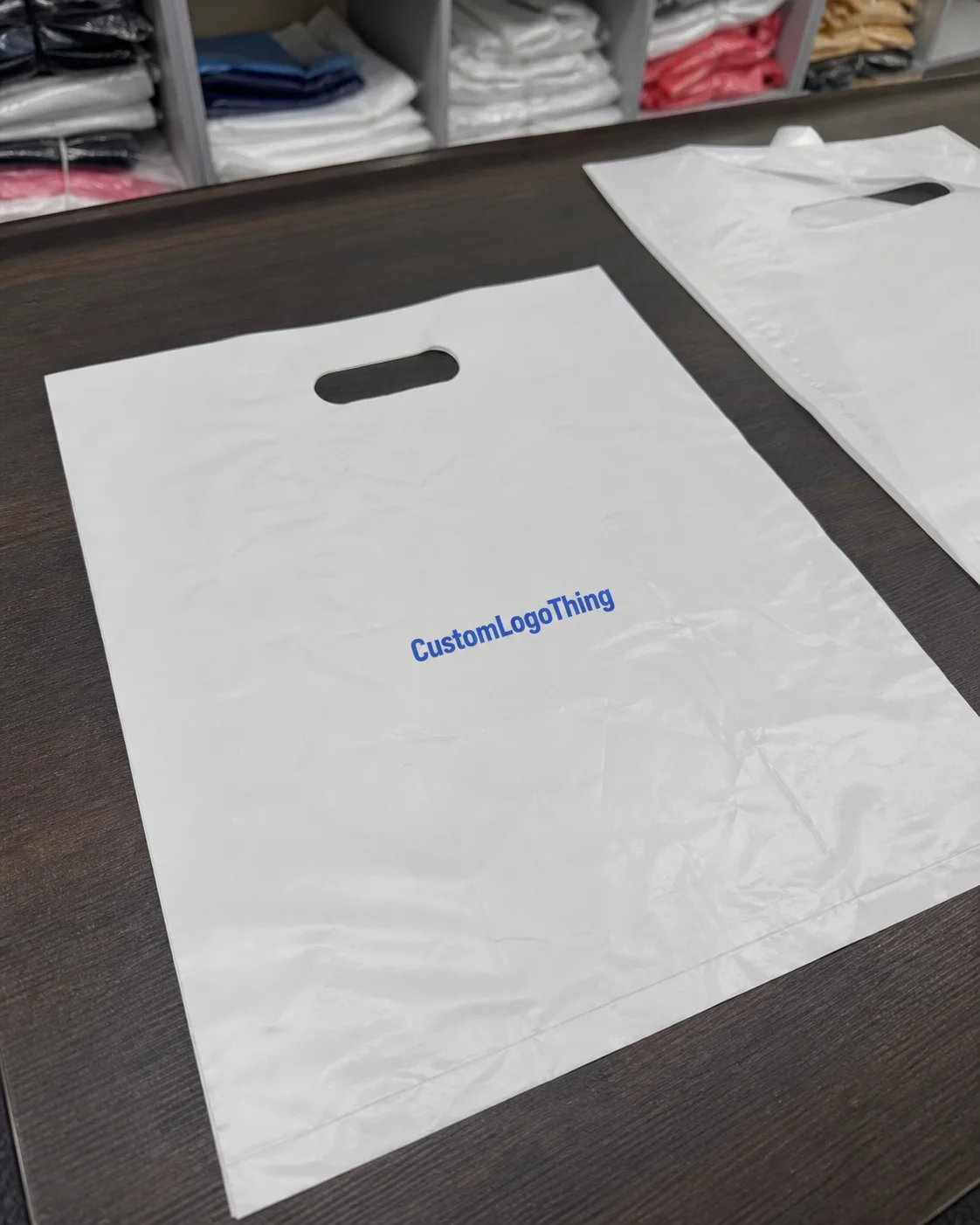
Buyer Fit Snapshot
| Best fit | compare flexible vs rigid mailers choice buyer review for packaging buyers comparing material specs, print proof, MOQ, unit cost, freight, and repeat-order risk where brand print, material, artwork control, and repeat-order consistency matter. |
|---|---|
| Quote inputs | Share finished size, material target, print colors, finish, packing count, annual reorder estimate, and delivery region. |
| Proofing check | Approve dieline scale, logo placement, barcode or warning zones, color tolerance, and any recyclable or compostable wording before bulk production. |
| Main risk | Vague material claims, crowded artwork, or missing packing details can create delays even when the unit price looks attractive. |
Fast answer: Compare Flexible vs Rigid Mailers Choice Buyer Review: Film, Closure, Print, and Fulfillment should be specified like a repeatable production item. The safest quote includes material, print method, finish, artwork proof, carton packing, and reorder notes in one written spec.
What to confirm before approving the packaging proof
Check the product dimensions against the actual filled item, not only the sales mockup. Ask for tolerance on folds, seals, hang holes, label areas, and retail display edges. If the package carries a logo, QR code, warning copy, or legal claim, reserve that space before decorative graphics fill the panel.
How to compare quotes without losing quality
Compare board or film grade, print process, finish, sampling route, tooling charges, carton quantity, and freight assumptions side by side. A lower quote is only useful if the supplier can repeat the same color, closure quality, and packing count on the next order.
When brands compare flexible vs rigid mailers, one assumption keeps popping up in meetings: rigid must automatically be safer. I remember standing on a noisy packing floor in Secaucus, New Jersey, watching cartons rattle down conveyor lanes, and thinking, “Well, there goes that theory.” Then I saw a stack of overbuilt rigid mailers still bruise the corners on a set of art prints, and that was the moment I stopped trusting assumptions and started trusting fit, route behavior, and materials. The right mailer depends on the product, the route, and how the packout behaves once it meets the carrier network, whether that shipment starts in Newark, Dallas, or a convertor’s plant in Dongguan.
If you compare flexible vs rigid mailers from a factory-floor point of view, flexible mailers usually win for lighter products, lower postage, faster packing, and better space efficiency. A standard 2.5 mil poly mailer can weigh as little as 9 to 12 grams, while a rigid chipboard mailer in 20 pt stock may weigh 28 to 45 grams depending on size and folding style. Rigid mailers win when the product must stay flat, the presentation matters, and bending is the enemy. That sounds simple enough, but the real answer sits in the details: material gauge, seal quality, carton counts, dimensional weight, and how much abuse a package can take before it reaches the customer. Packaging is never just packaging. It’s a tiny battle plan, and sometimes a fragile one.
At Custom Logo Things, I’ve spent enough time around converters in Shenzhen, paperboard mills in Wisconsin, and shipping docks in New Jersey to know that mailer choice is rarely about a single feature. It’s usually a tradeoff between protection, cost, speed, and brand feel. So as you compare flexible vs rigid mailers, keep one question front and center: what failure hurts more, a bent edge or a higher shipping bill?
Quick Answer: Compare Flexible vs Rigid Mailers
The quickest way to compare flexible vs rigid mailers is to start with the product itself. If you’re shipping apparel, soft goods, accessories, or anything that can tolerate a little conforming shape, flexible mailers usually make more sense. They weigh less, pack faster, and often shave real money off postage because they add less tare weight and less bulk to the shipment. On a typical 10,000-unit order, the difference between a 12-gram poly mailer and a 38-gram rigid board mailer can add up to more than 260 pounds of extra material before postage is even calculated.
Rigid mailers make more sense for flat products that must stay exactly flat, such as legal documents, certificates, photo prints, artwork, presentation kits, and luxury samples. I’ve seen a rigid mailer save the day for a signed certificate package that had to arrive without a single crease, and I’ve also seen a poorly matched rigid design create corner damage because the insert had too much movement inside the pocket. That is the part many buyers miss when they compare flexible vs Rigid Mailers: stiffness alone does not guarantee protection. A 350gsm C1S artboard envelope can still fail if the internal fit is loose by 3 mm on each side.
In drop tests and rough-handling simulations, the wrong rigid format can transmit impact straight to an edge. A well-sized flexible mailer with bubble or padded structure can actually perform better for semi-fragile items because it absorbs shock instead of turning it into a sharp pressure point. That is especially true in mail bags, chute drops, and densely packed cartons where stack pressure runs high. I’ve literally watched a package survive because it could flex a little. The mailer was not fancy; it just behaved like it understood gravity. In one ISTA-style 30-inch drop test, a 3 mil bubble mailer outperformed a loosely fitted chipboard sleeve for a boxed candle set by keeping the corners from taking the first hit.
Here’s my honest take: compare flexible vs rigid mailers by asking four questions in order. Is the item fragile? Must it remain flat? How much does shipping cost matter? How fast does the packing line need to run? If your answer leans toward speed, lower postage, and soft goods, flexible usually wins. If your answer leans toward presentation, flatness, and edge protection, rigid usually wins. A quote from a Guangzhou converter or a Chicago board plant is only the starting point; the final answer lives in the route.
Factory-floor truth: I’ve watched a 350gsm chipboard mailer perform beautifully for a premium print set, and I’ve watched a heavier-looking rigid mailer fail because the inside dimensions were off by just 3 mm. Fit matters as much as stiffness. Sometimes more. Which is annoying, because “close enough” sounds so nice until a shipment arrives looking like it lost a fight with a forklift.
As you compare flexible vs rigid mailers through the rest of this post, I’ll keep circling back to the same decision factors: product fragility, presentation, shipping cost, production speed, and return risk. Those are the things that actually move the needle in real operations, not just on a spec sheet.
Compare Flexible vs Rigid Mailers: Top Options Compared
When buyers compare flexible vs rigid mailers, they’re often comparing entire families of construction, not just one style. Flexible formats include polyethylene poly mailers, bubble mailers, padded paper mailers, and compostable film mailers. Rigid formats include chipboard mailers, stay-flat mailers, corrugated mailers, and document mailers with reinforced edges. A mid-volume brand sourcing from a converter in Ho Chi Minh City may even mix both in the same month, depending on SKU and retail channel.
Flexible poly mailers are the workhorses of high-volume e-commerce. A standard 2.5 mil or 3 mil poly mailer is light, cheap to store, and fast to seal on a pack line with a simple adhesive strip. Bubble mailers add an air-cell cushion that helps with minor knocks and scuffs. Padded paper mailers bring a more tactile, recyclable feel, while compostable film mailers attract brands with sustainability targets, though I always advise checking seal performance and shelf stability before committing to a full rollout. A glossy promise on a sales sheet is nice; a dependable seal at 3 p.m. on a humid Tuesday in Miami is better.
Rigid mailers behave differently the moment they hit a table. A chipboard mailer is thin, stiff, and good at resisting bending. Corrugated mailers add more crush resistance because of the fluted structure, which matters when parcels are stacked in sacks or loaded into mixed freight. Stay-flat mailers are a favorite for art, photography, and certificates because they hold shape even when handled roughly, but they often cost more and take up more room in storage. That tradeoff gets real fast once you start paying for pallet space and inbound freight from a plant in Ohio or Guangdong.
On a manual packing line, flexible mailers are usually quicker. Drop the product in, peel, seal, apply label, and move on. Rigid mailers usually need more attention: better sizing, careful insertion, and sometimes an extra insert sheet or backing board. In one distribution center I visited near Dallas, the packers could run flexible apparel mailers at a noticeably faster rhythm than rigid document mailers, simply because the rigid format demanded one more alignment step before sealing. That extra step sounds harmless until you multiply it by 6,000 orders over a three-day peak.
Protection is where the comparison gets interesting. Flexible mailers do well against abrasion, moisture, and everyday shipping scuffs, especially if they include bubble or padded layers. Rigid mailers do better against bending and folding, and the higher-end ones improve crush resistance. Rigid does not always mean safer, though. In a tightly packed mail stream, a rigid mailer can become a lever, transferring force to the corners. Flexible formats, by bending just enough, sometimes survive better than people expect. A 24 pt chipboard sleeve may look serious on a spec sheet, but a 3 mil padded mailer can sometimes absorb the real-world abuse more gracefully.
Branding matters too. Flexible mailers can look sleek with a clean custom print and a matte finish, especially on branded poly mailers from our Custom Poly Mailers program. Rigid mailers often feel more premium straight out of the box because they signal structure and care. If your customer opens hundreds of parcels a week, that first tactile impression matters more than many procurement teams realize. A package can whisper “premium” long before the product itself gets a chance, especially when the board comes from a mill in North Carolina or the film is printed in Shenzhen with a tight 1-color or 2-color build.
When I compare flexible vs rigid mailers in supplier meetings, I also ask about converting tolerances and closure behavior. A mailer that seals badly on a humid day or splits on a rough corner can ruin a well-intended packaging strategy. I’ve seen that happen with a batch of paper-padded mailers stored near a loading dock in Savannah where humidity climbed above 70 percent for three straight days. The material itself looked great, but the closure failed too easily under real working conditions. Nothing tests optimism like a bad adhesive strip and a deadline.
| Mailer's Type | Best For | Typical Strength | Typical Weakness |
|---|---|---|---|
| Poly mailer | Apparel, soft goods, subscription packs | Lightweight, moisture resistant, fast sealing | Low puncture protection for sharp items |
| Bubble mailer | Small electronics, books, moderate protection needs | Cushioning against minor impacts | Can still fail under hard crush or corner pressure |
| Chipboard mailer | Certificates, photos, flat documents | Good bend resistance and clean presentation | Limited crush protection |
| Corrugated mailer | Fragile flat items, premium documents | Better structural integrity and stack resistance | Bulkier and more expensive |
| Stay-flat mailer | Artwork, prints, high-value flat inserts | Strong anti-bend performance | Higher unit cost and storage volume |
Detailed Reviews of Flexible Mailers
Flexible mailers dominate a lot of e-commerce operations because they match the speed of the line. When I compare flexible vs rigid Mailers for Apparel and soft goods, flexible often wins before the product even gets to packaging engineering, simply because the labor savings are obvious. A packer can move through a hundred poly mailers faster than a hundred rigid document mailers, especially in facilities where the team is working against a carrier cutoff at 4:30 p.m. I’ve seen packing teams relax the second flexible stock gets rolled onto the benches; everybody knows the shift will go a little easier.
Poly mailers
Poly mailers are the standard for T-shirts, leggings, hoodies, socks, accessories, and other low-fragility items. A 2.5 mil white poly mailer with a tamper-evident adhesive strip is common for general fulfillment, while a 3 mil or 4 mil mailer gives more toughness for heavier garments or multi-item orders. In my experience, a well-made poly mailer gives excellent value because it keeps weight down and stores flat in high cube warehouses, including facilities in Columbus, Ohio, and Rancho Cucamonga, California.
They also behave well in automated and semi-automated operations. On a simple belt line or manual bench, the packer can prep the order, slide the item in, peel the liner, seal, and hand off to labeling with minimal fuss. That speed matters more than people think, because even a 2-second savings per order turns into hours over a full shift. For brands scaling quickly, that labor delta can outweigh the slightly lower “protection” image compared with rigid options. On a 5,000-piece run, a pack line that saves 2 seconds per order recovers nearly three hours of labor in one production cycle.
I’m also a fan of poly mailers when a brand wants a clean, sharp print and does not want the package to fight the product. The material lays flat, the graphics reproduce well, and the whole thing feels efficient. Not glamorous, maybe, but efficient has paid more bills than glamour ever has. A printed film from a factory in Dongguan or Xiamen can hold a crisp white logo, a QR code, and a 2-inch return instruction panel without adding the cost of a second insert.
Bubble mailers
Bubble mailers are the middle ground. They are useful when you need more protection than a plain poly mailer but do not need a full rigid structure. The air-cell interior helps absorb minor shocks, and for books, cables, small cosmetics, or boxed accessories, they can be a sensible choice. I’ve seen bubble mailers outperform rigid envelopes on routes where parcels get tossed into metal cages, because the cushion inside the flexible shell softened repeated impacts. A standard 3/16-inch bubble lining is common, while heavier constructions can use 5/16-inch bubbles for added air volume.
Still, bubble mailers have limits. A hard corner strike or a heavy stack load can collapse the air cells and transfer the force to the product. If your item has brittle plastic, glass, or a sharp edge, I would not rely on bubble alone. That is where sample testing matters. Compare flexible vs rigid mailers with actual product specimens, not just catalog pictures, because a bubble layer that feels thick in hand may not hold up after a 36-inch drop onto a warehouse floor. The catalog version looks brave. Gravity does not care, especially on a loading dock in Atlanta where cartons hit concrete at a bad angle.
Padded paper mailers
Padded paper mailers appeal to brands that want a more natural look and easier curbside recyclability. They can photograph well, feel premium, and fit nicely into brand stories that emphasize paper-based packaging. A good padded paper mailer can also be printed cleanly with logos, patterns, and return instructions. That makes them a strong fit for boutique apparel, beauty, and lifestyle brands that care about the unboxing moment, especially when the outer paper stock is a 350gsm kraft liner with a 12 to 18 mm fiber pad.
My caution is simple: paper padding varies a lot. Some constructions feel sturdy and hold shape nicely; others compress quickly and lose their protective value. I’ve handled padded paper mailers that looked elegant in a showroom in Brooklyn but didn’t survive rough warehouse handling as well as expected. So if you compare flexible vs rigid mailers and your eye is on sustainability, make sure you separate marketing claims from actual drop and crush performance. A recycled-content claim means little if the closure fails after 48 hours in a warm truck trailer.
Compostable film mailers
Compostable or eco-forward flexible mailers are a growing category, but they need scrutiny. The best versions balance print quality, closure integrity, and a usable shelf life, while the weaker versions can become brittle or sticky depending on storage conditions. If your warehouse sits in a humid region like coastal Georgia or southern Texas, I would test sample rolls or cartons for seal performance after a few weeks in your normal storage environment. Some films hold up well for 9 to 12 months on shelf; others lose tack in less than 90 days if they are stored hot.
Honestly, I think a lot of brands rush into green packaging before checking whether it can survive the route they actually ship. If the mailer fails and the product returns, the environmental benefit disappears fast. For that reason, I always recommend evaluating compostable claims alongside ASTM or equivalent test references, and if fiber sourcing is involved, looking at FSC-certified inputs where relevant. For more general packaging standards and industry resources, the Packaging Machinery Manufacturers Institute and the EPA sustainable materials guidance are useful starting points.
In one meeting with a subscription apparel client in Austin, we compared flexible vs rigid mailers after a string of return complaints. The problem was not the mailer category itself; it was the wrong size. Their poly mailer was too large for the folded garment, so the item slid around and arrived wrinkled. Once we tightened the format, changed the mailer width by 1 inch, and added a printed fold guide, complaints dropped within the next two shipping cycles. Small adjustments like that matter more than people expect, especially when the mailer is produced in a 2-color print run at a plant that quotes a 12 to 15 business day turnaround from proof approval.
When you compare flexible vs rigid mailers on speed, flexible wins more often than not. The common stock sizes are easier to source, the lead times are often shorter, and print tooling is simpler for many converters. A standard printed poly mailer can often move from proof approval to production in 12 to 15 business days, while a specialty rigid format with custom board, foil, or embossing may take 15 to 20 business days depending on factory load in Shenzhen or Kolkata. That said, exact timelines depend on artwork complexity, factory workload, and whether your order needs a custom die-cut or special finishing.
Detailed Reviews of Rigid Mailers
Rigid mailers are the right answer when flatness is non-negotiable. If the customer cannot accept a bent edge, a warped corner, or a folded certificate, rigid formats become the front line of protection. When I compare flexible vs rigid mailers for document-heavy clients, I usually start with the damage mode we are trying to prevent: crease, crush, or presentation loss. That clarifies the choice faster than a stack of brochures ever will, especially when the print buyer is sourcing from a converter in Chicago or Montreal.
Chipboard mailers
Chipboard mailers are simple, efficient, and excellent for documents, certificates, prints, and presentation inserts. They resist bending much better than a plain flexible envelope, and they pack flatter than corrugated options. For legal offices, schools, and print houses, chipboard often gives the right mix of stiffness and affordability. A 20 pt or 24 pt board can be enough for many applications, though exact thickness should be matched to item weight and edge sensitivity. For premium brand kits, I often like 350gsm C1S artboard because it delivers a smoother exterior surface for print and a cleaner hand feel at opening.
I’ve seen chipboard mailers work especially well for photo studios shipping signed proofs and portfolio samples. The mailing experience feels controlled and tidy, and the customer receives a package that clearly says, “We cared about keeping this flat.” But chipboard is not magic. If the route is rough and the product is heavy for its size, the mailer can still bow or deform under stack pressure. A lightweight certificate may be fine in a 20 pt sleeve, while a 12-inch art print set may need a heavier board or a second protective layer.
Corrugated mailers
Corrugated mailers bring better structural integrity because the flute adds stiffness and crush resistance. They are a stronger choice when the flat item is more vulnerable or when you expect rough handling in the carrier network. I’ve recommended corrugated mailers for premium inserts, framed print components, and flat kits that need a little more armor than chipboard provides. A single-wall B-flute construction, for example, can offer noticeably better load distribution than a plain board sleeve.
The tradeoff is bulk. Corrugated mailers take up more storage space, cost more to ship inbound, and can increase dimensional weight if the outer parcel is sized poorly. In one procurement review I sat through with a Midwest distributor in Indianapolis, the purchasing team liked the protection level but underestimated how many pallets they would need to store the mailers. That extra cube mattered more than they expected, and the warehouse manager’s face said everything before the spreadsheet did. A board converter in Mexico City quoted a good unit price, but the pallet count changed the monthly freight picture completely.
Stay-flat mailers
Stay-flat mailers are ideal for certificates, artwork, photography prints, and high-value flat items. They are designed to keep the contents from bending, and many include reinforced edges or multi-layer board structure. For premium creative work, that stiffness gives real confidence because the mailer itself sends a quality signal before the customer even opens it. A 9 x 12 inch stay-flat with reinforced corners can be the difference between a portfolio piece arriving crisp or arriving with a permanent arc.
What most people get wrong when they compare flexible vs rigid mailers is assuming the stay-flat format solves every shipping problem. It does not. If the product is vulnerable to puncture, moisture, or corner crush, a stay-flat mailer alone may not be enough. Sometimes a rigid insert plus an outer carton is the safer route, particularly for long-distance or multi-handling shipments, such as east-to-west fulfillment from New Jersey to California through two carrier hubs.
Document mailers with reinforced edges
Document mailers with reinforced edges are a practical solution for businesses shipping legal paperwork, contracts, onboarding kits, and branded documents. They are usually easy to label, easy to stack, and easy to identify in transit. For B2B operations, that predictability matters because the mailer has to survive not just transit but internal handling by reception teams and mail rooms. A reinforced edge can help protect the corners from the repeated knocks that happen in office towers in Boston, Toronto, or downtown Los Angeles.
From a branding perspective, rigid mailers tend to feel more formal and premium. They suit law firms, universities, art galleries, design studios, and luxury brands that want the package to arrive with a sense of importance. I’ve seen a luxury watch service team use rigid presentation envelopes for warranty papers and authenticity cards, and the effect was subtle but real: the paperwork felt like part of the product experience, not an afterthought. A well-printed shell from a factory in Suzhou can make a $3 insert feel like a $30 detail.
If you want to browse packaging categories that support both formats, our Custom Packaging Products page is a good place to start. It helps to see these materials in context, because the mailer rarely stands alone; inserts, labels, seals, and outer packs all affect final performance.
For standards-minded buyers, it also helps to review the International Safe Transit Association’s resources at ISTA. If you compare flexible vs rigid mailers without thinking about test methods, you are really just guessing with nicer samples. A real route trial, plus a 30-inch drop and a 15-pound top-load test, tells a far more honest story than a rendering ever will.
Price Comparison: Compare Flexible vs Rigid Mailers
Price is where many mailer decisions get distorted. On paper, a rigid mailer may not look dramatically more expensive than a flexible one, but total landed cost tells a different story. When I compare flexible vs rigid mailers, I always separate unit price from freight, storage, labor, damage risk, and return handling. That is the only way to get a true answer. A product team may focus on a $0.12 poly mailer versus a $0.38 rigid board mailer, but the warehouse and finance teams feel the shipment cube and labor minutes too.
Flexible mailers usually cost less per unit because they use less material and simpler converting. A plain printed poly mailer can be economical at higher volumes, while bubble and padded paper mailers sit higher depending on construction and print complexity. For example, a custom 2.5 mil printed poly mailer might land near $0.15 per unit for 5,000 pieces, while a printed 3/16-inch bubble mailer can rise to $0.28 to $0.42 per unit depending on ink coverage and size. Rigid mailers often cost more at the unit level because board usage, die cutting, and folding complexity add up. A 24 pt chipboard mailer may sit around $0.22 to $0.45 per unit for 5,000 pieces, and specialty stay-flat mailers can go higher if the board is reinforced or the print uses foil or embossing.
Storage and freight matter just as much. Flexible mailers nest flat, so a pallet holds a lot more units, and inbound shipping costs stay lower. Rigid mailers occupy more cube, so you may pay more to bring them in and store them. If your warehouse charges internal space allocation by pallet position, that difference becomes real money quickly. I’ve seen finance teams nod politely at a quote, then go very quiet when the warehouse cube math gets added in. A 40-foot container of flexible mailers can carry far more shipped units than the same container loaded with rigid sleeves from a plant in Guangdong or a board factory in Illinois.
Printing and customization can swing the numbers too. A simple one-color logo on a flexible poly mailer is typically less expensive than a premium rigid mailer with spot coatings, heavier board, or specialty finishes. If your rigid mailer replaces a separate insert or presentation folder, the math changes. That is why I always say: compare flexible vs rigid mailers by total cost per shipped order, not just the purchase price on the quote. A $0.36 rigid mailer that prevents one reshipment may outperform a $0.14 flexible mailer that triggers a 2 percent damage return rate.
| Cost Factor | Flexible Mailers | Rigid Mailers |
|---|---|---|
| Unit material cost | Usually lower | Usually higher |
| Warehouse storage | Lower cube, easier to store | More pallet space required |
| Inbound freight | Often lower due to flat packing | Often higher due to bulk |
| Packing labor | Usually faster | Usually slower |
| Damage risk for flat goods | Good for soft or cushioned items | Better for anti-bend needs |
| Total cost winner | Often wins for apparel and soft goods | Often wins for premium flat items |
Here’s the part people forget: returns and claims can erase a cheap unit price. If a 14-cent flexible mailer causes even a small percentage of damage claims on a high-margin product, the real cost jumps fast. On the other hand, paying more for a rigid format that eliminates reprint and reship costs can be a smart move if your item is sensitive. The goal is not the lowest mailer price; it is the best margin after the shipment reaches the customer. In one apparel program I reviewed, a 1.8 percent return rate wiped out nearly $9,000 in monthly savings from a cheaper mailer choice.
How to Choose the Right Mailer for Your Product
If you are trying to compare flexible vs rigid mailers in a way that leads to a decision, start with the product dimensions and failure mode. Soft goods like T-shirts, scarves, and promotional items usually fit flexible mailers well. Flat, fragile, or presentation-heavy goods usually need rigid mailers. The product tells you what shape of protection it needs, whether it’s a folded cotton tee shipping from Los Angeles or a signed print leaving a studio in Portland.
Then match the mailer to the shipping channel. E-commerce parcels that move through high-volume carrier networks often benefit from flexible formats because they save postage and keep line speed high. B2B document delivery, legal mail, art prints, and premium sample programs often need rigid formats because appearance and flatness are part of the promise. I’ve seen brands make the wrong call simply because they were optimizing for one route and ignoring another. Different lanes punish different weaknesses, especially when one lane goes through regional hubs in Memphis and Louisville while another stays local in the same state.
Testing is where the real answer shows up. Compare flexible vs rigid mailers using sample packs, then run them through drop testing, bend testing, crush loading, and moisture exposure. A mailer that looks fine in the office may fail after a 30-inch drop onto concrete or after sitting overnight in a humid truck yard. If you can, test the actual route, not just a controlled lab simulation. Warehouse reality has a way of being less polite than the lab technician, particularly when temperature swings from 55 degrees in the morning to 92 degrees by afternoon.
Operationally, think about labor skill level and packing speed. Flexible mailers are friendlier for teams that need to work quickly with minimal training. Rigid formats ask more from the packer because alignment matters, and if the product is even slightly oversized, the package can bow or pop open. Also consider whether you need tamper evidence, resealability, or a premium opening experience. A good adhesive strip or tear strip can change the usability of either format. In a 20,000-order month, even a half-second difference at the bench becomes a measurable labor line item.
Sampling and timing should be part of the decision too. Start with a short prototype run, approve artwork, and send test orders through your normal carrier lanes. If you choose stock sizes, the switch can be relatively fast. If you choose custom print, specialty board, or a unique film gauge, allow more time for proofing, converting, and route validation. That is the practical way to compare flexible vs rigid mailers without getting trapped by assumptions. A custom run out of a factory in Dongguan or Monterrey may be ready in 12 to 15 business days from proof approval, while a more complex rigid build can take 15 to 20 business days if special board stock has to be sourced first.
One thing I tell clients: if your product costs $12 and your shipping lane costs $8, a 20-cent packaging mistake is not the main risk. The risk is damage, labor drag, and customer disappointment. I’d rather argue over mailer specs in a conference room than explain a pile of returns to an unhappy customer service team.
Our Recommendation: Best Choice by Use Case
After years of walking factory floors, talking to packhouse supervisors, and reviewing carrier damage reports, my recommendation is straightforward: flexible mailers are the best choice for high-volume apparel, lightweight accessories, repeat-ship items, and operations that care most about postage and fulfillment speed. If your product is soft and your margins are tight, flexible is usually the smarter lane. A 2.5 mil poly mailer or a light bubble format can keep the freight line lean without forcing the warehouse to stock bulky cartons.
Rigid mailers are the better choice for legal documents, photography, artwork, certificates, luxury flat products, and any shipment where the product must arrive perfectly flat. If presentation is part of the product value, rigid wins more often. I’ve seen a flat premium item feel more expensive simply because it arrived in a clean, well-sized rigid mailer with a crisp printed exterior. A 24 pt chipboard sleeve with a clean tuck closure can say more about care than a generic padded envelope ever will.
For mixed assortments, I usually recommend a hybrid strategy. Use flexible mailers for 70 to 90 percent of orders, then reserve rigid mailers for premium tiers, fragile flat items, or special client shipments. That keeps your average cost low without sacrificing the shipments that need a little more structure. It also gives your fulfillment team a simple decision tree: soft item, flexible; flat premium item, rigid. In a warehouse near Phoenix, that kind of rule can cut pick-pack confusion during peak season and save 30 to 45 minutes per shift.
My honest reviewer opinion is that neither format is universally better. I’ve seen flexible mailers outperform rigid ones in real-world rough handling, and I’ve seen rigid mailers save products that would have been ruined in a softer pack. The best choice comes from matching the structure to the product, the shipping route, and the brand promise. If you want custom help sizing a program, our packaging team can guide you through formats, print options, and order quantities from the start, whether your order begins in a New Jersey fulfillment center or at a packaging plant in Shenzhen.
So if you need one final checklist to compare flexible vs rigid mailers, use this: measure the product, request samples of both formats, test actual shipping lanes, calculate total landed cost, and factor in labor time, not just carton price. That is how you compare flexible vs rigid mailers the right way, and it is the same approach I would use if I were setting up a new packaging line tomorrow. A sample pack tested over 3 carrier routes and 2 warehouse shifts will tell you more than a month of guesswork.
For practical sourcing, printing, and custom packaging support, Custom Logo Things can help you narrow down the right fit without overbuying the wrong structure. If you are ready to compare flexible vs rigid mailers for your own product line, start with samples, not guesses, and let the route decide the winner.
Frequently Asked Questions
Which is better for e-commerce when I compare flexible vs rigid mailers?
Flexible mailers are usually better for apparel, soft goods, and low-fragility products because they reduce postage and speed up packing. Rigid mailers are better for flat items that must not bend, such as prints, certificates, and presentation pieces. In a 5,000-order apparel run, the labor and freight savings from flexible mailers can be substantial.
Are rigid mailers always more protective than flexible mailers?
Not always. Rigid mailers resist bending better, but poor sizing or weak construction can still allow corner damage or crush issues. A well-sized flexible mailer with cushioning can outperform a rigid mailer for certain soft or semi-fragile products, especially on routes with multiple handoffs and 30-inch drops.
How do I compare flexible vs rigid mailers for shipping cost?
Compare unit price, warehouse storage, outbound postage, and dimensional weight together rather than looking at mailer price alone. Flexible mailers often win on total cost because they are lighter, flatter, and faster to pack, and a difference of even $0.10 per unit can matter at 10,000 units per month.
What is the best mailer for fragile flat products?
Rigid mailers are usually best for fragile flat products because they reduce bending and preserve presentation. For extra protection, pair them with inserts, corner support, or an outer carton if the route is rough. A 350gsm C1S artboard mailer or reinforced corrugated sleeve can improve results for high-value prints and certificates.
How long does it take to switch packaging after I compare flexible vs rigid mailers?
If you choose stock sizes, the switch can be quick after sampling and approval. Custom printed or specialty materials may require additional time for proofing, converting, and test shipments before full rollout. A standard custom run often takes 12 to 15 business days from proof approval, while more complex rigid builds can take 15 to 20 business days depending on factory load and finishing.