Buyer Fit Snapshot
| Best fit | Compostable Bottle Mailers Wholesale projects where brand print, material claims, artwork control, MOQ, and repeat-order consistency need to be specified before quoting. |
|---|---|
| Quote inputs | Share finished size, material target, print colors, finish, packing count, annual reorder estimate, ship-to region, and any compliance wording. |
| Proofing check | Approve dieline scale, logo placement, barcode or warning zones, color tolerance, closure strength, and carton packing before bulk production. |
| Main risk | Vague material claims, crowded artwork, missing packing details, or unclear freight terms can make a low unit price expensive after revisions. |
Fast answer: Compostable Bottle Mailers Wholesale: Specs, Pricing should be specified like a repeatable production item. The safest quote records material, print method, finish, artwork proof, packing count, and reorder notes in one written spec.
Production checks before approval
Compare the actual filled-product size with the drawing, then confirm tolerance on folds, seals, hang holes, label areas, and retail display edges. Reserve space for logos, QR codes, warning copy, and material claims before decorative graphics fill the panel.
Quote comparison points
Review material grade, print process, finish, sampling route, tooling charges, carton quantity, and freight assumptions side by side. A quote is only useful when the supplier can repeat the same color, closure quality, and packing count on the next order.
Compostable Bottle Mailers Wholesale: Specs, Pricing
Comparing compostable bottle mailers wholesale options for glass shipments means looking past the green headline on the carton and checking the thing that actually gets paid to do the work: protection. A package can look responsible and still fail the one test that matters, which is keeping a bottle in one piece after a carrier sorts it, stacks it, drops it, and sends it through a network that was never designed to be gentle. A 1% breakage rate sounds tiny until you ship 10,000 units and the math turns into 100 replacements, 100 reshipments, and 100 moments where a customer starts wondering what else went wrong.
Wholesale buyers usually care about three things before anything else: stable fit, repeatable packing, and a structure that does not slow the line. That is the real business case for compostable bottle mailers wholesale sourcing. A mailer earns its place by protecting the product and keeping packout simple enough that a warehouse team can repeat it all day without guessing. A lower unit price means very little if the design crushes under pressure or needs so much fiddling that labor costs creep up in silence. I have watched operators on a cold morning quietly spend extra seconds wrestling a bad insert; by the end of the shift, those seconds are a line item, whether the spreadsheet says so or not.
There is also a branding dimension that deserves a practical lens. Compostable materials can support a cleaner shipping story, lower plastic use, and fit into a broader zero waste initiative, but those claims only matter if the bottle still arrives intact. The smartest programs look at the whole system: outer carton strength, bottle weight, fill level, route conditions, and the exact material build of the mailer. Green language is easy. Distribution performance is not.
From a packaging buyer's point of view, the task stays remarkably simple: keep the carton efficient, keep the packout quick, and keep breakage low. That is where eco-friendly packaging starts to make financial sense. A compostable format is a poor trade if it needs extra dunnage, oversized master cartons, or constant rework on the warehouse floor. The package should improve the operation, not decorate it.
For teams sourcing through Wholesale Programs, the right conversation usually moves fast once the basic specs are on the table. Bottle dimensions, route profile, outer carton requirements, and transit testing method matter more than broad claims about green packaging or a shiny label. Clear data gives you a quote that can actually be compared against another supplier's offer, instead of two vague numbers that only look competitive.
Buyers who want to verify performance often check whether the design has been tested to a parcel profile such as ISTA methods for distribution testing. The ISTA site is a useful starting point for understanding how fragile-pack testing is structured. Compostability claims deserve the same scrutiny. The EPA composting resources are a solid reference when you need to confirm what compostable actually means in practice, not just in a sales deck.
Why Compostable Bottle Mailers Wholesale Matter for Fragile Shipments
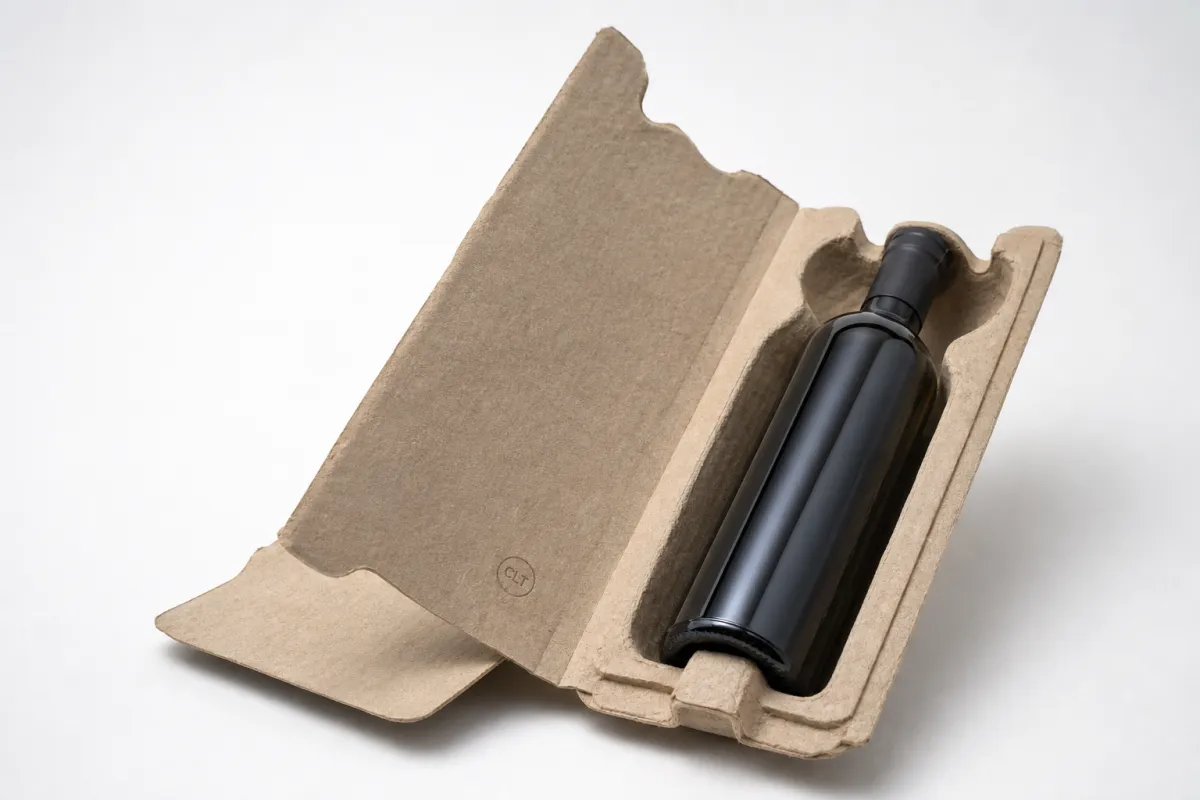
Compostable bottle mailers wholesale solutions matter most when the bottle is valuable enough that one failure changes the economics of the order. A broken wine bottle, a cracked spirits bottle, or a shattered olive oil container does more than waste product. It also consumes labor, shipping charges, customer goodwill, and time that could have gone to another order. A package that fails at a 2% rate can turn a decent margin into a disappointing one with surprising speed.
Repeatability is the hidden advantage. A warehouse team can only move quickly when the mailer folds the same way every time, the tabs lock the same way every time, and the bottle lands in the same position every time. Small variations in fit become large operational problems after a few hundred packs. A design that is difficult to close or awkward to load is not just inconvenient. It creates a steady stream of human error, and human error is expensive.
Compostable packaging can support a cleaner brand story without turning the packout into a science project. Some buyers want the material choice to align with a refill program or a premium product line. Others want to cut plastic and keep shipping materials easier to explain. Either way, the package still has to survive vibration, compression, corner impacts, and the piled weight that shows up inside master cartons and on pallets.
"If the bottle can move inside the pack, the job is unfinished."
The right compostable bottle mailers wholesale setup reduces void space, anchors the bottle, and protects the areas that usually fail first: the base, the shoulders, and the neck. Buyers who ship regularly know that carton efficiency matters too. A mailer that nests well in the outer shipper uses freight cube better, stacks more predictably, and usually makes the warehouse team happier in ways that are easy to measure and hard to overstate.
Environmental math gets messy fast if it is not grounded in the real package. Cutting plastic trim may lower the carbon footprint of the shipment, but the gain can shrink if the design needs a larger carton or extra corrugate to compensate. A compostable format should be judged as a system, not as a single object sitting beside a bottle. Buyers who compare the whole shipping chain usually make better decisions than buyers who focus only on the shell.
For glass, that distinction matters even more. A bottle that arrives intact in a slightly heavier package is better than a lighter solution that produces reshipments and claims. In many cases, the difference between a good program and a bad one is not the material itself. It is how well the material matches the bottle, the route, and the handling pattern.
To keep the comparison grounded, ask for the test data. Check whether the pack has been evaluated against distribution methods that simulate real parcel handling. Ask which bottle weight was used, whether the pack was tested empty or filled, and what the failure notes looked like. Buyers who take those questions seriously usually find that compostable bottle mailers wholesale sourcing becomes much easier to compare across vendors.
The strongest programs usually share one trait: they are specific. Exact bottle size, exact closure type, exact shipping mode, exact outer shipper. That specificity prevents expensive surprises later. It also keeps the conversation focused on what the packaging has to do rather than what it claims to be.
There is one more practical angle that often gets overlooked. A packaging program that works well on paper can still stumble when it reaches a busy dock with rotating staff and too many SKUs on the same shift. The best compostable bottle mailers wholesale choice is the one that holds up to real warehouse behavior, not just laboratory conditions.
Compostable Bottle Mailers Wholesale Product Details and Material Build
Compostable bottle mailers wholesale products usually fall into three structural families: molded fiber shells, paper-based protective formats, and compostable cushioning elements that stabilize the bottle inside a carton. Each one answers the same question in a different way. How do you hold a bottle still while the shipping network does its worst? The answer depends on the bottle shape, the shipping route, and whether the mailer needs to function on its own or as an insert inside another shipper.
Molded fiber is common because it gives a firm cradle around the body and shoulders while staying relatively light. Paper-based formats appeal when presentation matters and the packout needs to stay straightforward for line workers. Compostable cushioning elements tend to show up when the bottle shape is unusual or when the neck and base need extra suspension. The real test is not the label. It is crush resistance, rebound, and how the material behaves when the carton gets squeezed.
Fit matters more than nominal volume. A 750 ml wine bottle, a 700 ml spirits bottle, and a 500 ml olive oil bottle may sound close enough in conversation, yet their shoulder height, base diameter, and closure geometry can differ enough to ruin a generic fit. Skincare and supplement bottles add their own complications because droppers, pumps, and neck finishes change the overall envelope. A supplier that asks for exact dimensions before quoting is doing you a favor, even if it feels a little fussy at first.
The mailer should support the bottle at the base and shoulder, resist side compression, and keep the neck from rattling. A filled bottle can be trickier than an empty one because added weight changes how force moves through the structure during a drop. The better design keeps the bottle centered and lets the outer carton do less of the heavy lifting. That is the entire point.
Compostable should also mean something measurable. Buyers should ask for the exact material makeup and the certification language attached to it. Some structures are built for industrial composting conditions rather than backyard composting, and the claim may depend on ASTM D6400, ASTM D6868, EN 13432, or another applicable standard. If a supplier says a component is compostable, ask which component, under which standard, and in which environment. That level of detail separates responsible sourcing from vague language in green packaging.
There are real limitations. Humidity can weaken paper-based structures, especially in warehouse environments where bottles may arrive with surface condensation. Odd bottle profiles can create pressure points that need a custom insert instead of a standard shell. Overfilled bottles may also cause trouble because even a small leak can change stiffness and make the mailer harder to close cleanly. Heavy glass may require a stronger outer carton or a different format entirely, and that is not a flaw. It is packaging engineering doing what packaging engineering does.
Fiber origin matters as well. FSC-backed paper sourcing can strengthen a procurement story, even if the mailer itself is not a paper product in the narrow sense. The aim is not to oversell the environmental impact. The aim is to choose materials that fit the shipping need and support a practical circular economy goal without making operations harder.
In a mixed shipping program, structure choice can influence the entire line. A bottle that needs a cradle around the shoulder may perform badly in a generic insert, while a lighter bottle can do perfectly well in a simpler format. Matching structure to product keeps waste down and protection up. That balance is what buyers are paying for.
In my own audits, the quiet failures usually come from the tiny mismatches: a neck that sits too loose, a shoulder that takes the load unevenly, or a carton that looks right but gives the mailer too much room to wander. Those are not glamorous problems. They are the ones that actually cost money.
Specifications to Confirm Before You Order
Before you place any compostable bottle mailers wholesale order, gather the bottle measurements that actually affect fit: height, maximum diameter, shoulder profile, closure type, and whether the product ships empty or filled. Nominal volume helps, but it never tells the whole story. A sample bottle is better than a spec sheet because the real object often reveals issues that measurements alone miss. A 2 mm difference in closure height can be enough to change the entire geometry.
The fit method matters as much as the size. A single-bottle mailer is usually easier to control, while a multi-bottle format needs tighter management of internal movement, carton size, and the gap between units. Some designs grip at fixed contact points. Others allow more tolerance so operators can load them faster without using excess force. In compostable bottle mailers wholesale sourcing, a few millimeters can decide whether the closure locks cleanly or jams under pressure.
Performance specs show up in day-to-day usability. Ask about wall thickness where relevant, fiber density if molded fiber is involved, closure style, stacking strength, and how the mailer behaves under warehouse handling. If the package will ride on pallets, compression resistance matters. If it will move through mixed parcel networks, edge support and corner crush resistance matter more. For a deeper technical review, ask whether the package was evaluated against a parcel distribution profile such as ISTA 3A or an equivalent method.
Branding needs their own discussion. Many compostable bottle mailers wholesale formats can carry a logo, a small product message, or a one-color mark, but the surface has to support it. Ask where print can sit without crossing fold lines or structural tabs. Confirm whether labels, tamper bands, or variable codes still apply cleanly after packing. A rough or porous surface may limit coverage, and learning that after approval is a needless delay.
Packout details are just as important. How many motions does the operator need? Does the bottle go in base-first or neck-first? Is there a pre-formed lock, or does the package require tape? Those questions sound mundane until a line slows down because a tab is awkward or a fold sequence is unclear. In a busy warehouse, one extra motion repeated thousands of times becomes a real cost. It is the kind of cost people only notice when the shift supervisor starts asking why the pallet count fell behind.
Ask for transit results, sample photos, and any failure notes from prototype runs. Buyers often compare samples based on appearance, yet appearance tells you very little about compression and drop performance. The better question is how the structure behaved after testing. A supplier with real data can usually explain which option fits your route, your bottle weight, and your fill level. That is the kind of detail that makes compostable bottle mailers wholesale decisions feel grounded instead of speculative.
One practical habit saves time later: keep a single spec sheet with bottle dimensions, approved artwork, carton counts, and testing notes. Reorders move faster when the information is already locked down, and fewer people need to re-litigate the same fit question. Operations teams feel that benefit immediately.
- Send first: bottle height, diameter, shoulder shape, closure type, and filled weight.
- Confirm second: single-bottle or multi-bottle pack, packout direction, and carton size.
- Ask third: test method, print limits, moisture sensitivity, and whether the product is certified compostable for industrial conditions.
Pricing, MOQ, and Quote Details for Wholesale Buyers
Pricing for compostable bottle mailers wholesale orders usually comes down to a familiar set of drivers: material choice, structural complexity, print requirements, tooling, and order volume. A molded fiber shell with no print often costs less than a custom-shaped branded structure with tighter tolerances. Unique bottle profiles also bring development work, and development means setup cost before production even begins. That first run can look expensive for reasons that have nothing to do with greed and everything to do with tooling.
MOQ tends to follow the same logic. Stock formats can sometimes be ordered in lower quantities because the tooling already exists. Modified stock and fully custom dimensions usually require a higher minimum. If your bottle is standard and the shipping lane is stable, stock or lightly modified compostable bottle mailers wholesale options may give you the best balance of price and speed. If the product is premium and the fit needs to be exact, custom may be the cleaner long-term choice.
Freight changes the picture fast. A unit price that looks attractive can become less appealing once pallet configuration, carton count, shipping zone, and test requirements are added. A lighter mailer that ships flat may save cube. A thicker molded format may add weight but lower breakage. For long-distance orders, landed cost matters more than the sticker price, and that is especially true in compostable bottle mailers wholesale sourcing where packaging is only one piece of the shipping expense.
To make quotes comparable, include these details in every request:
- Bottle dimensions and filled weight
- Quantity needed for the first order and for reorders
- Printing or branding needs
- Destination ZIP code, warehouse location, or port
- Target timeline and launch date
- Any compostability, FSC, or documentation requirements
That level of detail gives the supplier enough information to price the real job instead of guessing. A vague request usually comes back with a broad estimate that is hard to compare. A complete brief produces a quote that can be tested against another supplier's offer on equal terms. Buyers who shop compostable bottle mailers wholesale often save time simply by asking for both unit cost and landed cost, because those numbers can tell two different stories.
There is also a hidden cost in ambiguity. Every unanswered question adds another email, another day, another chance for the package to arrive late to the launch calendar. A cleaner brief reduces that drag. It also helps the supplier point out issues early, before they become expensive mistakes.
| Option | Typical MOQ | Typical Unit Price | Best Use Case | Lead Time |
|---|---|---|---|---|
| Stock unprinted format | 1,000-3,000 pieces | $0.22-$0.48 | Common bottle sizes, faster restocks, lower setup | Often 10-15 business days after approval |
| Modified stock format | 3,000-7,500 pieces | $0.30-$0.65 | Near-fit adjustments, light branding, better bottle control | Often 12-18 business days after approval |
| Fully custom format | 5,000-20,000+ pieces | $0.45-$1.10 | Unique bottle shape, premium presentation, tighter spec control | Often 15-25 business days after approval |
Those figures are starting points, not promises. A small order with heavy print coverage may land above the range, and a large repeat order with a standard format may land below it. The useful part is understanding what changes the number. That is what gives compostable bottle mailers wholesale buyers leverage in the practical sense, not the marketing sense.
If you also need other formats in the same program, our Custom Packaging Products page is a useful place to compare structural options. Some buyers cross-check outer protection against Custom Poly Mailers when a shipping system uses more than one layer. The point is to compare the whole package, not just one component sitting in isolation.
One thing I have seen repeatedly: the cheapest quote is not always the simplest program. Sometimes the bargain option asks for more handwork, and that hidden labor cancels out the savings fast. A good buyer watches both numbers.
Process, Timeline, and Lead Time for Wholesale Orders
The order flow for compostable bottle mailers wholesale programs is usually simple enough, but the timeline depends on how fast the buyer can confirm the details. The sequence tends to run inquiry, dimension review, sample or prototype approval, production, and dispatch. A clean start makes everything else easier because there is less back-and-forth over fit, artwork, or certification language. The process slows down when one of those pieces is left vague.
Delays usually come from the same handful of places. Late artwork changes are common, especially when a branding team keeps adjusting logos or compliance copy after the sample is approved. Dimension revisions can slow things down too, because a small change in bottle height or closure shape can alter the insert geometry. Certification questions also add time, particularly when a buyer needs to confirm what part of the structure is compostable and under which standard. For compostable bottle mailers wholesale sourcing, early decisions usually save the most time.
Production planning gets much easier when launch dates are clear. If the order supports a seasonal spike, retail reset, or product launch, say so up front. The same advice applies to replenishment orders. A warehouse that is down to its last pallets cannot wait for a perfect quote if the shipping line will stop in two weeks. Buyers who manage recurring packaging programs often work better with forecast volumes than with one-off snapshots.
Complete specs shorten lead time. A supplier can quote faster when bottle dimensions, quantity, destination, print requirements, and documentation arrive in one message. Fewer follow-up emails mean the sample can move sooner and the production slot can be reserved with less friction. That matters especially for compostable bottle mailers wholesale orders that may need a custom die or a custom fold pattern before the first run starts.
Reorders are usually smoother. Once the fit is proven and the artwork is locked, repeat runs need less development because the structural choices are already made. Some buyers keep a master spec sheet with bottle measurements, approved artwork, carton counts, and testing notes so the next order can move quickly. That small habit saves real time when the packaging budget gets tight.
Waste reduction becomes much easier to manage once the process is stable. A zero waste goal is not just about fewer materials. It is about using the right material in a process the warehouse can repeat every day without constant exceptions. That is the operational value of a well-run compostable bottle mailers wholesale program.
Long lead times often point to unclear specs rather than production problems. Put the right information in front of the supplier early and the calendar usually tightens up. That kind of discipline pays off later too, because the next reorder follows a known path instead of starting from scratch.
For teams with seasonal launches, the real mistake is waiting until the final packaging art is finished before talking to the supplier. By then, the clock is already complaining. A better approach is to start the structure conversation early, then refine the artwork while samples are moving.
Why Choose Us for Compostable Bottle Mailers Wholesale
At Custom Logo Things, the value sits in practical packaging guidance rather than hype. When a buyer asks about compostable bottle mailers wholesale, the useful answer connects materials, bottle fit, shipping route, and warehouse handling without pretending that every bottle can live in the same structure. Good packaging advice should sound like engineering and procurement having a sensible conversation, not a slogan.
Experienced support matters because eco-friendly materials and fragile-pack requirements do not always point in the same direction. A supplier who understands both can help balance protection, cost, and presentation without forcing a buyer into one narrow choice. If your order only needs a simple unprinted shell, the recommendation should stay simple. If your bottle requires a tighter custom form, the advice should point there honestly. That kind of clarity matters in compostable bottle mailers wholesale sourcing because every bottle line has different failure points.
Support should also cover sizing, prototype review, and repeat-run consistency. A good partner will help confirm whether the bottle should be supported at the neck, the shoulder, or the base, and whether the design should be built for empty or filled shipping. The real question is not only whether a package can be made once. It is whether it can be made the same way again, with the same fit, the same protection, and the same warehouse behavior.
Recurring buyers usually feel the benefit quickly. Once the spec is locked, reorder cycles get shorter, the warehouse team learns the packout, and the packaging budget becomes easier to forecast. Some customers also compare bottle mailers against other protective formats as they build a larger shipping system, which is why our Wholesale Programs and Custom Packaging Products pages can help when you are planning beyond a single SKU.
Mixed shipping programs often need more than one solution. A bottle line may use a compostable insert, while other products in the catalog ship in a different format. In that kind of setup, Custom Poly Mailers can be part of the broader comparison even if the bottle itself needs a compostable structure. The goal is to match the package to the product instead of asking one material to do every job.
That practical mindset is what makes compostable bottle mailers wholesale sourcing work over time. It keeps the carbon footprint conversation grounded, supports a stronger green packaging story, and gives the buyer a structure that can survive the distribution channel. Packaging should earn its place in the shipping line by performing first and presenting well second.
There is a quiet advantage in consistency too. A repeatable package reduces training time for new staff, cuts down on packing mistakes, and makes the shipping operation easier to audit. Those gains are not flashy, but they are real. They show up in fewer claims, fewer rush orders, and fewer surprises when the volume rises.
And yes, consistency makes life easier for the people actually packing the orders. If a team can learn one fold sequence and stick with it, everything gets less chaotic. That is not a marketing slogan; it is just how warehouses work.
How to Specify Your Next Order and Get a Quote
If you are ready to start a compostable bottle mailers wholesale quote, send a complete brief rather than a short message. Begin with the bottle sample or the exact measurements, confirm the quantity you need, identify the branding requirements, and tell the supplier where the product will ship. One clear message can save several rounds of clarification and usually produces a tighter, more useful quote.
Next, decide whether you need stock, modified stock, or fully custom. Stock makes sense when the bottle is common, the budget is tight, and the goal is speed. Modified stock works when the bottle is close to a standard form but still needs better control. Fully custom is the right answer when presentation, fit, and repeatability matter more than turnaround time. A good compostable bottle mailers wholesale partner should walk through those trade-offs in plain language.
Before you approve pricing, run a pre-quote review. Check the bottle weight, closure shape, and fill level. Confirm the shipping method, whether parcel or pallet. Identify the outer carton requirements, because the mailer is only one piece of the shipment. If your compliance team expects documentation for compostability or fiber sourcing, mention that early. Late paperwork adds time, and it can change the product recommendation if the original format does not meet the requested standard.
Samples matter. Ask for them, pack out one full carton, and compare the result across suppliers using the same assumptions. Many buyers compare a polished sample from one vendor against a rough estimate from another, which does not lead to a useful decision. The better move is to compare the same bottle, the same fill weight, the same outer carton, and the same transit expectation. That is how compostable bottle mailers wholesale orders become comparable instead of confusing.
Once the fit is approved, keep a simple record of the final spec. Note the bottle dimensions, insert orientation, approved artwork, carton count, and any test results. The next reorder will move much faster if the baseline is already set. That habit also supports the broader circular economy story, because less trial-and-error means less wasted material, fewer emergency shipments, and fewer packaging mistakes that end up in the trash.
Here is the short version: send exact measurements, quantity, destination, print needs, and certification questions in one message. Ask for unit cost and landed cost. Request samples and one full packout test. Compare the options on performance, not just price. Do those things, and a compostable bottle mailers wholesale purchase becomes a technical decision instead of a guessing game. For brands that want better packaging outcomes without wasting time, that is the smartest way to buy compostable bottle mailers wholesale.
If the first quote feels a little too neat, push for the details behind it. The right answer is rarely the fastest answer. It is the one that survives real bottles, real handling, and a real warehouse shift.
What bottle sizes work best for compostable bottle mailers wholesale orders?
The best fit depends on bottle height, diameter, shoulder shape, and closure type, not just nominal volume. Single-bottle formats are usually easier to size and test, while multi-bottle packs need tighter control over internal movement. Send a sample bottle or exact measurements before quoting so the supplier can verify fit and protection for your compostable bottle mailers wholesale order.
Are compostable bottle mailers wholesale options strong enough for glass shipping?
They can be, as long as the structure is matched to the bottle weight and the outer shipper is correctly specified. Transit testing matters because real performance depends on drop resistance, stacking, and how the bottle sits inside the pack. Avoid moisture exposure and overstuffed cartons, since those two issues can reduce protection even in a strong compostable bottle mailers wholesale design.
What information do I need for a wholesale quote on compostable bottle mailers?
Provide bottle dimensions, quantity, print needs, delivery destination, and any sustainability certification requirements. Include whether you need stock, modified stock, or custom sizing so the MOQ and pricing come back accurately. If possible, share the filled bottle weight and your desired ship method, because both affect the recommended structure for compostable bottle mailers wholesale sourcing.
What is a normal MOQ for compostable bottle mailers wholesale?
MOQ depends on whether the product is stock or custom, and custom die or print requirements usually raise the minimum. Some suppliers can offer lower minimums for unprinted or standard formats, especially when the size already exists. Ask whether the MOQ is tied to one SKU, one print version, or total order volume so the compostable bottle mailers wholesale quote is easy to compare.
How long does production usually take for compostable bottle mailers wholesale orders?
Lead time includes quoting, sample approval, production, and freight, so the total schedule is longer than the factory run alone. Artwork changes, dimension revisions, and delayed approvals are the most common reasons timelines stretch out. If you have a launch date, share it early so the supplier can recommend the fastest workable path for your compostable bottle mailers wholesale order.
For buyers who want packaging that protects the bottle, supports a cleaner material story, and still fits a real production schedule, compostable bottle mailers wholesale is a practical place to start. The best order is the one that matches the bottle, the carton, and the route. So gather exact measurements, confirm the shipping conditions, and request a quote that reflects the real job, not a guess.