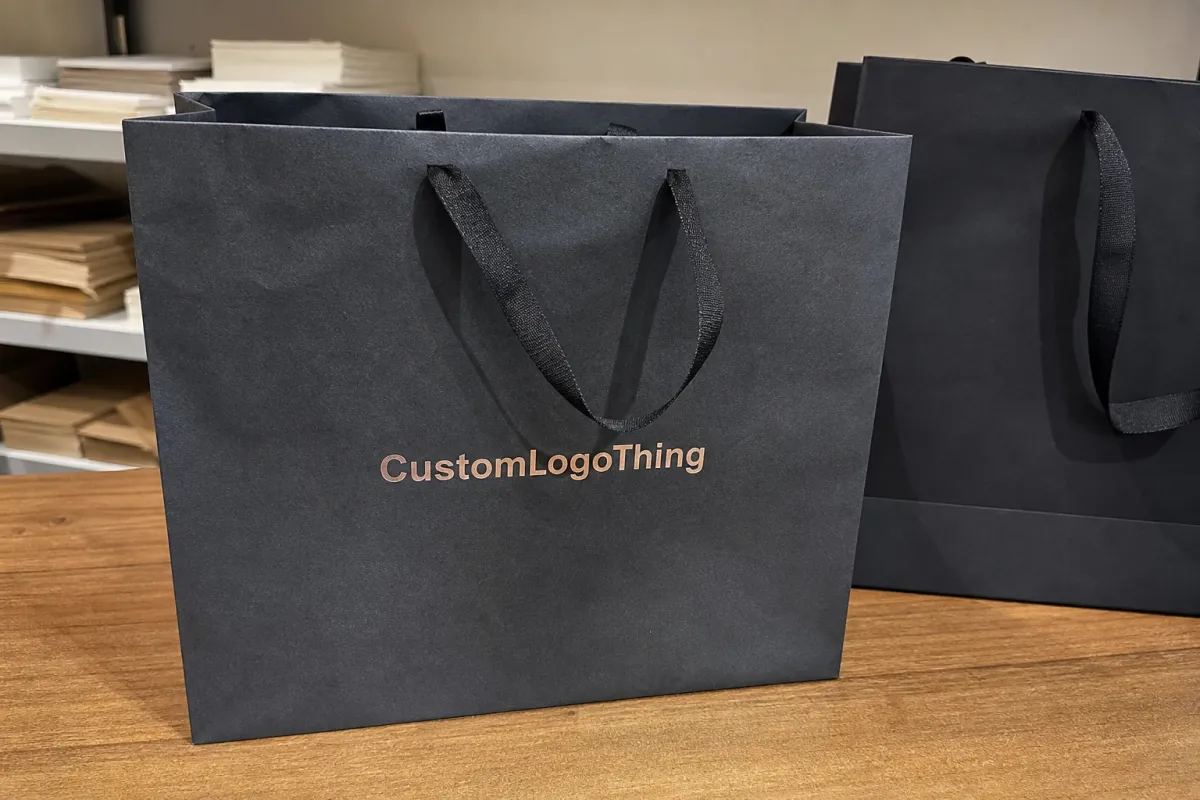
Two box quotes land in your inbox. One is 11% cheaper. Looks like an easy win until the first shipment arrives crushed, oversized, or packed with so much void fill that the savings vanish in a week. A corrugated boxes price quote is only useful if it reflects real compression needs, pack-out method, shipping route, and artwork complexity instead of vague assumptions.
That is the part buyers often miss. A few cents saved per unit disappears fast once you add damage claims, repacks, extra dunnage, dimensional-weight penalties, and warehouse headaches. The quote is not the product. The spec is the product.
This page is for ecommerce brands, retail packaging buyers, distributors, and operations teams sourcing custom mailers, master cartons, or shipping cases. The goal is simple: show what actually affects corrugated pricing, what a supplier needs in order to quote accurately, and how to shorten the usual back-and-forth. Price matters. Obviously. But usable pricing comes from specs that match the job, not from guessing and hoping the factory reads minds.
The cheapest box on paper usually costs more after shipping damage

Here is the classic mess. Buyer A sends only outside dimensions and asks for “best price.” Supplier 1 quotes a lighter board, assumes one-color exterior print, and uses a standard shipper style. Supplier 2 asks annoying but necessary questions about product weight, courier handling, stacking height, and whether the box ships individually or inside a master carton. Supplier 2 comes back higher. Guess which quote usually performs better in the field.
Bad comparisons happen when board grade, dimensions, flute profile, and print scope are not aligned. A die-cut mailer in E flute is not directly comparable to an RSC carton in B flute, even if the numbers look close. A white outside with inside print is not the same job as plain kraft with one flexo color. And if one supplier priced flat-packed delivery to your warehouse while another priced ex-works pickup, those are not competing quotes. They are different offers wearing the same costume.
From a packaging buyer’s point of view, the useful starting question is not “Who is cheapest?” It is “What does this box need to survive?” If the box fails compression in pallet storage, gets scuffed in parcel transit, or adds 1 inch of useless air that triggers higher freight, the low headline number means nothing.
Damage cost is rarely limited to the damaged box. It usually drags in labor to inspect returns, replacement shipments, customer service time, write-offs, and irritated retail receivers who now think your operation is sloppy. That is why a bargain-grade shipping carton can be expensive in all the ways finance sees a month later.
That is why a serious quote request should include product weight, shipping method, count per box, destination, and print expectations from the start. The more your supplier understands the actual packing job, the less likely you are to receive a fantasy price that falls apart later.
Practical rule: if two quotes differ a lot, the first thing to check is not margin. It is spec mismatch.
What your box needs to do before anyone talks numbers
Before anyone throws out unit pricing, define the box job in plain language. Does it need to protect a fragile SKU in parcel shipping, present well on a retail shelf, run efficiently on a hand-pack line, or hold heavy contents in stacked storage? Those are different jobs. Different jobs need different constructions.
Common quote requests usually fall into a few categories:
- RSC shipping cartons: standard regular slotted cartons for case packing, replenishment, or warehouse movement.
- Die-cut mailer boxes: front-lock or tuck-top mailers for ecommerce, kits, and subscription shipments.
- Folding corrugated cartons: lighter presentation-focused boxes that still need some shipping strength.
- Corrugated inserts: pads, dividers, or custom fitments that reduce movement and share load.
- Multi-pack master cartons: larger outer cases holding several inner packs for transport or distribution.
The use case changes the construction more than many buyers expect. Parcel shipping often needs better edge crush and tighter fit because carriers are not gentle. Shelf-ready retail may prioritize cleaner printing, white top liners, and easier opening features. Subscription kits often want a nicer unboxing experience, which can push buyers toward E flute or white corrugated with better graphic presentation. Heavy industrial items may need C flute, BC double wall, or reinforced inserts because weight and puncture risk are the real problem.
Finish assumptions matter too. Plain kraft is usually the most economical. White top costs more but improves color pop. Inside print, flood coverage, large solid areas, and tighter registration each move the quote upward. Premium coatings or laminated labels can make sense for branding, but pretending they are “basically the same” as a plain flexo box is how budgets get wrecked.
Honestly, a lot of “same box, lower price” requests are not really about supplier margin. The box is often overbuilt, under-filled, or sized poorly. If there is 2 to 3 inches of empty space on every side, you are buying extra board, extra dunnage, and extra freight cube. Not exactly genius purchasing.
There is also the packing-line angle. A box that looks efficient on a quote sheet can be annoying in operations if it needs extra taping, jams an erector, or takes too long to close by hand. If your team packs 2,000 orders per day, even a few extra seconds per box becomes labor cost you can actually measure.
This section is your filter. If the actual application is not clear, quote comparisons will be sloppy from the start.
Specifications suppliers need for an accurate corrugated boxes price quote
If you want an accurate corrugated boxes price quote, send the non-negotiables first: inside dimensions, box style, flute type, board grade, product weight, pack-out method, print coverage, quantity breaks, and delivery ZIP code or port. Missing any of those can distort pricing by more than most buyers expect.
Start with dimensions in the right order
Use length x width x depth, measured on the inside unless you state otherwise. Length is the longer opening side, width is the shorter opening side, and depth is the distance between openings. Mixing up width and depth can create a bad dieline, a bad fit, and yes, a bad quote. Suppliers will price material usage and cutting layout based on those numbers, so “close enough” is not close enough.
Choose flute and board in buyer language
You do not need to be a board engineer, but you do need the basics:
- E flute: thinner profile, better print surface, often used for branded mailers and presentation packaging.
- B flute: a good middle ground for strength and print quality.
- C flute: thicker and common for shipping protection.
- Double wall: often BC or EB combinations for heavier loads or stacking demands.
Board specifications may also reference test ratings such as ECT or burst strength. In many shipping applications, buyers ask for 32 ECT as a common baseline, while heavier or taller pallet loads may require 44 ECT or higher depending on pack weight and stacking. Not always, but often. If you ship through parcel networks, transit testing matters more than wishful thinking. The International Safe Transit Association provides recognized distribution test standards, and they are worth reviewing if your damage rate is not trivial.
Material and compliance details matter
Kraft linerboard is usually more forgiving on cost. White top liners add material cost but help graphics. Recycled content may be requested for sustainability goals, while moisture resistance can matter for cold chain, humid storage, or export conditions. If you need food-contact considerations, FSC-certified material, or other chain-of-custody documentation, say so upfront. Do not wait until proof approval and then suddenly announce compliance requirements. That is how timelines get blown up.
For buyers focused on sustainability claims, check official certification rules through FSC or waste reduction guidance from EPA recycling resources. Good claims need documentation, not vibes.
Printing variables quietly change cost
Print is where many quotes drift. Number of ink colors, outside versus inside print, plate count, flood coverage, fine text, barcodes, and registration tolerance all influence setup and run cost. A one-color flexo print on kraft can be straightforward. A white box with inside/outside graphics, large solids, and exact brand color matching is a different animal.
If you are requesting litho-lam, digital print, or premium color matching, say that clearly instead of attaching a pretty mockup and assuming the supplier will decode your intent. Mockups are nice. Production specs are better.
Logistics details affect the final number too
Suppliers also need to know how the finished boxes will be packed and received. Flat-packed bundles of 20 or 25, cartons per pallet, max pallet height, slip sheets, labeling rules, and appointment delivery requirements all change labor and freight. If your warehouse rejects odd pallet sizes or needs specific pallet footprints, include that in the RFQ. It saves everyone time.
Reference photos help. Current box samples help more. A target price range can also be useful if it is realistic, because it tells the supplier whether to value-engineer early or quote exactly to your requested build first.
One more thing buyers skip: tell the supplier whether the box is replacing an existing spec or launching as a brand-new format. Replacement jobs usually need equivalency on dimensions, stacking, and print appearance. New jobs often have more room for cost engineering. That distinction changes how a supplier approaches your corrugated boxes price quote.
Pricing, MOQ, and unit cost: what moves the number up or down
The main cost drivers are boring. Good. Boring is where the money goes. Board consumption, box footprint, flute profile, print setup, die cutting, run length, labor, and freight usually account for most of the variation in a corrugated boxes price quote.
MOQ changes the math fast. Low quantities carry setup, tooling, and make-ready cost over fewer units, so the unit price climbs. Higher volumes reduce unit cost, but they also increase cash tied up in inventory and storage space. That tradeoff matters more than chasing the absolute lowest per-piece number.
| Order Scenario | Typical MOQ / Qty | Unit Cost Pattern | Best Use |
|---|---|---|---|
| Sample or pilot run | 100-500 | Highest per unit due to setup spread | Fit check, launch testing, short promotions |
| Small production run | 1,000-3,000 | Moderate to high depending on print and die cuts | Early-stage ecommerce or SKU trials |
| Mid-volume repeat order | 5,000-15,000 | Better price bands and more efficient production | Stable reorder programs |
| Large scheduled volume | 25,000+ | Lowest unit cost, higher inventory commitment | Forecastable demand and standardized specs |
Practical range examples help. A plain kraft RSC at 5,000 units might price in a completely different band than a custom die-cut white mailer with inside print at the same quantity. That difference can be 30% to 100% or more depending on size, print coverage, and board choice. Anybody promising universal “low prices” without the spec details is selling fog.
Larger boxes are not just slightly more expensive. They use more board area, reduce pallet density, and increase freight cube. Add one inch in each dimension across a large run and the total cost jump can be ugly, especially for parcel shipping where dimensional weight kicks in.
Buyers also forget to compare add-ons. Inserts, tear strips, tape strips, coatings, proofing, tooling, special packing, pallet labels, and delivery appointments should be visible in the quote. If one supplier includes them and another buries them later, the cheap quote is not actually cheap.
Always compare landed cost, not just ex-factory price. Freight, duty if applicable, warehouse handling, and defect tolerance all belong in the decision. A lower box price with higher defect risk or poor pallet efficiency can cost more once it hits operations.
Here is a realistic way to think about unit pricing. A basic one-color shipping carton in a repeat order may move only a few cents per unit between volume tiers. A Custom Printed Mailer with die-cutting and premium white board may move far more because setup and finishing are a bigger slice of the cost. Same quantity. Very different cost structure.
If you need to cut cost without wrecking performance, use the smart levers first:
- Trim empty space and reduce box footprint.
- Simplify print from multi-color coverage to fewer colors or less area.
- Review whether white outside is necessary for every SKU.
- Standardize a few box sizes instead of buying too many tiny variations.
- Increase order quantity only if inventory turns support it.
- Test a lighter board only after verifying pack performance.
That last point matters. Board downgrades can work. They can also backfire. If you reduce flute strength and then compensate with more void fill, more tape, and more damage claims, congratulations, you saved nothing.
Process and lead time from quote request to delivered boxes
Buyers usually underestimate lead time because they count only factory production days. Real lead time starts before that. A normal custom corrugated workflow includes RFQ review, spec clarification, quoting, artwork or dieline approval, sample if needed, production scheduling, manufacturing, packing, and freight transit.
For straightforward repeat orders, a supplier may turn a quote around in 24 to 72 hours and produce in roughly 10 to 15 business days after final approval. More customized jobs with new tooling, interior print, or multiple stakeholders can take longer. Add transit, and the total timeline stretches fast.
Here is where delays usually come from:
- Missing dimensions or no confirmed box style.
- Artwork files not supplied in usable vector format.
- Unclear color expectations or late brand approvals.
- Compliance requests added after quoting.
- Freight arrangements treated as an afterthought.
Sample approval can be worth the extra time if fit or protection is critical. A plain white sample, mockup, or short run can confirm pack-out, insert placement, closure method, and pallet pattern before money is burned on a full order. That is not “slowing things down.” That is avoiding a larger and dumber delay later.
If you operate on launch dates, build backward from the in-warehouse date, not the day you want to request a price. Leave room for at least one revision cycle. Most projects need it even when nobody wants to admit that upfront.
For transit performance, recognized standards such as ASTM and ISTA can help define test expectations. Not every box needs formal lab testing, but high-value products, fragile goods, and parcel-heavy programs usually benefit from more than “it should probably be fine.”
How to compare suppliers without getting fooled by a low quote
A clean supplier comparison sheet beats gut feel every time. Line up the same fields across every quote: box style, dimensions, flute, board grade, print method, ink coverage, tooling, MOQ, unit price at each quantity, freight terms, production lead time, and defect policy. If one row is blank, ask why.
Then check the details buyers love to ignore:
- Freight basis: delivered, FOB, ex-works, or collect.
- Tooling charges: one-time, amortized, or hidden in unit price.
- Overrun and underrun tolerance: common on custom print jobs.
- Proofing: digital proof only or physical sample available.
- Claims process: what happens if boxes arrive damaged or out of spec.
If a supplier responds fast, asks intelligent questions, and flags a risk before you noticed it, that is usually a good sign. If they quote instantly with no clarification on a vague RFQ, that is not efficiency. That is guesswork dressed up as customer service.
Ask for photos of similar constructions, a board recommendation based on your use case, and whether the box has any known production constraints. For example, oversized panels, heavy flood coverage, or very fine reverse text can introduce real manufacturing limitations. Good suppliers say that early. Bad ones say it after you approve the art.
Also compare how each supplier handles repeat orders. Can they hold die lines, color references, and pack specs consistently? Can they schedule blanket orders or releases? A decent first quote is nice. Repeatability is better. Most corrugated packaging programs live or die on the second, third, and tenth order, not the first sample run.
From a buyer’s side, the best corrugated boxes price quote is not automatically the lowest one. It is the quote that stays accurate after production, delivery, packing, and actual shipping abuse enter the picture.
Send these details now to get a usable quote faster
If you want fewer emails and a faster result, send a compact RFQ with the right details the first time. Not a mood board. Not “need something similar.” Actual specs.
- Box style: RSC, die-cut mailer, tray, master carton, insert, or custom structure.
- Inside dimensions: length x width x depth, with units.
- Product details: item weight, fragility, and count per box.
- Board preference: E, B, C, or double wall if known; otherwise say the shipping method and load.
- Print scope: kraft or white, outside only or inside/outside, number of colors, and coverage level.
- Quantities: ask for multiple breaks such as 1,000 / 5,000 / 10,000.
- Delivery point: full ship-to ZIP code or port, plus pallet restrictions if any.
- Target timing: sample need-by date and in-warehouse date.
- Special requirements: FSC, recycled content, barcode placement, bundle count, labels, or test standards.
A basic email like that gives a supplier enough to return a useful corrugated boxes price quote instead of a placeholder number. It also makes value engineering easier, because now they can suggest specific changes such as a tighter box size, different flute, or simpler print layout.
If you already have an existing box, attach photos, current dimensions, annual volume, and what you want improved. Lower cost? Better stacking? Cleaner print? Easier assembly? Say it plainly. Suppliers are much better at solving a stated problem than decoding vague dissatisfaction.
One blunt truth: if your RFQ is sloppy, your quote will be sloppy. That is not the supplier being difficult. That is the predictable outcome of missing inputs.
FAQ
What is needed for a fast corrugated boxes price quote?
At minimum, send inside dimensions, box style, quantity, product weight, print requirements, and delivery location. Add board preference or shipping method if you know it. That is usually enough for a supplier to give a serious starting number.
How many box quotes should I compare?
Three is usually enough if the specs are aligned. More than that often creates noise unless you are sourcing a very large program. The key is comparing equivalent materials, print, freight terms, and lead times.
Does a higher MOQ always mean better pricing?
Per unit, usually yes. Overall cash efficiency, not always. If you buy too many boxes, you pay for storage, tie up cash, and risk obsolete inventory if dimensions or branding change.
Which is cheaper: kraft or white corrugated?
Plain kraft is usually cheaper. White corrugated costs more because the material and print presentation are different. Sometimes the branding lift is worth it. Sometimes it is just expensive vanity.
Should I ask for ECT or burst strength?
Many buyers use ECT because it relates well to stacking and shipping performance for corrugated cartons. The right spec depends on pack weight, stacking conditions, and transit method. If you are unsure, describe the use case and ask for a recommendation rather than guessing.
How long does custom corrugated packaging usually take?
Repeat orders can move fairly quickly once specs are locked. New custom jobs often take longer because they may need tooling, artwork review, and sample approval. A realistic planning window is usually measured in weeks, not days.
Can I lower cost without changing the box size?
Sometimes. You may reduce print coverage, switch board combinations, standardize bundle pack, or order at a more efficient quantity break. But if the box is oversized, size reduction is often the strongest cost lever by far.
A strong corrugated boxes price quote is not the one with the prettiest number in bold. It is the one built on the right dimensions, board grade, print scope, testing expectations, and freight terms so your boxes arrive, pack, stack, and ship the way they are supposed to. That is how you buy corrugated packaging like an operator instead of gambling like a tourist.