A product can arrive safely and still feel poorly presented. A Custom Printed Mailer box is meant to close that gap: it protects the order, carries the brand, and gives the buyer a package that looks intentional instead of improvised.
The logo is only one part of the decision. A good mailer box must fit the product, fold cleanly, stay closed, print clearly, survive handling, and make sense for the margin. If it fails structurally, better artwork will not fix it.
What a Custom Printed Mailer Box Actually Does
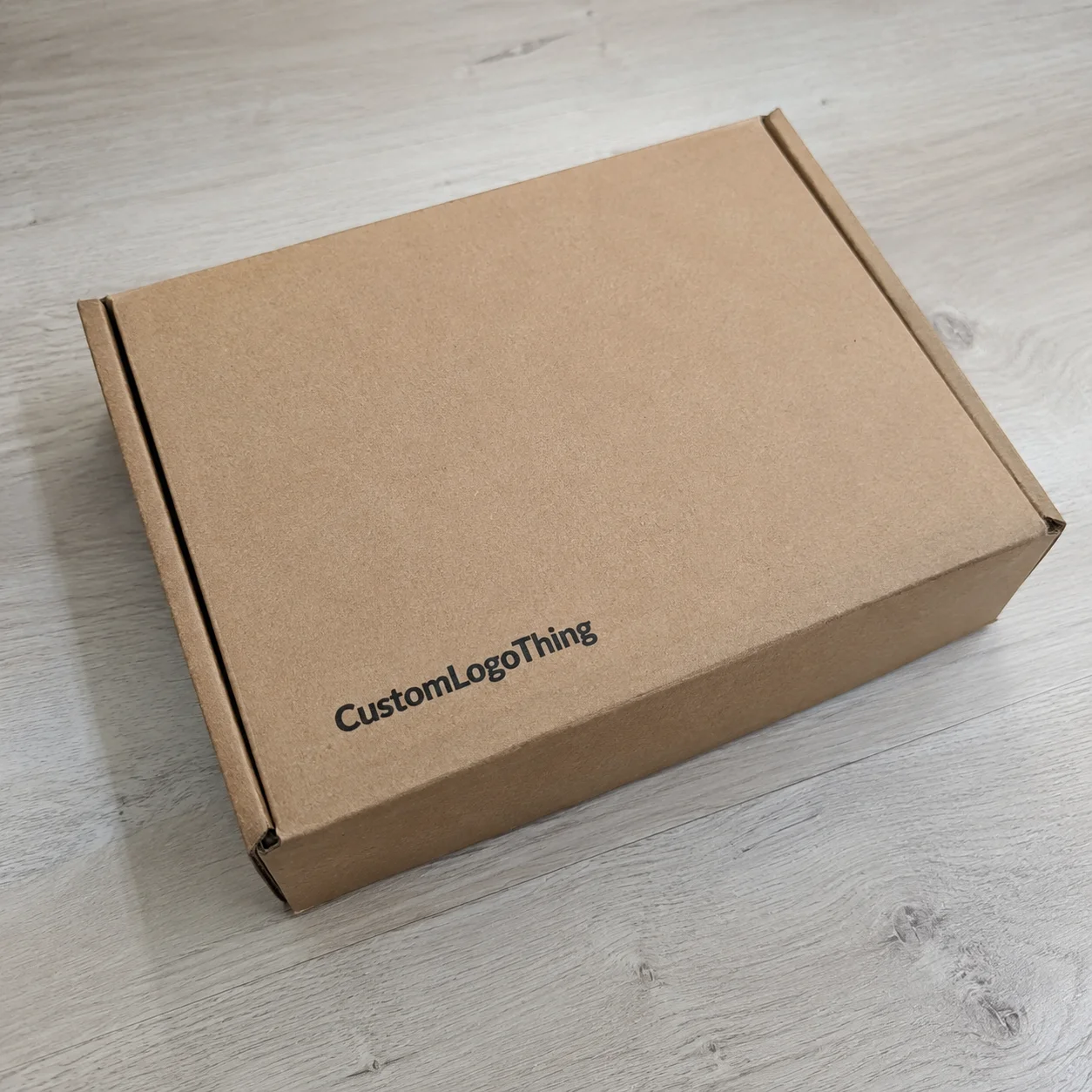
A custom printed mailer box is usually a foldable corrugated or paperboard shipping-style box with branded printing. It is common for ecommerce orders, subscription kits, gifting, influencer packages, sample sets, retail bundles, and direct-to-customer delivery. Most ship flat, fold by hand, and close with tabs instead of glue or tape.
The value is the combination of structure, protection, presentation, and brand recognition. Apparel brands, cosmetics companies, candle makers, supplement sellers, electronics accessory brands, stationery shops, and promotional programs use mailer boxes because they can be practical enough to ship and polished enough to support a branded unboxing.
Mailer boxes are different from folding cartons and rigid boxes. Folding cartons, often made from SBS, C1S, or kraft paperboard around 250gsm to 400gsm, are usually better for retail shelves, sleeves, and secondary packaging than direct parcel shipping. Rigid boxes use thick chipboard, wrapped paper, magnetic closures, and custom inserts for premium presentation, but they cost more and take up more storage space.
Mailer boxes sit in the middle. They can protect better than light cartons and cost less than rigid packaging. For many brands, that is the useful range: strong enough for shipping, attractive enough for presentation, and efficient enough for repeat orders.
Practical rule: the best mailer box is the one that fits the product, survives the shipping route, prints cleanly, and does not punish your margin.
That margin check matters. A low-margin candle, T-shirt, skincare sample set, or accessory kit may not support foil stamping, full interior printing, custom inserts, and oversized board. Good branded packaging should support the product economics, not overwhelm them.
The smart sequence is to define the specs first, then design inside those limits. Size, board grade, print method, finish, quantity, and freight all affect cost. Guess on those details and quote comparisons become slow, vague, and hard to trust.
How Printed Mailer Boxes Work From Flat Sheet to Branded Package
Printed mailer boxes start as flat sheets. The board is printed, coated if needed, die-cut, scored, stripped, packed flat, and shipped for assembly. Every crease, flap, tab, and panel must line up with the artwork while still folding correctly at packing speed.
The basic anatomy includes the top panel, bottom panel, side panels, front flap, dust flaps, tuck tabs, locking tabs, and score lines. These parts decide how the box opens, how tight the closure feels, whether the corners stay square, and how well the package handles pressure during shipping.
The most common styles are straightforward:
- Tuck-top mailer: simple closure and clean presentation for lighter products or short shipping routes.
- Roll-end front tuck: popular ecommerce style with rolled side walls and a front tuck flap.
- Roll-end lock front: stronger front closure for heavier kits or packages handled by multiple carriers.
- Tab-lock mailer: added locking tabs for better security, with slightly longer assembly time.
Sizing should be based on the real product layout, not the product alone. Include tissue, cards, labels, protective wrap, dividers, jars, droppers, sample packs, cables, booklets, and the clearance needed for assembly. A product arrangement that measures 7 x 5 x 2 inches usually needs more than a 7 x 5 x 2 inch internal box.
Material choice depends on the shipping job. Corrugated board is the usual choice because the fluted layer adds crush resistance. E-flute is common for printed mailers because it gives a smoother surface and cleaner look than thicker flutes. B-flute or stronger combinations can work for heavier goods. Paperboard mailers can look sleek, but they are better for lighter presentation packaging, local handoff, or inner packaging.
Color behaves differently by surface. Kraft board gives a natural, recycled feel but mutes ink. White board gives brighter graphics and cleaner brand colors. Exterior print, interior print, spot logos, repeated patterns, and full inside-and-outside coverage are possible depending on material and print method. More coverage usually means more cost and more proofing attention.
Most mailer boxes ship flat to reduce freight and storage. That helps, but larger boxes still occupy serious warehouse space once packed in cartons or stacked on pallets. Oversized packaging also affects dimensional weight, so a small product in a large box can become expensive beyond the packaging quote itself.
Key Specs That Decide Fit, Strength, and Print Quality
Start with dimensions: length, width, and depth. Use internal dimensions for product fit. Use external dimensions for freight planning, carton packing, and dimensional weight estimates. Buyers care about the inside; carriers care about the outside.
Measure the product arrangement after deciding how it will sit in the box. Apparel can compress. Glass jars cannot. A soft hoodie may work in thinner board with tissue. A three-piece skincare kit with glass bottles may need E-flute corrugated plus a paperboard tray or molded pulp insert.
Board thickness is usually discussed by material type and flute. E-flute corrugated is roughly 1.5mm to 2mm thick and works well for many small ecommerce products. B-flute is thicker, often around 3mm, and gives more cushioning but less refined print. Micro-flute options can balance print quality and structure for premium custom printed boxes.
Print method also changes cost and quality. Digital printing is useful for shorter runs, fast artwork changes, and variable designs. Offset printing or litho-lamination can deliver sharper color and smoother solids at larger quantities, but setup costs are higher. Flexographic printing may fit simpler one- to three-color designs, especially on corrugated board.
Color setup needs a reality check. CMYK handles most full-color artwork. Pantone matching helps when brand colors are strict, especially for cosmetics, supplements, and retail packaging programs. Kraft stock will mute color because brown paper is not a white canvas. Matte coatings can soften contrast, while gloss coatings add shine and scuff resistance.
Finishes add polish, cost, and sometimes lead time. Matte aqueous coating is common and practical. Soft-touch lamination feels premium but can show fingerprints and raise the quote. Spot UV highlights a logo or pattern. Foil stamping looks sharp in small areas but gets expensive quickly. Embossing and debossing add texture when the tooling is accurate and the board can support it.
| Spec Choice | Best Use | Tradeoff |
|---|---|---|
| E-flute corrugated | Most ecommerce mailers, beauty kits, apparel, accessories | Good print surface, moderate strength, not ideal for very heavy products |
| Kraft exterior | Natural, eco-leaning, minimalist package branding | Colors print darker and less vibrant |
| White exterior | Bright graphics, clean brand colors, retail-style presentation | Can show scuffs more easily during shipping |
| Inside printing | Subscription boxes, gifting, PR packages, premium unboxing | Raises print area, cost, and proofing requirements |
| Custom insert | Fragile jars, multi-item kits, electronics, sample sets | Adds tooling, assembly time, and unit cost |
Inserts deserve early attention. Corrugated dividers, paperboard trays, foam, molded pulp, and paper crinkle solve different problems. Foam protects well but may not fit a sustainability message. Molded pulp looks responsible and holds shape, but tooling can be costly. Paper crinkle is flexible and decorative, but it is better for presentation than precision. For fragile goods, follow test logic from standards such as ISTA transit testing or relevant ASTM packaging tests instead of guessing.
Quality control should be part of the spec. Check samples for internal fit, flap tension, print registration, scuff resistance, odor, color drift, barcode readability, and whether the box stays closed after a light shake. Then test the packing process. A box that looks right but folds slowly can add labor cost to every order.
Cost, Pricing, and MOQ Factors Buyers Should Know
There is no universal price for a custom printed mailer box. Size, material, print coverage, order quantity, finish, tooling, inserts, and freight all change the number. A firm quote without those specs is usually a guess or a very basic configuration.
The biggest cost drivers are surface area, board grade, full-color printing, inside printing, specialty coatings, foil, embossing, custom inserts, and complex dielines. Larger boxes use more board and more ink. Stronger board costs more. Full flood print costs more than a one-color logo. Interior print adds another surface to manage.
For rough planning, small custom runs might land around $1.50 to $5.00+ per unit depending on size and specs. Mid-size runs around 1,000 to 2,500 units may fall closer to $0.90 to $2.75 for common ecommerce sizes. Larger runs around 5,000 units or more can drop further, sometimes into the $0.45 to $1.50 range for simpler structures. Big boxes, heavy board, full interior print, foil, inserts, and freight can push those numbers up quickly.
Minimum order quantities vary. Digital production may support a few hundred pieces, while traditional production may prefer 1,000, 2,500, or 5,000 units. Some suppliers will run less, but the unit price may be high because setup costs are spread across fewer boxes.
Tooling and setup should be visible when you compare quotes. Die-cut tooling, print setup, plates, sampling, and structural design may appear as separate line items or be built into the unit price. Either way, they affect the total cost.
| Quantity Range | Typical Buyer Use | Cost Behavior | Buying Advice |
|---|---|---|---|
| 250-500 units | Product test, launch kit, event drop | Highest unit cost due to setup | Use simple print and avoid specialty finishes unless the campaign justifies it |
| 1,000-2,500 units | Growing ecommerce product or subscription run | Better balance of price and flexibility | Ask for one backup size if product mix may change |
| 5,000+ units | Repeat product, stable SKU, larger retail or DTC program | Lower unit cost, higher cash and storage commitment | Confirm dimensions, inserts, and artwork before buying deep |
Freight can change the real price. Mailer boxes ship flat, but they are still bulky. Ask whether pricing is EXW, FOB, delivered, or landed. Compare total landed cost, not only unit price. A $0.72 box with $0.28 in freight and storage is effectively a $1.00 box.
Labor belongs in the cost conversation too. A box that saves five cents but adds fifteen seconds of assembly time may not save anything. Across 5,000 orders, that adds more than 20 labor hours before counting rework from misfolded tabs or loose closures.
If you are comparing formats, review broader Custom Packaging Products before locking into one structure. Poly mailers, folding cartons, sleeves, inserts, and labels can sometimes solve part of the same problem at a lower cost. For soft goods, Custom Poly Mailers may be a better fit than a box if protection needs are low and shipping weight matters.
Process and Timeline From Artwork to Delivery
The order path is straightforward when the buyer prepares. Measure the product arrangement, choose a box style, create the dieline, place artwork, proof, sample, approve, produce, pack, and deliver. Skipping one step usually creates a larger problem later.
Before requesting a quote, gather product size, product weight, quantity, target launch date, shipping destination, artwork files, preferred material, and finish requirements. If the box needs to fit three jars, one card, tissue, and a branded sticker, include that detail early.
A dieline is the flat blueprint of the box. It shows cut lines, fold lines, bleed areas, safety zones, and print panels. Artwork should extend into bleed, usually around 3mm or 1/8 inch depending on supplier specs. Important logos and text should stay inside the safe zone, away from folds, cuts, tuck tabs, and panel edges.
Proofing happens in layers. A digital proof checks artwork placement, spelling, barcode position, panel orientation, and layout issues. A physical sample checks structure, size, color impression, folding experience, and product fit. For fragile or premium goods, a blank structural sample is often worth ordering before full printed sampling.
Timelines vary. A simple digital run with existing sizing and clean artwork may move through proofing and production in 10 to 20 business days after approval. Custom structures, physical sampling, specialty finishes, and larger production runs can take 4 to 8 weeks or more, especially with freight. Overseas production can work for larger quantities, but ocean freight adds time and air freight adds cost.
Common delays include missing vector logos, low-resolution artwork, late size changes, unclear approval chains, compliance marks added after proofing, and too many final approvers. If multiple people need to review the box, decide who has final authority before the proof arrives.
For sustainability claims, verify support before printing them. If you mention recycled content, compostability, or responsible sourcing, ask the supplier for documentation. FSC-certified paper sourcing may matter for some brands and should be verified through the Forest Stewardship Council or supplier documentation.
Build buffer time before product launches, subscription renewals, influencer drops, retail shipment dates, or seasonal promotions. A practical buffer is usually 1 to 2 extra weeks for domestic production and more for overseas projects or specialty finishes.
Common Mistakes That Make Mailer Boxes Expensive or Annoying
The biggest mistake is ordering before testing product fit. Always test with the real product, insert, tissue, closure method, and packing process. A beautiful wrong-size box is still wrong.
Overbuilding is another common issue. Thick board, full inside print, foil, spot UV, embossing, and custom inserts may look impressive, but not every product can support that cost. If the product sells for $18 and the box costs $3 before freight and labor, the math may not work.
Underbuilding causes the opposite problem. Flimsy stock for glass jars, sharp-edged products, electronics, or multi-item kits can create crushed corners, loose products, returns, and poor reviews. A shipping mailer must survive conveyors, drops, compression, and delivery handling.
Ignoring dimensional weight is expensive. A 10 x 8 x 4 inch box may cost more to ship than an 8 x 6 x 3 inch box even when the product weight is similar. Extra depth for presentation can become extra shipping cost on every order.
Artwork placement also causes problems. Do not put important text, QR codes, barcodes, or logos too close to folds, cuts, tuck tabs, or locking areas. Keep critical artwork on stable panels with enough safety margin.
Color surprises are common. Kraft stock changes color output. Matte coatings reduce shine. Digital and offset printing may not match exactly. Different production runs can vary slightly. If brand color is critical, ask for Pantone guidance, printed samples, or drawdowns before mass production.
Over-ordering too early traps cash. If you buy 10,000 boxes before testing customer response, product bundles, shipping rates, and warehouse handling, you may end up with Packaging That Fits an old plan. Start with a manageable run if the product is new, then reorder once the size and sales pattern are proven.
Sourcing custom packaging? See materials, MOQs & factory-direct pricing on our custom custom packaging page.
Request a Quote
Related Articles
Custom Reflective Stickers for Cars: Buyer's Guide
Jun 17, 2026
Custom Hockey Puck Stickers: Specs, Cost, Ordering
Jun 17, 2026
Custom Stickers Hawaii: Order Durable Island Labels
Jun 17, 2026
Related Articles
Custom Reflective Stickers for Cars: Buyer's Guide
Jun 17, 2026
Custom Hockey Puck Stickers: Specs, Cost, Ordering
Jun 17, 2026
Custom Stickers Hawaii: Order Durable Island Labels
Jun 17, 2026