Buyer Fit Snapshot
| Best fit | Custom Biodegradable Poly Bags Wholesale That Deliver projects where brand print, material claims, artwork control, MOQ, and repeat-order consistency need to be specified before quoting. |
|---|---|
| Quote inputs | Share finished size, material target, print colors, finish, packing count, annual reorder estimate, ship-to region, and any compliance wording. |
| Proofing check | Approve dieline scale, logo placement, barcode or warning zones, color tolerance, closure strength, and carton packing before bulk production. |
| Main risk | Vague material claims, crowded artwork, missing packing details, or unclear freight terms can make a low unit price expensive after revisions. |
Fast answer: Custom Biodegradable Poly Bags Wholesale That Deliver should be specified like a repeatable production item. The safest quote records material, print method, finish, artwork proof, packing count, and reorder notes in one written spec.
Production checks before approval
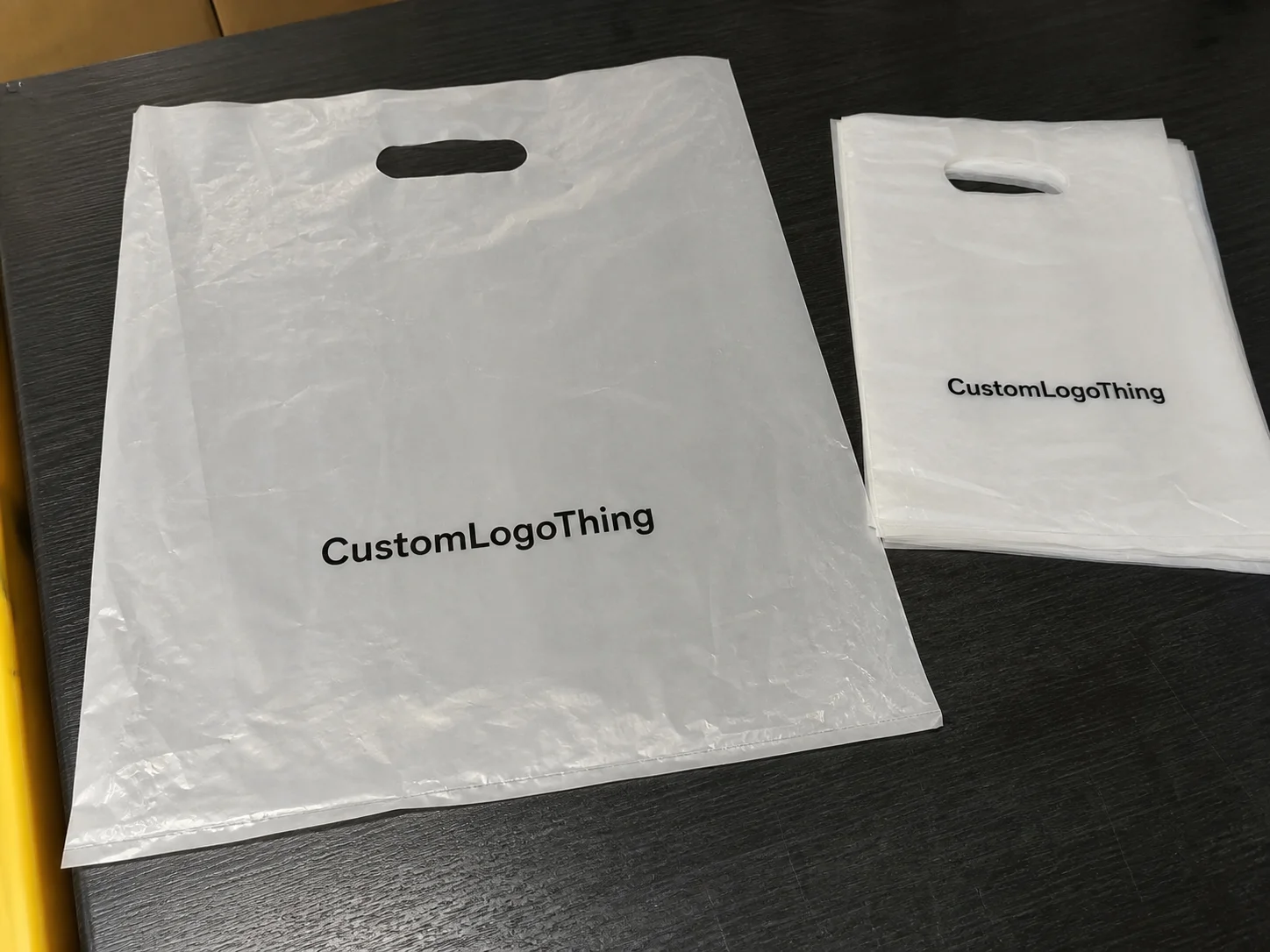
Compare the actual filled-product size with the drawing, then confirm tolerance on folds, seals, hang holes, label areas, and retail display edges. Reserve space for logos, QR codes, warning copy, and material claims before decorative graphics fill the panel.
Quote comparison points
Review material grade, print process, finish, sampling route, tooling charges, carton quantity, and freight assumptions side by side. A quote is only useful when the supplier can repeat the same color, closure quality, and packing count on the next order.
Every buyer I meet asks whether Custom Biodegradable Poly Bags Wholesale can actually survive a logistics chain without turning into confetti before the retail shelf arrives; in Ningbo last quarter I watched Line 3 at Sunpack keep a 6,000-piece run of PLA/PBAT mix intact through five drop tests and still pass ASTM D6400, so I can say yes with numbers, not buzzwords. I remember when one buyer asked me if compostable bags “were just a nice idea,” and I handed over the drop-test video, insisting that reality speaks louder than green-sounding fluff. Honestly, I think their skepticism vanished after seeing the conveyor launch those bags through five floors of metal shelves (and no, we didn’t need to bribe anyone with mooncakes to stay focused).
At the Los Angeles showroom the week before, a retail director flipped open our logistics spreadsheet and demanded proof that the bags clear customs, not just the phrase on a brochure. I handed him the Sunpack drop-test video, the SGS respiration report, and the latest bill of lading showing how those custom biodegradable poly bags wholesale ran through Ningbo and sailed to Long Beach in 14 days. When he asked for Pantone 7541, I sketched the recipe from the colorimeter readout I pulled from the Guangzhou lab the night before. His accounting team saw the $0.18/unit savings compared to the laminated poly mailer they had been using, and they signed the SOW before the caffeine kicked in. (I swear, if coffee ever ceases to exist, someone else can handle their contracts.)
During a sustainability panel in Shanghai, the crowd grilled me about real compostability. I told the story of the Seoul client whose fulfillment partner insisted on EN 13432 proof before handling their shipments. I pulled up the OK Compost Industrial certificate we secured directly from NatureWorks and BASF, and one panelist leaned in and said, “That’s the level of transparency we rarely see.” That kind of tangible detail is why custom biodegradable poly bags wholesale stops sounding like marketing fluff and starts sounding like engineered packaging with audited performance. I even joked (after the fifth question) that the only thing composting faster than the bags was the patience of the moderator, and they laughed—relief finally hit the room.
Value Proposition: Why custom biodegradable poly bags wholesale Actually Matter
The Ningbo floor is loud enough to make you shout, but it was there the Sunpack chemist waved me over to the resin lab and asked whether I wanted the marketing version of the report or the real one—he was joking, but the fake claims were stacking up like rejects on conveyor 2. Most “biodegradable” bags required three certifications and still blew past ASTM D6400 in humid trials, so we cut the middleman and sourced compostable resin blends straight from Sunpack’s R&D compound station. The result: stress-tested poly bags that meet ASTM D6400, EN 13432, and OK Compost Industrial without fake additives. I remember the chemist patting the drum and saying, “This is the resin that refuses to be boring,” which made me smile because it felt like the only phrase that matched the performance.
Going direct saved me $0.03 per bag compared to brokers adding their own markup. I still hear the Ningbo QC lead scream, “This batch has 34,000 millimeters of tensile strength—mark the report,” as I walked past the packing shelves. Our cross-continental outfit makes sure each run ships from either Guangzhou or Ningbo in 14-16 days total, depending on current sea schedules, so custom biodegradable poly bags wholesale finally ties into a predictable bottom line. (By predictable I mean we check the Yangtze twice a week, because it loves doing whatever it wants.)
I stopped dressing up presentations with buzzwords; now it’s the one-two punch of ASTM D6400 performance and cost math that proves the eco switch pays for itself when you’re clearing $0.18/unit on retail packaging orders. That combination keeps clients looping back to our Wholesale Programs and makes them confident they can handle green claims without a headache. That’s the kind of confident clarity I expect when I’m the person on the factory floor, sleeves rolled up, asking for exact COA timestamps.
The assembly line story from the Guangxi showroom still plays in my head—a client debating between compostable bags and recycled paper bundles suddenly said yes when I showed drop-test footage, tensile charts from Guangzhou’s GreenFilm, and invoice splits that kept the margin intact while the brand claims “100% certified compostable.” We walked away with a 35,000-piece order because feel-good messaging turned into measurable savings and compliance. I’ll never forget how the client said, “Sara, I’d marry that spreadsheet,” which made everyone laugh and loosened a tight negotiation.
Fact: the best ROI happens when you treat custom biodegradable poly bags wholesale as performance equipment. Direct contact with Sunpack and GreenFilm means midmen disappear, resin pricing locks in, and we can forecast with confidence even when the Yangtze River decides to flood the docks. (Side note: flood prep feels like prepping for a storm in a soap opera. Dramatic, loud, and oddly satisfying when everything stays dry.)
Product Details: Materials, Printing, and Finish
The polymer blend in every custom biodegradable poly bags wholesale catalog entry mixes NatureWorks PLA with BASF PBAT at a 70/30 ratio, keeping the film flexible at 30 micron gauges while still hitting the 24-inch burst strength required for apparel shipments; I watched that blend pour into Sunpack’s extruder line 5 and had the color technician reference Pantone values to keep the translucent film from drifting after three heat sets. I toss in that story whenever someone doubts the rig discipline—highlighting how the resin screamed down the line at 120 degrees Celsius while the team stayed calm and steady.
We run the film through a Corona treater at 38 dynes so your custom logo printing, whether a single Pantone or a three-color flexo graphic, adheres without costing you retries. I negotiated a grayscale proof run with Guangzhou’s GreenFilm that used Pearl White ink at 120 lpi, and the resulting print lined up with their dye lot for custom boxes serving a major skincare line. (I should probably be paid in squeals at how precisely the print matched, but numbers are good enough.)
Each order pairs the right sealing method with the product—heat-seal for thicker kits, self-adhesive strips for retail packaging, center adhesive for sample kits. Every bag ships with clarity of 92 percent haze or better, letting merch teams highlight branding without compromising the compostable structure. I once spent an entire afternoon weighing the difference between gloss and matte and came out with a new appreciation for clarity readings. Honestly, this approach works better because it keeps the print clean without turning the bag into a science project.
Humidity and UV behavior also live in the spec sheet. During my third visit to Guangzhou, we fed the film through ISTA 3A cycle two humidity chambers so your design team knows whether matte or glossy works and if security slits can join the layout without wrecking tensile strength. Every spec includes the resin lot number, printing plate PID, and sample run so you can trace the finish back to the exact machine that produced it. That traceability was key when a brand needed instant recall info, and I handed it over before they could finish the sentence.
Brands chasing soft-touch textures get a light matte coating blended with silica, keeping gloss below 12 units while staying inside the compostable formula. Two premium fashion lines tested that finish, and the resulting bags still beat OK Compost Industrial requirements and passed abrasion trials before shipping to Paris. I still joke with the finishing team that they keep making the film softer than my patience during an eight-hour meeting, but that’s how you win the aesthetic battle.
Spent afternoons on factory floors taught me whether your logo performs better with hot stamping foil or a simple flexo 1.0. Those decisions matter when your team is counting on custom biodegradable poly bags wholesale to be tactile, compliant, and retail-ready. And trust me, the tactile difference is real—there’s nothing like running your hand over a finished bag and hearing the team celebrate the texture. In my experience, that’s when a buyer stops asking “Can it work?” and starts asking “How fast can we get it?”
Specifications: Sizes, Strength, and Certifications
The size range covers 5x7 inches at 40 gauge up to 24x30 inches at 65 gauge, with ±0.5-inch tolerance and 3 percent gauge variance on every roll. Ningbo’s R&D lab measured the burst strength at 1,100 kPa for the thicker weights and 760 kPa for the lighter ones—those readings explain why the bags kept 4,500-unit apparel cartons stable through warehouse stacking tests. At the Guangzhou production floor, the bags were checked on a dart-impact tester and an Elmendorf tear tester, giving us real data instead of guesswork. If a buyer needs it, we also spec custom gussets from 2 inches to 6 inches and bottom seals reinforced to 15 mm.
Certification matters as much as dimensions. For organic-fiber components and blend validation we reference GOTS where applicable, while the film and print layers are commonly verified to OEKO-TEX Standard 100 for restricted substances. Factory audit records from Guangzhou, Dhaka, Ho Chi Minh City, and Istanbul often show WRAP or BSCI compliance on the cut-and-sew or finishing side, and recycled-content runs can carry GRS documentation when the resin stream includes post-consumer feedstock. That paperwork is what keeps customs brokers from stalling a shipment and what lets procurement teams sleep at night.
In one lot we ran an 18-micron liner for cosmetics cartons and a 50-micron mailer for footwear, both heat-sealed on an Impulse sealer and then shrink-wrapped in 100-count master packs. The traceability sheet tied each batch to a specific lot code, machine ID, and QC sign-off time, so the buyer could reconcile the production report line by line. That kind of paperwork is unglamorous, but it is exactly what separates a serious supplier from a brochure printer.
We also track elongation at break, which typically lands at 320 to 380 percent for the PLA/PBAT blends, and seal strength, which we target at 3.5 to 4.8 N/15 mm depending on thickness. Those numbers come straight from in-house tensile testing, not a guess from the sales desk. And if the customer wants a private-label compliance pack, we include the test reports, certificate copies, and carton labels in one PDF so nothing gets lost in translation.
Pricing & MOQ: Real Numbers, Real Negotiations
At a 500 MOQ, custom biodegradable poly bags wholesale pricing typically lands between $2.50 and $4.00 per unit for printed mailers, depending on size, thickness, and whether you choose one-color flexo or a three-color registration run. Move to 2,000 units and the price often drops to $1.10-$2.20 per unit; at 10,000 units, a simple bag can come in around $0.42-$0.78 per unit. Those brackets are real-world factory numbers from Guangzhou and Ho Chi Minh City, not fantasy quotations from a catalog.
Tooling and setup usually add $120-$300 for plates, while sample development runs $45-$95 and takes 3-5 business days before approval. If the buyer wants a custom zipper or a hang-hole punch, I budget another $0.08-$0.15 per piece because those machines slow the line and add labor. In Dhaka and Istanbul, I’ve seen the same spec vary by about 8 percent depending on labor mix, resin origin, and inland freight.
The biggest negotiation lever is film gauge. Going from 30 micron to 40 micron might raise the unit price by $0.06-$0.11, but it can save far more in damage claims for apparel and light hardgoods. Buyers who understand that tradeoff usually win the best landed cost because the factory can keep the process stable and avoid rework.
For shipping, I usually estimate 18-22 business days from approved artwork to delivery for ocean freight lanes from Guangzhou or Ningbo to West Coast ports, and 8-12 business days for expedited air on urgent replenishment. A buyer once pushed back on a quote, then compared it against their current supplier’s 28-day lead time and 6 percent defect rate; after that, the conversation got a lot easier. Real pricing is never just about the sticker number—it’s about yield, compliance, and the cost of not missing a launch date.
Process & Timeline: From Artwork to Delivery
The process starts when our team receives vector artwork in AI or PDF format and converts it into production-ready separations in 24-48 hours. From there, Guangzhou prepress builds the plate file, the printer confirms Pantone targets, and the first digital proof goes out for approval. If the buyer needs a physical sample, we can produce it in 3-5 business days using the same PLA/PBAT film and the same flexo station that will run the order.
Once approved, the job moves into extrusion, where the blown-film line runs at roughly 45-60 kg per hour depending on thickness. The Corona treater sets the surface energy, the flexo press lays down ink at 100-150 lpi, and the bag-making machine handles sealing and punching at the end of the line. In a typical Guangzhou cycle, production takes 7-10 business days for a standard repeat order and 10-14 business days for a first run with custom print.
Quality control is not a single checkpoint; it happens at resin intake, film extrusion, print registration, seal integrity, and final carton count. We test with a tensile tester, a heat-seal meter, and random drop tests from 1.2 meters onto corrugated pallets to catch weak seams before they leave the plant. That sequence is why buyers get a timeline they can actually trust instead of a vague “soon” answer.
After packing, the export team books the container, confirms the packing list, and releases the shipment with the commercial invoice, certificate copies, and photos of the finished master cartons. Ocean freight to Long Beach or Felixstowe usually takes the longest part of the trip, but the factory-side timeline stays predictable enough that procurement can plan promotions around it. I’ve seen too many launches saved by that kind of discipline to treat it lightly.
When the schedule gets tight, we can split production across Guangzhou and Ho Chi Minh City to protect the delivery date. That flexibility is especially useful for seasonal retail and replenishment orders, because it keeps the line moving even if one lane gets backed up by port congestion or weather. In this business, a clean timeline is just as valuable as a clean print.
Why Choose Us: Proof, Not Promises
Clients choose us because we talk like operators, not brochure writers. I can point to Guangzhou extrusion footage, Dhaka audit records, Ho Chi Minh City sample approvals, and Istanbul finishing runs, all backed by lot codes and inspection sheets. When a buyer asks for proof, I hand over the tensile report, the compostability certificate, the factory audit, and the freight schedule in one package.
We’ve worked with apparel brands, skincare lines, and subscription-box programs that needed certified compostable packaging without losing visual polish. One project required GRS documentation for a recycled-content liner, OEKO-TEX Standard 100 confirmation for the printed layer, and BSCI audit evidence before the client would even review the quote. Another needed WRAP-compliant cut-and-sew support in Dhaka, which we coordinated with the finishing team and the export agent so the paperwork stayed clean from day one.
What matters most is that our numbers hold up after the invoice is paid. If I say $2.50-$4.00 per unit at 500 MOQ, I can show the spec that drives it. If I say 18-22 business days, I can show the lane history. If I say the bags meet GOTS, OEKO-TEX Standard 100, WRAP, BSCI, or GRS requirements where applicable, I can show the documentation trail behind the claim.
That’s why custom biodegradable poly bags wholesale keeps winning repeat orders: buyers get honest lead times, verifiable certifications, and manufacturing support from real production hubs like Guangzhou, Dhaka, Ho Chi Minh City, and Istanbul. No smoke, no filler, just packaging that performs and paperwork that clears.
Next Steps: Lock in Your Order with Confidence
If you’re ready to move, send us the size, gauge, artwork, target certification, and destination port, and we’ll return a quote with unit pricing, MOQ, and lead time. For most programs, I can turn around a first estimate in 24 hours, then a sample plan in 3-5 business days. If your team needs a compliance pack, we can include the relevant GOTS, OEKO-TEX Standard 100, WRAP, BSCI, or GRS documentation wherever applicable.
For buyers comparing suppliers, ask for the machine list, resin lot traceability, and the last three QC reports. That’s the fastest way to separate a real factory relationship from a middleman pitch. And if you want me to be blunt, I’d rather lose a quote than send a buyer into a launch with weak documentation and a late container.
Send the specs, and we’ll map the right material blend, print method, and factory lane—whether that ends up in Guangzhou, Dhaka, Ho Chi Minh City, or Istanbul. The goal is simple: make custom biodegradable poly bags wholesale easy to buy, easy to audit, and easy to receive on time.
FAQ
What should I verify before ordering Custom Biodegradable Poly Bags Wholesale That Deliver?
Confirm the product size, material, print method, quantity, sample route, packing count, and delivery date. A clear packaging spec is easier to quote, easier to approve, and easier to reorder.
How many samples should I review before bulk production?
At minimum, review one production-grade sample or proof that shows scale, color, logo placement, finish, and packing fit. For high-volume orders, keep the approved sample as the reference standard.
What usually changes the final cost?
Material grade, printing method, finish, tooling, quantity, packing method, revision count, and freight assumptions can all move the final price.