custom blank labels are the practical choice for teams That Need Speed, variable data, or in-house printing without paying for artwork on every run. They look simple. They are not simple in use. The label itself is only one piece of the job; the rest is fit, feed, adhesion, and how much handling the label must survive before it reaches a customer or a warehouse bin.
That is why the best label purchases start with the application, not the artwork. A label for a folded cotton tee does not behave like a label on a coated carton. A removable adhesive that works for one job may fail on another. A roll that looks fine on a spec sheet can still jam a printer if the core, unwind, or spacing is wrong. In practice, the difference between a clean rollout and a box of unusable stock usually comes down to those details.
For clothing, the use cases are familiar: size stickers, SKU tags, temporary price labels, care-note placeholders, inventory IDs, sample markings, and short-run Packaging for Limited drops. Packaging teams use the same construction for cartons, inserts, polybags, and shipping prep. If your label program sits beside Custom Labels & Tags or Custom Packaging Products, it is worth keeping the specs in the same conversation so the whole system stays consistent.
Custom Blank Labels: What They Are and Why Buyers Use Them
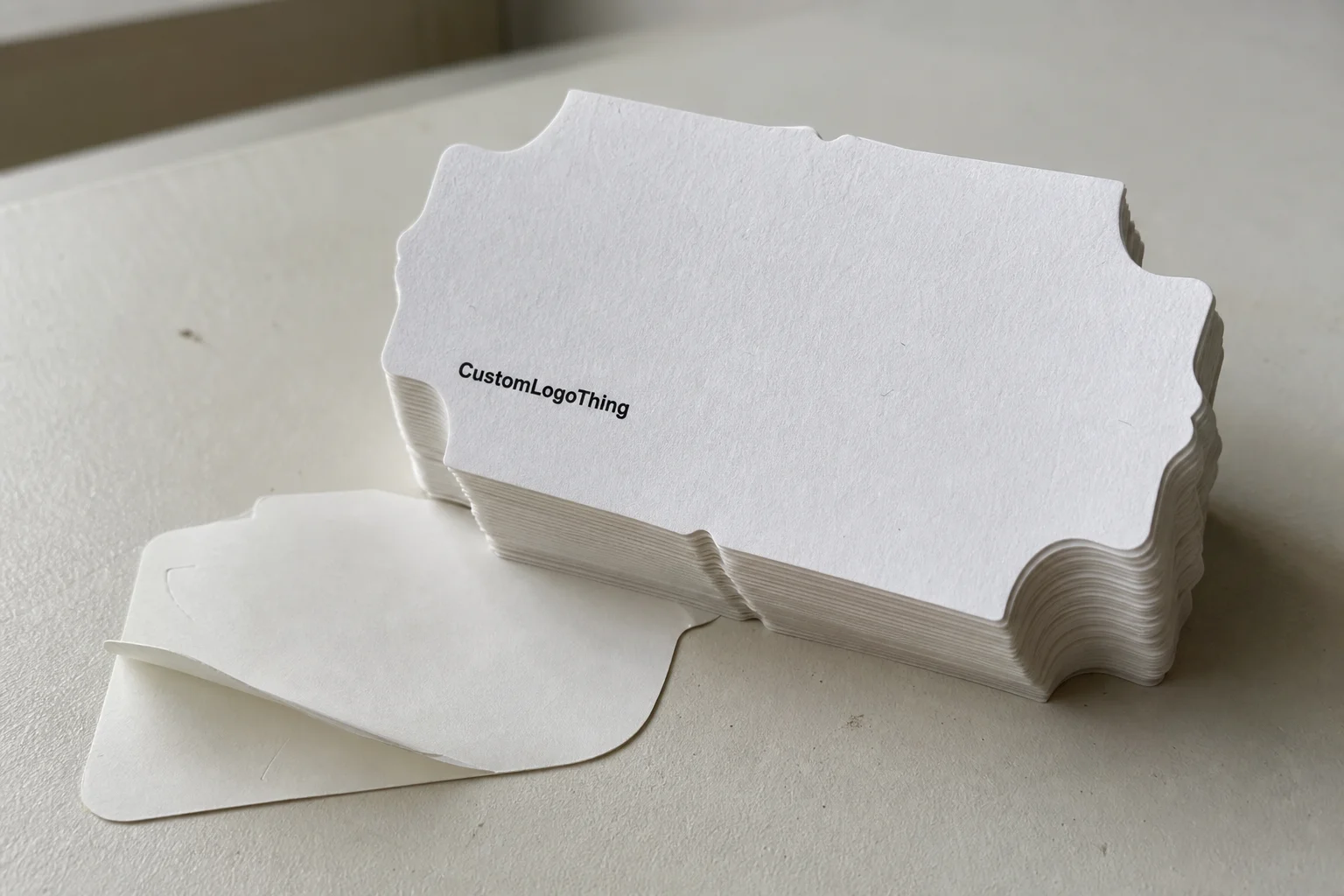
Custom blank labels are pre-cut labels or sheets with no printed artwork. They may be supplied on rolls, sheets, or fan-fold stacks, depending on the equipment and the way they will be applied. Some are made for handwriting. Others are tuned for thermal transfer printers, direct thermal printers, laser printers, or inkjet systems. “Blank” does not mean generic. It means the buyer controls the final data and often the timing of that data.
That matters because product information changes quickly. Sizes shift. SKUs are updated. Pricing is revised. Samples need temporary identifiers. A printed label order can be the right choice for a stable product line, but it is a poor fit for work that changes every week. Blank stock reduces setup friction and shortens the path from order to application, provided the spec is right.
The hidden value is operational. A blank label can be printed in-house, written on at the packing station, or applied as a placeholder and finished later. That flexibility saves time in apparel, retail, and fulfillment settings where the same item may need several different identifiers over its life. A product might leave the cut-and-sew floor with one label, reach a warehouse with another, and ship with a third.
There is a reason buyers still get this wrong. They treat labels as a commodity. A paper label that works on a carton can fail on textured fabric. A removable adhesive that looks harmless in a sample can peel off a polybag in a warm warehouse. A 2,000-label roll can be less efficient than two 1,000-label rolls if the dispenser setup is awkward. Labels are small, but the workflow around them is not.
For clothing teams, the priority is usually readability, speed, and clean removal when the label is temporary. For packaging teams, it is often moisture resistance, barcode clarity, and consistency across production lots. Those are different targets. Using one spec for everything usually creates compromise where there should be control.
If the label is part of a broader packaging program, the safest approach is to align it with the rest of the material stack: the carton, the insert, the hang tag, the mailer, and the storage conditions. That makes purchasing less reactive and reduces the chance that one component drifts away from the others over time.
How the Labeling Process Works from Stock to Application
The process is straightforward on paper and easy to undermine in practice. Start with the application surface. Then choose the format. Then match the adhesive, printer type, and size. In that order. If one of those steps gets skipped, the result is usually a label that is “almost right,” which is another way of saying unusable.
Sheet labels are usually better for hand application, lower-volume jobs, and office-based printing. Roll labels are better for thermal printers, dispenser workflows, and high-speed packing stations. Sheets give admin teams flexibility. Rolls give operations teams speed. Neither is inherently better; each solves a different production problem.
Variable data can be added in more than one way. Some teams handwrite on the label after delivery. Others print on-site using thermal transfer or laser equipment. A third group uses blank stock as a base and adds information later in fulfillment. All three approaches work, but only if the stock matches the method. A matte face stock suited to thermal printing is not the same thing as a glossy stock meant to look polished on retail packaging.
For garment applications, the details matter. Surface prep, temperature, pressure, and dwell time all affect adhesion. A label applied to a linty knit will behave differently from one placed on a clean polybag or a folded carton. Cold storage and shipping vibration add another layer of risk. If the label has to survive transit, ask for performance guidance that reflects real conditions rather than a generic promise about “strong hold.”
Proofing still matters even when the label is blank. Buyers should request material specs, printer notes, and sample photos before placing volume orders. A blank label can still be wrong if the liner is too stiff, the roll unwind is backward, or the adhesive is not suited to the target surface. One bad assumption at the start creates waste later, and that waste tends to show up in labor more than in material cost.
Production teams should also check incoming lots. Label diameter can vary slightly. Liner release can change between batches. Adhesive laydown may be acceptable on one lot and weak on the next if the source is inconsistent. A quick incoming inspection catches those problems before the labels hit the packing table.
Cost, Pricing, MOQ, and Unit Cost
Pricing for custom blank labels comes down to a few variables: material, adhesive chemistry, size, shape, finish, roll count, core diameter, and printer compatibility. Custom die-cut shapes add tooling complexity. Specialty adhesives add cost. Premium face stocks add cost. Short runs add cost per label. None of that is unusual. It is just production math.
The more useful question is not “What is the cheapest quote?” but “What is the cheapest workable label?” A label that saves a fraction of a cent and then jams the printer, curls off a garment, or scuffs in transit is expensive in the only way that matters. The true cost includes downtime, reprints, relabeling, and damaged presentation. If the label touches retail packaging, a weak adhesive or poor finish can make the whole package look cheaper than it is.
MOQ depends on the format and the amount of customization. Standard sizes often allow lower minimums because the tooling already exists. Fully custom shapes and specialty adhesives usually require larger runs to be efficient. In practical terms, a common paper sheet label may be viable at a few hundred pieces, while a custom roll with a specialty adhesive often needs a larger order to land at a reasonable unit price.
Typical price ranges vary by volume, but the following is a useful planning view for comparable quality and standard finishing:
| Format | Typical Use | Relative MOQ | Typical Unit Cost | Notes |
|---|---|---|---|---|
| Paper sheet labels | Hand application, office printing, short runs | Low | $0.04-$0.10 each | Useful for internal operations and light-duty packaging |
| Paper roll labels | Thermal printing, packing stations, barcode labels | Medium | $0.03-$0.08 each | Often the best balance of speed and cost |
| Polypropylene roll labels | Moisture resistance, shipping, better durability | Medium | $0.05-$0.14 each | Higher cost, stronger scuff and moisture resistance |
| Custom die-cut labels | Brand-heavy retail packaging, special shapes | Higher | $0.08-$0.20+ each | Tooling and setup raise the price quickly |
Those ranges move with quantity. At 1,000 pieces, the unit price will usually be higher than at 5,000 or 10,000. That is normal. What is not normal is buying a lower-priced label that forces rework later. Compare quotes only when the specs match: same material, same adhesive, same finish, same size, same format. Anything else is a misleading comparison with better formatting.
Material sourcing can matter too. If the brand has a fiber policy, ask for paper options that fit it. FSC-certified paper is available through FSC. That does not solve a bad adhesive choice, but it does help align label sourcing with broader packaging standards.
Process, Timeline, and Lead Time for Ordering
A clean ordering process usually moves through six steps: inquiry, spec confirmation, quote, sample or proof review, production, finishing and packing, then shipping. Standard stock items move faster because the dimensions and construction are already established. Custom die-cut labels or specialty adhesives take longer because more of the job is defined by the order itself.
Lead time is driven by complexity and by how complete the buyer’s information is. Missing dimensions, unclear printer requirements, and late changes after quote approval cause more delays than press time does. The machine can only print what was agreed. The schedule breaks when the spec keeps moving.
For seasonal apparel drops, retail events, or launch cycles, build extra time into the order. The label is often treated as a minor component, then becomes the thing that prevents shipping because the rest of the product is ready and the identifiers are not. That is a common failure mode in packaging programs. The smaller item gets ignored until it becomes the critical path.
Rush options exist, and they are useful, but they tighten the material list and usually raise cost. They should be a fallback, not the default plan. If orders are frequently rushed, the issue is usually not the supplier. It is the process. Better reordering discipline beats last-minute expediency almost every time.
One useful rule: do not release production until the printer type, adhesive requirement, and target surface are written down. That one habit prevents most avoidable mistakes. It also keeps the label system aligned with the broader packaging workflow instead of turning it into a series of exceptions that no one wants to own later.
Key Specs That Affect Performance on Clothing and Packaging
Face stock is the first major choice. Paper is usually the most economical and works well for many internal and retail tasks. Polypropylene offers better moisture resistance and better durability for shipping-heavy use. Polyester is stronger and more stable, which makes sense in tougher environments. Specialty stocks can improve presentation or solve unusual application problems. There is no universal winner; the correct stock depends on the environment.
Adhesive choice matters even more. Removable adhesive is useful for temporary labels, sample tags, and any application that should come off cleanly. Permanent adhesive is the default for most packaging work. Extra-tack adhesive may be needed for textured or hard-to-stick surfaces, but stronger is not automatically better. Fabric texture, lint, coatings, dust, and low temperatures can all affect adhesion in real use.
Finish affects both readability and appearance. Matte stock is easier for handwriting and often behaves well with thermal transfer printing. Gloss and semi-gloss can look better on retail packaging, but they may show scuffs more easily and can be less forgiving when writing by hand. If the label carries barcodes or QR codes, scan reliability has to come first. The label is doing a job before it is doing a design role.
Size and shape are not cosmetic. A label that is too small becomes hard to read and hard to apply straight. A label that is too large can curl, bridge folds, or make the package look careless. On the operations side, too much size variation creates inventory friction. Standardizing a few dimensions usually improves reorder speed and reduces waste.
Printer compatibility should be locked before the order is placed. Thermal transfer, direct thermal, laser, inkjet, and manual application each need different stock behavior. A label can look compatible in a quote and still fail in production if the coating, liner, or roll format is wrong. That is why asking for exact equipment details is not a nuisance. It is how the job gets done correctly.
Core diameter and unwind direction also matter more than buyers expect. The wrong core can prevent the roll from fitting the printer. The wrong unwind can slow the packing table or force staff to re-thread rolls constantly. Those are small issues on paper. On a busy shift, they are time sinks.
Common Mistakes That Waste Labels and Money
The first common mistake is choosing the wrong adhesive for the surface. Textured fabrics, coated mailers, and cold-chain packaging all behave differently. A label that stays put on a smooth carton may lift on a knit garment or a dusty polybag. Buyers often blame the supplier, but the real issue is that the application surface was never specified clearly enough.
Printer mismatch comes next. A sample sheet can look perfect in an office and then jam a production printer or smear under heat in the warehouse. That is why testing on the actual equipment matters. Labels are mechanical products. They interact with the machine, the liner, the feed rollers, and the heat settings. If any one of those is wrong, the printer will expose it quickly.
Storage gets ignored more than it should. Humidity, dust, heat, and stack pressure can affect label performance before the first application. Rolls stored badly can curl, block, or lose consistency. In apparel operations, that matters because labels often sit in a warehouse until a promotion or product launch forces them into service all at once.
Another trap is chasing the lowest quote without checking what is actually included. A lower unit price can hide a smaller label count per roll, more liner waste, or a spec that forces slower application. Compare usable label size, count per roll, adhesive type, and finish. Otherwise, the cheaper option is just expensive with a cleaner quote.
Finally, tiny dimension changes can break repeatability. Dispensing, spacing, and inventory counts all depend on consistent sizing. A few millimeters may not sound like much, but that kind of change can alter how the labels feed, how they stack, and how the warehouse stores them. Small shifts create real friction.
“The best label program is the boring one. Same spec, same format, same result. Anything else invites waste.”
Expert Tips for Better Ordering and Fewer Reorders
Test one production sample under real conditions. Not a desk test. Use the actual garment, the actual carton, the actual printer, and the actual packing station. That single step catches more problems than a trail of email approvals ever will. If the label sticks, scans, and stays clean through handling, the spec is usable. If it fails, the spec needs work before volume order.
Keep a simple internal spec sheet. It should list label dimensions, face stock, adhesive type, finish, roll direction, core size, printer type, and intended surface. That document prevents the buying team from relying on memory, which is a reliable way to introduce mistakes. It also keeps design, operations, and procurement aligned so each team is not rebuilding the same decision in a different format.
Standardize where possible. A few core sizes usually beat a long list of one-off label formats. Standardization improves pricing, shortens reorder cycles, and makes it easier to switch between projects without relearning setup details each time. It is not flashy, but it works.
Ask for formats that reduce waste in the real workflow. Rolls with a consistent unwind direction help on packing lines. Sheet layouts can work well for hand application and office printing. If the label will be applied alongside other packaging components, keep the physical and visual standards aligned so the final package reads as planned instead of stitched together under deadline.
Check lot consistency on replenishment orders. Even when the spec is unchanged, minor variations in coating or liner release can show up between batches. A quick sample run before full use is cheaper than discovering the issue after the warehouse has already opened the pallet.
For most teams, the right label system is predictable, repeatable, and easy for the warehouse to use without extra instructions. That is the target. Not elaborate. Just reliable.
Next Steps for Buying the Right Labels
Start with the application, the surface, the printer, and the environment. That four-part spec prevents most bad recommendations before they happen. If the label will go on fabric, say so. If it needs to work in a thermal printer, say that too. If it has to survive shipping or cold storage, do not leave that detail out and hope the supplier infers it.
Then compare at least two quotes using the same dimensions, stock, adhesive, and finish. Otherwise, the numbers are not comparable. One quote may look lower because the material is weaker. Another may look higher because it includes a specification that actually fits the job. Spec discipline matters more than bargain hunting.
If the labels touch apparel, ask for a sample run or a material swatch. Handfeel, stiffness, and adhesion show up fast in real use. A label can look fine on a sheet and still feel wrong on a product. For packaging, that mismatch is visible to the customer immediately. If the label fails, the package feels unfinished.
Document the reorder plan now. Keep the approved size, stock, adhesive, and finish on file so future buys stay consistent. Reorders should not drift because someone found a “similar” option. That is how a stable process turns into a pile of mismatched labels and extra work.
If the label has to work in your process, treat custom blank labels like a production component, not an afterthought. That is the difference between a clean label system and a stack of waste nobody wants to explain.
What are custom blank labels used for in clothing packaging?
They are used for size stickers, SKU tags, care-note placeholders, price labels, and inventory marking. They are especially useful when product data changes often or printing happens in-house. The main benefit is flexibility without paying for full artwork on every label.
How do I choose the right adhesive for blank labels?
Match adhesive strength to the surface. Fabric, polybag, carton, and cold storage all need different performance. Use removable adhesive when the label is temporary and permanent or extra-tack when it must stay put. Always test on the actual surface before ordering volume.
What affects the unit cost of custom blank labels most?
Material, adhesive, size, shape, finish, roll count, and MOQ are the main cost drivers. Smaller runs usually cost more per label, while custom die-cuts and specialty stocks raise pricing further. Comparing quotes only by total price is misleading if the specs are not identical.
How long is the typical turnaround for custom blank labels?
Standard sizes and common stocks usually move faster than fully custom shapes or specialty adhesives. Lead time depends on proof approval, material availability, and the production queue. Rush orders are possible in some cases, but they usually reduce flexibility and increase cost.
Can custom blank labels work with thermal printers and office printers?
Yes, but only if the stock is matched to the printer type: thermal transfer, direct thermal, laser, or inkjet. A label that looks compatible on paper may fail in production if the liner, coating, or roll format is wrong. Ask for printer specs before ordering to avoid jams and wasted rolls.


