Custom boat tote bags look straightforward, which is exactly why buyers underestimate them. A tote can fail in quiet ways: handles stretch, stitching loosens, ink cracks, or the whole bag arrives softer and less structured than the mockup suggested. The cheapest option often becomes the most expensive once reorders, replacements, and damaged first impressions are counted.
Boat totes sit between a basic giveaway and a premium merch item. They have a broader base, more body than a flat cotton tote, and enough structure to make product packaging, employee kits, and retail carry-outs feel deliberate. That added presence matters. A bag is no longer just a container once it starts representing the brand in public.
Most buyers are not trying to buy a tote. They are trying to solve a presentation problem, a shipping problem, or a consistency problem. The right specification handles all three. The wrong one looks fine in a quote and disappointing in a carton.
What Custom Boat Tote Bags Actually Solve
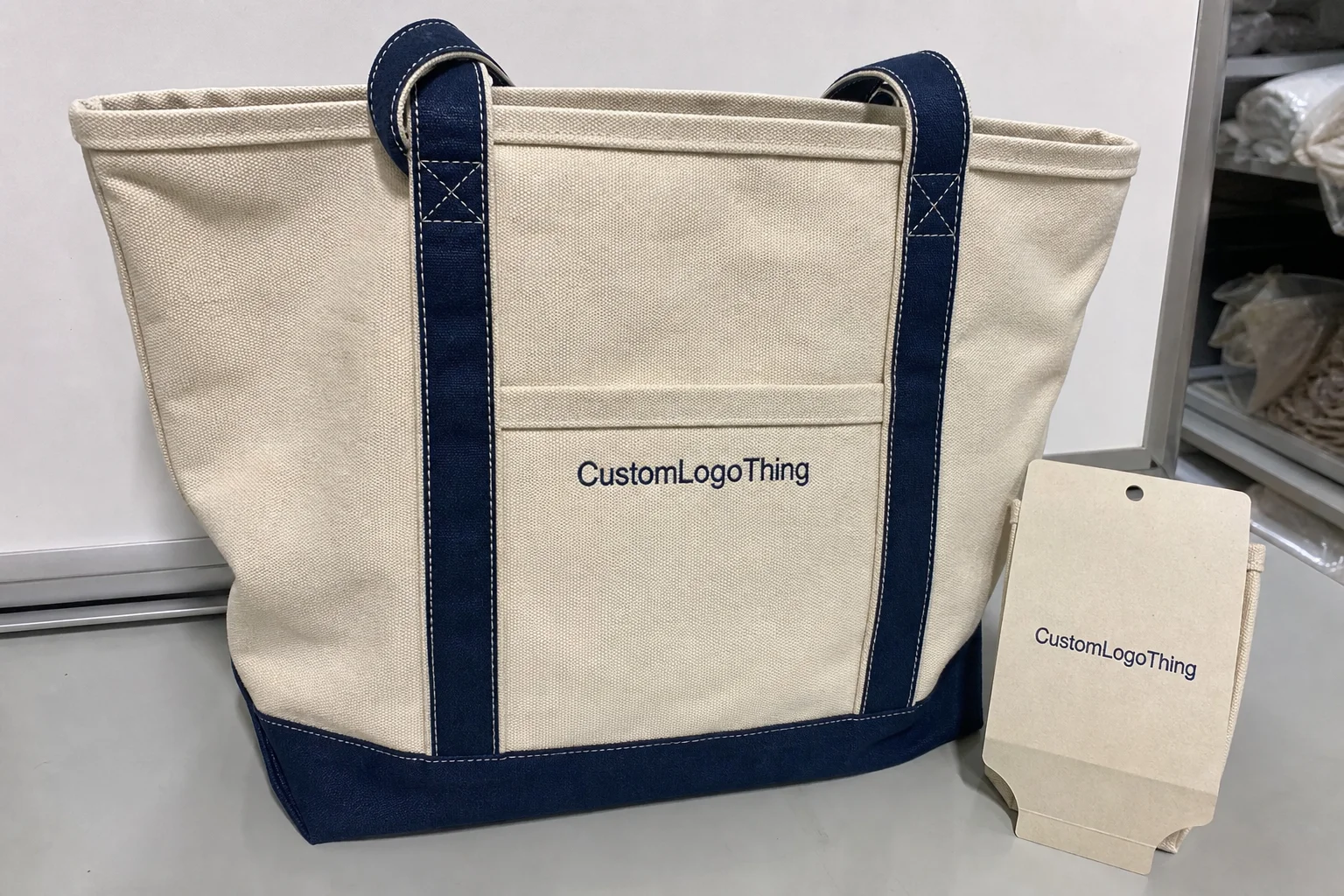
There is a reason boat totes keep showing up in retail, events, and hospitality programs. Their shape carries better than a limp promotional bag. The wide opening makes packing easier, while the gusset and side structure help the bag stand up instead of collapsing into itself. That matters when the contents include boxed goods, notebooks, bottles, or apparel that should not arrive wrinkled.
Compared with a standard flat tote, a boat tote gives the buyer more control over presentation. It feels more intentional when handed over, and it behaves better during actual use. A flat tote can work for low-cost giveaways. A boat tote is the better fit when the bag itself should feel like part of the product.
The best orders start with three questions:
- What is going inside? Weight, shape, and fragility determine the structure.
- Who receives it? A trade-show attendee, a retail customer, and an employee do not judge the bag the same way.
- How long should it last? One-day use, seasonal use, or repeated carry changes the material and construction.
That last point gets ignored too often. A tote intended for one launch event does not need the same durability as a bag that should survive a year of weekend errands. If the spec does not match the use, the cost will feel wrong even if the printing looks good.
A tote can be visually clean and still fail on function. The handle length, stitch count, and gusset depth matter more than most buyers expect.
Production Process and Timeline: From Art to Delivery
A standard tote order follows a predictable sequence: inquiry, quote, artwork review, proof approval, production, packing, and shipping. The process is simple enough to map on one page. The delays happen in the handoff between those steps, usually because the buyer sends incomplete artwork or changes the spec after pricing has already been built.
For most custom boat tote bags, a realistic lead time is 12 to 20 business days after proof approval on a standard run. Smaller and simpler orders can move faster. Larger quantities, special handle construction, custom colors, or multi-step decoration usually add time. Rush production exists, but it is not a shortcut around missing files or uncertain specs. A rushed order just compresses the margin for error.
Typical production flow looks like this:
- Inquiry and quote — Share quantity, size, material preference, print colors, and delivery ZIP code.
- Artwork review — The vendor checks file format, resolution, placement, and whether the design can be produced cleanly.
- Digital proof — You review the mockup for spelling, size, color callouts, and logo placement.
- Approval — Once approved, the job moves into production.
- Production and QC — Bags are printed, sewn, packed, and checked for obvious defects.
- Shipping — Transit time depends on destination and the service level chosen.
Two dates matter more than most buyers realize: the proof due date and the production start date. They are not the same, and the gap between them is where schedules get lost. If the proof sits in someone’s inbox for three days, the event deadline does not move with it.
Shipping choices also affect the calendar. A single-color logo on a standard canvas tote is easier to turn quickly than a multi-color design on a specialty coated bag. Add custom woven labels, hang tags, or polybag packing, and the schedule stretches a little. Not dramatically. Just enough to matter when the bags need to be on site by a fixed date.
For reference, packaging schedules tend to break down not because production is hard, but because approvals are slow. Once the proof is right, the rest becomes logistics.
Materials, Sizes, and Print Choices That Change the Result
Material choice determines whether the tote feels premium or merely serviceable. Heavier canvas, often in the 12 oz to 18 oz range, gives the bag a firmer hand and better structure. Lighter canvas can still work for events, but it tends to sag. Coated or laminated builds look cleaner and resist scuffing better, though they usually feel stiffer and cost more. Flexible low-cost options may save money, but they often read as promotional giveaways rather than retail packaging.
Size decisions matter just as much. A tote that looks generous in a mockup may feel awkward in use if the gusset is too shallow or the handles are too short. Four measurements deserve attention before anything else: width, height, gusset depth, and handle drop. If the bag is expected to hold boxed product, a 4-inch to 6-inch gusset is usually more practical than a slim profile. If it is meant for books, notebooks, or apparel, handle length can matter more than the bag’s visual proportions. Nobody wants a tote that bumps into the elbow on every carry.
Print method changes both the finish and the budget. Screen printing usually works best for simple art, strong logos, and fewer colors. Heat transfer can handle certain detailed designs, but the result may sit more on the surface depending on the material. Embroidery creates a more elevated look, though it is not always appropriate for thin fabrics or very small lettering. The right choice depends on the substrate, the artwork, and how polished the finished bag should feel in hand.
There is a practical rule here: if the bag needs to feel premium, spend on material and construction. If the logo needs to stand out sharply, spend on print quality and placement. Both can be done well, but rarely at the lowest possible price. That is not a sales line. It is the way packaging budgets actually work.
| Option | Typical Feel | Best For | Tradeoff |
|---|---|---|---|
| Light canvas | Soft, casual | Events, giveaways | Less structure, less premium |
| Heavy canvas | Firm, durable | Retail packaging, merch | Higher cost, heavier ship weight |
| Coated or laminated | Sleek, more polished | Premium branding, cleaner surfaces | Can feel stiffer, less fabric-like |
| Embroidered detail | Elevated, textured | High-end branding | Not ideal for tiny text or thin fabrics |
If sustainability claims are part of the brief, ask for documentation instead of relying on vague language. FSC-certified paper components, recycled-content packaging elements, and clear disposal guidance are easier to verify than broad claims about being eco-friendly. The FSC site is a solid reference for certified paper sourcing. For recycling questions, the EPA recycling guidance is still useful and practical.
How Pricing Is Built: MOQ, Unit Cost, and Setup Fees
Pricing for custom boat tote bags usually comes from the same handful of inputs: quantity, material, print complexity, number of decoration colors, and any special finishing. The quoted unit price is only part of the picture. The real number is the landed cost, meaning bag cost plus setup, printing, packing, and shipping.
MOQ, or minimum order quantity, matters because setup overhead has to be spread somewhere. If a screen setup or plate charge is divided across 300 bags, the unit price looks higher. Spread the same setup across 3,000 bags, and the per-unit cost falls quickly. That is why small runs always feel expensive. They are expensive, relatively speaking.
For budgeting, these rough ranges are common enough to be useful:
- Small run, simple print: about $3.50 to $7.00 per bag, depending on material and shipping.
- Mid-size run, better canvas or more color: about $2.20 to $4.50 per bag.
- Higher volume, standard build: about $1.50 to $3.20 per bag.
Those figures shift with artwork complexity and freight. A heavier bag shipped across the country will not price the same as a lighter tote moving a shorter distance. If a quote looks unusually low, check whether shipping is included, whether the decoration count is exact, and whether the bag size and material weight match the request. Very low numbers often hide missing details.
Common adders include:
- Screen setup or plate charges
- Proofing or sample fees
- Rush production charges
- Custom packaging or polybagging
- Freight or residential delivery fees
The simplest way to compare vendors is to request quotes on the same specification sheet. Same size. Same material weight. Same print method. Same quantity. Same destination. Then compare the full landed cost, not just the prettiest subtotal. If you are also buying Custom Packaging Products for the same campaign, keep each item quoted separately so the numbers stay readable.
Sometimes the best purchasing decision is accepting a slightly higher unit price because it prevents rework, delays, or a tote that feels too flimsy for the brand. That is not overspending. It is avoiding a second order.
Step-by-Step Ordering Checklist for Cleaner Approvals
The fastest way to get an accurate quote is to be specific before anyone starts pricing. A vendor can only price cleanly if the request is clean. “Something like this” creates guesswork, and guesswork creates revisions.
Use this checklist before requesting pricing:
- Quantity — Give a realistic range if the final number is not locked.
- Bag size — Width, height, and gusset if available.
- Material preference — Canvas weight, coated finish, or another build.
- Color — Bag color and imprint color.
- Artwork file — Vector AI, EPS, PDF, or a high-resolution PNG if necessary.
- Target date — Include the event date or delivery deadline.
- Shipping address — Commercial and residential destinations can change cost and timing.
Artwork prep is where many orders slow down. If the logo only exists as a tiny web image, expect cleanup time. Vector files are best because they scale without losing sharpness. If a raster file is the only option, it should be high resolution and have clean edges. Exact color references help too, though no material reproduces color perfectly. Fabric, coating, and ink all change how a color reads under normal light.
When the proof arrives, check it line by line:
- Is the logo centered and sized correctly?
- Are the spelling and punctuation exact?
- Do the ink colors match brand expectations?
- Are the tote dimensions and handle placement correct?
- Is the decoration method what was requested?
If the order includes inserts, labels, or tags, confirm whether those items follow the same proof process. The tote is only one piece of the package presentation. The full system matters more than the single item.
Final approval tip: keep a written record of what was approved, especially if the vendor makes a revision. That note becomes useful on repeat orders, when a small wording change or dimension change can otherwise get lost. The first order is the one that builds the file for the second.
Common Mistakes That Turn a Tote Order Into a Headache
The first mistake is vague specs. “We want it premium” is not a usable instruction. Premium can mean heavier canvas, cleaner stitching, a coated surface, reinforced handles, or a better print finish. If the target is not defined, the supplier fills in the blanks, and those blanks may not match the brand’s expectation.
The second mistake is weak artwork. A logo that looks fine on a screen can print poorly on a tote if the file is low resolution, too detailed, or built with colors the decoration method cannot reproduce cleanly. Tiny type is especially risky on textured or coated bags. If the logo needs a magnifying glass, simplify it.
The third mistake is comparing quotes without comparing specs. Cheap bags often hide thinner material, weaker stitching, lower stitch density, or a decoration method that looks dull in hand. Sometimes the quote is fair and the buyer simply under-spec’d the job. Other times the supplier quietly swapped the build. Either way, the result feels off.
Timeline mistakes are just as common. Buyers approve artwork late, then expect production to catch up automatically. It does not. If the event date is fixed, build in time for proof revisions, freight, and a little buffer. Rush production is useful when a plan is already solid; it is not a substitute for planning.
Changing the order after proof approval creates another layer of risk. Every change costs time. Sometimes it costs money too. If the bag needs a heavier handle, a different ink color, or a different insert size, settle that before sign-off. Rework is where margins disappear.
The cleanest tote orders are usually the boring ones. Clear specs, clean art, and one decision made once.
Expert Tips for Better Branding and Fewer Reorders
If the tote surface is textured, coated, or color-sensitive, keep the artwork simple. A large logo, strong contrast, and clean line work usually survive production better than fine detail. That is true for custom printed boxes as well: the more challenging the substrate, the less forgiving the art becomes.
Choose the tote size based on what goes inside it, not on a vague sense of what looks premium. If the contents are rigid, allow room for depth and handle comfort. If the bag will carry apparel, a slimmer build may look cleaner. If it needs to hold several items without bulging, prioritize gusset depth and handle strength over a trendy silhouette.
Ask for a sample or a close reference when texture and color matter. Photos help, but they do not tell you how a material feels in hand or how heavy it is once loaded. A matte, heavy canvas tote reads very differently from a glossy coated bag, even when both carry the same logo.
For repeat programs, document everything. Save the approved proof, note the exact material weight, list the print colors, and record any packaging extras. That is how future reorders stay consistent and less expensive. The first order should create the template, not become a memory test.
One practical move: order a small pilot run if the style is untested. If the tote is clearly part of a longer-term merch or retail packaging program, scaling up earlier often makes more sense. Larger runs usually lower the unit cost enough to justify better construction. Reorders are easier when the first run already solved the quality questions.
For buyers who think about transit damage, shipping test language can be helpful. ISTA guidance is not a design tool, but it does provide a useful frame for thinking about handling and carton abuse before bags are packed for distribution. The ISTA site is a practical place to start if packaging durability is part of the brief.
Next Steps to Place the Right Tote Order
Before requesting pricing, gather the spec sheet: quantity, size, material, print method, logo file, target date, and shipping address. If there is a reference image or an approved previous sample, include that too. Quotes are only useful when they are built on the same inputs.
Then compare at least two quotes on the exact same spec. Not similar. Exact. That makes unit cost, setup fees, and lead time easier to judge. Ask how pricing changes if quantity shifts by 25%, and ask whether proof revisions are included. Good suppliers answer those questions directly because they know the answers are already in the cost structure.
Confirm the proof approval process before production begins. Ask what is frozen once approval is given. Ask how shipping will be handled. Ask whether the delivery date is firm or estimated. These are not nuisance questions. They prevent surprises after the order is already in motion.
If the tote is supporting broader product packaging or retail packaging goals, make sure the style matches the brand story rather than fighting it. The best custom boat tote bags do more than carry items. They make the contents feel considered. Get the specs right, and the bag does its job quietly. Get them wrong, and the correction costs more than the tote itself.
How much do custom boat tote bags usually cost?
Pricing depends on quantity, material, print complexity, and whether there are setup fees or special finishing charges. Small runs usually cost more per unit because setup costs are spread across fewer bags. Larger runs generally lower the unit price, but the total spend rises. Ask for a quote that separates bag cost, decoration, and shipping so comparison is straightforward.
What is the best material for custom boat tote bags?
The best material depends on how the bag will be used. Premium retail programs usually benefit from heavier, cleaner-looking builds, while events may prioritize lower cost. If structure and durability matter, a heavier woven or coated option usually holds shape better. If print clarity matters most, ask which material gives the cleanest logo reproduction before committing.
How long does it take to produce custom boat tote bags?
Lead time changes with order size, decoration method, and how quickly artwork is approved. Simple runs can move faster; special colors, custom finishes, or larger quantities take longer. Build in extra time for proof revisions, shipping, and delays caused by missing files or unclear specs.
What artwork files do I need for custom boat tote bags?
Vector files like AI, EPS, or PDF are usually best because they stay sharp at any size. High-resolution PNG or PSD files can work if they are large enough and have clean edges. Send the logo in the exact colors you want whenever possible, and note any text that must remain unchanged.
Can I order custom boat tote bags in a small quantity?
Yes, but the unit cost is usually higher because setup fees are spread across fewer bags. Small quantities make sense for events, tests, or limited merch drops where the goal is speed and proof of concept. If budget matters, compare the cost difference between a small pilot run and a larger order with lower unit pricing.

