Custom Boxes and Packaging: How to Choose the Right Fit
For many buyers, custom boxes and packaging looks like a branding decision until the first shipment arrives damaged, the assembly line slows down, or the unit cost quietly climbs because the structure was never fully thought through. That is the pattern worth paying attention to. The cheapest-looking package on paper can become the most expensive once you factor in returns, filler, labor, freight inefficiency, and the loss of shelf presence before the customer even opens it.
The mistake is treating packaging as a single object. It is a system. Material, board grade, style, insert design, print method, finish, and shipping environment all interact. Change one variable and the others often move with it. A package that works for retail display may not survive parcel shipping. A mailer that protects well may look flat on shelf. Good sourcing starts by acknowledging those tradeoffs instead of hoping one box can solve everything at once.
What Custom Boxes and Packaging Really Includes
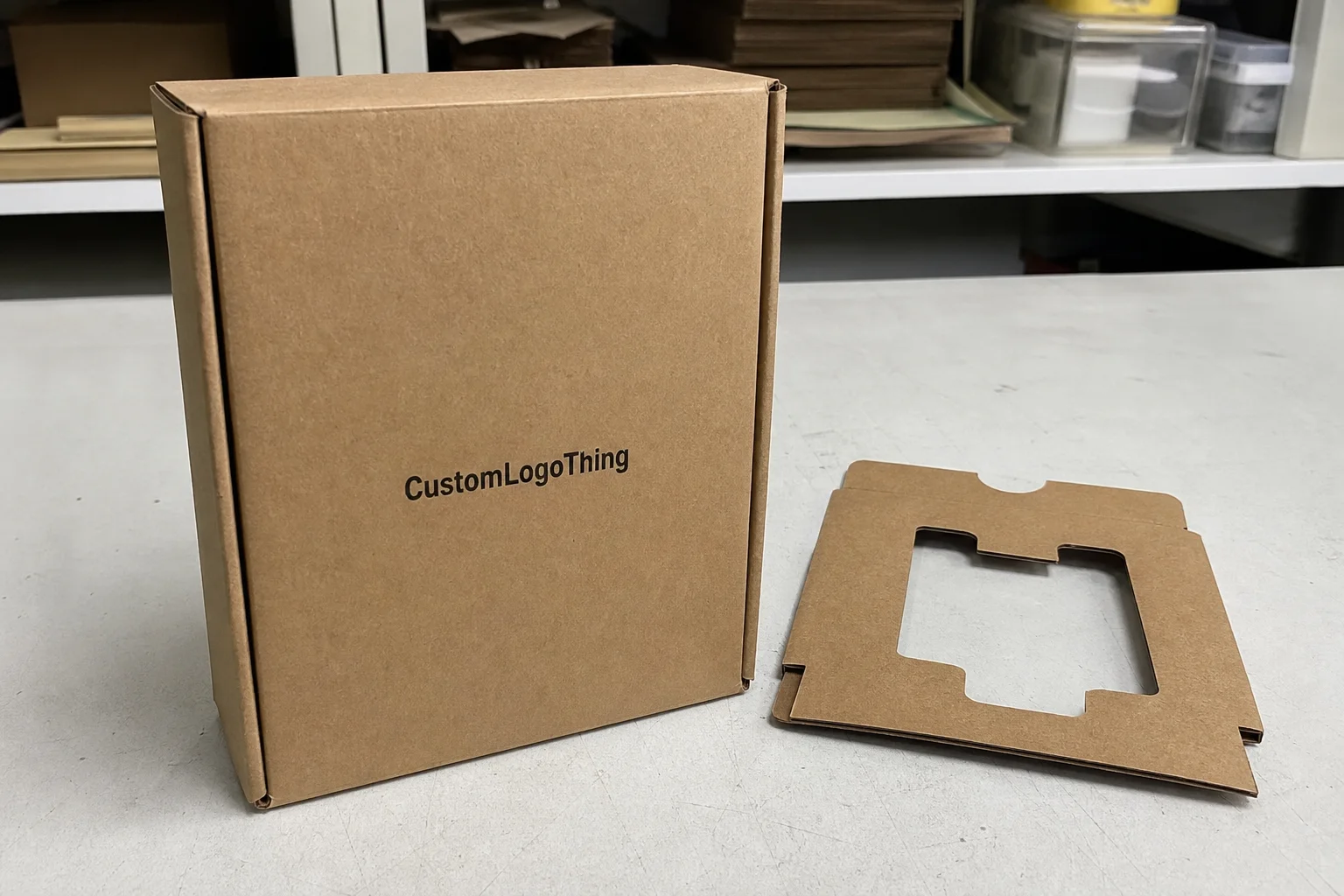
People use packaging terms loosely, which is how quotes get compared badly and approvals get delayed. In practice, custom boxes and packaging can mean a folding carton, a corrugated mailer, a rigid presentation box, or a kit with inserts, dividers, labels, and protective wraps. It may also include window film, tamper seals, coatings, and packout instructions. The box is only one line item in the build.
There are usually two jobs happening at once. One is protection. The other is presentation. If the product is fragile, heavy, oddly shaped, or prone to leaking, protection has to win first. If the product sits on a retail shelf or is part of a premium unboxing experience, presentation becomes just as important. When those goals pull in opposite directions, the packaging spec has to be engineered rather than guessed.
A useful brief describes the package in operational terms. Retail-ready. Shelf-facing. Recyclable. Single-unit shipper. Subscription mailer. Gift format. Those labels matter because they point toward different structures, different materials, and different cost profiles. They also affect whether you need one SKU or two. In real programs, that decision can have more impact than the graphics do.
It helps to separate the packaging stack into three layers:
- Primary package: the container or wrap that touches the product directly.
- Secondary package: the branded box, mailer, or carton that the customer sees first.
- Tertiary package: the outer shipper or case used for transportation and distribution.
That distinction matters because one format rarely performs all three jobs well. A folding carton can look sharp and print cleanly, but it may not offer enough crush resistance for distribution. A corrugated shipper protects better, yet it may be too plain for retail. A rigid box delivers a stronger premium cue, but the material and assembly costs rise quickly. The job is to choose the least complicated structure that still performs where it has to.
The most expensive box is not the one with the highest quote. It is the one that creates damage, rework, or inventory that cannot be used efficiently.
For buyers who are weighing sustainability claims, a few reference points are useful. The Forest Stewardship Council provides a common certification framework for responsible fiber sourcing, while the EPA Sustainable Materials Management resources are worth reviewing if recyclability or recovery language will appear on pack. If those claims matter to the launch, they should be confirmed early rather than improvised later.
How the Structural Spec Is Built
Good structure begins with basic facts: product dimensions, weight, fragility, stackability, closure style, and shipping environment. A glass jar in parcel transit faces a different failure profile than a lightweight skincare set sold from a retail shelf. If the item shifts, cracks, bends, or leaks, the package spec has to account for that before the artwork is even discussed.
The practical sequence is simple. Measure the product as it will ship, not as it appears in a marketing image. Add clearance for inserts, finger access, and any closure or tuck feature. Then work backward to the internal dimensions. Exterior size comes later, after the board thickness and construction style are fixed.
Internal fit is where many packaging projects either save money or bleed it. A box that is even a few millimeters too loose may need extra filler, tape, or a more complicated insert. A box that is too tight can scuff printed surfaces, slow assembly, and make the opening experience feel forced. Neither outcome is elegant. Both are costly.
The structure should follow the product’s weak points. Folding cartons suit lighter retail goods. Corrugated mailers make more sense for e-commerce, bundles, or anything likely to be stacked and shipped repeatedly. Rigid boxes are useful for premium kits and high-touch presentation, but they come with higher material cost and often more manual assembly. If the insert is carrying most of the load, its geometry matters as much as the outer carton.
Structural choices also affect artwork. A clean flat mockup can hide a lot of problems. Once a design wraps around a seam, flap, or fold, type placement becomes less forgiving. Logos can land on creases. Legal copy can crowd the trim edge. Barcodes can wind up too close to a weak zone. That is why a dieline should be treated as an engineering document, not a design afterthought.
For that reason, quotes should ideally include a dieline, a structural recommendation, and a prototype or sample. Those are not luxuries in a serious Custom Printed Packaging project. They are the difference between a visually attractive concept and a package that can actually be manufactured, packed, and shipped without constant correction.
Practical buyers also ask about tolerances. Board thickness can vary. Die-cutting can shift slightly. Glue application, especially on high-volume runs, needs visible quality control. Barcode zones, fold scores, and insert clearance should all be checked before production is approved. If the product is expensive, fragile, or time-sensitive, that extra scrutiny is usually cheaper than the first failed shipment.
Materials, Print, and Finishes That Change the Result
Material choice should be driven by function first. For many retail cartons, paperboard such as SBS or C1S artboard gives solid print fidelity, good fold performance, and a clean surface for branding. For shipping and product protection, corrugated board is usually the safer choice because it adds crush resistance and stack strength. If moisture, humidity, or cold-chain handling are part of the route, board selection and coatings matter more than a polished mockup suggests.
Not all board behaves the same. A low-cost sheet can vary in caliper, moisture response, or print acceptance from batch to batch, which shows up in production as scuffing, poor folding, weak score lines, or uneven color. Buyers who have been through a few programs usually stop asking for generic “premium stock” and start asking for the actual board grade, flute profile, and finish. That specificity cuts through a lot of vague quoting.
Print method should match run size and color expectations. Digital printing is often the practical choice for shorter runs, SKU testing, and frequent artwork changes. Offset printing usually makes more sense when color control and volume justify the setup. Flexographic printing belongs on many corrugated jobs where speed and cost matter more than fine image detail. None of these is universally better. The right method depends on quantity, coverage, substrate, and acceptable tolerance.
Finish changes both perception and performance. Matte coating softens glare and tends to read as calmer and more controlled. Gloss intensifies color and can help graphics pop, though fingerprints and scratches may show faster. Soft-touch creates a distinctive feel, but it is not indestructible; abrasion can make it look tired sooner than buyers expect. Spot UV can be effective when there is a clear contrast strategy, but it works best with restraint. A finish should earn its place.
There is also a practical side to finish selection that often gets ignored in design reviews. A package that looks elegant under studio lights may collect scuffs on a fulfillment table or show corner wear in a distribution carton. A reflective surface can hide some handling marks while revealing others. That is why it helps to test the sample under normal light, with normal hands, and on the actual route the package will travel.
For custom boxes and packaging, the real question is not which finish looks premium in isolation. It is which finish survives the route while still reading clearly in the customer’s hands, on the shelf, or inside a shipping case.
Pricing, MOQ, and Unit Cost: What Actually Moves the Number
Price is driven by a small set of variables. Material thickness, print coverage, special finishes, insert complexity, and the number of production steps usually matter more than the artwork itself. A plain mailer and a foil-stamped rigid set do not live in the same cost structure. One may use a single die and a simple print pass. The other may involve multiple setup stages, hand assembly, and more scrap allowance.
MOQ exists because setup costs have to be spread across the run. Plates, dies, proofing, machine setup, and waste allowances all sit inside the first order. When the run is small, those costs are spread across fewer units, which pushes the unit price up. That is not a sales tactic; it is manufacturing economics. If a quote seems high on a short run, the setup burden is usually the reason.
There is another trap: comparing unit price without looking at inventory risk. A lower unit number can cost more overall if it forces you into a larger order than you can use before the artwork changes. A slightly higher unit cost with a lower MOQ may be the better financial decision for a seasonal launch, a pilot run, or a product line that still shifts often. Total spend matters more than the headline number.
Typical pricing varies widely, but directional ranges are still useful for planning:
| Option | Typical Use | Indicative Unit Range | Notes |
|---|---|---|---|
| Folding carton | Light retail goods, cosmetics, supplements | $0.18-$0.45 at 5,000 units | Good print fidelity, efficient for shelf-driven products |
| Corrugated mailer | E-commerce, subscription boxes, direct shipping | $0.55-$1.40 at 3,000 units | Higher protection, better for parcel handling |
| Rigid presentation box | Premium sets, gifts, high-touch unboxing | $1.20-$4.50 at 1,000 units | Higher labor and material cost, stronger perceived value |
Those figures are directional, not universal. Heavy ink coverage, foil, embossing, magnetic closures, custom inserts, and specialty coatings can move them quickly. Freight, proofs, and tooling may be separate line items. When you compare suppliers, ask for board grade, print method, finish details, insert build, proofing fees, freight assumptions, and whether tooling is reusable on reorder. That is how you compare quotes without guessing.
If you are sourcing a new program, requesting options through Custom Packaging Products can help you compare structures before the visual treatment is locked. That usually produces a cleaner decision than approving artwork first and trying to force the package to fit afterward.
Production Steps and Timeline: From Proof to Delivery
The production path is usually orderly, but only when the brief is complete. A typical sequence starts with the initial request, moves to a dieline or structural recommendation, then a sample or proof, then artwork approval, followed by production, finishing, packing, and freight booking. Each step depends on the previous one being stable.
Delays show up in repeatable places. Missing dimensions. Unclear insert requirements. Artwork revisions after the dieline has already been built. Proof approval that waits on three departments instead of one. Packaging projects often sit between marketing, operations, and procurement, so if nobody owns the full timeline, the schedule slips quietly.
For simple reorders, turnaround can move relatively fast once the spec is locked. New structural jobs take longer because they may require sampling, fit checks, and test runs. A realistic schedule for a straightforward custom run is often 12-15 business days from proof approval, though that can stretch if the box is complex, the print coverage is heavy, or the production line is already booked. Freight time is separate, and buyers regularly underestimate it.
Quality control should be part of the schedule, not an optional extra. Useful checks include color consistency, trim accuracy, score quality, glue bond, barcode readability, and insert fit. If the package will travel through parcel networks, it may also need drop testing, compression checks, or a transit simulation. The ISTA guidance is useful when the goal is to test the package against a known standard rather than rely on visual approval alone.
It is also smart to lock the non-negotiables early:
- Final product dimensions and weight
- Box style and closure method
- Insert style, if needed
- Finish and print method
- Proof approval owner and deadline
- Delivery location and freight method
Common Mistakes That Inflate Waste and Reorders
The most common mistake is the simplest one: the box is the wrong size. Oversized packages waste board, filler, and freight space. Undersized packages crush corners, distort graphics, and frustrate the customer during unboxing. Both are expensive, just in different ways.
Another frequent error is approving artwork before the structure is final. That can push logos onto folds, shift barcodes into weak zones, or place legal copy too close to a trim edge. Once the dieline changes, the art usually has to move too. That means more revisions, more time, and a higher chance of introducing a production mistake.
Finish choice can also backfire when it is made for appearance alone. A surface that fingerprints easily may look refined in a mockup and tired after a single handling cycle. High-gloss can add color depth, but it can also make scratches more visible. Soft-touch feels premium, yet it may scuff faster than buyers expect. For custom printed boxes, the finish has to match the handling reality.
Skipping a physical sample is another expensive shortcut. If the product is fragile, dense, oddly shaped, or sold as a kit, sampling should be treated as part of the build. A sample shows closure strength, insert fit, shelf footprint, and how the package behaves after actual handling. Even a basic pre-production sample catches errors that a render will miss.
Most production failures fall into the same handful of buckets:
- Incorrect dimensions or insert clearance
- Artwork locked before structure is finalized
- Finish selected without handling tests
- MOQ chosen without inventory planning
- No sample approval before full production
The expensive part is rarely one dramatic mistake. It is usually a chain of small assumptions that nobody challenged early enough.
Expert Tips and Next Steps for a Cleaner Order
If you want a cleaner purchasing process, start with a one-page brief. Include product dimensions, weight, fragility, use case, target quantity, print goals, finish preferences, delivery location, and whether the package is for shipping, display, or both. That one sheet usually improves quoting accuracy more than a long thread of vague creative feedback.
Next, ask for a sample or proof and test it against the actual product. Put it through the same conditions the customer will create: packing, stacking, opening, and transit. If the package will go through direct-to-consumer fulfillment, test it in the actual lane. A sample that looks good on a desk can still fail on a packing table.
It also helps to sequence the decisions. Structure first. Material second. Print method third. Finish fourth. Then timeline, freight, and inventory planning. That order is not rigid, but it is safer than approving surface details before the box can actually do its job.
For teams managing multiple SKUs, standardizing the base structure often pays off. You can vary the artwork, labels, or inserts while keeping the underlying format stable. That reduces tooling complexity, simplifies reorders, and makes stock planning less messy. In practice, package branding gets easier when the structural system is disciplined.
A simple decision path works for most buyers:
- Confirm product measurements and shipping risk
- Choose the box style that matches the use case
- Select the board or paper grade
- Match the print method to quantity and color expectations
- Pick a finish only after handling needs are clear
- Review a proof or sample before full production
When comparing suppliers, ask the same questions every time. What is the board grade? What is the minimum order? What are the proofing steps? What is the realistic lead time? What are the freight assumptions? What QC checks are performed before shipment? The vendors that answer clearly are usually easier to work with, and the quote becomes more useful because it reflects the actual spec rather than marketing language.
In the end, the best order is the one that fits the product, the route, and the budget without creating surprises later. Get the dimensions right, align the structure with the use case, and treat custom boxes and packaging as a production decision, not just a branding exercise. That is how you end up with a package that looks right, travels well, and does not quietly add cost every time it changes hands.
What should I know before ordering custom boxes and packaging for a product launch?
Confirm the product dimensions, weight, fragility, and whether the package must ship, display, or do both. Decide on the minimum quantity you can actually use so inventory does not sit idle after launch. Ask for a sample or proof before approving full production.
How do I choose the right box style for custom packaging?
Match the style to the product’s movement risk, retail presentation needs, and shipping method. Use a folding carton for lighter retail items and a stronger shipper or mailer for heavier or fragile products. Prioritize internal fit first, then print and finish choices.
What affects the price of custom boxes and packaging the most?
Material grade, print coverage, special finishes, inserts, and order quantity usually drive the price more than the artwork itself. Lower quantities often raise unit cost because setup work is spread across fewer boxes. Shipping, proofing, and tooling can also change the final quote.
How long does the custom packaging process usually take?
Simple reorders move faster than new structural designs that need sampling and approval. Artwork revisions and proof delays are the most common reasons timelines slip. A realistic schedule should include design, proofing, production, finishing, and freight time.
What information should I send when asking for a quote on custom boxes and packaging?
Provide product dimensions, quantity, style preference, print needs, finish preferences, and delivery location. Include whether the package is for shipping, retail display, or both. The more complete the brief, the more accurate the quote and lead time.


