Custom Non Woven tote bags are one of the simplest packaging items to specify and one of the easiest to get wrong. The bag itself looks straightforward. The decisions behind it are not. Size, handle style, print method, material weight, and lead time all affect whether the finished piece feels like a useful branded carrier or a cheap afterthought.
The reason these bags remain popular is practical. Non woven polypropylene is light, cost-effective, and easy to print on. The material is made from fibers bonded into a sheet rather than woven yarns, so it gives buyers a smooth decorating surface without the higher cost of stitched woven fabric. That makes it a common choice for trade shows, retail counters, event kits, and promotional handouts where budget and presentation both matter.
A good tote does more than hold things. It extends the package experience after the first handoff. If the bag is sized well and printed cleanly, it reinforces the rest of the branded packaging instead of competing with it. If the spec is off, the whole order can feel improvised.
Custom non woven tote bags: why they outperform flimsy giveaways
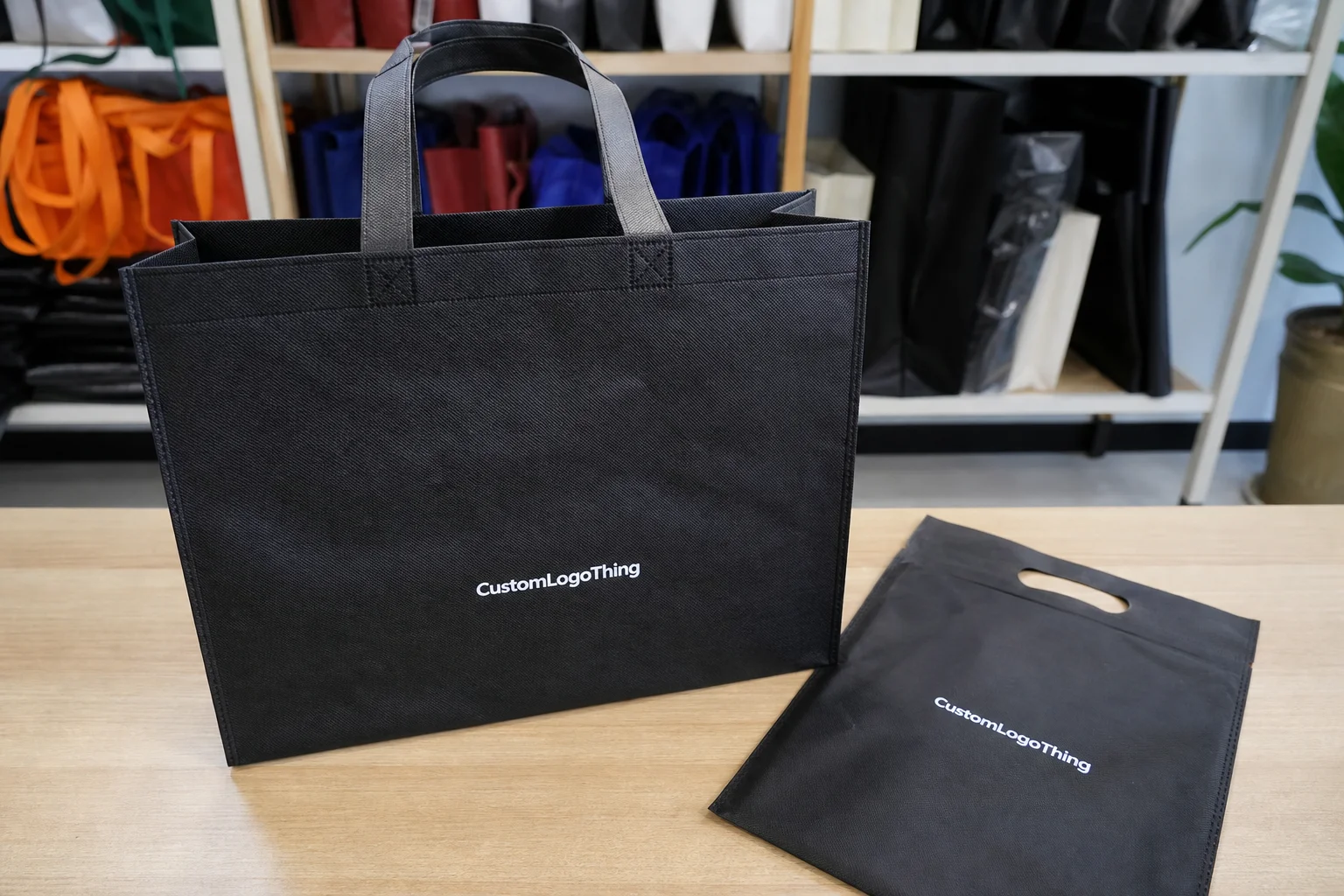
Cheap giveaway bags usually fail in one of two ways. They tear early, or they look thin and temporary before anyone puts anything inside them. Non woven totes avoid some of that because the fabric can stay light without feeling fragile, provided the seams and handles match the intended load. That balance is why these bags stay in circulation across retail, events, and community promotions.
They also print predictably. The flatter surface makes logos, icons, and short messages easier to reproduce than on textured or heavily woven materials. A simple design usually reads better than a crowded one. That matters because a tote is rarely viewed like a poster. It is seen in motion, over a shoulder, on a counter, or stacked in a kit. The message has to land fast.
For buyers, the real advantage is consistency. You can order a large run with a fairly tight idea of how it will look and hold up. That is useful if the bag is part of a larger package design system, not just a standalone promo item. A tote that matches the tone of custom printed boxes, inserts, or a launch kit looks intentional in a way a generic handout never will.
These bags make the most sense when the job is broad distribution rather than heavy-duty carry. If you need a lightweight reusable carrier for catalogs, apparel, or event materials, they are hard to beat on price and print clarity. If the contents are heavy or sharp-edged, the spec needs more care. The material can handle a lot, but not everything.
Before ordering, ask three basic questions:
- What will the bag carry?
- How many times should it be reused?
- How polished does it need to look at first contact?
If those answers are clear, the rest of the order becomes easier to shape.
How the material and construction actually work
Non woven polypropylene starts as polymer fibers formed into a web and bonded with heat or pressure. That process creates a sheet that behaves like fabric in use, but it is not woven in the traditional sense. The difference matters. It explains the low material cost, the smooth print surface, and the lighter hand compared with cotton canvas or sewn woven bags.
Construction changes performance more than many buyers expect. The body panels establish the footprint. Side gussets add room for folded garments, folders, or boxed items. A bottom gusset helps the bag sit flat and carry weight more evenly. Reinforced seams and handle attachment points matter even more. Without them, a bag may look fine in a proof and feel weak in real use.
Lamination changes the character of the bag. A laminated finish can give the outer surface a cleaner appearance, improve wipeability, and make the bag hold its shape better. It also adds cost and stiffness. That tradeoff is worth it for some retail-facing or gift-oriented jobs, but not for every run. A standard finish is often the better choice for large event orders where price and speed matter more than shelf presence.
Printing behaves differently based on the artwork. Bold logos, sharp outlines, and limited spot colors usually reproduce cleanly. Tiny legal copy, soft gradients, and thin type are more likely to look weak. Screen printing is common for simple work. Full-color methods or heat transfer can help with more complex graphics, but they change the budget and sometimes the feel of the bag. Treat the tote as a display surface, not a brochure.
For programs that need more carrying strength, ask for seam details, handle reinforcement, and sample load testing. A supplier should be able to tell you whether the bag is intended for brochures, apparel, light groceries, or a heavier reusable role. That distinction is more useful than a generic description like “good quality.”
Size, handles, and print area: the key specs
Size should follow the contents, not the logo. A tote for folded T-shirts is not the same as a tote for catalogs, boxed cosmetics, or gift sets. A bag that looks clean in a mockup can fail in the real world if the contents are too tall, too wide, or too rigid for the footprint.
Common sizing patterns are easy to spot. Compact bags work for literature, tickets, and event inserts. Mid-size bags suit apparel, folders, and small gifts. Larger gusseted totes are better for boxed products, groceries, or multi-item kits. If the bag is meant for repeat use, slightly more room is usually safer than a tight fit that stresses the seams or makes packing awkward.
Handles deserve as much attention as the body. Short handles are fine for quick hand carry. Longer shoulder-drop handles are easier for trade show traffic and retail use. Handle width matters too. Thin handles may work for light items, but if the bag needs to carry catalogs, boxed goods, or several pounds of product, wider and reinforced handles are worth the extra cost. Comfort shows up after the first few minutes of use, not during proof review.
The print area shapes the design. The front panel usually carries the main logo. The back panel can hold a website, a supporting message, or a secondary mark. Gussets can carry small repeats if the artwork stays simple. That is useful when the tote is part of a larger packaging design system and needs to work alongside inserts, boxes, and shipping materials.
Before approving size, check four things:
- Estimated load in pounds or kilograms.
- Whether the bag needs to stand upright.
- How the contents sit inside the finished footprint.
- Whether the tote should feel retail-ready or purely promotional.
That quick check prevents a common and expensive mistake: a bag that technically fits the product but feels wrong in use.
Production steps and lead time from proof to delivery
The production sequence is usually simple: quote, artwork review, digital proof, approval, production, packing, and freight. The labor itself is not usually the bottleneck. Delays come from incomplete files, late revisions, or shipping that was not built into the schedule.
Artwork is often the easiest part if the files are already in vector format. Clear logo files and simple print instructions move quickly. Problems start when the buyer sends low-resolution artwork, expects exact color matching without a reference, or changes the layout after the proof is nearly finished. Those are normal issues, but they extend the timeline. A clean brief can save days.
For straightforward orders, production can often finish in about 12 to 15 business days after proof approval. Larger quantities, laminated finishes, multiple print colors, or special handle builds can add time. Freight is the variable many buyers underestimate. A finished tote is not useful until it arrives where the event, launch, or retail program is happening.
If the bags are part of a multi-piece kit, ask how the cartons will travel and whether the pack has been considered against ISTA transit test guidance. That is not necessary for every order, but it becomes more relevant when inserts, rigid items, or higher-value contents need to arrive in good condition. If paper inserts are included, FSC certification can help support the paper side of the package without changing the tote specification.
A tote that fails at the seam or reads poorly from six feet away costs more than the unit price suggests.
The most reliable way to stay on schedule is still the least dramatic: send vector art early, confirm quantity tiers upfront, and approve the proof once the layout matches the brief.
Cost, pricing, and MOQ: what drives the quote
Price is driven by a short list of variables, and most of them are visible before a quote is requested. Bag size, material weight, handle style, number of print colors, packaging format, and total quantity all affect the final number. If you need individual folding, barcode labeling, or polybagging, those labor steps also add cost.
MOQ means minimum order quantity. It matters because setup costs have to be spread across the run. A 500-piece order usually costs more per unit than a 5,000-piece order for the same design, because print setup and handling do not shrink just because the quantity is smaller. That is normal. The per-unit price improves when the fixed costs are distributed over a larger batch.
These are broad market ranges, not guarantees, but they are useful for setting expectations.
| Bag Type | Typical Specs | Common MOQ | Typical Unit Range | Best Use |
|---|---|---|---|---|
| Basic promo tote | Thin non woven, one-color print, standard handles | 1,000-3,000 | $0.18-$0.35 | Trade shows, handouts, simple branded packaging |
| Standard retail-style tote | Midweight material, reinforced seams, one or two colors | 1,000-5,000 | $0.28-$0.55 | Retail packaging, event kits, merchandise bags |
| Laminated tote | Gloss or matte finish, stronger structure, cleaner surface | 2,000-5,000 | $0.42-$0.78 | Premium package branding, gift sets, shelf presentation |
| Small custom run | Any of the above with lower quantity and higher setup load | 300-1,000 | $0.80-$1.60 | Pilot programs, limited launches, internal events |
Optional upgrades move the quote quickly. Full-bleed artwork, custom colors, extra print placement, and reinforced seams all raise the price. So do packing requirements such as individual folding or polybagging. If the artwork gets more complicated while the quantity stays low, the unit price climbs fast. That is why a clear use case matters more than a long wish list.
For buyers comparing Custom Packaging Products, it is smarter to ask for pricing at several quantity tiers than to focus on the lowest headline number. A bag that looks inexpensive but feels weak, prints poorly, or misses the deadline is not a good value.
Common mistakes that make tote orders look cheap
The fastest way to make a tote feel disposable is to mismatch the spec with the job. A bag that is too small, too thin, or too shallow creates frustration before the person finishes the first carry. Once that happens, the bag stops functioning as packaging and starts looking like clutter.
Artwork can create the same problem. Crowded layouts, tiny copy, and weak contrast usually make the finished piece feel rushed. A simple logo with strong contrast often performs better than a complicated layout with multiple messages. That is especially true on non woven material, where fine detail does not always reproduce as crisply as it would on paper or rigid stock.
Handle comfort is often ignored until it is too late. If the bag carries catalogs, boxed goods, or a full kit, thin handles and weak attachment points become obvious quickly. People remember discomfort. They may not know the seam spec, but they notice when the handle cuts into the hand.
Another avoidable issue is approving a proof without checking scale, placement, and color expectations. A logo that looks fine on a screen can end up too small at tote size. Digital color and print color are also not identical. The proof should show how the bag will read in real use, not just how the art looks in a design file.
If the goal is an order that feels intentional, keep the design simple, keep the typography legible, and keep the material honest. That combination does more for package branding than trying to make the bag do too much.
Expert tips for better branding and longer reuse
Simpler design usually wins. One strong logo placement often does more for recall than three separate messages fighting for space. A tote is seen in motion and often at a distance. It needs clear contrast and enough blank space to keep the artwork readable.
Reuse should be treated as part of the design brief. If the bag works for errands, documents, or daily carry, it stays in the customer’s orbit longer. That is one reason custom Non Woven Tote Bags can keep producing impressions after the event is over. The bag earns a second life when the dimensions and handle length make sense outside the original use.
Folding and storage matter more than many teams expect. Bags that stack neatly and ship flat usually arrive in better shape. Poorly packed totes can lose visual polish even when the printing itself is fine. If the package is going to be handed out in volume, the physical presentation matters almost as much as the decoration.
Color choice should match the environment where the bag will be seen. A logo that disappears against a dark retail counter or a busy event floor is not helping the brand. Choose bag and print colors for visibility first, palette compliance second. That keeps the design functional without making it loud.
If the tote is part of a broader branded package, align it with the rest of the materials. The bag, insert card, box, and shipping pack should feel like they belong to the same system. Consistency raises the perceived value of the whole order.
FAQ
How do custom non woven tote bags compare with woven polypropylene bags?
Non woven bags usually cost less and feel lighter, so they work well for large giveaways and event packaging. Woven polypropylene is typically stronger and more structured, which makes it better for heavier loads or longer reuse. The right choice depends on the load, budget, and how polished the finished package needs to feel.
What size custom non woven tote bags should I order?
Match the size to what the bag needs to carry, such as apparel, brochures, boxed items, or grocery-style contents. Check gusset depth and handle length too, since both affect capacity and comfort. If you are unsure, start with a sample size that fits most of the contents and test it before placing a full order.
What is a normal MOQ for custom non woven tote bags?
MOQ varies by factory, size, and print complexity, but smaller runs usually have a higher unit cost. Simple one-color bags often allow lower minimums than custom shapes, laminated finishes, or multiple print placements. If the volume is uncertain, ask for pricing at a few quantity tiers so you can see where the value improves.
How long do custom non woven tote bags usually take to produce?
Lead time depends on proof approval, order size, production queue, and shipping method. Straightforward orders with ready artwork move faster than jobs that need revisions or special finishing. Build in extra time for freight if the bags are tied to a launch or event, since shipping is often the real bottleneck.
What artwork works best on custom non woven tote bags?
Bold logos, strong contrast, and limited colors usually print more cleanly than tiny text or delicate gradients. Vector files are best because they keep the edges crisp at bag scale. Keep the design readable from a few feet away, since totes are usually seen in motion rather than examined close up.