Custom Brown Bags: Pricing, Specs, and Ordering Tips
Custom brown bags look plain until the details start to matter. Kraft paper has a natural, uncoated surface that signals practicality, and that understated look can work harder than a louder package if the print, size, and handle spec are right. A clean logo on brown paper travels farther than many buyers expect. It leaves the store, shows up in transit, appears in office hallways, and keeps carrying the brand after the checkout moment is over.
That broader job is easy to miss. A bag is not only a carrier. It is part of the packaging system, and sometimes the most visible part. Compared with a box or sleeve, a bag may cost less, move faster through operations, and still give the brand repeated exposure. The tradeoff is that the bag has to be specified carefully. Size, stock weight, print method, handle type, and order quantity all affect whether the result feels polished or flimsy.
Buyers usually start with the artwork, then discover that artwork is only one piece of the quote. The real work is matching the bag to the product, the workflow, and the time available. If those three are aligned, custom brown bags can be one of the most efficient ways to keep packaging consistent across locations without pushing the budget into box territory.
Custom brown bags: what buyers notice first
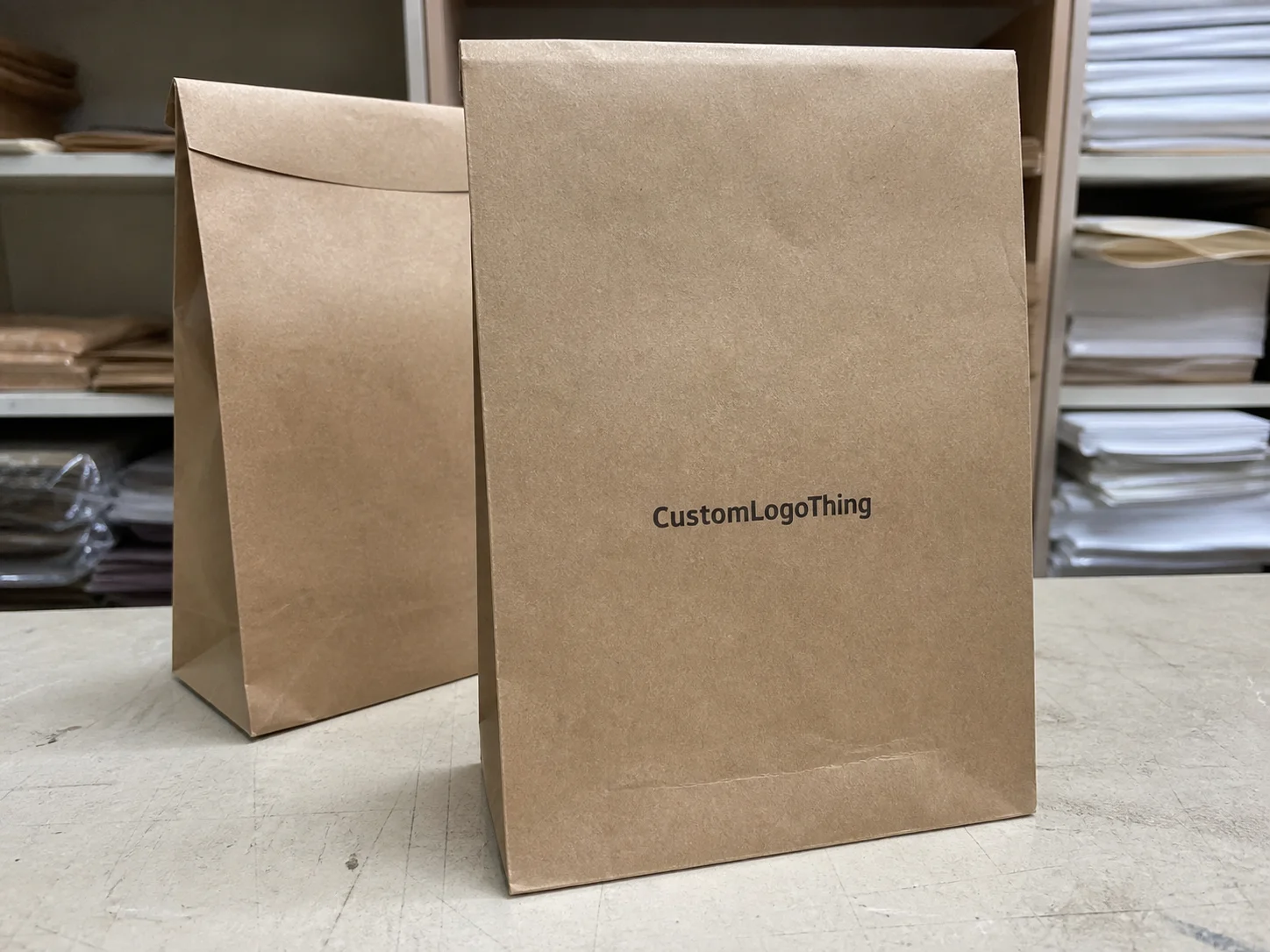
Most people notice the surface before they notice the structure. Kraft feels honest and functional, which is part of the appeal. It can read casual in one setting and premium in another, depending on how much of the paper is left visible, how the logo is treated, and whether the handles support the weight without looking improvised.
For a buyer, the first question should not be whether the bag looks branded in a mockup. It should be whether the bag survives the actual use case. A café takeaway bag, a boutique retail carrier, and a promotional gift bag all need different construction choices. The same logo can feel refined on one format and awkward on another if the bag collapses, wrinkles heavily, or tears at the fold.
That is why custom brown bags sit at the intersection of visual identity and operations. The bag has to carry, stack, store, and print well. If it does all four, the brand gets a moving billboard without buying a separate media channel. A restrained design often works best on kraft because the paper itself already brings texture and warmth. Heavy coverage can flatten that effect and push the bag into a less natural look.
In practice, buyers usually end up comparing five variables: bag size, paper grade, print method, handle style, and timing. Everything else matters less unless the bag needs food-contact consideration, a stronger carry rating, or a higher-end presentation for gifts or premium retail.
How bag construction and printing work
A paper bag looks simple from the outside, but the construction details control most of the performance. Paper stock, gusset depth, bottom style, handle attachment, and finish all change how the bag feels in hand and how it behaves once filled. A 100 gsm kraft bag with a reinforced bottom will not perform like a lighter stock with a flatter base, even if the artwork is identical.
Paper weight is one of the fastest ways to tune quality. Light bags around 60 to 80 gsm can work for low-load takeaway use. Bags in the 90 to 120 gsm range are more common for retail shopping because they offer better stiffness and tear resistance. Heavier stock usually improves strength, but it also changes folding behavior, storage efficiency, and cost. If bags are being packed on a line or stored flat in large quantities, that tradeoff matters.
Handles deserve their own decision. Flat paper handles are practical and cost-conscious. Twisted paper handles often feel stronger in the hand and keep their shape better. Rope handles push the bag toward a more premium presentation, but they add cost and may require extra reinforcement. If the bag carries bottles, boxed items, or anything with a concentrated load, handle spec is more important than decorative print.
Printing method changes both price and finish. Flexographic printing is a common fit for simple logos, solid colors, and larger runs. Once the plates are made, the per-unit price can be attractive. Offset printing is better for finer detail and tighter color control, though it generally makes more sense when the run is large enough to absorb setup. Digital printing is the most flexible option for short runs, seasonal artwork, or multiple versions, but the unit cost is usually higher.
Artwork complexity affects the quote more than many buyers expect. A one-color mark with clean lines usually looks sharper on kraft than a busy composition with small type. Heavy ink coverage can make the paper look less natural and raise print cost. In many cases, the strongest result is not the most decorated one. It is the one that respects the paper and uses the surface honestly.
A bag that carries well does more for brand perception than a polished mockup that fails at the counter.
The practical sequence is straightforward: choose a structure that fits the load, then choose graphics that fit the structure. If the bag is too weak or the proportions are wrong, the brand message never gets a fair chance. If the structure is sound and the print is restrained, custom brown bags often look more expensive than they are.
Cost, pricing, MOQ, and quote basics
Pricing usually comes down to a small set of variables that interact with one another. Size, paper weight, print coverage, number of colors, handle style, reinforcement, and finish all move the number. A larger bag uses more material, but a more complex logo can push cost just as hard because setup time rises and production may need additional steps.
The MOQ question is where many buyers get surprised. Lower quantities usually mean a higher unit price because setup costs are spread over fewer bags. That is true for most custom brown bags, whether the run is flexographic or digital. If a quote looks unusually low for a small order, check whether plate charges, proofing, packaging, or freight are hidden elsewhere.
A better way to compare suppliers is to separate the quote into four pieces: bag cost, setup cost, proofing cost, and landed freight. That makes a real comparison possible. A unit price that looks attractive can become the most expensive option once cartons, palletization, or expedited shipping are added. Buyers often compare the bag price alone and miss the full landed number.
| Option | Typical Quantity | Indicative Unit Price | Best Fit |
|---|---|---|---|
| Standard kraft bag, 1-color flexo | 5,000+ | $0.18-$0.28 | Retail counters, cafes, simple branded giveaways |
| Heavier stock, 2-3 colors | 5,000-10,000 | $0.26-$0.45 | Boutique retail, stronger presentation, more visible branding |
| Short digital run | 500-1,500 | $0.60-$1.20 | Seasonal programs, test launches, small locations |
| Premium handle and finish | 3,000+ | $0.35-$0.70 | Gift retail, higher perceived value, heavier carry requirements |
Those figures are directional. A reinforced top, specialty handle, or large print area can push the order outside those bands quickly. Freight can do the same. A buyer in a hurry may accept a higher unit cost if the supplier has stock on hand and can turn the order in 7 to 10 business days. A planned program may justify a lower unit price with a longer timeline.
Storage is another issue that gets overlooked. A slightly larger run can lower the per-bag price enough to matter, but only if there is space to store it and the artwork is stable enough to stay in use for months. If the design changes often, smaller runs can be smarter even when the unit price rises. That is especially true for seasonal retail packaging, where leftover stock turns into dead inventory.
If custom brown bags are part of a broader packaging program, ask for the same spec across every size. Small differences in stock weight, handle reinforcement, or print coverage can distort the comparison. Consistency matters more than a headline price that only works for one bag format.
Process and lead time: from proof to delivery
The ordering process should be boring. That is a good sign. A clean workflow usually starts with specs, then artwork, then proofing, then approval, then production, then shipping. Most delays happen before production starts. File issues, late revisions, and missing dimensions create more trouble than the press run itself.
A practical sequence looks like this:
- Confirm size, stock, handle style, and quantity.
- Send vector artwork or high-resolution files with exact colors.
- Review the digital proof for placement, bleed, and copy errors.
- Approve a physical sample if the bag will carry heavier goods or serve a premium retail role.
- Move to production only after the proof is signed off.
Lead time is not one number. Production time and shipping time are different, and buyers often blur them together. A standard run might need 12 to 15 business days after proof approval, while shipping can add another 2 to 7 business days depending on distance and carrier choice. International freight, customs handling, or pallet consolidation can add more time. If a supplier promises speed, ask whether that includes printing, curing, packing, and transit.
Rush orders can work, but only under the right conditions. The artwork needs to be final. The stock needs to be available. The buyer needs to accept fewer options. That usually means simple print, standard dimensions, and a willingness to pay extra for priority production or expedited freight. A rush job is not the place to experiment with a new logo version or a complex handle spec.
For multi-location programs, coordination matters. It is easy to approve one proof and later discover that different branches need different fill heights, counter space, or carry loads. A few days spent validating the use case can prevent a much larger delay after the order is in production.
Specs that matter before you order
Size is the first spec to lock down, and it should be based on the packed product, not only the item itself. Leave room for fill height, any insert or takeaway container, and enough headspace so the bag closes comfortably. A bag that looks right empty can become awkward once it is loaded, especially if the handle pull changes the top opening.
Paper weight comes next. Heavier stock usually improves stiffness and reduces the chance of tearing at the bottom seam, but that is not always the best answer. A heavier bag may be overkill for lightweight items and can feel too rigid if the brand wants a casual service model. The right spec depends on what the bag carries and how long the customer is expected to hold it.
Branding decisions should be specific. Ask how many colors are being printed, whether the logo sits on one side or both, whether the design needs bleed, and how much quiet space remains around the mark. On kraft, a restrained layout often looks stronger than a crowded one because the paper itself becomes part of the visual identity.
If the logo needs to read from across a room, simplify it. Small text and thin lines are risky on uncoated paper. They can fill in, break up, or lose contrast. A strong one-color mark in black, deep green, navy, or white usually performs better than an overworked file with six colors and tiny typography.
Sustainability and compliance need a real check, not a slogan. If recycled content matters, ask for the paper specification and whether the supplier can document chain-of-custody claims through FSC certification standards. If the bag will be used for food, verify whether it is intended for direct contact, indirect contact, or dry takeaway only. Local rules and buyer expectations vary, so the spec should be clear enough to avoid vague claims later.
It also helps to compare the bag against the rest of the packaging system. A paper bag, sleeve, insert, and carton should feel like they belong together. If the visual language changes from item to item, package branding loses some of its force. A well-prepared spec sheet keeps that from slipping.
Common mistakes when ordering paper bags
The most common mistake is choosing the wrong size because the item was measured before the product mix was finalized. A bag that fits one SKU may fail on the One That Sells best. That sounds obvious until it happens. Retail and food service buyers often work from samples instead of the actual pack-out, and the final dimensions end up too tight.
Another frequent error is sending artwork that is not production-ready. A low-resolution logo, a raster file where vector art is needed, or an incomplete color spec can slow proofing and distort the result. With custom brown bags, that matters because kraft paper does not hide sloppy alignment well. A logo that shifts 5 to 10 mm can look noticeably off-center on a plain field.
Handling needs are easy to underestimate. Moisture exposure, greasy hands, heavy bottles, and long walking distances all affect performance. A bag used in a boutique at checkout is not the same as a bag used for a hot takeaway meal or a customer carrying items across a parking lot. If the bag will live in a tougher environment, specify reinforcement early instead of trying to fix it after the first run.
Approving a proof too quickly can also backfire. Check color density, logo placement, gusset alignment, and the look of the handles when the bag is folded. Review the proof in the same lighting where the bag will actually be used if possible. That catches avoidable issues before they become inventory.
A short checklist helps:
- Confirm the final packed dimensions, not just the product dimensions.
- Verify the artwork file is vector or high resolution.
- Check the carry weight and handle reinforcement.
- Review the proof for margins, bleed, and fold placement.
- Ask what freight and packaging charges are included in the quote.
The hidden mistake is assuming that all Brown Paper Bags behave the same. They do not. A light kraft bag for pastries and a reinforced retail bag for boxed merchandise may look similar, but they solve different operational problems. Matching the spec to the use case is what keeps the order from turning into a reprint.
Practical ordering checks
Build a one-page spec sheet before asking for quotes. Include dimensions, paper stock, handle type, print colors, quantity, delivery date, and any handling requirement that changes the bag structure. That sheet speeds up quoting and keeps buyers from comparing apples to oranges.
If the bag will carry heavier products or represent a premium brand, ask for a sample. A digital proof shows layout, not hand feel. A sample tells you whether the handle is comfortable, whether the bottom folds cleanly, and whether the kraft weight matches the brand promise. That is especially useful if the bag is being compared with other Custom Packaging Products such as cartons, sleeves, or inserts.
Use the same assumptions across every quote. If one supplier is pricing a 90 gsm bag with flat handles and another is pricing a 120 gsm bag with twisted handles, the comparison is not useful. Ask each supplier to price the exact same spec, or the decision will be distorted by hidden differences. That is how buyers end up thinking one quote is cheaper when it is really thinner or less complete.
For brands ordering across multiple locations, consistency matters more than one-time savings. A slightly higher unit price can be the better decision if it keeps the bag spec stable, the lead time predictable, and the print quality repeatable. That is the point of custom brown bags: they should make the operation easier, not create a new exception every time the reorder comes around.
Final rule: lock the size, confirm the print, compare landed cost, and allow enough time to avoid a rushed reprint. If the spec is disciplined, custom brown bags can deliver visible brand value without becoming a budget problem.
Frequently asked questions
How do I choose the right size for custom brown bags?
Measure the packed product, not the loose item, then add room for fill height, handles, and any insert or container. If the bag is for retail use, ask the supplier for a recommendation based on the actual use case so you are not guessing from a generic size chart.
What affects custom brown bag pricing the most?
Paper stock, bag size, print coverage, number of colors, and handle style usually have the biggest impact. MOQ matters because setup costs are spread over fewer or more units, and freight can change the final landed cost even when the unit price looks reasonable.
What is a typical MOQ for custom brown bags?
MOQ varies by material, print method, and supplier capability. Standard sizes with simple one-color art may allow lower quantities, while highly customized formats usually need larger runs. Small orders are possible, but they often come with a higher unit price and fewer options.
How long does custom brown bag production usually take?
Timeline depends on proof approval, stock availability, print complexity, and order size. Production time is separate from shipping time, so both should be planned together. Rush work is sometimes available, but it usually narrows the choices and raises cost.
Are custom brown bags recyclable or reusable?
Many paper brown bags are recyclable if they are clean and made without problematic coatings. Reusability depends on paper weight, handle strength, and how the bag is used. Check the exact material spec and local recycling rules before making sustainability claims.


