Custom canvas drawstring bags do something a thin poly pouch rarely can: they make the contents feel selected with care, sturdier in transit, and worth keeping after the first use. That impression starts the moment someone picks the bag up. If it opens cleanly, holds its shape, and closes with a firm pull instead of a flimsy tug, the package feels like part of the product rather than a throwaway wrapper.
That is one reason buyers keep coming back to custom canvas drawstring bags for retail packaging, hospitality kits, event giveaways, and branded gift sets. The format is simple, but it has enough structure to feel premium and enough flexibility to fit a wide range of products. The challenge is choosing the right fabric weight, size, closure, and decoration so the bag looks intentional instead of generic.
Why custom canvas drawstring bags feel premium in real use
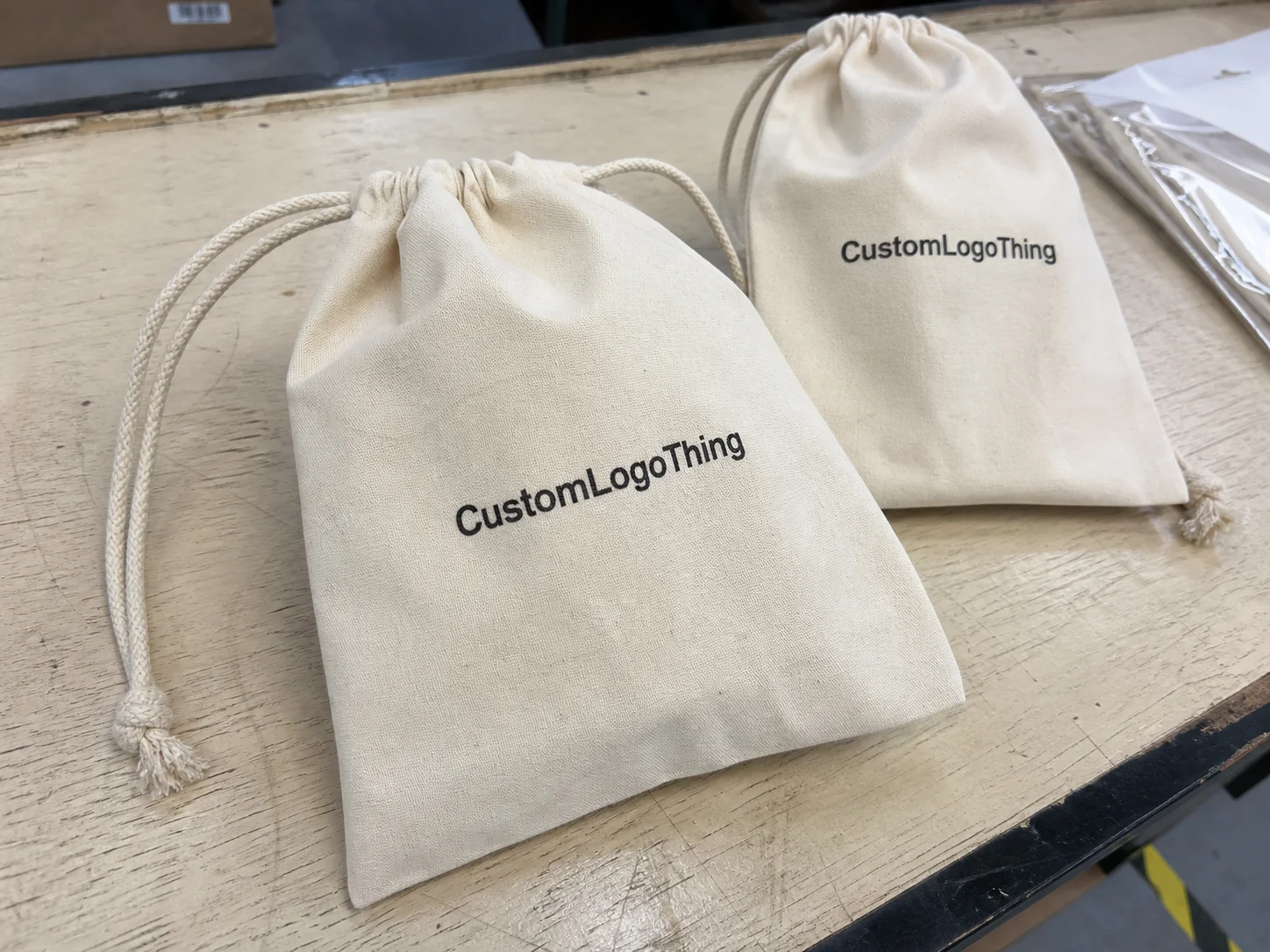
Hand a buyer a sample, and the difference is usually obvious within seconds. Canvas has body. It resists collapsing into a soft wrinkle the way very light fabrics do, and that firmness creates a stronger first impression. People tend to associate texture, weight, and clean stitching with value, especially when the bag is used for packaging rather than only for storage.
Canvas also handles repeat use well. A properly made bag can be opened, filled, tied, untied, and carried many times without losing its shape too quickly. That matters in practice because a reusable bag extends brand exposure beyond the moment of unboxing. A customer may keep it in a drawer, reuse it for travel, or pass it along with another item inside, which gives the packaging a longer life than most disposable wraps.
The drawstring closure is part of that appeal. It gives the bag a neat profile, makes it quick to close on a packing line, and helps protect the contents from dust or minor scuffing during handling. For products that are irregularly shaped or awkward to fit in a rigid box, the soft structure of a drawstring bag can be more forgiving while still looking polished.
Buyers usually choose this style for a few practical reasons. Sometimes they want a premium look without the cost of a full rigid package. Sometimes they need something easy for customers to open and carry. And sometimes the product itself benefits from a softer package that does not squeeze corners or create sharp edges inside the shipping carton. The right choice still depends on the product weight, how often the bag will be reused, and whether the bag is mainly for presentation or for daily carrying.
If the packaging program includes more than one format, the bag should fit the larger system. Boxes, tissue, inserts, and bags can work together instead of competing for attention, and that coordination often matters more than a single impressive component. For teams building a broader packaging line, Custom Packaging Products may include complementary pieces that keep the presentation consistent.
How the bag construction and closure system work
Most canvas drawstring bags look straightforward from the outside, but construction details decide whether they feel crisp and dependable or loose and unfinished. The body is usually cut from woven cotton or a cotton-blend canvas, then folded and stitched into shape with side seams and a bottom seam. Better versions use tighter seam density at stress points, because those areas take the most strain when the bag is filled, carried, and pulled closed again and again.
A typical structure includes a hemmed top edge, a drawcord channel, and stitching that guides the cord without cutting into the fabric. That channel matters more than many buyers expect. If it is too narrow, the cord drags and feels stiff. If it is too wide or loosely sewn, the top edge can bunch unevenly and the bag may not close cleanly. Small differences in stitching placement show up quickly once the bag is in use.
The cord itself can be cotton, polyester, or a blend. Cord choice changes both the look and the handling. Cotton usually gives a softer, more natural feel, while polyester tends to slide more easily and resist fraying a bit better over repeated pulls. Thickness matters too. A thin cord can feel inexpensive and cut into the fingers, while an overly thick cord may sit awkwardly in the channel and slow down packing.
Canvas weight is one of the first specifications worth understanding. Lightweight canvas is softer and easier to fold, which can be fine for small gifts or light samples. Medium-weight canvas offers a stronger balance of structure and cost. Heavier canvas holds its shape better, supports cleaner printing in many cases, and stands up to repeated use more effectively. The tradeoff is simple: more weight usually means more material cost and less drape, so an oversized heavy bag can feel overly stiff if the product inside is small.
Some bags use cords that are threaded through the channel after sewing, while others are assembled in a sequence that makes the cord insertion part of the final operation. In certain designs, reinforced openings or metal eyelets help reduce wear where the cord moves. Each approach affects how smoothly the bag closes and how long it will hold up in real use.
A drawstring bag is more than “a pouch with a cord.” Seam placement, cord path, and fabric weight work together, and if one part is off, the whole piece feels less refined.
Stress points deserve attention. If the bag is meant to carry boxed items, sample kits, or heavier inserts, reinforced corners and solid seam density become more than cosmetic details. The same is true for the cord. A bag that will be pulled open and shut many times needs a cord that resists fraying and a seam structure that does not start opening at the first sign of strain.
Key specifications that affect cost and performance
Pricing for custom bags is shaped less by one single factor than by a set of small decisions that add up quickly. Fabric weight, dimensions, gusset depth, cord type, stitching density, print method, and finish options all affect the quote. Change a few of those variables, and a simple promotional pouch can turn into a higher-end retail item with a very different cost structure.
Fabric weight is often the biggest performance driver. A lighter canvas is usually enough for jewelry, cosmetics, sample packs, or small accessories. A heavier canvas makes more sense for apparel, boxed sets, or products that will be handled often. Size matters just as much. If the bag is too large, the product looks lost inside it. If it is too small, packing becomes awkward and the closure may strain the opening.
Decoration affects both appearance and price. One-color screen printing is usually the most efficient choice when the logo is bold and the artwork is clean. Multi-color artwork, large coverage areas, and delicate details increase setup and labor time. Embroidery, woven labels, and heat-transfer decoration can also work well, but each comes with its own practical limits around texture, cost, and minimum order volume.
There is also a sourcing reality that buyers sometimes overlook: tightly woven fabric, consistent stitching, clean cord ends, and accurate folding take time to produce well. Better finishing usually costs more because it depends on both material quality and labor control. A low-price bag can look acceptable in a quote sheet and still feel weak in the hand if the fabric is loose or the seams wander.
| Spec choice | Typical effect on performance | Typical effect on cost |
|---|---|---|
| Light canvas, simple print | Best for light items and short-term giveaways | Lowest unit cost |
| Medium-weight canvas, one-color logo | Better shape, better reuse, cleaner presentation | Moderate unit cost |
| Heavy canvas, gusset, custom sizing | Best for retail resale, gift sets, and heavier inserts | Higher unit cost |
| Heavy canvas with multi-color decoration | Strong brand presence and a more premium finish | Highest unit cost |
Minimum order quantity, sample costs, and packing requirements also change the final number. A simple bulk shipment is easier to price than a project that needs individual polybags, insert cards, barcode labels, or special carton counts. For buyers comparing custom canvas drawstring bags with other packaging formats, the real cost is not just the unit price. It is the total finished presentation, including freight and the time needed to prepare the order for use.
If the bag is part of a coordinated packaging set, it should fit the rest of the line. A branded box, tissue, and bag can support one another well, and that is where custom printed boxes or other related packaging pieces may improve perceived value without forcing every component to be overbuilt.
Custom canvas drawstring bags pricing and MOQ basics
Pricing for custom canvas drawstring bags usually comes down to five things: fabric weight, dimensions, print complexity, cord choice, and order volume. Once those are fixed, the quote becomes much easier to interpret. Without them, people often compare prices that are not actually the same product.
MOQ means minimum order quantity, and it exists because setup takes time whether the run is 300 pieces or 3,000. Cutting, sewing, printing, and finishing all require preparation. Smaller runs spread those setup costs across fewer units, which is why the per-unit price almost always rises as quantity drops. That does not make smaller orders a mistake, but it does mean the math changes quickly.
For broad planning, basic stock-style canvas bags with simple branding may land in a lower range, while fully custom sizing or heavier fabric moves the price up. A buyer might see quotes around $0.80-$1.60 per unit for a simple small run and $0.40-$0.95 per unit at higher quantities, depending on size, decoration, and material choices. Those numbers are only planning ranges. Print coverage, cord selection, pack-out requirements, and shipment terms can shift the final total noticeably.
Here is a practical way to think about the tradeoffs:
- Blank or lightly branded stock bags are usually the least expensive route.
- Fully custom sizes add cutting and sewing complexity.
- Heavier fabric and premium cord raise material cost but improve handling and durability.
- Multiple print locations increase setup and decoration time.
When requesting a quote, include the dimensions, fabric preference, artwork file, target quantity, and whether you need sample approval. Ask about lead time, freight assumptions, overage allowance, and pack-out details. If the price is quoted ex-works, the landed cost can be very different once shipping, duty, and cartons are added.
There are a few sensible ways to control cost without making the bag feel cheap. Standardizing sizes across multiple SKUs, using one strong logo instead of a crowded layout, and selecting fabric weight that matches the product instead of overengineering the bag can all help. What usually does not save money is changing the spec repeatedly after sampling has started. Each revision adds more labor and can create avoidable delays.
Production steps, proofing, and turnaround timeline
The process is usually straightforward, but each stage has its own risk. It begins with the inquiry and spec confirmation, where the buyer provides size, quantity, artwork, and finish preferences. After that comes artwork review, then a digital proof or sample, followed by production, finishing, and shipment. If the brief is clear, the order moves efficiently. If it is vague, problems tend to surface later, when changes are more expensive.
Proofing is where many issues are caught before production begins. This is the time to confirm logo placement, exact dimensions, print colors, font readability, and any special folding or pack-out instructions. A digital proof can show layout and placement, but it does not always reveal how a logo will behave on woven canvas or how large the text looks from a few feet away. A design that reads well on screen may be harder to read once it is printed on textured fabric.
Typical turnaround depends on order size, decoration method, and workload. A simple run after proof approval may take 12-20 business days. Heavier canvas, more complicated printing, or a busy seasonal production window can extend that. Sample review and artwork revisions can also add days before production even starts, so the calendar should include enough time for approval on the buyer side.
Rush orders are sometimes possible, but the word “rush” does not remove every constraint. Material availability, print queue congestion, and shipment schedules still matter. If a supplier offers expedited service, ask exactly what is being expedited: sampling, production, or freight. Those are separate steps, and each one affects the delivery date differently.
Quality control is part of the end stage and deserves more attention than it usually gets. Bags may be counted, checked for print placement, folded to spec, and packed to the agreed carton quantity before shipping. That may sound routine, but it is the reason a finished bag can look easy while still requiring careful control on the production floor. Packaging standards such as ISTA testing principles are often used as a reference when shipment durability matters, especially for programs that need the product to arrive in clean, sellable condition.
Common sizing, branding, and durability mistakes to avoid
One of the most common mistakes is choosing the bag size based only on the product dimensions and forgetting the rest of the packing structure. A bag that seems correct on paper may be too tight once a box, tissue, insert card, or protective wrap is added. On the other hand, a bag that is too large can make the product look underfilled and less polished.
Artwork causes problems in predictable ways. Very small text tends to blur into the weave. Thin lines can lose definition. Low-contrast graphics disappear faster than buyers expect, especially on natural canvas. If the goal is packaging that reads clearly from a short distance, bold shapes and balanced spacing usually work better than highly detailed art with lots of fine type.
Durability mistakes are just as common. Some buyers assume every canvas bag is equally strong, but that is not true. A light canvas bag may be fine for lightweight items and still wear out quickly if the closure is pulled hard every day. Others choose an undersized cord that frays too early or makes the bag unpleasant to open and close. Reuse depends on construction, not just on the word “canvas” in the product description.
Presentation also matters in the customer experience. How is the bag folded? Does it arrive with a crisp edge? Does it sit flat in the carton? Does the product inside look intentional or simply stuffed in? Those details influence how premium the bag feels once it reaches the customer, especially in retail packaging and branded gifting.
For buyers comparing custom canvas drawstring bags with other formats, there is a useful reality check: not every project needs the heaviest fabric, and not every logo belongs on every surface. A simpler design that fits the product cleanly often looks more expensive than an overdesigned bag that tries to do too much.
Expert tips for better value, print quality, and next steps
Start by matching fabric weight to actual use instead of assuming thicker is always better. Heavy canvas is excellent for some retail packaging programs, but medium-weight fabric may give the best balance of cost, appearance, and handling for event kits or small gifts. The smartest spend is usually the one that supports the product without overbuilding the package.
Ask for a pre-production proof and check the dimensions carefully. A bag that is off by even a small amount can change how the product fits and how the logo sits once the bag is closed. If the logo has a specific viewing angle, quiet zone, or margin requirement, spell that out clearly. The cleaner the spec, the less room there is for guesswork later.
It also helps to plan inventory around the reorder window. If the bag supports a launch, promotion, or seasonal campaign, do not wait so long that you are out of stock while the program is already running. Early reorder planning is not wasted caution; it is a practical way to avoid a packaging gap that can interrupt fulfillment.
For buyers who care about sustainability messaging, ask about recycled content, responsible fiber sourcing, and documentation for any claims that will appear on the package or website. Programs tied to FSC apply more directly to paper packaging, but the same discipline around traceable sourcing is useful across branded packaging decisions. If environmental claims are part of the brief, they should be supported by real documentation rather than vague language.
A useful workflow is simple: collect the specs, define the quantity, prepare the artwork, Request a Quote, and approve a sample before full production. That sequence keeps the project organized and reduces the most common surprises. Done well, custom canvas drawstring bags can add real value to packaging without making the process harder than it needs to be.
What size custom canvas drawstring bags should I choose for my product?
Match the bag dimensions to the product footprint, then leave enough room for easy insertion and closure. Smaller items like jewelry or gift cards usually work well in compact bags, while boxed sets, apparel, or heavier inserts often need a larger gusseted style. If presentation matters, avoid a bag that looks oversized or loose around the product.
What affects the price of custom canvas drawstring bags the most?
Fabric weight, bag size, print complexity, order quantity, and cord or finish options are the main cost drivers. Lower quantities usually cost more per unit because setup time is spread across fewer pieces. Multi-color artwork, special placement, and custom sizing typically raise the price more than a simple one-color logo.
How long does it usually take to produce custom canvas drawstring bags?
Turnaround depends on order size, proof approval speed, decoration method, and current production workload. Samples and artwork revisions can add time before production starts. If you need a tighter schedule, ask about rush options early and confirm what can realistically be expedited.
Can custom canvas drawstring bags be reused and cleaned?
Yes, many canvas bags are made for repeat use, and that is part of their appeal. Care depends on fabric weight, print method, and construction details, so cleaning instructions should be confirmed before use. Heavier, better-stitched bags usually hold up better over time and stay presentable longer.
What should I send when requesting a quote for custom canvas drawstring bags?
Include the bag size, fabric preference, quantity, logo or artwork files, and whether you need a sample. Add notes about timeline, packaging requirements, and the intended use. The clearer the brief, the more accurate the quote and the fewer surprises later in the process.

