For a new product launch, Custom Plastic Packaging Bags low moq can solve a problem that many teams underestimate: packaging is needed before demand is proven, but nobody wants to sit on a warehouse full of the wrong bag. That tension shows up in startups, seasonal drops, private label programs, and any line where artwork, sizing, or compliance language is still moving.
The buyer logic is simple. A smaller order protects cash, reduces storage pressure, and exposes design issues early. In packaging, the expensive mistake is usually not the quote itself. It is ordering 20,000 units and finding the gusset is too small, the seal is weak, or the print contrast makes the brand look cheaper than intended. A tighter run keeps those problems contained.
Custom Logothing works in that space every day: practical quantities, clear specs, and a quote process that does not waste time. If you also sell other formats such as Custom Packaging Products, the same principle applies. Start with the job the launch actually needs, then scale once the data is real.
Why low-MOQ plastic bags make sense for test launches
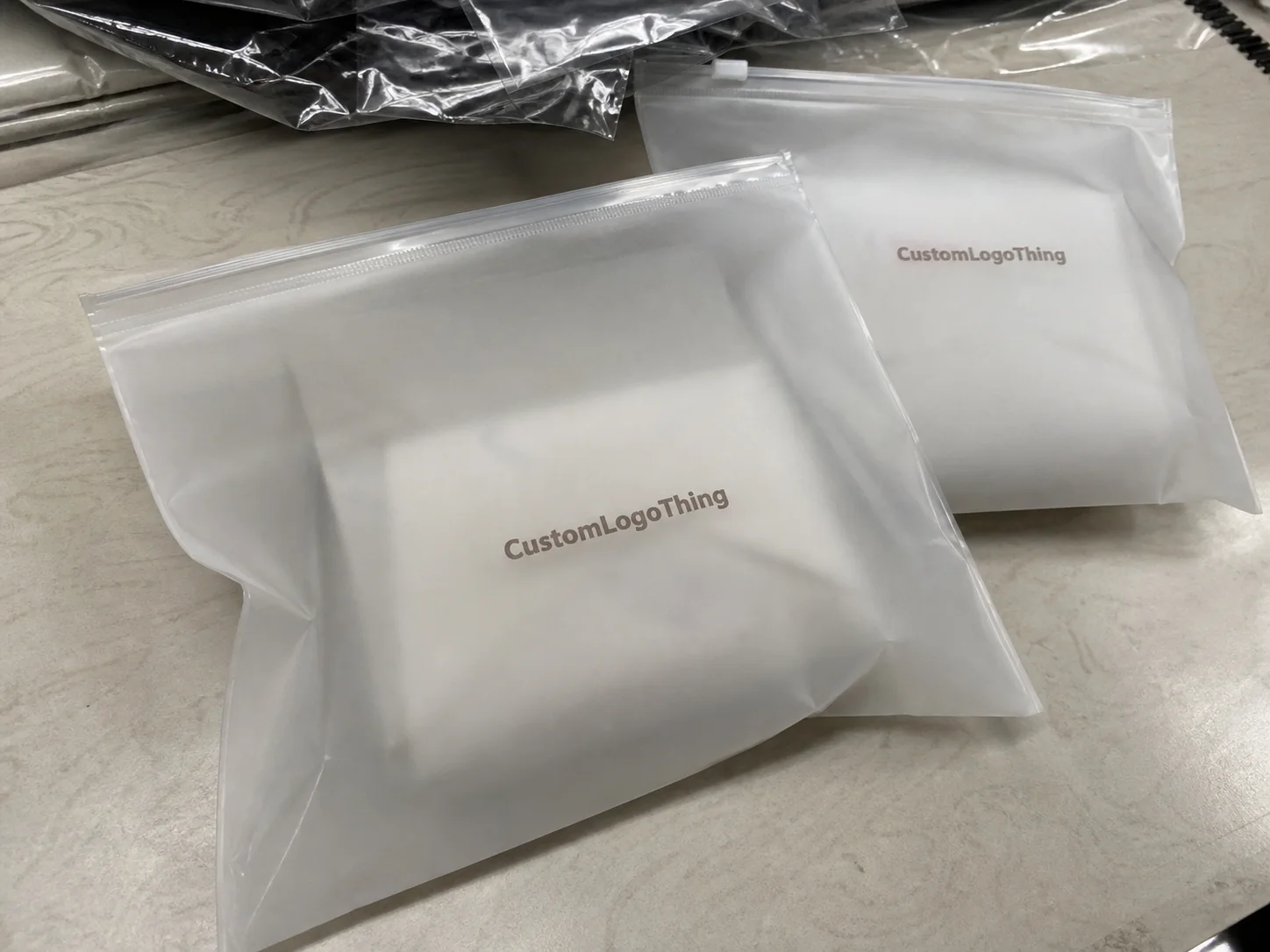
Not every product deserves a full production commitment on day one. If the formula is still changing, the retail channel is unproven, or the seasonal window is short, Custom Plastic Packaging Bags low moq give you room to learn without locking up too much capital. That matters in food, supplements, accessories, pet treats, and promotional kits, where packaging decisions can shift fast.
Startups usually feel the risk first. A subscription box brand may need 500 branded pouches for a pilot drop. A private label seller may want 1,000 bags to test marketplace conversion before going larger. Seasonal promotions are similar; if the bag misses the sales window, the savings from a larger buy disappear quickly. The same is true for limited editions, where package branding often matters more than raw unit price.
Here is the comparison most people miss: correcting a print or dimension problem on 800 units is annoying, but correcting it on 8,000 units can wipe out margin for an entire quarter. Packaging mistakes are cheaper to fix when the run is small. That is not marketing language. That is arithmetic.
“Low MOQ is not just about order size. It is a risk-control tool for brands that are still learning what the market will accept.”
Low minimums also help with iterative packaging design. You can test matte versus gloss, clear versus opaque, or a zipper bag versus a flat bag without overcommitting. Consumers react to packaging cues quickly. A slightly thicker film, a cleaner seal, or better shelf presentation can change perceived value more than a long sales pitch can.
For buyers comparing custom printed boxes with flexible bags, the bag format often wins on freight efficiency and storage. Bags ship flat, take less space, and are usually easier to store near the filling line. When volume is uncertain, that practical advantage matters as much as aesthetics.
Bag styles, materials, and print options that affect performance
The bag style should follow the product, not the other way around. Flat bags work well for lightweight items, inserts, and simple retail packaging. Resealable zipper bags are better when the customer needs repeated access. Gusseted bags create more internal volume, which helps with snacks, powders, apparel, and multi-piece kits. Wicketed bags are common for high-speed packing lines. For some applications, a stand-up pouch alternative makes more sense, especially if shelf presence is a priority.
Material choice changes more than people expect. LDPE is flexible and forgiving, with good sealability and a soft feel. HDPE is stiffer and thinner for a given strength profile, often used where clarity and efficiency matter. PP typically offers a crisper look and stronger stiffness, which can suit premium presentation. Laminated structures add barrier and print quality, especially when moisture, odor control, or product freshness matters. For food contact or sensitive product packaging, the actual structure has to match the application, not just the visual brief.
Print method is another major decision. Flexographic printing is cost-effective for larger repeat volumes and can be very consistent once plates are made. Gravure supports high-end image quality and long runs, though setup is more expensive. Digital printing is often the fastest route for smaller quantities because it avoids plate charges and supports frequent artwork changes. If a brand wants custom plastic packaging bags low moq with multiple colors, digital printing is usually the most practical starting point.
| Option | Best for | Typical MOQ behavior | Notes |
|---|---|---|---|
| Flat LDPE bag | Simple retail packs, inserts | Lower | Lightweight, economical, easy to store |
| Resealable zipper bag | Reclosable products, sampling | Moderate | Useful for repeat access and premium feel |
| Gusseted PP or laminated bag | Bulkier products, shelf display | Moderate | Better capacity and structure |
| Wicketed bag | Automated packing lines | Depends on format | Chosen for speed, not just appearance |
| Digital printed pouch | Small runs, frequent artwork changes | Often lowest | Shorter lead time, fewer setup costs |
Add-ons can change how the bag performs on shelf and in use. Tear notches improve opening behavior. Hang holes help with peg display. Matte finish looks softer and often reads more premium; gloss can sharpen color and increase visual punch. Anti-static treatment may matter for electronics or dust-sensitive items. Tamper-evident features are worth considering where consumer confidence or regulatory scrutiny is high. And yes, custom sizing is often the difference between a bag that looks tailored and one that simply “fits enough.”
For packaging materials and testing references, the Paper and Packaging Board / Packaging resources and standards-driven organizations such as ISTA can be useful starting points, especially if the bag has to survive shipping abuse or e-commerce handling.
Specifications buyers should confirm before ordering
If the quote request is vague, the result will be vague. That is the rule. To get accurate pricing for custom plastic packaging bags low moq, buyers should confirm width, length, side gusset if needed, and film thickness. A difference of 0.5 mil sounds small, but in flexible packaging it can change feel, durability, and cost. Usable capacity matters too, because a “10 oz bag” can behave very differently once product shape, settle volume, and seal area are considered.
Product behavior should drive the spec. Powdered items need a different seal and barrier profile than dry snacks. Sharp edges can puncture thinner films. Moisture exposure may call for a laminated barrier structure, while light shelf presentation may favor clarity and a cleaner finish. In practice, the right bag is often the one that protects the product without overspecifying material the application does not need.
Artwork requirements deserve more discipline than many teams give them. Confirm bleed, dieline approval, and whether the supplier wants PMS matching or CMYK only. If the design uses small type, fine lines, or compliance copy, those details should be checked against the final bag size, not just the mockup. A package that looks fine on a screen may fail once reduced to the actual printable area.
Documentation matters if the bag is going into regulated or label-sensitive channels. Food contact declarations, recycled content claims, and application-specific statements should be confirmed early. If the product is shipped into retail packaging programs with stricter documentation, ask for the paperwork before paying for production. Missing documents are a common reason a shipment sits while everyone waits for a corrected file.
One practical detail that gets overlooked: sealing method. Heat seal, impulse seal, zipper placement, and headspace all affect how the bag fills and closes on the line. A bag that looks perfect in a mockup can be awkward for operators if the seal area is too narrow or the opening is too stiff. That turns a “small” packaging issue into a production-line slowdown.
Cost, pricing, and MOQ factors that change your quote
The quote is shaped by more than one line item. Material grade, bag dimensions, print coverage, number of colors, finish, and format all move the price. So does whether the order uses stock film or a custom construction. A 1-color flat bag on standard LDPE is a different financial equation than a 6-color laminated zipper bag with matte lamination and hang holes.
MOQ depends on the print method, bag size, and whether the supplier can run from existing film or tooling. Digital printing often supports smaller quantities because it avoids plates. Plate-based production can still work for lower volumes in some cases, but setup cost is harder to spread out, which raises unit cost. That is why two quotes for the same-looking bag can differ by a wide margin.
Buyers should compare unit cost and total order cost together. A bag at $0.22 each can be better value than a bag at $0.18 each if the cheaper option forces a freight surcharge, longer lead time, or a reprint risk because the structure is too light. Plate charges, prepress fees, proofing, and shipping can change the final number more than the bag itself. That catches people out constantly.
For budgeting, smaller runs may land around $0.18 to $0.45 per unit depending on size, material, and print coverage, while more complex laminated or zipper formats can run higher. Exact pricing still depends on specs, but those ranges help a buyer sanity-check the quote. If the number is far outside the expected band, ask why.
Use the table below as a decision lens rather than a promise:
| Quote driver | Lower-cost direction | Higher-cost direction | Buyer takeaway |
|---|---|---|---|
| Material | Standard LDPE / stock film | Laminated barrier structures | Match material to product risk, not just appearance |
| Print method | Digital for smaller runs | Gravure or plate-heavy flexo | Setup cost matters more in low volumes |
| Color count | 1-2 colors | Full coverage, many colors | More colors usually mean more time and expense |
| Finishing | Simple gloss | Matte, special coatings, extra features | Every add-on should earn its place |
| Freight | Consolidated shipment | Rush or split shipments | Shipping can distort a “good” bag price |
One more buyer note: approvals can move the final price more than production does. If artwork changes after proof approval, or if the bag size changes after quoting, expect the quote to be revised. That is not a supplier problem. It is a scope problem.
Process and timeline from quote to delivery
The path from inquiry to shipment should be clear enough that a buyer can track it without asking the same question three times. A solid workflow starts with the inquiry, followed by specification review, artwork submission, proof approval, production, quality check, and shipment. If a supplier cannot explain these steps in plain language, that is a warning sign.
Timing depends heavily on print method. Digital jobs are usually faster because they do not require plates. Plate-based runs take longer because setup, curing, and press preparation add time. In many cases, a low-MOQ digital run may ship faster once the proof is approved, while a more complex flexo order may take longer even if the order size is not huge.
The biggest delay is often not production. It is missing information. A buyer sends a product name but not dimensions. Or the artwork file arrives in low resolution. Or legal copy changes after the proof is created. Each of those problems can push a shipment back by days. If the packaging will face retail scrutiny or any regulatory review, ask for a sample or digital proof before locking production. That small step reduces rework.
Typical lead times can vary, but many buyers should expect roughly 10 to 20 business days from proof approval for a smaller run, with faster timelines possible for simpler digital jobs and longer timelines for plate-based or highly finished jobs. Freight is separate. International shipping and customs clearance can add another layer, especially if the order is time-sensitive for a launch.
For brands where shipping performance matters, ISTA-style testing or transit review can be useful. If the product is fragile, consider how the bag behaves under compression, vibration, and abrasion. A packaging structure that looks good on a mockup may still fail under actual e-commerce handling.
Sample approval is worth the time even for low MOQ orders. Checking seal strength, print registration, zipper action, and opening behavior on a physical sample catches issues that digital proofs never show. That is especially true for food and retail products where first impressions are tied to both appearance and function.
What separates a reliable custom packaging supplier
Speed matters, but quote clarity matters more. A reliable supplier asks the right questions up front: product size, target quantity, print colors, material preference, finish, and compliance needs. That is not bureaucracy. That is risk control. The best suppliers reduce guesswork before it becomes a production issue.
Consistency is the next filter. Film thickness should stay within a reasonable tolerance. Seals should be clean and consistent. Print alignment should hold from first unit to last. Repeat orders should match the original spec, not drift over time because records were not maintained. That is especially important for branded packaging and anything sold through retail channels where visual consistency is part of the brand promise.
Good communication habits separate strong partners from average ones. Look for written proof approvals, clear spec sheets, realistic lead-time expectations, and a willingness to explain trade-offs. If the supplier changes answers every time the same question is asked, the quote is not the only thing you should question.
Flexibility matters too. A supplier that can handle a small test run now and scale later without rebuilding the whole spec file saves the buyer time and money. That is how custom plastic packaging bags low moq become a launch tool instead of a one-off purchase.
For sustainability claims or recycled-content discussions, verify documentation rather than relying on verbal assurances. The FSC is relevant for paper-based components, inserts, or mixed packaging programs, and the EPA offers useful reference points for materials and waste-related considerations. If the packaging program touches environmental claims, documentation discipline is non-negotiable.
QC is another tell. A supplier that can describe what they inspect — dimensions, seal integrity, print quality, film gauge, zipper function, and sample retention — usually runs a more controlled operation than one that just says “we check everything.” That phrase means very little in practice.
Next steps to order the right low-MOQ bag run
Before requesting a quote, prepare the basics: product dimensions, target quantity, artwork files, preferred material, and the features you actually need. If the bag must be resealable, hangable, food-contact safe, or tamper evident, say so now. The cleaner the brief, the cleaner the pricing.
Request two versions if possible: the lowest-cost option that still works, and the best-fit option for shelf performance. That comparison usually reveals where the real value sits. Sometimes the cheapest bag is enough. Sometimes a slightly better film or stronger zipper protects margin by improving customer experience and reducing damage.
Ask for a sample, proof, or spec confirmation before payment. That is not being difficult. It is what serious buyers do. A few hours spent reviewing artwork and dimensions can save a much larger cost later. If you also need broader packaging support, review the FAQ so your internal team can align on timelines, approvals, and repeat-order planning.
Then move in sequence: submit specs, compare the quote, approve the proof, and schedule production. That simple process is usually enough to get a launch moving without overbuying inventory. For brands that need custom plastic packaging bags low moq, the best order is the one that matches real demand, not imagined demand.
If the product is still evolving, keep the first run conservative. Overordering to “save” a few cents per bag is how teams end up with obsolete inventory and a very boring storage problem. Low MOQ is there to keep the launch flexible. Use it that way.
What is the minimum order for custom plastic packaging bags low MOQ?
MOQ depends on bag style, print method, material, and size. Digital printing and stock-film options usually support smaller quantities than plate-based production. A supplier should confirm MOQ after reviewing your exact specs rather than giving a generic number.
Can I order custom plastic packaging bags in a small run with full-color printing?
Yes, but the print method matters. Digital printing is often the best fit for smaller runs with multiple colors. More colors, larger coverage, and specialty finishes can raise the price even at low MOQ.
What information do I need to get an accurate quote for low MOQ bags?
Provide product dimensions, bag dimensions, quantity, material preference, print artwork, and required features. Include whether the bag needs resealability, hang holes, or food-contact considerations. The more complete the specs, the faster and more accurate the quote.
How long does production take for custom plastic packaging bags low MOQ?
Lead time varies by printing method, artwork approval speed, and factory schedule. Low-MOQ digital runs are usually faster than plate-based jobs. Approval delays are one of the most common reasons a shipment moves later.
Can I reorder the same custom bag design later at a higher quantity?
Yes, reorders are usually simpler if the original spec sheet and artwork files are retained. Higher quantities often improve unit cost. Confirm whether the supplier keeps your production records and print setup details for repeat orders.


