Custom cloth labels do more than identify a garment. They are one of the first tactile brand cues a buyer notices, and a clean label can make a private-label sweatshirt feel more finished before the hangtag is even touched. If you are evaluating custom cloth labels how to order the right finish, the goal is to match the label to the garment, the wash cycle, and the brand story instead of treating it as a last-minute add-on.
From a packaging buyer’s point of view, the label sits in the same decision family as Custom Labels & Tags and Custom Packaging Products. If the weave is sloppy, the fold is wrong, or the care copy is hard to read, the product often feels less disciplined overall. That is why custom cloth labels how to order the right finish is as much a sourcing question as a design question.
A label is a small component with an outsized effect on how a brand feels in hand, on rack, and after the first wash.
That is the buying challenge. You are not just ordering a strip of fabric. You are specifying a component that has to survive sewing, wear, laundering, and handling while still supporting the rest of the packaging system. For teams working on custom cloth labels how to order the right finish, the best results usually come from testing the label on the actual garment, not on a blank artboard.
What custom cloth labels are and why buyers notice them first
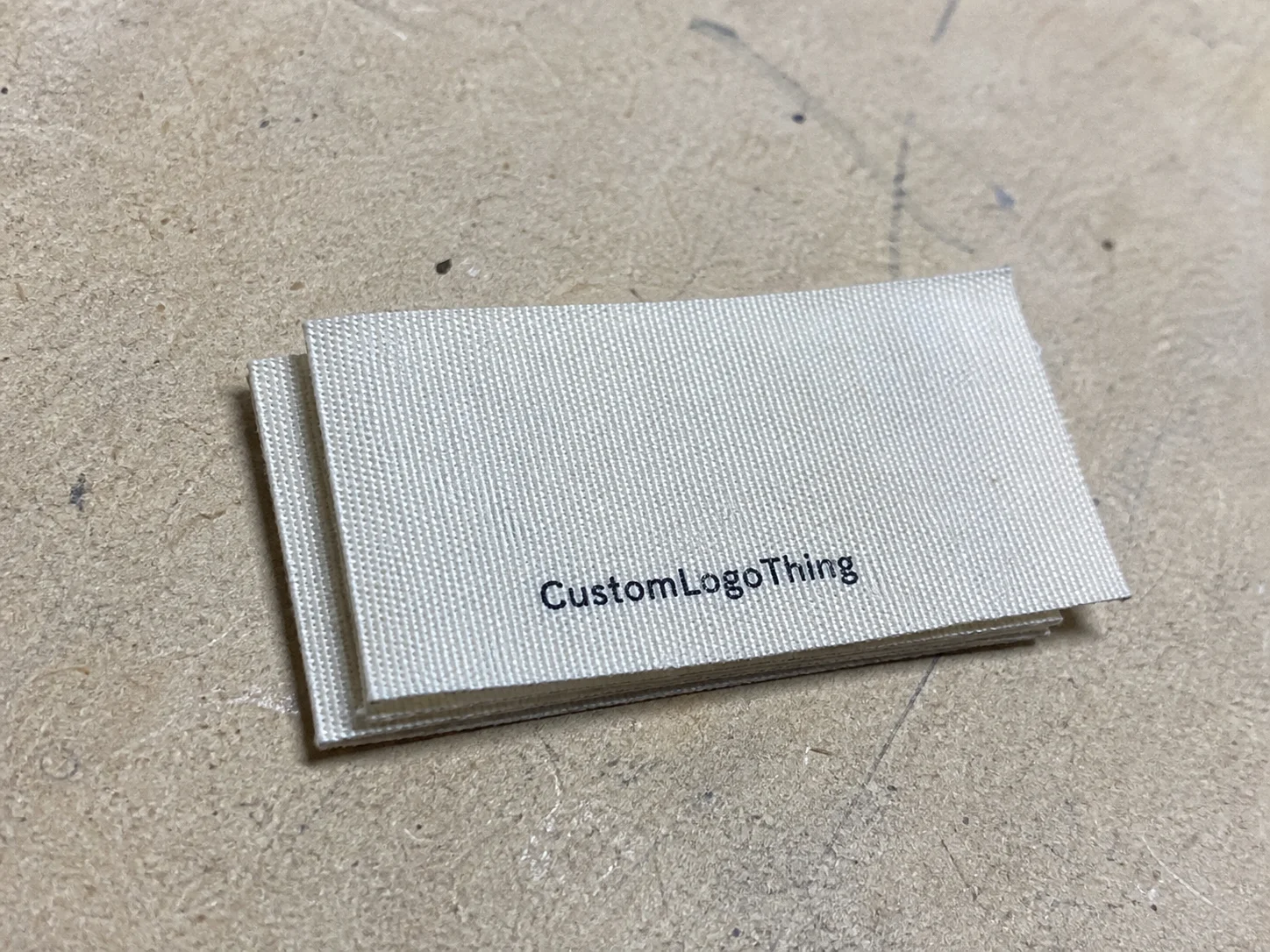
Custom cloth labels are sewn-in or attached fabric identifiers used for branding, sizing, care instructions, fiber content, country of origin, or other compliance details. Common formats include neck labels, side-seam labels, hem labels, loop labels, and care labels. They may be woven, printed, or a hybrid, but the job is the same: carry useful information while reinforcing the brand.
Buyers notice them early because cloth is tactile. A hangtag can look expensive and a printed box can create a strong first impression, but a label touches skin and moves with the garment. If the edge is rough, the backing is stiff, or the type is too small, the customer feels the problem immediately.
There is also a commercial reason to care. Clear care copy and durable construction can reduce returns, especially on items that need specific washing treatment. For private-label brands, the label is often the cheapest place to improve consistency across a collection.
Good labeling also supports brand discipline across channels. A label should not look like an afterthought beside a clean box or a well-printed insert. When the outer packaging, garment, and sewn-in information all follow the same standard, the product feels intentional rather than assembled from mismatched parts.
How weaving, printing, and finishing change the final label
Three choices shape the final label: how the image is applied, what base material is used, and how the edge is finished. Those decisions affect durability, softness, and readability after repeated laundering.
Woven labels are built from thread. They usually feel more structured and hold up well under wash cycles. A damask weave can capture fine detail better than basic taffeta because the thread count is higher and the image can be rendered more tightly. That matters if your logo includes small lettering or a thin icon.
Printed labels are better when detail and hand feel matter more than thread texture. Satin and soft printed constructions sit more lightly against the skin, which helps for babywear, activewear, and lightweight basics. If your artwork includes a long care block or small text, print can be the more readable option.
Finishing affects both comfort and presentation. Heat-cut edges reduce fray on some synthetics. Center folds are common for neck branding because they sit neatly across the seam. End folds work well on side seams or outer branding. Straight cuts are common for sew-on patches or external applications, and loop folds show up on specialty garments and accessories.
| Label Type | Typical Feel | Best Use Case | Typical Cost Range at Mid Volume |
|---|---|---|---|
| Woven damask | Textured, crisp, durable | Premium tees, denim, outerwear | $0.05-$0.18 per unit |
| Printed satin | Softer, smoother, lighter | Neck labels, babywear, activewear | $0.03-$0.14 per unit |
| Taffeta woven | Light, functional, economical | Utility garments, uniforms, mass basics | $0.02-$0.10 per unit |
That table is only a starting point. Two labels with the same price can behave very differently once they are sewn into a heavyweight hoodie versus a thin jersey tee. The real question is which style survives the garment’s life cycle and still feels intentional after twenty washes.
The spec choices that affect feel, durability, and compliance
Once the style is chosen, the spec sheet does the real work. Size, color count, fold style, artwork complexity, attachment method, and compliance copy all change the final result. A 25 mm neck label with two colors is a very different job from a 70 mm care label with six lines of legal copy.
Garment category matters. Babywear needs soft edges and low irritation risk. Activewear needs wash durability and stretch compatibility. Premium denim can tolerate more body in the label, but it still benefits from clean fold geometry. Uniform programs often prioritize legibility and fast reordering over visual flair.
Compliance is not optional. Depending on the market, you may need fiber content, care symbols, country-of-origin details, and size marking. Those fields should be planned early, because squeezing them into a tiny layout after the logo is approved is where many labels become cramped and hard to read.
Texture matters as much as appearance. A label can look perfect on screen and still fail on a real garment if the backing is stiff or the edge catches the skin. In a fit session, the problem is often immediate because people move, rub, and tug at the garment.
If your apparel line ships in cartons, polybags, or gift sets, it helps to think about the whole stack, not just the label. Many teams cross-check label specs with broader product packaging requirements and transit performance standards. For shipping-related testing, the procedures used by organizations like ISTA are a useful reference point. If your packaging uses paper components, the sourcing side often intersects with FSC expectations as well.
Label durability should match garment durability. If a hoodie is built to last years, the label should not start fraying after the first laundry cycle. Teams still under-spec labels on higher-margin products because they compare them to the cheapest possible sample instead of the actual use case.
New options and market trends for 2026
Several shifts are changing how brands order custom cloth labels how to order the right finish in 2026. First, more buyers are asking for recycled yarn options and lower-impact finishes, especially for brands that already publish material disclosures. Recycled polyester woven labels are now easier to source than they were a few years ago, and many suppliers have expanded low-itch soft backing choices to support comfort-led apparel lines.
Second, premium brands are moving toward cleaner, lower-contrast label systems. Instead of packing every detail into a single woven neck label, they split branding and compliance across separate pieces: a soft brand tab at the neck, then a printed care label at the side seam. That approach can improve readability and reduce the “busy” look that hurts higher-end basics.
Third, digital proofing has improved. Suppliers increasingly send more accurate mockups and color references before production, which helps reduce approval errors. In our own sourcing reviews, the biggest win has been catching fold-orientation mistakes early, before a full run is produced. That matters because rework on labels is often more expensive than the original label cost.
Updated pricing in 2026 still depends heavily on volume, but market movement has made low-MOQ orders a bit more accessible than they were during the supply tightness of earlier years. For many standard woven or printed cloth labels, small-run pricing still starts around the ranges shown above, while mid-volume orders remain the most efficient balance of cost and flexibility. Rush production and specialty finishes still add a premium, particularly when the design needs custom backings or extra finishing steps.
Another practical trend is the move toward label systems that support resale and repair. Brands that expect a longer product life are choosing finishes that stay readable after repeated laundering and handling, which is especially useful for premium outerwear, workwear, and kids' apparel. That is a strong reason to treat finish selection as part of the product strategy instead of a cosmetic detail.
Pricing, MOQ, and unit cost: what changes the quote
Quote variation usually comes from seven levers: quantity, color count, weave density, fold style, backing, rush timing, and whether the artwork requires special thread or print handling. Two suppliers can both offer a “woven label” while one includes a basic fold and the other prices a higher-density weave with a custom finish.
MOQ means minimum order quantity. Lower MOQs are useful for small launches, but they usually carry a higher unit cost because setup is spread across fewer labels. At 500 pieces, a label will usually cost more per unit than at 5,000 pieces. That does not make the small run a bad choice. It just means the economics are different.
Small orders are also more sensitive to fixed charges. Setup, digitizing, plate work, or proof preparation can add a meaningful amount to the first invoice. On a large run, that overhead gets diluted. On a test run, it can dominate the quote. A label that saves two cents but causes sewing problems, color mismatch, or reorder delays is expensive in the wrong way.
| Scenario | Typical MOQ | Approx. Unit Cost | What Usually Drives the Price |
|---|---|---|---|
| Small launch, simple logo | 300-500 pcs | $0.08-$0.25 | Setup fees, low volume, basic fold |
| Mid-volume apparel line | 1,000-3,000 pcs | $0.04-$0.14 | Color count, weave density, finish type |
| Higher-volume replenishment | 5,000+ pcs | $0.02-$0.08 | Scale efficiency, simpler handling, repeat artwork |
Price should be judged against more than label cost alone. Compare it against sewing time, return risk, brand impact, and the cost of ordering again because the first spec was off. A slightly higher price can be the better commercial decision if it saves a rework cycle or keeps the garment from feeling scratchy on skin.
Production process, proofing, and turnaround expectations
The production path is usually straightforward. A clean order starts with a brief that covers garment type, label placement, dimensions, fold, quantity, and required text. From there, the supplier reviews artwork, prepares a digital proof, and, if needed, produces a sample before bulk production begins. After approval, the run moves through production, finishing, quality check, and shipment.
The proof stage is where many schedules slip. Missing compliance text, low-resolution logos, color changes after proofing, and delayed sign-off can add days. If your team sends a design without final care copy, the supplier has to pause or make assumptions. Assumptions are expensive in labeling because even a tiny type error can make an entire batch unusable.
Typical lead times vary by construction and volume, but a useful working range for many custom cloth labels is often 10-15 business days from proof approval for standard runs. Rush options can reduce that window, sometimes to about 5-7 business days, but they often narrow material choices or add cost. Large or highly detailed orders can take longer.
Before ordering, ask for a clear breakdown of what the turnaround includes. Does it cover proofing, sampling, production, finishing, and freight? Is the ship date from payment, proof approval, or artwork receipt? Are weekends counted? Those questions prevent confusion because suppliers do not always define “lead time” the same way.
Common ordering mistakes that create waste or rework
The most expensive mistake is usually scale mismatch. A label that looks balanced on a flat mockup can overwhelm a small seam or disappear on a bulky outerwear piece. Size should be judged against the actual garment, not a blank artboard.
Color approval errors are another recurring issue. Screen color and thread color are not the same thing, and printed satin does not behave like woven yarn under the same light. The safest move is to check the label against the actual garment color and lighting conditions used in production or retail photography.
Skipping wash testing is another false economy. Activewear, children’s apparel, and utility garments need more than a visual check. They need abrasion and laundering confidence. If the application uses a printed finish, test for fading, edge lift, and legibility after repeated cycles. If it is woven, check fray behavior and seam comfort.
There is also a quantity mistake that shows up later. Teams order only enough for the main production run, then discover they need samples, repairs, or replenishment. A buffer of 5% to 10% is usually easier to justify than a separate emergency order six months later.
One more issue is forgetting to align the label with the garment’s retail position. A neck label that works on a crewneck may interfere with trim placement on a zip hoodie, and a side-seam label can look awkward on a draped silhouette. The finish should support the silhouette, not fight it. That is one of the quiet reasons custom cloth labels how to order the right finish tends to produce better results when the label is chosen alongside fit and construction, not after them.
Expert ordering tips and the next steps to take
Start with a one-page spec sheet. Keep it simple: garment type, placement, dimensions, fold, quantity, finish, target unit cost, and any required compliance text. That sheet becomes your internal reference and your supplier brief. It also makes comparing quotes much faster, because every supplier is responding to the same request.
If the brand is undecided between woven and printed options, ask for both versions of the same design. The price difference is useful, but the real test is hand feel on the actual fabric. A woven label may look richer on paper, while a printed version may be better on skin.
For repeat programs, keep one master artwork file and one approved production sample. Reorders drift when teams rely on old email chains or screenshots. A controlled reference sample keeps thread color, fold, size, and text spacing aligned across seasons, especially if multiple people handle purchasing.
- Audit the garment and measure the available placement area.
- Decide on the required text, including care and origin details.
- Choose the finish that fits the fabric and wash cycle.
- Request quotes with the same spec sheet from each supplier.
- Approve only after checking the sample against the real garment.
The most consistent brands align their cloth label, outer packaging, and retail presentation so the customer experiences one clear standard from shelf to wash cycle. That is the practical value of custom cloth labels: they help the garment feel deliberate and keep the brand story intact after the box is opened.
How much do custom cloth labels usually cost per piece?
Unit price depends most on quantity, color count, fold style, and whether the design is woven or printed. Small runs usually carry a higher per-piece cost because setup fees are spread across fewer labels.
What is the difference between woven and printed cloth labels?
Woven labels are built with thread and usually feel more durable and premium for long-term branding. Printed labels can show finer detail and often feel softer, which helps for lightweight or skin-facing garments.
How long does production take for custom cloth labels?
Lead time usually includes proofing, production, finishing, and shipping, so the full timeline is longer than the machine run alone. Rush options can reduce delivery time, but they may limit material choices or increase cost.
Which fold style works best for clothing neck labels?
Center fold is common for neck labels because it sits neatly on the seam and keeps branding visible. End fold or loop fold may work better for side seams, external branding, or specialty placements.
Can custom cloth labels be used on delicate fabrics?
Yes, but the material, backing, and attachment method need to be chosen carefully to avoid scratching or puckering. Softer printed constructions often work better when the garment touches the skin directly.


