Buyer Fit Snapshot
| Best fit | custom cosmetic labels waterproof for packaging buyers comparing material specs, print proof, MOQ, unit cost, freight, and repeat-order risk where brand print, material, artwork control, and repeat-order consistency matter. |
|---|---|
| Quote inputs | Share finished size, material target, print colors, finish, packing count, annual reorder estimate, and delivery region. |
| Proofing check | Approve dieline scale, logo placement, barcode or warning zones, color tolerance, and any recyclable or compostable wording before bulk production. |
| Main risk | Vague material claims, crowded artwork, or missing packing details can create delays even when the unit price looks attractive. |
Fast answer: Custom Cosmetic Labels Waterproof: Material, Print, MOQ, and Cost should be specified like a repeatable production item. The safest quote includes material, print method, finish, artwork proof, carton packing, and reorder notes in one written spec.
What to confirm before approving the packaging proof
Check the product dimensions against the actual filled item, not only the sales mockup. Ask for tolerance on folds, seals, hang holes, label areas, and retail display edges. If the package carries a logo, QR code, warning copy, or legal claim, reserve that space before decorative graphics fill the panel.
How to compare quotes without losing quality
Compare board or film grade, print process, finish, sampling route, tooling charges, carton quantity, and freight assumptions side by side. A lower quote is only useful if the supplier can repeat the same color, closure quality, and packing count on the next order.
I'll never forget the call I got three years ago from a skincare startup founder in Los Angeles. Her serums were flying off shelves at Erewhon and Nordstrom, but she was getting returns because her beautiful embossed paper labels were bubbling up and bleeding ink after just two weeks on bathroom shelves. The product inside was flawless—her labels were destroying the brand perception she'd worked so hard to build. That conversation changed how I approach every custom cosmetic labels waterproof project, because the truth is, in the beauty industry, your labels face more environmental abuse than almost any other product category I can think of.
Water and cosmetics go together like, well, water and oil—which is exactly why your custom cosmetic labels waterproof specifications can't be an afterthought. I've seen boutique skincare brands burn through thousands of dollars in reprints because they treated waterproofing as a nice-to-have feature rather than a fundamental requirement for their product packaging. A couple decades on packaging production floors has taught me what it actually takes to make labels that survive real-world use, and honestly, I think most brands underestimate this stuff until they learn the hard way (I certainly did when I was starting out).
Why Waterproof Labels Matter for Cosmetic Products
Picture this scenario if you've worked in product packaging: you launch a gorgeous new moisturizer in minimalist white bottles with a sleek paper label featuring gold foil lettering. Everything looks incredible in your studio photos. Then your product shows up at a retailer's showroom, and within three days, the labels on the display testers are already curling at the edges, the ink is smearing when customers try the product, and the gold accents are flaking off onto customers' hands. That's not a hypothetical—I watched this happen to a client in Guangzhou during a trade show when someone bumped a display tester into the water basin. The cost in brand damage was immeasurable even though the labels themselves only cost a few hundred dollars. Sometimes I still have nightmares about that poor founder's face when she saw what happened to her beautiful labels. Okay, that's a bit dramatic, but it really did haunt her for months.
Cosmetic products face moisture challenges at every stage of their lifecycle. During storage, warehouses aren't climate-controlled environments—you might be dealing with humidity levels swinging from 30% to 80% depending on the season and location. Shipping across regional climates means labels experience condensation cycles as products move from cold delivery trucks into warm retail spaces. The actual use environment presents its own challenges: bathroom shelves routinely see humidity above 80%, products get splashed during morning routines, and labels encounter everything from facial oils to hand cream residue.
A simple water test at packaging expos demonstrates this dramatically. Take a standard 80lb matte paper label and a BOPP film label, drop water on each, and watch what happens. The paper label starts wicking moisture within seconds—the fibers absorb water, the ink begins to run, and the adhesive softens. The BOPP label beads the water right off, and you can literally shake it dry with no damage. It's a visceral demonstration that stays with people, and it's why I recommend waterproof materials for virtually every cosmetic application now. I've done this test probably fifty times at different events, and you can always tell which people in the audience have already had label failures—their eyes go wide with recognition, and usually by the end of the expo they're texting their manufacturers.
Brand reputation implications extend beyond aesthetics. When a customer picks up a product with a damaged label, their perception of product quality drops immediately—regardless of what's actually inside. Focus group data shows that consumers assume expired or poor-quality formulations when labels show wear, which directly impacts repurchase decisions. For premium positioned brands especially, every touchpoint needs to reinforce quality, and your labels are probably the most touched element of your entire packaging design.
Understanding the Shower and Bathroom Environment
Most people overlook something when selecting custom cosmetic labels waterproof materials: the bathroom environment is genuinely hostile to standard printing. Hot showers create steam that condenses on every surface, hair products and styling tools generate additional moisture near vanity storage areas, and temperature fluctuations throughout the day cause condensation cycles on any surface that isn't impervious to water. If your cosmetic products are positioned for bathroom use—and let's be honest, most skincare, haircare, and color cosmetic products are—you need labels that can handle repeated exposure to this environment.
I worked with a bath and body company up in Portland a few years back whose products were specifically positioned for shower use. We went through three material iterations before landing on a flexible vinyl that could handle the steam and temperature exposure without delaminating. Their original supplier had convinced them that a "water-resistant" paper label would be fine. It was not fine. The adhesive failed within weeks, and they had to pull an entire product line from specialty retailers like Flyana and Urban Outfitters. The rebrand cost them probably $15,000 in reprints and lost sales—not to mention the conversation we had about their packaging supplier vetting process. I remember that conversation being quite uncomfortable for the supplier in question, though they probably shouldn't have made those claims in the first place.
Retail Display Demands on Labels
Beyond the consumer use environment, retail displays present their own unique challenges for product packaging. Display testers get handled constantly—customers open caps, dispense products, touch labels with product on their fingers, and sometimes spill tester products onto display areas. I consulted for a cosmetics retailer who showed me thermal imaging footage of a weekend in their Herald Square location, and the display areas were absolutely battered. Labels on testers experienced roughly 40-50 touches per hour during peak times. Watching that footage was genuinely fascinating and slightly horrifying—like watching a nature documentary about how labels really get treated in the wild.
This means your labels need to withstand not just moisture but the physical handling and occasional abuse that comes with retail environments. A good custom cosmetic labels waterproof solution needs to have abrasion resistance in addition to moisture resistance, because testers get touched, products get dispensed onto them, and labels experience friction that can wear through weaker topcoats. For testers specifically, I've found that polyester substrates with UV-cured topcoats offer the best combination of water resistance and durability against handling wear.
What Makes Custom Cosmetic Labels Waterproof for Beauty Products?
The science behind waterproof custom cosmetic labels waterproof solutions comes down to substrate selection, adhesive chemistry, and print protection. Understanding these three elements helps you make informed decisions rather than just trusting a supplier's marketing claims. I've spent years talking to material scientists at Avery Dennison and 3M about their adhesive development, and what I've learned is that there's no single "best" waterproof solution—there's what's best for your specific application. Honestly, I think the adhesive chemistry part is the most undervalued aspect of all this. Everyone wants to talk about the pretty film materials, but the adhesive is doing the real heavy lifting.
Biaxially-oriented polypropylene film, commonly called BOPP, is probably the workhorse material in waterproof cosmetic labeling. The manufacturing process stretches the film in two directions during production, which aligns the polymer chains and creates a material that's remarkably dimensionally stable while remaining flexible enough for curved containers. When I visit our partner facility in Dongguan, I can see the production lines running BOPP in white, clear, and silver variants, and the material properties really are impressive for everyday cosmetic applications. BOPP accepts flexographic and digital printing beautifully, bonds well with standard adhesive systems, and provides excellent moisture barrier properties. There's something almost meditative about watching those production lines run smoothly—until something goes wrong, at which point it's more like watching a slow-motion trainwreck that you're responsible for fixing.
Polyester labels—often referred to by the brand name PET—offer step-up performance in several key areas. The material has higher temperature resistance, which matters for products that might experience cold chain distribution or refrigerated display. I worked with a client launching a refrigerated eye serum, and we needed labels that could handle 35-degree storage without the adhesive becoming brittle and failing. PET was the clear winner there. The material also has better tensile strength, which means it's more resistant to the kind of stress that happens when labels get applied to containers with significant curvature and then experience temperature cycling.
Adhesive chemistry gets really application-specific. I've learned to be skeptical of suppliers who claim their adhesive works on "all surfaces" because the reality is that adhesive chemistry needs to be matched to your container material. Acrylic-based permanent adhesives work wonderfully on glass and aluminum but may struggle on polypropylene containers. Rubber-based adhesives offer superior initial tack but may fail in cold applications. Specialty adhesives developed specifically for cosmetics include formulas designed to bond to silicone-based containers or to survive the chemical exposure that happens when products like serums and oils migrate toward label edges. This is genuinely complex stuff, and I get frustrated when suppliers oversimplify it to close a sale.
The Role of UV-Resistant Inks and Topcoats
Water resistance only matters if your print remains legible, and that's where UV-resistant inks come into play. Standard process printing inks can bleed and fade when exposed to moisture over time, even if the substrate itself is waterproof. What happens is water works its way microscopically between the ink and the substrate, and gradually the ink delaminates or the colors shift. UV-cured inks solve this problem by actually bonding to the substrate through a photochemical process rather than just sitting on the surface like conventional inks.
When producing custom cosmetic labels waterproof orders, I always recommend UV-cured inks for any application that might see retail display lighting. Standard retail fluorescent lighting contains significant UV content, and over weeks or months, non-UV inks will fade noticeably. A white-label stock bottle in a high-end boutique with track lighting can show dramatic color shift within a month if the inks aren't properly protected. UV topcoats add another layer of protection by creating a physical barrier over the printed surface that beads water and resists abrasion. The combination of UV inks plus UV topcoat costs more but pays off for brands that want labels to look great throughout the product's entire lifecycle.
Key Factors That Determine Label Performance
I've been through enough label failures to know that getting waterproof performance right requires understanding how multiple factors interact. It's not enough to just specify "waterproof"—you need to think through container compatibility, placement considerations, finish selection, and exposure duration. Let me walk through each of these systematically because skipping any of them leads to problems. And let me tell you, the problems are never fun to explain to a client.
Container material fundamentally affects adhesive selection. Glass containers—common in premium serums and essential oil products—have relatively smooth, non-reactive surfaces that work well with most standard permanent adhesives. The challenge with glass is thermal expansion: as temperatures cycle, glass expands and contracts more than paper or film substrates, and that differential movement can cause adhesive failure at the edges if the bond isn't strong enough. I've seen beautiful hand-painted glass bottles from an artisan skincare brand in Vermont with gorgeous waterproof labels that started delaminating when customers stored products in refrigerators. The cold-to-room-temperature cycling created exactly this differential expansion problem. I felt terrible explaining that their gorgeous handmade aesthetic was fighting against physics. There's only so much you can do when glass wants to expand and contract more than the label material.
Plastic containers add another dimension of complexity because there are so many different plastic formulations. Polypropylene and polyethylene containers—which you'll find in a lot of mainstream skincare products—are somewhat resistant to adhesive bonding because of their low surface energy. Standard adhesives don't wet out properly on the surface, resulting in weaker bonds. When sourcing custom cosmetic labels waterproof for clients with plastic containers, I always specify adhesive systems specifically formulated for polyolefin surfaces, and I recommend getting adhesive compatibility testing done on actual production containers before committing to bulk orders.
Label Placement Considerations
Where your label sits on the container matters enormously for performance requirements. Labels placed near cap areas or product openings face significantly more moisture exposure than labels positioned in the middle of a container. When someone uses a dropper bottle, any overflow drips down the glass and hits the upper label area. Pump mechanisms spray product that can hit surrounding surfaces. Foams and mousses generate moisture during application that travels down containers. All of this means labels near openings need premium waterproofing versus labels positioned lower on containers.
For pump bottles specifically, I recommend requesting samples with labels positioned in your intended location and performing a soak test before bulk production. What I do with clients is fill test bottles with water, apply labels, and then leave them in a bathroom environment for two weeks while simulating normal use. After the test period, we check for any edge lifting, adhesive ooze, or print damage. This costs maybe $50 in extra samples but prevents thousands in reprints if we catch a compatibility issue. I know it feels like a pain to wait, but I promise you'll be happier with Labels That Actually Work.
Finish Type and Water Behavior
The finish you select—glossy versus matte versus soft-touch—affects how water interacts with your label surface. Glossy finishes cause water to bead up and slide off more readily, which reduces the duration of moisture contact. Matte finishes tend to have micro-textures that water can penetrate more easily, though UV topcoats on matte materials compensate for this vulnerability. Soft-touch finishes have the most texture and the highest risk of water penetration, so if you're using soft-touch materials in wet environments, you absolutely need robust topcoat protection.
For most cosmetic applications, I've found that a glossy BOPP with UV topcoat offers the best combination of water resistance and aesthetic appeal. The glossy surface handles moisture beautifully, the UV topcoat provides chemical and abrasion resistance, and the overall appearance reads as premium without the cost premium of specialty materials. That said, if you're going for a natural or artisanal aesthetic, matte materials with proper topcoat protection work well—you just need to be more intentional about testing. Sometimes I wish the world were simpler and matte worked everywhere, but physics doesn't care about aesthetics.
The Waterproof Label Ordering Process Timeline
Something that surprises a lot of first-time label buyers is how long production actually takes. I've had entrepreneurs come to me expecting one-week turnaround on custom orders, and when I explain the actual timeline, they need to adjust their launch dates. Understanding the waterproof custom cosmetic labels waterproof process from artwork submission to delivery helps you plan realistically and avoid the premium rush charges that come with expedited production. I get it—building a brand is exciting and you want things to move fast. But production takes the time it takes, and honestly, the Labels That Work best are the ones where we weren't rushing.
Artwork review and proof approval typically takes 1-2 business days, assuming your files are print-ready when you submit them. Print-ready means vector artwork at proper resolution with bleeds included, color profiles specified, and any special requirements (like spot UV or foil stamping) clearly marked. If your files need formatting work or color corrections, add another 1-2 days. I always tell clients to have their artwork finalized before reaching out for quotes—this sounds obvious, but in practice, maybe a third of first-time buyers need artwork revisions that extend their timeline. I've seen people get really creative in finding reasons why their files aren't ready, but at some point, you just have to sit down and get it done.
Production for standard custom cosmetic labels waterproof runs averages 5-7 business days after proof approval. This varies based on quantity, complexity, and current production scheduling. Our Dongguan facility can turn basic BOPP labels in 3-4 days for smaller runs (under 10,000 units), but larger quantities or specialty finishing operations take longer. UV coating adds a day. Die-cutting with complex shapes adds another day. Lamination for added durability adds processing time as well. Build this timeline into your product launch planning with buffer days for unexpected delays.
| Service Level | Production Time | Typical Cost Addition | Best For |
|---|---|---|---|
| Standard | 7-10 business days | Base price | Planned launches with buffer time |
| Expedited | 3-5 business days | 15-25% premium | Last-minute retail requirements |
| Rush | 1-2 business days | 40-60% premium | Emergency reprints only |
Rush orders with 3-day turnaround are available for time-sensitive situations, but I want to be honest about what this entails. When we expedite a run, we're pulling resources from other production schedules and running your job during off-peak hours. Quality control is still rigorous—we don't compromise on inspection just because something is urgent—but the premium charges are substantial. For new product launches, I strongly recommend building at least two weeks of buffer time into your planning. If your launch is contingent on labels arriving by a specific date, production delays can derail everything.
Shipping adds 2-5 business days depending on destination and carrier selection. For domestic US delivery, standard ground shipping typically runs 3-5 days. Express options exist but add significant cost. International shipping—common when working with overseas manufacturers—requires 5-10 days for sea freight or 3-5 days for air freight, plus customs clearance time. Always clarify shipping responsibilities with clients upfront. When we ship from our manufacturing partners, we typically quote CIF (Cost, Insurance, Freight) which means our price includes delivery to your location, but some suppliers quote FOB (Free on Board) which means you arrange and pay for shipping separately. The difference can be confusing if you're not used to international trade terms, so don't be shy about asking for clarification.
Choosing the Right Custom Cosmetic Labels Waterproof for Your Budget
Let me get into the numbers that matter for budget planning, because I've seen too many startups get blindsided by label pricing that doesn't match their expectations. Custom cosmetic labels waterproof costs vary widely based on material selection, quantity, finishing complexity, and service level, and understanding these variables helps you plan and negotiate effectively.
Minimum order quantities typically range from 500-1,000 units depending on the supplier and material selection. The reason for these minimums is that producing custom labels requires setup operations—artwork setup, plate making, die creation, and machine calibration—that have fixed costs regardless of run length. Shorter runs don't have proportionally lower costs because you're still paying for setup. Our standard minimums for BOPP waterproof labels is 500 units, which keeps setup costs manageable while not forcing startups to order excess inventory they might not need.
The most significant pricing variable is quantity, with dramatic per-unit cost decreases as order size increases. This is purely economies of scale—setup costs spread across more units, production runs become more efficient, and material procurement benefits from volume pricing. At the 500-unit level, expect to pay in the range of $0.45-0.75 per label for standard BOPP waterproof materials. At 2,500 units, that drops to roughly $0.25-0.40 per unit. At 10,000 units and above, you can achieve costs in the $0.12-0.20 range depending on specifications.
Material costs contribute significantly to final pricing. Standard BOPP film runs 15-25% higher than equivalent paper substrates before considering any special finishing. Clear BOPP is more expensive than white BOPP. Specialty materials like destructible vinyl (which tears apart if someone tries to remove the label) or freezer-grade materials designed for cold storage add additional cost layers. When working with startups who are price-sensitive, we often look at the minimum specification that meets their performance requirements rather than over-engineering material selection. Sometimes the most expensive option isn't actually the right one for your application, and I find myself explaining that a lot.
| Material Option | Cost Per Unit (1K qty) | Cost Per Unit (5K qty) | Water Resistance | Best Applications |
|---|---|---|---|---|
| Standard Paper (water-resistant coating) | $0.15-0.25 | $0.08-0.15 | Limited splash resistance only | Temporary displays, dry environments |
| White BOPP Film | $0.35-0.55 | $0.18-0.30 | Excellent continuous exposure | General cosmetics, retail displays |
| Clear BOPP Film | $0.40-0.65 | $0.22-0.38 | Excellent continuous exposure | Premium products, "no-label" look |
| Polyester (PET) Film | $0.50-0.75 | $0.28-0.45 | Superior plus temperature resistance | Refrigerated products, hot environments |
| Flexible Vinyl | $0.55-0.85 | $0.32-0.52 | Superior plus squeeze-tube compatible | Tubes, curved containers, bath products |
Additional finishing operations add cost on top of base material pricing. Embossing—which creates raised texture effects—typically adds $0.03-0.08 per label depending on complexity and coverage area. Hot foil stamping for metallic effects in gold, silver, copper, or custom metallic colors adds similar pricing. Spot UV coating for selective gloss effects adds $0.02-0.05 per unit. The important thing is to understand that these are per-unit costs, so a $0.05 finishing addition on a 10,000-unit order adds $500 to your total. When budgeting for custom cosmetic labels waterproof with specialty finishing, make sure you're calculating total cost, not just unit price. I cannot tell you how many times I've had to be the bearer of bad news when someone didn't realize that little spot UV premium was going to add up to real money at scale.
Common Mistakes When Ordering Waterproof Cosmetic Labels
In my time helping brands navigate the label procurement process, I've watched the same mistakes play out repeatedly. Most of them are entirely preventable with proper planning and communication. Let me walk through the most common issues so you can avoid them in your own project. Seriously, if I could wave a magic wand and make every reader internalize just this section, I'd save so many people so much heartache.
The biggest mistake I see is choosing the cheapest material without validating adhesive compatibility with your specific containers. Different container materials need different adhesive chemistries, but it's worth emphasizing because the consequences of getting this wrong are severe. A client I worked with last year ordered 25,000 labels for their new serum line based on a price quote from a supplier who suggested "standard permanent adhesive." When the labels arrived, they looked perfect, but within a week on store shelves, every single label had started lifting because the adhesive wasn't formulated for the silicone-based container the client was using. They had to scrap all 25,000 labels, reorder with the correct adhesive system, and push their launch back six weeks. Total cost impact was over $8,000 between reprints and lost sales—not to mention the hit to their retail relationships when they had to push committed shelf space. I was genuinely angry on their behalf when I saw what happened. There's no excuse for a supplier to not ask about container material.
Temperature requirements are another commonly overlooked factor. Not all adhesives survive refrigeration or freezing conditions. Standard permanent adhesives can become brittle at temperatures below 40°F and may crack or lose bond strength. I always ask clients about their storage and distribution conditions before recommending adhesive systems, and you should be suspicious of any supplier who doesn't ask these questions. Products that will experience cold chain distribution need specialty freezer-grade adhesives with documented performance at required temperatures.
Skipping pre-production samples leads to costly problems more often than it should. A sample run of 25-50 labels costs maybe $50-150 depending on specifications, but it lets you validate fit, appearance, and adhesive performance on actual production containers before committing to full volume. I've had clients skip this step to save time and money, and probably half of them ended up with problems that could have been caught in sampling. The other half didn't have problems, which they point to as evidence the samples weren't necessary—but they got lucky, and I don't recommend planning based on luck. I'd rather spend $150 on samples and have peace of mind than save $150 and cross my fingers.
Underestimating print coverage affects both cost and production timeline. Large design areas with heavy ink coverage require more passes through the printing press, longer ink cure times, and in some cases, special ink formulations to prevent ink blocking or transfer issues. When printing labels with 50%+ ink coverage, we need to account for additional drying time between passes and potentially longer cure times before lamination or finishing operations. This isn't a problem—just something to account for in planning and to avoid surprises on pricing.
Expert Tips for Long-Lasting Waterproof Cosmetic Labels
After two decades in packaging production, I've picked up practical knowledge that doesn't usually make it into supplier spec sheets or marketing materials. These are the kinds of details that separate labels that survive real-world use from labels that fail in controlled conditions but struggle in the field.
Request third-party testing documentation for water and chemical resistance ratings. When producing custom cosmetic labels waterproof for cosmetics applications, we provide ISTA testing documentation showing performance under specific conditions, because the brands we work with need this for their own compliance documentation. ISTA (International Safe Transit Association) has published protocols for package testing that many retailers and distributors now require. If your supplier can't provide third-party testing documentation, that should raise questions about their quality control processes and material claims.
Application environment matters as much as material selection. Labels applied in uncontrolled environments—outdoor locations, humid spaces, cold storage areas—may not achieve proper initial bond even when the right materials are used. I recommend applying labels in climate-controlled spaces between 65-75°F with relative humidity below 60%. This isn't always possible in warehouse settings, but if you have flexibility, applying in controlled conditions optimizes adhesive wetting and initial bond strength.
Allow proper cure time after application before exposing labels to moisture. Adhesive bond strength develops over 24-48 hours as the adhesive fully wet-out on the substrate and achieves full contact with the container surface. Labels may appear bonded immediately after application but haven't reached full strength yet. Exposing labels to moisture or handling stress before the cure period completes means you're testing an incomplete bond. For production scheduling, I build in at least 48 hours between label application and shipping, and I advise clients against selling products immediately upon receipt if those products will face moisture exposure in the use environment.
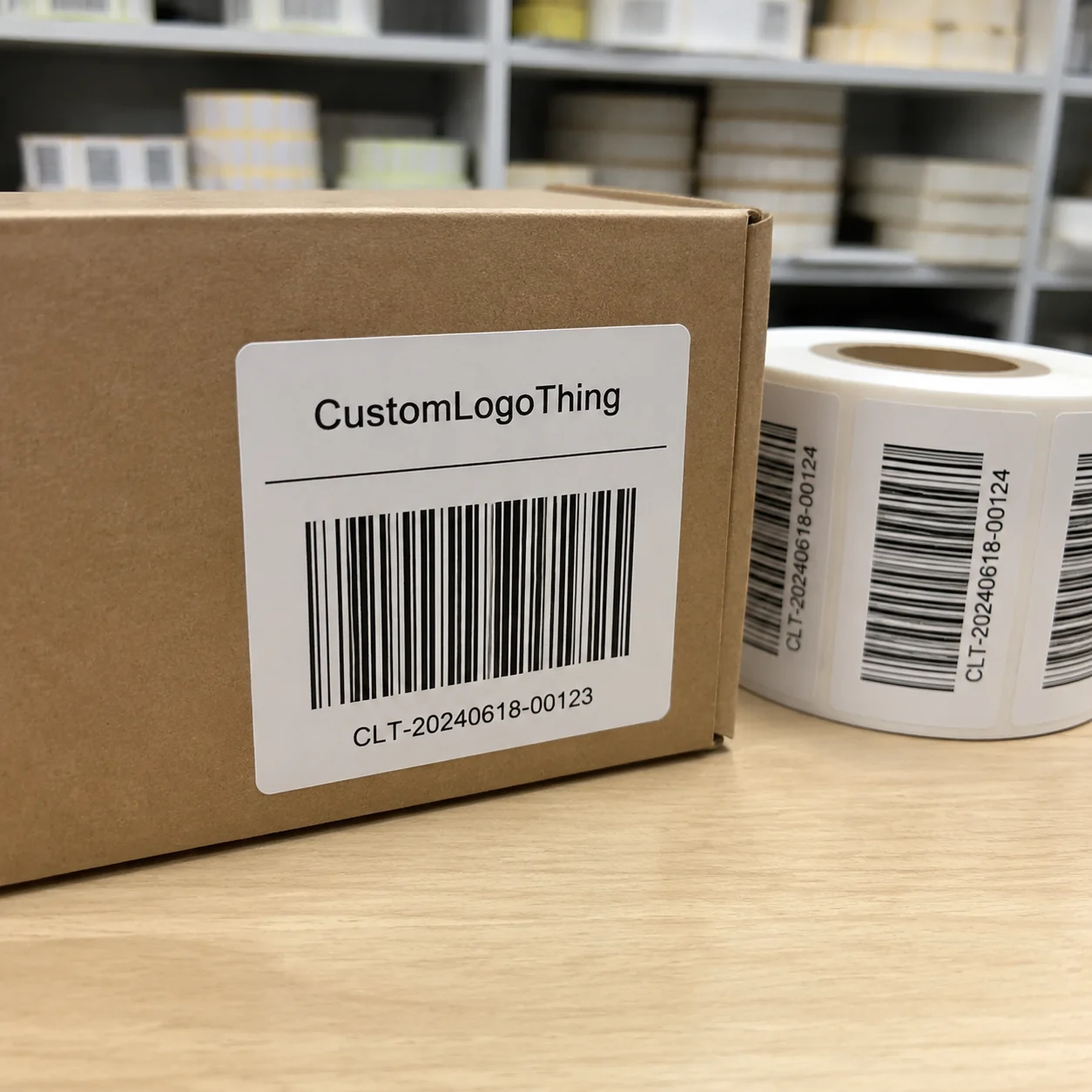
Consider functional elements beyond branding when designing your labels. QR codes and batch numbers serve dual purposes: they enable customer engagement and product traceability while also functioning as design elements that integrate with your overall label aesthetic. For traceability purposes, batch numbers should be on every label to support inventory management and any potential recall situations. For QR codes, I recommend testing on actual labels in the expected use environment—I've seen QR codes that scan perfectly in office lighting but fail in the dim conditions of bathroom environments because the contrast ratio isn't sufficient. There's nothing more frustrating than designing what you think is a perfect label experience, only to find out the QR code is basically decorative because no one can get their phone to read it.
Getting Started With Your Waterproof Label Project
If you've read through this guide and you're ready to move forward with your custom cosmetic labels waterproof project, here's the practical roadmap I walk clients through when starting a new engagement. Taking these steps in order will prevent delays and ensure you get accurate quotes that reflect your actual requirements.
Start by gathering complete container specifications. You Need to Know your container material (glass, PP, PE, acrylic, etc.), shape (cylindrical, rectangular, curved), dimensions (height, diameter, circumference), and any special features like recessed areas or unusually curved sections. Our team can work from samples you ship to us, or if you're still in development, detailed photos and measurements often suffice. I've had projects stall for weeks waiting for container specifications that the client could have provided immediately if they'd thought to gather them upfront. It's like showing up to a doctor appointment without knowing anything about your symptoms—technically you're there, but you can't really move forward until you do some homework.
Prepare print-ready artwork following industry standards. Vector files in AI, EPS, or PDF format at 300 DPI minimum for any raster elements. Include 1/16 inch bleed on all sides (so if your label is 3" x 2", your artwork file should be 3.125" x 2.125" with the label area centered). Specify all spot colors or Pantone references if you're matching specific brand colors. For waterproof applications, we recommend outlining fonts so they don't depend on system font files. If you're not confident in your file preparation, many suppliers including Custom Logo Things offer artwork preparation services at reasonable rates.
Request material samples and adhesive test kits before committing to bulk orders. Most suppliers will send material samples so you can evaluate the look and feel of different substrates. For adhesive testing, we provide small adhesive test rolls that you can apply to your actual containers, store in your expected conditions, and evaluate over 1-2 weeks. This is the single most valuable step you can take to prevent expensive problems, and I can't emphasize it enough. The sample investment is minimal compared to the cost of reprints. Repeat after me: samples are not optional, samples are not optional, samples are not optional.
Contact us with your exact requirements for a custom quote. The more details you provide upfront, the more accurate your quote will be. Include quantity requirements, material preferences if you have them, finishing operations needed, timeline constraints, and shipping destination. We respond to most quote requests within one business day, and our team includes people who've spent years in production facilities who can help you optimize specifications for your budget without compromising performance.
Building custom cosmetic labels waterproof that perform in real-world conditions requires balancing multiple factors—material selection, adhesive chemistry, finishing operations, and application procedures all contribute to the final result. When you're ready to move forward with your project, our team at Custom Labels & Tags has the experience and production capabilities to help you get it right the first time.
What materials make the best waterproof labels for cosmetics?
BOPP film remains the most popular choice for cosmetic label applications because it offers excellent moisture resistance while maintaining good printability and accepting a wide range of finishing options. Polyester (PET) materials provide superior durability and temperature resistance, making them ideal for products that face refrigeration or extreme temperature conditions. Flexible vinyl works best for squeeze tubes and containers with significant curvature because it conforms to rounded surfaces without wrinkling or lifting. All three of these substrate options accept standard flexographic and digital printing methods and are compatible with waterproof adhesive systems specifically formulated for cosmetic applications.
How long do waterproof cosmetic labels actually last?
Quality waterproof labels from reputable manufacturers typically last throughout the complete product lifespan, which for most cosmetics means 2-3 years of normal use. The actual longevity depends on adhesive quality, environmental exposure levels, and whether the labels are exposed to conditions beyond their tested specifications. Indoor display conditions with climate control will extend label life versus bathroom or shower environments where humidity and temperature fluctuate dramatically. Most manufacturers offer warranty coverage for at least one year, with some premium suppliers warranting performance for the full product shelf life when labels are stored and applied according to their specifications.
Can I print waterproof labels with my existing artwork?
Most print-ready files in PDF, AI, or EPS formats work directly with waterproof label production without modification. The key requirements are 300 DPI minimum resolution for any raster images to ensure sharp text and graphics reproduction, CMYK color mode for full-color designs (spot color files may need conversion depending on your material selection), and flattened transparencies to prevent issues in the RIP processing stage. If your artwork contains effects like drop shadows, glows, or overprints, these typically need flattening before production files are submitted. Vector elements generally transfer without issues. When in doubt, request a pre-flight review of your files before committing to production.
What's the minimum order quantity for custom waterproof cosmetic labels?
Standard minimum order quantities typically range from 500 to 1,000 units depending on the supplier and material choice. Some suppliers offer smaller runs with setup fee additions, which can make very short runs of 250-500 units economically viable if you need prototypes or limited edition products. Sheet-fed production options exist for runs under 250 units and can provide flexibility for product development phases or extremely small batch artisan products. Volume pricing discounts typically kick in at the 5,000-unit threshold, where setup costs spread across significantly more units and production efficiency improves substantially. When comparing quotes, always confirm whether pricing is quoted at your actual order quantity to avoid surprise setup fees.